
Reviewed · CALLIGRAPHY & CRAFT WORKSHOPS
Tokyo: Knife Making Workshop (Sharpening, Engraving)
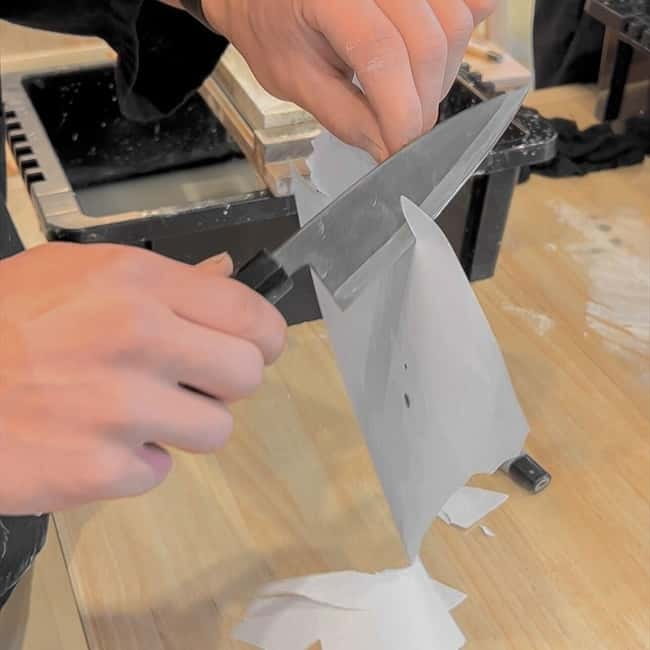
Sharpening a Japanese knife by hand is slow, physical work, but that is exactly the point. At BUB Activity Center in Asakusa, you learn the basics, choose a blade, attach its handle, and engrave your name in Japanese. The finished knife feels far more personal than a shop-bought souvenir.
I like two things here: the staff stay close and correct your technique, and the workshop connects a simple kitchen tool with Japanese sword and knife traditions. Guides including Lisa, Joe, Mori, and Agata have been praised for clear English and lively instruction. The main consideration is that 90 minutes can feel tight if you work slowly, and larger or more specialized blades cost extra.
Key points at a glance
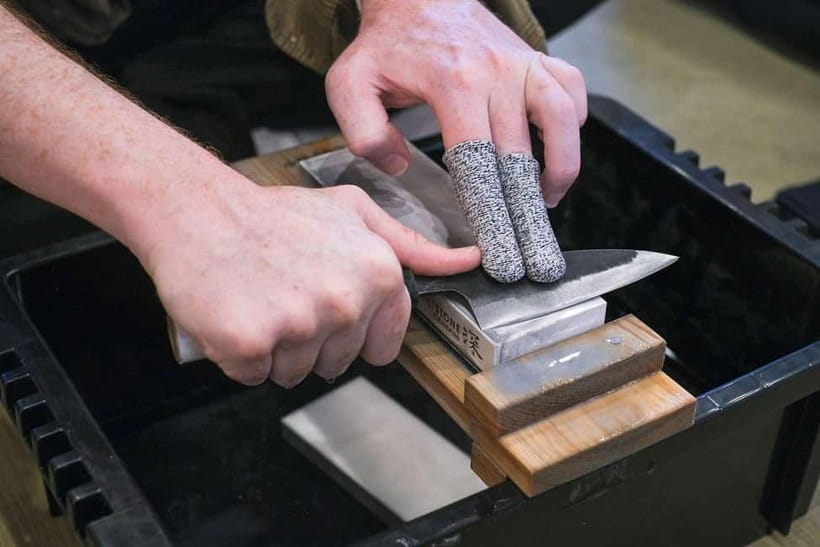
- Choose your blade: Start with a standard multitask knife, or pay a small extra fee for selected larger styles such as usuba, deba, or petit yanagiba.
- Learn a practical skill: You sharpen the blade yourself, with staff correcting your hand position and movements.
- Add a personal mark: Engrave your name in Japanese on the handle, or try a simple picture or design.
- Meet the craft directly: A short talk covers Japanese knives, kitchen tools, and the difference between Japanese katanas and Western swords.
- Take home more than a knife: Your package includes the finished knife, snacks and tea during the session, and a custom key-holder.
- Plan for the airport: Put the knife box in checked luggage, or ask the staff about shipping it.
What the Asakusa workshop feels like
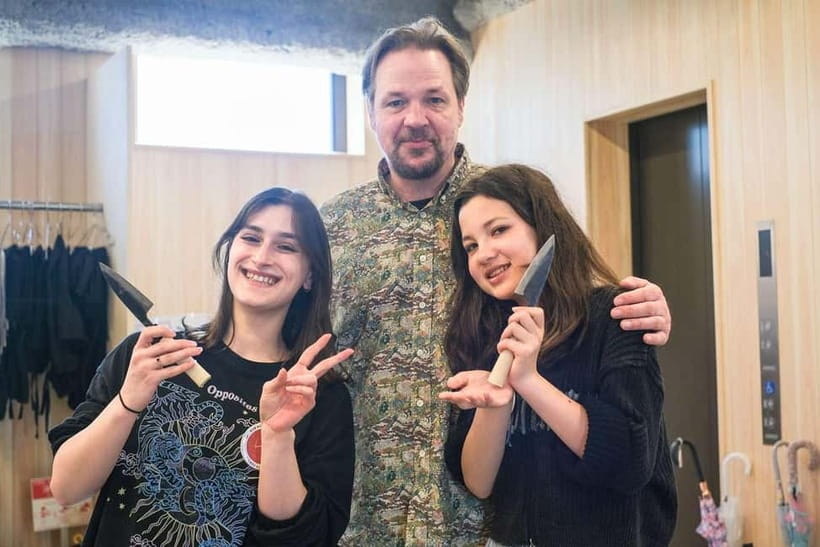
The BUB Activity Center is at 2 Chome 6-11 in Asakusa, inside the Heiwa Building. Take the elevator to the fifth floor. It is in a handy part of Tokyo for public transport, so you can pair the class with Asakusa sightseeing or a visit to the nearby kitchenware district.
You begin by putting on a light haori-style jacket. It protects your clothes from stains and gives the session a pleasant Japanese touch without turning it into a costume show. You also receive a badge with your name written in Japanese letters, which helps set the tone before the tools come out.
The room is arranged for hands-on work, with staff nearby throughout. You sit down first for tea, juice, or another soft drink while the instructor explains the cultural background of Japanese knives and swords. This opening matters. Without it, the class could feel like a basic sharpening lesson. With it, you get a better sense of why Japanese blades are treated as carefully made tools rather than ordinary kitchen hardware.
The English support is one of the strongest parts of the experience. The teaching team uses simple explanations and adjusts to your level. Lisa, Joe, Mori, and Agata have all been singled out by name for friendly, clear instruction at different sessions, though the exact team working on your visit may vary.
Other things to make with your hands in Tokyo:
- Chopstick Making Workshop in Ginza
★ 4.8 · 1,366 reviews - Tokyo Chopstick Making Workshop with Artisan
★ 5.0 · 466 reviews - Tokyo: Matcha Making Experience with Mochi Sweets in Asakusa
★ 4.9 · 388 reviews
Choosing the right Japanese knife
The included knife is a standard multitask model. It is the sensible choice if you want a useful kitchen souvenir without paying more than the advertised $161 price. You can also select from up to five knife types, with some requiring an added fee.
The options listed for an extra charge include usuba, deba, and petit yanagiba. These are not merely different shapes for display. They are associated with different kitchen tasks, so listen carefully to the explanation before choosing. A larger or more specialized blade may look more distinctive, but the standard knife is likely the easier choice if you want one general-purpose tool.
I would make this decision early and ask the staff what each blade is best suited for. The class gives you enough information to choose with some purpose, but 90 minutes is not a long time for a full lesson in Japanese cutlery. If your main interest is cooking, think about how you will use the knife at home. If your main interest is the experience, choose the shape that feels most interesting to you.
The extra cost is not listed, so check the price on site before committing to an upgrade. That small uncertainty is worth noting when you are comparing the total cost of the activity.
The sharpening lesson takes real concentration
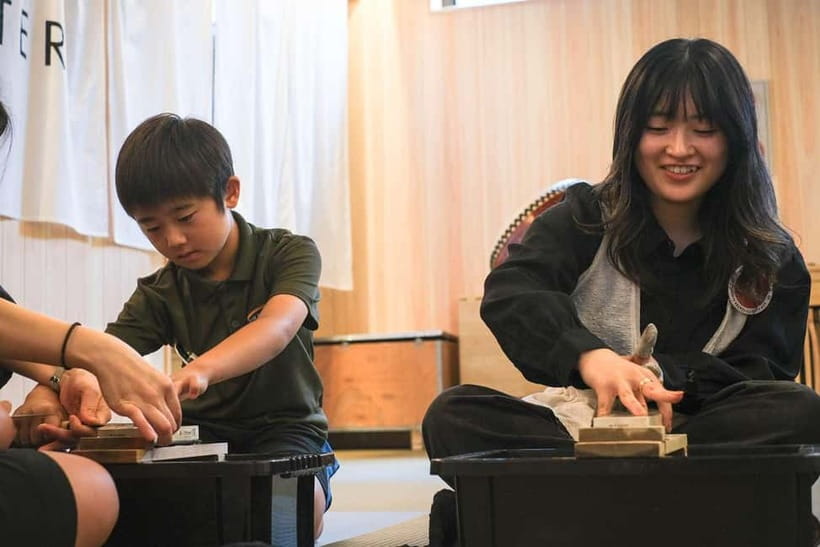
The heart of the class is sharpening the blade on a whetstone. You work slowly, repeating the correct motion while keeping your attention on the angle and pressure. It is tactile and quiet in a way that many Tokyo activities are not.
The process can be harder than it looks. Several people have found it to be real work, especially when trying to maintain a steady technique. That is not a flaw, but you should not expect to sit back while an expert does everything for you. The goal is to learn the motion and see the edge change under your own hands.
The instructors keep checking your work. They politely correct mistakes, demonstrate the movement again, and help finish the blade if needed. That close support makes this suitable for beginners, including children who can follow instructions. One family session included a 10-year-old who enjoyed the activity, and the staff kept the class engaging.
I like this part because the souvenir begins to carry a little of your effort. You may not produce a perfect professional edge on your first attempt, but you will understand more about knife care when you leave. The activity also gives you a useful introduction to a skill you can continue practicing at home.
Do not rush the sharpening stage. If you are booking another appointment immediately afterward, leave some breathing room. One session ran longer than expected because the staff were accommodating and helped complete the knives, but you should not rely on extra time being available.
Attaching the handle and engraving your name
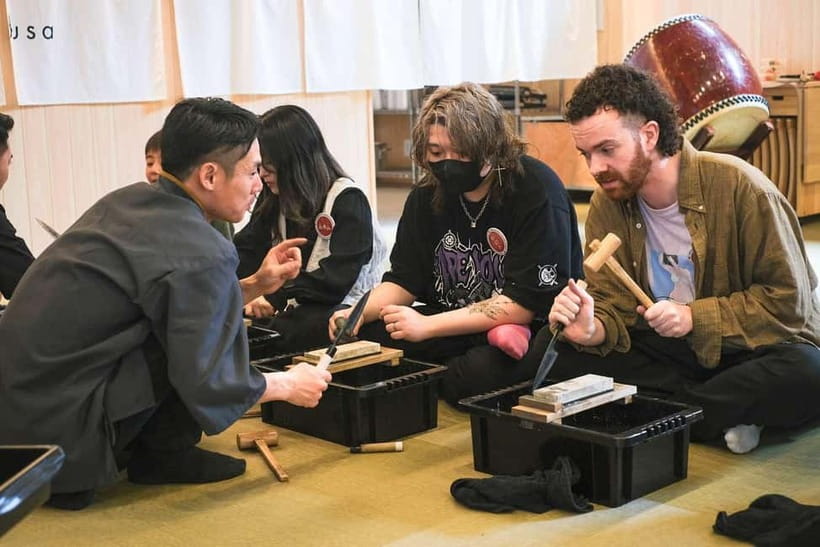
Once the blade work is underway, you attach the handle using a traditional hammer. This is a satisfying step because the separate pieces finally become a working knife. The staff guide you carefully, so prior experience is not needed.
You then engrave your name in Japanese letters on the handle. The crew can help with the Japanese basics, and you can also attempt a simple picture or another design. Engraving is harder than it looks, so expect a handmade result rather than machine-perfect lettering.
That roughness is part of the charm, but it also points to one fair criticism. One person felt the handle quality could be improved and wanted more engraving methods. If you care most about a polished display piece, inspect the knife and engraving options before you begin. If you like objects that show how they were made, the personal marks make the knife more memorable.
The sound of the hammer and the careful lettering give this section a nice sense of completion. You are not simply buying a blade and having your name printed on it. You are helping assemble and mark the object yourself.
Same base, a different sort of day:
- Mt Fuji and Hakone 1-Day Bus Tour Return by Bullet Train
★ 5.0 · 26,383 reviews - 1-Day Tokyo Bus Tour
★ 5.0 · 14,250 reviews - Tokyo: TOKYO SKYTREE® Admission ticket
★ 4.5 · 11,192 reviews - Tokyo: teamLab Planets TOKYO Digital Art Museum Entry Ticket
★ 4.6 · 9,779 reviews
Tea, snacks, and a useful souvenir
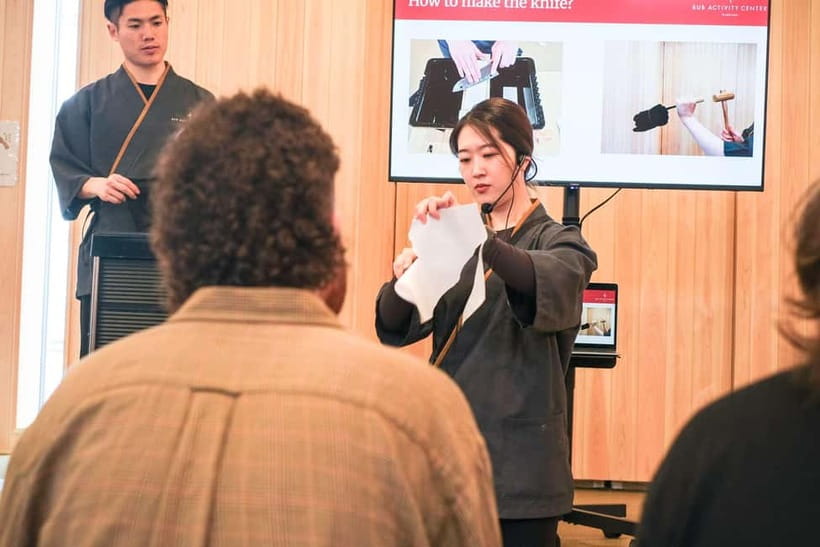
Tea, Japanese snacks, and soft drinks are included. These are small touches, but they help pace the work and make the workshop feel welcoming. The food is not a meal, so eat beforehand if you need lunch or dinner.
At the end, your knife is placed in aesthetic packaging. You also receive a customized key-holder with a unique design. The extra gift is a nice bonus, especially if you are looking for a small keepsake beyond the main souvenir.
The knife itself is the reason to book. It is a practical object, not just a decorative craft. You can display it, give it to a friend, or use it at home, subject to your local rules and your comfort with maintaining a Japanese blade.
A small but important airport point: put the knife box in your checked luggage. If that is not possible, ask the staff about shipping it. Do not plan to carry the knife through airport security in your hand luggage.
Is $161 a fair price?
At $161 per person, this is not a cheap drop-in activity. You are paying for the knife, instruction, English assistance, drinks and snacks, packaging, engraving, and a structured 90-minute class. The value improves if you care about the process as much as the object.
A comparable shop purchase might give you a sharper or more refined knife, but it would not teach you how the blade was prepared or let you assemble and mark the handle. The class also gives you a story to attach to the souvenir. You can explain where it came from, how you sharpened it, and why the Japanese writing is on the handle.
The price feels easier to justify for someone interested in cooking, Japanese craft, swords, or hands-on activities. It may feel high if you only want the lowest-cost kitchen knife. In that case, choose the included standard model and avoid the optional upgrades.
If you are visiting with a partner or family member who does not need another knife, ask about the observation fee before booking. A non-participant can watch, but an observation charge applies on site. That arrangement can make sense for couples who want to share the activity without taking home two knives, but confirm the current fee when you arrive.
Who will enjoy this most?
This workshop suits curious beginners. You do not need knife-making experience, Japanese language skills, or previous sharpening practice. The bilingual staff keep the instructions straightforward, and the practical nature of the task gives children and adults something to focus on together.
It is especially good for:
- Home cooks who want to understand Japanese knife care
- People who prefer useful souvenirs over mass-produced gifts
- Visitors interested in Japanese tools, swords, or craft
- Couples or families who enjoy making something side by side
- Anyone who likes a calm activity requiring concentration
It is less suitable if you want a quiet museum-style lesson with no physical effort. You will be sharpening, hammering, and engraving, and your result may show a few handmade imperfections. That is part of the experience, but it is worth knowing before you book.
The activity is wheelchair accessible. Alcohol and drugs are not allowed. Since the class lasts about an hour and a half, it fits neatly into a Tokyo day, but allow extra time for finding the building and getting to the fifth floor.
Pairing the class with Asakusa
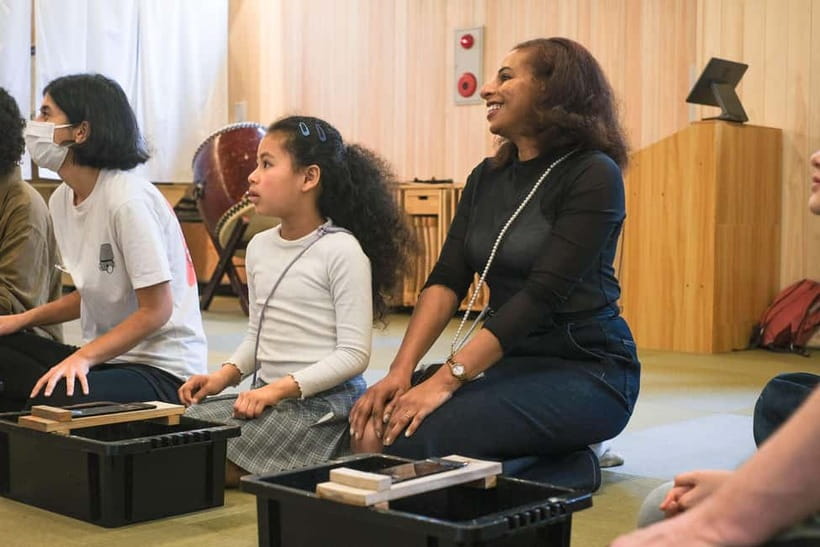
The location makes this easy to fit into a day around Asakusa. You can arrange the workshop before or after sightseeing in the area, then continue toward Tokyo’s kitchen district if you want to compare other knife styles.
The kitchen district connection is particularly useful. After learning the basic differences between blades, you will have a better idea of what to look for in a specialist shop. You may still decide not to buy another knife, but the class gives you a working vocabulary and a clearer sense of what suits your cooking.
Try not to schedule the class at the very end of your trip if you are unsure how to transport the knife home. You need room in checked luggage, or time to arrange shipping. The staff can advise you, but the responsibility for getting the blade home safely remains yours.
Final verdict: should you book it?
I would book this if you want a hands-on Tokyo experience that leaves you with a useful, personal souvenir. The best parts are the patient English instruction, the chance to sharpen the blade yourself, and the simple cultural background that explains why Japanese knives matter.
Choose the standard knife if you want to keep the cost controlled. Consider an upgrade only after you understand the different blade types. Give yourself more than the bare 90 minutes if you have a fixed appointment afterward, and plan checked luggage or shipping before you arrive.
Skip it if you want a finished premium knife with no effort, or if $161 feels too high for a guided craft activity. For everyone else, this is a thoughtful way to spend part of a Tokyo afternoon, especially if you like cooking and want a souvenir you can actually use.
FAQ
Where is the knife-making workshop held?
It is held at BUB Activity Center, Tokyo, Taito-ku, Asakusa, 2 Chome 6-11, Heiwa Building. Take the elevator to the fifth floor.
How long does the activity last?
The workshop lasts approximately 90 minutes, or one and a half hours.
How much does the experience cost?
The listed price is $161 per person. Some larger or specialized knives require an additional fee.
What knife is included?
A standard-size, multitask knife is included and can be taken home after the workshop.
Can I choose another type of knife?
Yes. Up to five knife types may be available. Usuba, deba, and petit yanagiba knives are listed among the options that may cost extra.
Do I need previous knife-sharpening experience?
No. The workshop is suitable for beginners, and staff guide you through sharpening, handle attachment, and engraving.
Is the activity taught in English?
Yes. English-speaking, bilingual staff provide instruction and assistance.
Can a friend or family member watch without making a knife?
Yes, but an observation fee applies on site for non-participating relatives or friends.
How should I take the knife home?
Put the knife box in your checked luggage, or ask the staff about shipping it.
Just added in Tokyo
- The 10 Tastings of Tokyo With Locals: Private Street Food Tour★ 5.0 · 48 reviews
- Small Town in the Big City: Tasting Tokyo’s Kichijoji★ 5.0 · 195 reviews
- Small Town in the Big City: Tasting Tokyo’s Kichijoji★ 5.0 · 16 reviews
- EXCLUSIVE Tokyo Secret: Kichijoji Small-Group Food & Bar Hopping★ 5.0 · 29 reviews
- Explore Kichijoji: Walk Through One of Tokyo’s Beloved Districts★ 5.0 · 21 reviews
- :Tokyo,Shibuya/ Pro Photography in Kimono / English-Friendly★ 5.0 · 26 reviews
- 【R34】Tokyo:Private Daikoku tour in Modified R34★ 4.9 · 92 reviews
- Tokyo:Calligraphy &Make your original folding fan in Asakusa★ 5.0 · 62 reviews
Calligraphy & Craft Workshops, compared.
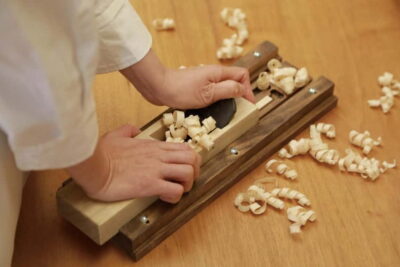
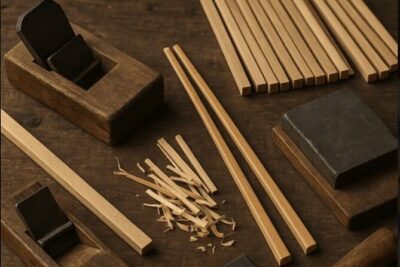
Chopsticks Making Workshop in Gion with Engraving Option
Read our review →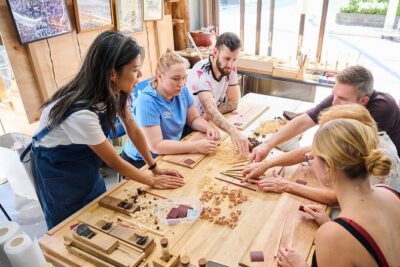

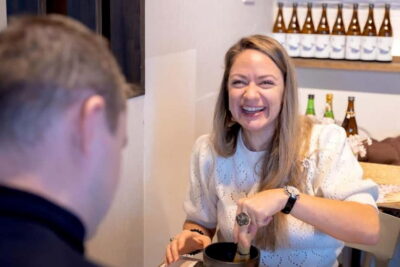
Matcha Making Experience with Mochi Sweets in Asakusa
Read our review →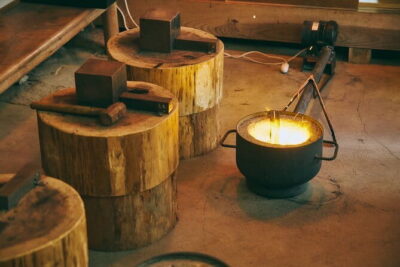
Authentic knife making experience at a blacksmith in Kyoto
Read our review →
Calligraphy class at Buddhist temple in city center
Read our review →Browse the lists this tour appears in