
Reviewed · CALLIGRAPHY & CRAFT WORKSHOPS
Tokyo: Learn Traditional Origami with a Local
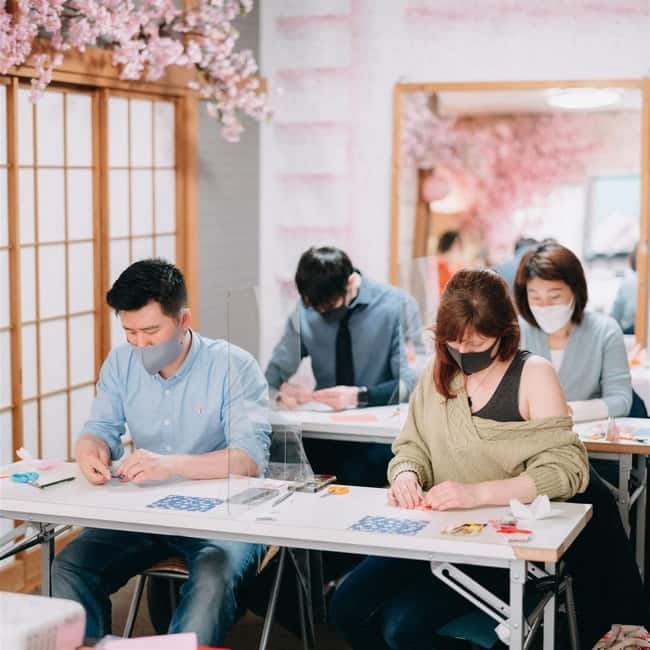
Origami becomes much more interesting when the person teaching it has folded paper since childhood. In Shinjuku, Tokyo native Manami Watanabe shows you several designs, then guides you through each crease while explaining the stories and meanings behind them. I like the calm, hands-on pace, and I like that you leave with three to five finished pieces rather than just watching a demonstration. The main catch is that the class is aimed at beginners, so experienced folders may find the choices too easy.
I also like the personal help. Manami demonstrates each step, watches your progress, and is happy to correct a troublesome fold without rushing you. The $58 price is fair if you value patient instruction, cultural background, quality paper, and a peaceful break from Tokyo sightseeing, but it is more than you would pay to follow an origami book or video at home.
Key points at a glance

- Learn with a lifelong Tokyo folder: Manami has practiced origami since age 3 and teaches in English.
- Make three to five designs: Choices can include cranes, jumping frogs, boxes, lotus flowers, balloons, and samurai helmets.
- Hear the story behind the fold: Manami explains the symbolism and cultural importance of each shape.
- Choose your own paper: Traditional and modern sheets with different colors and patterns are provided.
- Beginner-friendly by design: Step-by-step help makes the class suitable for adults, families, couples, and groups.
- Leave with a small souvenir collection: Bags, pens, scissors, water, snacks, and paper are included.
Why a 90-minute origami class works in Tokyo
Tokyo can fill a day with temples, department stores, neon streets, and packed train rides. This activity offers a different kind of Japanese experience: you sit down, focus your hands, and make something that has meaning beyond its final shape.
The session lasts 90 minutes, which is long enough to complete several projects without taking over your day. You can fit it between sightseeing in Shinjuku and other central Tokyo plans. It also makes a useful rainy-day option, or a quieter choice after several busy hours on foot.
You are not simply handed paper and told to copy a diagram. Manami introduces the designs, demonstrates the folds, and stays available as you work. That matters because origami instructions often look simple on paper, then become confusing when several small folds meet at once.
The class is designed mainly for people new to origami. You can usually choose designs at different levels, but the activity does not offer custom advanced projects on site. If you already fold complex models, this may feel more like a cultural introduction than a serious workshop.
Other things to make with your hands in Tokyo:
- Chopstick Making Workshop in Ginza
★ 4.8 · 1,366 reviews - Tokyo Chopstick Making Workshop with Artisan
★ 5.0 · 466 reviews - Tokyo: Matcha Making Experience with Mochi Sweets in Asakusa
★ 4.9 · 388 reviews
Meeting Manami in Shinjuku
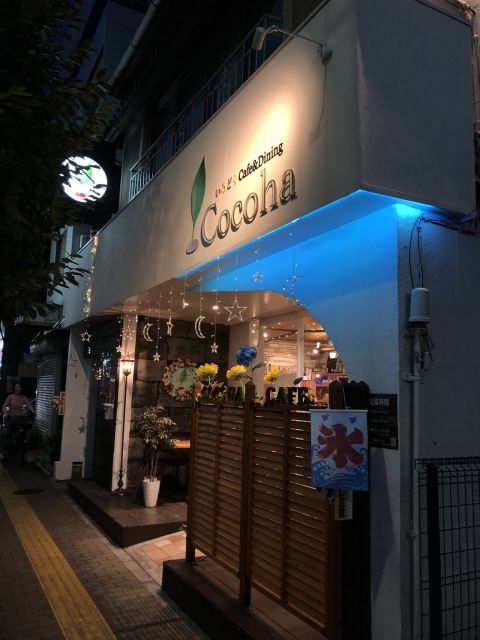
The meeting point is FEEEP Shinjuku Higashi-guchi, at the Shinseido Building, 5F, 3-29-11 Shinjuku-ku. The nearest station is Shinjuku-sanchome, served by metro lines M09, F13, and S02. You can also walk from the east gate of JR Shinjuku Station.
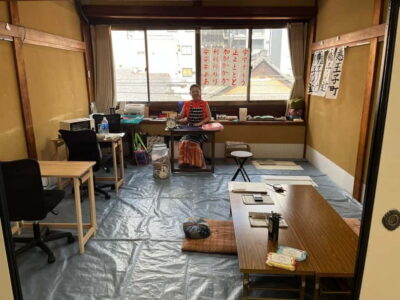
FEEEP is a shared workspace divided into meeting booths. The entrance is locked, so message Manami after reaching the fifth floor. This is an important arrival detail. Do not assume you can simply walk into an open classroom or wait at a clearly marked reception desk.
Give yourself time to find the building, especially if you are coming from the enormous JR Shinjuku Station. Shinjuku has many exits, and the difference between the east side and the west side can add unwanted walking. Using Shinjuku-sanchome may be simpler if that station fits your route.
There is no train-station pickup. You are responsible for reaching the venue, but the public transport options are strong. The precise meeting instructions matter more than transportation difficulty here.
Choosing your first three to five designs
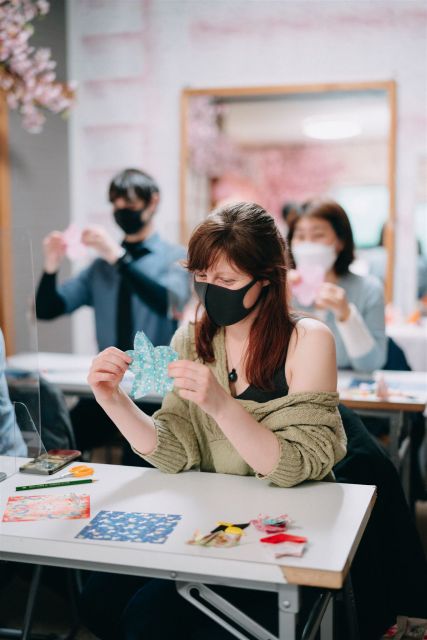
Manami begins by showing designs across several skill levels. You then choose which shapes interest you and select paper for each one. The exact combination depends on the options available during your session and how quickly your group works.
Possible projects include:
- A paper crane, one of Japan’s best-known origami forms
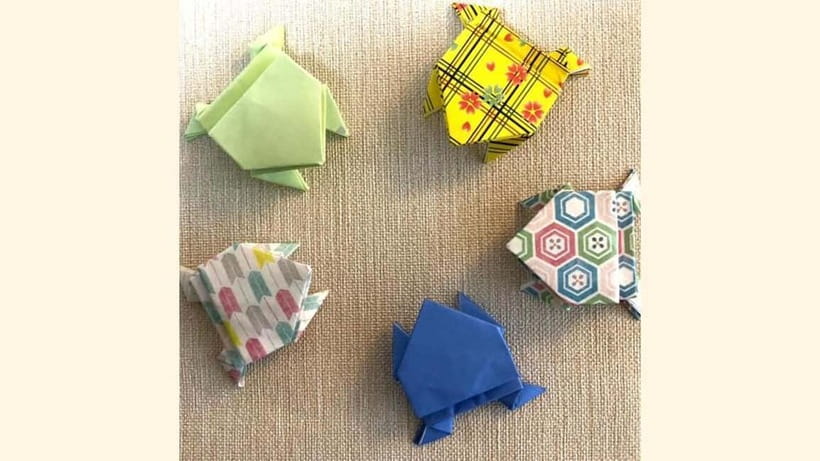
- A jumping frog, which adds a playful moving feature
- A lotus flower
- An open box
- A balloon
- A samurai helmet
- Other classical shapes presented by Manami
The range gives each person some control without turning the session into a free-for-all. A child might choose a jumping frog, while an adult might prefer a crane or lotus. One family group made a samurai helmet, jumping frog, and crane, with extra support for an eight-year-old.
You should expect to make three to five pieces rather than master every design in the room. Four pieces is realistic for a focused participant, while five may be possible if the group moves quickly. Choosing a simpler model leaves more time to listen to the explanations and decorate or photograph your finished work.
If you are attending with children, the activity suits families particularly well when everyone can follow spoken instructions and manage small folds. Children under 7 require advance notice because the venue must be changed. The same applies to elderly people or anyone who needs special care.
Paper choice is part of the experience
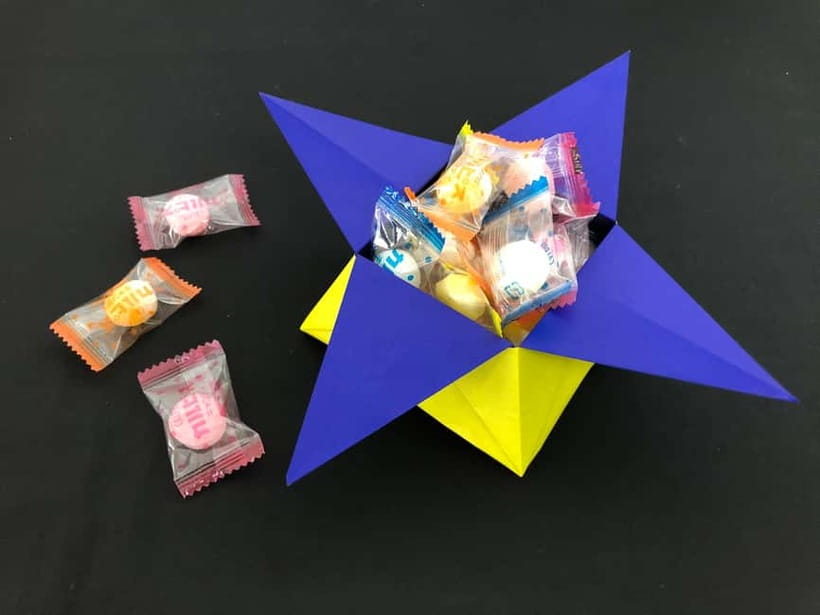
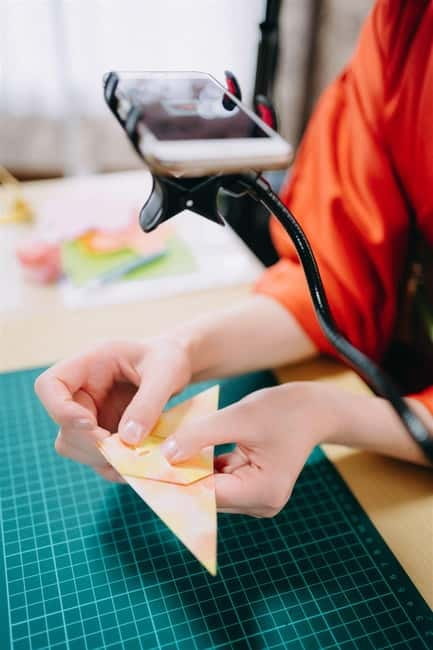
The paper is not an afterthought. You receive a selection of traditional and modern origami papers with attractive designs, then choose a sheet for each project.
That choice changes the feel of the finished piece. A crane made from a bold patterned sheet has a different character from one made with a quiet traditional design. The paper also gives the activity a stronger connection to Japanese craft than plain printer paper would.
Scissors and pens are provided when they are useful for a particular project. Small bags let you carry your creations home without crushing them in a daypack. Water and snacks are also included, a welcome touch during a seated activity in the middle of a busy city day.
Bring a little care to the packing stage. Folded paper can be fragile, so use the provided bags and avoid pressing the finished shapes under heavy items. The small souvenirs are easy to carry, but they still need room to keep their form.
Same base, a different sort of day:
- Mt Fuji and Hakone 1-Day Bus Tour Return by Bullet Train
★ 5.0 · 26,383 reviews - 1-Day Tokyo Bus Tour
★ 5.0 · 14,250 reviews - Tokyo: TOKYO SKYTREE® Admission ticket
★ 4.5 · 11,192 reviews - Tokyo: teamLab Planets TOKYO Digital Art Museum Entry Ticket
★ 4.6 · 9,779 reviews
Manami’s step-by-step teaching style
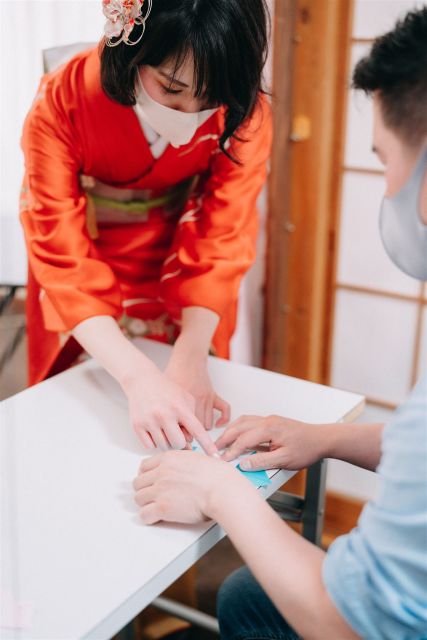
The strongest part of the class is the instruction. Manami does not expect you to memorize a long sequence of folds from a single demonstration. She shows the next step, gives you time to try it, and helps when a crease or corner does not line up.
That approach is especially useful for families and mixed-ability groups. One family with two adults and children aged 10 and 13 completed three designs, while an eight-year-old received extra encouragement and help. The class can work for different ages as long as younger children meet the advance-notice requirement.
Manami’s manner also suits solo visitors. A one-to-one session can produce four pieces with close guidance, while also leaving room for conversation about Japanese culture. Couples and small groups can work together without needing prior knowledge.
The teaching is in English. You should still expect origami to require attention. The folds are not difficult in the same way as a technical craft class, but it is easy to lose your place if you talk through a demonstration or rush ahead.
My advice is simple: keep your hands still while Manami demonstrates, then copy the step immediately. Ask for help as soon as a fold feels wrong. Trying to force the next stage over a poor crease usually makes the final shape harder to form.
The crane, the frog, and the meaning behind the shapes
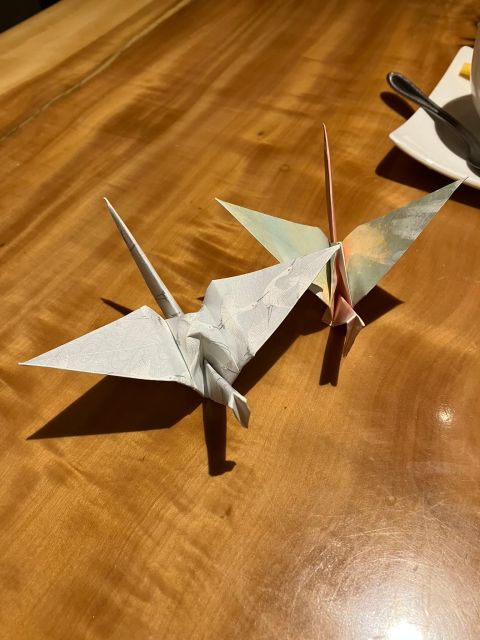
The cultural explanations give the class its purpose. Manami discusses the background of origami and shares stories connected with particular forms, including the crane’s importance in Japan.
The paper crane is familiar to many people, but folding one with a Japanese instructor adds context. You hear why the shape matters, rather than treating it as a decorative bird with no story attached. The crane also gives you a lasting reminder of the session because it is recognizable and easy to display.
Other designs offer a lighter mood. A jumping frog brings a small mechanical surprise when folded correctly, making it a good choice for children and playful adults. A lotus flower has a more decorative result, while a box gives you something with a practical shape. A samurai helmet connects the craft to a visual symbol of Japanese history.
Manami also draws on family and childhood memories. That personal connection keeps the cultural material from feeling like a formal lecture. You are learning how to fold, but you are also hearing how origami fits into ordinary life in Japan.
The explanations are brief enough to protect the hands-on time. This is not a full course in Japanese art history, and it should not be booked as one. It is a friendly introduction that links each finished piece to a broader tradition.
Who gets the best value from the $58 price
At $58 per person, this is not a bargain craft table. The value comes from the complete package: an English-speaking local instructor, individual help, several sheets of attractive paper, tools, snacks, and finished pieces to take home.
I think the price works best for:
- Solo visitors who want a guided cultural activity
- Couples looking for a quiet shared experience
- Families with school-age children
- Groups that prefer a private-feeling craft session over another sightseeing stop
- First-time folders who learn better from a person than from printed diagrams
The price is harder to justify if you already fold advanced models or mainly want a cheap souvenir activity. The class is intentionally beginner-focused, and the available designs cannot be customized on site for advanced participants.
For a family, the cost adds up quickly, so consider how much value you place on a calm activity where everyone can sit together and finish something. For a solo visitor, the one-to-one attention can make the price feel more reasonable, particularly if you want conversation as well as instruction.
The reservation can be canceled up to 24 hours before the start for a full refund, and the reserve-now, pay-later option gives you some flexibility while arranging a Tokyo schedule.
Families, older visitors, and accessibility
The activity is listed as wheelchair accessible. Still, contact Manami in advance if anyone in your party needs special care, since the venue may need to be changed.
Children under 7 also require advance notice. This is not simply a question of age, since small folds demand patience and close attention. Tell the provider about young children before arrival so the right venue can be arranged.
For older participants, the seated format may be appealing, but anyone needing special assistance should be identified ahead of time. The class is flexible in its teaching style, yet the physical setup can depend on the venue.
Alcohol and drugs are not allowed. That rule is ordinary but worth noting because this is a shared workspace rather than a nightlife setting.
What you take home from the session
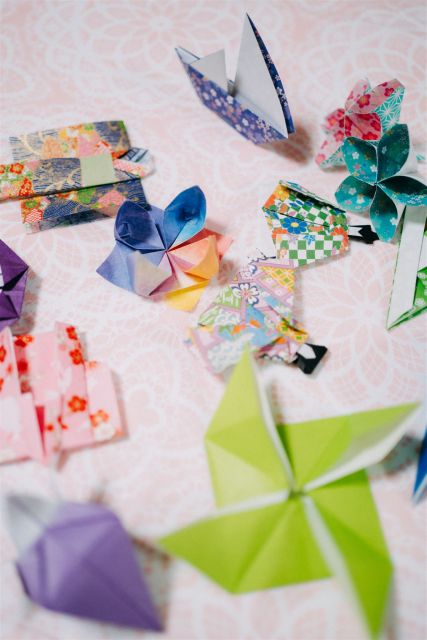
The finished origami is the obvious souvenir, but the real keepsake is the method. Once you understand the basic folds, you can try the same shapes again with different paper at home.
You can photograph your pieces during the session, and the small bags help protect them afterward. One participant carried a crane, frog, box, and lotus flower back to the United Kingdom and displayed them on a bookcase. That is the kind of souvenir this activity creates: light, personal, and tied to a specific afternoon in Tokyo.
You may also leave with ideas for seasonal projects. The basic patterns can be used again around holidays or at home with family. The class does not promise an advanced manual, but it gives you enough confidence to keep practicing.
Should you book this origami class?
Book it if you want a gentle, personal activity with a local teacher and you are new to origami. Manami’s patience, clear demonstrations, and cultural stories are the main reasons to choose this session over learning from a book.
It is also a good pick for families, couples, and solo visitors who need a break from Tokyo’s fast pace. The central Shinjuku location, 90-minute length, provided materials, and take-home creations make it easy to fit into a sightseeing day.
Skip it if you are an experienced folder seeking intricate models or a specialized technical workshop. The class is built for beginners, and that limitation is important. For everyone else, $58 buys more than paper folding: you get personal instruction, a taste of Japanese tradition, and several small reminders of your time in Tokyo.
FAQ
How long does the origami class last?
The activity lasts 90 minutes.
How many origami pieces can I make?
You can expect to make three to five shapes during the session, depending on your choices and pace.
Who teaches the class?
Manami Watanabe teaches the class. She is from East Tokyo and has practiced origami since she was 3 years old.
Is the class taught in English?
Yes. The listed instruction language is English.
What origami designs can I choose?
Possible designs include cranes, jumping frogs, boxes, lotus flowers, balloons, and samurai helmets. The available choices may vary, and advanced custom designs cannot be arranged on site.
What materials are included?
Origami paper, scissors, pens, small bags for carrying your finished work, water, and snacks are included.
Where does the class meet?
The meeting point is FEEEP Shinjuku Higashi-guchi, Shinseido Building 5F, 3-29-11 Shinjuku-ku, Tokyo. The nearest station is Shinjuku-sanchome, and the venue is also accessible from the east gate of JR Shinjuku Station.
Can children under 7 attend?
Children under 7 may require a venue change, so you must notify Manami in advance. You should also contact her ahead of time if anyone in your group is elderly or needs special care.
Just added in Tokyo
- The 10 Tastings of Tokyo With Locals: Private Street Food Tour★ 5.0 · 48 reviews
- Small Town in the Big City: Tasting Tokyo’s Kichijoji★ 5.0 · 195 reviews
- Small Town in the Big City: Tasting Tokyo’s Kichijoji★ 5.0 · 16 reviews
- EXCLUSIVE Tokyo Secret: Kichijoji Small-Group Food & Bar Hopping★ 5.0 · 29 reviews
- Explore Kichijoji: Walk Through One of Tokyo’s Beloved Districts★ 5.0 · 21 reviews
- :Tokyo,Shibuya/ Pro Photography in Kimono / English-Friendly★ 5.0 · 26 reviews
- 【R34】Tokyo:Private Daikoku tour in Modified R34★ 4.9 · 92 reviews
- Tokyo:Calligraphy &Make your original folding fan in Asakusa★ 5.0 · 62 reviews
Calligraphy & Craft Workshops, compared.
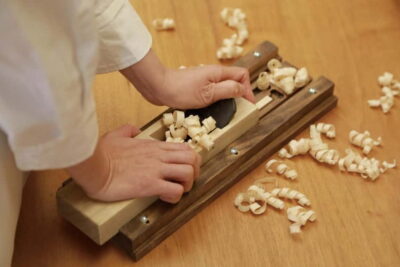

Chopsticks Making Workshop in Gion with Engraving Option
Read our review →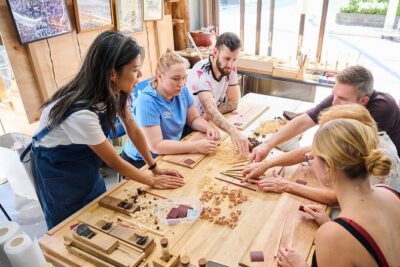


Matcha Making Experience with Mochi Sweets in Asakusa
Read our review →
Authentic knife making experience at a blacksmith in Kyoto
Read our review →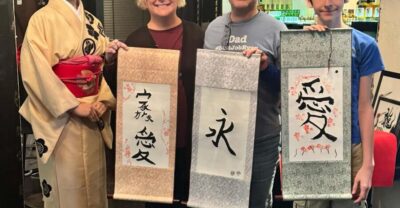
Calligraphy class at Buddhist temple in city center
Read our review →Browse the lists this tour appears in