
Reviewed · CALLIGRAPHY & CRAFT WORKSHOPS
Tokyo: Origami Fun for Families & Beginners in Asakusa
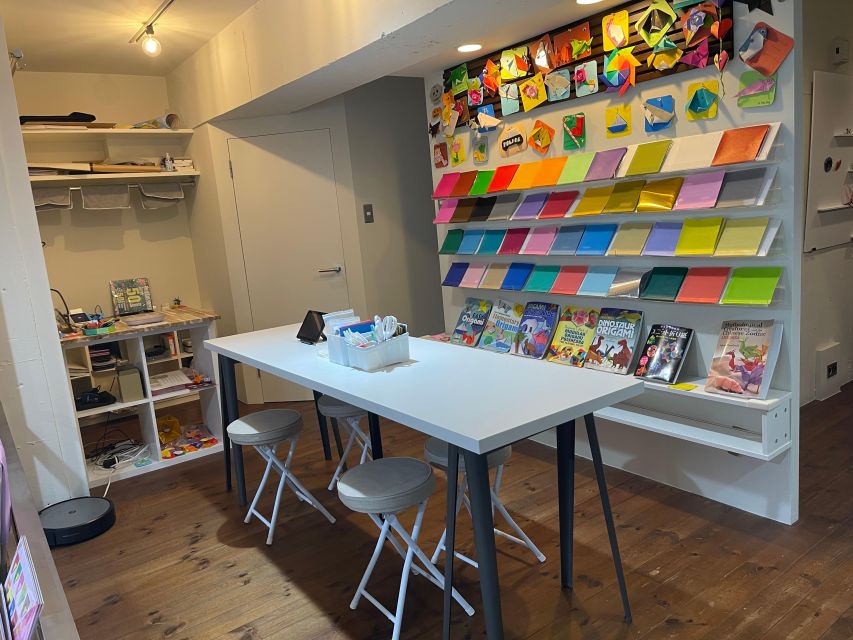
A square sheet of paper becomes a bird, flower, animal, or vehicle in this relaxed Asakusa activity. You choose from more than 100 models, pick from 50 paper colors, and follow clear tablet steps at your own pace. It is a pleasant change from Tokyo’s crowded streets and a simple way to try a traditional Japanese craft without needing prior skill.
I like the freedom to make several different pieces in 45 minutes, and I like the small group size, limited to six people. Staff members keep an eye on your work and step in when a fold gets tricky. The main drawback is that this is not a private, teacher-led class, so anyone looking for a full lesson with constant personal instruction may find the tablet-led format too independent.
Key points to know before booking
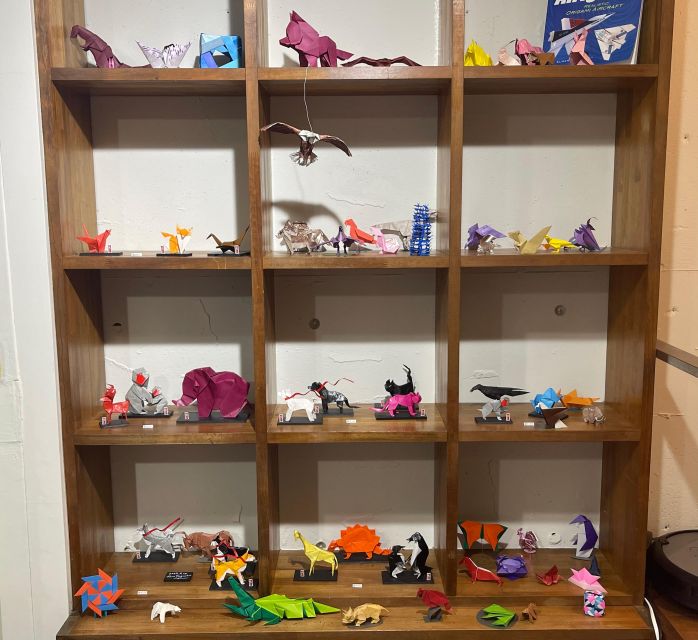
- More than 100 models: Pick from animals, flowers, vehicles, and other designs ranging from beginner to intermediate.
- 50 paper colors: Choose paper to suit the model, then add stickers, stamps, and marker details.
- Tablet-guided format: You control the pace and can replay steps or return to earlier instructions.
- Small groups: Sessions are limited to six people, which leaves room to ask staff for help.
- Family-friendly timing: The 45-minute session works well as a short break during an Asakusa sightseeing day.
- Bring socks: Socks are required, and seating has no back support.
A quiet craft break in the middle of Asakusa
Asakusa is known for major sights, busy shopping streets, and a steady flow of people. This origami session gives you a calmer way to spend part of your time in the area. You sit down, choose a paper color, and focus on a sequence of folds instead of rushing from one landmark to the next.
The activity takes place in a studio on the main street side of the building. This detail matters because the building also faces a park at the back. If you arrive beside the park, you are on the wrong side and cannot enter from there. Look for the company sign on the front of the building and a brown sea turtle attached to the wall below the window.
The studio is easy to find once you know these clues, but the entrance instructions are worth saving before you arrive. Asakusa has plenty of side streets and busy pedestrian areas, so a quick look at the meeting point can save you from circling the block.
Other things to make with your hands in Tokyo:
- Chopstick Making Workshop in Ginza
★ 4.8 · 1,366 reviews - Tokyo Chopstick Making Workshop with Artisan
★ 5.0 · 466 reviews - Tokyo: Matcha Making Experience with Mochi Sweets in Asakusa
★ 4.9 · 388 reviews
Choosing a model and a color
The first step takes place at a PC tablet. You browse categories on the touchscreen and select the model you want to make. The range covers simple beginner shapes as well as designs that require more careful folding.
I like this setup because you are not locked into one project. You can choose something small and simple first, then try a more involved design if your hands are ready for it. Families can also choose different models, which is useful when one person wants to make a flower and another wants to make an animal or vehicle.
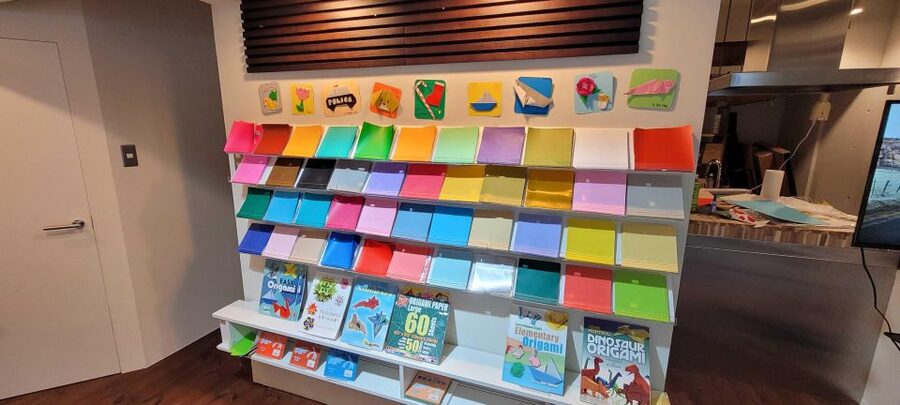
After selecting a model, you go to the origami paper wall. There are 50 colors to choose from, so the color is part of the activity rather than an afterthought. Think about the design before picking your sheet. A bright color may suit a flower or vehicle, while a softer shade may make a finished animal easier to see.
The supplies are included in the $27 price. You do not need to bring your own paper, tools, or decorating materials.
How the tablet instructions work
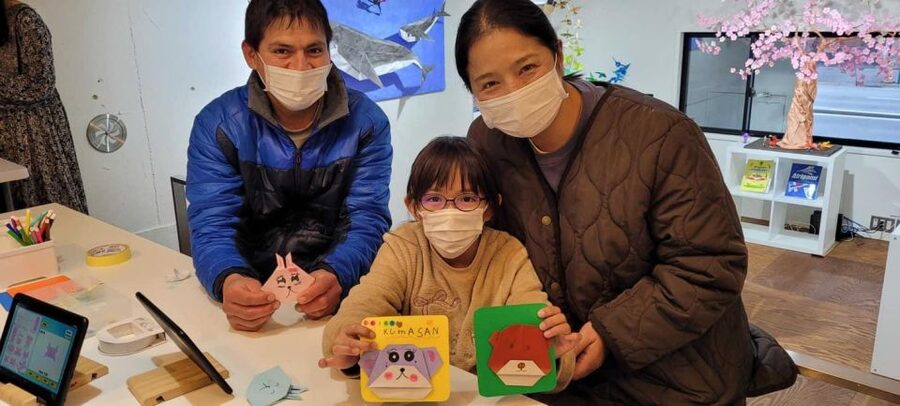
Once you have paper, return to the tablet and press Play. The program takes you through the folds from a square sheet to the finished form. You can replay a step or go back if you lose track of the sequence.
That control makes the activity approachable for first-timers. Origami instructions can become confusing when several folds happen in quick succession. Here, you can pause by replaying a step and work at the speed that suits you. You are not expected to keep up with a teacher or with other people at the table.
The tablet system also gives the session a self-directed feel. Staff members are present to help, but this is not a class in which an instructor demonstrates every model to the entire group. If you need help, ask the origami instructor rather than struggling through a difficult fold.
David has provided one-on-one help during a session, folding several figures and explaining the craft along the way. His personal attention made that particular visit feel closer to a private lesson, but you should not assume every booking will have the same staffing arrangement or the same amount of individual instruction.
What you can make in 45 minutes
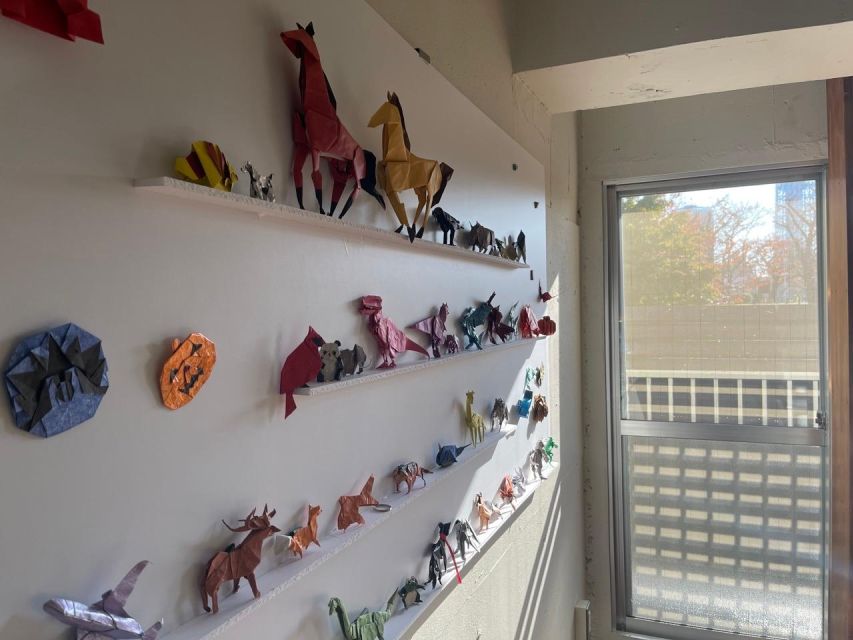
Forty-five minutes is enough time to get a useful introduction and make several pieces, but it is not a long workshop. One family made about four items per person during the allotted time. That gives you a realistic target, though the number will depend on the models you choose and how much decorating you do.
A sensible plan is to begin with a beginner model. That lets you learn how the tablet works and get used to the paper. If you move quickly, you can choose a second model with more folds. Starting with the most difficult design may use much of your session on one piece.
The session has a nice rhythm:
- Select a model from the tablet menu.
- Choose a suitable paper color.
- Follow the folding steps.
- Ask staff for help when needed.
- Add stickers, stamps, or marker details.
- Choose another model if time remains.
The ability to replay instructions is especially useful for children and first-time folders. You can also stop worrying about making every fold perfect. The point is to learn the basic process and leave with something you made yourself.
Same base, a different sort of day:
- Mt Fuji and Hakone 1-Day Bus Tour Return by Bullet Train
★ 5.0 · 26,383 reviews - 1-Day Tokyo Bus Tour
★ 5.0 · 14,250 reviews - Tokyo: TOKYO SKYTREE® Admission ticket
★ 4.5 · 11,192 reviews - Tokyo: teamLab Planets TOKYO Digital Art Museum Entry Ticket
★ 4.6 · 9,779 reviews
Staff help without a formal teaching style
The staff member or members are there to support you, but they do not lead a full lesson. At times, an instructor may check your work and offer help without hovering over you. That balance works well for people who like to try things independently.
I like this format for families with different skill levels. A child can work through a simple animal while an adult tries an intermediate model. Everyone can ask for help at the point where it is needed instead of waiting for the whole group to move together.
The tradeoff is clear. If you want detailed explanations of Japanese paper-folding traditions, a long demonstration, or constant hand-by-hand correction, this is not the best match. You are booking a guided activity with support, not a private origami course.
Decorating gives children a second creative task
After folding, you can use stickers, stamps, and markers to personalize your creation. This adds a useful final step, especially for younger children who may lose interest once the folds are finished.
The decorating materials also make the activity less rigid. Two people can follow the same instructions and end with very different pieces. You get to choose how much time to spend on the finishing touches, so someone who enjoys drawing can keep working while another person begins a new model.
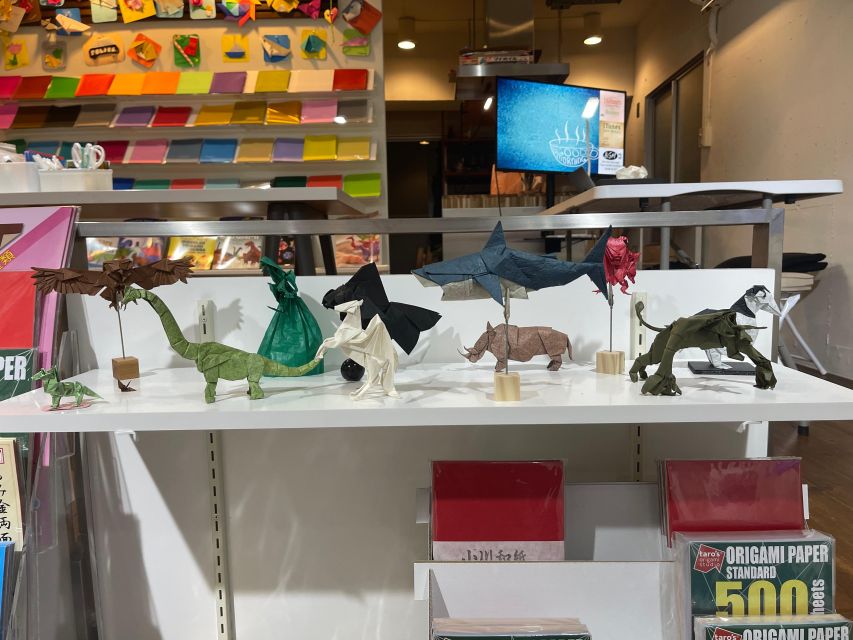
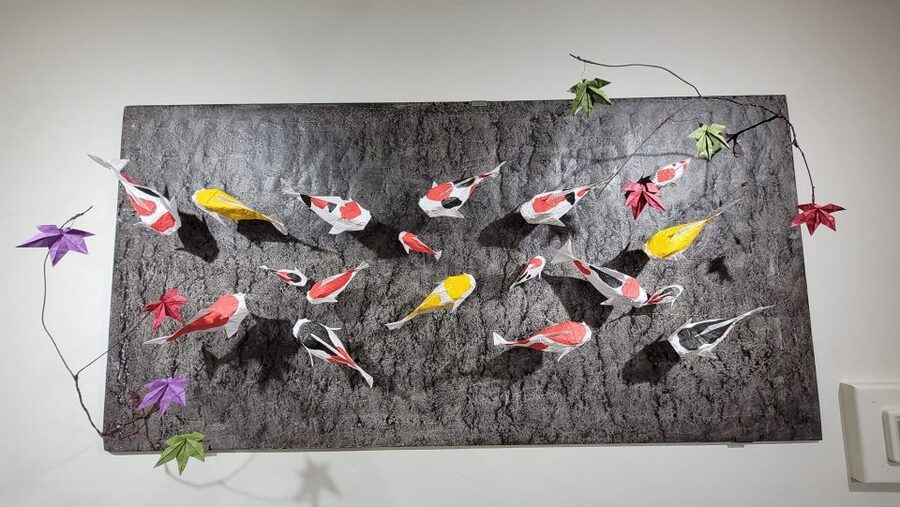
You may take photos during the session, and origami displays are available to enjoy during and after your booking. You can also make purchases at the studio. The supplied information does not specify the available items or prices, so ask staff if you want to budget for anything beyond the included activity.
The right fit for families and first-time folders
The activity is recommended for children four and older, with an important qualification. Children under five who cannot fold independently need adult supervision throughout the activity. Children under 13 also need adult supervision for the full session.
That means adults should plan to take an active role rather than simply dropping children at the table. Younger children may need help lining up corners, pressing folds, and following the tablet sequence. Older children may be able to work more independently, but the adult still needs to remain present.
The activity also suits adults who have never tried origami. The beginner models and replayable instructions remove much of the pressure. One participant described the experience as a highlight of a Tokyo trip after receiving a one-on-one lesson with David, but again, the level of personal help can vary by session.
People with a cold should not attend. The studio is also not handicap accessible. There are no ramps or lifts, only stairs, and the seating has no back support. Those details are important for anyone who needs step-free access or a chair with more support.
Why the small group matters
A maximum of six participants keeps the setting more personal than a large craft workshop. You have a better chance of catching an instructor’s attention when a model goes wrong, and the room should feel less hectic than a crowded activity space.
Small size does not mean you receive continuous one-on-one instruction. The tablet remains the main guide, and staff may be helping several people at once. Still, the group limit gives the format a practical balance: you can work alone most of the time and ask for assistance when a fold refuses to cooperate.
The size also works well for a family or a small group of friends. If your party is larger, you may not all fit into one session because the limit is six participants.
Is $27 a fair price?
At $27 per person, the value depends on what you want from an origami experience. The fee includes paper, supplies, instruction, taxes, and fees. You do not have to buy materials separately, and the choice of 50 colors and more than 100 models gives you plenty of options within the 45-minute session.
I consider it a fair price for a short, organized activity in a major sightseeing district, especially if you want a family experience that does not require a full day. The price is less compelling if you expect a private instructor, a long cultural lecture, or an advanced workshop.
The strongest value comes from the flexibility. You are not paying for one fixed model. You can make several pieces, choose your own colors, decorate them, take photos, and browse the studio displays. A family can also split its attention across different designs without needing separate lessons.
Food and drinks are not included, but that is not much of a concern for a 45-minute session. Plan to eat before or after in Asakusa rather than expecting refreshments at the studio.
Practical details that affect your visit
Wear or bring socks. Socks are required for studio activities, and you may purchase a pair beforehand if needed. This is an easy rule to overlook, so check your footwear before leaving your hotel.
Allow enough time to reach the front entrance. The correct side is the main street side, not the park side. The company sign and brown sea turtle on the wall are the useful visual markers.
The activity is offered in English and Japanese. The tablet-guided structure also reduces the need for constant spoken explanation, which can help mixed-language groups. Staff assistance is available if you need help with a fold.
You can cancel up to 24 hours before the start time for a full refund. You can also reserve now and pay later, which helps if your Asakusa plans are still shifting. Starting times vary, so check availability when choosing a booking.
Best ways to plan the session
I would book this activity as a short pause between Asakusa sights rather than as the main event of the day. The 45-minute length makes it easy to fit into a larger plan, but you should leave enough time to find the entrance and settle in.
For families, let each person choose a model that matches their patience. A younger child may enjoy a simple figure and decoration, while an older child or adult may prefer an intermediate model. If someone finishes early, they can begin another piece rather than waiting.
For adults, consider using the first model as practice. The second model is often where the activity becomes more satisfying because you already understand the tablet controls and basic fold patterns. Do not spend the whole session chasing perfection. Origami rewards careful work, but a slightly uneven creation still makes a personal souvenir.
Should you book this Asakusa origami activity?
Book it if you want a short, hands-on activity for beginners, families, or a small group. The combination of 50 paper colors, more than 100 models, decoration supplies, and staff support gives you more choice than a one-model workshop. The small group limit and replayable tablet instructions are especially helpful for first-time folders.
Think twice if your main goal is a traditional teacher-led lesson. The instructor can help, and David has offered personal guidance in the past, but the normal format is tablet-guided and self-paced. Also skip it if stairs, unsupported seating, or the required socks create a problem.
For most families and curious beginners spending time in Asakusa, $27 buys a pleasant, manageable creative break and a few handmade pieces to carry away.
FAQ
How long does the origami activity last?
The activity lasts 45 minutes.
How much does it cost?
The price is $27 per person.
How many origami models can I choose from?
You can choose from more than 100 models, including animals, flowers, and vehicles.
How many paper colors are available?
The studio offers 50 colors of origami paper.
Is the activity suitable for beginners?
Yes. The tablet-guided activity is designed for beginners and does not require previous origami experience.
Is an instructor present?
Staff members are present to help with models, but this is not a teacher-led private lesson. The tablet provides the main instructions.
What languages are available?
The activity is available in English and Japanese.
Do children need adult supervision?
Children under 13 need adult supervision throughout the activity. Children under five who cannot fold independently also need an adult to supervise them throughout the session.
Do I need to bring anything?
You must bring socks or purchase a pair beforehand, because socks are required for studio activities.
Just added in Tokyo
- The 10 Tastings of Tokyo With Locals: Private Street Food Tour★ 5.0 · 48 reviews
- Small Town in the Big City: Tasting Tokyo’s Kichijoji★ 5.0 · 195 reviews
- Small Town in the Big City: Tasting Tokyo’s Kichijoji★ 5.0 · 16 reviews
- EXCLUSIVE Tokyo Secret: Kichijoji Small-Group Food & Bar Hopping★ 5.0 · 29 reviews
- Explore Kichijoji: Walk Through One of Tokyo’s Beloved Districts★ 5.0 · 21 reviews
- :Tokyo,Shibuya/ Pro Photography in Kimono / English-Friendly★ 5.0 · 26 reviews
- 【R34】Tokyo:Private Daikoku tour in Modified R34★ 4.9 · 92 reviews
- Tokyo:Calligraphy &Make your original folding fan in Asakusa★ 5.0 · 62 reviews
Calligraphy & Craft Workshops, compared.

Chopsticks Making Workshop in Gion with Engraving Option
Read our review →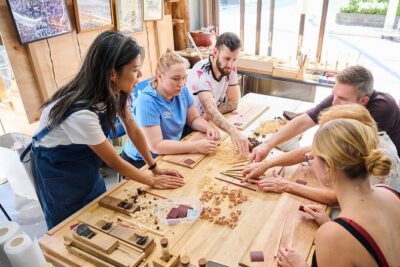


Matcha Making Experience with Mochi Sweets in Asakusa
Read our review →
Authentic knife making experience at a blacksmith in Kyoto
Read our review →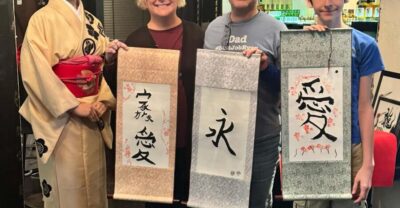
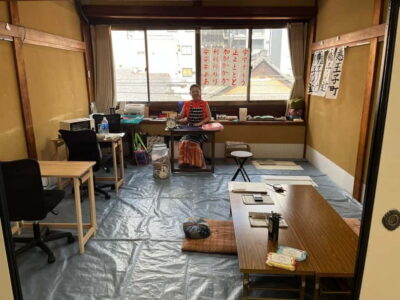
Calligraphy class at Buddhist temple in city center
Read our review →Browse the lists this tour appears in