
Reviewed · SUMO EXPERIENCES
Tokyo Sumo Experience: Chanko & Mochi with a Former Pro
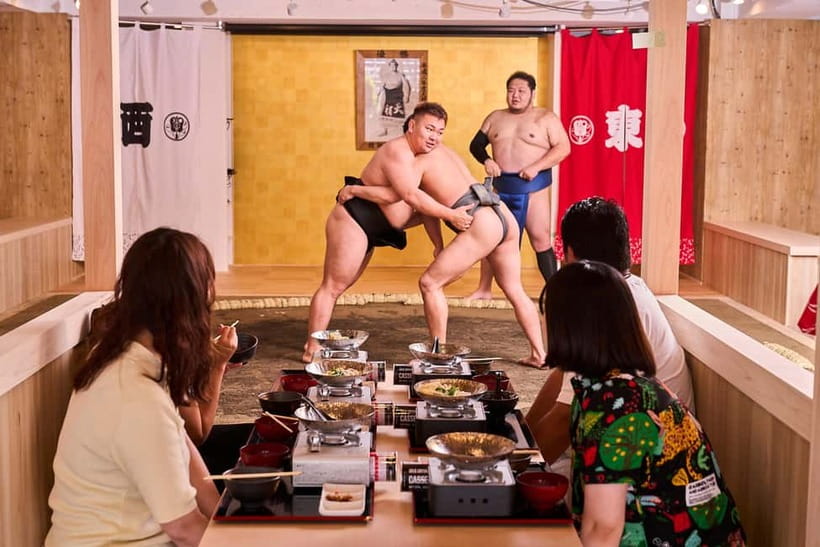
The best part of this Ryogoku experience is the chance to see former professional sumo wrestlers at close range, then try the sport yourself. You’ll watch demonstrations, learn about training and diet, eat the wrestlers’ traditional chanko nabe, and take part in mochi pounding before dessert.
I like the mix of real sumo culture and good-natured audience participation. The food gives the evening substance, while the mochi and wrestling activities keep children and adults involved. The main consideration is that this is a polished entertainment experience, not a serious morning practice session at a working stable.
Key points
- Former pros on the dohyo: Watch sumo techniques, training movements, and demonstration bouts at close range.
- Chanko nabe with a story: Eat the hearty hot pot associated with the sumo lifestyle, with its flavor supervised by sumo wrestlers.
- Three ways to join in: Try mochi pounding, practice sumo techniques, and step onto the ring for a friendly match.
- A strong family choice: Children, teenagers, and adults can participate, though standard seating requires a separate reservation for each person.
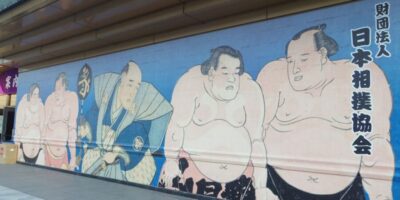
- Easy Ryogoku setting: The venue is on the first floor near Ryogoku Station, marked by a large sumo sign and flags.
- Good off-season option: You can enjoy sumo culture even when Tokyo is not hosting a major tournament.
Why Ryogoku is the right place for a sumo evening
Ryogoku is Tokyo’s sumo neighborhood. Around the station, you’ll find sumo-related sights, restaurants, and a direct sense that this sport belongs here. The venue is only a short walk from the station, but look for the large sumo wrestler sign and flags because one visitor found the entrance a little hard to spot.
This location also fits neatly into a Tokyo day. You can pair the activity with Asakusa, Akihabara, Nihonbashi, or Tokyo Skytree. The two-hour length is useful: it gives you a full cultural activity without taking over an entire afternoon or evening.
The setting is designed for watching from around the dohyo, or sumo ring. Seating is assigned by the venue, so you cannot choose a particular place. That matters if you are hoping for a front-row view or want to sit beside a specific part of the ring. Go early enough to find the venue calmly and settle in before the action begins.
Other ways to see sumo in Tokyo:
- Tokyo: Sumo Show Experience with Chicken Hot Pot and a Photo
★ 4.8 · 6,678 reviews - Tokyo: Sumo Show and Dining Experience
★ 4.8 · 2,742 reviews - the SUMO show
★ 5.0 · 1,960 reviews
What the two-hour experience feels like
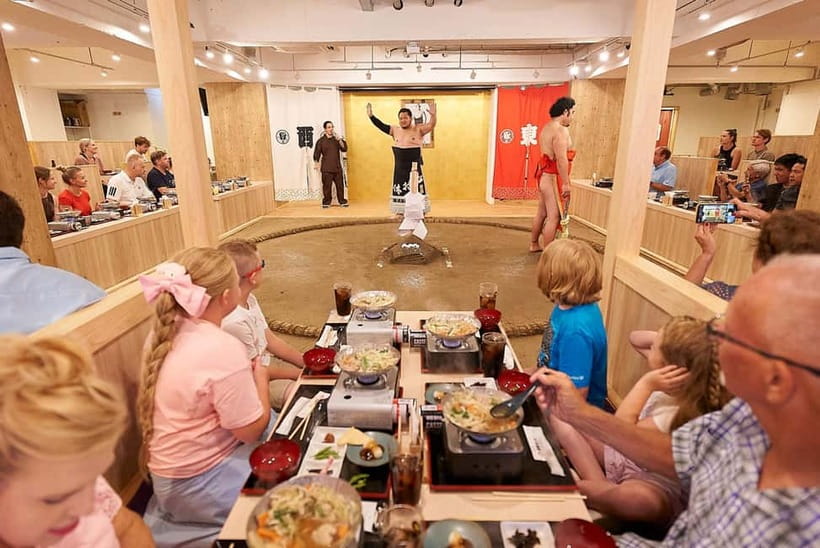
This is not a quiet lecture with a short demonstration at the end. The format moves between explanation, food, performance, and participation. An English and Japanese instructor or master of ceremonies keeps the event moving, and the wrestlers interact with the audience rather than staying at a distance.
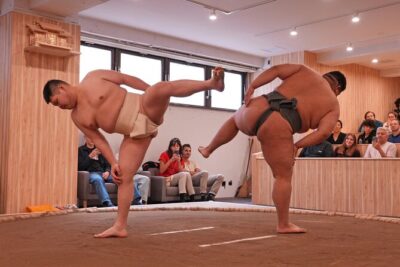
You begin by taking your seat near the dohyo and watching the wrestlers demonstrate sumo movements. The demonstrations explain the physical side of the sport, including techniques and training exercises. You’ll see the power of sumo close up, but the tone remains friendly and controlled.
The wrestlers then demonstrate bouts for the room. Several people specifically enjoyed seeing multiple rounds, with one account noting four different rounds of wrestling. These are demonstrations for entertainment and education, not official tournament matches, but they give you a clear look at how quickly a bout can end and how much force is packed into a short exchange.
I like this structure because it gives you context before asking you to participate. You are not simply watching large athletes collide. You get a sense of the training, diet, techniques, and lifestyle that support the sport.
Chanko nabe: the meal at the center
Chanko nabe is a hot pot closely linked with sumo stables. It is a practical meal for wrestlers, built around a shared pot and designed to be filling. Here, the recipe and flavor are supervised by sumo wrestlers from an actual stable, which gives the meal a useful connection to the sport rather than making it just a standard Japanese dinner.
Expect a warm, hearty dish served as part of the experience. The food drew especially strong praise, with several people finding it delicious, fresh, healthy, and more filling than expected. One family noted that even a six-year-old enjoyed it, while another group called the meal much better than anticipated.
The food also helps pace the event. You can watch the action while eating rather than spending two hours only on a stage show. That makes the $103 price easier to assess, since you are paying for a meal, instruction, demonstrations, and hands-on activities in one sitting.
Special diets need advance notice. Vegetarian, vegan, and gluten-free meals can be provided if requested at least two days before the reservation date. Halal meals cannot be prepared, but you may bring your own food. If you have an alcohol allergy, ask about the complimentary sour plum drink, since it may contain alcohol.
Mochi pounding is the most approachable activity
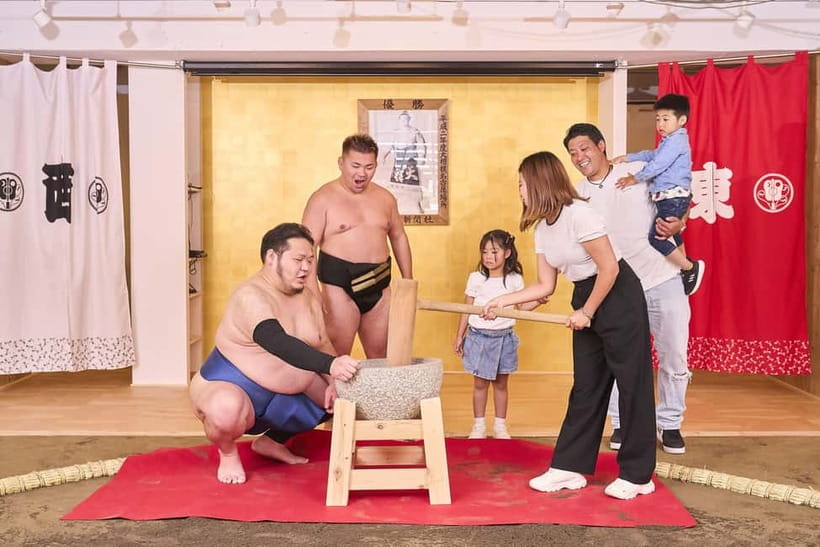
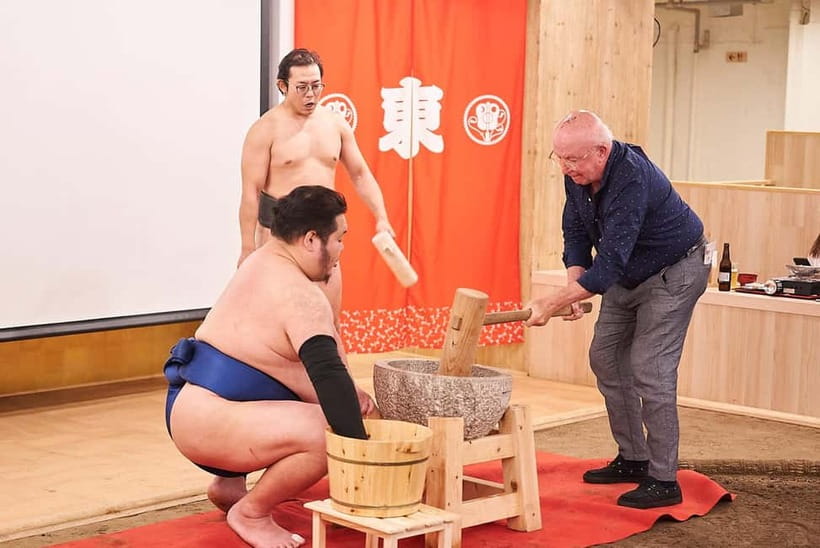
The mochi portion is a highlight for people who want to participate without wrestling. You’ll watch a demonstration of the traditional pounding process, then have the chance to pound mochi with the wrestlers. Afterward, you eat sweet mochi for dessert.
This is a simple activity, but it works well because it is visual, rhythmic, and easy to understand even if English is not your first language. It also offers a gentler way for children and cautious adults to join the program. One person called mochi pounding a favorite part of the afternoon, and several families enjoyed letting their children take part.
The activity is supervised, so you are not left to guess what to do with the mallet or when to strike. You should still wear comfortable clothing and follow the staff’s instructions. Bring a camera if you want photos, as the mochi preparation and interaction with the wrestlers create some of the best picture opportunities.
Same base, a different sort of day:
- Mt Fuji and Hakone 1-Day Bus Tour Return by Bullet Train
★ 5.0 · 26,383 reviews - 1-Day Tokyo Bus Tour
★ 5.0 · 14,250 reviews - Tokyo: TOKYO SKYTREE® Admission ticket
★ 4.5 · 11,192 reviews - Tokyo: teamLab Planets TOKYO Digital Art Museum Entry Ticket
★ 4.6 · 9,779 reviews
Stepping onto the dohyo
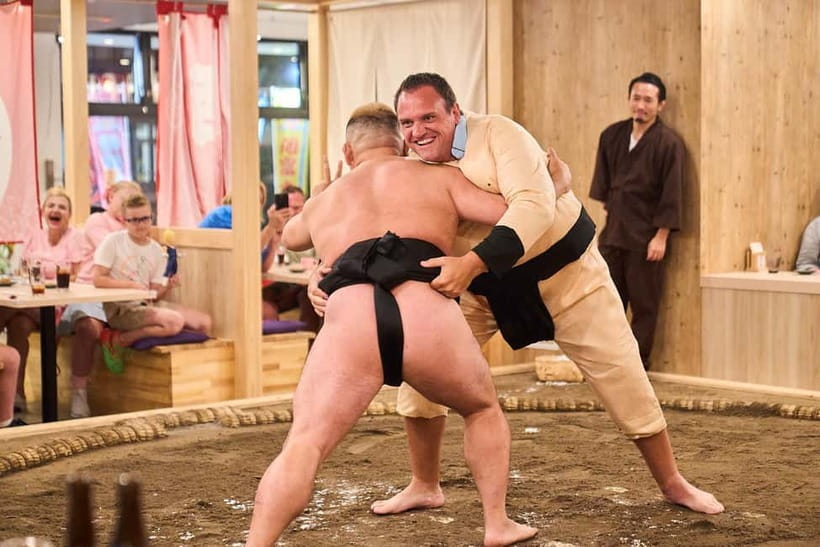
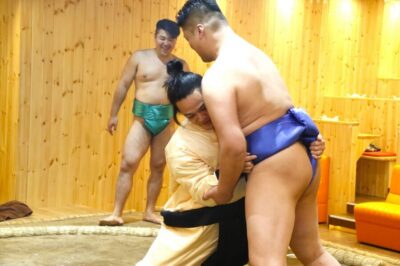
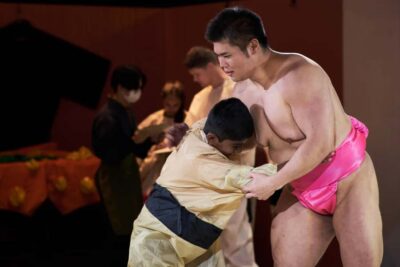
The most memorable part for many people is getting onto the dohyo for a friendly sumo match. You can try basic sumo techniques and, if you choose, test your strength against one of the wrestlers.
The event is set up to be fun for children and adults. The wrestlers encourage participation, and the staff keeps the matches controlled. You do not need to be athletic or experienced. The point is to feel the stance, balance, and push of sumo for a moment, not to win a serious contest.
Still, the activity is physical. Comfortable clothes are recommended, and you should be honest about your own limits. If you prefer not to wrestle, you can watch the demonstrations and take part in mochi making instead. The format gives you several ways to enjoy the event, so participation does not have to mean tackling a wrestler.
The demonstrations also make the personal experience more meaningful. After seeing the pros perform a technique with speed and force, you feel how difficult it is to copy even the basic movement. That contrast is part of the fun.
What this teaches you about sumo
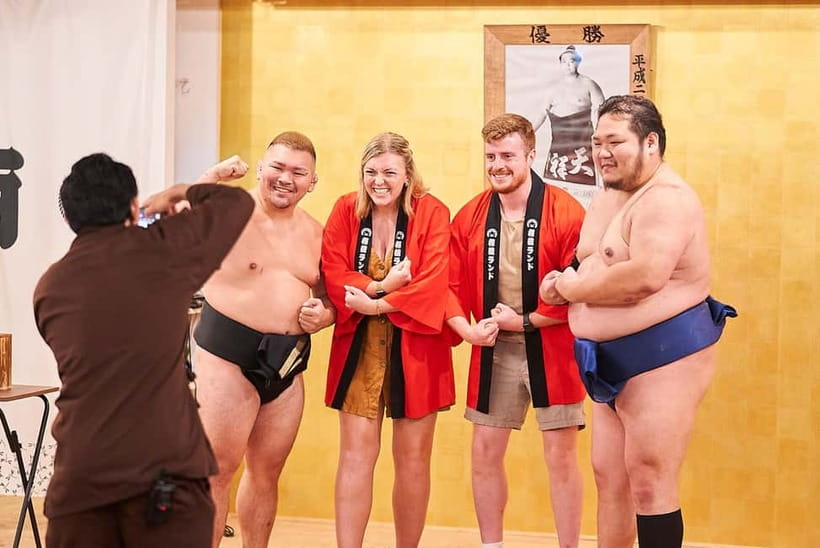
A good sumo experience should explain more than size and spectacle. This one covers training, techniques, diet, and the wrestlers’ lifestyle. The chanko nabe connects the meal to daily life in a stable, while the exercises and demonstrations show how sumo athletes prepare their bodies.
You’ll also see some of the traditions behind mochi preparation. That broadens the activity beyond wrestling and gives you a small look at Japanese food culture. The result is not a full course in sumo, but it is enough to help you understand what you are watching at a tournament or on television.
The former professionals are central to the experience. Their presence gives the demonstrations authority, but the atmosphere is not formal or stiff. The hosts are described as warm, funny, and active in bringing people into the program. That balance works especially well for families and work groups looking for an activity that gets people laughing together.
Who should book this experience
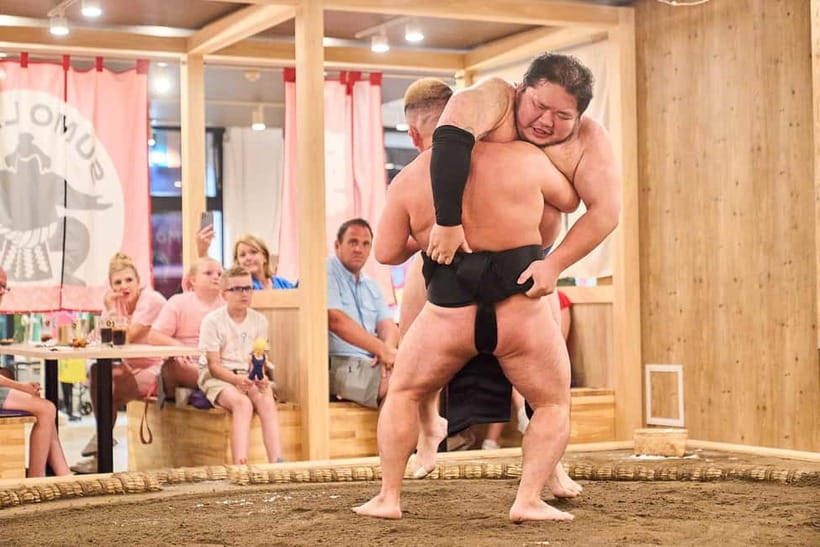
I would recommend it most strongly to first-time visitors who want an easy introduction to sumo. You do not need to know the rules beforehand, and the event combines explanation with visual demonstrations and hands-on activities.
It is also a strong choice for families. Children can watch, eat, make mochi, learn basic techniques, and possibly wrestle. Teenagers are less likely to get bored because the program keeps changing pace. Adults who prefer cultural activities with food will find more here than in a short photo opportunity.
This experience also makes sense during a Tokyo visit outside tournament season. You get a close look at sumo without planning around the official competition calendar. If you are in Tokyo during a tournament, a live match will offer the greater sense of sporting stakes. This activity gives you more direct contact and participation.
I would be more cautious if your main goal is to observe a working stable’s serious morning practice. The organizers clearly frame this as an entertaining program for adults and children. It is informative and uses former professionals, but it is not the same as quietly watching wrestlers train before dawn.
Price, seating, and practical value
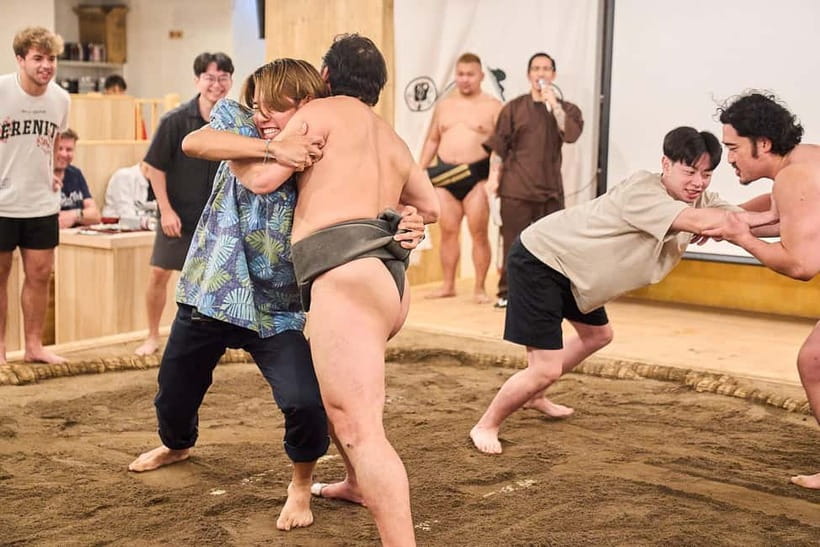
At $103 per person for two hours, this is not a budget meal or a free cultural stop. You are paying for several parts at once: a chanko nabe meal, demonstrations by former pros, instruction, mochi making, dessert, and the chance to wrestle.
For a family or group, the value improves because the activity creates a shared event rather than separate sightseeing stops. People can eat, watch, take photos, and participate without arranging several bookings. The food is also described as generous, which helps the price feel more reasonable.
Seat assignment is the one practical limit to keep in mind. The venue chooses your seats, and you cannot request a particular location. Standard seats are not safe for holding a child on your lap, so reserve the exact number of people attending. Box seats can hold up to six people and allow a child to sit on a lap.
The experience is not suitable for wheelchair users. Smoking is not allowed. English and Japanese are available, and the material is presented in a way that supports visitors who know little about sumo.
Free cancellation is available up to 24 hours before the start for a full refund, and you can reserve now and pay later. Check the available starting times when planning your day, since the activity lasts two hours and the exact schedule is not fixed here.
How to fit it into a Tokyo day
Ryogoku works well as part of a day in eastern Tokyo. You might visit Asakusa first, then continue toward Ryogoku for the sumo program. Akihabara, Nihonbashi, and Tokyo Skytree are also nearby areas to combine with the activity, depending on your schedule.
Give yourself enough time to reach the first-floor venue and identify the sign. The sumo flags make the entrance easier once you are close, but arriving at the last minute could be stressful if you have children or a large group.
Wear clothing that lets you move comfortably. You do not need special sports gear, but stiff clothing or shoes may make the wrestling portion less enjoyable. Bring a camera, and keep your hands free during the mochi and dohyo activities.
Should you book it?
Book this experience if you want sumo brought close to you, with food and a chance to join the action. The combination of former pros, chanko nabe, mochi pounding, and friendly wrestling gives you more to do than a simple stage performance.
Skip it if you want the seriousness of a tournament or a traditional training visit. For everyone else, especially families, first-time visitors, and people in Tokyo outside tournament season, the two-hour program offers a well-paced introduction with plenty of laughs and a satisfying meal.
FAQ
Where does the Tokyo Sumo Experience take place?
It takes place in Ryogoku on Honshu, Japan, on the first floor of a venue a short walk from Ryogoku Station. Look for the large sumo wrestler sign and flags.
How long does the experience last?
The experience lasts two hours. Starting times vary, so check availability when booking.
What food is included?
A chanko nabe hot pot meal and sweet mochi are included. The chanko nabe is connected with the sumo diet and is prepared under the supervision of sumo wrestlers.
Can I try sumo wrestling myself?
Yes. You can step onto the dohyo and try sumo techniques or take part in a friendly wrestling match with the wrestlers. Participation is optional.
Can children participate?
Yes. The experience is designed for both children and adults. For standard seats, reserve a place for every person because it is not safe to hold a child on your lap. Box seats can hold up to six people and allow lap seating.
Can special meals be arranged?
Vegetarian, vegan, and gluten-free meals can be provided if requested at least two days before the reservation date. Halal meals are not available, but you may bring your own food.
Is the experience accessible for wheelchair users?
No. The experience is not suitable for wheelchair users. English and Japanese are available, and smoking is not allowed.
Just added in Tokyo
- Small-Group Wagyu Beef and 7 Japanese Dishes Tokyo Cooking Class★ 5.0 · 190 reviews
- Nikko: Edo Wonderland Edomura Cultural Theme Park Ticket★ 4.3 · 205 reviews
- 《MEMBERS-ONLY-BAR-HOPPING》Discover Your Special Whiskey in Tokyo!★ 5.0 · 29 reviews
- Japanese Whisky Hunting《HIGH-QUALITY-ONLY》Rare Tasting Class★ 5.0 · 20 reviews
- Luxury Tokyo Sake, Cocktail, Whisky and Pairing Tour★ 5.0 · 18 reviews
- Wagyu & Sake Pairing in Shinjuku – Steak, Shabu-Shabu & More★ 5.0 · 112 reviews
- From Tokyo: Private Tour to Fuji/Hakone – Onsen, Art, Nature★ 5.0 · 116 reviews
- Tokyo: KABUKI Show at Kabukiza Theatre Admission Ticket★ 4.8 · 152 reviews
Sumo Experiences, compared.
Sumo Show Experience with Chicken Hot Pot and a Photo
Read our review →
Tokyo Shinjuku Sumo Show & Experience with Photo
Read our review →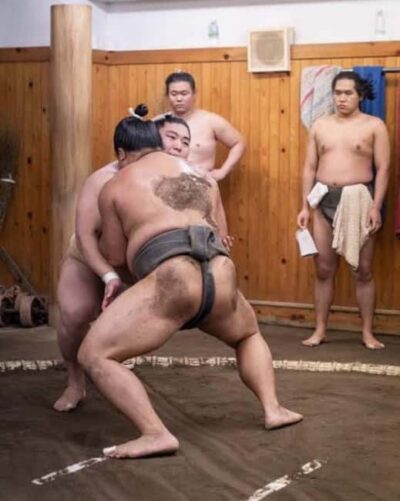
Sumo Show & Experience w/ Optional Kimono & Hot Pot
Read our review →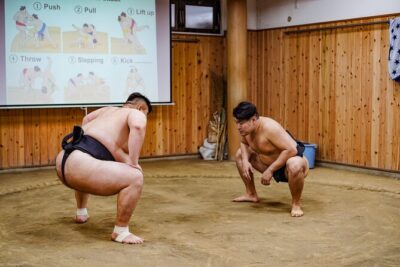
Authentic Sumo Experience in Tokyo: Enter the Sanctuary
Read our review →Browse the lists this tour appears in