
Reviewed · SUMO EXPERIENCES
Tokyo: Sumo Morning Practice Tour at Sumida City
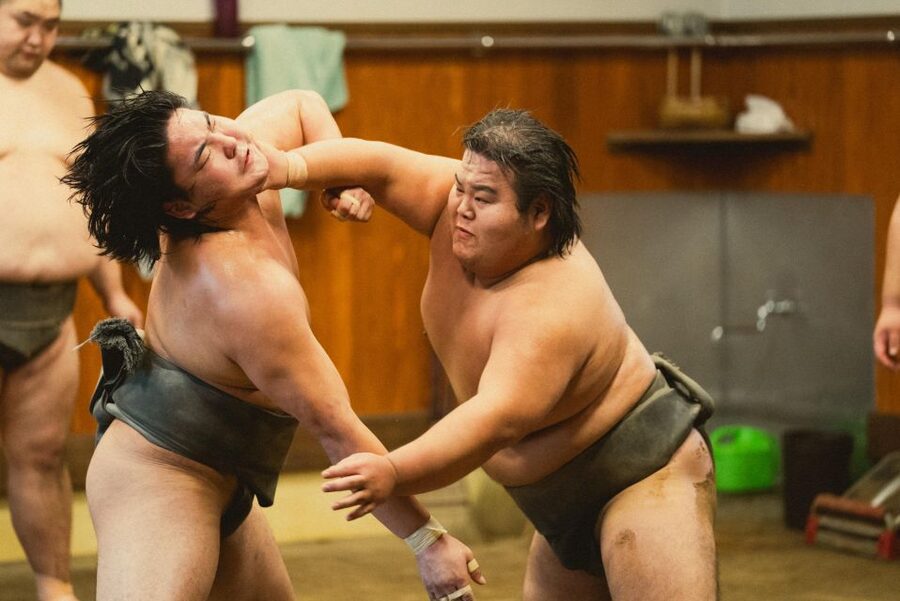
The best part of this Tokyo experience is the distance between you and the action. You sit on the floor beside a working sumo stable, close enough to hear the slap of bodies and feel the force of each bout. I especially like the quiet, respectful setting and the chance to ask the stable master about the wrestlers’ daily lives. The main drawback is just as clear: you must sit cross-legged on the floor for about 90 minutes, with no chair and no bathroom break.
I also like that this is not a staged demonstration built for tourists. The wrestlers train whether you are there or not, and the guide helps you understand what you are seeing without turning the practice into a show. The early meeting time, the walk from Oshiage Station, and the rule against flash, shutter sounds, and social media sharing require some care.
Key points to know before booking
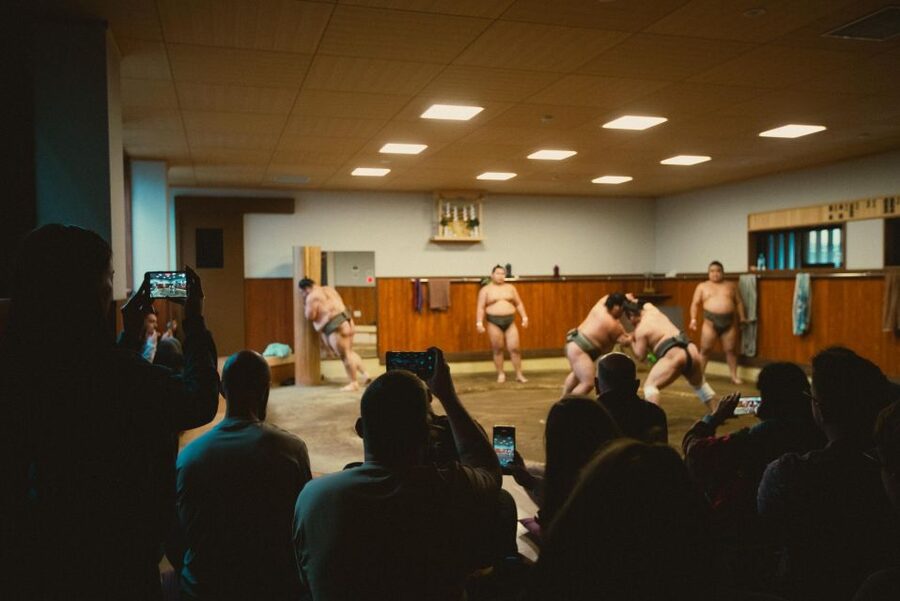
- Training happens at close range: You watch wrestlers practice beside the ring, often close enough to see their footwork, balance, and physical strain.
- The stable master takes questions: The post-practice question session is one of the most useful parts, especially if you want to understand sumo beyond television bouts.
- The floor is your seat: There are no chairs, and you need to remain quiet and still for roughly an hour and a half.
- The walk begins at Oshiage Station: Meet at Exit A1 at 7:15 AM, then walk about 15 to 20 minutes to the stable.
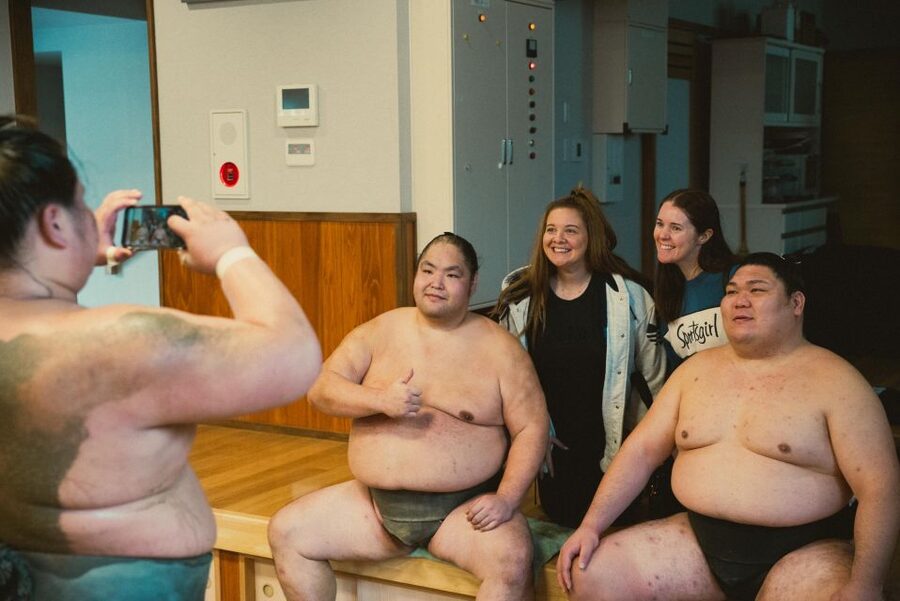
- A photo may be possible: After practice, you may have a chance to photograph yourself with the wrestlers, but it is not the main purpose of the visit.
- Schedule around tournament months: Morning practice tours are not held in March, July, or November because the Grand Sumo tournaments take place outside Tokyo.
Why a sumo practice is more revealing than a tournament
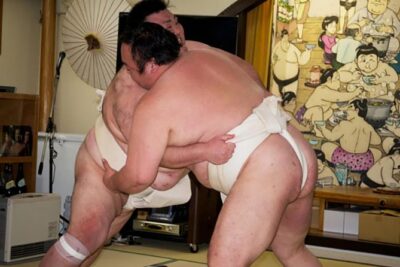
A Tokyo sumo tournament gives you the spectacle: packed seats, formal introductions, top-ranked stars, and bouts decided in seconds. This morning visit gives you the machinery behind that spectacle. You see the repeated drills, the stretching, the ritual movements, and the hard work that makes a short match possible.
The setting also changes how you watch. On television, sumo can look simple: two huge men collide, and one leaves the ring. From a few feet away, you notice how much depends on balance, flexibility, timing, and control. The wrestlers are large, but they are not lumbering. Their movements can be quick and surprisingly precise.
This is also a working practice, not a performance arranged around your group. That distinction matters. The wrestlers are there to train, so the atmosphere is serious. You are expected to watch silently and avoid anything that might break concentration. For me, that restraint is part of the value. You are being allowed into a private part of sumo life, not handed a polished tourist show.
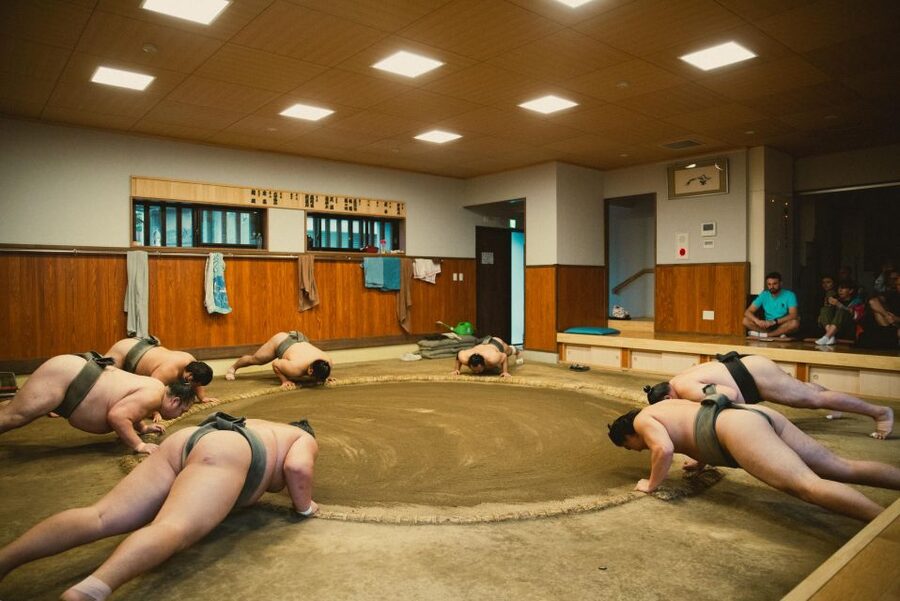
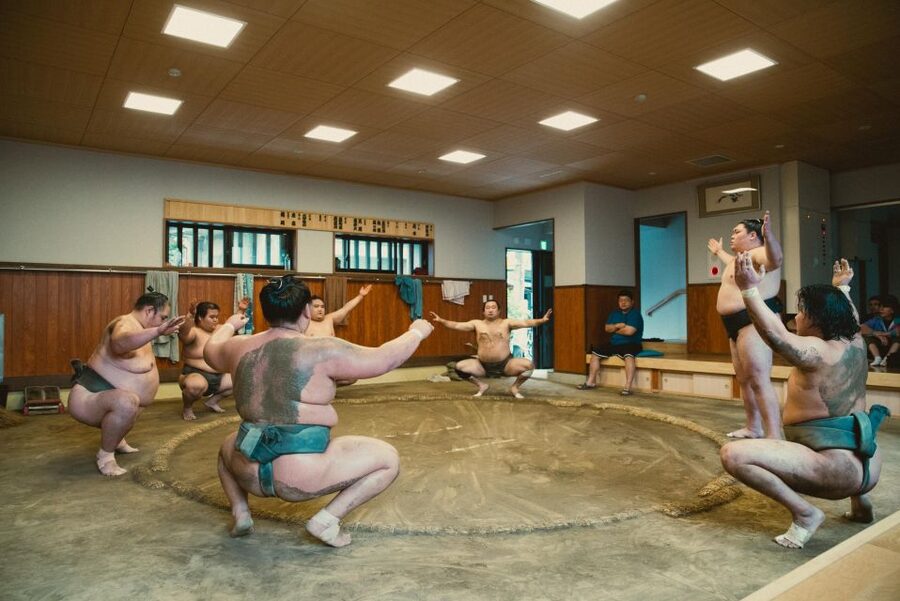
The session may include several wrestlers practicing against one another. One past group watched seven wrestlers train. The exact mix and intensity can vary, and you should not expect the most famous elite competitors every time. The trainees are still impressive, and seeing their techniques up close gives you a better sense of the sport than a quick photo opportunity would.
Other ways to see sumo in Tokyo:
- Tokyo: Sumo Show Experience with Chicken Hot Pot and a Photo
★ 4.8 · 6,678 reviews - Tokyo: Sumo Show and Dining Experience
★ 4.8 · 2,742 reviews - the SUMO show
★ 5.0 · 1,960 reviews
Meeting at Oshiage before sunrise
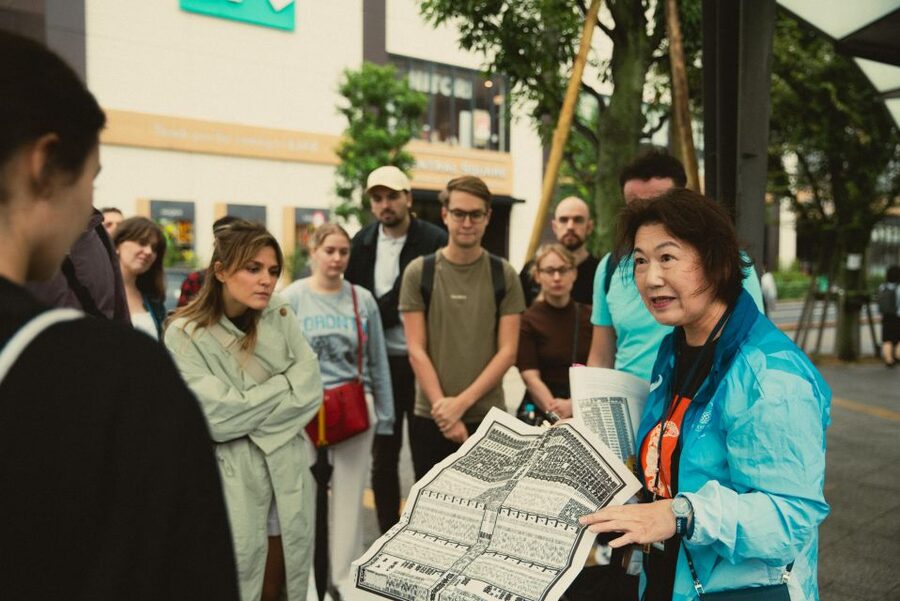
The meeting point is outside Tokyo Metro Oshiage, also called Skytree Mae, and Toei-Asakusa Line Oshiage Station at Exit A1 on the ground floor. You are asked to arrive at 7:15 AM, with the tour beginning at 7:30.
The timing is important. This is not the sort of activity where arriving ten minutes late is harmless. The group walks together to the stable, and the route takes about 15 to 20 minutes. Some people have found the meeting instructions less clear than they expected, so give yourself extra time to locate Exit A1 and regroup near Tokyo Skytree Town.
The walk is manageable, but it can feel long in August heat or on a wet morning. Wear comfortable shoes and bring a small towel if rain is expected. You will remove your shoes at the stable, and a towel can help if your feet get wet on the way.
If you are late, contact the provider rather than entering the stable alone. You will be given the address and must wait outside for the guide. Do not ring the bell. The instruction may seem fussy, but it protects the wrestlers’ concentration and respects the stable as a working home.
Use the restroom before you meet the guide. You cannot leave for a bathroom break during practice, so this small bit of planning makes a real difference.
Inside the stable: quiet observation beside the ring
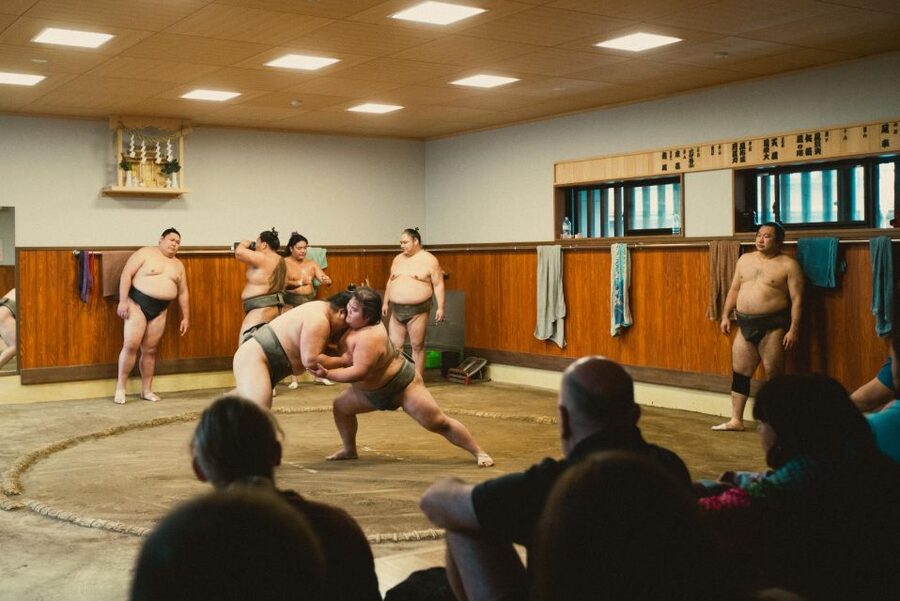
At the stable, you remove your shoes and take a place on the floor. There are no chairs. You may sit cross-legged, kneel, or change position carefully, but you should be ready to remain quiet and avoid unnecessary movement.
The practice lasts about 90 minutes, with the rest of the two-hour visit used for explanation, questions, and possible photographs. Depending on the group and the seating arrangement, your view may change. One group found that people rotated places, while another had a less ideal view when a separate visiting group received priority seating.
That is worth understanding before you book. You are close to the action, but this is not a theater with numbered seats and a guaranteed front row. A larger group can also make the guide harder to hear. One person found the guide’s voice difficult to catch because of the group size, while others praised guides who quietly explained each stage as it happened.
The best approach is to treat the practice as the main event, not as a photo session. Watch the wrestlers’ foot placement, how they brace their bodies, and how they recover after a hard clash. You may see strength work, repeated bouts, and exercises that show how much preparation goes into sumo.
The intensity can vary. During a tournament period, training may be lighter, and you may not see as many full bouts. One visit in May included less fighting than expected because the tournament was under way. That does not make the morning worthless, but it does mean you should avoid booking with a rigid expectation of nonstop dramatic collisions.
The rituals and rules behind the action
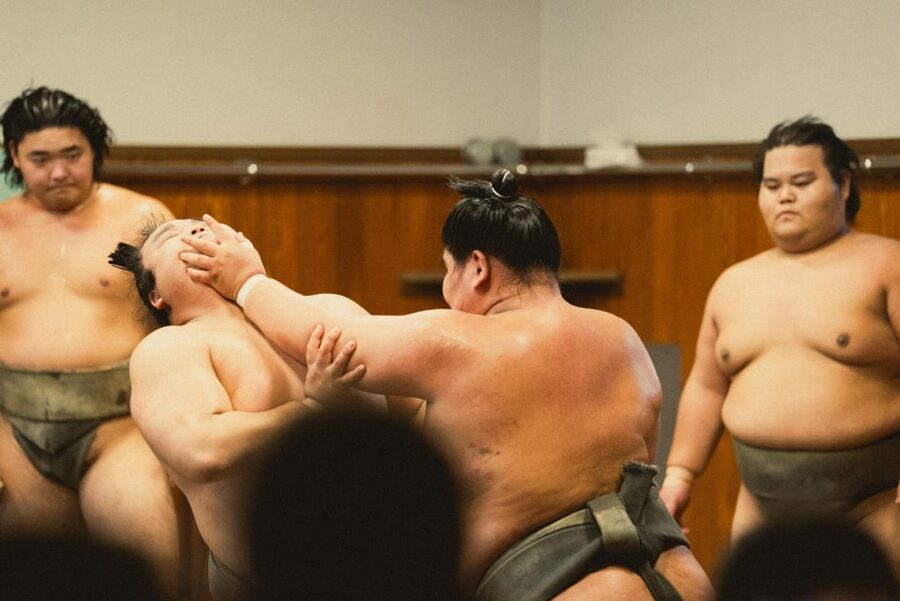
A good guide gives you a framework for what you are seeing. The tour is designed to cover sumo’s history, rules, and rituals, along with the daily life of wrestlers. Guides have included Yoko, Yuriko, Yukiko, Tadashi, Kiyomi, Oku, Juki, and Julie, and the strongest guide experiences have combined clear instructions with useful explanations before and after practice.
The exact amount of spoken teaching can vary. Some groups received helpful explanations and printed material at the start. One person felt there was little verbal information before the practice and relied mainly on a leaflet. If learning the background is your main reason for booking, ask questions during the walk or after the session rather than assuming every detail will be explained before the wrestlers begin.
You will also learn why the rules about silence matter. This is not simply a cultural courtesy. The wrestlers are concentrating, and the stable is a place where discipline is part of the training. No hats, sunglasses, food, or drinks are allowed inside, and flash photography is prohibited.
Photos and videos may be permitted without flash or shutter sounds, but you cannot upload them to social media. Follow that rule closely. It is easy to forget when a famous-looking wrestler is standing a few feet away, but the stable’s privacy comes first.
Same base, a different sort of day:
- Mt Fuji and Hakone 1-Day Bus Tour Return by Bullet Train
★ 5.0 · 26,383 reviews - 1-Day Tokyo Bus Tour
★ 5.0 · 14,250 reviews - Tokyo: TOKYO SKYTREE® Admission ticket
★ 4.5 · 11,192 reviews - Tokyo: teamLab Planets TOKYO Digital Art Museum Entry Ticket
★ 4.6 · 9,779 reviews
Questions with the stable master
After practice, the stable master may speak with the group and answer questions. This is where the tour moves from impressive to genuinely useful. You can ask about training routines, life inside the stable, the wrestlers’ backgrounds, and the meaning of customs that may otherwise seem mysterious.
The question session has been described as lasting about 30 minutes, though the exact timing can vary. The stable master has been generous with answers, and groups have had the chance to learn about the wrestlers they just watched. In one case, the group discovered that one of the wrestlers was already quite famous.
I recommend preparing two or three questions before you arrive. Ask about something you noticed during training, such as why a wrestler repeats a movement or how wrestlers advance. Specific questions usually lead to more interesting answers than a broad request to explain sumo.
The session also helps correct a common misunderstanding. Sumo is not just about body size. The practice shows flexibility, agility, technique, endurance, and discipline. The wrestlers’ friendliness after training can be striking, but remember that their welcome does not turn the stable into a casual meet-and-greet venue.
Photos, farewells, and the end of the visit
A group photo with the wrestlers may be possible after training. It is a pleasant extra, not a guarantee, and you should be ready to leave without one if the stable’s schedule or rules require it.
Several groups were able to take photos, and one group received a friendly farewell as the wrestlers stood when the visitors departed. Those moments can feel personal because the visit has taken place in such a close setting. Still, keep the process quick and respectful. Do not crowd the wrestlers or make the photo the focus of the morning.
The tour returns to the Oshiage area, and you can easily pair it with Tokyo Skytree Town afterward. One guide even helped a family check whether the nearby sumo museum was open, then explained that it was temporarily closed. That kind of practical help is valuable in a city where opening hours and temporary closures can disrupt a carefully planned day.
Is $116 fair for two hours?
At $116 per person, this is not a cheap morning activity. You are paying for an English-speaking guide, access to a working sumo stable, and a rare chance to observe training at very close range. Food, drinks, hotel pickup, and transport to the meeting point are not included.
The price makes more sense if you value access rather than length. The formal visit lasts two hours, but the practice itself is around 90 minutes. You are not paying for a long sightseeing route or several attractions. You are paying for a small window into a place most visitors cannot enter on their own.
The guide matters greatly to that value. A strong guide explains the rituals, gives clear instructions, manages the walk, and helps you ask useful questions. Yoko, Yuriko, Tadashi, Kiyomi, and others have received especially warm praise for their care and explanations. On the other hand, a soft-spoken guide or a crowded group can reduce what you get from the teaching.
I would call the tour good value for sumo fans, culture-minded visitors, and anyone who wants access to ordinary training rather than a staged display. If you are only curious about sumo and dislike early starts, floor seating, or strict silence, the price may feel high.
Who should book, and who should skip it
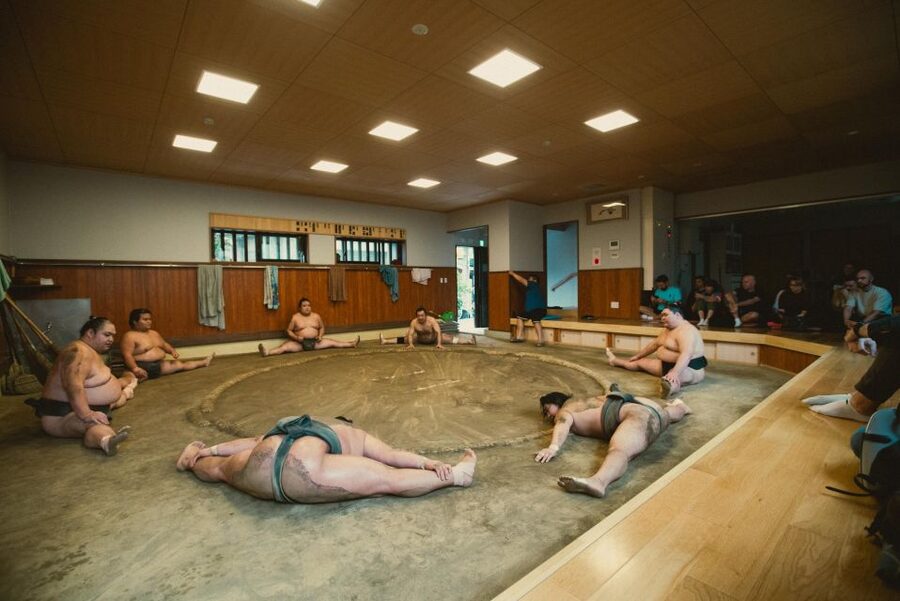
Book this experience if you can sit on the floor quietly for about 90 minutes, walk 15 to 20 minutes in the morning, and follow rules about photography and privacy. It suits adults, older children, and visitors who enjoy watching a real craft or sport at work.
Children must be at least six years old. A child who talks loudly, moves around, or cannot watch quietly may be asked to leave the stable. That makes this a poor choice for very young children, even if they are fascinated by the wrestlers.
The tour is also not suitable for people with mobility impairments. The floor seating, shoe removal, walk to the stable, and lack of bathroom access make the physical demands plain. Wear shoes that are easy to remove and put back on.
Avoid March, July, and November, when morning practice tours are not held because Grand Sumo tournaments take place outside Tokyo. The schedule for other dates is usually known one to two months ahead, so check availability around two months before your visit.
Final verdict: a close look at sumo’s real work
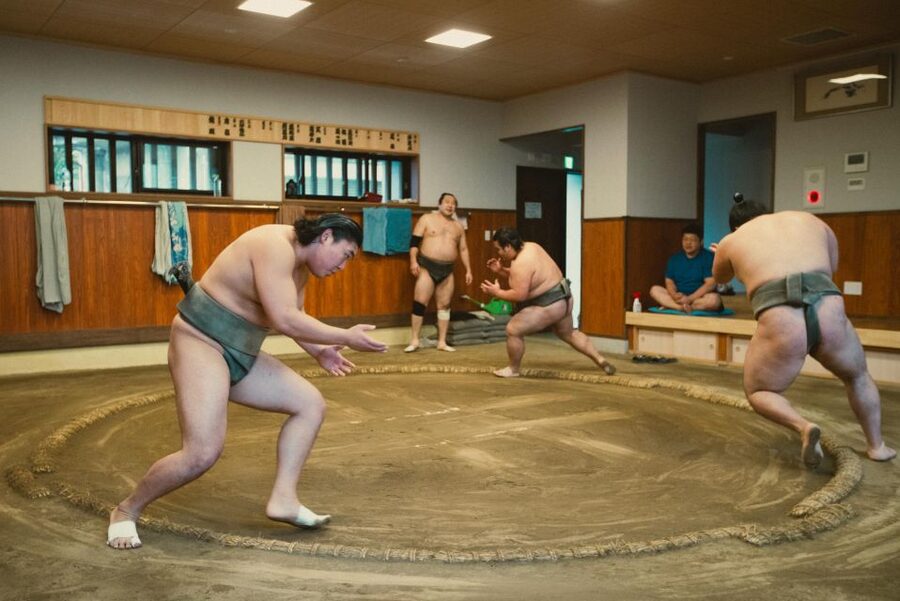
I recommend this tour if you want to see what sumo looks like before the banners, crowds, and tournament ceremony. The practice is close, serious, and physical, while the stable master’s question session gives you a useful link between what you watch and how wrestlers live.
You should book it with realistic expectations. You may not see elite stars, the training intensity can vary, and your view is not guaranteed to be perfect. But if you arrive early, use the restroom, accept the floor seating, and treat the stable with respect, the morning can become one of the most memorable cultural experiences in Tokyo.
FAQ
Where does the sumo morning practice tour meet?
Meet at 7:15 AM at Tokyo Metro Oshiage, also called Skytree Mae, and Toei-Asakusa Line Oshiage Station Exit A1 on the ground floor. The tour begins at 7:30 AM.
How far is the sumo stable from the meeting point?
The stable is about a 15 to 20 minute walk from the meeting point. Bring a small towel if rain may make your feet wet before you remove your shoes.
How long does the tour last?
The full activity lasts about two hours. The sumo practice itself takes roughly 1.5 hours, followed by time for questions and possible photographs.
Can I use the bathroom during practice?
No. You should use the restroom before joining the tour because you cannot go to the toilet during the practice.
Are chairs provided inside the stable?
No. There are no chairs, and you should be able to sit cross-legged on the floor for approximately 1.5 hours.
Can I take photos or videos?
You may take photos and videos without flash or shutter sounds, but you cannot upload them to social media. Flash photography is not allowed.
Is the tour held during every month?
No. Morning practice tours are not held in March, July, or November because Grand Sumo tournaments take place outside Tokyo during those months.
Just added in Tokyo
- Small-Group Wagyu Beef and 7 Japanese Dishes Tokyo Cooking Class★ 5.0 · 190 reviews
- Nikko: Edo Wonderland Edomura Cultural Theme Park Ticket★ 4.3 · 205 reviews
- 《MEMBERS-ONLY-BAR-HOPPING》Discover Your Special Whiskey in Tokyo!★ 5.0 · 29 reviews
- Japanese Whisky Hunting《HIGH-QUALITY-ONLY》Rare Tasting Class★ 5.0 · 20 reviews
- Luxury Tokyo Sake, Cocktail, Whisky and Pairing Tour★ 5.0 · 18 reviews
- Wagyu & Sake Pairing in Shinjuku – Steak, Shabu-Shabu & More★ 5.0 · 112 reviews
- From Tokyo: Private Tour to Fuji/Hakone – Onsen, Art, Nature★ 5.0 · 116 reviews
- Tokyo: KABUKI Show at Kabukiza Theatre Admission Ticket★ 4.8 · 152 reviews
Sumo Experiences, compared.
Sumo Show Experience with Chicken Hot Pot and a Photo
Read our review →
Tokyo Shinjuku Sumo Show & Experience with Photo
Read our review →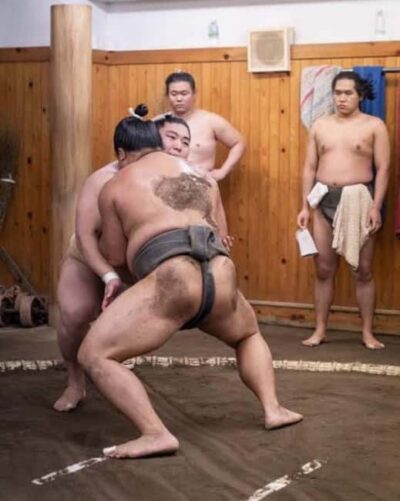
Sumo Show & Experience w/ Optional Kimono & Hot Pot
Read our review →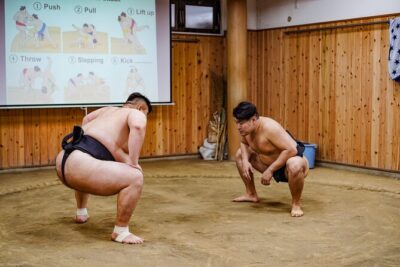
Authentic Sumo Experience in Tokyo: Enter the Sanctuary
Read our review →Browse the lists this tour appears in