
Reviewed · SUMO EXPERIENCES
Watch Sumo Morning Practice at Stable in Tokyo
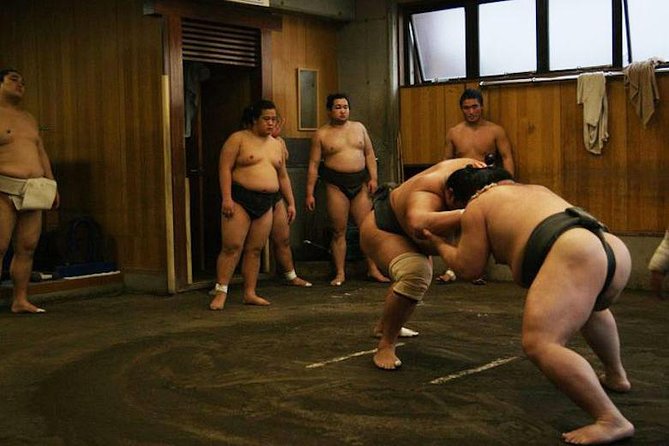
The best part of this Tokyo experience is its lack of showmanship. You are not watching a staged demonstration. You sit quietly beside the dohyo while professional wrestlers stretch, drill, push, and collide as they prepare for competition. The sudden force of a practice bout is startling when you are only a few steps away.
I like the close view of real training and the chance to see the rituals that spectators miss during a tournament. I also like the small maximum group of 10, though some sessions have felt much larger in practice. The main drawback is simple: you may sit on the floor for up to two hours, often in silence, and the guide may offer little explanation once practice begins.
- Morning access to a working stable: See warmups, footwork, pushing drills, sparring, and cooldown rather than a tourist performance.
- Close-range sumo: The impact of two large athletes meeting in the ring is far more impressive from a few meters away than on a distant tournament seat.
- Quiet Japanese etiquette: No eating, loud talking, or bright flash photography. You are watching practice, not attending a public show.
- Floor seating matters: A thin mat over a hard floor can become uncomfortable. A stool or chair may be available by advance request, but views can be poorer.
- Dates change with the sumo calendar: Tokyo tournament months, especially January, May, and September, can bring shorter practice sessions or stable closures.
- Photos may follow practice: A quick photograph with the wrestlers is included when timing and stable rules allow it.
What You Actually See Inside the Stable
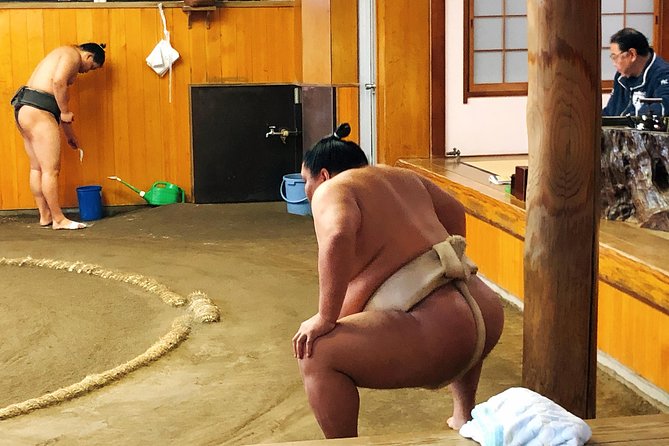
This is a visit to a sumo training center in Tokyo, not admission to a tournament. After meeting your guide and small group at the arranged Tokyo meeting point, you go inside and take a place along the side of the training room.
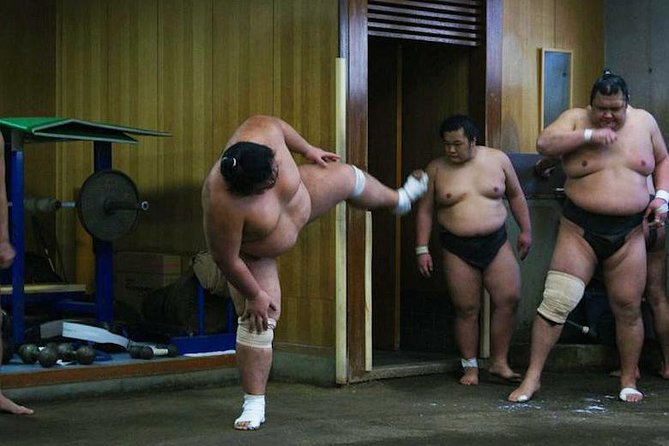
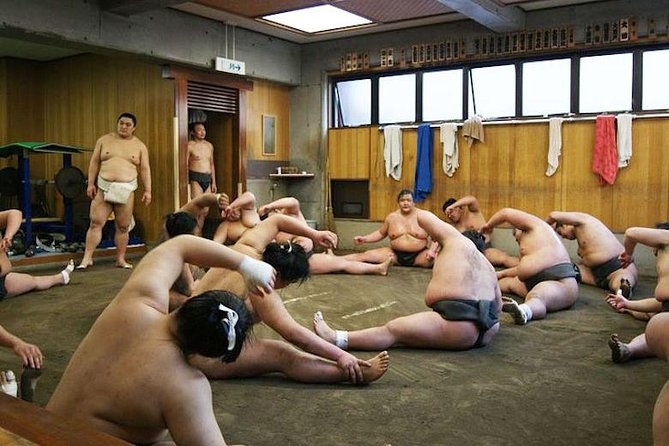
The practice usually begins with stretching and warmups. The wrestlers work through repeated movements, stance drills, and exercises that can look slow at first. That repetition is the point. Sumo depends on balance, leg strength, timing, and the ability to drive another body backward, so the basics receive a great deal of attention.
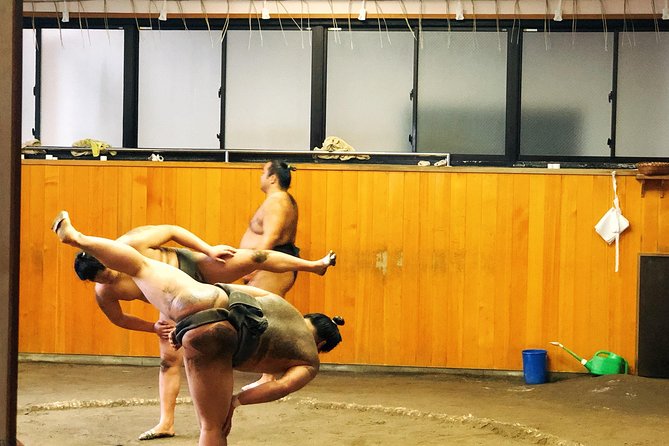
As the session develops, the work becomes more physical. Wrestlers enter the dohyo for technique practice and bouts. You may see younger athletes working with more experienced men, receive advice, or repeat an exchange several times. The serious mood is part of the appeal. This is a team training room, not a theater.
The final stage can include harder sparring and a cooldown. The most highly praised feature of the visit is the proximity. You can see the foot placement, hear the slap of bodies meeting, and appreciate how much strength is needed simply to hold position.
Do not expect a tidy performance with a fixed running order. The stable decides what happens, and the schedule can shift from one day to the next. Practice may finish after 60 minutes, or continue toward 90 minutes. The advertised morning window is generally 8:00 to 10:00, but the end time is not guaranteed.
Ryogoku Kokugikan and Tokyo’s Sumo Quarter
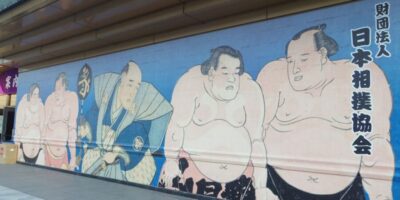
The itinerary identifies Ryogoku Kokugikan as the stop, placing the outing in Tokyo’s sumo district. The meeting point is arranged in advance, which helps because stable locations can be difficult to find and the final address may only be confirmed about a week before the visit.
Give yourself extra time. The stable may not be directly beside the station or the arena, and one booking may take place more than an hour from central Tokyo. Some people have found a taxi from Asakusa easier than walking, while others have reached the address by public transport and on foot. If you take a taxi, carry the address in Japanese. English may not be enough for every driver.
The meeting point is important because this is not a walk-in attraction. You do not simply enter a stable and ask to watch. Your guide or local representative takes the group to the correct place, handles entry, and explains the basic conduct expected inside.
The organizer is Beauty of Japan. Specific arrangements have also involved guides named Hiroko and Ricko. Ricko has helped with transport and group coordination, while Hiroko has provided background on sumo for some bookings. The amount of spoken guidance can vary, so do not book this expecting a full lecture unless your confirmation specifically promises one.
Other ways to see sumo in Tokyo:
- Tokyo: Sumo Show Experience with Chicken Hot Pot and a Photo
★ 4.8 · 6,678 reviews - Tokyo: Sumo Show and Dining Experience
★ 4.8 · 2,742 reviews - the SUMO show
★ 5.0 · 1,960 reviews
Silence Is Part of the Experience
Inside the stable, your role is to observe without interrupting. Do not eat, chat loudly, or use a flash. Cameras with intrusive sounds can also disturb the room. The wrestlers are training, and the stable is their workplace.
That quiet can feel unusual for a sightseeing activity. I find it useful to read a little about sumo before arriving, especially the wrestler hierarchy, stable structure, and basic rules. Without that preparation, the early exercises may look repetitive, and you may not know why one wrestler receives advice or why a particular drill matters.
Several people have enjoyed the session precisely because it feels so unpolished. You see athletes preparing for real bouts, not actors explaining their craft. At the same time, some visitors have found the lack of explanation disappointing. In a few cases, the person at the door mainly checked names and opened the way, leaving the group to watch on its own.
That difference matters. If you want cultural context, confirm how much guiding is included before paying. If you mainly want a close look at training, the quiet format may suit you well.
The Floor Seating Is the Main Test
You sit on the floor for most of the practice. The surface may be a thin mat over a firm floor, and the position can become painful well before the wrestlers finish. You should be able to sit on the floor for an extended period, often with your legs tucked or crossed.
A few chairs or stools may be available, but they are limited and may offer a worse view. If you have back, hip, or knee problems, request a chair in advance and understand that it may not place you at the front. This is not a good choice if you need regular movement or cannot sit low for 60 to 90 minutes.
Arrive early when instructed. A front position gives you a much clearer view, especially if the group is larger than expected. People seated farther back may have trouble seeing between heads, and one badly placed coach’s cushion can block much of the ring.
Dress for comfort rather than ceremony. You will be sitting close to the action, but the activity does not provide food or drinks. Eat beforehand, since eating inside the stable is not appropriate.
How the Practice Builds in Intensity
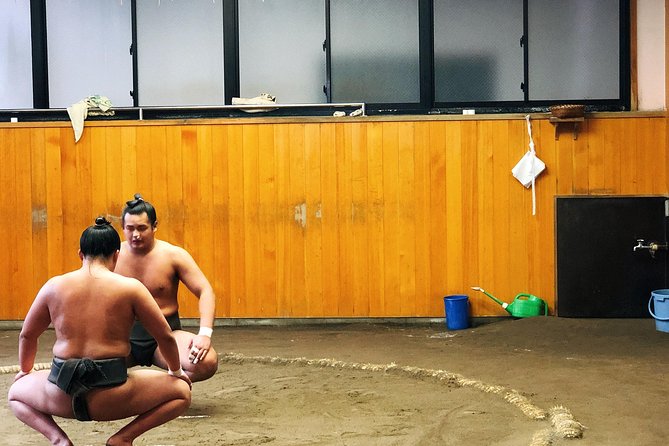
The session rewards patience. At first, you may see stretching, breathing, footwork, and basic movement. It can seem repetitive if you are expecting immediate wrestling.
Then the rhythm changes. Wrestlers take turns in the ring, testing balance and strength. A bout can be over quickly, but the impact is powerful. The athletes may reset, receive instruction, and repeat the exchange. This gradual movement from preparation to contact is one of the most interesting parts of the morning.
You also get a better sense of sumo as a disciplined group sport. Younger wrestlers train around more experienced ones, and the practice includes correction, repetition, and mutual support. It is not only about size. Technique, timing, posture, and endurance are visible even to a first-time observer.
If you have watched the series Sanctuary, you may recognize some of the setting and routines, but the real session is less dramatic and more repetitive. That is a good thing if you want authenticity. It is a poor fit if you need constant action.
Same base, a different sort of day:
- Mt Fuji and Hakone 1-Day Bus Tour Return by Bullet Train
★ 5.0 · 26,383 reviews - 1-Day Tokyo Bus Tour
★ 5.0 · 14,250 reviews - Tokyo: TOKYO SKYTREE® Admission ticket
★ 4.5 · 11,192 reviews - Tokyo: teamLab Planets TOKYO Digital Art Museum Entry Ticket
★ 4.6 · 9,779 reviews
Photos at the End Are Not Guaranteed
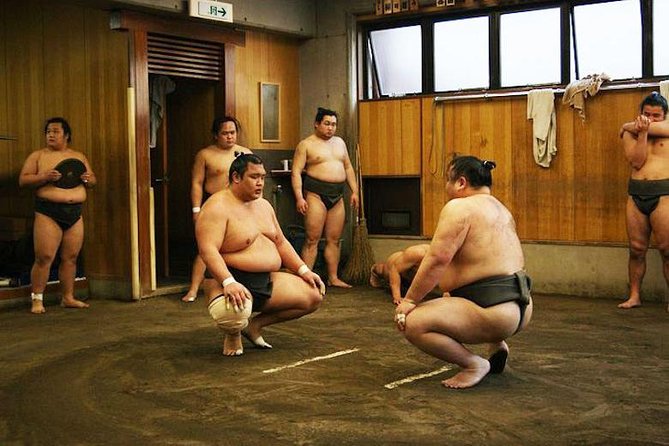
A photo opportunity with the wrestlers is included when the stable permits it and the schedule allows. This can be a memorable finish, particularly because you have just watched the athletes train at close range.
Do not treat the photograph as the main product. Practice may run long, and some groups have missed the photo session because they had to leave. The stable’s routine comes first. The timing is difficult to predict, and the organizer cannot always make the practice fit a neat 8:00 to 9:30 schedule.
When photos happen, the process is usually quick. Have your camera ready and follow the guide’s instructions. You may not have time for several poses or a long personal exchange.
The Sumo Calendar Changes the Value
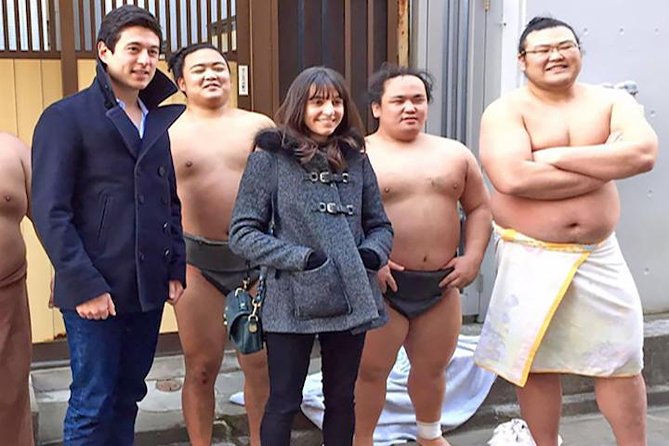
The stable’s schedule is confirmed only about a week before the visit. Sumo tournaments take place in other months, and the stable may be closed during tournament periods. Exact dates vary each year.
In Tokyo tournament months, particularly January, May, and September around the middle to later part of the month, the practice may last only 30 to 40 minutes. The price remains the same, even when the viewing time is shorter. That is a crucial point when you compare dates.
The listed operating periods include Monday through Saturday from 8:00 to 10:00 for February 2 to 14, March 31 to April 30, and May 1 to 9, 2026. Availability is still subject to the stable’s own schedule. Confirmation is normally sent within 48 hours of booking, but the exact conditions may be settled later.
I would book this for a date outside a Tokyo tournament if your main goal is to watch a full practice. During tournament season, the shorter session may still be worthwhile, but you should pay for the access and closeness, not for a guaranteed two-hour program.
Is $95.77 a Fair Price?
At $95.77 per person, this is not a cheap way to fill an hour in Tokyo. You are paying for arranged access to a private training environment, an entrance fee, and the chance to take photos when allowed. You are not paying for a meal, a performance, or a long guided tour.
The value depends on your interest. If sumo is one of your reasons for visiting Japan, the price is easier to justify. Seeing a tournament can be difficult to arrange, and a stable visit offers a different view of the sport. You watch the work behind the public bouts, often from very close by.
The value is weaker if you want a polished cultural presentation. There may be little explanation, uncomfortable seating, and a practice that spends a long time on warmups. Group discounts may help families or larger parties, and the maximum listed group size is 10, though some sessions have felt crowded.
I would also compare the date carefully. A shorter tournament-season practice at the same price may disappoint someone expecting a full morning. For a non-tournament date with a longer session and a photo opportunity, the fee feels more reasonable.
Who Should Book This Morning Visit?
I would recommend it to people who are curious about how sumo wrestlers train, enjoy quiet observation, and can sit on the floor without trouble. It is especially good for visitors who want a real working environment rather than a staged demonstration.
Families with teenagers may enjoy it, provided everyone understands the rules. The minimum age is 13. Younger children are not eligible, and even older children need to accept the silence and long stretches of repeated drills.
This is also a good choice for photographers, but only if you respect the restrictions. Bright flash and intrusive camera sounds are not suitable. Your best images may come during the permitted photo session at the end, not during the practice itself.
I would skip it if you need a chair, dislike quiet sports training, or want constant explanation. I would also avoid booking it tightly before another appointment. Practice can end at different times, and a late finish could make you miss the final photos or disrupt your next plan.
Booking, Changes, and Weather Rules
The activity can be canceled for a full refund up to six full days before the start time. Cancel two to six full days before the start and the refund is 50 percent. Less than two full days before the activity, there is no refund.
The booking terms also state that date changes are not accepted within three days of the experience. Flight delays, illness, and similar problems are treated as cancellations, so do not schedule this for the morning after a risky connection.
The activity requires good weather. If the provider cancels because of poor weather, you can choose another date or receive a full refund. Confirmation is subject to availability, and most people can participate if they meet the minimum age and seating requirements.
Should You Book the Sumo Morning Practice?
Book it if you want to see the unglamorous, physical work behind professional sumo. The powerful collisions, careful rituals, and close view of the dohyo can make this one of your most memorable Tokyo mornings.
Go in with the right expectations. This is not entertainment built around you. It is a quiet practice session with uncertain timing, limited commentary, and hard floor seating. Confirm the address, arrive early, request a stool if needed, and choose a date outside Tokyo tournament season if you want the longest session.
For a genuine look inside sumo, I think the access is worth the effort. For a comfortable, highly explained tour, choose something else.
FAQ
How long does the sumo practice last?
The practice usually lasts between 60 and 90 minutes. During Tokyo tournament season, it may last only 30 to 40 minutes.
What time does the activity take place?
The listed operating time is Monday through Saturday from 8:00 AM to 10:00 AM during the available date periods. The exact ending time varies each day.
Where does the activity start?
You meet at an arranged location in Tokyo. The final stable location may only be confirmed about one week before the activity.
Does the experience include a photo with sumo wrestlers?
Photos with sumo wrestlers are included when the stable schedule and rules allow the session to take place. A practice that runs long can cause the photo session to be missed.
Do I need to sit on the floor?
Yes. You should be able to sit on the floor for an extended period. A stool or chair may be available by request, but seating is limited and may provide a less clear view.
Is food or drink included?
No. The activity does not include food or beverages.
What is the minimum age?
The minimum age is 13.
How large is the group?
The activity has a maximum listed group size of 10 travelers.
Can I cancel for a refund?
You can receive a full refund if you cancel at least six full days before the start time. A cancellation two to six full days before the activity receives a 50 percent refund, while cancellations less than two full days before the start time are not refunded.
Just added in Tokyo
- Nikko: Edo Wonderland Edomura Cultural Theme Park Ticket★ 4.3 · 205 reviews
- 《MEMBERS-ONLY-BAR-HOPPING》Discover Your Special Whiskey in Tokyo!★ 5.0 · 29 reviews
- Japanese Whisky Hunting《HIGH-QUALITY-ONLY》Rare Tasting Class★ 5.0 · 20 reviews
- Luxury Tokyo Sake, Cocktail, Whisky and Pairing Tour★ 5.0 · 18 reviews
- Wagyu & Sake Pairing in Shinjuku – Steak, Shabu-Shabu & More★ 5.0 · 112 reviews
- Small-Group Wagyu Beef and 7 Japanese Dishes Tokyo Cooking Class★ 5.0 · 190 reviews
- Mt. Fuji & Hakone Cherry Blossom private One Day Tour★ 4.5 · 35 reviews
- Mt. Fuji, Hakone Private Tour from Tokyo – Onsen, Arts and Nature★ 5.0 · 79 reviews
Sumo Experiences, compared.
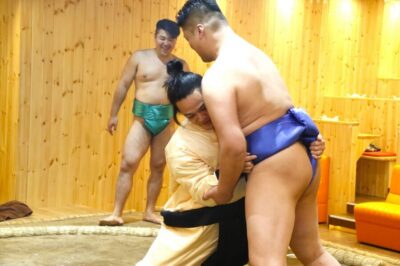
Sumo Show Experience with Chicken Hot Pot and a Photo
Read our review →
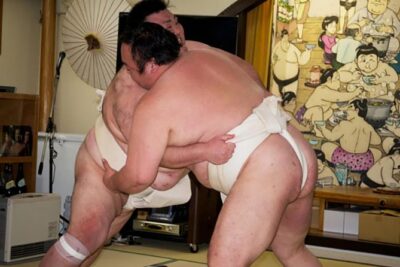
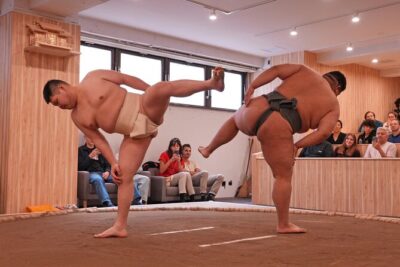
Tokyo Shinjuku Sumo Show & Experience with Photo
Read our review →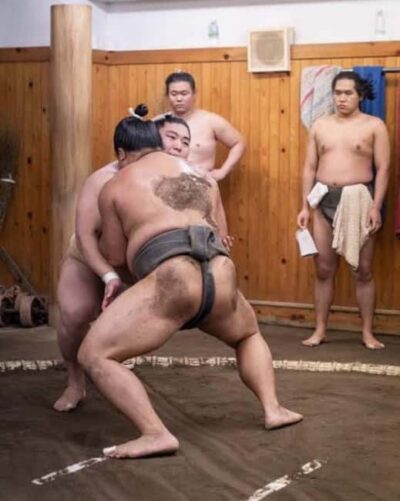
Sumo Show & Experience w/ Optional Kimono & Hot Pot
Read our review →
Authentic Sumo Experience in Tokyo: Enter the Sanctuary
Read our review →Browse the lists this tour appears in