
Reviewed · IMPERIAL PALACE & HISTORIC SITES
Tokyo: Pvt. Tour – Edo Castle & Imperial Palace East Gardens
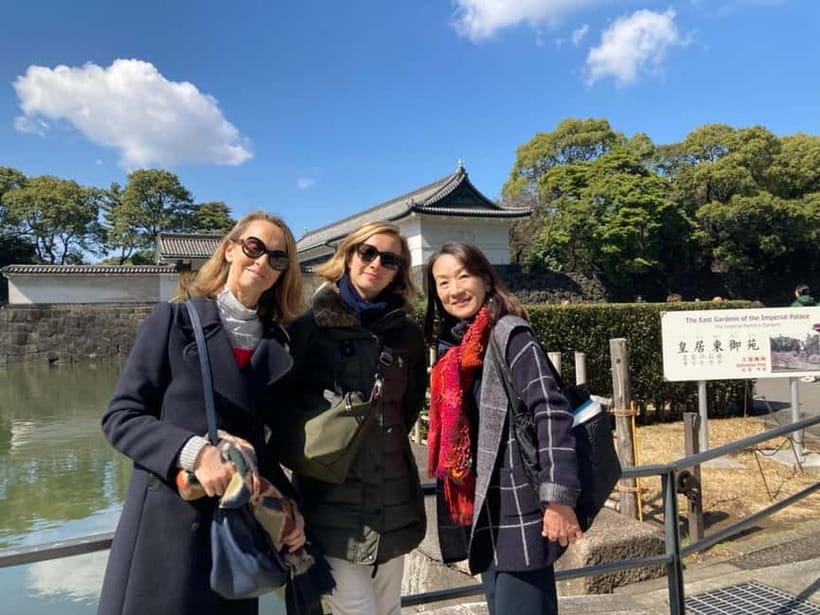
Edo Castle once ruled Japan from the heart of modern Tokyo, and its surviving stone walls, moats, and massive keep base give you a clear sense of the power held here. I like the private format, which lets you ask questions and set a comfortable pace, and I like that guides such as Yoshi, Yuji, Masahito, and Naoko have been praised for clear English and thoughtful explanations. The main drawback is simple: you do not enter the Imperial Palace itself, and flowers can be between seasons.
This is a calm two-hour walk through one of Tokyo’s best contrasts: busy streets outside, carefully tended gardens and feudal ruins inside. The $63 price makes the most sense if you want the setting explained rather than simply photographed, especially if this is your first visit to Japan.
Key points to know before you book
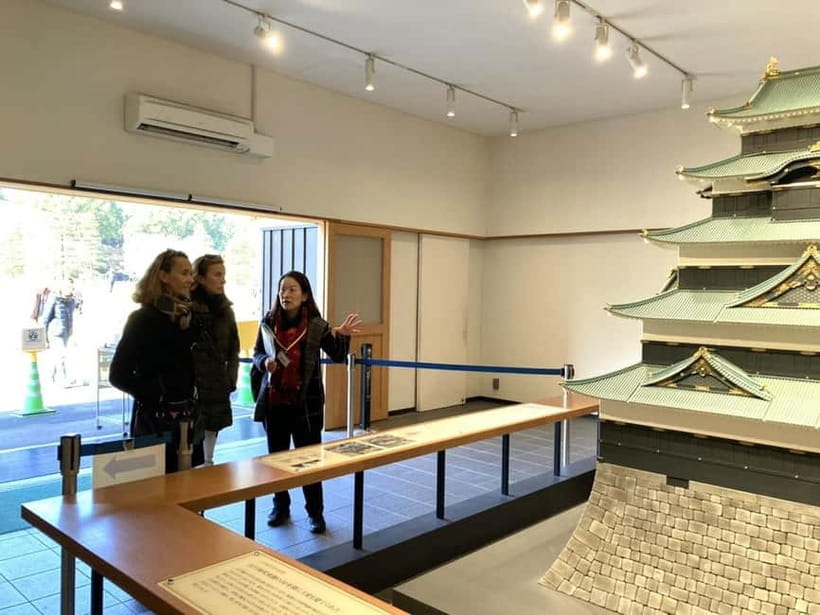
- Walk on the grounds of Edo Castle: See ancient walls, moats, a large keep foundation, and the old castle layout.
- Enjoy a private English-language tour: Your group has its own guide, with room for questions and a pace suited to your party.
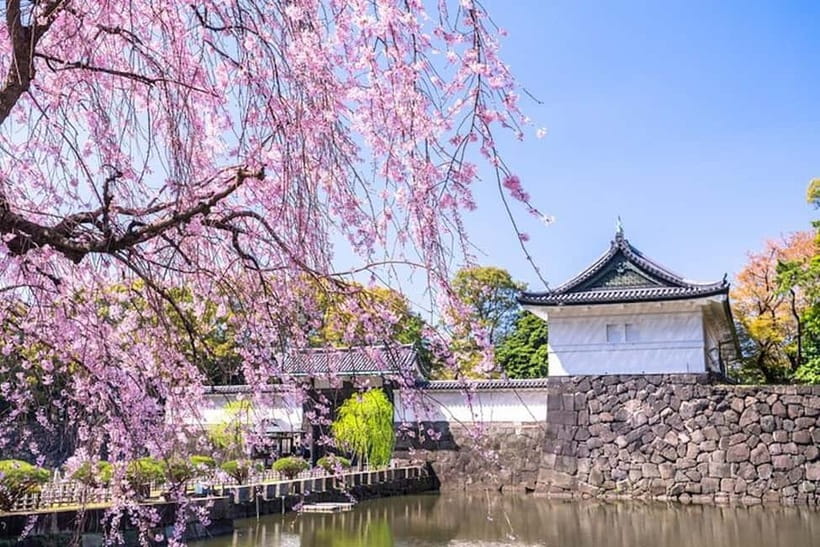
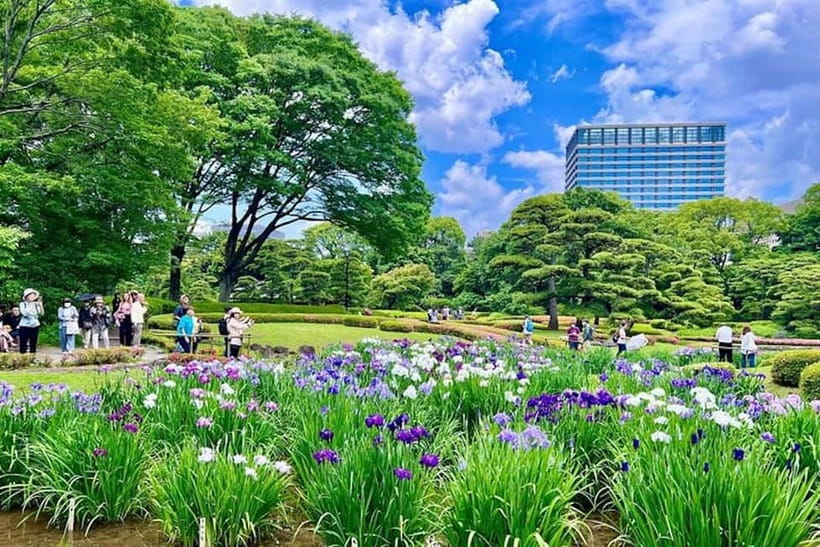
- See the Ninomaru Garden: Seasonal flowers include cherry blossoms, summer irises, and autumn foliage.
- Meet near two major transport points: The meeting place is a three-minute walk from Otemachi Station and a ten-minute walk from Tokyo Station’s Marunouchi Central Exit.
- Plan for a baggage inspection: Leave recently purchased knives or similar items in a coin locker before arriving.
- Know what is not included: The inner palace, where the Emperor resides, is not part of this experience.
Why Edo Castle matters in modern Tokyo
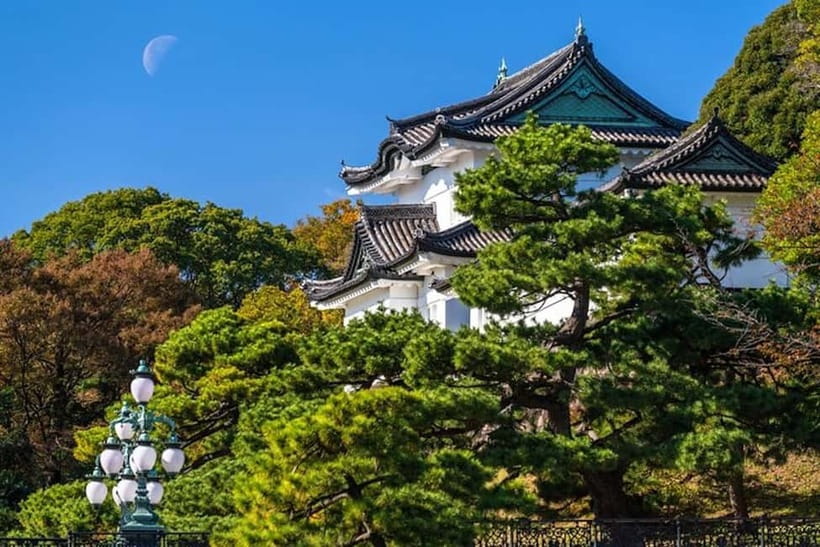
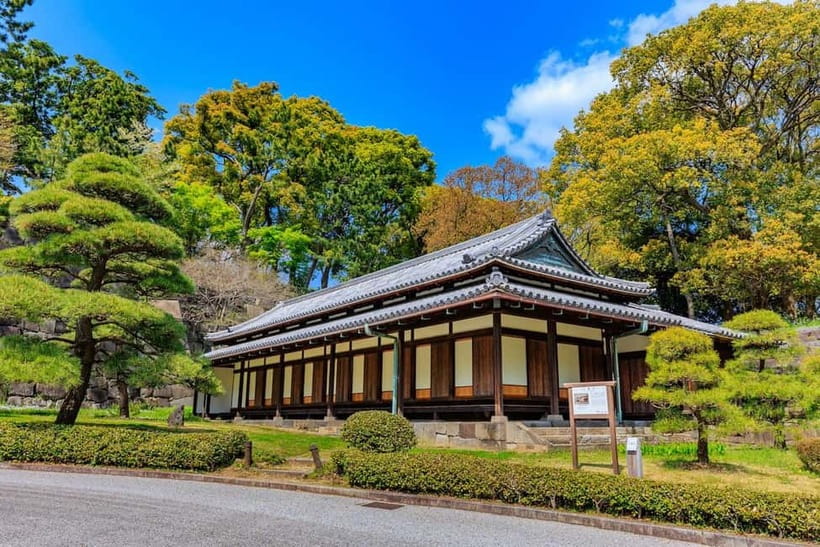
The Imperial Palace East Gardens occupy land that once belonged to Edo Castle, the seat of the Tokugawa shoguns. That setting gives this walk more weight than a standard city garden visit. You are not just looking at clipped trees and flowers. You are walking through the former center of Japan’s feudal government, with Tokyo’s office towers close by.
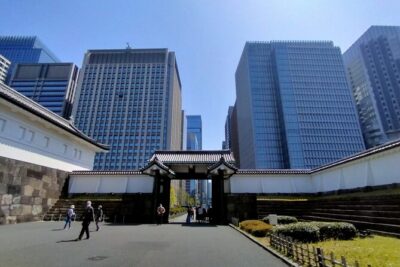
I like this combination of old and new. A traditional guardhouse and thick stone defenses sit near a modern capital, while the garden provides a quiet break from the city’s traffic and crowds. The remains are not a complete castle, so you need a guide to help you picture what once filled the site.
Your guide can point out how the castle grounds were arranged, explain the role of the shogun, and connect the ruins with Japan’s imperial past. The experience is especially useful if you are still sorting out the difference between the shoguns who governed Japan and the Emperor, whose residence is nearby but not open on this tour.
Other historic grounds in Tokyo:
- Tokyo: Imperial Palace and Shogun Historical Walking Tour
★ 5.0 · 2,251 reviews - Tokyo: Imperial Palace Japanese History Walking Tour
★ 4.9 · 987 reviews - Tokyo: Imperial Palace and Shogun Walking Tour
★ 4.9 · 935 reviews
Meeting at Wadakura Fountain Park
The tour begins at Wadakura Fountain Park, where you look for a guide carrying a sign marked gotcha. The meeting point is practical rather than dramatic, but it is easy to reach. Otemachi Station’s D2 exit is about a three-minute walk away, and Tokyo Station’s Marunouchi Central Exit is about ten minutes on foot.
Allow a little extra time if you are unfamiliar with Tokyo’s station passages. Tokyo Station and Otemachi are large transport areas, and the stated walking time assumes you are already at the right exit. Using the exact exit listed is smarter than relying only on a general station name.
The park makes a reasonable starting point because it places you beside the palace grounds without throwing you straight into a confusing entrance area. Once you meet your guide, the route is on foot for the full two hours. Wear comfortable shoes and expect a steady garden walk rather than a seated lecture.
The Main Gate and the first glimpse of the old castle
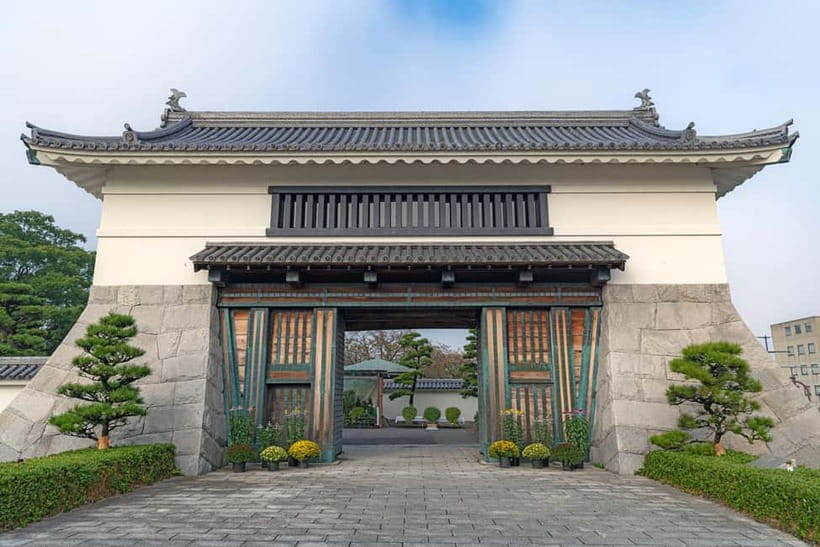
One early highlight is the historic Main Gate, with its traditional guardhouse and a mix of older defensive features and newer security procedures. This is where the character of the tour becomes clear. The grounds are carefully protected, but they are also part of a working national site rather than a reconstructed theme park.
You should expect a baggage inspection when entering the Imperial Palace grounds. This matters if you have spent the morning shopping in Asakusa or Tsukiji. Japanese kitchen knives and other items that could be used as weapons must be left in a coin locker or another secure place before the meeting. It is an easy detail to miss, and dealing with it ahead of time prevents a needless problem at the entrance.
The guide’s presence helps here. Instead of worrying about where to go next, you can focus on the entrance, the layout, and the way the old guardhouse fits into the larger site. The tour does not promise access to restricted buildings, so the value comes from understanding the public grounds and the remains you can actually see.
Edo Castle ruins, stone walls, and the keep foundation
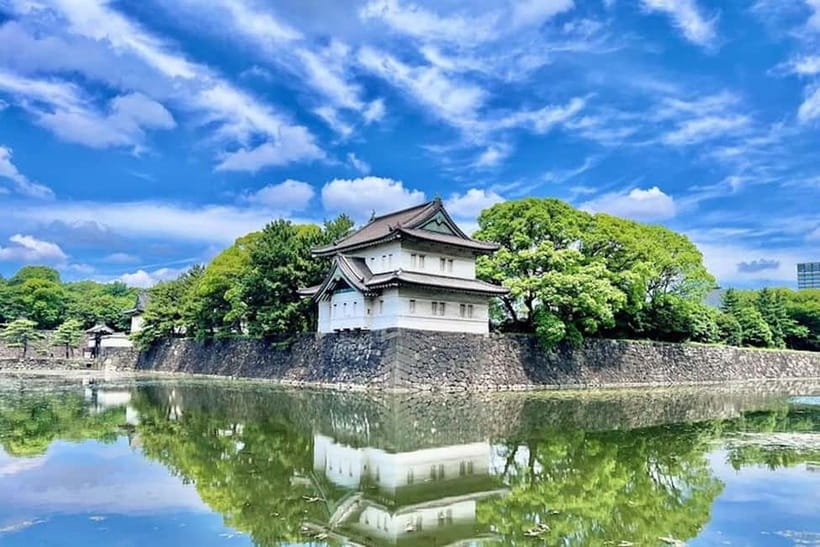
The castle ruins are the strongest part of the visit for anyone interested in Japan’s political past. Ancient stone walls and moats show the scale of Edo Castle, while the massive keep foundation hints at how imposing the site once was.
Do not arrive expecting a complete castle interior. Much of what you see is architectural evidence rather than intact rooms. That can be frustrating if your picture of a Japanese castle involves turrets, wooden corridors, and furnished chambers. On the other hand, the open ruins let you see the site at a broader scale, and a private guide can explain what has disappeared.
I value this kind of stop because it gives context to the garden. Without the castle remains, the East Gardens might seem like a pleasant green space near Tokyo Station. With them, the ponds, paths, walls, and changes in ground level become part of a former seat of power.
The private format also helps at the ruins. You can ask about the shoguns, the castle’s former residents, or the difference between the surviving stonework and later palace buildings. Masahito, one of the guides praised for this experience, was especially good at answering questions and finding an answer when he did not have one immediately. That is the sort of flexibility a self-guided walk cannot provide.
Other castles reached from Tokyo:
- Tokyo Castle & Imperial PalaceーShogun Walking Tour
★ 4.7 · 1,068 reviews - Tokyo Castle & Imperial PalaceーShogun Walking Tour
★ 5.0 · 724 reviews - Imperial Palace East Garden and Edo Castle Walking Tour in Tokyo
★ 5.0 · 510 reviews - Tokyo Castle, Imperial Palace, Shogun & Garden Walking Tour
★ 5.0 · 211 reviews
Ninomaru Garden and the changing seasons
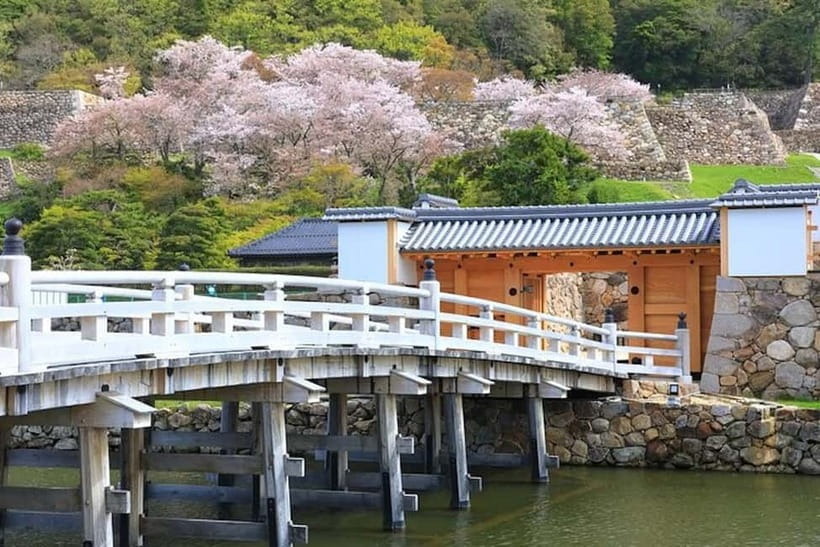
The Ninomaru Garden brings a different mood. Here, the hard military lines of walls and moats give way to a traditional Japanese garden with seasonal plants and carefully arranged scenery.
The timing of your visit matters. Cherry blossoms are associated with spring, irises with summer, and autumn leaves with fall. The garden is still worth seeing outside peak bloom, but you should keep your expectations realistic. An April visit may not deliver full cherry blossoms. One April tour had flowers and blossoms that had not fully appeared yet.
That uncertainty is part of planning any garden visit in Japan. If flowers are your main reason for booking, check the season and accept that weather can shift the display. If you are coming for the castle grounds and cultural background, the garden works well at almost any time of year.
Naoko was praised for explaining the buildings, former inhabitants, koi, and the garden itself. That detail points to an important advantage of a guided visit: the garden’s meaning is not always obvious from the path. You can enjoy the view on your own, but you may miss the reasons particular features matter.
The walk is also a good change of pace after Tokyo’s dense commercial districts. You are still in the middle of the capital, yet the garden creates a slower setting for listening and looking. I would not call it a full-day escape, since the tour lasts two hours, but it is a useful pocket of quiet in a packed itinerary.
What the private guide adds
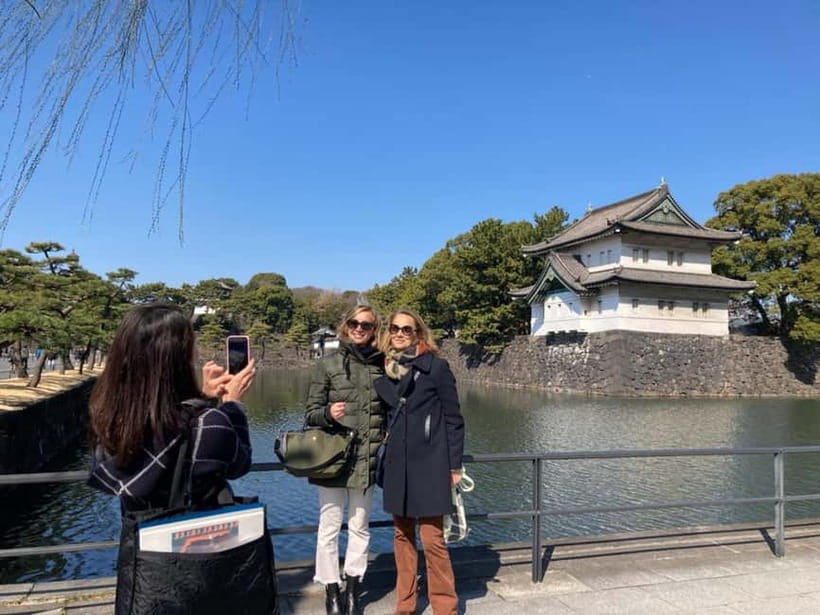
The guide is the main reason to pay for this experience rather than enter the gardens on your own. The grounds can be visited without a private tour, but the ruins do not explain themselves. A guide can turn a wall, gate, or garden feature into part of a larger story.
The private group setup is valuable for families and mixed-age groups. Yuji was praised for walking at a comfortable pace and adjusting the tour for a family. Other guides, including Yoshi, Hiroshito, Mari, Ishida, and David, received strong praise for clear English, friendliness, organization, and useful explanations.
Those names do not guarantee who you will meet. They do show the kind of service to expect from the provider’s guide team: an English-speaking local who can explain the site, respond to questions, and adjust the walk when needed. One guide even helped with suggestions for what to see next and directions back through the station after the tour. That extra practical help can be useful on a first Tokyo visit.
The private format also means you are not tied to a large group’s interests. If you want more time at the castle ruins, you can ask. If your children need a slower pace, you can say so. The tour remains only two hours, so it is not endlessly flexible, but it has more breathing room than a fixed group walk.
Is $63 a fair price for two hours?
At $63 per person, this is not the cheapest way to see the East Gardens. The grounds themselves are not the only product here. You are paying for a private English-language guide, two hours of interpretation, and a more personal pace.
I think the price is fair for first-time visitors who want historical context and do not want to work out the site alone. It is particularly good value for a small private group that can share one guide while asking questions freely. For a confident independent visitor who enjoys reading signs and wandering without a set route, the extra cost may be harder to justify.
The tour is also short enough to fit neatly into a Tokyo day. You can schedule it around Tokyo Station, Marunouchi, Ginza, or another central stop without giving up half a day. The two-hour limit is a strength for a busy itinerary, though anyone hoping for a slow photographic study of every garden corner may find it brisk.
What you should bring and what to leave behind
Keep your belongings simple. Everyone entering the grounds is subject to a baggage inspection, so avoid arriving with anything that could cause concern.
Most important, do not bring Japanese knives or similar items purchased earlier in the day. If you plan to shop for them in Tsukiji, Asakusa, or elsewhere, place them in a coin locker before meeting your guide. This instruction is specific and worth taking seriously.
Comfortable footwear is sensible because the experience is a walking tour through garden paths and historic grounds. The supplied details do not specify accessibility conditions or the exact surface of every path, so anyone with mobility concerns should ask the provider before booking.
Who will enjoy this tour most?
I would recommend this experience to first-time Tokyo visitors who want more than a quick photograph of palace walls. It suits history fans, families, couples, and anyone who prefers asking questions to reading short signs.
It is also a good fit if you are curious about the shoguns and want a clearer picture of how Edo Castle shaped the city. The garden adds enough beauty to keep the tour from feeling like a dry history lesson.
You may prefer exploring independently if you mainly want blossoms, have already studied the site, or dislike a scheduled walk. You should also choose another activity if entering the Imperial Palace is your main goal. This tour does not go inside the inner palace, where the Emperor resides.
Booking details worth knowing
The experience lasts two hours and is led in English. Starting times depend on availability, so check the date that suits your schedule.
You can reserve now and pay later, which helps if your Tokyo plans are still moving around. Cancellation is free up to 24 hours before the tour for a full refund. Those terms are useful when weather, jet lag, or a changing city itinerary may affect your plans.
The provider is gotcha Corporation. The group type is private, and the meeting point is Wadakura Fountain Park, not inside Tokyo Station or inside the palace grounds.
Should you book the Imperial Palace East Gardens tour?
Book it if you want the castle ruins explained, a quiet garden walk, and a private guide who can adapt the pace to your group. The strongest parts are the combination of Edo Castle remains and Ninomaru Garden, plus the practical help offered by guides such as Yuji, Yoshi, Masahito, and Naoko.
Skip it if you expect palace interiors, a full surviving castle, or guaranteed peak-season flowers. The inner palace is off limits, and seasonal displays may be modest when you visit.
For $63, I see this as a solid short tour for a first Tokyo trip. It gives you a manageable dose of Japanese political history, a break from the city streets, and enough personal attention to make the grounds easier to understand.
FAQ
Where does the tour meet?
Meet your English-speaking guide at Wadakura Fountain Park. Look for a guide holding a sign that says gotcha.
How far is the meeting point from Otemachi Station?
The meeting point is about a three-minute walk from Tokyo Metro Otemachi Station Exit D2.
How far is it from Tokyo Station?
Wadakura Fountain Park is about a ten-minute walk from Tokyo Station’s Marunouchi Central Exit.
How long does the tour last?
The guided walking tour lasts two hours.
Is the tour private?
Yes. It is offered as a private group experience with an English-speaking guide.
Does the tour enter the Imperial Palace?
No. The tour visits the Imperial Palace East Gardens but does not enter the inner palace where the Emperor resides.
Will there be a baggage inspection?
Yes. Visitors are subject to a baggage inspection when entering the Imperial Palace grounds.
Can I bring a Japanese knife purchased earlier in the day?
You should leave Japanese knives and other items that could be used as weapons in a coin locker or similar secure place before meeting the guide.
More gardens in Tokyo
- Tokyo: Imperial Palace East Gardens Walking Tour
★ 4.8 · 353 reviews - Tokyo: Edo Castle & East Garden of the Imperial Palace Tour
★ 4.7 · 112 reviews - Tokyo: Tsukiji Market and Hama-rikyu Gardens Guided Tour
★ 4.8 · 73 reviews - Tokyo: Kimono Rental inside Shinjuku Gyoen National Garden
★ 4.9 · 39 reviews
Just added in Tokyo
- The 10 Tastings of Tokyo With Locals: Private Street Food Tour★ 5.0 · 48 reviews
- Small Town in the Big City: Tasting Tokyo’s Kichijoji★ 5.0 · 195 reviews
- Small Town in the Big City: Tasting Tokyo’s Kichijoji★ 5.0 · 16 reviews
- EXCLUSIVE Tokyo Secret: Kichijoji Small-Group Food & Bar Hopping★ 5.0 · 29 reviews
- Explore Kichijoji: Walk Through One of Tokyo’s Beloved Districts★ 5.0 · 21 reviews
- :Tokyo,Shibuya/ Pro Photography in Kimono / English-Friendly★ 5.0 · 26 reviews
- 【R34】Tokyo:Private Daikoku tour in Modified R34★ 4.9 · 92 reviews
- Tokyo:Calligraphy &Make your original folding fan in Asakusa★ 5.0 · 62 reviews
Imperial Palace & Historic Sites, compared.
Imperial Palace and Shogun Historical Walking Tour
Read our review →
Imperial Palace East Garden and Edo Castle Walking Tour in Tokyo
Read our review →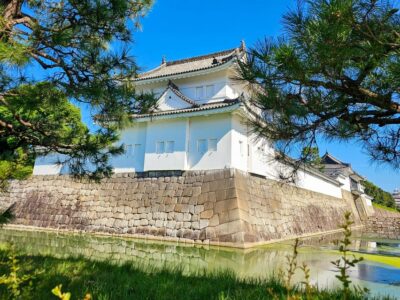
Imperial Palace & Nijo Castle Guided Walking Tour
Read our review →
Imperial Palace, Sensō-ji Temple, & Tokyo Tower Tour
Read our review →
Tokyo Castle, Imperial Palace, Shogun & Garden Walking Tour
Read our review →
Imperial Palace, the history of Japan (ENGLISH GUIDE)
Read our review →Browse the lists this tour appears in