
Reviewed · SAMURAI & NINJA EXPERIENCES
Tokyo: Samurai Entertainment Night Show in Kanda Shrine
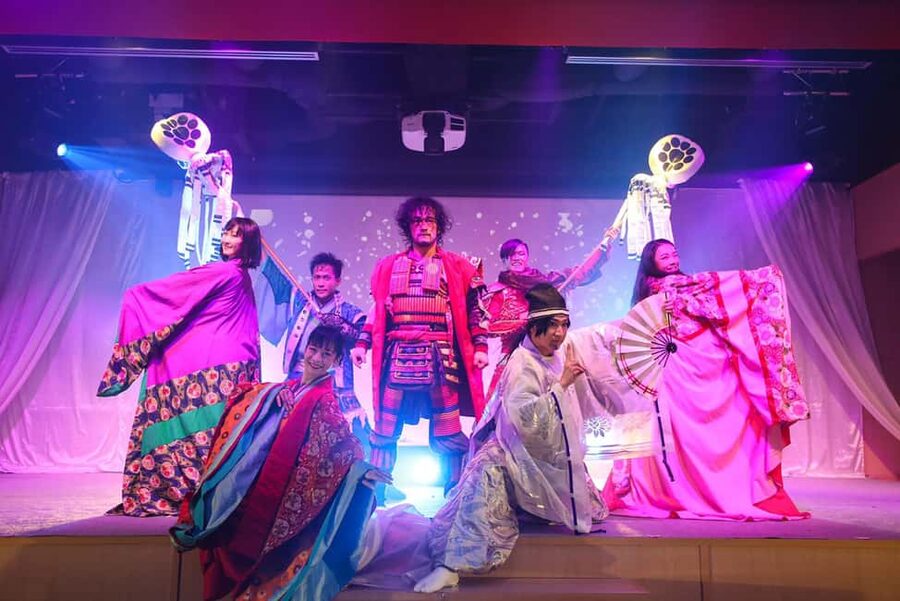
The best part of this Tokyo night is the setting: a samurai performance beneath Kanda Myojin Shrine, where the drama about Taira no Masakado unfolds among one of the city’s most important sacred sites. It feels closer to a small dinner theater than a large stage production, so you can watch the performers at close range and meet them afterward.
I like the evening’s two-part appeal. First, the show mixes swordplay, dance, music, costumes, and modern light effects into a lively piece of theater. Second, the cast makes time for the audience after the final act, when you can talk with the performers and take photos with them. The basic price of about $41 also gives you a drink, though meal and drink options vary.
The main thing to know is that this is more theatrical storytelling than a historical sword-fighting demonstration. Some scenes use limited dialogue, and the Masakado story may take a little work to follow. You must also keep cameras and phones away during the performance, and late arrival can mean missing the entrance entirely.
Key points to know before booking
- Kanda Myojin after dark: The shrine grounds provide a memorable setting before you head downstairs to the show restaurant.
- A 60-minute samurai production: Expect choreography, music, dramatic movement, costumes, and visual effects rather than a lecture on Japanese history.
- Dinner is optional: The base experience includes the show and one drink or unlimited drinks, depending on the option chosen. Food is ordered separately unless your booking says otherwise.
- The cast meet-and-greet matters: From 9:15 to 10:00 PM, you can take photos with the performers and speak with them.
- Arrive on time: Doors open at 7:00 PM, the show begins at 8:15 PM, and entry is not allowed after 8:15 PM.
- No filming during the show: Photos and video are allowed during the designated time at the end, but not during the performance.
Arriving at Kanda Myojin Shrine after dark
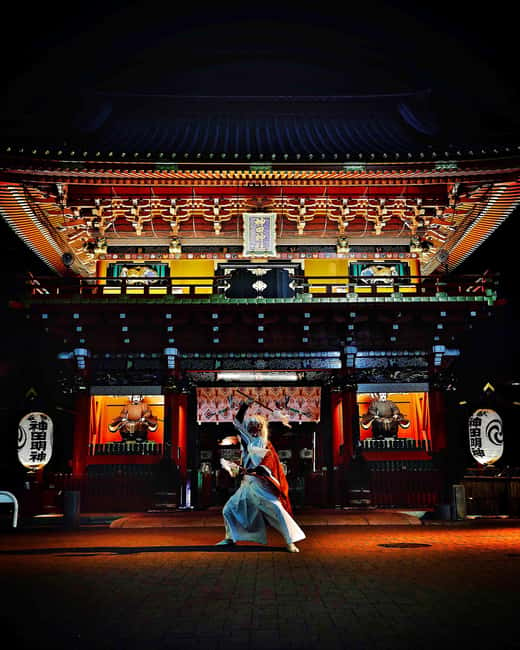
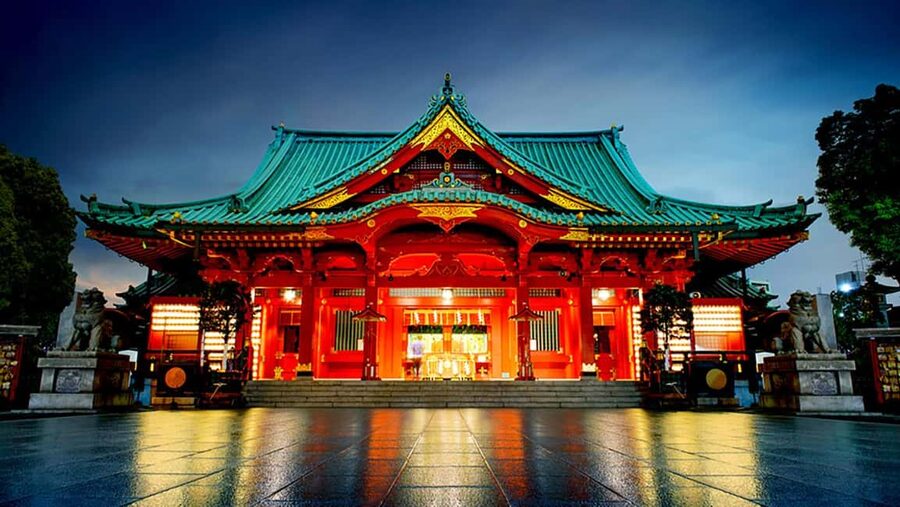
Kanda Myojin is not just a convenient backdrop. It is a well-known Tokyo shrine associated with prosperity in business and love, and its illuminated grounds give the evening a sense of place before the theater begins.
Your actual meeting point is The Show restaurant in the basement of Kanda-Myojin Bunka-Koryu-kan. Look for the activity provider’s staff there. The location can take a little extra time to find, so I would not cut it close, especially if you are walking from a nearby station or visiting the shrine first.
Doors open at 7:00 PM. That gives you an hour and a quarter to settle in, order food, and arrange drinks before the stage action starts. The evening closes at 10:00 PM, making this an easy event to fit into a Tokyo day without giving up the whole night.
One useful detail: you cannot request a particular seat. The restaurant assigns seats, and the front section is described as rows one through four. If being close to the action matters to you, arrive promptly, but do not assume early arrival guarantees a front-row place.
Other samurai and ninja experiences in Tokyo people book:
- Tokyo: Samurai Restaurant Show Ticket with 2 Drinks
★ 4.5 · 1,307 reviews - Tokyo: Samurai Ninja Museum Guided tour and Experience
★ 4.6 · 1,010 reviews - Tokyo: Samurai Sword & Archery Class from Samurai Descendant
★ 5.0 · 603 reviews
The 7:00 to 8:15 PM food and drink period
The show is built around a meal and drinks, but you should read your selected booking carefully. The experience includes either one drink or unlimited drinks, depending on the option you choose. Food is not automatically included in the basic description, and additional dishes are available from the à la carte menu.
A chicken hot pot is offered as one of the meal choices. Each person receives an individual pot with broth and seasonal vegetables. You add the chicken yourself, wait until the meat changes color, dip it into the sauce, and eat it. Udon can be added later, which keeps the noodles from becoming overcooked while you watch the show.
Other food mentioned with the menu includes fried chicken, fries, gyoza, soup, dessert, and vegetarian udon. The menu appears designed for international visitors as much as for local diners, which is helpful if your party has different tastes. Still, food opinions vary. Some people consider the meal a strong part of the night, while others find it basic but satisfying.
The timing matters. Drinks and food orders need to be placed before the show begins. Once the performance starts, your attention will be pulled toward the stage, and you should not expect to keep ordering or eating at a leisurely pace.
I see the meal as a useful extra, not the chief reason to book. If you want a full dinner, choose a package that clearly includes food or plan to order from the menu. If you care mostly about the performance, the show plus one drink may be enough and keeps the price close to the advertised $41.
Taira no Masakado and the story on stage
The performance centers on Taira no Masakado, a legendary rebel figure connected with Kanda Myojin. The production treats his story through Japanese folklore and theatrical imagination, rather than presenting a plain historical reenactment.
Before the show, you receive a short guide to the story and what happens in each section. Read it while you eat or drink. This small bit of preparation helps, because the story can move through symbolic scenes and fantasy elements without relying heavily on spoken explanation.
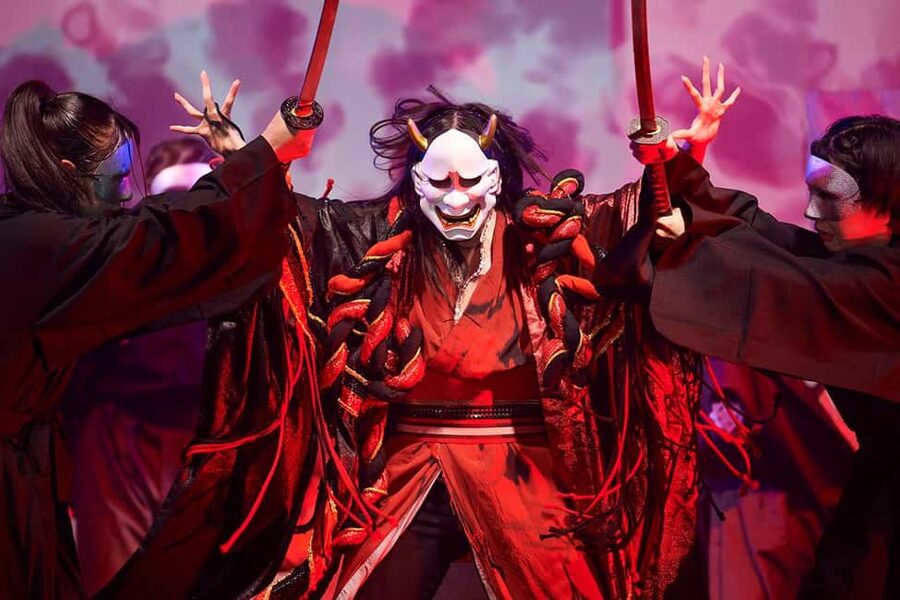
The production has also included figures such as the Spiderwoman, the Butterfly, and the Black Fox, alongside the Masakado story. That mix gives the show a folklore feel. You are not simply watching men in armor trade sword blows. You are seeing a series of stylized characters and scenes linked by music, movement, and legend.
That approach will suit you if you enjoy visual theater, Japanese mythology, anime-like drama, or dance. If you want a careful account of Masakado’s life, you may find the plot less clear. One useful way to think of it is as a stage interpretation inspired by Japanese stories, not a museum presentation.
The 8:15 to 9:15 PM samurai entertainment show
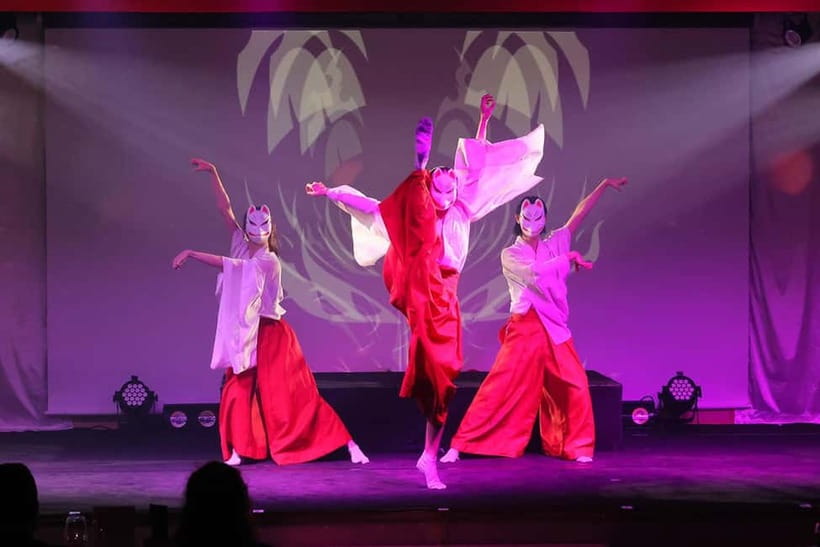
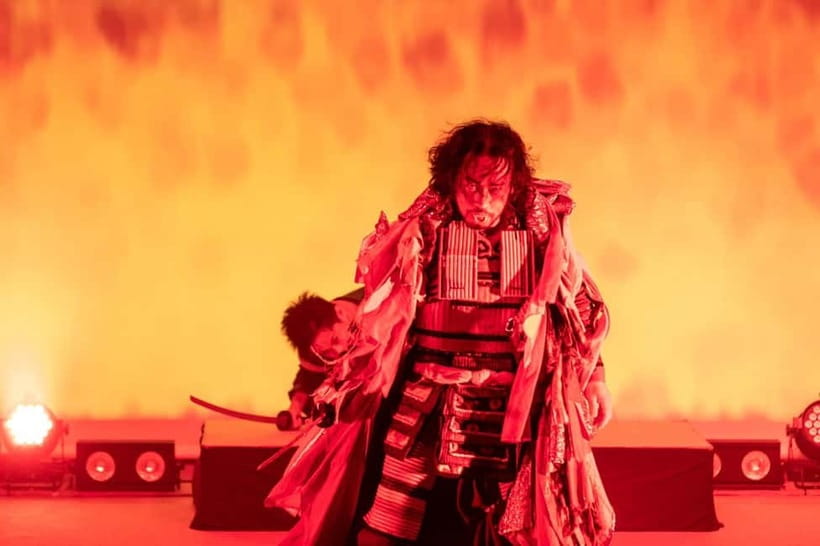
The main performance lasts about an hour. It combines swordplay, dance, sound effects, music, costumes, storytelling, and lighting. The small venue brings the actors close to the audience, and action can take place beyond the central stage, so keep your attention moving.
The cast’s energy is one of the production’s strongest features. Performers use large gestures, precise movements, and expressive faces to carry scenes that may contain little dialogue. The result can feel like live-action anime, especially when modern music and lighting meet traditional characters.
Do not expect every minute to be a realistic combat display. One part of the appeal is the choreography and visual storytelling. If you are hoping to study sword technique, the amount of actual sword fighting may feel limited. The show focuses more on character, mood, movement, and spectacle.
The costumes and stage design add a lot. Against the shrine setting, the colors and lighting create a sharp contrast with ordinary Tokyo nightlife. The production feels intimate rather than grand, but that is part of its charm. You can see the performers’ expressions and physical control without sitting far back in a huge auditorium.
Photography and video are not allowed during this section. That rule is worth taking seriously. The show depends on concentration, and staff do enforce the no-recording policy. You will have a proper chance to take pictures later, so keep your phone away and watch the performance directly.
Other temples and shrines in Tokyo people book:
- Tokyo: Meiji Shrine, Asakusa, Skytree Bus Tour and Cruise
★ 4.7 · 1,986 reviews - Tokyo: Asakusa Walking Tour with Sensoji Temple Visit
★ 4.8 · 1,583 reviews - Nikko: Kegon Falls, Lake Chuzenji & Toshogu Temple
★ 4.6 · 1,577 reviews - Tokyo: Nikko Toshogu Shrine and Kegon Waterfall Tour
★ 4.5 · 1,266 reviews
Why the small venue works
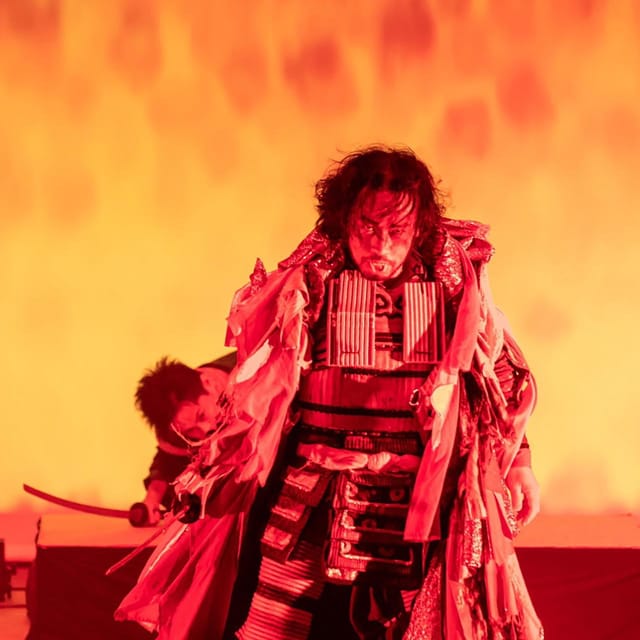
A small audience changes the tone of the night. You are not simply looking at a distant stage. The actors can acknowledge the room, move near the audience, and speak with you before and after the performance.
This also makes the evening feel social. Solo visitors can join the shared atmosphere without needing a companion, while families and couples have a clear activity that does not depend on understanding every line of dialogue. Several children around ages 10 and 12 have enjoyed the show, though parents should decide if dramatic fighting and supernatural scenes fit their children.
The close setting has one tradeoff: seating is assigned, and sightlines may vary. The front section covers rows one through four, but no particular seat can be requested. If you have mobility needs, wheelchair access is available, although one wheelchair user noted that getting back to a hotel afterward required extra assistance. For the show itself, contacting the provider ahead of time remains sensible.
Meeting the actors from 9:15 to 10:00 PM
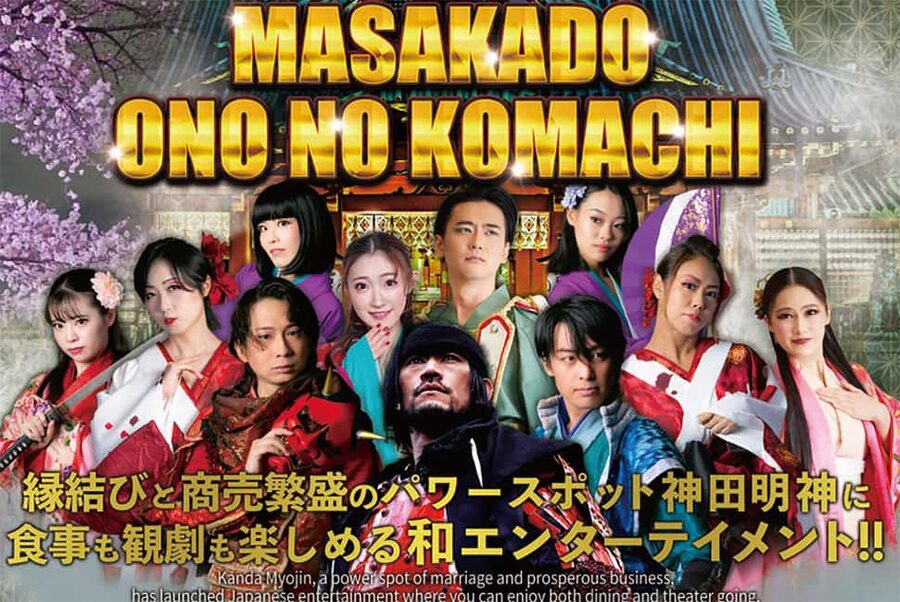
After the final act, the atmosphere changes from theater to personal contact. The performers come out to meet the audience, and you can take photos with them free of charge. You can also talk with them, and English interaction may be available.
This final period is more than a quick souvenir stop. It gives you a chance to ask about the characters, thank the cast, and see the performers outside their stage roles. Several of the strongest memories from the evening are likely to come from this relaxed contact.
Bring your camera or phone for this part, but not for the performance itself. The rules allow photos after the show, including pictures with the cast. You may also see people offering tips to individual performers. Tipping is not a normal part of everyday service in Japan, so do not feel confused if you are unsure. It is optional, not listed as an included requirement.
The photo period runs until 10:00 PM. That is enough time for personal pictures, but the process can move quickly if many people want photos. If you have a favorite character, be ready to approach politely when the cast begins mingling.
Is the $41 price good value?
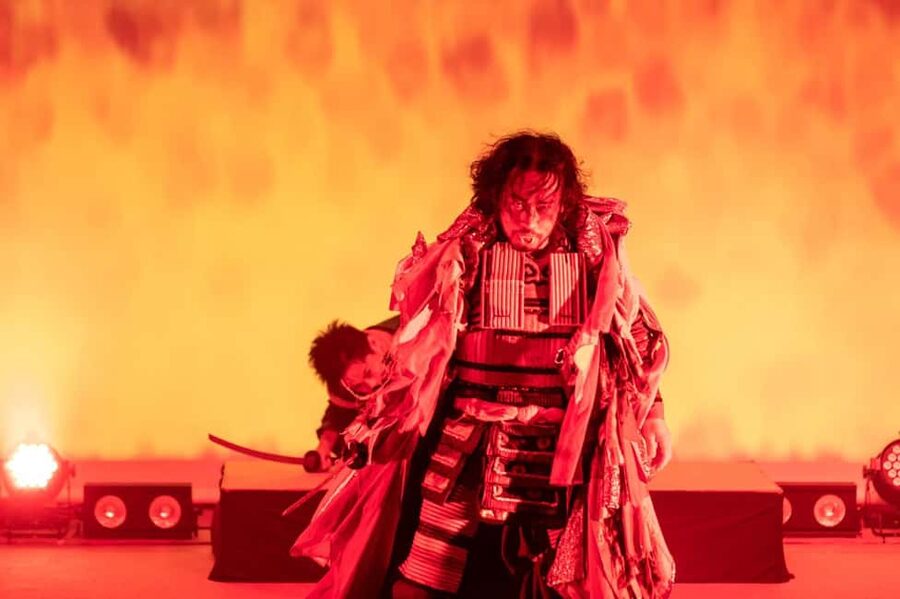
At about $41 per person, the experience is fairly priced for a Tokyo evening that combines a performance, shrine setting, and drink. The value is strongest when you want several elements in one booking rather than paying separately for dinner and entertainment.
The base inclusion is the samurai show plus one drink or unlimited drinks, depending on the option selected. Food can add to the final bill, so compare the exact package before booking. A full hot pot meal and unlimited drinks make the night feel more like dinner theater. A show with one drink is better for someone who wants a cultural performance without a large meal.
The cast interaction also adds value. Many stage shows end when the curtain falls. Here, you get a planned photo and conversation period, which makes the event more personal and gives you a useful souvenir without an extra photo charge.
The price is less attractive if you mainly want a traditional martial arts demonstration or a formal historical lesson. You are paying for theatrical presentation, atmosphere, and access to the performers. That is a good deal for fans of live entertainment, but not necessarily for someone seeking technical instruction.
Who should book this Tokyo night?
I would recommend it to you if you want an easy evening activity with a strong Japanese theme but do not want a formal lecture. It works especially well for first-time visitors, families with older children, couples, solo visitors, and anyone interested in costumes, folklore, dance, or stage combat.
It is also a good choice if you have already visited Tokyo’s major daytime sights and want something different after dark. The shrine grounds give the night a local setting, while the show uses modern production tools that keep it accessible to people who may not know much about samurai history.
You may want to skip it if you dislike theatrical fantasy, cannot sit through a performance without taking pictures, or want a quiet meal. The story can be confusing if you arrive without reading the program, and the food is not the main attraction for everyone.
If you are sensitive to late starts, note the fixed schedule: 7:00 PM doors, 8:15 to 9:15 PM performance, 9:15 to 10:00 PM photos, and closing at 10:00 PM. Plan your route carefully because entry is not possible after 8:15 PM.
Final call: book it for theater, not a history lesson
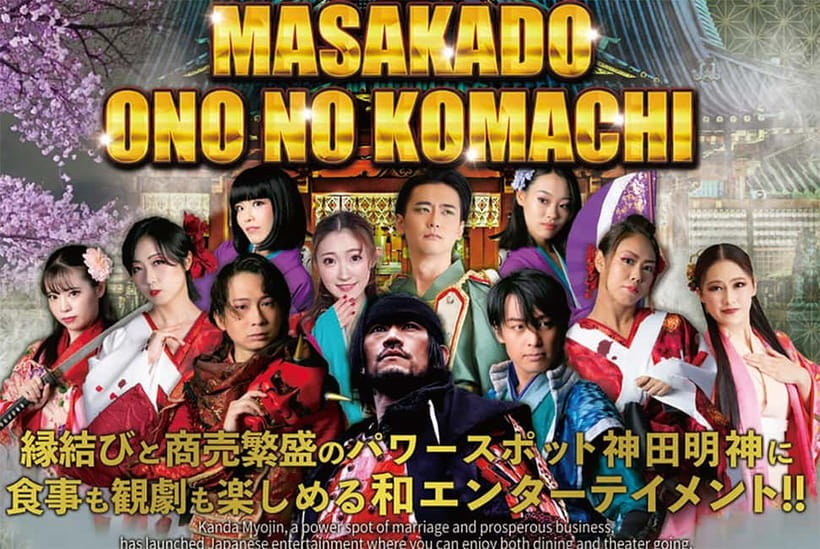
This is a strong Tokyo night out because it joins three things that rarely appear together: an important shrine, an intimate samurai stage show, and a real chance to meet the cast. The best moments come from the performers’ energy, the close venue, and the final photo session.
Book it if you want an entertaining introduction to Japanese folklore with food and drinks available. Choose your package carefully, arrive early, read the story guide, and save your camera for the end. If you expect a historically exact account or nonstop sword fighting, choose another activity. For a lively, personal piece of Tokyo theater, this one earns its place on your evening schedule.
FAQ
Where does the samurai show take place?
The meeting point is The Show restaurant in the basement of Kanda-Myojin Bunka-Koryu-kan, at Kanda Myojin Shrine in Tokyo.
What time should I arrive?
Doors open at 7:00 PM. You should arrive before the 8:15 PM show start, because entry is not possible after 8:15 PM.
How long does the experience last?
The full evening runs from 7:00 PM until 10:00 PM. The performance itself lasts from 8:15 to 9:15 PM, followed by photos and cast interaction until 10:00 PM.
Is dinner included?
Food depends on the option selected and is not included in the basic show description. An à la carte menu is available, including a chicken hot pot and other dishes.
What drinks are included?
The selected option includes either one drink or unlimited drinks. Food and drink orders must be placed before the show begins.
Can I take photos during the performance?
No. Cameras, audio recording, and video recording are not allowed during the show. Photos are permitted during the scheduled period after the performance.
Can I take a photo with the samurai performers?
Yes. From 9:15 to 10:00 PM, you can take photos with the performers and speak with them.
Can I request a front-row seat?
No. Seating is assigned by the restaurant. The front section includes rows one through four, but specific seats cannot be requested.
Is the experience wheelchair accessible?
Yes, the activity is listed as wheelchair accessible. You may wish to contact the provider ahead of time about your specific needs.
More temples and shrines elsewhere in Japan
- Tokyo Panoramic 1 Day: Meiji Shrine, Asakusa, Odaiba and SKYTREE®
★ 4.5 · 1,222 reviews - Tokyo: Zen Meditation at a Private Temple with a Monk
★ 5.0 · 510 reviews - Mt. Fuji Heritage Tour: Traditional Villages, Lakes & Shrine
★ 4.5 · 509 reviews - Tokyo: Asakusa and Tokyo’s Oldest Temple Senso-ji Tour
★ 4.9 · 352 reviews
More samurai and ninja experiences elsewhere in Japan
- Best Samurai Experience in Tokyo
★ 5.0 · 458 reviews - Ninja Experience (Family Friendly) at Samurai Ninja Museum TOKYO
★ 5.0 · 441 reviews - Tokyo Sword Experience – includes Museum Ticket/Ninja Experience
★ 5.0 · 314 reviews - Samurai Ninja Museum Asakusa: Samurai Sword Lesson & Tour
★ 4.8 · 306 reviews
Just added in Tokyo
- Nikko: Edo Wonderland Edomura Cultural Theme Park Ticket★ 4.3 · 205 reviews
- 《MEMBERS-ONLY-BAR-HOPPING》Discover Your Special Whiskey in Tokyo!★ 5.0 · 29 reviews
- Japanese Whisky Hunting《HIGH-QUALITY-ONLY》Rare Tasting Class★ 5.0 · 20 reviews
- Luxury Tokyo Sake, Cocktail, Whisky and Pairing Tour★ 5.0 · 18 reviews
- Wagyu & Sake Pairing in Shinjuku – Steak, Shabu-Shabu & More★ 5.0 · 112 reviews
- Small-Group Wagyu Beef and 7 Japanese Dishes Tokyo Cooking Class★ 5.0 · 190 reviews
- Mt. Fuji & Hakone Cherry Blossom private One Day Tour★ 4.5 · 35 reviews
- Mt. Fuji, Hakone Private Tour from Tokyo – Onsen, Arts and Nature★ 5.0 · 79 reviews
Samurai & Ninja Experiences, compared.
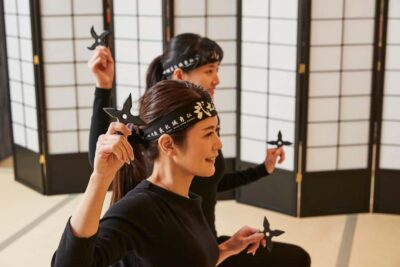
Samurai Ninja Museum Guided tour and Experience
Read our review →
Kendo and Samurai Experience with Uniform and Gear
Read our review →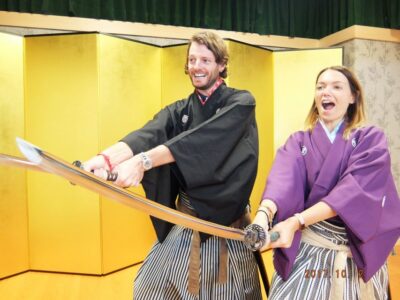
Samurai Sword Class by Experts in Traditional Arts
Read our review →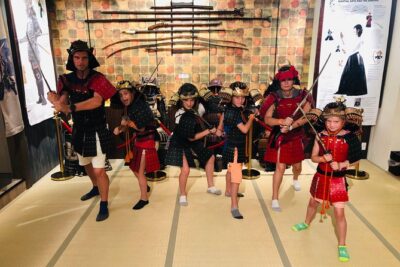
Skip the lines Basic Ticket at SAMURAI NINJA MUSEUM KYOTO
Read our review →
Samurai Sword & Archery Class from Samurai Descendant
Read our review →
Browse the lists this tour appears in