
Reviewed · TEA CEREMONY EXPERIENCES
An Amazing set of Cultural experience: Kimono, Tea Ceremony and Calligraphy
A kimono fitting, tea ceremony, and calligraphy lesson make a fine trio at Tokujuji Temple on Miyajima. You get more than a costume photo: you learn how the clothing is worn, prepare matcha, and practice Japanese writing in a calm temple setting. The small group limit of eight keeps the experience personal.
I especially like the garden photo session and the way the tea ceremony moves from demonstration to hands-on practice. The staff help choose the kimono, accessories, socks, obi, and sandals, then take family and group pictures throughout the visit. The main drawback is value: at $132.14 per person, this costs more than a quick dress-up activity, and the advertised timing varies between about 90 minutes and two hours.
Key details at a glance
- Five minutes from the Miyajima ferry port: Walk toward Tokujuji Temple to reach Okeiko Japan Miyajima.
- Three connected cultural activities: Dress in a kimono, prepare matcha during a tea ceremony, and practice calligraphy.
- Small groups of up to eight: You should receive more individual help than at a large cultural demonstration.
- Morning and afternoon departures: The two start windows make it easier to fit around Miyajima sightseeing.
- Photos are part of the experience: Staff take pictures in the temple grounds and during the activities.
- Minimum age six: Most people can take part, and the activity returns to its starting point.
Starting at Okeiko Japan Miyajima
The meeting point is Okeiko Japan Miyajima, at 741-1 Miyajimachō, Hatsukaichi, Hiroshima. From the Miyajima ferry port, allow about five minutes on foot, heading toward Tokujuji Temple.
That short walk matters. You do not need a separate taxi or a complicated transfer once you arrive on the island. Still, you should leave enough time to find the building, especially if you are fitting this into a packed day of shrine visits, shopping, and the ropeway.
The activity takes place at a historic Zen temple, not in a generic studio. That gives the experience a quieter, more traditional setting. You are learning about Japanese customs in a place connected to religious practice, while still receiving clear instruction aimed at international visitors.
The group maximum is eight people. That is a useful limit for an activity involving clothing, tea preparation, writing practice, and photographs. You will likely spend less time waiting for your turn than you would in a large class.
The booking information describes the experience as about 90 minutes, while the itinerary gives two hours. I would plan for roughly one and a half to two hours, then add walking time from the ferry port. That small cushion keeps you from having to rush away from the temple.
Other dressing and photo sessions in Hiroshima:
- Kimono and Tea Ceremony in Miyajima
★ 5.0 · 73 reviews - Cultural Activities :Kimono, tea ceremony, Calligraphy and Amulet
★ 5.0 · 44 reviews - Kimono and Calligraphy Experience in Miyajima
★ 5.0 · 16 reviews
Choosing a kimono and getting dressed
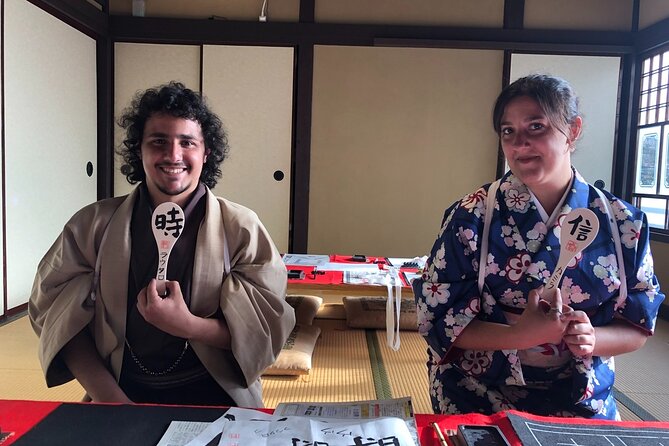
The first major part is the kimono fitting. Staff help you select from the available garments and coordinate the pieces, including the kimono, obi, cord, socks, sandals, and decorative accessories such as flowers.
This is not simply putting on a robe over your clothes. The dressing process shows you how the outfit is assembled and gives you a better sense of why traditional clothing takes time and care. The staff handle the complicated parts, so you can focus on the colors, patterns, and finished look.
Sizes are available for the participants booked into the activity, though one account specifically noted relief at finding a suitable fit. If you are concerned about sizing, contact Okeiko Japan before booking rather than assuming every style will be available in every size.
The experience is not limited to women. Men in one group enjoyed the activity as well, and the staff helped everyone take part. That makes it a sensible pick for couples, parents with older children, and mixed groups where not everyone is naturally drawn to dress-up.
You should also expect the kimono to affect how you move. Traditional clothing is formal and structured, not ideal for running around Miyajima afterward. Plan your sightseeing around the activity, and do not count on wearing the outfit comfortably for a full day of steep walks or long ferry connections.
Photos in the temple gardens
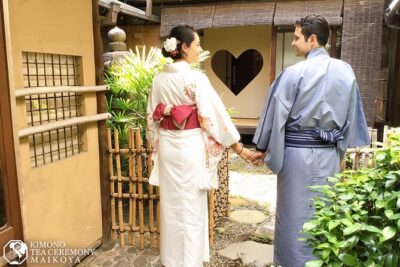
Once you are dressed, staff take pictures in the temple grounds and during the cultural activities. This is one of the strongest parts of the experience because the setting gives the photographs more character than an indoor backdrop.
The pictures can include individuals, couples, and family groups. Staff make an effort to take many images, which is useful when small details such as a sleeve, flower, or obi look especially good from a particular angle.
The photo service also changes the pace. You are not hurried through the kimono fitting and immediately placed at a table. You get time to enjoy the finished outfit and use the temple setting as part of the occasion.
One practical point deserves attention: picture sharing has caused at least some difficulty through an app. The provider acknowledged that concern and said it was considering another method. Ask how the photographs will be delivered when you arrive, especially if having the images is a major reason for booking.
Do not expect a professional portrait studio or a guaranteed number of edited photographs. The clear value is having staff take pictures during the visit, so you can take part instead of handing your phone to another member of your group.
Watching and making matcha
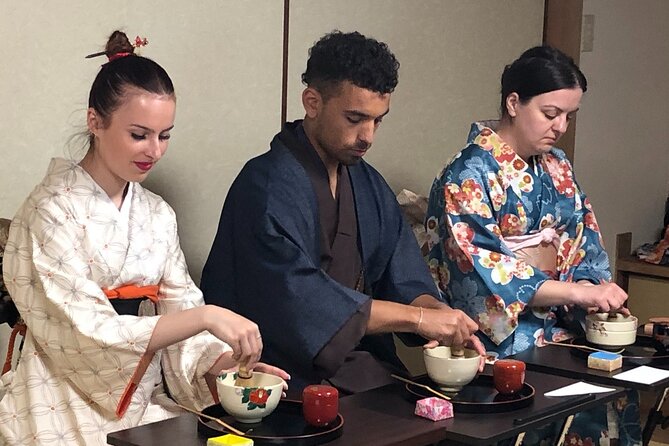
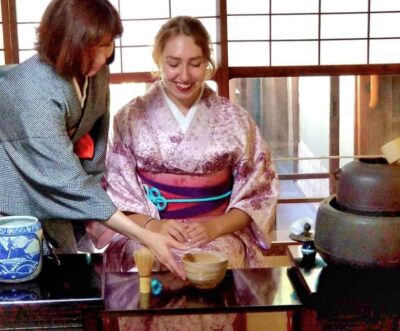
The tea ceremony follows the kimono portion. You first watch the ceremony and learn about its manners and small movements. Then you make your own matcha, whisking the powder and taking part in the process rather than only observing.
That order is important. Japanese tea ceremony can look simple from a distance, but the gestures, handling of the bowl, and sequence of actions have meaning. Seeing a demonstration before trying it gives you a basic framework and makes your own attempt less awkward.
The English explanation is described as clear, so you can follow the cultural reasons behind the actions instead of copying movements without context. The tone is both serious and friendly, which suits the subject. You are learning a formal tradition, but you are not expected to perform it perfectly.
The tea bowls used during the activity include pieces made by local artisans. That adds a tactile detail to the lesson. You are holding an object created for this kind of use, not merely drinking from a standard tourist cup.
Matcha has a distinct grassy, bitter taste. If you already enjoy green tea, you may like the direct preparation. If you do not, the value is still in learning the method and manners. The focus is cultural understanding, not serving a large drink or meal.
The tea ceremony is also the least rushed part of the experience. You have a chance to sit, watch, and pay attention after the bustle of Miyajima. If you have spent the morning visiting busy sights, this slower rhythm can be a welcome change.
Other tea rooms and ceremonies in Hiroshima:
- Hiroshima Local guided Hiking Tour&Open-air Tea Ceremony
★ 5.0 · 213 reviews - Hiroshima: Morning Hiking Tour with Open-air Tea Ceremony
★ 4.8 · 58 reviews - Kyoto: Tea Ceremony in a Traditional Tea House in Kiyomizu
★ 4.9 · 3,519 reviews - Kyoto: Tea Ceremony Ju-An at Jotokuji Temple
★ 4.9 · 3,207 reviews
Practicing calligraphy in a quiet room
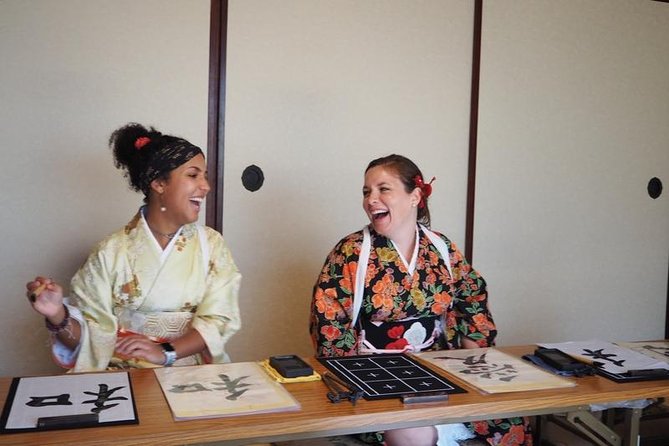
The calligraphy lesson adds a practical, slightly humbling finish. You practice Japanese characters and may also write your name, learning how much control is needed to produce a clean line.
Calligraphy often looks easier than it is. A simple character can require careful brush pressure, spacing, and direction. That makes the class more engaging than a quick demonstration because you feel the difference between recognizing a symbol and creating one.
The lesson is suited to beginners. You do not need prior knowledge of Japanese writing to participate. English instruction helps you understand what you are writing and gives the activity a clear purpose.
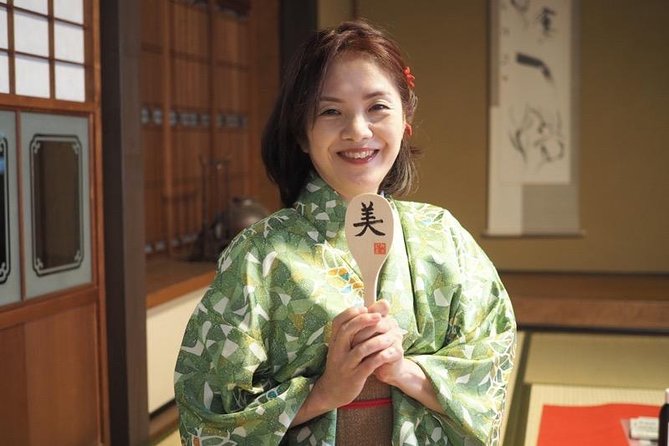
Some participants write their efforts on wooden spoons, which are then beautifully wrapped as souvenirs. This is a particularly nice touch because you leave with something connected to your own attempt, not just a shop-bought object.
The calligraphy room also balances the more visual kimono segment. The clothing and photographs are outward-facing experiences, while calligraphy asks you to concentrate and make something yourself. Together with the tea ceremony, the three parts offer different ways to approach Japanese culture.
What the $132.14 price includes in real terms
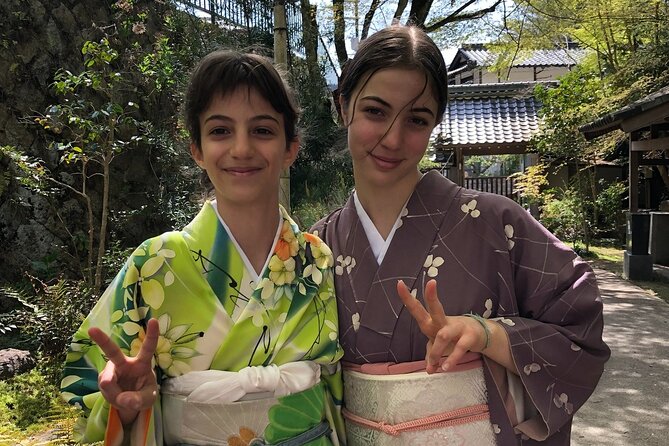
At $132.14 per person, this is a premium short activity. You are paying for instruction, kimono assistance, cultural demonstrations, matcha preparation, calligraphy practice, access to the temple setting, and staff-taken photographs.
The price makes more sense if you want a structured cultural experience rather than a quick rental. Staff help with the clothing, explain the customs in English, guide the tea preparation, and support the calligraphy lesson. You also avoid having to arrange each piece separately.
The small group size helps justify the cost. With no more than eight participants, the staff can spend time on fitting, photographs, tea technique, and writing. That personal attention is harder to provide in a large class.
Still, you should compare the activity with your own priorities. If you mainly want a kimono photo, a shorter and cheaper dressing service may be enough. If you want to understand several traditions in one sitting and take home a personal souvenir, this combination offers stronger value.
The experience is best for someone who enjoys participation. You will be asked to try the matcha, write characters, and follow some tea ceremony manners. It is not a passive performance where you sit back and take pictures.
Planning the timing on Miyajima
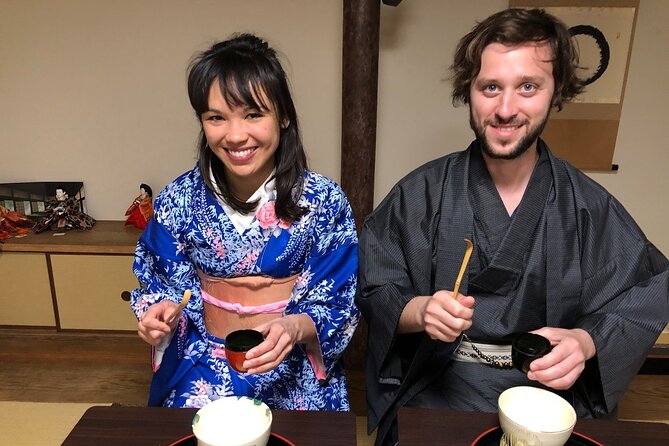
Morning and afternoon start times give you useful flexibility. You can place the activity before or after other time-sensitive plans on Miyajima, though you should leave room for the ferry walk and the variable length of the session.
An early start can work well if you want to visit the temple area afterward while still dressed normally for walking. An afternoon start may suit you if you prefer to see other parts of the island first and use the activity as a calmer cultural break later in the day.
Because the experience ends back at the meeting point, you can continue exploring Miyajima afterward. The return point also makes the activity easy to understand: there is no separate drop-off location to reach.
The ferry crossing is not included in the supplied details, so you should account for that separately when planning from Hiroshima. The experience itself begins on Miyajima, near the ferry port, not in central Hiroshima.
You can book up to 38 days ahead on average, which suggests that popular dates may fill before a short-notice visit. Confirmation arrives at booking. If your schedule is uncertain, free cancellation is available until 24 hours before the local start time. Cancellations or changes inside that window are not refunded or accepted.
Who will enjoy this most
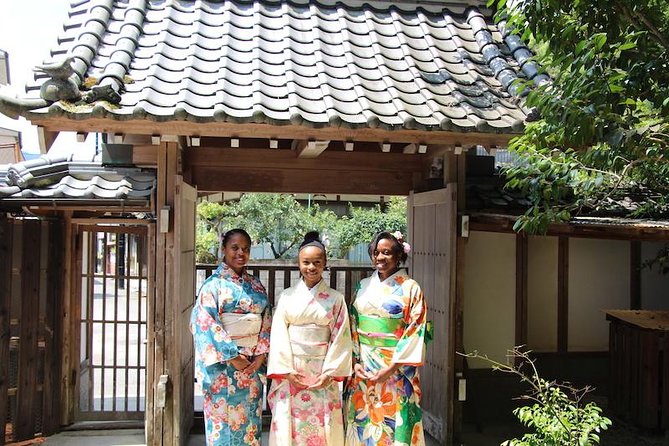
I would recommend this for first-time visitors who want a guided introduction to Japanese customs without committing to a full-day class. It suits couples, families with children aged six and older, and friends who want photographs that feel connected to the place they are visiting.
It also works well after emotionally heavy sightseeing in Hiroshima. The temple setting, quiet tea preparation, and careful writing practice offer time to slow down and reflect, without making the activity solemn from start to finish.
You should be comfortable with a little structure. The tea ceremony has manners to follow, and the kimono will limit easy movement. If you dislike posed photographs, formal clothing, or hands-on lessons, the experience may feel too organized.
The activity is also a good choice for mixed-interest groups. One person can enjoy fashion and photos, another can focus on tea, and someone else may prefer calligraphy. Men and children can participate, so the group does not need to share one narrow interest.
A few practical cautions before booking
Dress for easy changing and avoid bringing a large amount of luggage. The supplied details do not specify storage arrangements, so travel light if possible.
Ask about available kimono sizes before committing if fit is important to you. The selection depends on what is available for your group, and the clothing is part of the experience rather than an unlimited wardrobe fitting.
Allow extra time for photos. The activity is listed at about 90 minutes in one place and two hours in another, and the staff may take many pictures throughout the visit.
Finally, confirm how photographs will be shared. The experience includes staff-taken pictures, but at least one issue involved the delivery app. A quick question at the start can prevent confusion later.
Should you book the Miyajima kimono and tea experience?
Book it if you want a compact, hands-on introduction to Japanese arts in a temple setting. The strongest reasons are the small group size, kind personal help with the kimono, clear English explanations, the chance to make matcha yourself, and the combination of photographs with a calligraphy souvenir.
At $132.14, it is not a bargain activity. You are paying for several guided elements and individual attention, not just a costume rental. For a special day on Miyajima, that can be worthwhile, especially if you value authentic context over simply collecting another photograph.
Skip it if your schedule is too tight for up to two hours, if you want a low-cost attraction, or if you would rather spend your Miyajima time outdoors. For everyone else, this is a thoughtful way to pause between major sights and leave with a better feel for three Japanese traditions.
FAQ
Where does the experience take place?
It takes place at Okeiko Japan Miyajima, located at 741-1 Miyajimachō, Hatsukaichi, Hiroshima, near the historic Tokujuji Temple.
How far is the meeting point from the Miyajima ferry port?
The meeting point is about a five-minute walk from the ferry port toward Tokujuji Temple.
How long does the activity last?
The experience is described as approximately 90 minutes, while the itinerary gives two hours. Plan for roughly one and a half to two hours.
What activities are included?
You learn to wear a kimono, take part in a tea ceremony, prepare your own matcha, and practice Japanese calligraphy.
Are photographs taken during the experience?
Yes. Staff take photographs during the kimono portion, in the temple grounds, and during the cultural activities. Ask how the images will be shared.
How many people can join the activity?
The maximum group size is eight participants.
What is the minimum age?
The minimum age is six.
Are morning and afternoon start times available?
Yes. The experience offers morning and afternoon start times.
Can I cancel for a full refund?
Yes, if you cancel at least 24 hours before the local start time. Cancellations and changes made less than 24 hours before the start are not refunded or accepted.
More craft workshops in Hiroshima
- Calligraphy Workshop at Traditional Folk Craft Shop in Hiroshima
★ 5.0 · 26 reviews - Private Hiroshima Calligraphy: Create Your Own Kanji Art Souvenir
★ 5.0 · 12 reviews - Chopstick Making Workshop in Ginza
★ 4.8 · 1,366 reviews - Kyoto : Chopsticks Making Workshop in Gion with Engraving Option
★ 5.0 · 958 reviews
Just added in Hiroshima
- Iya Valley BROMPTON Slow Cycling Tour★ 5.0 · 28 reviews
- Iya Valley All Must-Sees Private Chauffeur Full-day Tour with a Driver★ 5.0 · 20 reviews
- Shore Excursion from Hiroshima Port : Private Tour in Hiroshima★ 5.0 · 17 reviews
- Hiroshima & Miyajima All-Inclusive Tour w/Licensed guide Pancho★ 5.0 · 54 reviews
- Okunoshima Rabbit Island Cycling Tour with Local Guide★ 4.5 · 17 reviews
- The Peace Memorial to Miyajima : Icons of Peace and Beauty★ 4.5 · 31 reviews
- Private Full Day Hiroshima Tour★ 4.5 · 29 reviews
- Hiroshima Saijo Sake Tasting Tour with visit to 7 Breweries★ 5.0 · 104 reviews
Tea Ceremony Experiences, compared.

Tea Ceremony in a Traditional Tea House in Kiyomizu
Read our review →

World Heritage Kyoto & Nara Uji Authentic Matcha Experience
Read our review →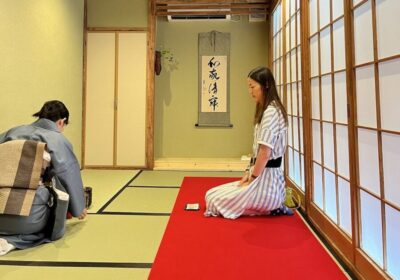
Arashiyama Bamboo Forest, Monkeys, Matcha & Temple Tour
Read our review →Browse the lists this tour appears in