
Reviewed · ARASHIYAMA & BAMBOO GROVE TOURS
Arashiyama Hidden Gems: Walking Tour escaping crowds
Arashiyama is famous for its bamboo grove, but the best part of this tour comes after you leave the busiest paths. Yusuke Tanaka leads a small group through moss gardens, old temples, imperial grounds, and the peaceful shores of Osawa Pond. Choose the Tale of Genji option for added literary context, or take the standard route for the same sights with less storytelling.
I like the quiet route and the chance to see a side of Arashiyama that many day trippers miss. I also like the small maximum of six people, which gives Yusuke room to answer questions and help with photos. The main caution is the length: you walk about 3 kilometers over roughly four hours, and the route can feel tiring on a hot day, especially if you are 68 or older or simply prefer a slower outing.
Key points at a glance
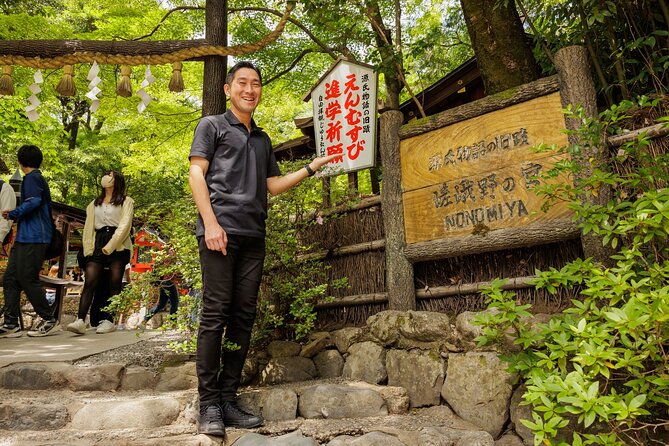
- Quiet Arashiyama route: Move from Nonomiya Shrine and the bamboo forest to lesser-visited temples and Osawa Pond.
- Yusuke Tanaka as your guide: He has guided more than 3,000 people and leads the tour himself.
- Literary option: The Tale of Genji version adds explanations about the sites connected with the classic Japanese novel.
- Small group size: The tour accepts no more than six people, making conversation and photo help easier.
- Extra costs to plan for: Temple and pond admissions total ¥1,300 per person, with snacks optional.
- About four hours on foot: Expect roughly 3 kilometers of walking, shoe removal at two temples, and an ending at Daikakuji Temple.
Why this Arashiyama walk feels different
Most first visits to Arashiyama follow a familiar pattern: bamboo grove, Togetsukyo Bridge, a few photos, then a quick return to central Kyoto. This outing takes a broader view. The bamboo forest is only one short stop, while the main portion leads you toward temples and ponds where the pace is calmer.
That change matters. Arashiyama is not just a photo stop. It has connections to imperial life, Buddhist practice, Japanese literature, and the old Saga area of Kyoto. Yusuke uses those links to explain what you are seeing rather than simply pointing out buildings.
The tour lasts about three to four hours, including walking and transfers between stops. It is not a strenuous hike, but it is a sustained walk. You cover about 3 kilometers and spend time standing, looking, listening, and removing your shoes at two temple buildings.
The group limit of six is one of the strongest practical features. A large group can make a temple visit feel like a procession. Here, you have a better chance to ask why a gate is painted black, how to pray at a shrine, or what makes a particular pond important.
Other walking tours in Kyoto people book:
- Kyoto Geisha Walking Tour: Gion District & Hidden Gems
★ 4.7 · 3,273 reviews - Kyoto: Gion Magical Night Walking Tour with Geisha Trivia
★ 4.9 · 2,393 reviews - Kyoto: Gion Geisha District Walking Tour – Stories of Geisha
★ 4.7 · 2,187 reviews
Starting at Nonomiya Shrine
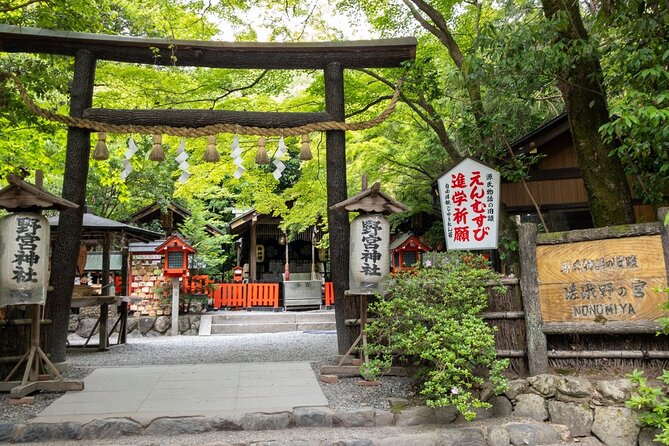
The meeting point is at Randen-yaJapan inside the Randen Arashiyama station complex. Starting here makes sense because Nonomiya Shrine and the bamboo forest are nearby, so you can begin with two of Arashiyama’s best-known sights before moving toward quieter ground.
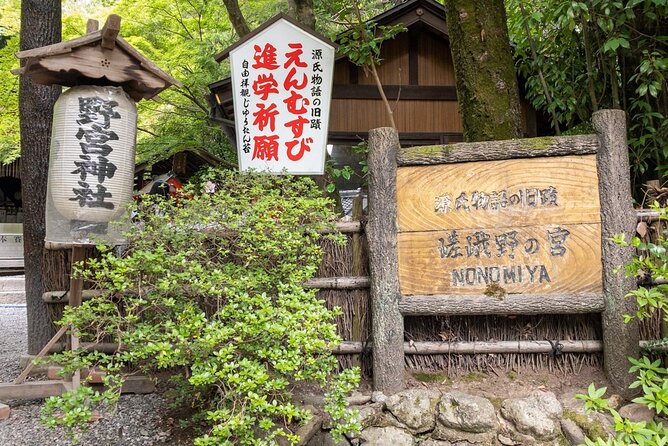
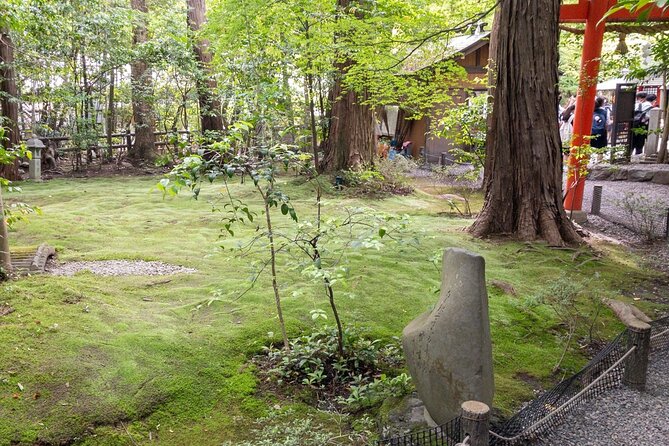
Nonomiya Shrine gives Yusuke a chance to explain the difference between a Shinto shrine and a Buddhist temple. You will also learn the basic way to approach and pray at a shrine, useful knowledge if this is your first visit to Japan.
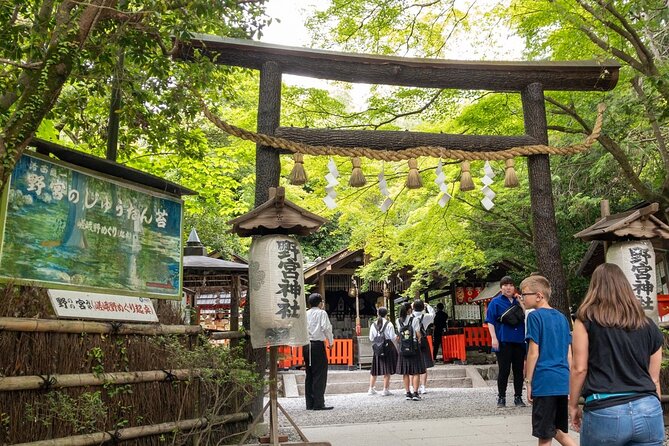
The shrine’s black wooden torii gate is a special detail. Only two shrines in Japan are said to have black torii gates, according to the tour information. The moss garden adds another layer, with a softer, more enclosed feeling than the open streets around the station.
You spend about 30 minutes here. That is enough time to look carefully and hear some context without turning the visit into a long lecture. I especially like this opening because it gives you a few simple customs to carry through the rest of your Kyoto sightseeing.
Fifteen minutes in the bamboo forest
The bamboo forest stop is short, about 15 minutes. That may sound brief, but it is a sensible choice if your goal is to escape crowds rather than spend the whole morning trying to find an empty stretch of bamboo.
You will have time to enjoy the tall bamboo and its soft natural soundscape, along with a few photos. Yusuke offers to take memorable pictures for you, and photography is one of his hobbies. That can be useful for solo visitors or couples who do not want to rely on a passing stranger for a quick snapshot.
Do not expect a private bamboo grove. This remains one of Kyoto’s most popular spots, and the tour cannot remove the crowds from it. The value comes from keeping this portion focused, then moving on to places where you have more room to look around.
If you want extensive time for posed photographs, this schedule may feel rushed. If you have already seen the grove or mainly want a taste of it before exploring elsewhere, 15 minutes is enough.
Seiryoji Temple and its 1,200-year story
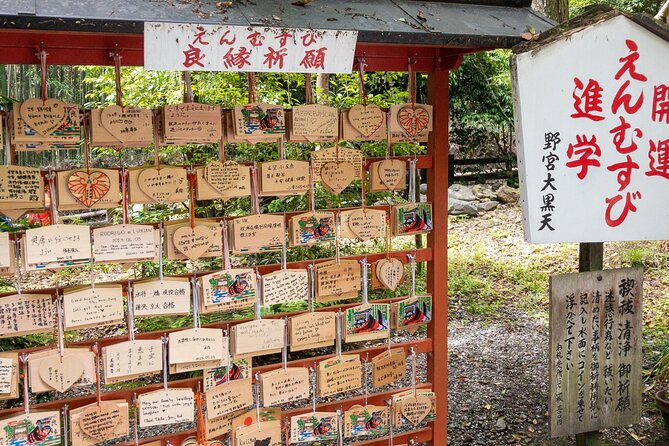
The next major stop is Seiryoji Temple, where you spend about 55 minutes. The temple was originally established about 1,200 years ago, although the present buildings date from roughly 300 years ago. That distinction is worth knowing because Japanese temple sites often have long histories while their visible structures are much newer.
Inside, you can see a Buddhist statue of Shaka Nyorai, identified as a Japanese national treasure. The visit offers a closer look at temple interiors and religious art than you get from simply walking around an exterior courtyard.
You must remove your shoes to enter. Wear socks and choose footwear that comes off easily, especially if you are visiting several temples during your Kyoto trip. The floor may also feel cool, so comfortable socks are a small but useful preparation.
Admission to Seiryoji costs ¥500 per person and is not included in the tour price. The extra fee is modest, but you should add it to your day’s budget before booking.
This is one of the places where a guide adds real value. Without context, you might notice an old wooden building and a large statue. With Yusuke’s explanations, you can better understand how the temple’s past, its surviving structure, and its religious role fit together.
Other mornings on the western edge of Kyoto:
- Kyoto: Fushimi Inari, Kinkakuji, Bamboo Grove 1 Day Bus Tour
★ 4.8 · 4,316 reviews - Osaka/Kyoto:Kinkakuji,Arashiyama,FushimiInariShrine,NaraPark
★ 4.1 · 1,596 reviews - Kyoto/Osaka: Nara, Fushimi Inari Taisha, Arashiyama Bus Tour
★ 4.7 · 1,275 reviews - Kyoto Arashiyama Walking Tour: Bamboo, Monkeys, Gardens & Secrets
★ 5.0 · 1,216 reviews
Daikakuji, once called Saga Gosho
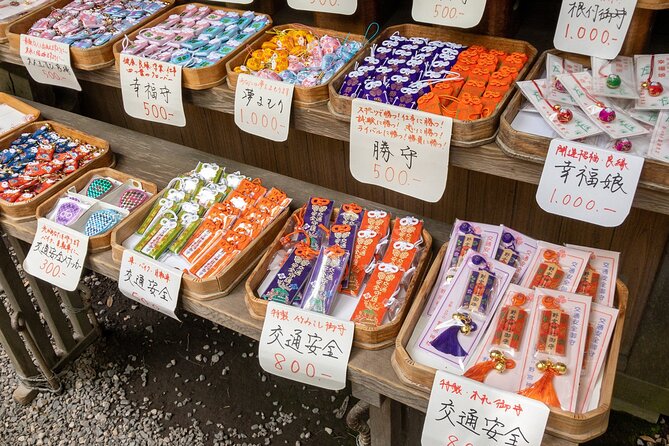
Daikakuji Temple is the longest temple visit, at about 50 minutes. The site began as Saga Gosho, a former imperial palace built about 1,200 years ago. That background changes the way you read the rooms, corridors, gardens, and formal spaces.
Daikakuji is also where the tour’s quiet character becomes clearest. It offers the feel of an imperial residence without the same level of crowd pressure found at Arashiyama’s headline sights. You can take time to notice architectural details and traditional spaces instead of moving immediately toward the next photo point.
You will remove your shoes here as well. Since both Seiryoji and Daikakuji require this, comfortable footwear and socks are more important than usual. The route also involves walking between stops, so this is not the day for stiff shoes or thin sandals that leave your feet sore.
Admission to Daikakuji and Osawa-no-ike Pond is listed together at ¥800 per person. The tour details also give Osawa Pond a separate ¥300 figure, so confirm the current ticket arrangement when you book or meet the guide. The supplied cost breakdown lists ¥1,300 total for Daikakuji, Osawa Pond, and Seiryoji, and that is the amount to set aside.
Osawa Pond and a quiet finish
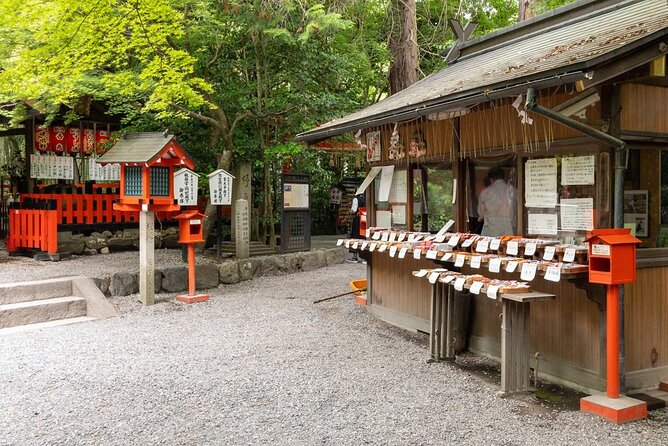
The final stop is Osawa Pond, described as the oldest artificial pond in Japan. You spend about 20 minutes here, taking in the water, seasonal scenery, and a quieter bamboo area.
This is a good ending because the mood changes again. The bamboo grove near the start is famous and compact. Osawa Pond gives you more open space and a slower final view. The setting also connects with the old imperial character of Daikakuji and the Saga area.
The tour ends at Daikakuji Temple, not back at the original meeting point. If you prefer to return to the start, Yusuke offers a free walking return tour. That is helpful, but it will add more time on your feet, so keep it in mind if you have dinner plans or train connections.
There are not many restaurants around the ending point. Bring a snack if you need one, or choose the optional Japanese snack offered during the tour, which costs about ¥500. Do not assume you will find a convenient meal immediately after finishing.
The Tale of Genji option explained
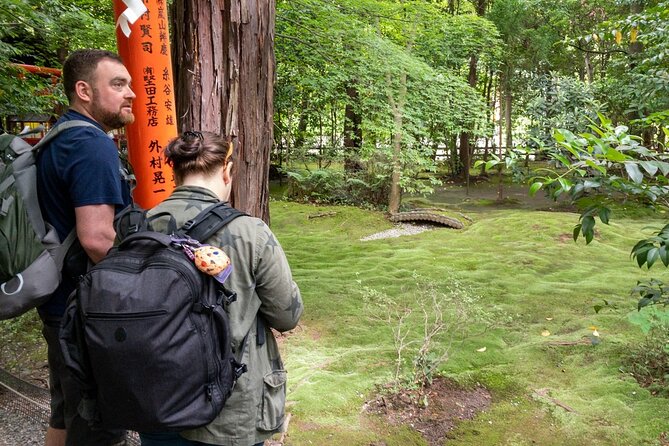
The literary version visits the same places as the standard tour. It does not add different stops. Instead, Yusuke gives more explanation about The Tale of Genji and its connection to the area.
Most of the places visited, apart from the bamboo forest, appear in the novel. If you have read the book, this option can give the walk a clear theme and help you connect physical places with its characters and setting. One particularly enthusiastic participant had read the novel several times and chose the tour to follow its fictional footsteps.
You do not need to be a literature specialist to take the regular tour. The standard option still includes the sights, local explanations, and temple visits. Choose the Tale of Genji version if you enjoy classic literature or want a more focused story running through the walk.
The added storytelling may also make the tour feel longer for someone who mainly wants photographs and scenery. That is not a flaw, but it is worth matching the option to your interests.
How much walking and effort should you expect?
The route covers around 3 kilometers, with about 55 minutes of walking time included in the total. The rest of the four-hour schedule is spent at shrines, temples, the bamboo grove, and the pond.
This is manageable for most people who can walk comfortably, and the tour notes say most participants can take part. Still, the route is not a quick two-hour introduction. Warm weather can make it feel tiring, particularly because Kyoto summers are hot and you spend time outdoors.
One participant, age 68, found the route lengthy on a warm day and became too tired to complete the final portion. That is useful guidance, not a reason to dismiss the tour. If you are concerned about heat, walking, or standing, ask yourself if you can comfortably handle several hours with short sightseeing pauses.
Bring water, sun protection, and a snack. The tour information specifically warns that restaurants are limited near the endpoint. Plan your day around the finish rather than assuming you can quickly sit down for lunch there.
What the $89 price includes
The tour costs $89 per person. That price includes Yusuke’s guiding, an original booklet of about 15 pages, and help taking photos.
The booklet is a nice practical extra. You can use it to remember the route and details after the walk, rather than relying only on photographs. The photo help also adds value for people traveling alone or anyone who wants a proper picture rather than another arm’s-length selfie.
The tour price does not include temple admissions. Set aside ¥500 for Seiryoji and ¥800 for Daikakuji and Osawa Pond, using the supplied total of ¥1,300 as your planning figure. Optional Japanese snacks cost about ¥500, and insurance is your responsibility.
At $89, this is not the cheapest way to see the bamboo forest. It can be good value if you want a personal guide, cultural explanations, a small group, and access to several places you might otherwise pass without understanding. It is less compelling if you only want a quick bamboo photo and a short walk.
The 4.9 rating from 14 reviews and 100 percent recommendation mark show strong satisfaction, but the sample is small. I would treat those figures as encouraging rather than absolute proof. The more useful evidence is the repeated praise for Yusuke’s explanations, care with the group, and ability to make the route feel personal.
Who will enjoy this tour most?
I would choose this tour if you have already seen Kyoto’s headline sights and want more context around Arashiyama. It also fits a first-time visitor who prefers a guided introduction rather than wandering between temples with a map.
It is especially suitable for:
- Readers of The Tale of Genji who want literary connections
- Solo visitors who would appreciate photo help
- Couples or friends who prefer a group of no more than six
- People interested in Buddhist temples, Shinto customs, and imperial architecture
- Visitors who want the bamboo forest without making it the entire Arashiyama experience
I would be more cautious if you dislike walking, are visiting during very hot weather, or need a quick tour between other reservations. The route is thoughtful, but it is not rushed. You need to give it most of half a day.
The tour also involves removing shoes. Anyone who dislikes this custom or has difficulty putting footwear on and off should plan accordingly. The provided information says most people can participate, but it does not promise special accessibility arrangements.
Meeting point, cancellation, and timing tips
You meet at Randen-yaJapan in the Randen Arashiyama station complex, at 202 Sagatenryuji Tsukurimichicho. The area is near public transportation, which makes the start practical for a Kyoto sightseeing day.
Confirmation is provided at booking, and the experience is booked on average 25 days ahead. If you want a particular date, especially during a busy Kyoto season, booking early is sensible.
Free cancellation is available until 24 hours before the start time. Changes or cancellations inside that window are not accepted for a refund. The activity depends on good weather, and a weather cancellation brings the choice of another date or a full refund.
The tour ends at Daikakuji Temple. If you need to return to the station area, use Yusuke’s free walking return option, but allow extra time and energy.
Should you book Arashiyama Hidden Gems?
Book it if you want Arashiyama to feel like a place to understand, not just a backdrop for photographs. Yusuke’s route links shrine customs, Buddhist art, imperial buildings, The Tale of Genji, and a quiet pond into one well-paced outing.
The strongest reasons to go are the small group, the less crowded temples, and Yusuke’s personal guiding. The strongest reasons to hesitate are the four-hour length, the extra admission fees, the shoe removal, and the possibility of heat making the walk tiring.
If The Tale of Genji interests you, choose that version. If not, the standard tour still offers the same stops and a useful introduction to the area. Bring water, snacks, comfortable shoes, and socks, then expect a fuller and calmer look at Arashiyama than the usual bamboo forest visit.
FAQ
How long does the tour take?
The tour takes about three to four hours. Walking and travel time are included, with about 3 kilometers of walking and roughly 55 minutes spent walking between sights.
What places does the tour visit?
The route visits Nonomiya Shrine, Arashiyama Bamboo Forest, Seiryoji Temple, Daikakuji Temple, and Osawa Pond.
Who guides the tour?
Yusuke Tanaka designed and guides the tour himself. He has experience guiding more than 3,000 people.
How many people can join?
The tour has a maximum group size of six travelers.
Are temple tickets included?
No. Seiryoji costs ¥500 per person, and Daikakuji Temple and Osawa-no-ike Pond are listed at ¥800 per person together. The supplied total for these admissions is ¥1,300 per person.
Do I need to remove my shoes?
Yes. You must remove your shoes to enter Seiryoji Temple and Daikakuji Temple.
Where does the tour finish?
The tour finishes at Daikakuji Temple. If you want to return to the starting point, Yusuke offers a free walking return tour.
More walking tours elsewhere in Japan
- Kyoto Gion Geisha District Walking Tour – The Stories of Geisha
★ 5.0 · 1,441 reviews - Nishiki Market Brunch Walking Tour (7 Tastings + Brunch)
★ 5.0 · 1,355 reviews - Kyoto Gion: 2-Hour Geisha Culture & History Walking Tour
★ 5.0 · 1,186 reviews - Kyoto: Izakaya Bars Guided Walking Tour
★ 4.9 · 815 reviews
More hidden-gem tours in Kyoto
- Private Kyoto Tour with a Local, Highlights & Hidden Gems, Personalised
★ 5.0 · 1,543 reviews - Arashiyama Bamboo Forest & Hidden Gems Bike Tour (Early Bird)
★ 5.0 · 613 reviews - Kyoto: Hidden Gems E-Bike Tour with Local Japanese Guide
★ 4.9 · 189 reviews - Kyoto: Gion Hidden Gems & Geisha Culture Tour
★ 4.9 · 126 reviews
Just added in Kyoto
- Private Cooking Class Udon in Kyoto Japan★ 5.0 · 23 reviews
- Your Private Vacation Photography Session In Kyoto★ 5.0 · 110 reviews
- Kyoto: Zen Meditation at a Private Temple with a Monk★ 5.0 · 25 reviews
- Private Pewter Sake Cup Experience with a Kyoto Artisan★ 5.0 · 31 reviews
- Kyoto Wagashi(Japanese sweets) Cooking Class near Fushimiinari★ 5.0 · 60 reviews
- Kyoto:Family-Friendly Kimono & Yukata Experience at WARGO★ 5.0 · 147 reviews
- Private Guided Traditional Buddhist Cooking in Japan★ 5.0 · 16 reviews
- Kyoto: Gion Geisha District & Sake-in-Hand Walking Tour★ 5.0 · 37 reviews
Arashiyama & Bamboo Grove Tours, compared.
Osaka/Kyoto:Kinkakuji,Arashiyama,FushimiInariShrine,NaraPark
Read our review →
Kyoto/Osaka: Nara, Fushimi Inari Taisha, Arashiyama Bus Tour
Read our review →
Kyoto Arashiyama Walking Tour: Bamboo, Monkeys, Gardens & Secrets
Read our review →
Arashiyama Bamboo, Temple, Monkeys, or Secret Sake Brewery
Read our review →
Arashiyama Bamboo Forest, Monkeys, Matcha & Temple Tour
Read our review →
Osaka/Kyoto: Arashiyama, Nara & Fushimi Inari Shrine w/Lunch
Read our review →
Nijo, Kinkaku-ji, Arashiyama, Kiyomizu & Fushimi Inari
Read our review →
Kyoto Ghost Tour: Dark Tales, Urban Legends, Bamboo Forest Night
Read our review →Browse the lists this tour appears in