
Reviewed · WALKING TOURS
Kyoto Early Bird Walking Tour
Kyoto’s most famous sights are at their best before the city wakes up. This private morning tour gets you to Fushimi Inari’s torii gates, Kinkaku-ji, and Arashiyama’s bamboo forest early, then returns you to Kyoto Station with the afternoon still free.
I like two things here. First, a guide takes care of the tricky movement between sites spread across Kyoto, using trains and buses while you focus on the temples and scenery. Second, the early timing is not a minor detail. It is the main reason this plan works, especially at Fushimi Inari and the bamboo forest.
The trade-off is clear: you must meet early and keep moving. This is a private tour, but it is not a slow, leisurely stroll. You will cover a lot of ground in roughly five hours, and the ¥1,220 transport fare, ¥500 Kinkaku-ji admission, food, and drinks are extra.
Key points to know before booking
- Three major sights before noon: Fushimi Inari, Kinkaku-ji, and Arashiyama are all included in one morning.
- Early start makes the difference: You visit popular places before the main crowds arrive.
- Private group format: Only your party takes part, making it easier to ask questions or request small adjustments.
- Local transport is part of the experience: Your guide leads you through the trains and buses connecting Kyoto’s distant districts.
- Expect serious walking: Comfortable shoes, water, and reasonable fitness will make the morning much easier.
- Strong guide service: Akiko, Sumiko, Kaz, Miho, Tomoko, Makoto, and other guides are praised for cultural explanations, route planning, family care, and photo help.
Why the early start matters in Kyoto
The tour begins at Kyoto Station in the early morning and ends back at the same meeting point by about noon. That timing gives you a useful half-day plan without sacrificing your afternoon.
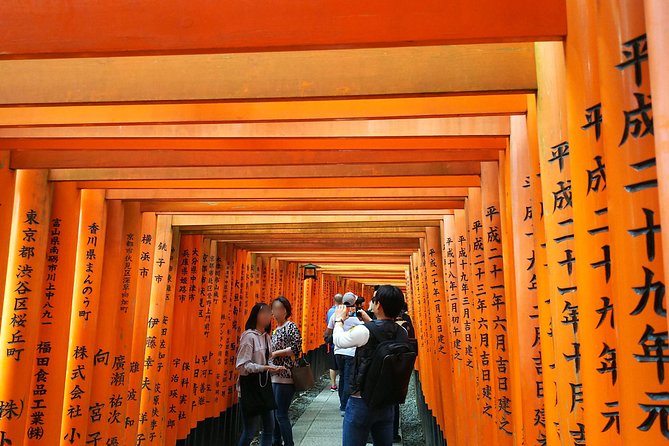
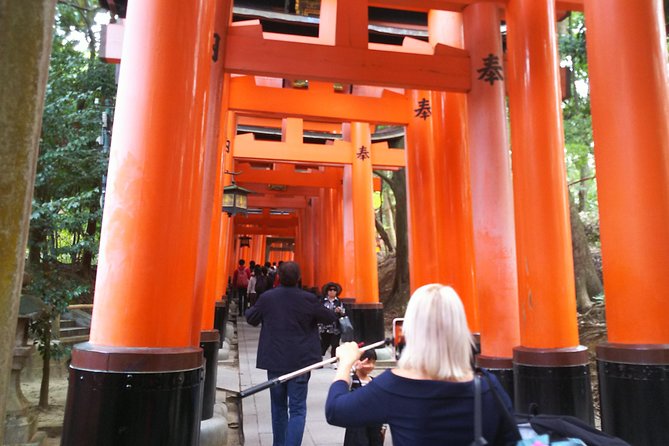
Kyoto’s best-known sights can become crowded quickly. At Fushimi Inari, that changes the feel of the torii tunnel. Early on, you have more room to notice the repeating vermilion gates, the forested slopes, and the quiet rhythm of the shrine path. Later, the same route can feel more like a queue.
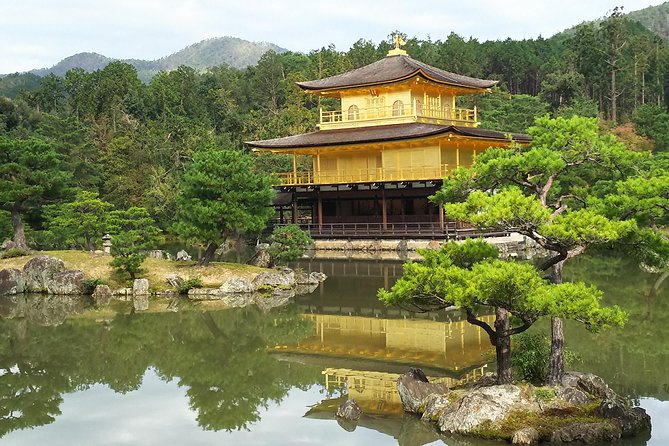
Kinkaku-ji also benefits from a prompt arrival. The gilded pavilion is viewed from across a pond, and the composition is simple: gold, water, trees, and sky. A quieter morning gives you more time to look closely and take photographs without constantly waiting for a clear opening.
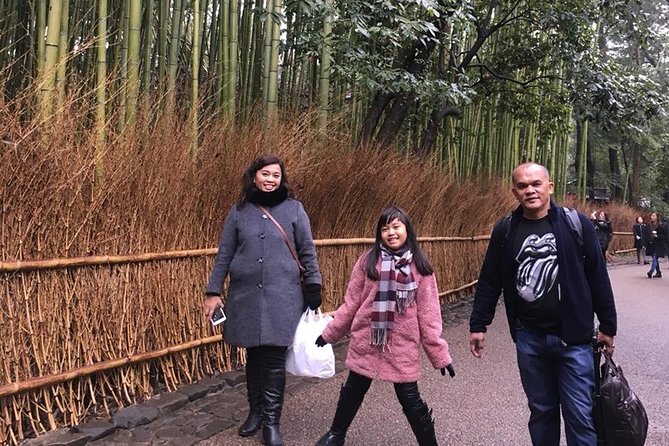
Arashiyama is the final major stop, and the timing helps there too. The bamboo grove is striking in the cool morning air, when sunlight filters between the tall stalks and the path feels less congested. You do not get the whole district in this one-hour stop, but you do get its signature sight at a sensible time.
Other walking tours in Kyoto people book:
- Kyoto Geisha Walking Tour: Gion District & Hidden Gems
★ 4.7 · 3,273 reviews - Kyoto: Gion Magical Night Walking Tour with Geisha Trivia
★ 4.9 · 2,393 reviews - Kyoto: Gion Geisha District Walking Tour – Stories of Geisha
★ 4.7 · 2,187 reviews
Fushimi Inari and its vermilion torii gates
Your first stop is Fushimi Inari-taisha Shrine, reached from Kyoto Station. The visit lasts about an hour, with free admission.
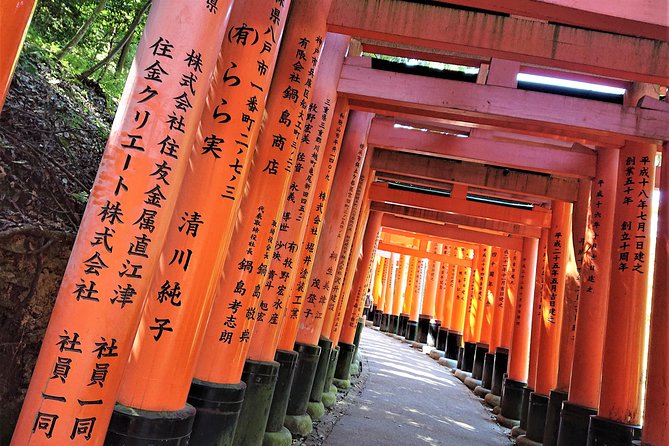
The shrine is famous for its thousands of vermilion torii gates. Each gate was offered by a worshipper or business in appreciation for good fortune, creating the long tunnel that appears in so many Kyoto photographs. Your guide can add meaning to what might otherwise be just a very photogenic walk, explaining the shrine’s Shinto setting and why the gates are there.
An hour is enough to experience the lower sections and appreciate the design, but not enough for a full climb through the mountain paths. That is worth knowing if you picture a long hike. This tour focuses on the iconic gate-lined route rather than an extended exploration of the entire shrine complex.
The ground can be uneven, and you will be walking uphill in places. Wear shoes with good support. In summer, carry water and consider sun protection. One guide also recommends a sun umbrella for hot-weather touring, a practical idea given the amount of time spent outside.
Fushimi Inari is often the emotional high point of the morning because the first stop feels calm and atmospheric. You are not simply checking off a famous site. You are walking through a place still used for worship, with the gates showing how religious practice and everyday gratitude shape the site.
Kinkaku-ji in the first morning light
After Fushimi Inari, the route continues to Kinkaku-ji, the Golden Pavilion. Admission is not included, so plan on paying ¥500 per person. The visit is listed at about one hour.
Kinkaku-ji is a Zen temple associated with the culture of Japan’s samurai era. The main attraction is the gold-covered pavilion reflected in the pond, but the pleasure of the visit comes from seeing how the building sits within its garden setting.
The early arrival is especially useful here. The pavilion itself is not a place you enter for a long interior visit. You follow the viewing route, pause at the best angles, and continue through the grounds. A guide helps turn that short route into a more meaningful stop by explaining the temple’s role, design, and place in Kyoto’s past.
Do not expect solitude. Kinkaku-ji is one of Kyoto’s most popular sights, and even opening time does not guarantee an empty scene. The advantage is that the morning usually gives you a better chance at clear views before the heavier flow arrives.
This is also the stop where the tour’s pace may become noticeable. You have already walked at Fushimi Inari, and you still have Arashiyama ahead. If you want a long, unhurried garden visit, a private day tour would suit you better. If you want a strong first look at one of Kyoto’s essential sights, an hour is practical.
Arashiyama bamboo forest before midday
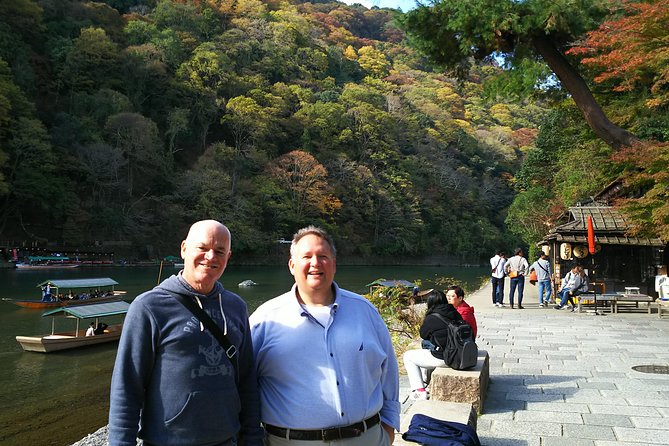
Arashiyama is the third stop, with about an hour in the bamboo forest and no separate admission charge listed.
The grove is cooler than the open streets and has a distinct sound as wind moves through the bamboo. This is a place where the guide may encourage you to pause, close your eyes, and listen rather than rush from one photo spot to the next. That small moment helps you appreciate the setting beyond its familiar images.
The bamboo forest is not a remote wilderness. It is a public attraction with a defined walking path, and its reputation draws large numbers of people. An early visit gives you the best chance of a more comfortable walk, but you should not assume the path will be empty.
The one-hour stop is focused. It does not leave time for a broad exploration of every corner of Arashiyama, nor does the supplied plan promise visits to additional attractions in the district. If bamboo is your priority, this gives you the essential experience. If you want temples, gardens, river views, or a longer stay in Arashiyama, plan to return later in your own time.
Finishing here before noon is a smart part of the design. You can continue exploring Kyoto, stop for lunch, or return to your hotel while many other visitors are only beginning their sightseeing.
Other guided walks in Kyoto:
- Kyoto Gion Geisha District Walking Tour – The Stories of Geisha
★ 5.0 · 1,441 reviews - Nishiki Market Brunch Walking Tour (7 Tastings + Brunch)
★ 5.0 · 1,355 reviews - Kyoto Arashiyama Walking Tour: Bamboo, Monkeys, Gardens & Secrets
★ 5.0 · 1,216 reviews - Kyoto Gion: 2-Hour Geisha Culture & History Walking Tour
★ 5.0 · 1,186 reviews
The real value of having a private guide
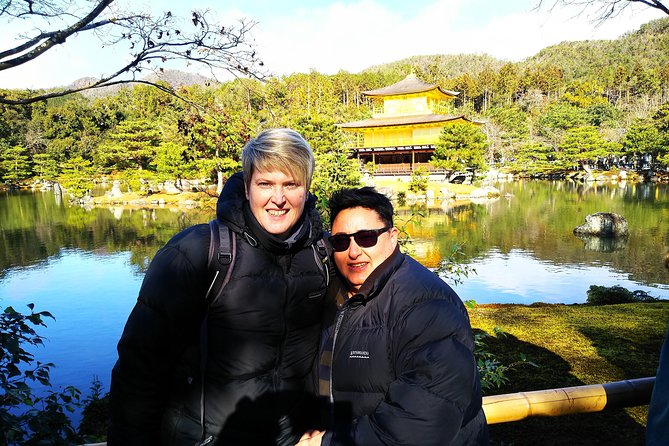
The private format is more important here than it might first appear. Fushimi Inari, Kinkaku-ji, and Arashiyama are spread across different parts of Kyoto. Moving among them requires more than following one simple walking route.
Your guide leads you through the public transport system, with the listed fare totaling ¥1,220 per person. Several guides are praised for finding the right train or bus and keeping waiting time low. Miho, Mihu, and Makoto are specifically described as making the connections easy to follow, even in rain. Toshi’s route planning helped a family move quickly between the three sites, while Kazuo was valued for taking the stress out of navigating Kyoto.
You should have an IC card ready if possible, since one group found a charged card useful for trains, buses, and vending machines. The tour does not include the transport fare, so budget for it separately.
Because only your group participates, the guide can adjust the pace within reason. Kaz accommodated a request to change the order slightly, and guides are described as checking on water and restroom needs. Families also appear to fit the format well. Akiko was praised for working comfortably with young children, and Kaz kept children engaged with conversation about Studio Ghibli films.
A private tour does not mean you can ignore the clock. The three locations are fixed, and the morning has a tight rhythm. Think of the guide as your route planner, interpreter, and timekeeper rather than someone leading a long, slow walk at every stop.
What the guide service adds
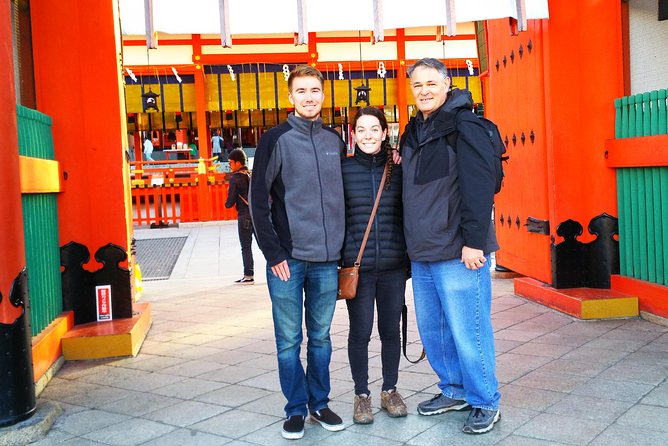
The guide quality is one of the strongest reasons to consider this experience. Names repeatedly associated with warm, useful service include Akiko, Sumiko, Kaz, Tomoko, Miho, Makoto, Megumi, Hiro, Emiko, Naoko, Miko, and Makiko.
Their roles go beyond reciting dates. You can expect explanations of Buddhist and Shinto practices, Japanese history, temple design, and the meaning behind the sites. Several guides also help with photographs and know useful photo positions. Akiko, for example, was praised for taking photos of couples and for being attentive to children.
Practical care comes through as well. Makoto contacted a group before a rainy tour, shared pictures of the Kyoto Station meeting point, and checked on comfort during the day. Hiro even helped a group find a pharmacy. These small acts matter when you are tired, unfamiliar with the transport system, or dealing with changing weather.
Guide assignments can vary, so you should not assume a particular person is guaranteed. The consistent pattern is a friendly, well-prepared approach, with guides such as Sumiko bringing printed agendas and helping explain the day’s sequence.
Price, extra costs, and overall value
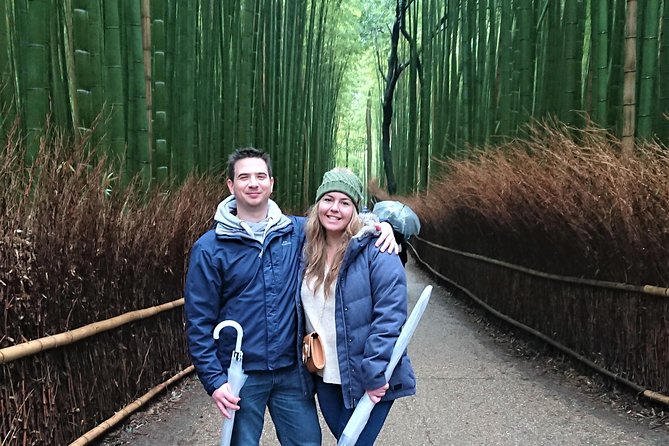
The listed price is $105.45 per person. That is not a budget sightseeing walk, but the comparison should include what the fee saves you: route planning, cultural explanation, and a private guide for a difficult five-hour morning.
Add ¥1,220 per person for public transport and ¥500 for Kinkaku-ji. Food and drinks are also excluded. The three sites themselves are not equally priced: Fushimi Inari and the bamboo forest have no admission charge listed, while Kinkaku-ji requires the separate ticket.
The value is strongest if you have limited time in Kyoto, are visiting for the first time, or feel uneasy managing several train and bus connections. It is also useful for families and small groups who want personal help rather than a large coach tour.
The value is weaker if you already know Kyoto’s transport system, prefer to spend half a day at one temple, or are comfortable arriving very early and visiting independently. You can see these sites on your own for less, but you will need to handle the route, timing, tickets, and explanations yourself.
Group discounts are available, and mobile ticketing makes booking convenient. The tour has a 4.9 rating from 377 reviews and a 99 percent recommendation rate, which supports the idea that the service is consistently well received, though no guided tour can guarantee perfect weather or empty paths.
Who should book this morning tour
I would choose this for a first Kyoto visit, especially if you have only a few days. It gives you three famous sights, a useful introduction to the city, and an afternoon for your own plans.
It also suits families, couples, and small private groups who value help with transport. The guides have shown patience with children, flexibility with small changes, and care with photo stops and breaks.
You should be comfortable with a moderate level of physical activity. The tour involves quite a bit of walking, stairs or slopes may appear at the shrine, and the pace is designed to fit three distant sites into one morning. It is not recommended for people with heart conditions. The experience is described as accessible for people with limited mobility and limited eyesight, but you should discuss your specific needs when booking.
Animals and pets are allowed according to the tour information. Weather matters, too. If poor weather causes cancellation, you are offered another date or a full refund. For your own comfort, bring water, comfortable shoes, and rain protection when needed.
Should you book the Kyoto Early Bird Walking Tour?
Book it if you want Kyoto’s three headline sights in one carefully planned morning and you do not want to spend your first day studying transit maps. The early departure is the key benefit, not a minor feature.
Skip it if you want a slow temple day, dislike early mornings, or prefer to explore each district on its own. For most first-time visitors with limited time, the private guide, smart routing, and before-noon finish make the $105.45 fee reasonable, provided you budget for transport and Kinkaku-ji separately.
FAQ
Where does the Kyoto Early Bird Walking Tour start?
It starts at Kyoto Station Building, 901 Higashishiokōjichō, Shimogyo Ward, Kyoto, 600-8216, Japan.
Where does the tour finish?
The activity ends back at the Kyoto Station meeting point.
How long does the tour last?
The tour lasts approximately 5 hours and 15 minutes and is scheduled to finish by around noon.
Which attractions are included?
The tour visits Fushimi Inari-taisha Shrine, Kinkaku-ji Temple, and Arashiyama’s bamboo forest.
Is Kinkaku-ji admission included?
No. The Kinkaku-ji admission fee is ¥500 per person and must be paid separately.
Are public transport fares included?
No. Public transportation costs ¥1,220 per person and are not included in the tour price.
Is this a private tour?
Yes. Only your group participates in the activity.
What should I bring?
Wear comfortable shoes because the tour involves quite a bit of walking. Water is also useful, especially in summer, and you should prepare for the day’s weather.
Can I cancel for a full refund?
Yes. You can cancel at least 24 hours before the local start time for a full refund. Cancellations or changes made less than 24 hours before the start are not refunded or accepted. If poor weather cancels the tour, you are offered another date or a full refund.
Just added in Kyoto
- Kyoto: Private Photoshoot Service★ 5.0 · 158 reviews
- Kyoto Rickshaw Tour★ 5.0 · 210 reviews
- Izakaya Style Cooking Class★ 5.0 · 219 reviews
- Kyoto: Traditional Concert at Townhouse or Bathhouse★ 4.9 · 224 reviews
- Ninja 2-hour Hands-on Lesson by Japanese master in Kyoto -Medium★ 5.0 · 218 reviews
- Kyoto: Arashiyama Bamboo, Temple, Matcha, Monkeys & secret spots★ 5.0 · 219 reviews
- Kyoto: Gion & Pontocho Food Tour with 13 Dishes★ 4.9 · 235 reviews
- Kyoto: Afternoon Japanese Izakaya Cooking Class★ 4.9 · 241 reviews
Walking Tours, compared.
Kyoto Geisha Walking Tour: Gion District & Hidden Gems
Read our review →
Tokyo Tsukiji Fish Market Food and Culture Walking Tour
Read our review →
Imperial Palace and Shogun Historical Walking Tour
Read our review →
Gion Geisha District Walking Tour – Stories of Geisha
Read our review →
Shinjuku Local Bar and Izakaya Guided Walking Tour
Read our review →
Asakusa Walking Tour with Sensoji Temple Visit
Read our review →
Nishiki Market Brunch Walking Tour (7 Tastings + Brunch)
Read our review →Browse the lists this tour appears in