
Reviewed · WALKING TOURS
Kyoto Early Riser Platinum One-Day Walking Tour
Kyoto’s biggest sights are spread across the city, and this early-start private tour tackles many of them before the day gets hot and crowded. You begin at Fushimi Inari, then move through Arashiyama, Kinkakuji, northern Kyoto, and Nishiki Market before returning to Kyoto Station.
I like the chance to shape the day around your interests, especially since guides such as Gigi, Fuji-san, Seiya, and Meg have been praised for adding photo stops, local suggestions, and helpful cultural context. I also like that the route uses buses, trains, and subways, letting you see ordinary Kyoto neighborhoods between the famous temples.
The tradeoff is clear: eight hours is a lot of ground to cover. Public transport can be slow and crowded, and the bamboo forest receives only about an hour. If you prefer a relaxed pace, split these sights over two days.
Key points at a glance
- An early start at Fushimi Inari: Begin with Kyoto’s famous red torii gates before the busiest part of the day.
- Six major stops in one day: The route includes Fushimi Inari, Arashiyama, Kinkakuji, Kitano Tenmangu, Kamishichiken, and Nishiki Market.
- Private guiding: Only your group takes part, so you can ask questions and adjust the pace within the limits of the schedule.
- Public transport is part of the experience: Buses, trains, and subways connect the sights, but fares cost extra and transfers take time.
- A useful first-day overview: You get temples, shrines, a geisha district, food stalls, shopping, and Kyoto’s best-known scenery.
- Good value for a busy itinerary: The price is $130.79 per person, before transport and the Kinkakuji admission fee.
Why the early start matters at Fushimi Inari
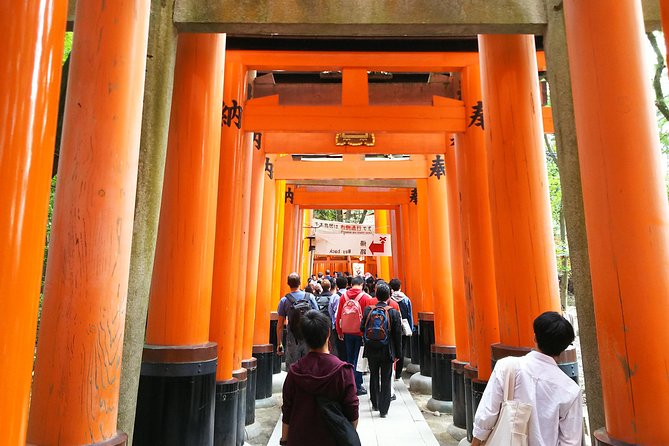
The day begins at Kyoto Station Building, where you meet your guide. Starting early is the right move for Fushimi Inari-taisha Shrine. Its tunnel of vermilion torii gates is one of Kyoto’s most photographed sights, and the narrow paths become harder to enjoy as the day fills up.
The scheduled visit lasts about one hour. That gives you time to walk beneath a good stretch of gates, take photographs, and hear about the tradition behind them. Businesses and individuals donate torii gates to express thanks for good fortune, which gives the shrine’s famous corridors a more personal meaning than a simple photo backdrop.
You should not expect to hike the entire mountain in this time. The tour is designed as a citywide overview, not a full Fushimi Inari climb. Wear comfortable shoes, since the route involves quite a bit of walking from the start.
This first stop also sets the tone for the day. You see a major religious site, learn how it functions, and then move on rather than spending half a day in one place. That suits a first visit, but it will feel rushed if you want long quiet pauses.
Other walking tours in Kyoto people book:
- Kyoto Geisha Walking Tour: Gion District & Hidden Gems
★ 4.7 · 3,273 reviews - Kyoto: Gion Magical Night Walking Tour with Geisha Trivia
★ 4.9 · 2,393 reviews - Kyoto: Gion Geisha District Walking Tour – Stories of Geisha
★ 4.7 · 2,187 reviews
A short but memorable hour in Arashiyama
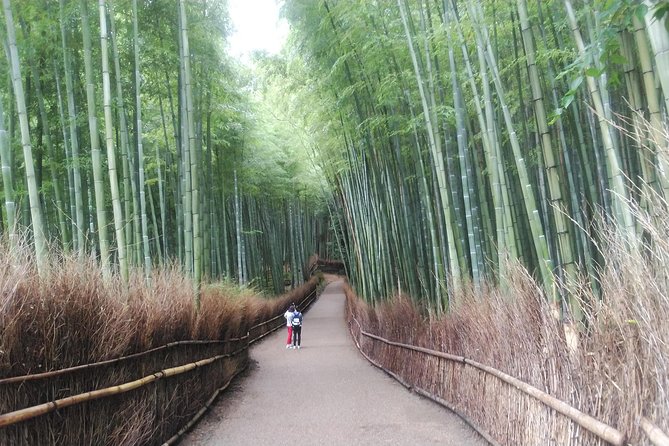
The next major stop is Bamboo Forest Street in Arashiyama, scheduled for about one hour and ten minutes. The tall bamboo, filtered light, soft rustling, and creaking trunks create a completely different mood from Fushimi Inari’s red gates.
The forest is beautiful, but the visit has limits. You will have time to walk through the famous section and take pictures, yet not enough time to treat Arashiyama as a full district. The supplied timing does not include a broad exploration of nearby sights, so keep your expectations focused on the bamboo path.
This is one of the tour’s weaker points for anyone who loves Arashiyama. The area deserves more time, and public transport between distant parts of Kyoto can eat into the sightseeing schedule. The guide can help you make the most of the visit, but no guide can remove the distance between western Arashiyama and the other stops.
Still, the contrast is valuable. You move from shrine architecture to a natural setting, then continue to one of Kyoto’s most recognizable temples. If you have just one day for Kyoto’s headline sights, this is an efficient way to sample the city.
Seeing the Golden Pavilion at Kinkakuji
Kinkakuji Temple receives about 50 minutes. The Golden Pavilion is one of Kyoto’s defining sights, with its gilded exterior reflected in the pond. It is tied to Zen temple culture and the world of the samurai, but the visual impact is immediate even if you know little about its background.
The admission fee is not included. The listed cost is ¥500 per person, so budget for that separately. Once inside, you follow the established viewing route rather than wandering freely through every part of the temple grounds.
Fifty minutes is enough for the main view, photographs, and a short walk through the grounds. It is not enough for a slow study of every building or garden detail. That makes the stop practical for a first overview, especially when combined with five other destinations, but less satisfying for repeat visitors who already know Kyoto’s central sights.
Your guide’s role matters here. A strong guide can explain what you are seeing instead of leaving you with only a famous photograph. Guides on this experience have also been praised for finding scenic places and helping with pictures, useful at a location where many people want the same classic view.
Kitano Tenmangu and the quieter side of northern Kyoto
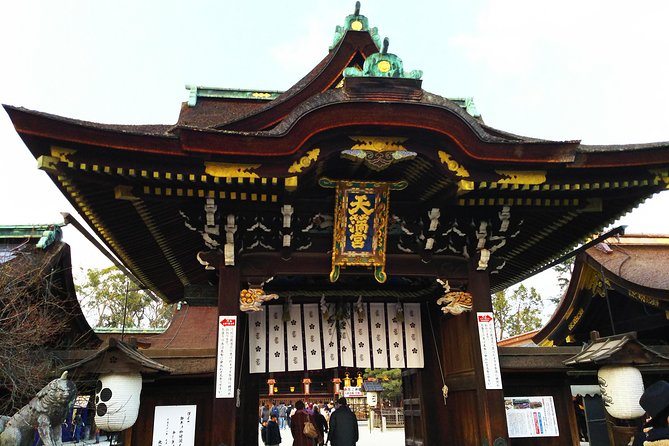
Kitano Tenmangu Shrine offers a change of pace after Kinkakuji. Built in 945, the shrine honors Sugawara no Michizane, associated with academic success. Students visit to pray for good examination results, giving the site a clear connection to everyday Japanese life.
The planned visit lasts about 30 minutes, and admission is free. That is enough for a look around and an explanation of the shrine’s purpose, but not a long, unhurried exploration.
I like this stop because it adds context beyond the standard temple checklist. You see how a shrine connects with school, family hopes, and personal goals. It also helps break up the better-known attractions with a place that has a strong local role.
The short stop works well if you want variety. If you are especially interested in religious architecture or shrine customs, you may wish the schedule allowed more time.
Other guided walks in Kyoto:
- Kyoto Gion Geisha District Walking Tour – The Stories of Geisha
★ 5.0 · 1,441 reviews - Nishiki Market Brunch Walking Tour (7 Tastings + Brunch)
★ 5.0 · 1,355 reviews - Kyoto Arashiyama Walking Tour: Bamboo, Monkeys, Gardens & Secrets
★ 5.0 · 1,216 reviews - Kyoto Gion: 2-Hour Geisha Culture & History Walking Tour
★ 5.0 · 1,186 reviews
Kamishichiken, Kyoto’s old entertainment district
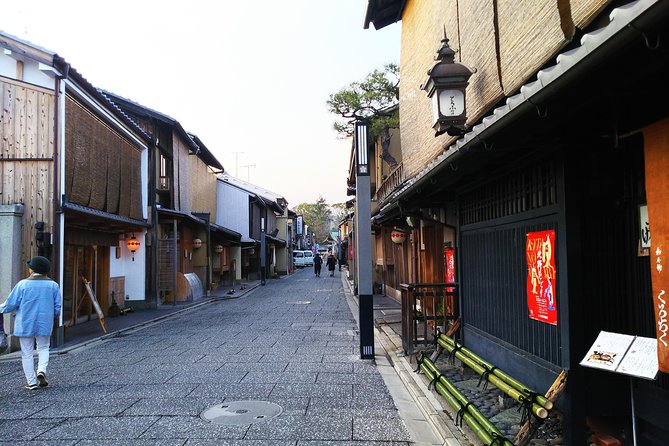
Just beside Kitano Tenmangu is Kamishichiken, one of Kyoto’s five traditional hanamachi, or geisha districts. The visit to Kamishichiken Kaburenjo Theatre lasts about 25 minutes and is free.
This is a brief walk, not a promised performance. You will see the district’s streets and learn about its connection to geiko and maiko culture. Kamishichiken is smaller and less heavily populated with geisha houses than some of Kyoto’s better-known districts, which can make it feel more restrained.
The value here is in the explanation. Without context, an old street can pass in a few minutes. With a guide, you can better understand how the entertainment districts fit into Kyoto’s cultural life. Keep your camera respectful and follow your guide’s advice about photography.
The pairing with Kitano Tenmangu is efficient because the two stops are next to each other. It is a good example of why a private guide can help: you do not need to work out the connection between nearby sites yourself.
Tasting and browsing at Nishiki Market
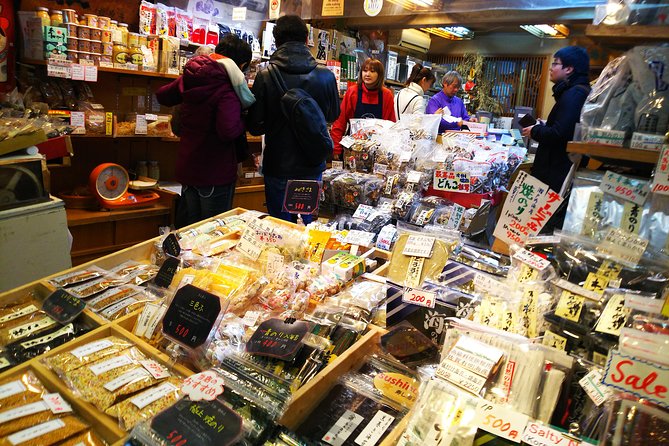
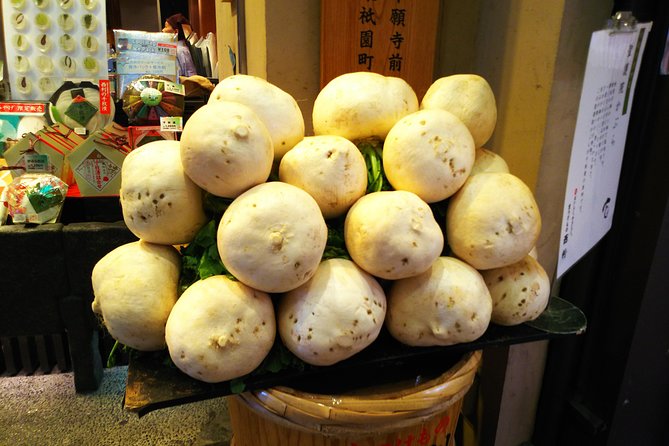
The final sightseeing stop is Nishiki Market, a 390-meter shopping street with 126 shops. The market has served Kyoto residents for about 400 years and is the best place on this route to shift from temples and shrines to food.
You have about 40 minutes here. Shops sell Kyoto vegetables, pickles, and other local foods, and you may have chances to taste some of them. This is not a sit-down food tour, so treat the visit as a quick introduction rather than a full meal.
Forty minutes can disappear quickly at Nishiki Market. You may want to browse, sample, shop, and ask your guide what is distinctive, all while moving through a narrow passage. If food is a major reason for booking, tell your guide early so the stop can match your interests as much as possible.
A guide can also make this stop easier. You get help identifying unfamiliar ingredients and local specialties instead of simply walking past rows of attractive but mysterious snacks. Some guides have also arranged lunch, though lunch is not listed as an included part of the tour, so confirm any plan and payment directly with the operator.
How the private format affects the day
Only your group participates, and the professional guide is included in the price. That private format is the tour’s strongest practical feature. You can ask questions without holding up a large group, request help with photographs, and explain whether you care most about temples, food, history, or local neighborhoods.
Guides named in past tour details include Gigi, Fuji-san, Seiya, and Meg. Availability is not guaranteed, but the range of personal styles matters. Gigi has been associated with arranging lunch and making extra effort around personal interests. Fuji-san has been praised for covering requested sights and pointing out scenic places. Seiya has used buses and subways to show more of Kyoto between stops, while Meg has been noted for thoughtful touches such as bringing hand warmers on a cold morning.
Do not book this expecting a fixed lecture delivered at every stop. The appeal is human guidance and flexibility within a demanding route. The more clearly you explain your interests at the beginning, the more useful the day is likely to be.
The real cost: $130.79 plus local expenses
The advertised price is $130.79 per person. That includes the guide, but not the Kinkakuji admission or public transport. The stated extra costs are ¥500 for admission and about ¥1,700 for transportation per person.
That puts the actual cost above the headline price, and you should plan for fares throughout the day. A Suica card will make the transport easier. Without one, you may spend too much time counting coins, especially when several transfers are involved.
Is it good value? For a private day with six major stops and a guide who can explain cultural details, yes, particularly if you are visiting Kyoto for the first time. It is less compelling for a solo visitor on a tight budget, or for someone who prefers to move slowly and use public transport independently.
The price also reflects time saved in planning. You do not have to work out the order of distant sights, decide which station connects to which bus, or research the meaning of each place while standing in line. The downside is that the route’s efficiency depends on Kyoto’s transport system, which can be crowded and poorly connected.
Walking, weather, and practical comfort
Expect a full day of walking, standing, stairs, and public transport. The experience is described as suitable for most people, with access support for people with limited eyesight or limited mobility, but it is not stroller accessible.
Animals are allowed according to the general participation information, while the details also say the experience is not suitable for pets. That wording is not fully clear, so confirm directly before booking if an animal is important to your plans.
The tour requires good weather. If poor weather causes cancellation, you are offered another date or a full refund. Normal cancellation is free up to 24 hours before the start time, but late cancellations and changes are not refunded or accepted.
Wear shoes you can walk in for eight hours. Bring a transit card if you have one, and keep some flexibility around lunch and market purchases. An early start helps with crowds, but it also means you should be ready to stay active from the first shrine.
Who should book this Kyoto day tour?
I would choose this tour if you are visiting Kyoto for the first time and want a useful sweep of the city’s main cultural sights. It works especially well for couples, families, or small groups who value a private guide and do not want to build a complicated route themselves.
I would also consider it if you want cultural explanation rather than simple transportation. The mix of shrine, temple, bamboo forest, traditional district, and food market gives you a broad sense of Kyoto in one day.
I would skip it if your priority is a slow Arashiyama visit, a long food crawl, or detailed photography at each temple. The schedule is ambitious, and the transport time is unavoidable. In that case, spend one day around Fushimi Inari and southern Kyoto, then another around Arashiyama and northern Kyoto.
Should you book it?
Book this tour if you want maximum coverage with a private guide and accept a fast pace. The early Fushimi Inari visit, personal attention, and mix of famous and less obvious stops make it a strong first-day introduction.
Think twice if eight hours of walking and public transport sounds tiring. The tour’s main weakness is not the sights, but the distance between them. For the right person, that tradeoff is worthwhile. For a slower visit, divide the route over two days.
FAQ
Where does the tour begin?
It begins at Kyoto Station Building, 901 Higashishiokōjichō, Shimogyo Ward, Kyoto, 600-8216, Japan.
Where does the tour end?
The activity ends back at the meeting point at Kyoto Station Building.
How long does the tour last?
The tour lasts approximately eight hours.
Is this a private tour?
Yes. Only your group participates in the activity.
What is included in the price?
A professional guide is included.
Are admission fees included?
No. The Kinkakuji admission fee is listed separately at ¥500 per person. The other listed stops have free admission.
Is public transportation included?
No. Public transportation costs about ¥1,700 per person and are paid separately.
How much walking is involved?
Quite a bit of walking is involved across the temples, shrines, bamboo forest, market, and transport connections.
Can I cancel for a full refund?
Yes, if you cancel at least 24 hours before the experience start time. Cancellations made less than 24 hours before the start are not refunded.
What happens if the weather is poor?
The experience requires good weather. If it is canceled because of poor weather, you are offered another date or a full refund.
Just added in Kyoto
- Kyoto: Zen Meditation at a Private Temple with a Monk★ 5.0 · 25 reviews
- Private Cooking Class Udon in Kyoto Japan★ 5.0 · 23 reviews
- Your Private Vacation Photography Session In Kyoto★ 5.0 · 110 reviews
- Private Pewter Sake Cup Experience with a Kyoto Artisan★ 5.0 · 31 reviews
- Kyoto Wagashi(Japanese sweets) Cooking Class near Fushimiinari★ 5.0 · 60 reviews
- Kyoto:Family-Friendly Kimono & Yukata Experience at WARGO★ 5.0 · 147 reviews
- Private Guided Traditional Buddhist Cooking in Japan★ 5.0 · 16 reviews
- Kyoto: Gion Geisha District & Sake-in-Hand Walking Tour★ 5.0 · 37 reviews
Walking Tours, compared.

Kyoto Geisha Walking Tour: Gion District & Hidden Gems
Read our review →
Tokyo Tsukiji Fish Market Food and Culture Walking Tour
Read our review →
Imperial Palace and Shogun Historical Walking Tour
Read our review →
Gion Geisha District Walking Tour – Stories of Geisha
Read our review →
Shinjuku Local Bar and Izakaya Guided Walking Tour
Read our review →
Asakusa Walking Tour with Sensoji Temple Visit
Read our review →
Nishiki Market Brunch Walking Tour (7 Tastings + Brunch)
Read our review →Browse the lists this tour appears in