
Reviewed · TEA CEREMONY EXPERIENCES
2 Types of Japanese Sweets making and Tea Ceremony
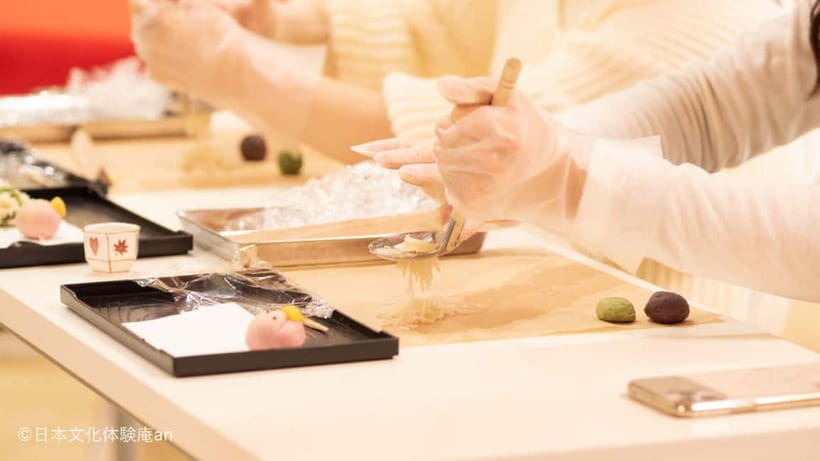
Making Japanese sweets by hand gives you a pleasant way to understand Kyoto beyond temples and crowded lanes. In 125 minutes, you prepare wasanbon ohigashi, two seasonal nerikiri sweets, and your own matcha. The sweets use bean paste from long-established Kyoto shops, and the matcha is single-origin.
I especially like the three-part format and the low $28 price. You do not just watch a demonstration, you make several items and taste them with tea. The central Gojo Station location is another plus. The main drawback is that the tea portion is casual and explanatory, so you should not book it expecting a long, formal tea ceremony.
Key points to know before booking
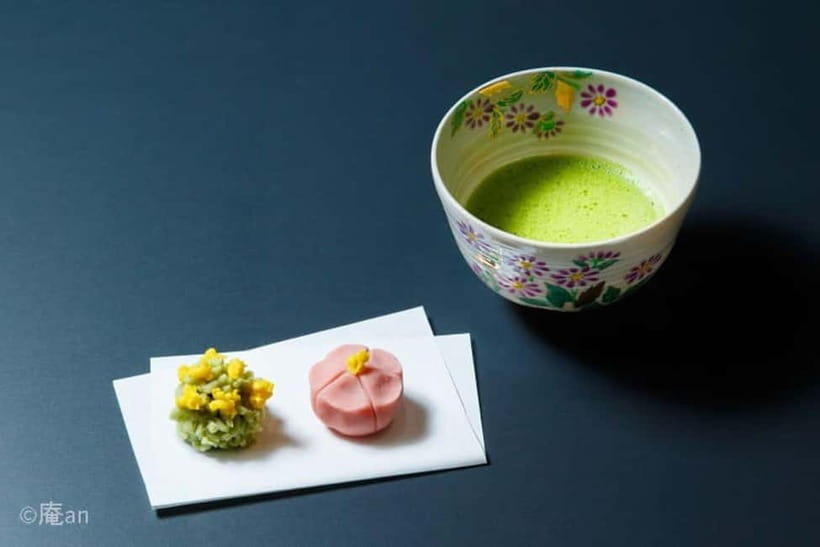
- Three hands-on activities: Make wasanbon ohigashi, two seasonal nerikiri sweets, and matcha.
- Kyoto ingredients: The workshop uses bean paste from established Kyoto shops and traditional wasanbon sugar.
- Seasonal designs: You make a flower-shaped nerikiri and a kinton-style nerikiri, with designs matched to the time of year.
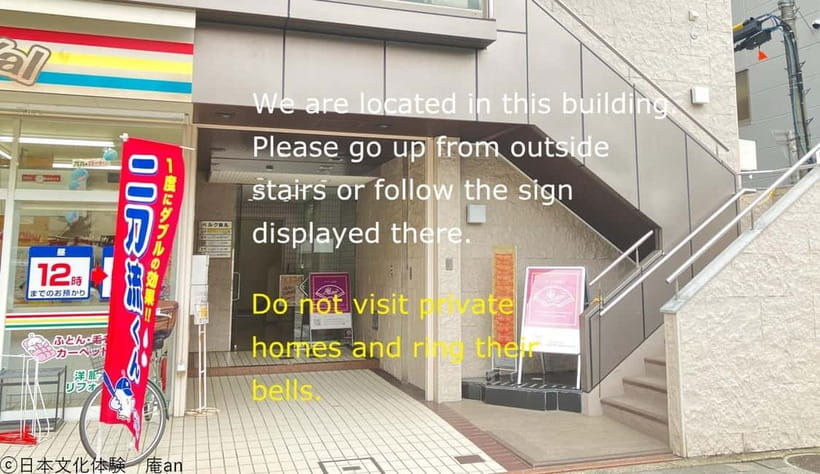
- Easy location: The meeting point is one minute from Exit 1 of Gojo Station on the Karasuma Line.
- Friendly instruction: Maiko has received praise for attentive teaching and useful English translation.
- Casual tea practice: You grind matcha, learn about tea, and prepare your own cup rather than taking part in a long formal ceremony.
A sweet introduction to Kyoto culture near Gojo Station
This workshop focuses on the small details that make Japanese confectionery special. You work with bean paste, sugar, shapes, and tea, then see how these parts fit together at the end of the session.
The location is convenient for a Kyoto day out. Gojo Station is on the Karasuma subway line, and the shop entrance faces Gojo-dori. Exit 1 puts you about a minute away, so you will not need to search through a maze of side streets while carrying a full sightseeing day on your shoulders.
The price is $28 per person. For Kyoto, that is fair value for a session lasting just over two hours, especially since the fee covers three related activities rather than a single demonstration. You leave having made several sweets and prepared matcha, though optional extras cost a little more.
The instructor is Japanese, and English translation is provided as much as possible. Maiko has been praised for clear, attentive instruction and good English. Still, the official language is Japanese, so if you need detailed English guidance, contact the provider before booking.
Other tea ceremonies in Kyoto people book:
- Kyoto: Tea Ceremony in a Traditional Tea House in Kiyomizu
★ 4.9 · 3,519 reviews - Kyoto: Tea Ceremony Ju-An at Jotokuji Temple
★ 4.9 · 3,207 reviews - Kyoto: 45-Minute Tea Ceremony Lesson Experience
★ 4.3 · 2,378 reviews
First project: shaping traditional wasanbon ohigashi
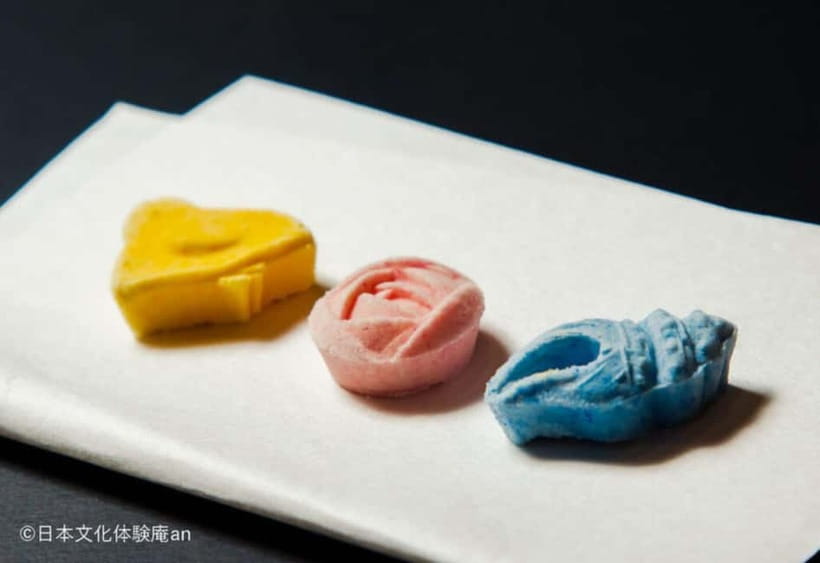
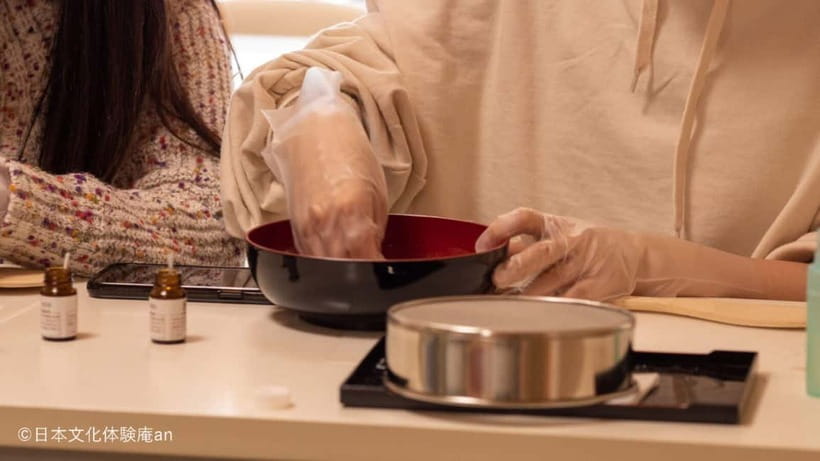
The session begins with an explanation of Japanese traditional sweets. Your first task is ohigashi, a dry confection made from wasanbon, a refined Japanese sugar known for its delicate texture and flavor.
This is a useful starting point because ohigashi is quite different from the soft bean-paste sweets that many visitors know. You get to work with a traditional sugar-based sweet before moving on to the more sculptural nerikiri.
The schedule gives about 20 minutes to the opening activity, followed by a short break. That pacing matters. You get a clear introduction without spending the entire workshop seated through a long lecture, and the first project helps you get comfortable with the tools and techniques.
The flavor is gentle rather than dramatic. Japanese sweets often rely on balance and texture instead of heavy sweetness, and wasanbon helps show that approach. You should expect a refined, restrained taste rather than the sugary punch of a Western dessert.
An optional color addition costs 200 yen. If you want to keep the cost down, the base experience still includes the main sweet-making activities. If you care about how the finished pieces look, ask about the color option when you arrive.
Two seasonal nerikiri pieces with Kyoto bean paste
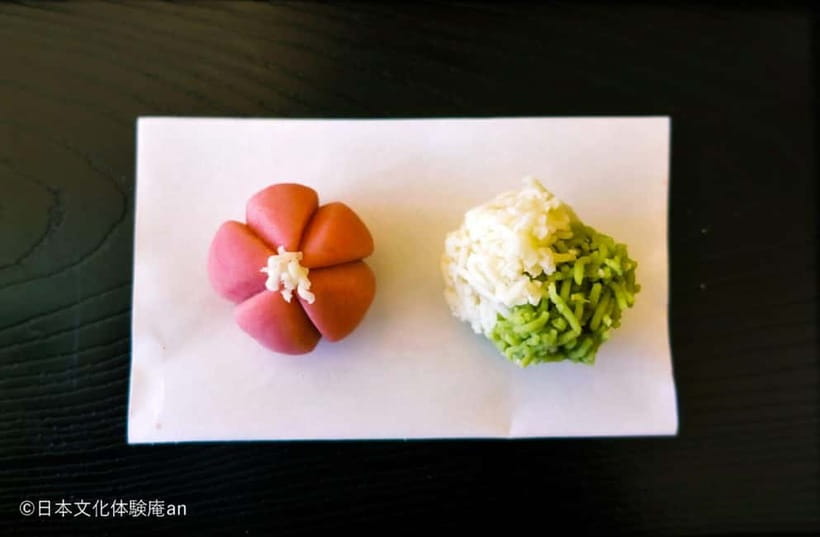
The main hands-on section is the making of two nerikiri sweets. These soft Japanese confections are made with white and red bean paste, and the designs change with the season.
The first is a flower-shaped nerikiri. This gives you a chance to work with form and detail. The second is a kinton nerikiri, a style that uses delicate strands or textured shaping to create a more natural appearance.
The seasonal element is important. Japanese confectionery often reflects flowers, plants, weather, and festivals, so the design is not simply decoration. It connects the sweet to the time of year you are visiting.
The bean paste comes from long-established Kyoto shops. That does not turn the class into a formal confectionery apprenticeship, but it does give the activity a meaningful local link. You are handling an ingredient tied to Kyoto’s long pastry tradition rather than an anonymous commercial filling.
The schedule allows about 55 minutes for the two nerikiri projects, with a break before the tea portion. That is enough time to follow the instructor and shape the sweets at a comfortable pace. You will need to concentrate, though. Small changes in pressure and form affect the final result, and your finished piece may look more handmade than shop-perfect. That is part of the fun.
You should also expect instruction rather than complete freedom. The point is to learn the basic method and reproduce seasonal forms, not to invent a private collection of designs. If you enjoy crafts, food preparation, or taking home a tangible memory of Kyoto, this is likely to be the strongest part of the experience.
A take-out box costs 100 yen. The sweets are intended to be eaten during the session, but the box is useful if you want to protect them afterward. Ask about it before leaving rather than trying to carry soft sweets loose in a day bag.
Grinding and preparing single-origin matcha
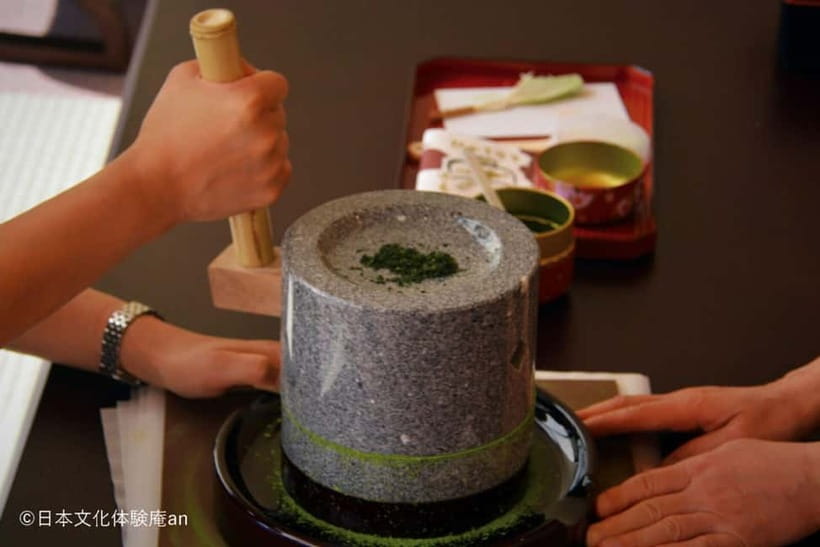
After the sweets are made, the class turns to tea. You see a matcha-grinding demonstration, receive an explanation of the tea process, and prepare your own cup.
The matcha is single-origin, which gives the tea portion a little more substance than simply whisking supermarket powder into hot water. You get a chance to connect the drink with its preparation, texture, and taste.
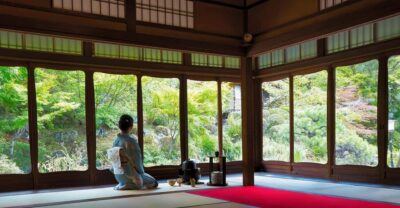
This is presented as a casual tea ceremony experience. You will learn the basic ideas and make a cup yourself, then enjoy the sweets with the tea. It is a good fit if you want an approachable first look at matcha without committing to a strict ceremonial setting.
You should set your expectations carefully. This is not a long, formal tea ceremony with a full set of traditional movements and etiquette. One participant found it closer to an informative session followed by making a cup of matcha. That description is useful. The experience gives you participation and context, but it is not designed as a formal performance.
The tea portion begins after roughly 85 minutes and continues until about the 115-minute mark, including picture time. You then have a final eating and drinking period before leaving at 125 minutes.
The combination works well because the sweets give you something to taste immediately with the tea. You can notice how the mild sweetness of bean paste and wasanbon works with the bitter, grassy flavor of matcha. That pairing is one of the workshop’s best teaching tools. Instead of hearing a general explanation of Japanese tea culture, you get to see how the food and drink support each other.
Other tea rooms and ceremonies in Kyoto:
- Kyoto: Table-Style Tea Ceremony at a Kyo-Machiya
★ 4.9 · 1,211 reviews - Kimono Tea Ceremony at Kyoto Maikoya, NISHIKI
★ 5.0 · 911 reviews - Kyoto: Arashiyama Bamboo Forest, Monkeys, Matcha & Temple Tour
★ 5.0 · 759 reviews - Kyoto: Tea Museum Tickets and Matcha Grinding Experience
★ 4.9 · 739 reviews
What the atmosphere may be like
The class can feel more like a cultural lesson than an intimate private gathering. One participant described the setting as clinical and classroom-like, while another noted that a noisy group affected the experience.
That is worth keeping in mind. The quality of your session may depend partly on the group around you. A considerate class creates a calm setting for careful shaping and tea preparation. A loud group can make the tea portion feel less peaceful.
The format itself is structured. You receive explanations, follow steps, take short breaks, and move from one activity to the next. If you want an informal craft class with clear guidance, that structure is helpful. If you want a quiet, highly personal tea meeting, this may feel less intimate than expected.
The workshop also includes picture time. You can photograph the finished sweets and the tea experience, but keep your attention on the preparation as well. The shapes are delicate, and the best part of the session is learning how they come together.
A completion certificate is available for 300 yen. It is an optional souvenir, not part of the main price. I would treat it as a keepsake for children or anyone collecting activity certificates, rather than a necessary extra.
Price, timing, and practical details
At $28, this is a sensible choice for a hands-on Kyoto activity. You receive instruction, ingredients, three connected experiences, and tasting time. Many cultural activities cost more when they include personal participation, so the ability to make three types of items adds real value.
The session lasts 125 minutes. That makes it easy to fit between sightseeing stops, though you should allow extra time to reach Gojo Station and find Exit 1. The shop entrance faces the main road, which helps once you are in the area.
Operating hours are from 10:00 to 17:00. Reservations received after 17:00 are processed the next day. The experience will not wait for late arrivals, so plan your route carefully and arrive early.
Cancellation is free up to 24 hours in advance for a full refund. After that point, fees apply, and changing the date or time can also involve a specified fee. The provider does not cover your travel costs if you cancel, so do not book this as a flexible filler if your day is uncertain.
The activity is listed as wheelchair accessible, but the building has no elevator and you need to use stairs to reach each venue. This is an important detail. Contact the provider before booking if you have mobility needs, rather than relying on the accessibility label alone.
Children under two who sit on a parent’s lap are free. Anyone who does not participate cannot enter the experience area.
Who will enjoy this workshop most?
I would recommend this activity to you if you want a practical introduction to Japanese food culture. It suits first-time visitors who want something beyond temples, families with older children who can follow guided steps, and anyone who enjoys making things with their hands.
It is also a good rainy-day plan. You spend the session indoors, and the 125-minute length gives you a clear block of time without taking over your entire day.
You may want to choose another activity if your main goal is a formal tea ceremony. The tea segment is casual, and the emphasis is on explanation and making your own matcha. You should also think twice if you dislike structured group classes or need a fully English-led experience.
For English speakers, send a message before booking if translation is especially important. The instructors can provide English help as much as possible, and Maiko has been praised for her English, but Japanese remains the stated language of instruction.
Should you book the Japanese sweets and matcha experience?
Book it if you want strong value, three hands-on activities, and an easy-to-reach introduction to Kyoto sweets. The use of Kyoto bean paste, seasonal nerikiri designs, wasanbon, and single-origin matcha gives the class more substance than a simple snack-making session.
Go in expecting a friendly, organized workshop rather than a private tea ceremony. The setting may feel classroom-like, and other participants can affect the mood. Still, for $28 and 125 minutes, you get plenty to do, plenty to taste, and a useful look at how Japanese sweets and matcha belong together.
FAQ
Where does the experience take place?
It takes place in Honshu, Japan, one minute from Exit 1 of Gojo Station on the Subway Karasuma Line. The entrance faces Gojo-dori.
How long does the activity last?
The full experience lasts 125 minutes, including the sweets activities, tea preparation, picture time, and final eating and drinking time.
What sweets will I make?
You will make wasanbon ohigashi, a flower-shaped nerikiri, and a kinton nerikiri. The two nerikiri designs match the season.
Is matcha included?
Yes. The experience includes a matcha-grinding demonstration, an explanation of tea, and the chance to prepare your own matcha.
Is this a formal tea ceremony?
It is a casual tea ceremony experience. You learn about tea and make your own cup, but it is not presented as a long, formal tea-school ceremony.
Is English instruction available?
The stated language is Japanese, and English translation is provided as much as possible. You can contact the provider if you would like to add English support.
Is the venue wheelchair accessible?
The activity is listed as wheelchair accessible, but the building has no elevator and stairs are required to reach each venue. Contact the provider before booking to discuss your needs.
More sweet things to try in Kyoto
- Kyoto: Japanese Traditional Sweets Making and Tea Ceremony
★ 4.4 · 314 reviews - Kyoto Wagashi(Japanese sweets) Cooking Class near Fushimiinari
★ 5.0 · 60 reviews - Kyoto: Wagashi (Japanese sweets) Cooking near Fushimiinari
★ 5.0 · 40 reviews - Kyoto: Traditional Tea Ceremony with Matcha & Sweets in Gion
★ 4.9 · 27 reviews
Just added in Kyoto
- Private Cooking Class Udon in Kyoto Japan★ 5.0 · 23 reviews
- Your Private Vacation Photography Session In Kyoto★ 5.0 · 110 reviews
- Kyoto: Zen Meditation at a Private Temple with a Monk★ 5.0 · 25 reviews
- Private Pewter Sake Cup Experience with a Kyoto Artisan★ 5.0 · 31 reviews
- Kyoto Wagashi(Japanese sweets) Cooking Class near Fushimiinari★ 5.0 · 60 reviews
- Kyoto:Family-Friendly Kimono & Yukata Experience at WARGO★ 5.0 · 147 reviews
- Private Guided Traditional Buddhist Cooking in Japan★ 5.0 · 16 reviews
- Kyoto: Gion Geisha District & Sake-in-Hand Walking Tour★ 5.0 · 37 reviews
Tea Ceremony Experiences, compared.
Tea Ceremony in a Traditional Tea House in Kiyomizu
Read our review →
World Heritage Kyoto & Nara Uji Authentic Matcha Experience
Read our review →
Arashiyama Bamboo Forest, Monkeys, Matcha & Temple Tour
Read our review →Browse the lists this tour appears in