
Reviewed · ARASHIYAMA & BAMBOO GROVE TOURS
Private Walking Tour in Bamboo Forest & Hidden Spots in Arashiyama
Arashiyama’s bamboo grove is the star, but this private walk is better understood as a tour of old Sagano, not just a photo stop. You move from a ninth-century temple and preserved village street to Otagi Nenbutsu-ji’s wonderfully odd stone figures, then finish beside the river at Togetsukyo Bridge.
I like the private format, since your group can ask questions and set a comfortable walking pace. I also like the route’s mix of famous sights and quieter corners. The catch is simple: Arashiyama gets very crowded, and the bamboo path may feel more like a busy photo corridor than a peaceful forest.
Key points at a glance
- Four hours from station to river: Start at Saga-Arashiyama Station at 9:00 a.m. and finish at Togetsukyo Bridge.
- A private guide for your group: You receive personal commentary rather than joining a large shared tour.
- Six varied stops: Temples, preserved traditional buildings, bamboo, a Zen garden, and a famous bridge all fit into one morning.
- Otagi Nenbutsu-ji is the unusual highlight: Its 1,200 hand-carved Rakan statues give the walk a playful, memorable stop.
- The bamboo grove is free but crowded: Go early when possible, and keep expectations realistic about quiet.
- Budget for extras: Otagi Nenbutsu-ji and Tenryu-ji charge admission, while lunch and transport are not included.
Why this route gives you more than a bamboo photo
Arashiyama is one of Kyoto’s easiest places to love and one of the easiest places to misjudge. The bamboo grove is beautiful, with tall green stalks rising on both sides of the path, but the main route is very popular. By late morning, people stop for photographs, selfie poses, and group pictures. The setting remains striking, yet the silence promised by many travel photographs is not guaranteed.
This tour helps by placing the bamboo in a wider walk through Sagano. You begin at Saga-Arashiyama Station, then see temples and old streets before reaching the grove. That order matters. You get a sense of the area’s older character instead of arriving, taking one photograph, and leaving.
The $85.87 price per person is reasonable mainly for people who value a private guide and local explanation. It is not a bargain if you only want to walk through the free bamboo path. You also pay separately for admission to Otagi Nenbutsu-ji and Tenryu-ji, and the price does not cover lunch or transport to and from the attractions.
Other walking tours in Kyoto people book:
- Kyoto Geisha Walking Tour: Gion District & Hidden Gems
★ 4.7 · 3,273 reviews - Kyoto: Gion Magical Night Walking Tour with Geisha Trivia
★ 4.9 · 2,393 reviews - Kyoto: Gion Geisha District Walking Tour – Stories of Geisha
★ 4.7 · 2,187 reviews
Seiryōji begins the morning with ninth-century roots
The first stop is Seiryōji, also called Saga Shakadō. The temple began as the villa of an aristocrat in the ninth century, giving you an early connection to Sagano’s past. A short visit of about 10 minutes will not cover every corner, but it sets the tone for the day.
I like this opening because it places the tour in a historical setting before the famous bamboo appears. Sagano was once a countryside retreat for aristocrats, and this temple helps explain why the area became associated with escape, beauty, and refined leisure.
The free admission keeps the first stop easy. Your guide can point out details you might otherwise pass without understanding, though the listed schedule allows only a brief look. If you want a long temple visit, this tour may feel fast.
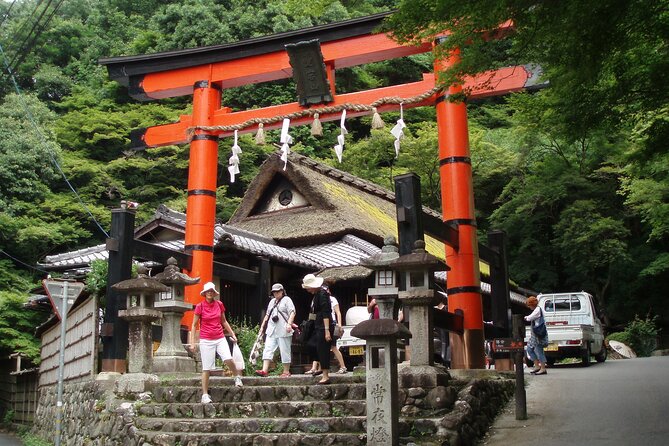
Saga Toriimoto preserves an older roadside village
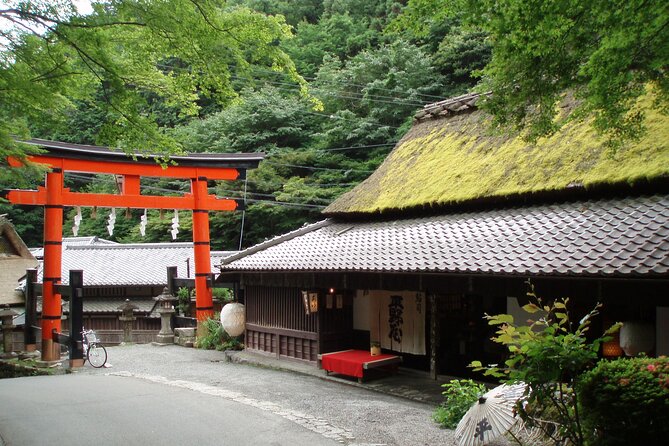
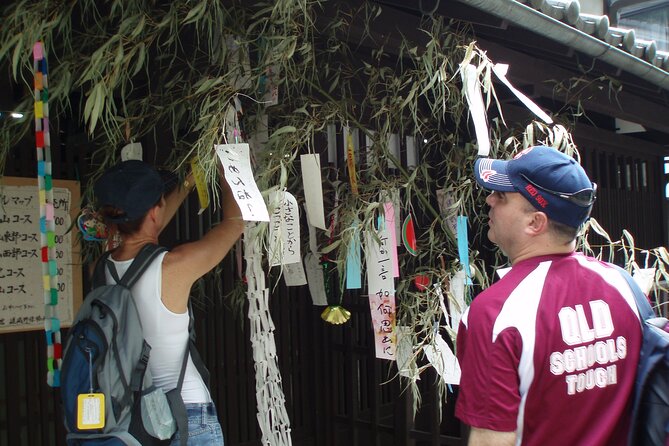
From Seiryōji, the walk continues to the Saga Toriimoto Traditional Buildings Preservation Area. This was once called Atago Highway, an old road leading toward Mount Atago and its Shinto association with fire prevention.
The appeal here is not one grand monument. It is the feel of a preserved streetscape, with traditional buildings that offer a glimpse of how roads outside central Kyoto once looked. The tour allows about 10 minutes, so expect an introduction rather than a long architectural study.
This is one of the route’s quieter ideas: the best part of Sagano is not always a single sight. Sometimes it is the transition between temples, old roads, and wooded paths. The guide’s commentary is especially useful here because the buildings and road can otherwise seem like a pleasant but unexplained stretch of town.
Otagi Nenbutsu-ji brings 1,200 stone personalities
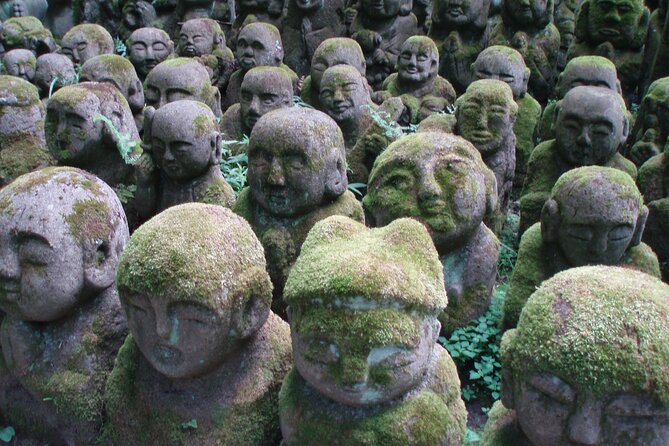
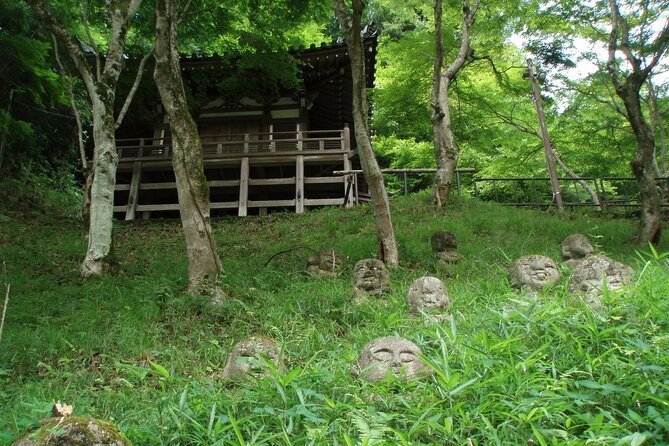
Otagi Nenbutsu-ji is likely to be the most distinctive stop. The temple is known for about 1,200 stone Rakan figures, representing Buddha’s disciples. Each statue was hand-carved by one of 1,200 people who visited the temple, so the collection has a personal, almost village-like character.
You will see figures with different expressions and poses rather than rows of identical religious images. Some look solemn, while others have a friendly or comic quality. That makes the temple especially appealing if you want something more unusual than another formal hall and garden.
Admission is not included, so keep extra yen available. The planned visit lasts about 20 minutes. That is enough to see the statues and get the main story, but you may want longer if you enjoy photography or want to study the individual carvings.
For me, this stop adds real value to the tour. The bamboo grove is famous, but Otagi Nenbutsu-ji is the kind of place you may remember more clearly afterward because it feels specific to this route.
Other mornings on the western edge of Kyoto:
- Kyoto: Fushimi Inari, Kinkakuji, Bamboo Grove 1 Day Bus Tour
★ 4.8 · 4,316 reviews - Osaka/Kyoto:Kinkakuji,Arashiyama,FushimiInariShrine,NaraPark
★ 4.1 · 1,596 reviews - Kyoto/Osaka: Nara, Fushimi Inari Taisha, Arashiyama Bus Tour
★ 4.7 · 1,275 reviews - Kyoto Arashiyama Walking Tour: Bamboo, Monkeys, Gardens & Secrets
★ 5.0 · 1,216 reviews
The bamboo forest is beautiful, but timing matters
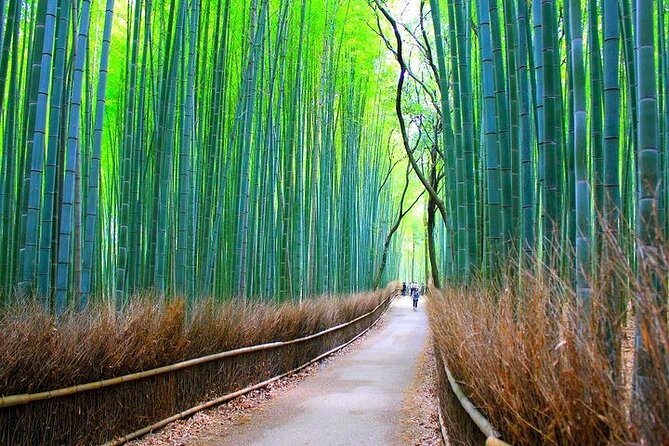
The Bamboo Forest Street is the most recognizable part of the walk. Tall bamboo rises beside the path, creating a green corridor that can feel striking even when the route is busy. The guide explains how bamboo has been valued and used in Japan, which gives the plants more meaning than a quick photo stop.
The scheduled time is about 10 minutes, but the walk through the area may feel longer depending on the exact route and pace. One practical point is clear: the grove becomes crowded as the day goes on. The tour starts at 9:00 a.m., which is helpful, though it does not guarantee an empty path.
You should arrive ready for two different experiences. On a quieter stretch, the bamboo can feel cool, tall, and almost otherworldly. In a crowd, it becomes a broad walkway filled with people taking pictures. Both impressions are real. The grove is worth seeing, but it is not wise to book this tour expecting guaranteed solitude.
Some people find the bamboo itself less impressive than groves elsewhere because of the traffic. Others find the height, color, and unusual setting memorable enough to justify the visit. I would set your expectations at beautiful and photogenic, not silent and untouched.
Tenryu-ji adds a formal Zen garden
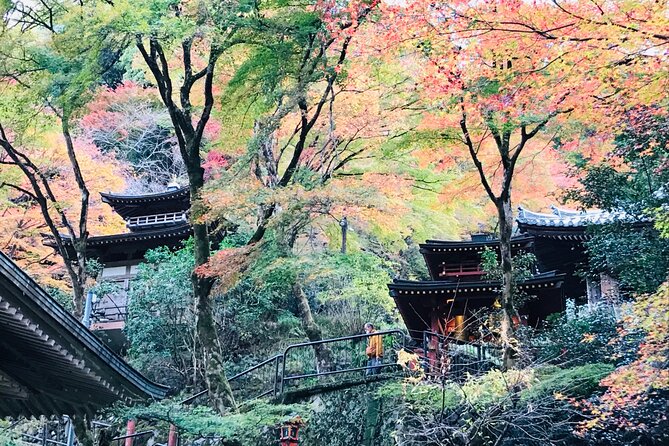
Tenryu-ji is a major Zen Buddhist temple founded in the 14th century and recognized as a World Cultural Heritage site in Kyoto. Its garden offers a calmer, more carefully composed contrast to the busy bamboo path.
The tour allows about 20 minutes here, and admission is not included. The garden is the main reason to make time for this stop. You can take in the ordered design and the sense of stillness associated with Zen practice, though the short schedule means you may not have time for a full exploration of the temple complex.
This stop works well after the bamboo. The grove is vertical and dramatic, while Tenryu-ji gives you a broader garden view and a more formal setting. If gardens matter to you, the admission fee may be worthwhile. If your main goal is simply to see bamboo and the bridge, you may consider the added cost less important.
Togetsukyo Bridge is a scenic finish
The route ends at Togetsukyo Bridge, a well-known Arashiyama landmark. Its name means Moon Crossing Bridge, inspired by an ancient emperor who saw the moon appear to cross the bridge.
You spend only about five minutes at the bridge on the formal schedule, but the ending is practical. From here, you are close to Monkey Park and can continue exploring on your own. The bridge also gives you a natural stopping point after the temples and grove.
The end point is not back at the station, so plan your next move before the tour begins. That is not a problem for most people, since the bridge sits in one of Arashiyama’s main sightseeing areas, but it is worth knowing if you have a timed reservation elsewhere in Kyoto.
What the private format is really worth
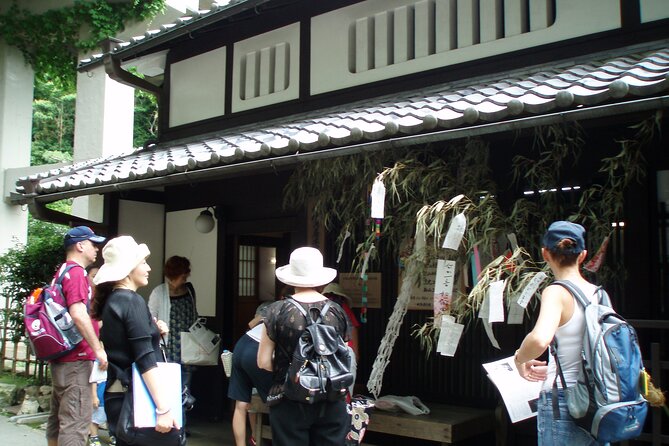
A private tour changes the value calculation. You are not paying only for a path through places that you could reach independently. You are paying for a guide who can explain why Sagano mattered, identify the purpose of the temples, and answer questions as your group walks.
The personal format is useful for families, first-time visitors, and anyone who prefers not to manage maps, temple order, and local context while sightseeing. It also gives you a chance to ask about Kyoto beyond the listed stops, although the information provided does not name the individual guides.
For independent visitors who already know Arashiyama well, $85.87 per person may feel high. You can reach the area by train, walk through the free bamboo grove, and visit sights on your own. The tour earns its price through convenience, interpretation, and the inclusion of less obvious stops such as Saga Toriimoto and Otagi Nenbutsu-ji.
Keep in mind that the tour includes only a professional guide. Hotel pickup and drop-off, transport to and from attractions, lunch, and temple entrance fees are separate. The meeting point is Saga-Arashiyama Station, so you must make your own way there.
How difficult is the four-hour walk?
The route is a walking tour of roughly four hours. The available information describes it as suitable for most people, and the sightseeing itself is not presented as a strenuous hike. Still, you should expect to be on your feet for much of the morning.
Wear comfortable shoes. The route moves between station streets, temple grounds, preserved buildings, the bamboo path, and the bridge. You may also spend time standing while the guide explains each stop or while you wait for a clear photograph.
Bring water and protect yourself from insects. One practical tip is bug spray, since bites can be an issue around the grove and wooded areas. Kyoto weather can also change your comfort level, so light layers are sensible, though no special equipment is required.
Who should book this Arashiyama walk?
I would recommend it to you if you want a structured first visit to Sagano and prefer context over simply collecting photographs. It suits couples, families, and small private groups who like to ask questions and keep the morning personal.
It is also a good choice if Otagi Nenbutsu-ji interests you. That temple is less predictable than the usual Arashiyama highlights, and the 1,200 stone figures give the route a memorable center beyond the bamboo.
You may want to skip it if you are seeking a quiet forest walk above all else. The bamboo path can be very crowded, and the tour cannot control the number of people who arrive that morning. You may also prefer independent sightseeing if you are comfortable arranging transport and paying temple fees separately.
Book with an early start in mind. The 9:00 a.m. departure is one of the tour’s practical strengths, since the bamboo grove generally becomes busier later in the day. Free cancellation is available up to 24 hours before the start time, which gives you some flexibility if your Kyoto plans change.
Final call: a strong guided introduction, with one crowded centerpiece
This is a well-balanced way to see Arashiyama in one morning. You get old Sagano, Seiryōji, preserved traditional streets, the remarkable stone figures at Otagi Nenbutsu-ji, the bamboo grove, Tenryu-ji, and Togetsukyo Bridge without having to organize the route yourself.
The main limitation is the bamboo crowd, not the route itself. If you accept that the grove may be busy and budget for the two temple admissions, the private format gives you useful context and a varied look at the area. I would book it for a first visit when you want personal guidance. I would not book it solely for a peaceful bamboo experience.
FAQ
Where does the tour begin?
The tour begins at Saga-Arashiyama Station, at 11-1 Sagatenryūji Kurumamichichō in Kyoto’s Ukyo Ward.
What time does the tour start?
The start time is 9:00 a.m.
Where does the tour end?
The tour ends at Togetsukyo Bridge, near Monkey Park. You can continue exploring Arashiyama from there.
How long does the walking tour last?
The tour lasts approximately four hours.
Is this a private tour?
Yes. Only your group participates in the private activity.
Are temple admission fees included?
No. Admission to Otagi Nenbutsu-ji and Tenryu-ji is not included in the tour price.
What does the price include?
The price includes a professional guide. Lunch, hotel pickup and drop-off, transportation to and from attractions, and temple entrance fees are not included.
More walking tours elsewhere in Japan
- Kyoto Gion Geisha District Walking Tour – The Stories of Geisha
★ 5.0 · 1,441 reviews - Nishiki Market Brunch Walking Tour (7 Tastings + Brunch)
★ 5.0 · 1,355 reviews - Kyoto Gion: 2-Hour Geisha Culture & History Walking Tour
★ 5.0 · 1,186 reviews - Kyoto: Izakaya Bars Guided Walking Tour
★ 4.9 · 815 reviews
Just added in Kyoto
- Private Cooking Class Udon in Kyoto Japan★ 5.0 · 23 reviews
- Your Private Vacation Photography Session In Kyoto★ 5.0 · 110 reviews
- Kyoto: Zen Meditation at a Private Temple with a Monk★ 5.0 · 25 reviews
- Private Pewter Sake Cup Experience with a Kyoto Artisan★ 5.0 · 31 reviews
- Kyoto Wagashi(Japanese sweets) Cooking Class near Fushimiinari★ 5.0 · 60 reviews
- Kyoto:Family-Friendly Kimono & Yukata Experience at WARGO★ 5.0 · 147 reviews
- Private Guided Traditional Buddhist Cooking in Japan★ 5.0 · 16 reviews
- Kyoto: Gion Geisha District & Sake-in-Hand Walking Tour★ 5.0 · 37 reviews
Arashiyama & Bamboo Grove Tours, compared.
Osaka/Kyoto:Kinkakuji,Arashiyama,FushimiInariShrine,NaraPark
Read our review →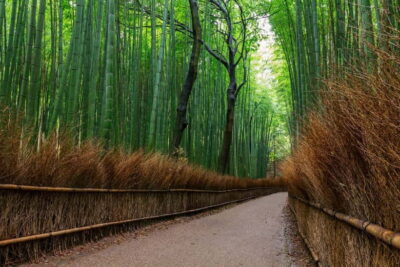
Kyoto/Osaka: Nara, Fushimi Inari Taisha, Arashiyama Bus Tour
Read our review →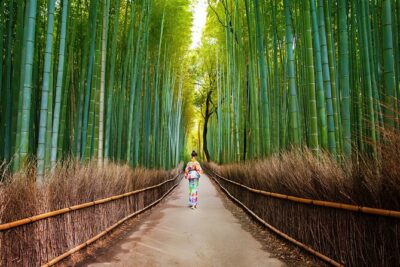
Kyoto Arashiyama Walking Tour: Bamboo, Monkeys, Gardens & Secrets
Read our review →
Arashiyama Bamboo, Temple, Monkeys, or Secret Sake Brewery
Read our review →
Arashiyama Bamboo Forest, Monkeys, Matcha & Temple Tour
Read our review →
Osaka/Kyoto: Arashiyama, Nara & Fushimi Inari Shrine w/Lunch
Read our review →
Nijo, Kinkaku-ji, Arashiyama, Kiyomizu & Fushimi Inari
Read our review →
Kyoto Ghost Tour: Dark Tales, Urban Legends, Bamboo Forest Night
Read our review →Browse the lists this tour appears in