
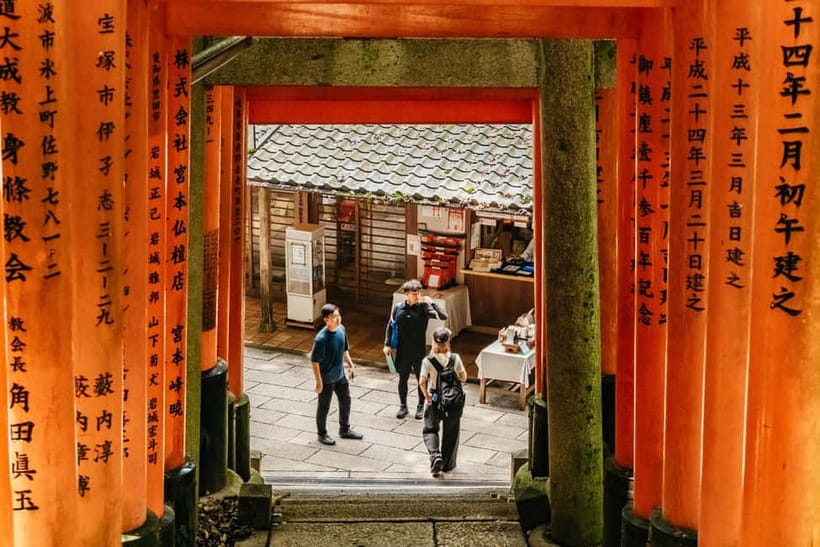
Reviewed · FUSHIMI INARI TOURS
Kyoto: 3-Hour Fushimi Inari Shrine Hidden Hiking Tour
Fushimi Inari is famous for its endless red torii gates, but the best part of this tour comes before you reach the crowded main route. You walk from Tofukuji through quiet streets, forest trails, bamboo groves, and small hillside altars, then approach the shrine from behind. For much of the climb, you may hear birds and your own footsteps instead of the usual Kyoto crowd.
I like the back-route approach and the small group, capped at nine people. I also like that the guides do more than point at gates: Hina, Naru, Shiori, Hira, and others have helped visitors understand Shinto customs, offerings, amulets, and respectful shrine behavior. The catch is simple: this is a moderate mountain hike, not an easy walk. Seven kilometers, stairs, rocky ground, and steep sections can feel demanding in heat or rain.
Key points to know before booking
- Start at Tofukuji Station: Meet outside Exit 2, beside the FamilyMart Nakai Tofukuji Store.
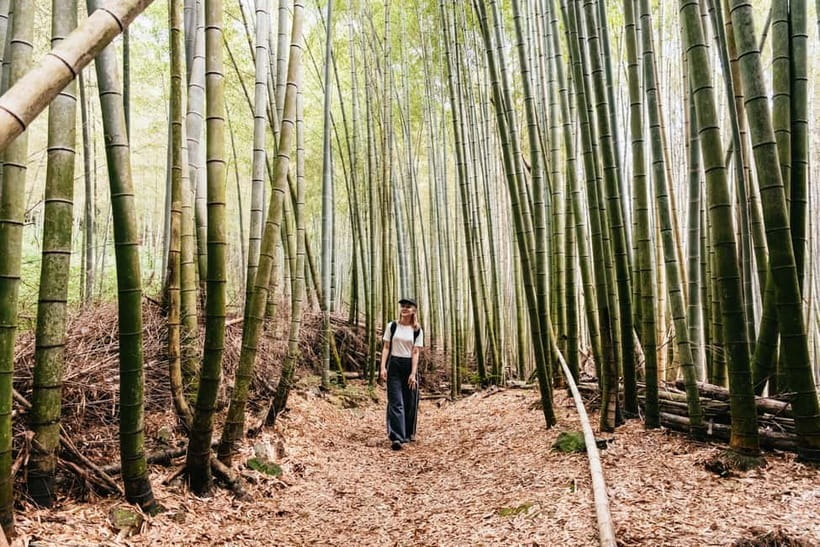
- Use the quiet side of Mount Inari: The tour reaches Fushimi Inari through forest paths and bamboo groves before joining the famous torii route.
- Expect about 7 kilometers: You will climb stairs and uneven trails, with regular stops but no promise of an effortless pace.
- Learn shrine customs on the way: Guides explain offerings, wishes, torii gates, amulets, and Shinto practices.
- Get photos without carrying the camera work: Photos are included, and guides such as Naru and Hira have been praised for taking thoughtful shots.
- Plan for mountain conditions: Wear long sleeves and long pants, leave large bags behind, and be ready for mosquitoes, mud, or slippery ground.
Why this route improves the Fushimi Inari visit
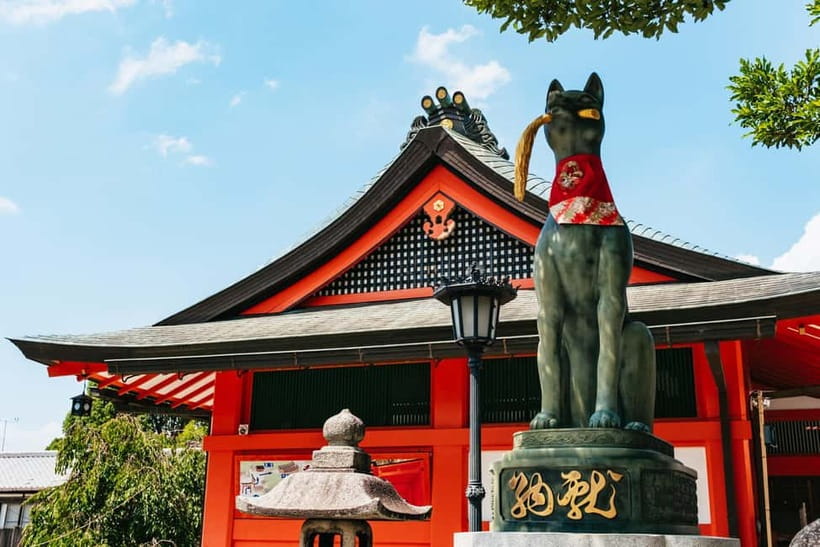
Fushimi Inari Taisha can be one of Kyoto’s most frustratingly crowded sights. The lower shrine area fills with people posing beneath the first torii gates, and the famous photo spots can turn into a slow-moving queue. This tour changes the order of the experience.
You begin at Tofukuji, a short distance from Fushimi Inari, and walk through a quieter neighborhood. That opening matters. Instead of arriving at the busiest entrance and spending the first part of your visit dodging groups, you gradually move from ordinary Kyoto streets into wooded mountain paths.
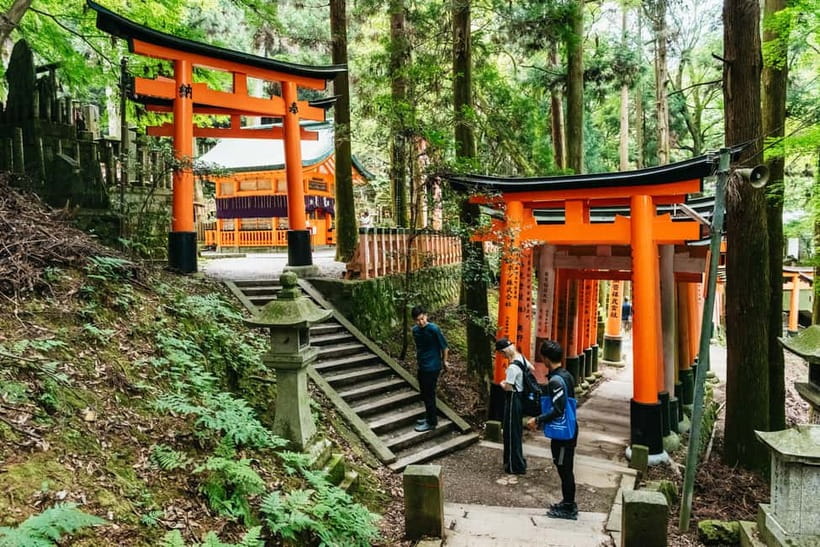
The route takes you through parts of Mount Inari that many visitors miss. You pass small shrines and old altars tucked beside the trail, then reach a bamboo grove before connecting with the main torii path. Later, after climbing higher, you return by another forest route and approach the most photographed section from above.
The result is not a crowd-free Fushimi Inari for all three hours. Once you reach the well-known lower sections, people appear in greater numbers. Still, the first half is usually the quietest part, and the tour gives you the contrast between secluded mountain trails and Kyoto’s most recognizable shrine.
Other temples and shrines in Kyoto people book:
- Kyoto: Tea Ceremony Ju-An at Jotokuji Temple
★ 4.9 · 3,207 reviews - Arashiyama Bamboo, Temple, Monkeys, or Secret Sake Brewery
★ 4.8 · 886 reviews - Kyoto: Arashiyama Bamboo Forest, Monkeys, Matcha & Temple Tour
★ 5.0 · 759 reviews
The Tofukuji start gives you a calmer beginning
Meet outside Exit 2 at the FamilyMart Nakai Tofukuji Store. The meeting point is next to the station, but check your train carefully. JR trains, including local and rapid services, can reach Tofukuji. On the Keihan Line, use local, sub-express, or semi-express trains, not express trains.
From the station, the guide leads you through a neighborhood toward Tofukuji Temple. The temple visit is brief, about 10 minutes, so do not expect a full temple tour. It works more as an introduction to the area and a gentle transition from city streets to the mountain.
This opening also lets the group settle into its pace. Guides stop along the way to explain what you are seeing, and the small-group format makes it easier to ask questions. Group size can reach nine, though some outings are much smaller. One group had only three participants and a guide, which allowed for a more personal rhythm.
The first forest trail is the quiet reward
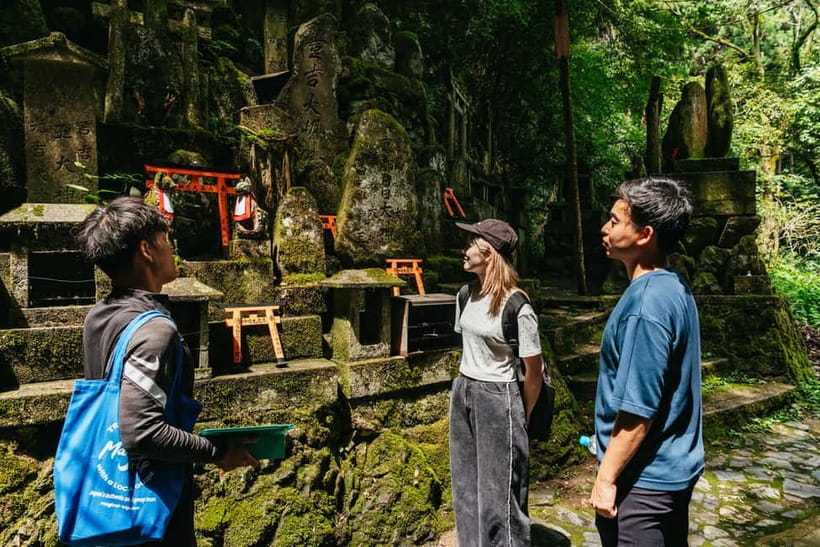
The most unusual part of the route is the move onto actual forest trails. You leave the paved paths and walk through wooded sections around Mount Inari, where the atmosphere changes quickly. You may find uneven, rocky ground and sloping paths, but you also gain shade and a break from direct sun.
About half of the tour takes place in the forest. That is helpful in Kyoto’s warmer months, though shade does not remove the need for water and sensible clothing. Mosquitoes and other bugs are possible, so long sleeves and long pants are strongly recommended.
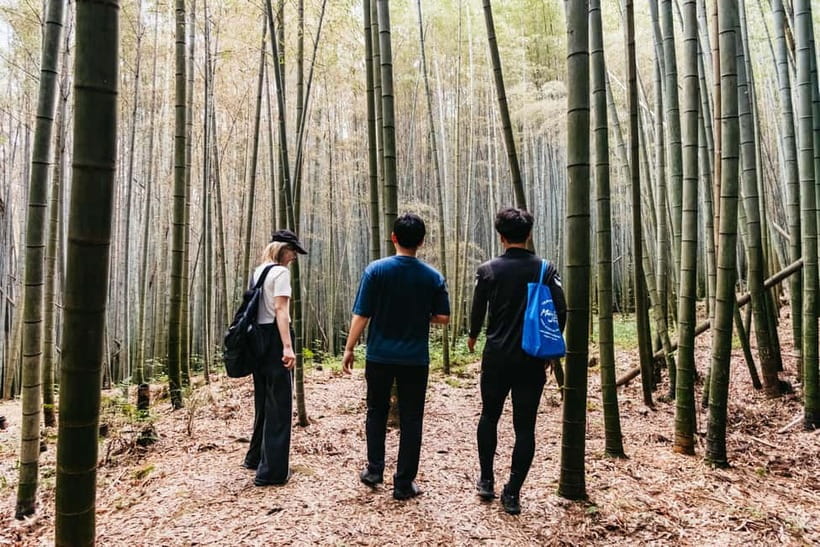
The first bamboo grove is one of the memorable stops. It is not presented as a quick photo backdrop beside a busy road. You reach it as part of the forest route, away from the main flow of people. The bamboo, evergreens, torii gates, and small altars give the walk a quieter character than the standard Fushimi Inari visit.
Rain changes the trail. Wet ground can become muddy or slippery, especially on steep sections. One outing in rainy weather still worked well because the route was nearly empty, but the conditions required care. If rain is forecast, wear shoes with good grip and be honest about your comfort on wet paths.
Climbing Mount Inari takes real effort
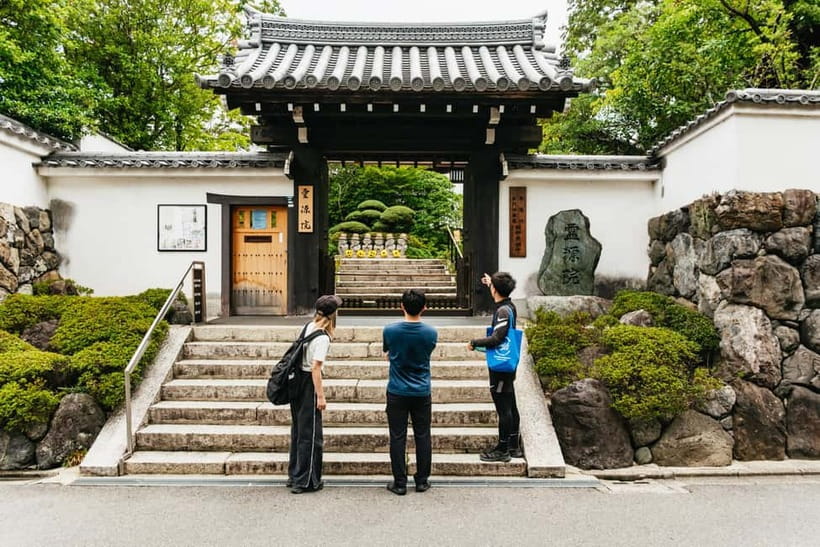
The tour covers roughly 7 kilometers and includes a climb to the summit area of Mount Inari. It is not described as an extreme hike, but several people found it more demanding than expected. You may climb many flights of stairs, walk on unpaved tracks, and move up and down hilly sections.
One participant recorded about 50 flights climbed, which gives you a useful sense of the effort involved. The guide makes regular stops, and you can request extra breaks, but you should arrive with a reasonable level of fitness. This is not a good match if you have trouble walking or limited mobility.
The payoff comes from the changing scenery. At the upper parts of the mountain, shrine altars appear among the trees, often in small and quiet corners. Fushimi Inari is not only a line of torii gates. The mountain is covered with religious markers, offerings, and smaller places of worship, and the guide helps explain why they matter.
The English explanations vary by guide. Names such as Shiori, Hina, Naru, Hira, Yukari, and Matthew receive especially warm praise for clear explanations and friendly conversation. One participant found the guide’s English quite limited, with only brief explanations. If detailed cultural interpretation is central to your plans, tell the guide what interests you and ask questions early.
Other shrine walks around Kyoto:
- Kyoto: Fushimi Inari, Kinkakuji, Bamboo Grove 1 Day Bus Tour
★ 4.8 · 4,316 reviews - Fushimi Inari Hidden Hiking Tour (Private Option Available)
★ 5.0 · 1,750 reviews - Kyoto/Osaka: Nara, Fushimi Inari Taisha, Arashiyama Bus Tour
★ 4.7 · 1,275 reviews - Osaka/Kyoto: Arashiyama, Nara & Fushimi Inari Shrine w/Lunch
★ 4.4 · 754 reviews
The torii gates mean more with context
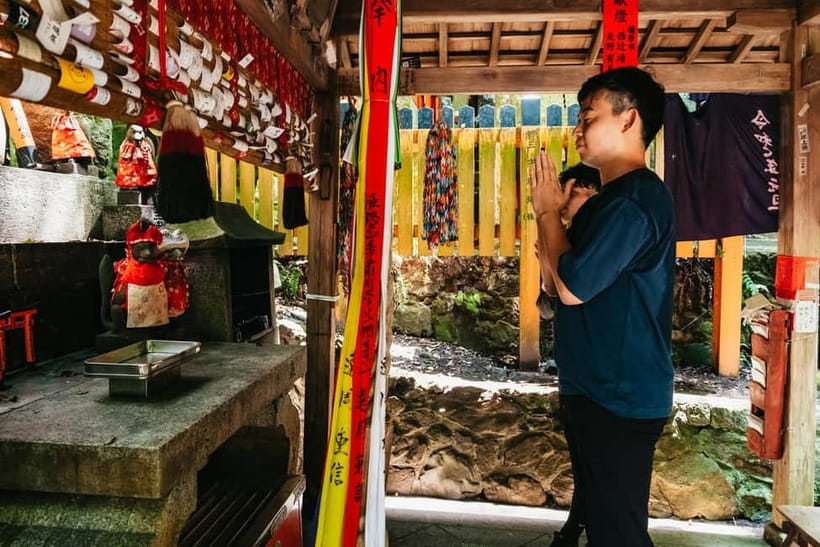
The red-orange gates are the visual reason most people come to Fushimi Inari, but their meaning is worth learning. The guide can explain how to pass through the gates respectfully, how to make offerings, and how wishes and amulets fit into Japanese religious practice.
You may walk through hundreds or even around 1,500 gates on a long route through the mountain, though the exact count depends on the path and pace. Each gate was donated, and the repeated passage creates a striking tunnel effect. The tour gives you time to appreciate that structure without rushing straight toward a single famous photo point.
I particularly like the cultural guidance here. Several guides have shown participants how to enter torii gates, make offerings, and behave at shrines. That makes the visit more than a series of attractive pictures. You leave with a clearer idea of what you are doing and why.
The main torii route is not quiet all the way to the top. As you connect with the popular sections, the crowd gradually builds. The tour does not erase that reality. It simply gives you a more thoughtful route into it and a forest path out again.
The return route reveals a second side of Inari
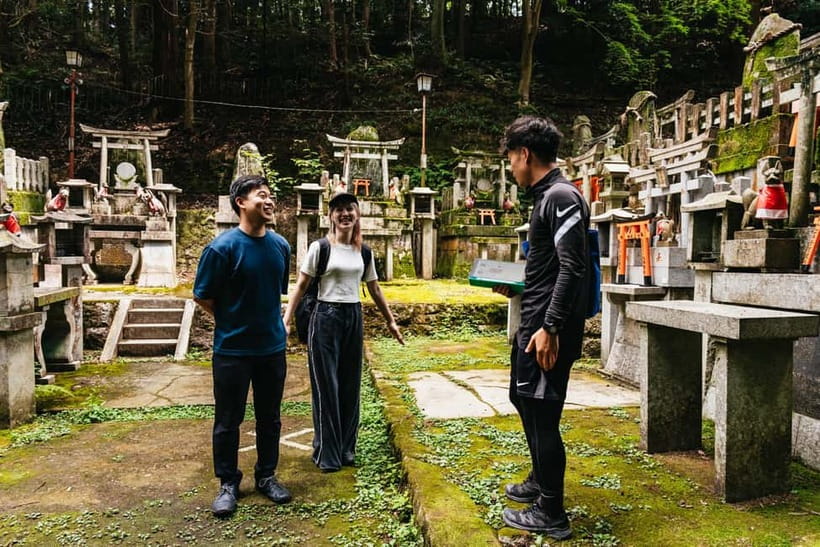
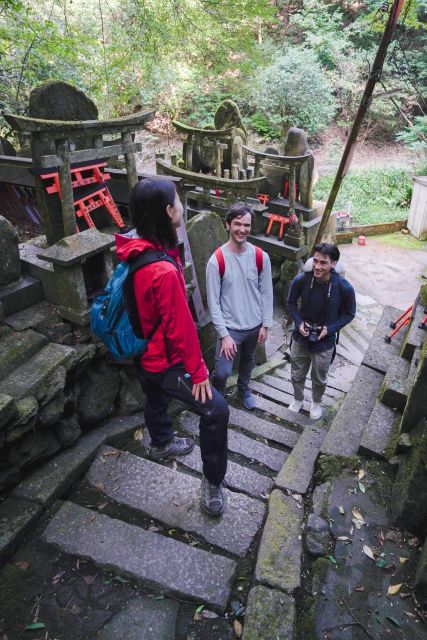
After reaching the upper mountain and its altars, you descend on a forested trail rather than retracing the entire busy route. A second bamboo grove appears on the way down, along with smaller shrines and quiet sections that are easy to miss if you stick to the main entrance.
This return route is useful for two reasons. First, it keeps the outing varied. You are not simply walking uphill through torii gates and then reversing direction. Second, the descent lets you see how the shrine complex spreads through the mountain, with sacred markers placed beyond the postcard views.
The trail can still be steep. Take care on loose or wet ground, and do not treat the downhill section as automatically easy. Tired legs can make stairs and uneven surfaces harder than they seemed at the start.
Eventually, you reach the famous lower area of Fushimi Inari. This is where you get the classic photographs, with larger torii tunnels and more people competing for clear views. Guides take photos during the tour, so you can enjoy the setting without constantly handing your phone to strangers.
Finishing at the main shrine and street food
The tour ends at the main shrine at the base of the mountain, rather than returning you to a distant part of Kyoto. The stated meeting and return point is the FamilyMart near Tofukuji Station, but the route description also places the final portion at the main shrine. Confirm the exact end point and timing with the guide when you meet.
At the shrine base, you can continue on your own and look for local street food. Food and drinks are not included, so bring money if you want a snack after the climb. This is a useful finish because you can slow down, eat, and revisit the shrine grounds without the group’s walking schedule.
The three-hour timing works well as a morning activity or as a first half of the day. It leaves room for another Kyoto sight, but the hike may tire you more than a typical guided temple visit. I would not schedule a demanding afternoon immediately afterward if you are unused to hills.
Is $72 good value?
At $72 per person, this is not the cheapest way to see Fushimi Inari. You can visit the shrine without a ticket, and the main torii route is easy to find. The price pays for route planning, an English-speaking guide, a small group, cultural explanations, and photos.
The value is strongest if you care about avoiding crowds and would not feel comfortable finding forest paths on your own. A guide also adds safety and pacing on trails that can be muddy, steep, or confusing. The cultural help matters too, especially if this is your first visit to a Shinto shrine.
The value is weaker if you only want a quick look at the lower torii gates. You would be paying for a three-hour hike when a shorter independent visit might suit you better. The same is true if stairs and uneven ground are a problem.
Free cancellation up to 24 hours before the start gives you some flexibility, and you can reserve now and pay later. Extreme weather can cancel the tour, while rain may lead you to cancel if you are not prepared.
Who should book this hike?
I would choose this tour for active visitors who want a quieter, more personal Fushimi Inari experience. It suits couples, families with older children, and small groups who enjoy walking and asking questions. Children under eight are not suitable, and children younger than eight require parent or guardian permission before booking.
It is also a strong choice if you have already seen the standard Kyoto sights and want a different angle on a famous place. The combination of bamboo, evergreens, altars, torii gates, and forest shade feels much more varied than a simple entrance-to-summit route.
I would skip it if you want a relaxed stroll, have limited mobility, dislike bugs, or are visiting during a spell of heavy rain without proper shoes. The phrase hidden trail may sound gentle, but some sections are genuinely rough.
Should you book it?
Book this tour if the thought of walking through a bamboo grove, learning shrine customs, and approaching Fushimi Inari from the back sounds better than joining the crowd at the main entrance. The guides often add real value, especially people such as Naru, Hina, Shiori, Hira, and Yukari, who are praised for explanations, patience, and photos.
Do not book it expecting three hours of easy sightseeing. Bring water, wear long sleeves and long pants, leave large luggage behind, and prepare for stairs, mud, bugs, and a moderate workout. If you meet those conditions, $72 buys a more distinctive and better-paced introduction to Mount Inari than the standard self-guided walk.
FAQ
Where does the Fushimi Inari hiking tour begin?
Meet outside Exit 2 of Tofukuji Station, beside the FamilyMart Nakai Tofukuji Store.
How long is the tour?
The tour lasts three hours and covers approximately 7 kilometers.
Is this an easy walk?
No. The hike is not extremely difficult, but it includes stairs, steep sections, rocky paths, and forest trails. A reasonable level of fitness is recommended.
Does the tour avoid the crowds?
The first part uses quieter forest trails and bamboo groves where you may encounter few or no other people. Crowds increase when you reach the popular torii gate areas near the main shrine.
What should I wear?
Wear a long-sleeved shirt and long pants because mosquitoes and other bugs may be present. Shoes suitable for uneven or slippery ground are also sensible.
Are food and drinks included?
No. Additional food and drinks are not included. You can buy local street food near the main shrine after the hike.
Can I cancel for a refund?
Yes. You can cancel at least 24 hours before the starting time for a full refund. Free date or time changes are also available up to 24 hours before the tour, subject to availability.
More hiking near Kyoto
- Hiroshima Local guided Hiking Tour&Open-air Tea Ceremony
★ 5.0 · 213 reviews - Hiking the Historic Nakasendo Trail [1 Day Tour from Nagoya]
★ 5.0 · 104 reviews
More temples and shrines elsewhere in Japan
- Kyoto: Ninnaji Temple Entry Ticket
★ 4.2 · 650 reviews - Kyoto Zen Meditation & Garden Tour at a Zen Temple with Lunch
★ 5.0 · 441 reviews - Kyoto: Zen Experience in a Hidden Temple
★ 5.0 · 437 reviews - KYOTO Tea Ceremony with kimono near by Imamiya Jinjya Shrine
★ 5.0 · 343 reviews
Just added in Kyoto
- Kyoto: Private Photoshoot Service★ 5.0 · 158 reviews
- Kyoto Rickshaw Tour★ 5.0 · 210 reviews
- Izakaya Style Cooking Class★ 5.0 · 219 reviews
- Kyoto: Traditional Concert at Townhouse or Bathhouse★ 4.9 · 224 reviews
- Ninja 2-hour Hands-on Lesson by Japanese master in Kyoto -Medium★ 5.0 · 218 reviews
- Kyoto: Arashiyama Bamboo, Temple, Matcha, Monkeys & secret spots★ 5.0 · 219 reviews
- Kyoto Geisha District Walking Tour in Gion★ 5.0 · 232 reviews
- The right way to know Kyoto★ 5.0 · 257 reviews
Fushimi Inari Tours, compared.
Fushimi Inari Hidden Hiking Tour (Private Option Available)
Read our review →
Kyoto/Osaka: Nara, Fushimi Inari Taisha, Arashiyama Bus Tour
Read our review →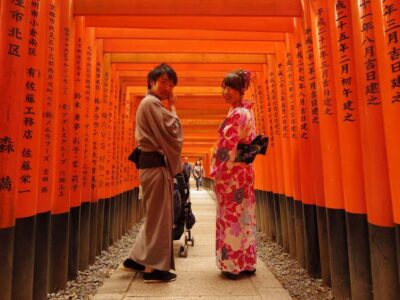
Osaka/Kyoto: Arashiyama, Nara & Fushimi Inari Shrine w/Lunch
Read our review →
Nijo Castle, Kiyomizu & Fushimi Inari Guided Tour
Read our review →
Nijo, Kinkaku-ji, Arashiyama, Kiyomizu & Fushimi Inari
Read our review →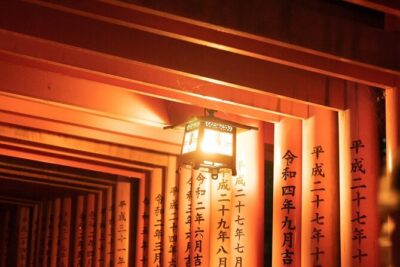
Full Day Kyoto Tour : Bamboo Forest, Golden Temple, Fushimi Inari
Read our review →Browse the lists this tour appears in