
Reviewed · WALKING TOURS
Kyoto Early Riser Golden One-Day Walking Tour
Kyoto’s biggest sights are spread across the city, and this private full-day tour tackles the hard part for you: getting from Fushimi Inari to Arashiyama, Ryoanji, Kinkakuji, and Nishiki Market in one long, carefully arranged day. You travel by public transport and walk between major stops with your own guide.
I like the private format, which lets your guide slow down for questions, suggest a lunch stop, or adjust the pace for your group. I also like the human touch from guides such as Tomoko, Keiko, Meg, and Kazuo, who have helped with train routes, local restaurants, photos, and translation.
The catch is simple: this is a full day of walking, and transport, meals, and some temple admissions cost extra. You will see a lot, but this is not a gentle stroll through one compact neighborhood.
Key points to know before booking
- Five major Kyoto stops in one day: Fushimi Inari, Arashiyama, Ryoanji, Kinkakuji, and Nishiki Market give you a broad first look at the city.
- Private guiding makes a difference: Your guide can answer questions, adjust breaks, and help with buses, trains, subways, and other local transport.
- The early start helps: The tour is designed around a full sightseeing day, with some departures reported at about 8 a.m.
- Expect real walking: Fushimi Inari has slopes and steps, Arashiyama involves standing and walking, and the day includes several transit changes.
- Budget for extras: Public transport is listed at ¥1,670 per person, Ryoanji costs ¥1,100, and meals are not included.
- Best for first-time Kyoto visitors: It covers the famous sights efficiently, while a private guide adds cultural context and practical help.
Why this private Kyoto route works
The strength of this tour is its range. In roughly eight hours, you move from Shinto worship at Fushimi Inari to bamboo groves, Zen gardens, a glittering temple, and a covered food market. That gives you a quick but useful picture of Kyoto rather than a day devoted to one temple district.
A private guide also solves one of Kyoto’s most annoying problems: distance. The sights are not next door to one another. You may use a train, subway, bus, trolley, taxi, and plenty of foot power during the day. Guides such as Toshi and Tohru Shimigaki have been praised for making those changes easy to follow, which is valuable if Japanese transport is new to you.
The private setup is especially helpful for families and mixed-ability groups. Several guides have adjusted breaks, helped people with knee trouble, or taken extra care with older family members. Still, the tour provider asks for a moderate fitness level, and you should take that seriously.
The experience costs $119.30 per person. That is a fair price if you would otherwise spend hours planning routes, reading up on temples, and working out how to fit five distant sights into one day. It is less attractive if you already know Kyoto well or prefer to linger for half a day at one temple.
Other walking tours in Kyoto people book:
- Kyoto Geisha Walking Tour: Gion District & Hidden Gems
★ 4.7 · 3,273 reviews - Kyoto: Gion Magical Night Walking Tour with Geisha Trivia
★ 4.9 · 2,393 reviews - Kyoto: Gion Geisha District Walking Tour – Stories of Geisha
★ 4.7 · 2,187 reviews
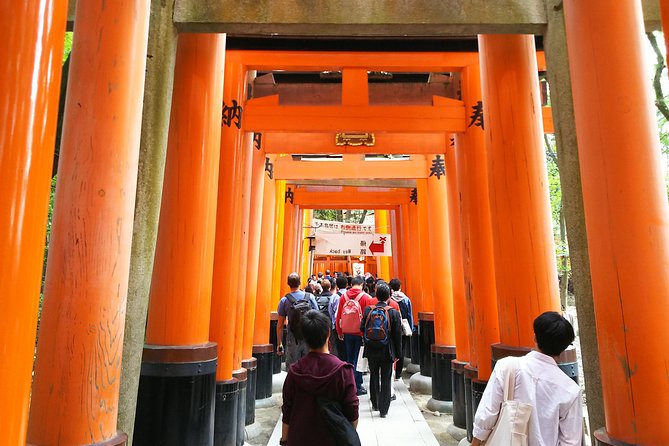
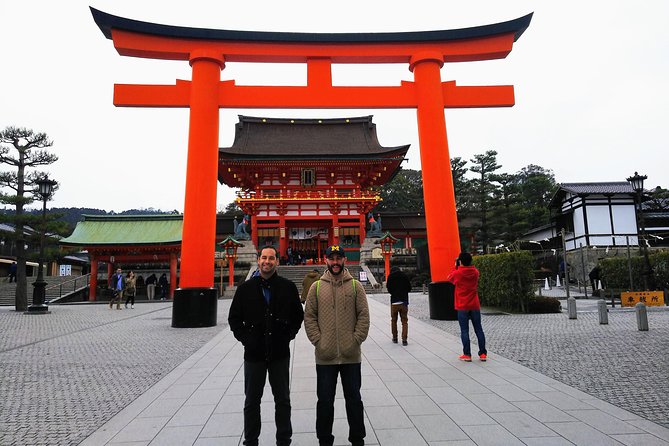
Starting at Fushimi Inari’s red torii gates
Fushimi Inari-taisha is an excellent first stop. Its thousands of vermilion torii gates form a striking path up the wooded slopes behind the shrine. Each gate was donated by a worshipper, often in thanks for good fortune or in hope of receiving it.
The listed visit lasts about one hour, with no admission charge. That makes it a strong opening stop: you get one of Kyoto’s most recognizable sights without spending part of the morning waiting at a ticket counter.
The first section of the torii path is the most photographed and can be crowded. Your guide can add meaning to what you are seeing, explaining the shrine’s role and the symbolism of the gates rather than simply pointing out their color. The route also gives you a first taste of Kyoto as a place of active worship, not just a collection of pretty buildings.
Do not treat this as a flat walk. Fushimi Inari extends uphill, and even a short visit can include steps and uneven ground. If you want to walk farther beneath the gates, tell your guide early. With only an hour assigned here, you are sampling the shrine rather than completing every path.
Arashiyama and the bamboo forest
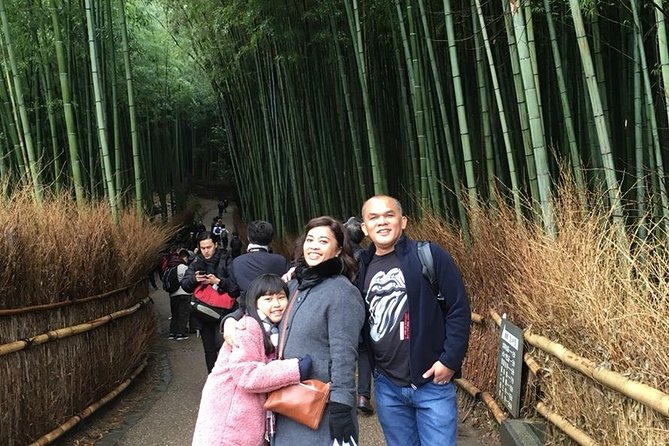
Arashiyama takes about one hour and 10 minutes, with no admission charge for the bamboo forest. The tall stalks, filtered light, and soft sound of leaves moving in the wind make this one of Kyoto’s gentler sights.
The bamboo path is beautiful, but it is not a private woodland walk. Its fame brings plenty of people, especially around the most accessible section. Go in expecting atmosphere and strong photographs, not solitude.
This stop works well after Fushimi Inari because the mood changes completely. You move from bright shrine gates and uphill walking to cool green tones and a quieter natural setting. Your guide can also help you make the most of the short time, pointing out where the path is most attractive and keeping the schedule moving.
The limitation is time. Arashiyama has more to offer than the bamboo forest, but this itinerary gives you about 70 minutes here. You should not expect a full visit to every nearby temple, garden, or riverside area. If Arashiyama is your main reason for coming to Kyoto, a separate half-day would serve you better.
Ryoanji’s spare Zen garden
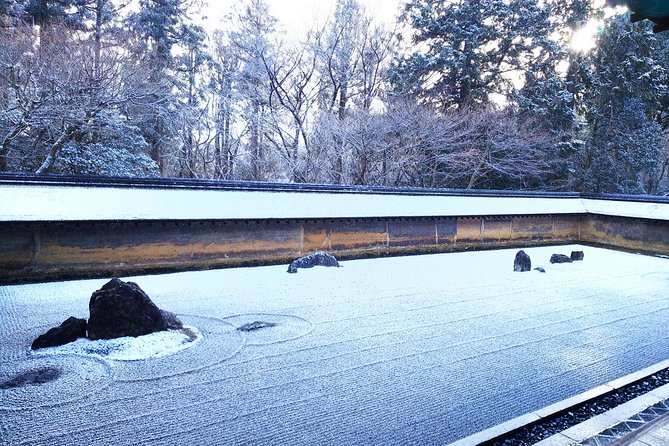
Ryoanji receives about 50 minutes of the day. The UNESCO-listed temple is famous for its rock garden, a restrained arrangement of stones set in white gravel. The simplicity is the point. It asks you to sit, look, and decide what you notice.
The garden is not large, and some people find it less immediately exciting than Fushimi Inari or Kinkakuji. Your guide is useful here because context can turn a short viewing into a more thoughtful stop. You can ask about Zen design, the temple’s place in Kyoto culture, and why a garden with so little in it has such lasting appeal.
Admission is not included and is listed as ¥1,100 per person. That extra cost is modest, but it is part of the real price of the day. You should also allow for the fact that a temple visit may require removing shoes or following quiet, respectful behavior in certain areas, though the exact arrangements can vary.
Fifty minutes is enough to see the main garden and grounds at a measured pace. It is not enough for a slow, reflective visit if you want to sit for a long time. Tell your guide if the garden matters more to you than shopping later, since the private format may allow some adjustment.
Other guided walks in Kyoto:
- Kyoto Gion Geisha District Walking Tour – The Stories of Geisha
★ 5.0 · 1,441 reviews - Nishiki Market Brunch Walking Tour (7 Tastings + Brunch)
★ 5.0 · 1,355 reviews - Kyoto Arashiyama Walking Tour: Bamboo, Monkeys, Gardens & Secrets
★ 5.0 · 1,216 reviews - Kyoto Gion: 2-Hour Geisha Culture & History Walking Tour
★ 5.0 · 1,186 reviews
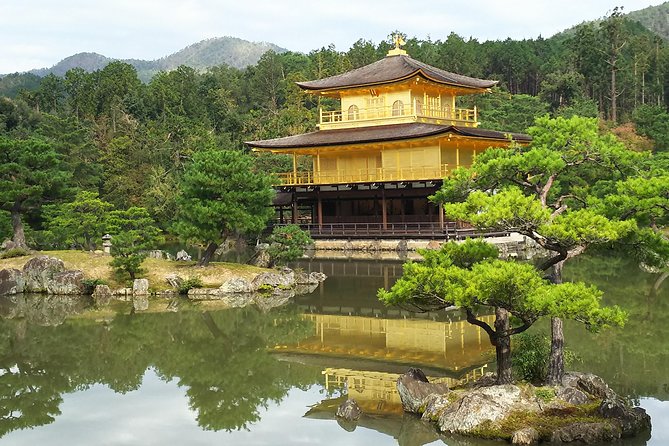
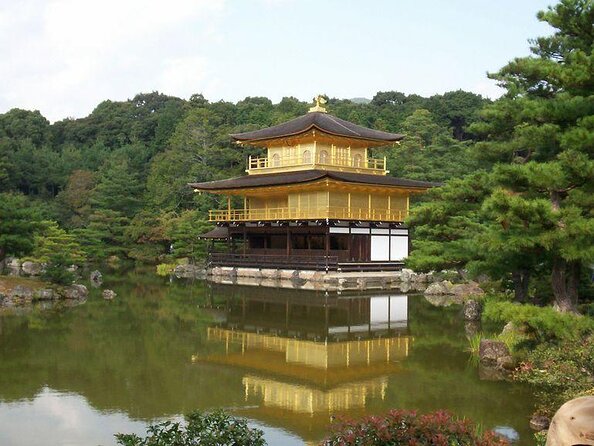
Kinkakuji, Kyoto’s Golden Pavilion
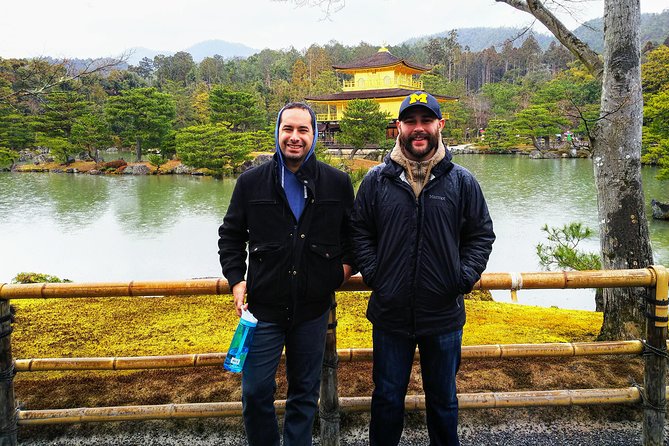
Kinkakuji, also called the Golden Pavilion, is the visual high point for many people. The gilded building reflects in the pond, with carefully kept gardens around it. The temple is associated with Zen Buddhism and samurai-era culture, and its polished appearance feels very different from Ryoanji’s plain gravel and stone.
The visit lasts about 50 minutes. Kinkakuji is popular, so you should expect a set sightseeing path and other people around the pond. The pavilion itself is the main event. You do not enter the building, but the view is memorable and easy to photograph.
The ticket is not included in the tour price. The supplied details do not state the current admission amount, so check the charge when booking or at the entrance. This is another reason to think of $119.30 as the guide fee and planning value, not the full cost of the day.
I like the pairing of Ryoanji and Kinkakuji. One offers quiet restraint, the other bright spectacle. Together they show two very different sides of Kyoto temple design. If you are short on time in Japan, that contrast is useful.
Nishiki Market and a taste of everyday Kyoto
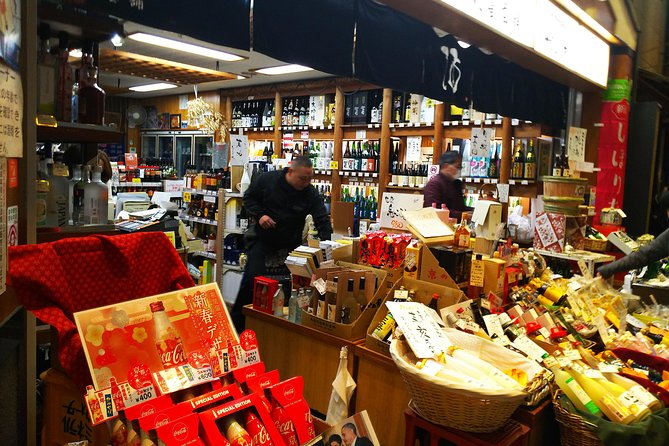
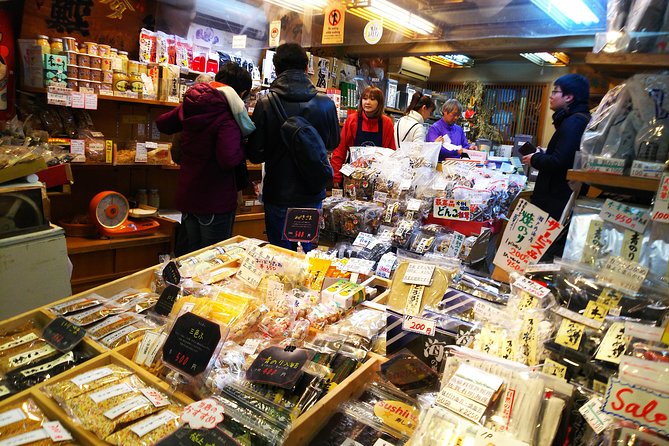
The final listed stop is Nishiki Market, a 390-meter covered shopping street with about 126 shops. It has served Kyoto residents for centuries and is a good place to shift from temple sightseeing to food, shopping, and ordinary city life.
You have about 40 minutes here. That is enough to walk through part of the market and sample items such as Kyoto vegetables and pickles, but it is not a long food tour. Meals are not included, so plan to pay for anything you eat.
This is one place where a private guide can add real value. Several guides have recommended lunch at local restaurants, helped with sushi ordering, and explained how conveyor-belt sushi works. Kazuo, a retired English teacher, was also praised for helping with translation while shopping. Those small services can make a big difference if you are unsure what to order or how a restaurant works.
Nishiki is compact but can feel crowded. Be polite around food displays, avoid stopping in the middle of the passage, and ask before taking close-up photographs of vendors or products. Your guide can help you decide what is worth tasting instead of trying to eat your way through every stall.
The guide matters more than the route
The listed route is strong, but the guide will shape the day. The most useful guides are not just walking encyclopedias. They are good at reading a group, explaining local customs in plain language, and keeping transport changes from becoming stressful.
Tomoko has been singled out for her energy, practical help, and restaurant arrangements. Keiko has taken photos, offered lunch and dinner suggestions, and helped make a long day feel personal. Meg has been praised for patience and for finding lifts or escalators when a guest had a knee injury.
Kazuo’s background as a retired English teacher suggests the kind of cultural exchange this tour can offer. Instead of hearing only dates and temple names, you may get explanations of daily life, traditions, and how to behave at a shrine or market. Guides including Satomi, Masa, Chie, Yuka, Hironori, Nozomi, and Fujihara have also been praised for organization, humor, cultural explanations, and care with pacing.
You cannot guarantee a particular guide unless the operator confirms it. If you have a strong preference, ask before booking. It is also worth telling the provider about mobility concerns, food interests, or a wish to spend extra time at one stop.
Getting around by public transport
This is not a chauffeured sightseeing circuit. You meet at Kyoto Station Building, at 901 Higashishiokojicho in Shimogyo Ward, and finish back at the same meeting point. The day uses public transport, with the listed fare set at ¥1,670 per person.
That arrangement is part of the experience. You see how Kyoto works for local residents, and by the end you may feel more confident using trains, subways, buses, a trolley, or a taxi on your own. Tohru Shimigaki was praised for using several kinds of transport while making the system understandable.
The tradeoff is time and effort. Every transfer means finding the right platform, walking through a station, or waiting for a bus. In warm weather, rain, or peak sightseeing periods, this can wear you down. One group completed the tour during intense August heat because the guide built in breaks, but you should still bring water, comfortable shoes, and weather protection.
The early-riser design helps make the schedule possible. One departure was reported at 8 a.m., though you should confirm your exact start time. Starting early also gives you the best chance of reaching the first major sights before the day reaches its busiest stretch.
What the price really includes
At $119.30 per person, the main purchase is the private guide’s time and the convenience of having the day organized around your group. You are not paying for a luxury vehicle, a meal, or all entrance tickets.
Add the ¥1,670 public transport fare, ¥1,100 for Ryoanji, the separate Kinkakuji admission, and any food at Nishiki Market or lunch. Group discounts may be available, and the tour accepts a mobile ticket.
For a family of four, the cost can make sense because you share one guide and avoid arranging five separate sightseeing stops on your own. It is also a good deal for a first Kyoto visit when your time is tight. A solo visitor may find the per-person price harder to justify unless expert guidance and efficient routing are top priorities.
The tour has a five-star rating from 30 reviews and a 100 percent recommendation figure. Those numbers point to a consistently strong experience, especially in guide quality and organization, but they do not remove the practical limits: long walking, extra costs, and a fast schedule.
Who should book this day
I would choose this tour if you have only one full day in Kyoto and want to see the city’s headline sights without building a transport plan yourself. It also suits families, first-time visitors, and anyone who wants help with Japanese food, temple customs, or local trains and buses.
It is a good fit for people who prefer conversation and flexibility over a large coach group. A private guide can slow down for questions, arrange rest stops, take family photos, and suggest a lunch that matches your interests.
I would hesitate if you dislike early starts, have trouble walking for much of a day, or want long stretches of quiet time at each temple. The route is ambitious. It gives you an excellent overview, but it cannot offer a leisurely visit to every place.
Free cancellation is available up to 24 hours before the start time. Changes or cancellations inside that window are not accepted for a refund, and poor weather may lead to a different date or a full refund because the experience requires good conditions.
Should you book the Kyoto Early Riser Golden One-Day Walking Tour?
Book it if your Kyoto schedule is short and your priority is seeing the major sights with a capable local guide. The route gives you red torii gates, bamboo, Zen stones, golden architecture, and Kyoto food culture in one day, while the private format keeps the experience personal.
Skip it if you already know Kyoto’s transport system or would rather spend a full morning at one temple district. For everyone else, the price is reasonable once you value the route planning, cultural explanation, and help with local logistics. Pack light, wear good shoes, and tell your guide what matters most before the first train leaves.
FAQ
How long does the Kyoto Early Riser Golden One-Day Walking Tour last?
The tour lasts approximately eight hours.
Where does the tour begin and end?
It begins at Kyoto Station Building, 901 Higashishiokojicho, Shimogyo Ward, Kyoto, 600-8216. It ends back at the same meeting point.
Is this a private tour?
Yes. Only your group participates in the activity.
Which sights are included?
The route includes Fushimi Inari-taisha Shrine, Arashiyama Bamboo Forest, Ryoanji Temple, Kinkakuji Temple, and Nishiki Market Shopping District.
Are entrance fees included?
No. Ryoanji admission is listed at ¥1,100 per person. Kinkakuji admission is also not included, though no amount is provided. Fushimi Inari, Arashiyama, and Nishiki Market are listed without an admission charge.
Are transportation and meals included?
No. Public transportation is listed at ¥1,670 per person, and meals are not included.
What level of fitness is needed?
A moderate level of fitness is recommended. The day involves quite a bit of walking and several public transport journeys.
Can I cancel for a full refund?
Yes, if you cancel at least 24 hours before the experience start time. Cancellations or changes made less than 24 hours before the start time are not refundable.
Just added in Kyoto
- Private Cooking Class Udon in Kyoto Japan★ 5.0 · 23 reviews
- Your Private Vacation Photography Session In Kyoto★ 5.0 · 110 reviews
- Kyoto: Zen Meditation at a Private Temple with a Monk★ 5.0 · 25 reviews
- Private Pewter Sake Cup Experience with a Kyoto Artisan★ 5.0 · 31 reviews
- Kyoto Wagashi(Japanese sweets) Cooking Class near Fushimiinari★ 5.0 · 60 reviews
- Kyoto:Family-Friendly Kimono & Yukata Experience at WARGO★ 5.0 · 147 reviews
- Private Guided Traditional Buddhist Cooking in Japan★ 5.0 · 16 reviews
- Kyoto: Gion Geisha District & Sake-in-Hand Walking Tour★ 5.0 · 37 reviews
Walking Tours, compared.

Kyoto Geisha Walking Tour: Gion District & Hidden Gems
Read our review →
Tokyo Tsukiji Fish Market Food and Culture Walking Tour
Read our review →
Imperial Palace and Shogun Historical Walking Tour
Read our review →
Gion Geisha District Walking Tour – Stories of Geisha
Read our review →
Shinjuku Local Bar and Izakaya Guided Walking Tour
Read our review →
Asakusa Walking Tour with Sensoji Temple Visit
Read our review →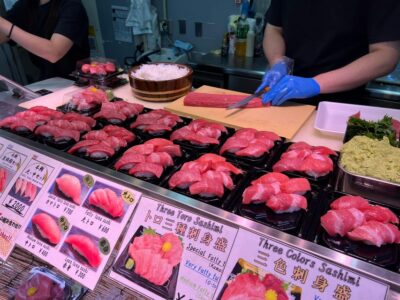
Nishiki Market Brunch Walking Tour (7 Tastings + Brunch)
Read our review →Browse the lists this tour appears in