
Reviewed · RAMEN TOURS & WORKSHOPS
Kyoto Ramen and Gyoza Cooking Class with Professional Chefs
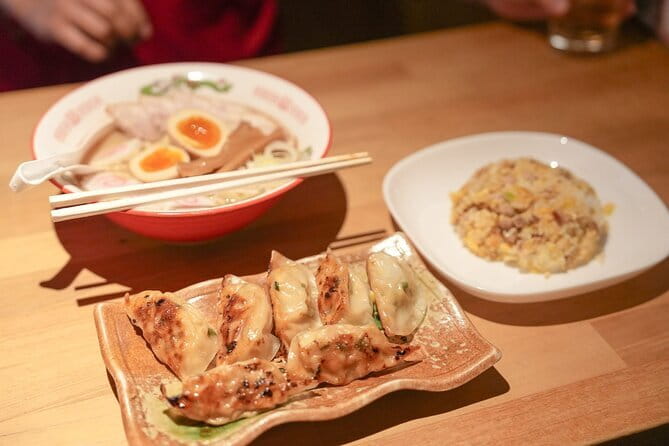
Ramen noodles made by hand, gyoza folded at your own station, and a full Japanese meal waiting at the end: this Kyoto class turns familiar comfort food into a practical cooking lesson. You work with a professional chef while a guide such as Yuki, Ayuri, Rina, or Emi helps explain the steps and adds local context.
I like the hands-on noodle making and the fact that you eat a proper meal of ramen, gyoza, and fried rice rather than a few samples. I also like the small maximum group of eight, since several sessions have felt very personal, especially when only three or four people booked.
The main caution is dietary. The ramen uses pork broth, and the class cannot accommodate vegetarian, vegan, or gluten-free diets. It is also not a good fit if you need step-free access or plan to arrive late.
Quick reasons to book this Kyoto cooking class
- Make ramen noodles from scratch: Knead, cut, cook, and top your own noodles under a chef’s direction.
- Prepare three filling dishes: The meal includes ramen, gyoza, and fried rice, so you leave well fed.
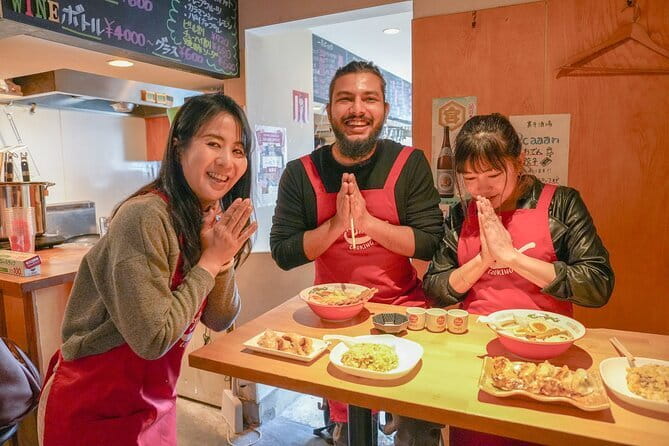
- Learn with a translator-guide: Hosts including Yuki, Ayuri, Rina, Emi, Eri, and Shun have helped explain the chef’s instructions in English.
- Small group setting: The class accepts no more than eight people, and weekday bookings may result in a group of just three or four.
- Two drinks are included: Beer or sake pairs naturally with the gyoza and ramen.
- Take the lesson home: A recipe guide gives you a way to repeat the dishes after Japan.
Making ramen noodles in central Kyoto
The class meets at 「北緯35物語」木村光佑 in Shincho, Shimogyo Ward, a central Kyoto location near public transportation. The activity lasts about two and a half hours and ends where it begins, so you do not need to arrange a second meeting point or worry about a long transfer afterward.
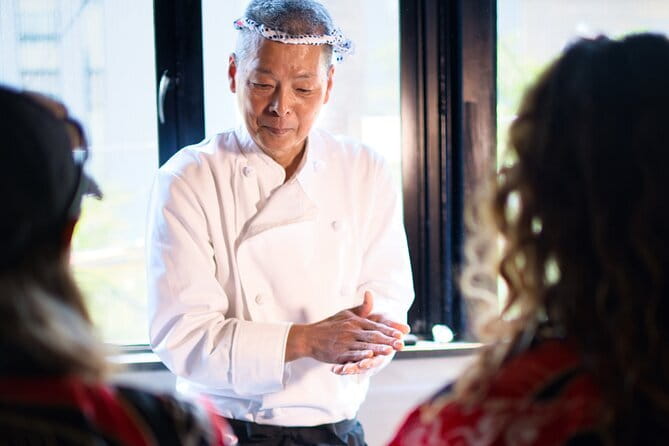
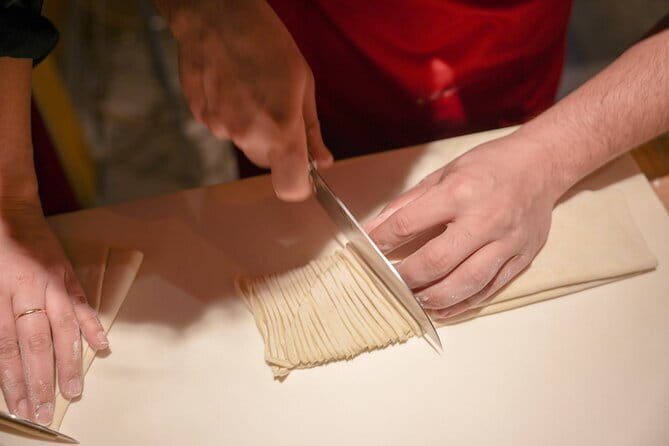
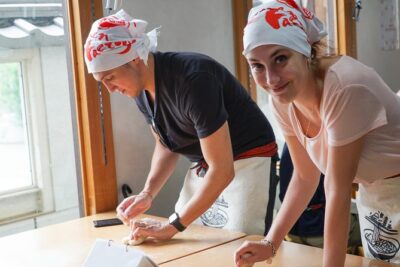
The first major task is the ramen itself. You knead the dough, cut the noodles, and prepare the toppings. This is the part I find most useful for home cooks because it shows how the texture of ramen begins before the noodles ever reach the pot. You are not simply watching a chef work behind a counter.
The chef leads the process step by step, making the class suitable for beginners. Several guides have helped bridge the language gap by translating instructions and adding explanations about Japanese food culture. Yuki, Ayuri, Rina, Emi, Eri, and Shun are among the guides praised for keeping the lesson clear and friendly.
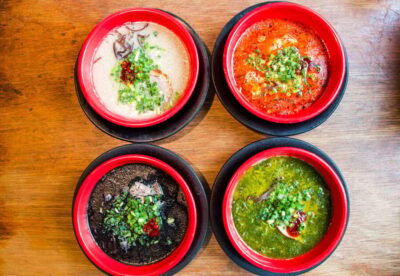
Do not expect a long lesson in traditional broth making. One important detail is that the ramen broth is pork-based, and at least one participant found it less traditional than expected because it used a prepared paste mixed with water. The class focuses more on making noodles and assembling a full meal than on simmering stock for many hours.
That distinction matters. If you want to study complex regional ramen broths, this is probably too basic. If you want to understand the mechanics of noodles and enjoy the satisfaction of making lunch yourself, it fits nicely.
Other cooking classes in Kyoto people book:
- Ramen Cooking Class at Ramen Factory in Kyoto
★ 5.0 · 1,937 reviews - Kyoto: Ramen Cooking Class at a Ramen Factory with Souvenir
★ 4.9 · 532 reviews - Kyoto: Ramen, Gyoza, and Onigiri Cooking Class
★ 5.0 · 445 reviews
Folding gyoza without worrying about perfect pleats
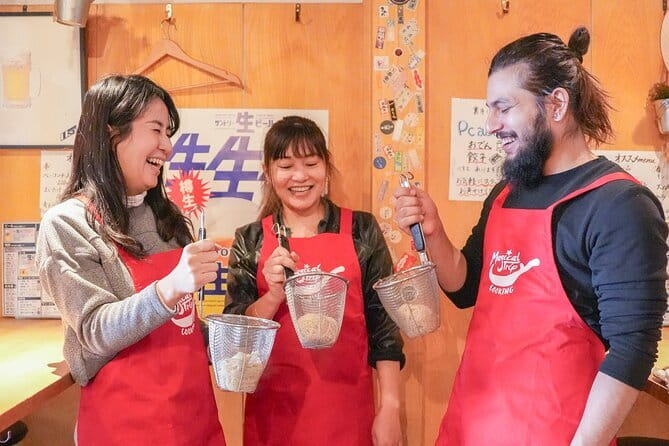
Gyoza is the most social part of the class. You fill and fold your own dumplings, with the chef nearby to show you how to handle the wrappers and shape them. Your first few may look uneven. That is part of the fun, and the cooking setup is designed to make the process approachable.
The gyoza also gives the class a useful rhythm. You prepare food with your hands, pause to learn a little about the dish, and then sit down to eat what you made. Beer or sake is included, adding a traditional pairing to the meal without requiring you to order anything extra.
The food is generous. You are not receiving one dumpling as a token sample. Along with the ramen and fried rice, the gyoza makes this a full lunch or dinner. Plan your meals around it, especially if you have a small appetite.
I would not schedule this immediately after a major restaurant meal. The portion is meant to satisfy you, and several sessions have left people pleasantly full. That is good value, but only if you arrive hungry enough to enjoy the result.
Fried rice adds a third Japanese comfort food
Ramen and gyoza get the attention, but fried rice makes the meal feel complete. You learn how the three dishes work together as a familiar Japanese meal rather than treating ramen as a stand-alone bowl.
The class is not only about one signature dish. You leave with a basic set of techniques for noodles, dumplings, and rice. The recipe guide helps turn the experience into something practical, though the recipes are fairly simple. An experienced home cook may wish for more detail or greater challenge.
That simplicity is useful for families and casual cooks. You can follow the instructions without special culinary training, and the chef keeps an eye on the preparation. A parent should still supervise children closely when knives or other risky steps are involved.
The guide matters as much as the chef
The chef teaches the cooking, while the English-speaking guide helps you keep pace and understand the wider setting. This arrangement works well because you can focus on the practical steps without missing the cultural explanations.
Yuki has been praised for translating the chef’s directions and adding useful information about Kyoto and Japan. Ayuri has also combined translation with background on Japanese culture, while Rina has helped make the class feel attentive and relaxed. Emi, Eri, and Shun are other named guides associated with positive experiences.
The quality of the class can depend on this partnership. A clear interpreter prevents small misunderstandings from turning into kitchen mistakes. A warm guide also helps a mixed group talk while the food cooks, which is part of the appeal of a shared class.
You may be paired with people from other countries, and that can add a nice social element. The class does not promise a private lesson, though groups are capped at eight. In practice, a smaller booking can feel nearly private and gives you more time with the chef.
Other bowls worth queuing for in Kyoto:
- Eat and Drink Like a Local: Tokyo Ueno Food Tour-Taverns&Ramen
★ 5.0 · 957 reviews - Ramen & Gyoza Cooking Class in Tokyo with Local Supermarket Visit
★ 5.0 · 823 reviews - Tokyo: Ramen Tasting Tour with 6 Mini Bowls of Ramen
★ 4.9 · 432 reviews - Osaka: Five Must-See Highlights Walking Tour & Ramen Lunch
★ 4.7 · 411 reviews
A former restaurant with a practical kitchen feel
The cooking takes place in an authentic working-style space described as a former restaurant. That gives the activity more character than a polished demonstration room, but it also means you should pay attention as you move around.
One useful warning concerns the interior. The space is mostly upstairs and includes several levels, so watch your footing. The activity is not recommended for people with mobility issues. If you need special access arrangements, the operator suggests booking a private tour instead.
The setting is part of the experience’s charm, but it is not designed as a fully accessible venue. This is the sort of place where a practical kitchen matters more than a flawless visitor facility. Wear comfortable clothes and shoes, and arrive ready to work around cooking equipment.
What the 2.5-hour schedule feels like
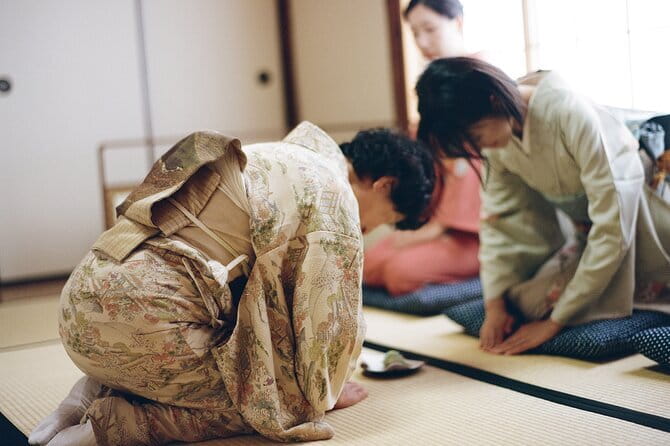
The time is divided between instruction, preparation, cooking, and eating. You begin with the chef’s guidance, move through ramen, gyoza, and fried rice, then sit down to enjoy the finished meal with your included drinks.
Because the dishes are prepared in stages, the class has a natural flow. While one item is being prepared, you can work on another. The guide can fill in cultural details between tasks rather than stopping the whole lesson for a long lecture.
You should allow the entire two and a half hours. This is not a quick demonstration followed by a snack. It is a meal-making activity, and the final eating time is an important part of what you pay for.
The class starts on time. If you arrive late, you cannot join, reschedule, or receive a refund. In Kyoto, where a short walk from a station can take longer than expected, leave extra time and find the meeting point before the start. The activity ends back at the starting location, which makes it easy to continue sightseeing afterward.
Is $86.22 a fair price?
At $86.22 per person, this is more expensive than simply ordering ramen and gyoza at a local restaurant. But the comparison is not really restaurant versus restaurant. You are paying for instruction, ingredients, a full meal, two drinks, translation, cultural context, and recipes to use later.
I consider the price fair for anyone who wants an activity rather than just lunch. The class occupies 150 minutes and gives you several skills to practice at home. A family can also get substantial value from the shared time, since children aged six and older are welcome.
The value is strongest when the group is small. With only three or four participants, you can receive more direct help and ask more questions. With eight people, the class will naturally feel more like a group lesson, though the chef still provides step-by-step guidance.
For an experienced cook seeking advanced technique, the price may feel high because the recipes are fairly simple and the broth is not prepared from a long-simmered stock. For a first-time cook, family, couple, or food-focused visitor, the meal and teaching make the cost easier to justify.
Who will enjoy this most?
This class is a strong choice for families with children aged six and older, couples looking for a relaxed shared activity, and anyone who likes eating Japanese food but wants more than a restaurant meal. You do not need previous cooking experience.
It also suits visitors who want a break from temples and formal sightseeing. Kyoto can involve a lot of walking and looking. Here, you use your hands, meet other people, and end with food you helped prepare.
The class is less suitable for strict vegetarians, vegans, people avoiding pork, and anyone who needs gluten-free food. The operator cannot guarantee allergy-free meals because preparation takes place in kitchens that are not dedicated allergy-free facilities. Substitutions may be attempted when possible, but they are not assured.
Mobility limitations are another serious consideration. The upstairs, multi-level layout may be difficult, and the activity is not recommended for people who need accessible movement through a venue.
Useful practical details before booking
Confirmation arrives at booking, and the mobile ticket is convenient for a Kyoto day spent moving between sights. The meeting point is near public transportation, but you should still build in extra time because late arrivals are not admitted.
The class is shared, with a maximum of eight participants. You do not need to pay for the guide’s food or drinks. Two drinks for you are included, and beer or sake is available for the gyoza pairing.
Free cancellation is available if you cancel at least 24 hours before the start time. Changes or cancellations inside that window are not refunded, and the cut-off follows local Kyoto time. The operator may also cancel if weather conditions become unsafe.
The meal contains pork broth even if you skip meat toppings. Read the dietary notes carefully before paying, rather than hoping the chef can make a last-minute adjustment.
Should you book the Kyoto ramen and gyoza class?
Book it if you want a friendly, hands-on food activity with a real meal at the end. The best parts are the handmade noodles, the gyoza folding, the generous serving of three dishes, and the guides who translate clearly while adding useful Kyoto context.
I would especially recommend it for families and couples, or for anyone who wants a rainy-day plan that feels more active than sitting in a restaurant. The small group limit can make the class feel personal, and weekday bookings may give you unusually close contact with the chef.
Skip it if you need vegetarian, vegan, gluten-free, or allergy-controlled food, or if you are seeking an advanced ramen course with broth made entirely from scratch. Also think twice if stairs and several kitchen levels will be difficult.
For most food-loving visitors, this is a practical Kyoto memory: you learn enough to repeat the dishes at home, eat well, and leave with a better sense of how everyday Japanese comfort food comes together.
FAQ
How long does the Kyoto ramen and gyoza cooking class last?
The class lasts approximately two hours and 30 minutes. It includes cooking instruction, preparation of the meal, and time to eat the ramen, gyoza, and fried rice you make.
What food is included?
You prepare and eat ramen, gyoza, and fried rice. The ramen uses pork broth, including when meat toppings are not used.
Are drinks included?
Yes. Two drinks are included. Beer or sake can be paired with the gyoza.
Do I need cooking experience?
No. All cooking levels are welcome, and the professional chef provides step-by-step guidance.
Can children join the class?
Children aged six and older may participate. An accompanying adult must supervise children when they use knives or take part in potentially dangerous steps.
Can the class accommodate vegetarian, vegan, or gluten-free diets?
No. The class cannot accommodate vegetarian, vegan, or gluten-free requests. Allergy-free meals cannot be guaranteed, though the team may try substitutions when feasible.
More cooking classes elsewhere in Japan
- Kyoto: Japanese Washoku Bento Small Group Cooking Class
★ 5.0 · 380 reviews - Kyoto: Afternoon Japanese Izakaya Cooking Class
★ 4.9 · 241 reviews - Izakaya Style Cooking Class
★ 5.0 · 219 reviews - Osaka: Ramen and Gyoza Cooking Class in Dotonbori
★ 5.0 · 378 reviews
Just added in Kyoto
- Kyoto: Private Photoshoot Service★ 5.0 · 158 reviews
- Kyoto Rickshaw Tour★ 5.0 · 210 reviews
- Izakaya Style Cooking Class★ 5.0 · 219 reviews
- Kyoto: Traditional Concert at Townhouse or Bathhouse★ 4.9 · 224 reviews
- Ninja 2-hour Hands-on Lesson by Japanese master in Kyoto -Medium★ 5.0 · 218 reviews
- Kyoto: Arashiyama Bamboo, Temple, Matcha, Monkeys & secret spots★ 5.0 · 219 reviews
- Kyoto: Gion & Pontocho Food Tour with 13 Dishes★ 4.9 · 235 reviews
- Kyoto: Afternoon Japanese Izakaya Cooking Class★ 4.9 · 241 reviews
Ramen Tours & Workshops, compared.
Ramen Cooking Class at Ramen Factory in Kyoto
Read our review →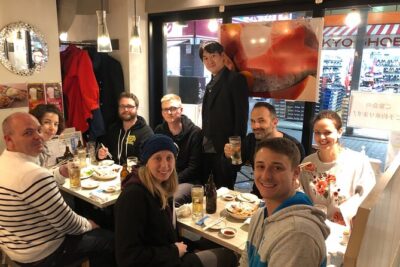
Eat and Drink Like a Local: Tokyo Ueno Food Tour-Taverns&Ramen
Read our review →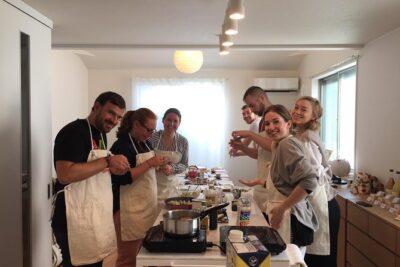
Ramen & Gyoza Cooking Class in Tokyo with Local Supermarket Visit
Read our review →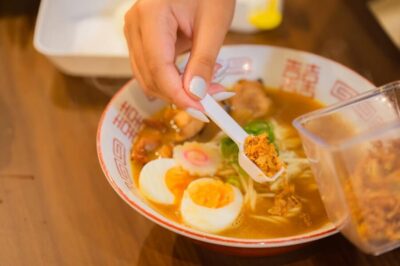
Ramen Cooking Class at a Ramen Factory with Souvenir
Read our review →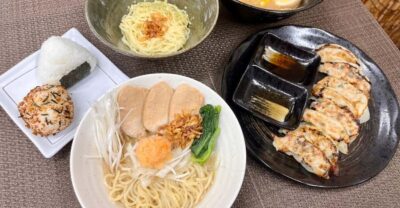
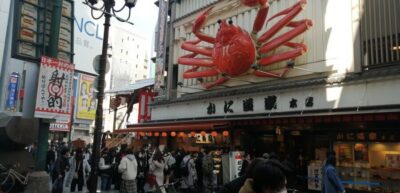
Five Must-See Highlights Walking Tour & Ramen Lunch
Read our review →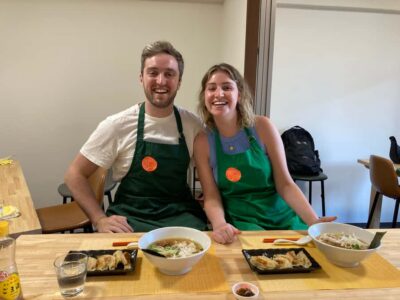
Browse the lists this tour appears in