
Reviewed · WALKING TOURS
Private & Custom KYOTO Walking Tour – your Travel Companion
Kyoto is too large for a casual stroll, and this private tour tackles that problem with a custom eight-hour day. You choose the interests, while an English-speaking companion helps with directions, public transport, photos, restaurant calls, local vendors, and ticket arrangements. Guides associated with past bookings include Jinshi, Rio, Karl, Dalivanh, Femin, and Karim.
I like the privacy for a family or group of friends, and I like the freedom to shape the day around temples, food, shopping, or traditional neighborhoods. The main caution is that the advertised menu includes far more sights than you can properly see in eight hours, and guide quality appears to vary. Give the company a firm priority list before you set out.
Key points to know before booking
- You control the route: Choose from major sights such as Kinkakuji, Kiyomizu-dera, Fushimi Inari, Arashiyama, Gion, and Nijo Castle.
- The price covers the group: The $265.82 rate is for up to five people, not each person.
- Transport is extra: Private transportation is not included, so expect to use public transportation or arrange your own rides.
- Tickets cost extra: Temple and castle admission fees are separate from the tour price.
- Eight hours requires discipline: Seeing every listed stop would leave little time for meaningful visits or meals.
- The guide matters: Past guides have included Jinshi, Rio, Karl, Dalivanh, Femin, and Karim, but the level of Kyoto knowledge may differ.
What this Kyoto companion tour really offers
This is best understood as a private day of help rather than a fixed sightseeing circuit. You are not buying a guaranteed sequence of thirteen complete visits. You are paying for a person who can help you decide, get around, communicate, and adjust the day to your interests.
That difference matters in Kyoto. The city spreads across several districts, and its most famous sights are not packed into one easy walking route. Kinkakuji is in the northwest, Fushimi Inari lies in the south, and Arashiyama is farther west. Add Gion, Kiyomizu-dera, Nishiki Market, and the Imperial Palace, and you have a very busy day.
The guide can meet you at a pickup point, including an accommodation according to the tour details, and the activity ends back at the meeting point. The guide may help with buses and trains. One strong account specifically describes a guide meeting the group at an Airbnb and helping with public transportation, which is useful if Kyoto’s bus system feels like a puzzle.
The service includes a travel companion, a personalized itinerary, and assistance throughout the trip. It does not include private transportation, meals, accommodation, or entrance fees. You should also confirm which sights you want before the day begins, rather than expecting the companion to select everything on the spot.
Other walking tours in Kyoto people book:
- Kyoto Geisha Walking Tour: Gion District & Hidden Gems
★ 4.7 · 3,273 reviews - Kyoto: Gion Magical Night Walking Tour with Geisha Trivia
★ 4.9 · 2,393 reviews - Kyoto: Gion Geisha District Walking Tour – Stories of Geisha
★ 4.7 · 2,187 reviews
How to plan the eight hours
The most important decision is not which temple you like best. It is how many parts of Kyoto you want to connect.
A realistic day should probably focus on one or two areas. Eastern Kyoto works well with Kiyomizu-dera, Sannenzaka and Ninenzaka, Yasaka Shrine, Gion, and perhaps Sanjusangendo. Another day could pair Arashiyama with Kinkakuji, though even that needs careful timing. Fushimi Inari can fit with southern or central sights, but adding it to Arashiyama and eastern Kyoto creates a lot of transit.
The listed visit times add up to several hours before you count travel, meals, waiting, and ticket lines. Some stops have only 15 or 30 minutes assigned. That can be enough for a quick look and a few photos, but not for a thoughtful visit.
I would send a short priority list:
- Two must-see sights.
- Two places you would enjoy if time allows.
- One food or shopping interest.
- Any mobility, pace, or language concerns.
- A clear limit on how much time you want to spend in transit.
That gives the companion something useful to work with. It also reduces the chance of spending the whole day rushing between famous names.
Kinkakuji and Kiyomizu-dera bring the classic Kyoto views
Kinkakuji, the Golden Pavilion, is one of Kyoto’s most recognizable sights. The gold-covered structure reflects in the pond, and the temple grounds offer a polished introduction to Zen architecture and Japanese garden design. The planned stop is about 30 minutes, with admission extra.
Thirty minutes can work if you want the main view and a short walk through the grounds. It is tight if you like gardens, photography, or a quiet pause. Ask your guide how much time is sensible on the day, since crowds and movement through the grounds can affect the pace.
Kiyomizu-dera is another major stop. Its wooden stage projects from the main hall above the hillside, giving you one of Kyoto’s classic elevated views. The temple is especially effective when you approach through the older streets below, rather than treating it as a quick photo stop.
The suggested time is 45 minutes, and admission is not included. That gives you more breathing room than Kinkakuji, but the approach through the historic lanes can take time. Wear shoes suitable for walking and expect some slopes and steps around the temple area.
Sannenzaka, Ninenzaka, and Gion slow the day down
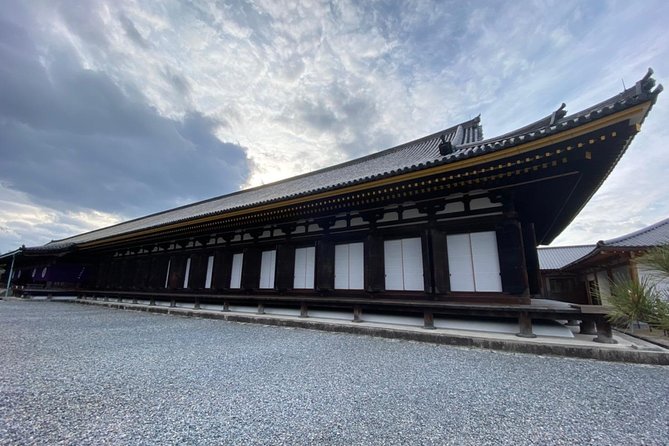
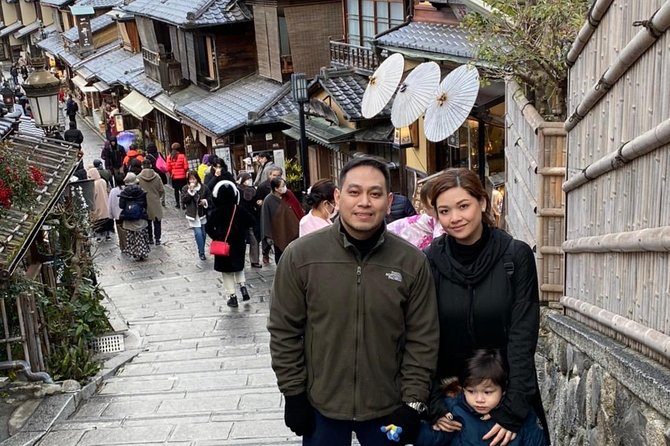
Sannenzaka and Ninenzaka are preserved districts of traditional-looking streets near Kiyomizu-dera. Their value is not one grand monument. It is the chance to walk through a part of Kyoto where old-style buildings, small shops, and food stops shape the experience.
The planned visit is 45 minutes and admission is free. That is enough for a pleasant walk, though you may want longer if shopping interests you. This is one place where a private companion can help you avoid turning the visit into a hurried march toward the next temple.
Yasaka Shrine, also called Gion Shrine, is another eastern Kyoto stop. It is closely linked with the Gion Matsuri, held each July and described as Japan’s most famous festival. The suggested visit is 30 minutes.
From there, Gion gives you a look at Kyoto’s famous geisha district. The planned time is also 30 minutes, with no admission charge listed. Keep your expectations sensible. A short visit lets you see the streets and atmosphere, but it does not guarantee a geisha sighting or a special performance.
These four stops make a natural cluster. If you want a less frantic day, I would give eastern Kyoto priority over trying to cross the city several times.
Other guided walks in Kyoto:
- Kyoto Gion Geisha District Walking Tour – The Stories of Geisha
★ 5.0 · 1,441 reviews - Nishiki Market Brunch Walking Tour (7 Tastings + Brunch)
★ 5.0 · 1,355 reviews - Kyoto Arashiyama Walking Tour: Bamboo, Monkeys, Gardens & Secrets
★ 5.0 · 1,216 reviews - Kyoto Gion: 2-Hour Geisha Culture & History Walking Tour
★ 5.0 · 1,186 reviews
Fushimi Inari is about the torii path, not a quick snapshot
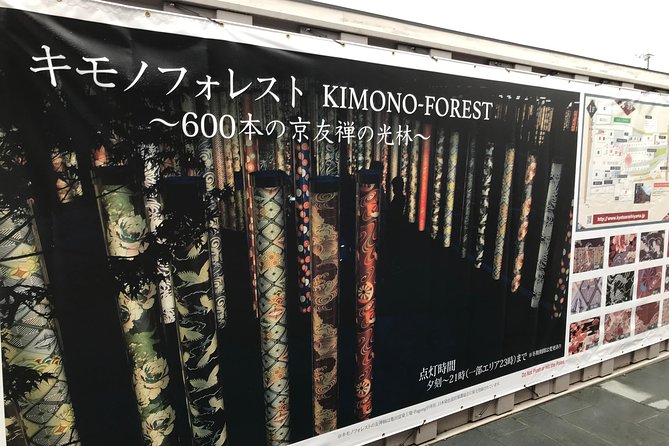
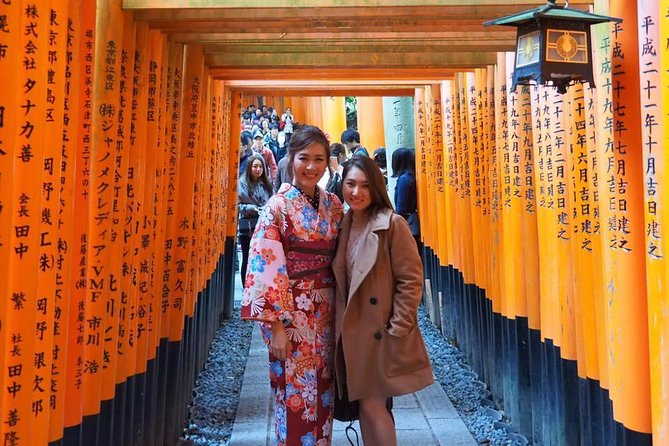
Fushimi Inari-taisha is famous for its rows of vermilion torii gates running up the wooded trails behind the main shrine buildings. It is one of Kyoto’s most memorable walks because the gates create a changing path rather than a single viewing point.
The schedule gives it only 15 minutes, and admission is free. That is enough to enter, see the first section of gates, and take a few photos. It is not enough for a substantial hike up the mountain.
Tell your guide how far you want to walk. If Fushimi Inari is a top priority, it deserves more time than the suggested outline gives it. If you only want to see the famous lower gates, a brief stop may suit a packed day.
Arashiyama needs more than the bamboo grove
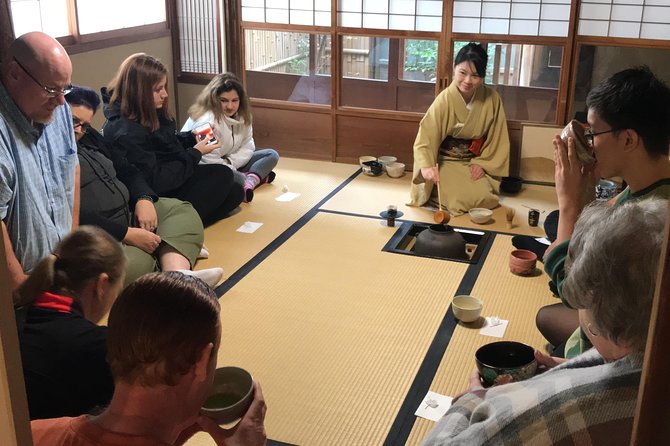
Arashiyama is one of Kyoto’s major sightseeing districts, with temples, shrines, the bamboo grove, and the Tenryuji temple complex. The planned visit is one hour, and entrance fees are extra.
The bamboo grove is the obvious draw, but it is only one part of the district. Tenryuji is one of Kyoto’s major Zen temples, founded in 1339, and gives the visit more substance than a short walk among bamboo. If you want both, one hour will pass quickly.
Arashiyama is on the western side of Kyoto, so combining it with Fushimi Inari, Gion, and eastern Kyoto can make the day feel like a transport exercise. The companion may help you use buses and trains, but no guide can remove the distance between districts.
I would choose Arashiyama when the bamboo grove and Tenryuji are central to your plans. I would not add it automatically just because it appears on the sightseeing list.
Nishiki Market adds food and everyday Kyoto
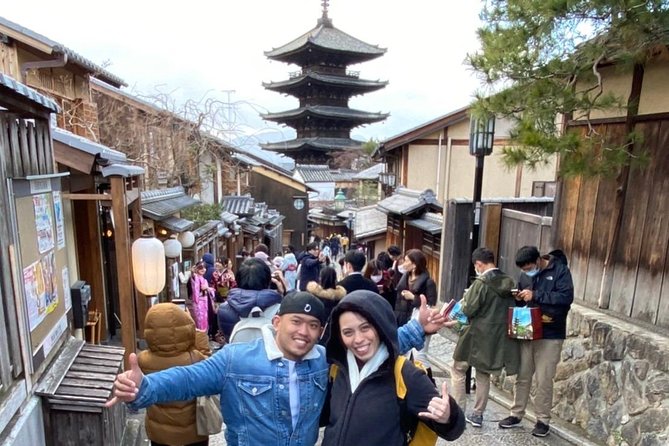
Nishiki Market is a narrow, five-block shopping street known as Kyoto’s kitchen. More than one hundred shops and restaurants line the route, making it a useful change of pace after temples and shrines.
The suggested visit is 40 minutes, with no admission fee. That works for a walk and a few small tastes, but it may feel short if you want to shop or eat a proper meal. Meals are not included, so budget separately.
This is a good place to tell your companion what you do and do not eat. The service includes help communicating with local vendors and booking restaurants, which can be practical when you want something more specific than a quick market snack.
Ginkakuji, Sanjusangendo, and Nijo Castle
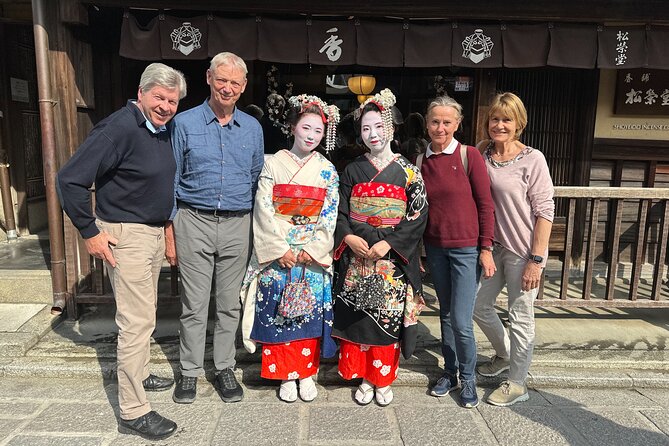
Ginkakuji, the Silver Pavilion, was built by Ashikaga Yoshima, the grandson of the shogun connected with Kinkakuji. Its 30-minute stop is designed as a quick visit, with admission extra.
The pairing of Kinkakuji and Ginkakuji sounds neat on paper, but they are on opposite sides of the city. If both are essential, ask the guide to explain the transport plan before committing. Otherwise, choosing one may leave more time for the surrounding streets and gardens.
Sanjusangendo is known for its hall of 1,001 statues of Kannon, the goddess of mercy. The suggested visit is 30 minutes, and admission costs extra. This stop offers a very different experience from the open gardens and outdoor paths at other temples. The interior collection is the main reason to go.
Nijo Castle was built in 1603 as the Kyoto residence of Tokugawa Ieyasu, the first shogun of the Edo period. Its palace buildings were completed later by his grandson Iemitsu. The planned visit is 45 minutes, with admission extra.
Nijo Castle is a strong choice if you want political history and architecture rather than another shrine. It can also anchor a central Kyoto day with Nishiki Market, though you should check the order and opening times with the guide.
Eikando and the Imperial Palace round out the choices
Eikando, formally Zenrinji, belongs to the Jodo sect of Buddhism and lies north of Nanzenji. It is especially famous for autumn colors, according to the description provided for the tour. The suggested visit is 45 minutes, with admission extra.
This is a seasonal choice. If you are visiting in autumn, it may deserve more attention. At other times, you may prefer to use the time for one of Kyoto’s better-known districts, depending on your interests.
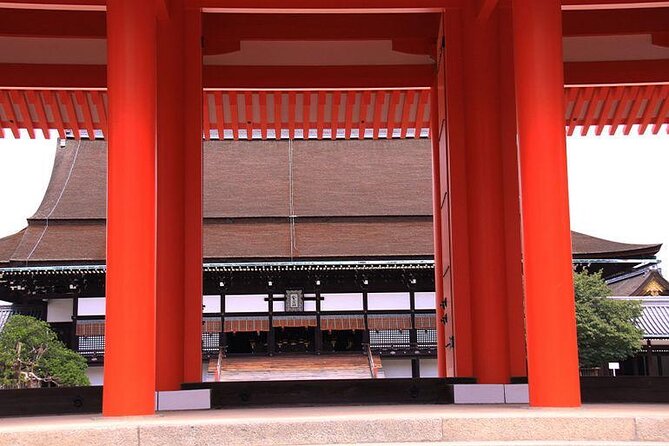
The Kyoto Imperial Palace was the residence of Japan’s Imperial Family until 1868, when the emperor and capital moved to Tokyo. It sits within a spacious park, and the visit is listed as 30 minutes with free admission.
The palace offers a different view of Kyoto from the temples and shopping lanes. It works well for people interested in court life and the former capital. The open setting can also provide a break from tight streets and crowded temple approaches.
Price, group size, and what is not covered
The total price is $265.82 for a private group of up to five. At the full group size, that works out to about $53 per person for eight hours, before transport, food, and admission fees. For five people who want personal help all day, that can be fair value.
For one or two people, the per-person cost rises sharply. You are paying for privacy and flexibility, not a low-cost group excursion. The value is strongest when your group wants different help from a standard fixed tour, such as public transport guidance, restaurant communication, or a schedule built around particular interests.
Private transportation is not included. Entrance fees are not included either, including the paid stops noted above. Ask for a rough spending plan before departure so the final cost does not surprise you.
The cancellation policy is strict. The experience is non-refundable and cannot be changed for any reason, so book only when your Kyoto date and group plans are firm.
Guide quality is the key uncertainty
The best accounts describe companions who were patient, flexible, cheerful, and helpful with questions. Jinshi received especially warm praise for a full day among temples, shrines, gardens, and food. Dalivanh was described as flexible and effective with buses and trains, while another group valued Femin’s effort to answer a child’s questions.
There is also a clear warning. Some bookings involved a last-minute guide change because the original guide became ill. Other accounts describe companions with limited knowledge of Kyoto, poor navigation, or little preparation. One guide was a college student, and another had arrived in Japan only a few months earlier.
That does not mean every booking will have the same problem. It does mean you should ask who is assigned, what the guide knows, and whether the person can explain the places you want to visit. If you need a specialist historian or polished temple commentary, this may not be the safest choice.
If you mainly need help getting around, translating, taking photos, and keeping a busy day organized, the arrangement may suit you better.
Should you book this private Kyoto day?
Book it if you are a group of up to five that wants a personal route, help with buses and trains, and assistance handling local communication. It is particularly useful for a first Kyoto visit when you have several must-see places but do not want to manage every transfer yourself.
Do not book it expecting a guaranteed expert lecture at every temple or a relaxed visit to all thirteen stops. The day needs firm priorities, and guide experience can vary. Before paying, confirm the guide assignment if possible, name your two or three essential sights, and ask how the route will work without private transportation.
Used as a flexible companion service, this can make a complicated Kyoto day easier. Used as an attempt to collect every famous sight in eight hours, it is likely to feel rushed and expensive.
FAQ
How long is the private Kyoto tour?
The tour lasts approximately eight hours.
How many people can join the private tour?
The price covers one private group of up to five people.
Is hotel or accommodation pickup available?
Pickup is offered, and the activity ends back at the meeting point. The exact pickup arrangement should be confirmed when booking.
Are entrance fees included?
No. Entrance fees are separate. Paid attractions listed for the route include places such as Kinkakuji, Kiyomizu-dera, Ginkakuji, Sanjusangendo, Nijo Castle, and Eikando.
Is private transportation included?
No. Private transportation is not included. The companion can assist with itinerary planning and public transportation, but you must account for transport costs separately.
Can I choose which Kyoto sights to visit?
Yes. The experience is designed around a personalized itinerary. Possible stops include Kinkakuji, Kiyomizu-dera, Sannenzaka and Ninenzaka, Yasaka Shrine, Fushimi Inari, Arashiyama, Nishiki Market, Gion, Ginkakuji, Sanjusangendo, the Imperial Palace, Nijo Castle, and Eikando.
Just added in Kyoto
- Private Cooking Class Udon in Kyoto Japan★ 5.0 · 23 reviews
- Your Private Vacation Photography Session In Kyoto★ 5.0 · 110 reviews
- Kyoto: Zen Meditation at a Private Temple with a Monk★ 5.0 · 25 reviews
- Private Pewter Sake Cup Experience with a Kyoto Artisan★ 5.0 · 31 reviews
- Kyoto Wagashi(Japanese sweets) Cooking Class near Fushimiinari★ 5.0 · 60 reviews
- Kyoto:Family-Friendly Kimono & Yukata Experience at WARGO★ 5.0 · 147 reviews
- Private Guided Traditional Buddhist Cooking in Japan★ 5.0 · 16 reviews
- Kyoto: Gion Geisha District & Sake-in-Hand Walking Tour★ 5.0 · 37 reviews
Walking Tours, compared.

Kyoto Geisha Walking Tour: Gion District & Hidden Gems
Read our review →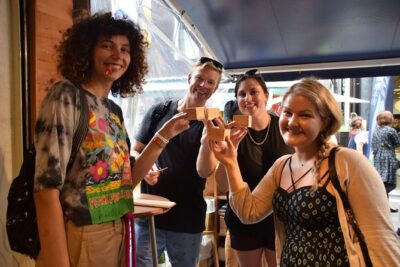
Tokyo Tsukiji Fish Market Food and Culture Walking Tour
Read our review →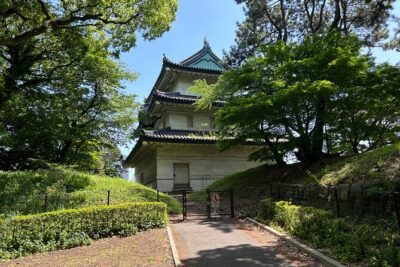
Imperial Palace and Shogun Historical Walking Tour
Read our review →
Gion Geisha District Walking Tour – Stories of Geisha
Read our review →
Shinjuku Local Bar and Izakaya Guided Walking Tour
Read our review →
Asakusa Walking Tour with Sensoji Temple Visit
Read our review →
Nishiki Market Brunch Walking Tour (7 Tastings + Brunch)
Read our review →Browse the lists this tour appears in