
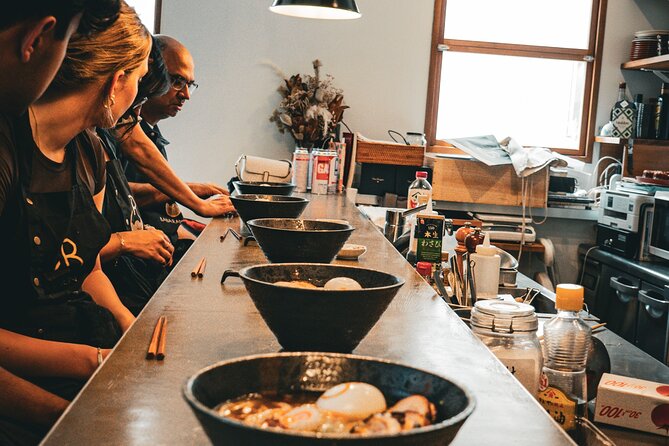
Reviewed · RAMEN TOURS & WORKSHOPS
Professional Ramen & Gyoza with Ramen Chef in a restaurant!
Tokyo has plenty of cooking classes, but this one puts you in a working restaurant kitchen and asks you to do real work. You make the noodles, prepare the ramen components, fold gyoza, and finish with a bowl built from your own efforts. The teaching team has included Andrew, Eric, Jae, and Leo, with instruction in English and Japanese.
I like the small maximum group of six, since it gives the chefs room to correct your technique. I also like the practical follow-up: you receive an e-book, so the class does not end when lunch is over. The main consideration is price. At $159.18 per person, this is not a casual noodle demonstration, and the four-hour session can be active and demanding.
Key points at a glance
- Make the noodles yourself: Work with ramen dough and learn why fresh noodles change the finished bowl.
- Cook in a real restaurant setting: Use professional kitchen equipment rather than watching from a distance.
- Prepare gyoza, too: The class covers more than ramen, giving you a second Japanese dish to make and eat.
- Learn the whole bowl: The process covers the separate parts that come together in restaurant-style ramen.
- Small, hands-on group: A maximum of six people means more access to the instructors.
- Dietary requests are possible: Vegetarian, vegan, gluten-free, and pork-free options may be available with advance notice.
What makes the Baba Ramen class different
The best reason to book this experience is simple: you are not just shown a bowl of ramen. You help make it.
Baba Ramen operates from 3-chōme-7-32 Shimomeguro in Meguro City. The morning begins at 9:00 a.m. and finishes back at the same location after roughly four hours. That start time matters. You will need to plan around a full morning, but you also finish with lunch rather than giving up a prime evening in Tokyo.
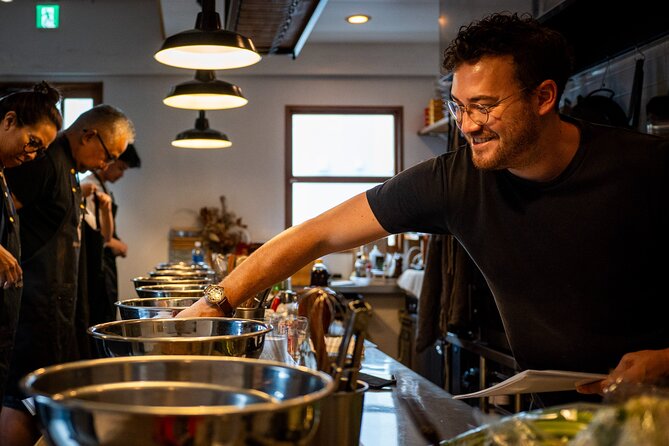
The class uses a restaurant kitchen with professional equipment. That changes the feel of the session. You get a better sense of the heat, timing, preparation, and physical effort behind a bowl of ramen than you would in a relaxed home kitchen. Some cooking experiences let you stir a pot and then watch the chef handle the important parts. Here, you are expected to take part in nearly every stage.
The setting is practical rather than polished for show. One person described the small restaurant as a place that becomes an Italian restaurant at night. That detail gives you a sense of the flexible space, and it also explains why the kitchen can support serious preparation without feeling like a staged tourist set.
Other bowls worth queuing for in Tokyo:
- Eat and Drink Like a Local: Tokyo Ueno Food Tour-Taverns&Ramen
★ 5.0 · 957 reviews - Ramen & Gyoza Cooking Class in Tokyo with Local Supermarket Visit
★ 5.0 · 823 reviews - Tokyo: Ramen Tasting Tour with 6 Mini Bowls of Ramen
★ 4.9 · 432 reviews
From flour to fresh ramen noodles
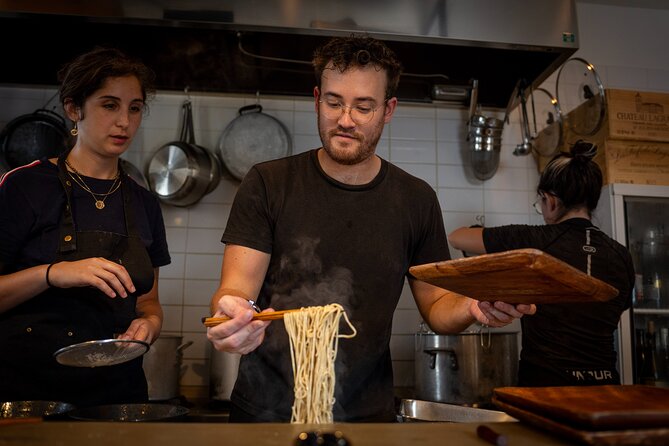
The noodle-making section is likely to be the most memorable part of the morning. Fresh ramen noodles require more than mixing flour and water, and the class uses that process to show you what goes into the texture of the finished noodle.
You should expect hands-on work rather than a short demonstration. You may roll and shape the dough, follow the chef’s instructions, and see how small changes affect the noodles. The point is not only to produce lunch. It is to give you an understanding of why restaurant ramen has a different bite from many instant or packaged versions.
The instructors also explain the background of ramen, its varieties, and the etiquette connected with eating it. That cultural context adds value, especially if you plan to eat your way through Tokyo afterward. You will better understand that ramen is not one fixed dish. The broth, tare, noodles, toppings, and cooking method all affect the result.
A useful reality check: making noodles from scratch takes effort. The class keeps you busy, and one account specifically warns you to be ready to work. If you want a quiet morning with a chef doing most of the cooking, choose another activity. If you like learning through your hands, this is one of the strongest parts of the experience.
Building the bowl, one layer at a time
The class teaches the separate elements that make up restaurant-quality ramen. The exact sequence can vary with the group and kitchen schedule, but the focus is on making the parts from fresh ingredients and bringing them together at the end.
This matters because ramen can look simple when it arrives at the table. A bowl may contain noodles, broth, seasoning, and toppings, but each part carries its own job. The class helps you see how the components work together instead of treating ramen as one recipe.
You also choose between two broth options. That gives you some control over the final meal and makes the class more useful for home cooking. You can compare the style you prefer and then use the supplied recipes as a starting point later.
The teaching team also shares ways to shorten the process at home with limited tradeoffs. This is important. Traditional ramen can demand a great deal of time, and few home cooks want to spend every free day preparing one bowl. Learning which steps matter most lets you make a realistic version without losing the character of the dish.
The work can include hot pans and oils, and one family described the session as active from beginning to end, including breaking down chicken bones and rolling noodles. Those details make this more than a food talk. You need to pay attention around heat and moving equipment, and you should be comfortable standing and working for much of the class.
Folding gyoza alongside the ramen
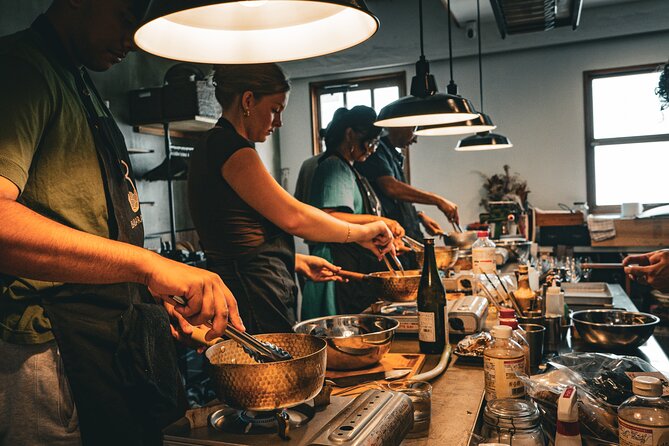
Gyoza gives the session a welcome change of pace. After working with ramen ingredients and noodles, you learn to prepare and fold these Japanese dumplings before cooking and eating them.
The gyoza portion also makes the experience useful for home cooks. Folding is a skill you can repeat without buying specialist equipment, and it gives you another dish to make after your trip. The class is designed so you take part rather than simply receive a plate.
This second dish helps justify the length of the activity. You are not spending four hours on one narrow demonstration. You get a fuller look at Japanese cooking, with ramen as the main project and gyoza as a substantial extra.
The final meal includes the food you have made. Expect a generous serving, since several accounts describe leaving very full. That is a benefit after a busy morning, though it may be worth eating lightly beforehand. You are coming for lunch as well as instruction.
More cooking in Tokyo:
- Ramen and Sushi Cooking Class with Sake Pairing Set in Tokyo
★ 5.0 · 291 reviews - Tokyo: Wagyu and 7 Japanese Dishes Cooking Class
★ 4.9 · 273 reviews - Tokyo Washoku 4-hour Cooking Class: From Market to Table
★ 5.0 · 253 reviews - Small-Group Wagyu Beef and 7 Japanese Dishes Tokyo Cooking Class
★ 5.0 · 190 reviews
The chefs and the small-group format
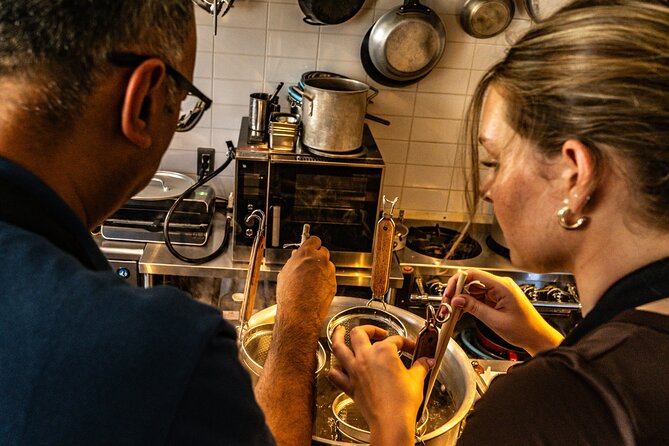
The group size is capped at six people. That is one of the most important details in the booking decision.
A small group gives you more direct time with the chefs. If your dough feels wrong, your gyoza folds fall open, or you are unsure about a cooking step, you can ask for help without waiting behind a large class. The instructors are described as warm, patient, organized, and easy to talk with, which matters when the kitchen work becomes fast.
Andrew is named as part of the team, while Eric, Jae, and Leo have also taught sessions. The class is offered in English and Japanese, making it a good fit for English-speaking visitors who want clear instruction while still learning about Japanese food culture.
The social side depends partly on who books the same morning. You may be working with a family, a couple, solo participants, or a small group of friends. The class gives you plenty to do, so conversation tends to happen naturally while you cook. Still, you should not book it expecting a private lesson unless your booking fills the group.
The teaching style is energetic. The chefs explain technique and history, but they also keep the pace moving. That balance is useful, since a long cooking class can drag if too much time is spent listening. Here, you should be prepared to follow instructions, ask questions, and keep your station active.
Is $159.18 a fair price?
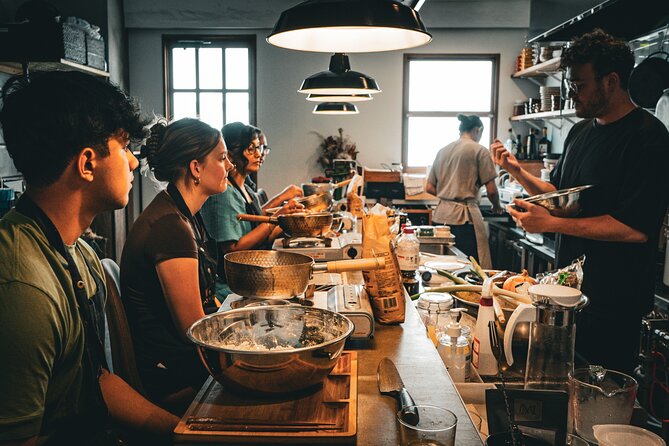
At $159.18 per person, this is an expensive cooking class. Tokyo offers cheaper food activities, and you can eat a bowl of excellent ramen for far less than the cost of this session.
The price makes more sense if you value instruction, hands-on work, and the meal at the end. You are paying for about four hours, a small group, professional kitchen use, ingredients, ramen and gyoza, bilingual instruction, and an e-book with recipes. You also leave with a process you can repeat rather than only a photograph and a full stomach.
I would compare it with other cooking activities based on how much you actually do. If another class costs less but has you watching a chef prepare most of the food, the savings may not matter to you. Baba Ramen is aimed at people who want to work through the recipe and understand the effort behind it.
The value is strongest for food-focused visitors, repeat Japan visitors, families who enjoy cooking together, and solo participants who want a structured social activity. It is less attractive if your main goal is simply to eat ramen cheaply or fit several sightseeing stops into one morning.
Dietary needs and practical planning
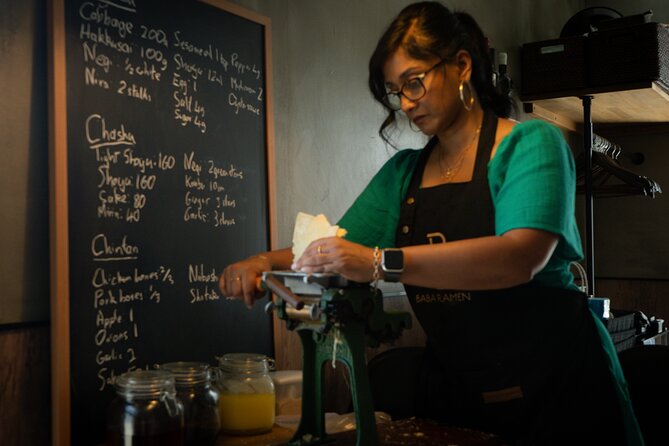
Vegetarian and vegan versions may be available, along with gluten-free and pork-free options. You need to include the request when booking, and availability is not guaranteed, so do not wait until the morning of the class.
This is especially important for ramen because broth, seasoning, noodles, and dumpling wrappers can all contain ingredients that are not obvious. Send a clear request in advance and make sure the class confirms that it can meet your needs.
Service animals are allowed, and the meeting point is near public transportation. The activity begins and ends at Baba Ramen Cooking Meguro, so you do not need to manage a second meeting point after the class. You receive a mobile ticket, and booking confirmation is provided at the time of purchase.
The published start time is 9:00 a.m. Plan to arrive with enough time to find the restaurant in Meguro. The class lasts about four hours, though the exact finish may depend on the group’s pace and the amount of cooking involved.
The activity is listed as weather dependent. If poor weather causes cancellation, you are offered another date or a full refund. The same applies if the minimum number of participants is not reached. For your own plans, free cancellation is available up to 24 hours before the start time. Changes or cancellations inside that window are not accepted for a refund.
Who will enjoy this most
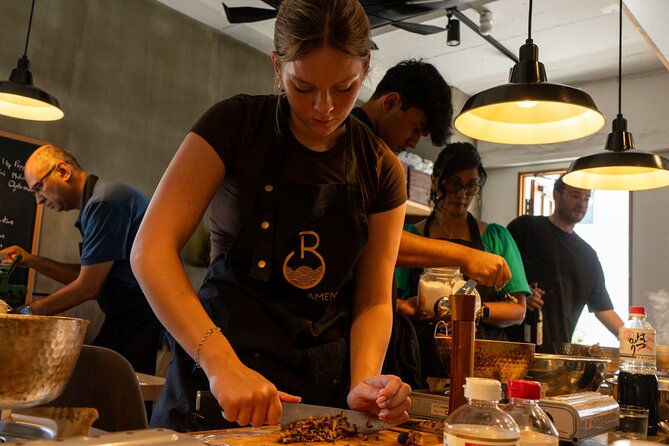
I would recommend this class to you if you meet several of these points:
- You care more about learning than simply eating.
- You enjoy practical work and do not mind a busy kitchen.
- You want to make fresh noodles, not just decorate a finished bowl.
- You like food history, cooking technique, and etiquette explained together.
- You want recipes to use at home after Japan.
- You are comfortable spending four hours on one focused activity.
Families can do well here because everyone has a role, and the class has welcomed young children with extra care. That said, hot pans, oils, and kitchen equipment mean adults need to supervise small children closely. The activity is not a passive family show.
Solo visitors also have a good reason to book. The small group gives you an easy setting for meeting other people, while the cooking keeps the conversation from feeling forced. You still need to be comfortable joining a shared class rather than booking a private experience.
This may not suit you if you dislike standing, have limited time in Tokyo, or want a relaxed restaurant meal with no preparation. It can also feel costly if the e-book and cooking instruction are not important to you.
What you take home besides a full stomach
The strongest souvenir is the method. You learn how the noodles are made, how the broth options differ, how the bowl’s parts fit together, and how gyoza is prepared. The e-book then gives you a practical reference for trying again at home.
Do not expect to reproduce a restaurant bowl with no effort. The class itself makes clear that authentic ramen takes time and hard work. Still, the instructors offer shortcuts, and the recipes help you decide which parts to make from scratch and which parts to simplify.
That makes the lesson more useful than a one-off tasting. You may start with the full process, then adapt it to your own kitchen. One participant had already begun making shoyu tare at home after the class, which shows how the recipes can lead to specific projects rather than vague inspiration.
The finished ramen is also a key part of the reward. Several accounts describe it as the best ramen they ate in Japan, but your own taste will depend on the broth choice and how well your group handles the preparation. The fair expectation is this: you will eat a meal built from fresh ingredients and your own work, with chef guidance along the way.
Should you book Baba Ramen?
Book it if you want a serious, hands-on food class and can spare a full morning in Tokyo. The small group, restaurant kitchen, fresh noodles, gyoza, bilingual instruction, and take-home recipes give the $159.18 price a reasonable basis, even if it remains a splurge.
I would especially choose it for a food-loving family, a couple who enjoys cooking, or a solo visitor looking for an activity with a clear purpose. Send dietary requests early, arrive ready to work, and do not schedule a rushed attraction immediately afterward.
Skip it if you only want an inexpensive bowl of ramen or prefer watching rather than cooking. For everyone else, this offers a useful look at the labor behind a Japanese staple, followed by a meal you helped create.
FAQ
How long does the ramen and gyoza class last?
The activity lasts approximately four hours, beginning at 9:00 a.m. and ending back at the Baba Ramen Cooking Meguro meeting point.
Where does the class take place?
It takes place at Baba Ramen Cooking Meguro, located at 3-chōme-7-32 Shimomeguro, Meguro City, Tokyo 153-0064, Japan.
How many people can join the class?
The class has a maximum of six participants, allowing for more direct instruction and feedback from the chefs.
Are vegetarian, vegan, gluten-free, or pork-free options available?
These options may be available if requested in advance. You should include your dietary needs in the booking request, since alternatives are subject to availability.
Do I make both ramen and gyoza?
Yes. The activity includes making ramen noodles from scratch as well as preparing gyoza. You eat the food made during the class.
What is the cancellation policy?
You can cancel up to 24 hours before the start time for a full refund. Cancellations or changes made less than 24 hours before the start time are not accepted for a refund.
Just added in Tokyo
- Nikko: Edo Wonderland Edomura Cultural Theme Park Ticket★ 4.3 · 205 reviews
- 《MEMBERS-ONLY-BAR-HOPPING》Discover Your Special Whiskey in Tokyo!★ 5.0 · 29 reviews
- Japanese Whisky Hunting《HIGH-QUALITY-ONLY》Rare Tasting Class★ 5.0 · 20 reviews
- Luxury Tokyo Sake, Cocktail, Whisky and Pairing Tour★ 5.0 · 18 reviews
- Wagyu & Sake Pairing in Shinjuku – Steak, Shabu-Shabu & More★ 5.0 · 112 reviews
- Small-Group Wagyu Beef and 7 Japanese Dishes Tokyo Cooking Class★ 5.0 · 190 reviews
- From Tokyo: Private Tour to Fuji/Hakone – Onsen, Art, Nature★ 5.0 · 116 reviews
- Tokyo: KABUKI Show at Kabukiza Theatre Admission Ticket★ 4.8 · 152 reviews
Ramen Tours & Workshops, compared.
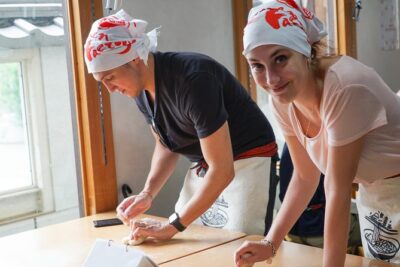
Ramen Cooking Class at Ramen Factory in Kyoto
Read our review →
Eat and Drink Like a Local: Tokyo Ueno Food Tour-Taverns&Ramen
Read our review →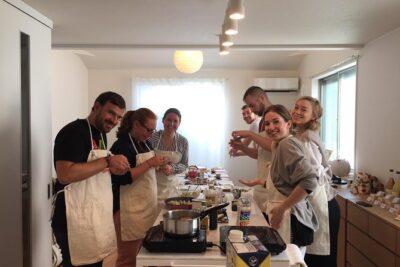
Ramen & Gyoza Cooking Class in Tokyo with Local Supermarket Visit
Read our review →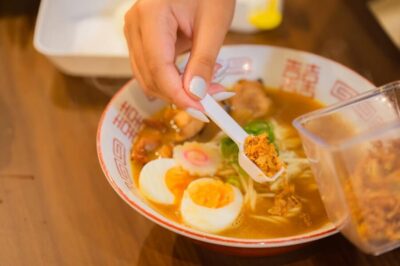
Ramen Cooking Class at a Ramen Factory with Souvenir
Read our review →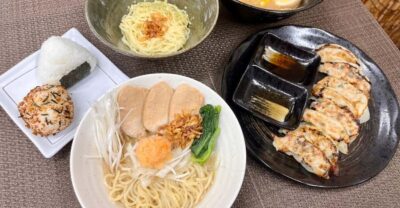
Five Must-See Highlights Walking Tour & Ramen Lunch
Read our review →
Browse the lists this tour appears in