
Reviewed · TEMPLE & SHRINE TOURS
The Way of Tea: Kyoto Crafts, Hidden Temples & Wabi-Sabi Walk
Kyoto’s tea culture makes the most sense when you see it alongside the temples, gardens, ceramics, and quiet streets that shaped it. This small-group walk brings those pieces together, ending with a hands-on matcha ceremony in a traditional Japanese house.
I like the maximum group size of seven, which gives you a fair chance to ask questions. I also like the route’s mix of major and lesser-known stops, especially Kennin-ji, a second temple garden, and a raku tea bowl shop. The main caution is communication: one account found the guide’s English too soft to hear clearly, so guide quality may affect how much you gain from the walk.
Key points to know before booking
- The tour ends with a full one-hour tea ceremony, not just a quick cup of matcha.
- Kennin-ji and a second temple are included, with admission fees covered.
- The group is limited to seven people, a useful size for questions and photos.
- A raku tea bowl shop adds a craft angle, showing why each cup has a distinct character.
- You meet outside Exit 5 of Gion Shijo Station, beside the Statue of Izumo-no-Okuni.
- The $94.45 price includes the guide, temples, matcha, and photos, but not extra food or drinks.
Starting beside Gion Shijo Station
The meeting point is easy to identify if you use the Keihan Line. Go to Exit 5 of Gion Shijo Station and look for the Statue of Izumo-no-Okuni. A guide will be holding an orange Magical Trip Tour signboard.
This precise meeting point matters in Kyoto, where several streets around Gion look similar and station exits can put you on opposite sides of a busy road. Arrive early. The tour starts on time, and you cannot join later or receive a refund if you miss the group.
The walk lasts about three and a half hours, though the included guide service is described as three hours and the tea ceremony itself takes one hour. Allow the full three-and-a-half-hour block, then leave extra time afterward for getting back across Kyoto.
The route is near public transportation, but it is still a walking experience. Kyoto summers can reach 40°C, while winter temperatures can fall to -5°C. Wear shoes you can walk in and dress for the season. Heat, cold, rain, and long periods outdoors can change the feel of the tour considerably.
Other temples and shrines in Kyoto people book:
- Kyoto: Tea Ceremony Ju-An at Jotokuji Temple
★ 4.9 · 3,207 reviews - Arashiyama Bamboo, Temple, Monkeys, or Secret Sake Brewery
★ 4.8 · 886 reviews - Kyoto: Arashiyama Bamboo Forest, Monkeys, Matcha & Temple Tour
★ 5.0 · 759 reviews
Gion, matcha, and the first look at tea culture
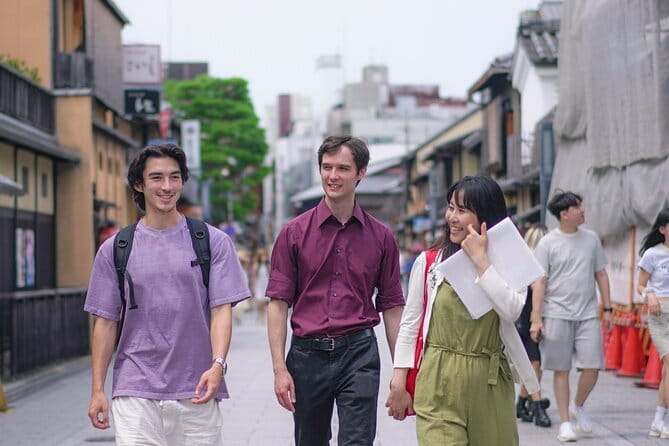
The first stop takes you through Gion, Kyoto’s famous traditional district. The focus is not only on old streets and wooden buildings. You begin learning how Japanese tea is made and why matcha plays such an important role in Japanese culture.
A stop at a well-known matcha shop gives the subject a practical starting point. You can expect about 30 minutes here, with no separate admission fee. This part is useful if you know little about matcha, since the later tea ceremony will make more sense once you have some background.
The Gion walk is also a good way to get your bearings without worrying about a map. Your guide leads the group through the district, explains the setting, and keeps the pace moving toward the temples.
Do not expect a long food tasting here. Additional food and drinks are not included. If you want something beyond the tea experience, budget separately and ask the guide when there is a suitable chance to stop.
Kennin-ji, one of Kyoto’s oldest temple settings
Kennin-ji is the tour’s main temple visit. It has stood for centuries and gives you a substantial example of Kyoto’s Buddhist architecture and temple grounds.
The planned visit lasts about 30 minutes. That is enough for an introduction and a look around, but not enough for a slow, detailed study of every building, garden, and artwork. I see this as a strength for a short tour because you get a clear taste of the temple without spending half the afternoon in one place.
Your guide can help connect the temple to the tea tradition. Kyoto’s tea culture did not develop separately from religious life, craft, and formal gardens. Seeing a temple before taking part in a tea ceremony gives the final hour more meaning.
Admission to two temples is included in the price. That is a helpful detail in Kyoto, where entrance fees can add up quickly over several days. The exact admission charge for each temple is not given, but you will not need to pay separately for the included temple visits.
Kyoto crafts and the raku tea bowl
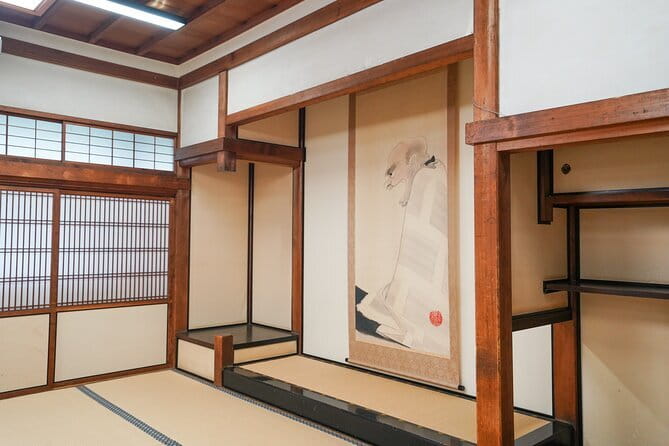
The route then turns toward Kyoto craft shops. This is where the experience becomes more than a standard temple walk.
The highlight is a tea bowl shop featuring raku ware. Your guide explains how each bowl has its own character, background, and meaning. That detail may sound small, but it gives you a better way to understand the tea ceremony. The bowl is not simply a container for matcha. Its shape, surface, weight, and imperfections all affect the moment of drinking.
The craft-shop portion lasts about 30 minutes. It is a short visit, so you should not expect an extended shopping session or a full workshop. Instead, think of it as a close look at one object central to tea culture.
This stop also introduces the idea of wabi-sabi, the appreciation of simplicity, age, irregularity, and imperfection. The word is often used loosely, but seeing a handmade tea bowl helps make the idea less abstract. A cup that is not perfectly uniform can be valued precisely because it shows the maker’s hand.
If you are interested in Japanese ceramics, this could be one of the most useful parts of the walk. If shopping is your main goal, the half-hour visit may feel brief.
Other places of worship worth the walk in Kyoto:
- Osaka/Kyoto: Arashiyama, Nara & Fushimi Inari Shrine w/Lunch
★ 4.4 · 754 reviews - Kyoto: Ninnaji Temple Entry Ticket
★ 4.2 · 650 reviews - Kyoto Zen Meditation & Garden Tour at a Zen Temple with Lunch
★ 5.0 · 441 reviews - Kyoto: Zen Experience in a Hidden Temple
★ 5.0 · 437 reviews
A second temple and a quieter garden
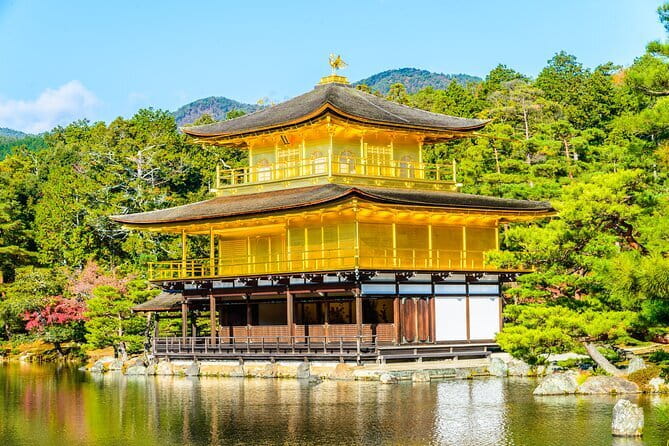
The tour includes a visit to a hidden temple and garden in Kyoto Prefecture. The supplied details do not name this temple, so do not book expecting a particular famous site.
That uncertainty is worth keeping in mind, but it is also part of the appeal. The stop gives the route a quieter change of pace after Gion and Kennin-ji. You can expect roughly 30 minutes here, with the guide explaining what makes the place important.
The garden setting connects directly to the wabi-sabi ideas introduced through the tea bowls. Rather than rushing from one major sight to another, the walk uses temples, gardens, and crafts to build a picture of the tea tradition from several angles.
The tour includes admission to two temples, so this visit is likely one of the two covered temple entries. Still, the precise details of the second temple are not provided. If you need a tour built around specific named monuments, choose a more tightly defined temple tour.
The final hour in a traditional Japanese house
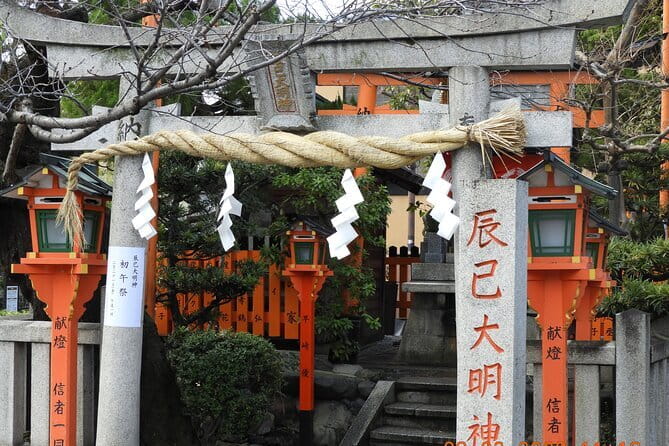
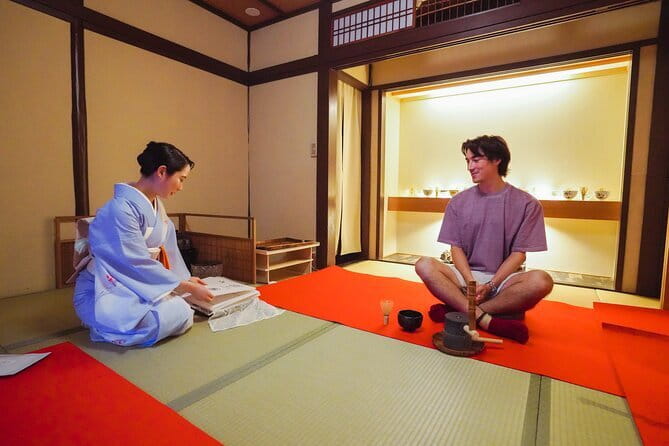
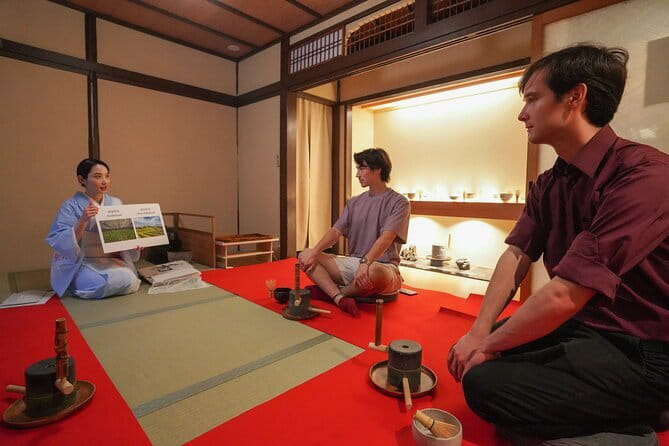
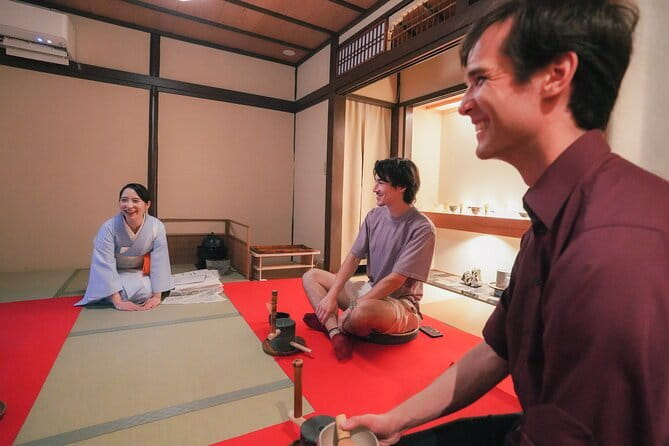
The tea ceremony is the heart of the experience. You finish at Chayu, a real tea house in a traditional Japanese house, where a tea master gives instruction and you take part in making matcha.
This is not simply a demonstration from across the room. The description says you enjoy the ceremony with the tea master’s instruction, making it a participatory experience. You will drink matcha and learn through the steps of the ceremony.
The session lasts one hour, making it the longest single stop. That gives the experience room to slow down after the walking sections. The earlier discussion of temples, gardens, ceramics, and wabi-sabi comes together here in a more focused setting.
For many people, this will be the strongest reason to book. Kyoto has plenty of places where you can buy matcha or watch a short cultural demonstration. A full hour in a traditional house, with guidance from a tea master, offers more structure and context.
Children must be at least six years old to take part in the ceremony. Younger children may come on the tour, but one adult must stay outside the facility with them during this part. That rule is important for families, since the tea ceremony is not an activity the whole group can attend if a child is too young.
The tour ends at the tea experience location in the Kiyomizu area, at 4-chōme-172-7 Kiyomizu. You will not return to Gion Shijo Station, so plan your next move from the eastern side of Kyoto.
What the $94.45 price covers
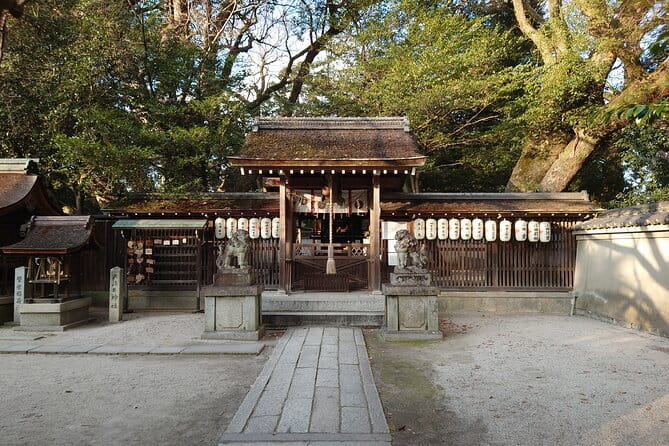
At $94.45 per person, this is not the cheapest way to see a Kyoto temple or drink matcha. The value comes from combining several separate expenses and services in one compact outing.
The price includes:
- An English-speaking local guide
- Admission to two temples
- A matcha tea ceremony in a traditional Japanese house
- Tea during the ceremony
- Photos taken during the tour
You are paying for a guided route, cultural explanation, two temple entries, and a one-hour activity. If you booked temple visits and a formal tea experience separately, the total could be similar, while requiring more planning and transportation.
The small group also matters. With no more than seven people, you are less likely to lose the guide in a crowd, and you should have more opportunity to ask about the tea bowls, temple details, or ceremony steps. The tradeoff is that the price does not include extra food or drinks, and the craft-shop stop is for browsing rather than a hands-on pottery lesson.
The tour receives a current rating of 4.9 from 41 ratings, with 98 percent recommending it. That is a strong signal, but I would still focus on fit. If you want a calm introduction to tea culture with several connected stops, the price is reasonable. If you mainly want a long temple visit or extensive shopping time, you may get better value elsewhere.
Guide communication and group comfort
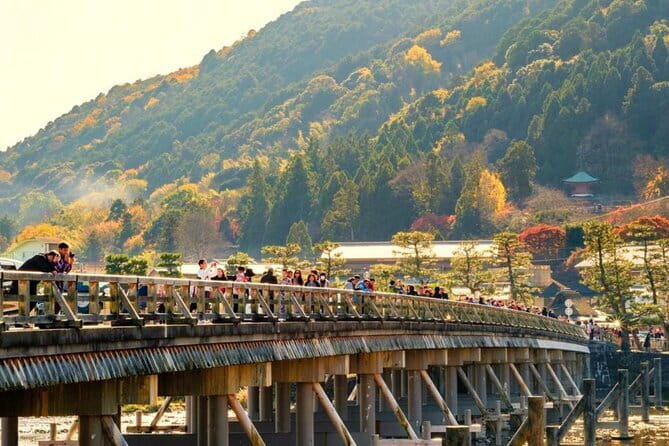
An English-speaking guide leads the walk and takes photos along the way. Photos are a nice extra, especially if you are traveling alone or want pictures that include the whole group.
The group limit of seven is one of the better features. You get the convenience of a guided route without the feel of a large bus excursion. The guide can point out details as you walk, and questions should be easier to manage.
Still, guide communication deserves attention. One poor account described a guide who spoke very softly and was difficult to understand in English. The same account felt the guide tried to help but did not seem fully informed about some places. No guide names are provided, so you cannot request a particular person.
I would treat this as a real but limited caution. Most of the tour’s appeal depends on explanations, especially at the temples, craft shop, and tea house. If hearing a quiet speaker is difficult for you, stand close to the guide and tell them early that you need clear, audible English.
Who will enjoy this Kyoto walk
I would recommend this experience to you if you want several Kyoto traditions tied together in one half-day outing. It suits first-time visitors who want help with navigation, couples looking for a cultural activity, and solo visitors who value a small group.
It is also a good fit if you are curious about matcha but do not want a highly formal or intimidating introduction. The guide gives you context first, then the tea master shows you how the ceremony works.
Families can join, but remember the age rule for the tea house. Children under six cannot take part in the ceremony, and an adult must remain outside with them.
You may want a different experience if you dislike walking, need a fully private tour, want a particular named hidden temple, or hope to spend a long time shopping for ceramics. The route offers an introduction to Kyoto’s tea culture, not a specialist course in pottery, Buddhism, or tea ceremony.
Practical details that affect your day
You receive confirmation when booking, and a mobile ticket is provided. The meeting point is close to public transportation, but the tour does not finish where it begins.
Free cancellation or rescheduling is available until 24 hours before the start time. Changes made within 24 hours are not accepted, and late arrival means no joining the group, refund, or rescheduling.
Weather can affect the tour. It may be cancelled for safety reasons in unsuitable conditions. Bring clothing suited to Kyoto’s seasonal extremes, since the walking portions are outdoors.
You do not need to pay for the guide’s food or drinks. That is a small but useful point for anyone wondering about customary tour expenses.
Should you book the Way of Tea walk?
Book it if you want a well-packed introduction to Kyoto’s tea world, with temples, a raku bowl shop, a garden, and a real tea ceremony in one guided route. The one-hour tea session and seven-person limit give the experience more substance than a quick matcha tasting.
Think twice if you need a named second temple, a specialist guide, a private group, or a slow visit focused on one site. The soft-speaking guide concern is worth noting, too.
For most first-time Kyoto visitors, I see this as a practical cultural sampler with a clear payoff at the end. The price is fair when you use the included admissions, guide, photos, and full tea ceremony. Just arrive early, dress for the weather, and treat the route as an introduction rather than an exhaustive study of Kyoto’s tea tradition.
FAQ
Where does the tour begin?
It begins in front of the Statue of Izumo-no-Okuni, directly outside Exit 5 of Gion Shijo Station on the Keihan Line. The guide will hold an orange signboard marked Magical Trip Tour.
Where does the tour end?
The tour ends at the tea experience location at 4-chōme-172-7 Kiyomizu in Kyoto’s Higashiyama Ward.
How long does the experience last?
The experience lasts approximately three hours and 30 minutes. The tea ceremony itself takes one hour.
Is the tea ceremony included?
Yes. The price includes a matcha tea experience in a traditional Japanese house, with instruction from a tea master.
Are temple admission fees included?
Yes. Admission to two temples is included.
Is the tour conducted in English?
Yes. An English-speaking local guide leads the tour.
How many people can join?
The tour has a maximum of seven participants.
Can children join the tea ceremony?
Children must be at least six years old to take part in the tea ceremony. Younger children may join the tour, but one adult must stay outside the facility with them during the ceremony.
What happens if I arrive late?
The tour starts on time. If you miss the group, you cannot join later, receive a refund, or reschedule.
Just added in Kyoto
- Private Cooking Class Udon in Kyoto Japan★ 5.0 · 23 reviews
- Your Private Vacation Photography Session In Kyoto★ 5.0 · 110 reviews
- Kyoto: Zen Meditation at a Private Temple with a Monk★ 5.0 · 25 reviews
- Private Pewter Sake Cup Experience with a Kyoto Artisan★ 5.0 · 31 reviews
- Kyoto Wagashi(Japanese sweets) Cooking Class near Fushimiinari★ 5.0 · 60 reviews
- Kyoto:Family-Friendly Kimono & Yukata Experience at WARGO★ 5.0 · 147 reviews
- Private Guided Traditional Buddhist Cooking in Japan★ 5.0 · 16 reviews
- Kyoto: Gion Geisha District & Sake-in-Hand Walking Tour★ 5.0 · 37 reviews
Temple & Shrine Tours, compared.


Meiji Shrine, Asakusa, Skytree Bus Tour and Cruise
Read our review →
Asakusa Walking Tour with Sensoji Temple Visit
Read our review →
Kamakura & Enoshima Day Trip including Temple Tickets
Read our review →
Nikko Toshogu Shrine and Kegon Waterfall Tour
Read our review →
Tokyo Panoramic 1 Day: Meiji Shrine, Asakusa, Odaiba and SKYTREE®
Read our review →
1-Day Snow Monkeys, Zenko-ji Temple & Sake in Nagano
Read our review →Browse the lists this tour appears in