
Reviewed · WALKING TOURS
Osaka: Highlights & Hidden Gems Private Walking Tour
Osaka reveals itself best on foot, one noisy lane and sizzling food stall at a time. This private tour lets you shape the day around what you care about, from street food and shopping to local customs, nightlife districts, and older neighborhoods. Hozenji Yokocho and the food stalls around Kuromon Market give you a more personal look at the city than a quick photo stop at Dotonbori.
I like the private format, especially for families or small groups that want to walk at their own pace. I also like the chance to request a particular focus before the tour, since some guides have mixed famous sights with local areas and then sent useful Osaka recommendations for the rest of the stay. The main consideration is that the itinerary is not fixed, so you need to tell your guide in advance if historic sights matter to you. One person who wanted more history found that the market received more attention than expected.
Key points to know before booking
- Your guide shapes the route: The itinerary can focus on food, culture, shopping, history, nightlife districts, or a mix of interests.
- Kuromon Market is a food stop, not a meal included in the price: You pay separately for seafood, snacks, and drinks.
- Hozenji Yokocho offers a quieter contrast: Its stone paving and old-style bars feel far removed from Dotonbori’s giant signs.
- The private group is usually six people or fewer: Larger groups can be arranged if you mention them when booking.
- The tour can last from two to eight hours: A short booking works for a neighborhood introduction, while a longer one can link Namba, Dotonbori, Shinsaibashi, and other districts.
- Book at least 72 hours ahead: That gives the local team time to match the route and guide to your interests.
Why a private Osaka walk can be worth the price
At $67 per person, this experience is priced as a flexible introduction to Osaka rather than a packaged sightseeing circuit. The value depends heavily on how clearly you communicate what you want.
For two hours, you are mainly paying for orientation, local context, and help finding your way through a busy part of town. That can be useful when you have just arrived, especially if you want to understand Namba, Dotonbori, or the food streets before exploring on your own.
A longer booking gives the price more room to make sense. You can cover several districts, ask questions as you go, and receive suggestions for the rest of your stay. The guide can also adjust the pace for photographs, heat, shopping, or a tired group. Maria was praised for allowing plenty of time for pictures and making sure the group did not struggle in hot weather.
Food, drinks, public transportation, and entrance fees are not included. You should treat the $67 as the guiding fee, then allow extra money for anything you eat, train fares, or ticketed attractions. Transportation can be arranged at an additional cost, but you should ask about it before the tour.
Other walking tours in Osaka people book:
- Osaka: Hotspots & Hidden Gems Walking Tour Private or Group
★ 4.9 · 1,300 reviews - Osaka Local Foodie Walking Tour in Dotonbori and Shinsekai
★ 5.0 · 985 reviews - Osaka Bar Hopping Night Walking Tour in Namba (3 bars, 6 tastes)
★ 5.0 · 958 reviews
Starting in Namba and finding Osaka’s rhythm
Namba is a sensible area for this experience because it gathers several sides of Osaka in a compact stretch. You get shopping streets, food stalls, arcades, bars, canals, and older lanes, with plenty of chances to compare the polished tourist face of the city with places locals use every day.
The route may begin with a train ride into the Namba entertainment district, though transportation is not included. Your meeting point depends on the option you book. A central hotel meet-up is available on request, so ask about that if you want to avoid finding an unfamiliar starting point.
I would use the first few minutes to explain your priorities. Say plainly if you want temples and history, local food, shopping, anime, photography, or a general introduction. The experience is built around those choices, and the route can change from the advertised examples.
Kuromon Market and the cost of eating as you go
Kuromon Market is a covered market with more than 100 shops and vendors. You can expect seafood, street food, souvenirs, and ingredients displayed close to the walking route.
This is one of the more practical stops because a guide can help you understand what you are seeing and, if you wish, point out seafood for immediate cooking. Scallops and sea urchin are among the examples provided, but your purchases are separate from the tour price. If you are hungry, budget for several small tastings rather than assuming the guide covers lunch.
The market is also a place where your interests matter. A food-focused visit could spend more time comparing stalls and asking about Osaka eating habits. If you are not interested in seafood or shopping, tell the guide early. One important lesson from the experience is that a market can be visited independently, so its value comes from the explanation and personal help, not simply from walking through the aisles.
Hozenji Yokocho, Osaka’s quieter old lane
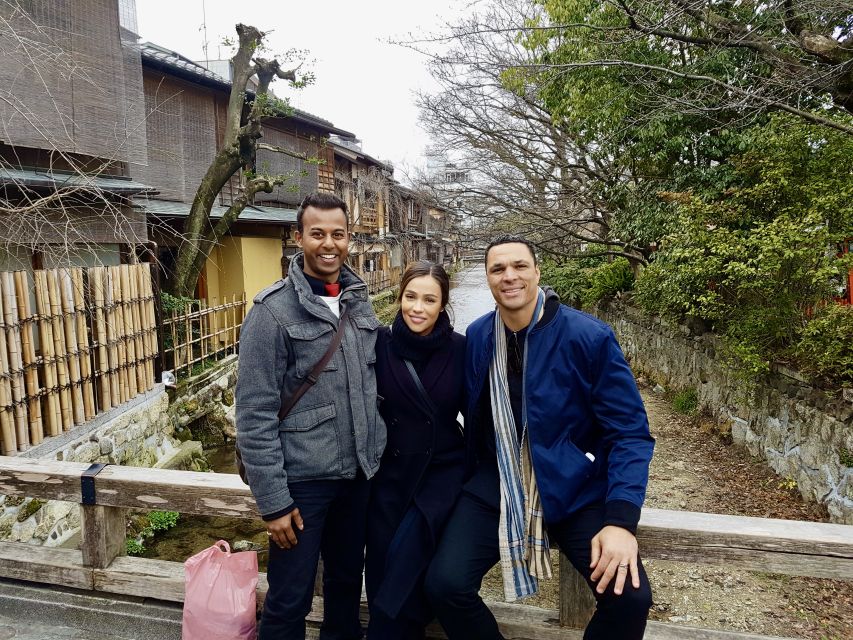
Hozenji Yokocho provides the strongest change of mood on the route. Its stone paving, long-running Japanese bars, and small restaurants preserve the feel of an older Osaka, at least in contrast with the bright commercial streets nearby.
This is a good place to request if you want atmosphere and photographs without giving up access to central Namba. It also helps explain why Osaka is more than giant food signs and shopping arcades. The lane is compact, so do not expect a full afternoon here. Its appeal comes from the contrast with the surrounding streets.
If history is important to you, ask for context at Hozenji Yokocho and other older areas before the day begins. The tour can include cultural and historical explanation, but no fixed route guarantees that every historic stop will be included.
Other quiet corners of Osaka:
- Osaka Kickstart: Hotspots & Hidden Gems Tour
★ 5.0 · 1,306 reviews - Ultimate Osaka Walking Tour: Castle, Dotonbori & Hidden Gems
★ 5.0 · 862 reviews - Private Osaka Walking Tour: Highlights & Hidden Gems
★ 5.0 · 569 reviews - Kyoto Geisha Walking Tour: Gion District & Hidden Gems
★ 4.7 · 3,273 reviews
Kitchenware, restaurants, and Osaka’s working side
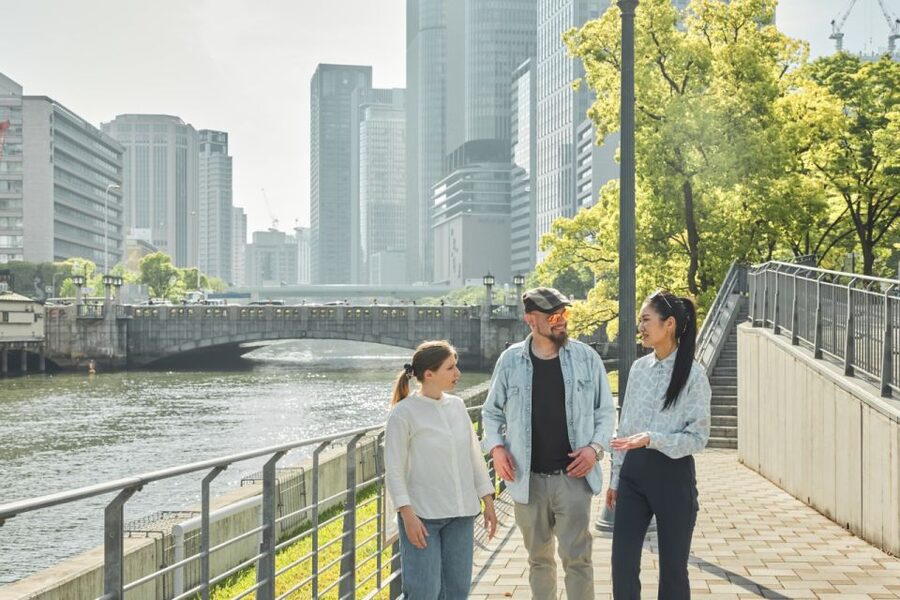
Sennichimae Kitchenware Street is devoted to cooking tools, restaurant supplies, and kitchen goods. It is a useful stop for anyone who enjoys Japanese food culture, practical souvenirs, or the behind-the-scenes side of restaurants.
You might find utensils and supplies that are more distinctive than standard tourist gifts. The point is not just shopping. A street dedicated to food equipment shows how closely cooking is tied to Osaka’s commercial life.
Soemon-cho offers another view of the city. Its entertainment district has more than 400 years of history, and the small restaurants and shops give your guide a chance to discuss how Osaka’s nightlife areas developed. Ask your guide to slow down here if you want explanations instead of only a walk past the signs.
Dotonbori and the bright Osaka everyone recognizes
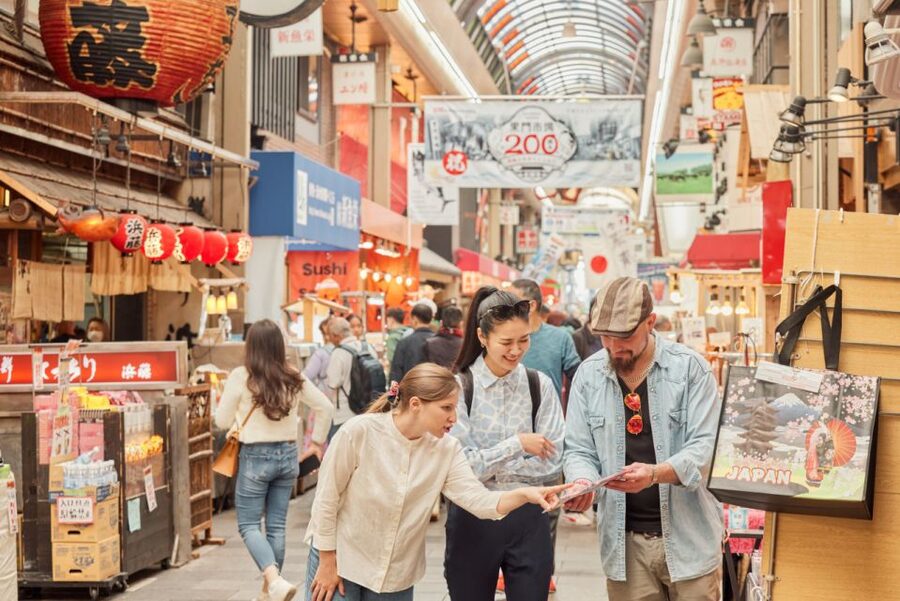
Dotonbori is Osaka’s loudest postcard. Huge food signs, flashing lights, canalside activity, and the famous Glico Running Man above Ebisubashi Bridge create the image most people expect before arriving.
You will want photos here, but do not mistake the photo stop for the whole Osaka experience. Dotonbori can feel crowded and commercial, and you can see much of its main stretch without a guide. The guide becomes more useful when connecting this famous district to nearby lanes, eating customs, and places that are easier to miss.
The timing of your visit may affect the mood, but a specific time is not promised. If you want evening lights, food, or a quieter walk, state that when arranging the itinerary. Your guide may choose a route that fits the number of hours you booked.
Shinsekai and the areas locals enjoy
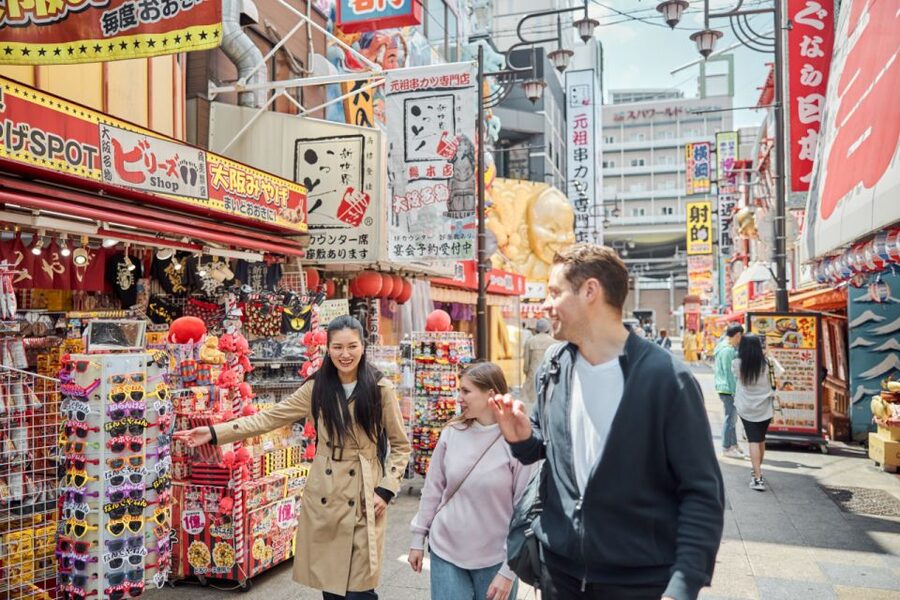
Shinsekai is named as an area locals love, and it can add a different tone to a Namba-focused walk. Rather than giving you another run of department stores and bright signs, it helps show the everyday character of Osaka’s entertainment districts.
Because the tour is personalized, Shinsekai may or may not be included. Request it if it matters to you. The same applies to other districts mentioned in the plan. The listed neighborhoods are possibilities, not promises, and the local team chooses the actual route with your preferences in mind.
This flexibility is useful, but it also creates a small risk. If you arrive without a clear idea of what you want, the day may follow your guide’s strengths rather than your priorities. That is not necessarily bad, but it is why booking early and sending a detailed request matters.
Den-Den Town, Shinsaibashi, and America-mura
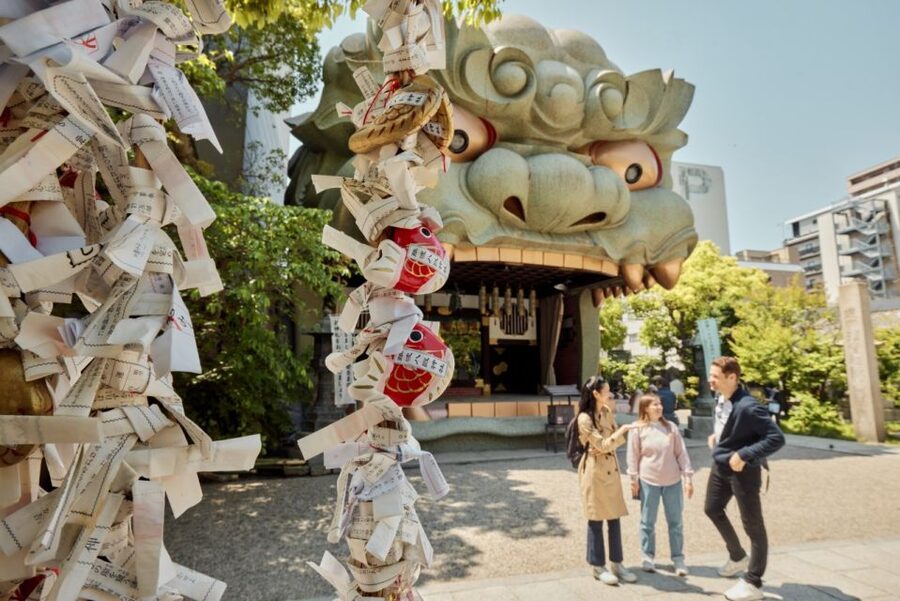
Den-Den Town is the natural choice for fans of cameras, computers, games, anime, and other pop culture. It gives the tour a more specialized edge and could be a better fit than a standard monument route if you want shopping or Japanese media culture.
Shinsaibashi shifts the focus back to major retail streets. It works well as part of a longer walk because it links several central areas, but it may feel less personal if your main interest is old Osaka or local food.
America-mura brings a younger, creative mood, with retro stores, independent galleries, and cafés. This is a useful choice for anyone interested in design, secondhand shopping, or contemporary youth culture. If you prefer temples, older streets, or food markets, ask for a different balance.
What the guides add to the day
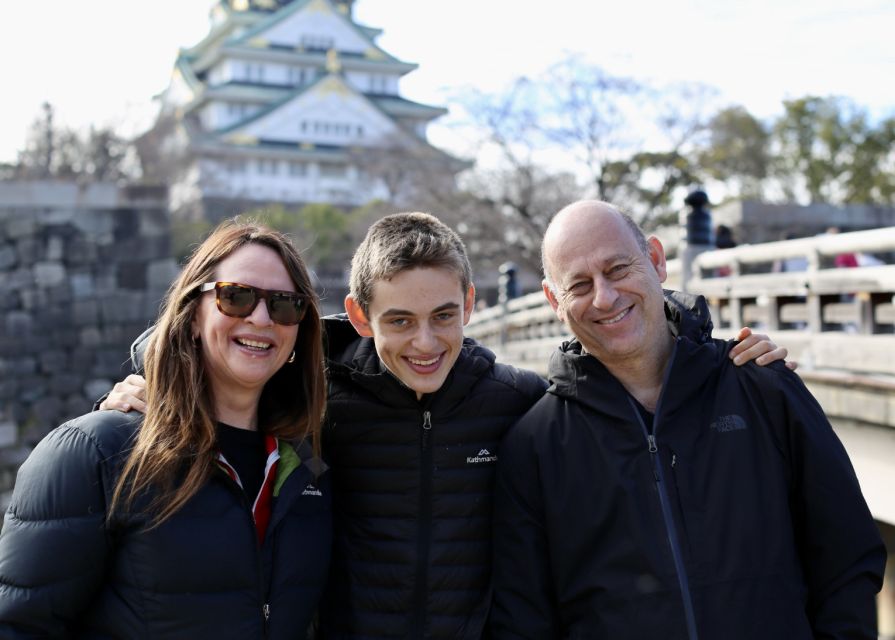
The guide matters more here than any single stop. The operator matches you according to interests and personality, and the strongest experiences in the feedback came from guides who adapted rather than rushed.
Maria received especially warm praise for her English, Japanese, patience, cultural explanations, photo stops, and care in hot weather. She has lived in Osaka for 30 years and can speak Japanese fluently, which is helpful when ordering food or communicating with vendors. Her background as a Filipina was also noted as a strength because she offered very clear English.
Boris was described as highly informed, while Antoine was flexible and easy-going with a group that was tired after long walks in Tokyo. Kieran was praised for being fun and offering useful advice. These details point to the main benefit of the private setup: you can ask questions, change pace, and request recommendations instead of following a fixed group schedule.
The guide’s quality can still vary, and the route depends on the match. Send a clear message before the tour. Include your walking tolerance, food interests, desired neighborhoods, need for historic sights, and whether you want time for photos or shopping.
Walking, transport, and practical limits
The experience is primarily a walking tour, and the possible route covers several central districts. A two-hour booking should be treated as a focused neighborhood walk. An eight-hour booking allows more districts, but it also means a long day on your feet.
Public transportation is not included. Ask the local team if you want train travel built into the plan, since transportation and other special arrangements can cost extra. Comfortable shoes are a sensible choice, and you should tell the guide if heat, mobility, or frequent rests are concerns.
The activity is wheelchair accessible, but the exact route can change. Mention accessibility needs when you book so the itinerary can be arranged appropriately. Hotel meet-up is available on request from a central location, and private groups are normally no larger than six people. Larger parties should be disclosed in advance.
The tour is available in English and Japanese. Free cancellation is available up to 24 hours before the start, and you can reserve now and pay later, which helps if your Osaka schedule is still moving.
Who should book this Osaka walking tour?
I would recommend it most to first-time visitors who want to get oriented quickly without being tied to a large group. It also suits families, couples, and small groups with different interests, since one person can request food while another asks for history, shopping, or pop culture.
It is a strong choice if you want personal recommendations for the rest of your stay. Several guides have followed up with suggestions, and that can help you decide where to eat or what to see next.
I would be more cautious if you want a fixed list of historic monuments or a guaranteed food tour. The itinerary is flexible, not fixed, and food costs extra. If you want Kuromon Market but would rather skip Dotonbori, or if you want Shinsekai and older neighborhoods instead of shopping, say so before the tour begins.
Should you book it?
Book this tour if you value a private guide who can adjust the day and help you make sense of Osaka’s busy central districts. The best reasons are the personal pace, the mix of famous places and less obvious streets, and the chance to request a guide who fits your interests.
Choose a longer option if you want several neighborhoods and real time for questions, food, and photos. Choose two hours only if you want a quick introduction. Before paying, send a specific request for historic areas, markets, Shinsekai, food, or pop culture. That one step can determine whether the experience feels like a useful introduction or simply a guided walk through places you could have found yourself.
FAQ
How much does the tour cost?
The listed price is $67 per person. Food, drinks, transportation, and entrance to ticketed attractions are not included.
How long does the tour last?
You can book a tour lasting from two to eight hours. Starting times depend on availability.
Is the tour private?
Yes. It is a private group experience, normally for no more than six people. Larger groups can be arranged if you mention them in advance.
Can I choose what neighborhoods to visit?
The itinerary is personalized around your interests and preferences. The places listed are examples, so tell the local team if specific areas or themes matter to you.
Does the tour include Dotonbori?
Dotonbori is one of the possible areas and includes sights such as the Glico Running Man above Ebisubashi Bridge. The exact route can differ according to your preferences and the number of hours booked.
Is food included?
No. Food and drinks are not included. You can purchase items separately at places such as Kuromon Market.
Is transportation included?
No. Transportation is not included. Train travel and other transport can be arranged at an additional cost.
Can the guide meet me at my hotel?
A hotel meet-up is available upon request from a central location. The exact meeting point varies by the option booked.
What languages are available?
The tour is offered in English and Japanese.
How far in advance should I book?
You should book at least 72 hours ahead so the best itinerary can be organized for you. You can cancel up to 24 hours in advance for a full refund.
More walking tours elsewhere in Japan
- Osaka: Deep Backstreets Walking Tour with Dinner Option
★ 4.9 · 902 reviews - Osaka: Main Sights and Hidden Spots Guided Walking Tour
★ 4.9 · 702 reviews - Osaka Castle Walking Tour and Castle Tower Admission
★ 5.0 · 561 reviews - Kuromon Market Food Walking Tour in Osaka (6 stops, 6 tastes)
★ 5.0 · 550 reviews
Just added in Osaka
- Private arrival transfer from Kansai International airport to Kyoto City★ 5.0 · 32 reviews
- (Ticket Included) Explore Osaka Castle & Museum of History★ 4.8 · 21 reviews
- Hidden Osaka – Yukaku Red Light Tour & Culinary Adventure★ 4.8 · 96 reviews
- Osaka: Walking Tour and Top Highlights★ 4.8 · 104 reviews
- Pickleball in Osaka, Kobe & Kyoto with Locals!★ 4.7 · 80 reviews
- Osaka: Private Ceramic Painting Workshop★ 5.0 · 13 reviews
- Osaka:SUMO BEATS SHOWCASE: Taiko Drum and Wagyu burger!★ 4.2 · 37 reviews
- Eat Like a Local in Osaka – Private Custom Street Food Tour★ 4.3 · 33 reviews
Walking Tours, compared.

Kyoto Geisha Walking Tour: Gion District & Hidden Gems
Read our review →
Tokyo Tsukiji Fish Market Food and Culture Walking Tour
Read our review →
Imperial Palace and Shogun Historical Walking Tour
Read our review →
Gion Geisha District Walking Tour – Stories of Geisha
Read our review →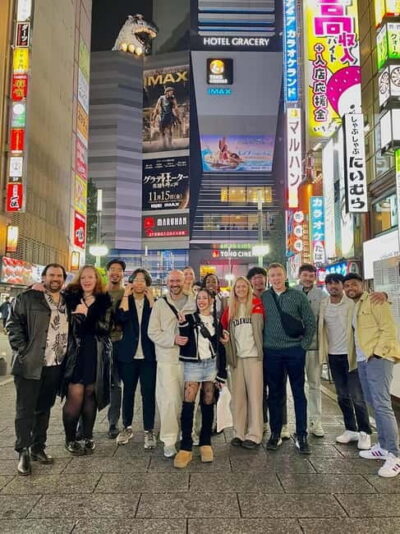
Shinjuku Local Bar and Izakaya Guided Walking Tour
Read our review →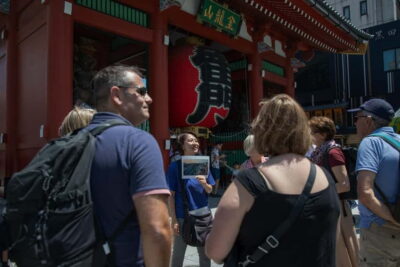
Asakusa Walking Tour with Sensoji Temple Visit
Read our review →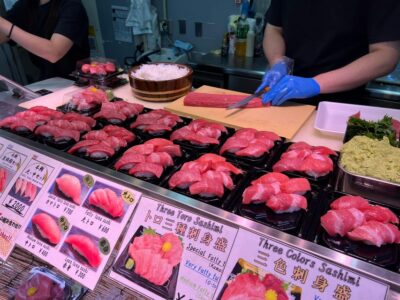
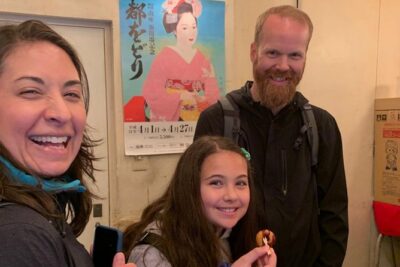
Nishiki Market Brunch Walking Tour (7 Tastings + Brunch)
Read our review →Browse the lists this tour appears in