
Reviewed · WALKING TOURS
Osaka: Dark Side of Osaka Night Walking Tour
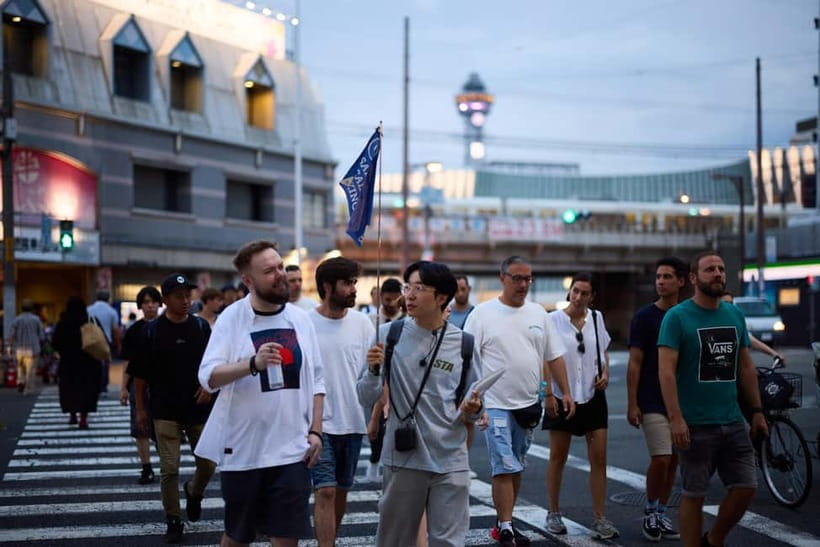
Osaka’s neon surface is only part of the story. This two-hour walk takes you through Shinsekai, Nishinari, and Tobita Shinchi, areas shaped by poverty, day labor, entertainment, and traditions kept mostly out of sight. It is less about famous sights than about learning how a city works behind its tourist face.
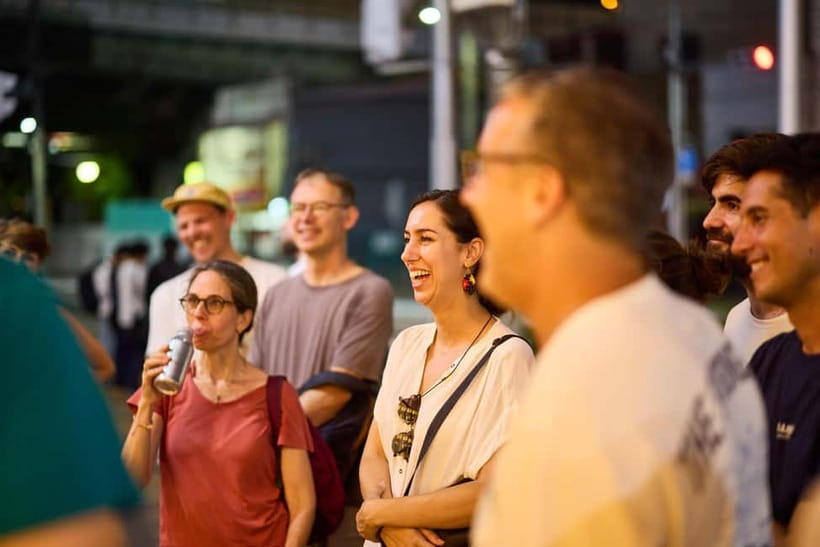
I like the small-group feel described by participants, including one group of six, and the way guides such as Jay, Rico, and Matt connect old Osaka with present-day life. I also like the practical finish near Tsutenkaku, where you can stay for food in Shinsekai. The main caution is simple: some subjects and scenes are confronting, so this is not a good choice for children or anyone wanting a light sightseeing stroll.
Key points to know before you book
- Shinsekai’s unusual design: Learn how this 1912 entertainment district drew on Paris and New York’s Coney Island.
- A frank look at Osaka: The walk covers social class, day labor, poverty, nightlife, and changing local customs.
- Tobita Shinchi after dark: See Osaka’s largest red-light district from public streets and hear about its regulated traditions.
- Strong guide-led experience: Jay, Rico, and Matt are singled out for warmth, clear explanations, and thoughtful handling of sensitive topics.
- A useful two-hour route: Begin under the giant penguin at MEGA Don Quijote Shinsekai and finish at Tsutenkaku.
- Adults only: You need comfortable shoes, tolerance for difficult subjects, and respect for residents and local rules.
Why this Osaka walk is different
Many Osaka tours stay with food, shopping, temples, and bright signs. This one asks you to look at the parts of urban life that are harder to package for visitors. You walk through districts associated with working-class life, day labor, homelessness, entertainment, and the sex industry, while your guide supplies the history and local context.
That context matters. Without it, Shinsekai can look like a collection of old eateries and colorful signs. Nishinari can seem merely rough around the edges. Tobita Shinchi can be reduced to a curious street to photograph. A good guide helps you see how these places developed and why they still matter.
The activity is priced at $25 per person, which is fair for two hours with a live English-speaking guide. You are not paying for transport, a meal, or admission to an attraction. You are paying for interpretation, access to a difficult subject, and the chance to ask questions as the route unfolds.
Other walking tours in Osaka people book:
- Osaka: Hotspots & Hidden Gems Walking Tour Private or Group
★ 4.9 · 1,300 reviews - Osaka Local Foodie Walking Tour in Dotonbori and Shinsekai
★ 5.0 · 985 reviews - Osaka Bar Hopping Night Walking Tour in Namba (3 bars, 6 tastes)
★ 5.0 · 958 reviews
Meeting under the giant penguin
The meeting point is beneath the giant penguin at MEGA Don Quijote Shinsekai. Your guide holds a GetYourGuide sign, so the location should be easy to identify, though this is a busy commercial area and you will want to arrive with enough time to find the entrance.
The tour is on foot from the start. Wear shoes that are comfortable for two hours on city streets, and bring clothing suitable for the weather. The activity does not include hotel pickup or drop-off, food, or drinks, so plan those around the walk.
The route finishes at Tsutenkaku, making it easy to continue your evening in Shinsekai. You might stop for dinner or explore the area on your own after the guide says goodbye. Since the tour begins and ends in the same general part of southern Osaka, it works well as an evening activity rather than a separate day trip.
Shinsekai and the making of a New World
Shinsekai means New World, and the district was planned in 1912 as a modern entertainment area. Its southern section drew inspiration from Paris, while its northern section looked toward New York’s Coney Island. That mix gives the neighborhood an unusual visual and cultural character.
The district’s first ambitions have faded, but that is part of its appeal. You get a place with old signs, local eateries, narrow streets, and a strong sense of the past sitting beside present-day commerce. The guide’s explanation helps you understand that the area is not simply a preserved theme park. It has changed with Osaka’s fortunes.
Tsutenkaku Tower is the district’s best-known landmark and a useful point of orientation. The tour ends there, but the tower is also part of the story of Shinsekai’s identity. You see it as a local symbol rather than just a photo stop.
The drawback is that Shinsekai can feel less polished than central Osaka. That is exactly what makes it interesting, but visitors expecting spotless, carefully staged sightseeing may find the setting uncomfortable. Keep your camera away when the guide discusses private lives or sensitive places, and follow instructions about where to stand.
Nishinari and the working city
The walk continues into Nishinari, a southern Osaka district long associated with day laborers and working-class residents. The area has also drawn budget-conscious visitors and urban explorers interested in its rougher past and changing present.
This is where the tour’s social focus becomes most useful. You hear about people and work, not just buildings. The district offers a way to consider how Osaka has dealt with economic hardship, temporary labor, and the gap between the city shown in guidebooks and the city experienced by its most vulnerable residents.
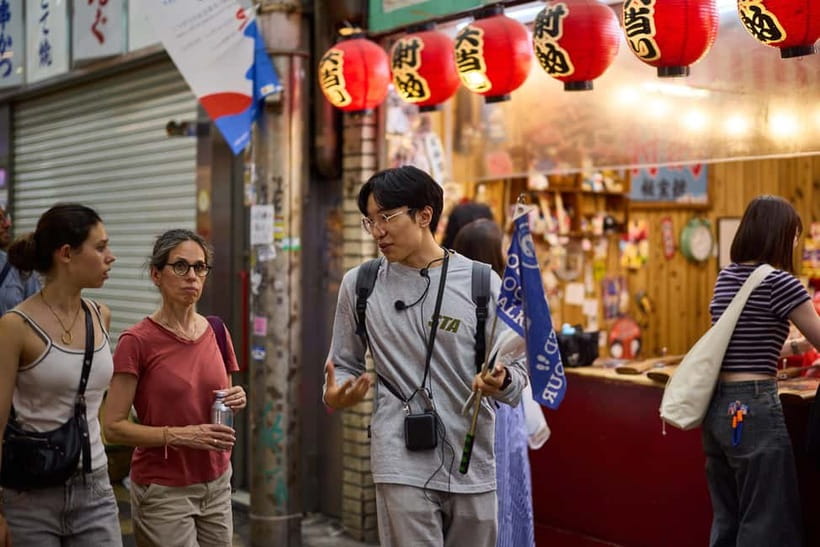
The strongest guides handle this material with care. Matt is praised for treating the people and circumstances at the center of the tour with respect. Rico is described as offering different perspectives and answering questions in detail. Jay is repeatedly noted for being warm, attentive, and easy to engage with.
Those qualities matter here. A tour of a poorer neighborhood can easily become a spectacle. The best version of this experience avoids that trap by explaining systems and history rather than inviting you to gawk. You should still remain aware that people live and work along the route. Do not photograph individuals without permission.
Other guided walks in Osaka:
- Osaka: Deep Backstreets Walking Tour with Dinner Option
★ 4.9 · 902 reviews - Ultimate Osaka Walking Tour: Castle, Dotonbori & Hidden Gems
★ 5.0 · 862 reviews - Osaka: Main Sights and Hidden Spots Guided Walking Tour
★ 4.9 · 702 reviews - Private Osaka Walking Tour: Highlights & Hidden Gems
★ 5.0 · 569 reviews
Jyanjyan Yokocho and retro Osaka

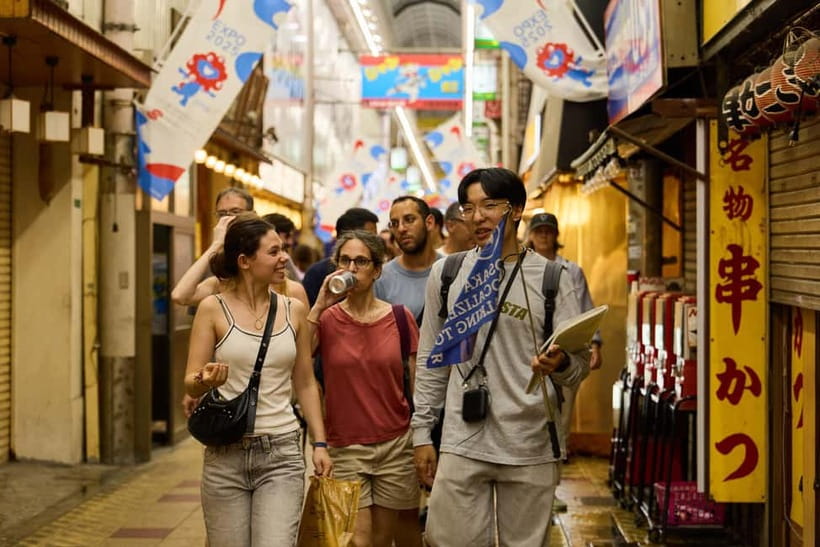
Jyanjyan Yokocho is a narrow shopping and dining street close to Tsutenkaku. Its old-style eateries, bars, and shops recall mid-20th-century Osaka, giving the route a change of pace after the heavier discussion of Nishinari.
I like this part because it links the city’s past to ordinary pleasures: eating, meeting friends, and spending an evening out. The street is not presented as a museum. It is a living commercial area with a nostalgic look, and that distinction helps you read it more accurately.
The tour does not include food, but the location makes it easy to eat afterward. One participant specifically appreciated ending in Shinsekai and getting food recommendations. Guides may also share personal suggestions, as several participants valued advice about restaurants and other places in Osaka.
You should not count on a formal tasting session. If food is a major priority, treat the walk as a source of local orientation and save room in your evening for your own meal. That lets you choose what appeals to you instead of rushing through a fixed menu.
Tobita Shinchi and a carefully regulated district
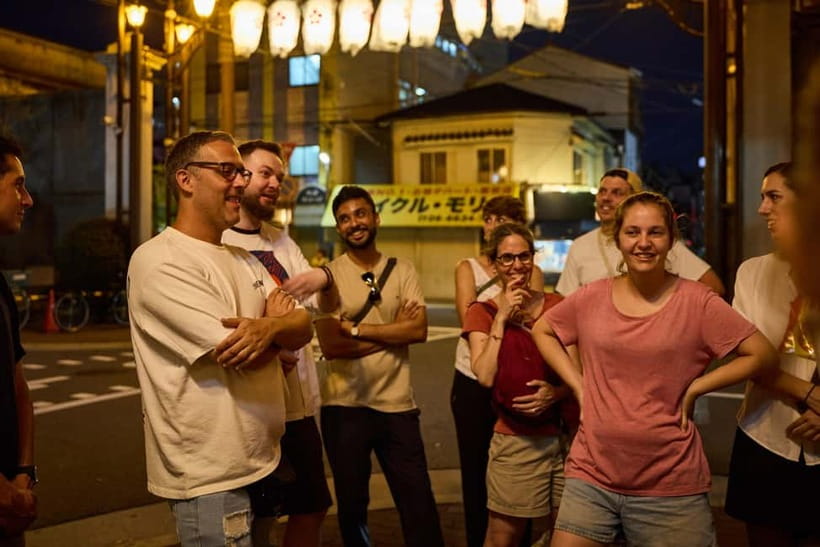
The final major subject is Tobita Shinchi, Osaka’s largest and most famous red-light district. Its history reaches back more than a century, and the area is known for distinctive architecture, established customs, and a tightly regulated environment.
The point is not to enter private businesses or turn the district into entertainment. You walk through public areas while the guide explains how the district operates within Japanese urban culture and why much of its life is kept discreet. This is one of the reasons the tour is restricted to adults.
Tobita Shinchi can be confronting. It deals with sex work, gender, money, social boundaries, and the difference between what is visible and what is understood. The experience is best for adults who can listen without judging quickly and who are willing to treat the area as a community rather than a curiosity.
Do not expect every question to have a neat answer. The value is in seeing how history, custom, regulation, and modern tourism overlap. A diplomatic guide can give you useful context without pretending that the subject is simple.
What the guides add
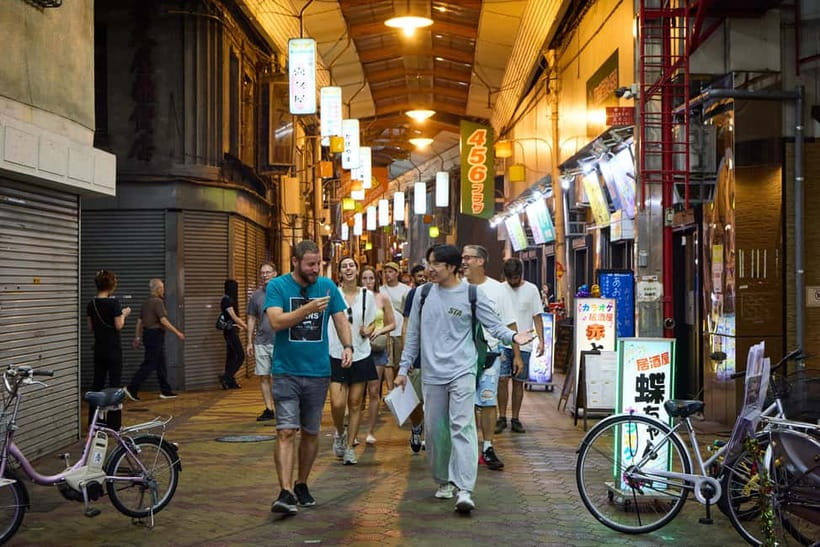
The route itself is interesting, but the guide makes or breaks this experience. English is the only listed language, and the guide needs to explain modern history, local customs, and sensitive subjects clearly.
Jay receives particularly strong praise for being engaging, friendly, and attentive to questions. Rico is noted for his intelligence, detailed explanations, adaptability in rainy weather, and restaurant advice. Matt is valued for his command of Osaka’s modern history and his respectful approach.
One useful detail from the walk concerns a torii painted on a wall. It can signal that people should not urinate there, an example of how local visual symbols can carry practical messages. Small observations like this help you notice the city differently after the tour.
English ability varies among guides, and one participant noted that Matt speaks quickly. If English is not your strongest language, ask the guide to slow down or repeat a point. The tour is discussion-based, so understanding the explanations is more important than simply keeping up with the group.
Who should take this tour
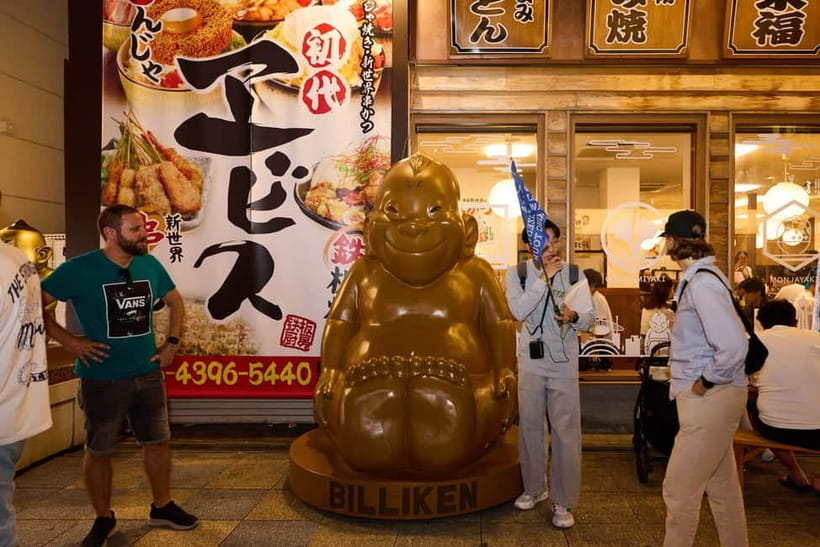
You are a good match if you like social history, urban change, and places that do not appear on a standard Osaka highlights route. It is also useful if you have already seen Dotonbori and Osaka Castle and want a different angle on the city.
This walk suits adults who are comfortable with difficult subjects and who can follow local etiquette. It may be especially useful for solo visitors or first-time visitors who want an informed introduction to southern Osaka before exploring the area alone.
The tour is not suitable for children under 18 and is not designed for wheelchair users. The streets, subject matter, and pace all make this a poor fit for families seeking a gentle evening outing. Smoking is not allowed, and you should respect local customs and regulations throughout.
Timing, weather, and practical value
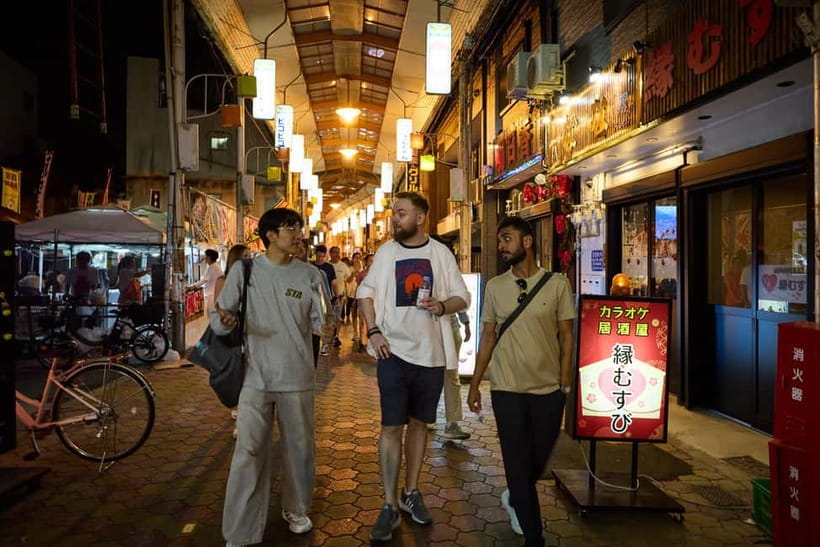
The walk lasts two hours, long enough to cover several districts without taking over your whole evening. The itinerary includes guided stops of roughly 30, 30, 10, 20, and 20 minutes, although the exact flow may depend on the group and conditions.
Rain does not automatically ruin the experience. Rico is praised for adapting well on a rainy day, but you should still bring suitable clothing and expect to be outdoors. There is no vehicle segment, so the warning about alcohol in a vehicle does not change the main point: this is a walking activity, not a transport tour.
At $25, the value is strongest if you want explanation rather than a checklist of sights. You could walk through Shinsekai and see Tsutenkaku without paying anything, but you would miss much of the background connecting the districts. If you are mainly seeking tower views, food samples, or nightlife, spend the money elsewhere.
The booking terms are traveler-friendly. You can cancel up to 24 hours ahead for a full refund, and the reserve-now, pay-later option lets you hold a place without paying immediately. Check the available start times when booking, since the activity is offered at specific times rather than at any hour you choose.
Should you book the Dark Side of Osaka walk?
Book it if you want an adult look at Osaka’s social history and are willing to leave the polished tourist center behind. The combination of Shinsekai’s old entertainment culture, Nishinari’s working-class story, Jyanjyan Yokocho’s food streets, and Tobita Shinchi’s discreet traditions gives you a fuller picture of southern Osaka.
Skip it if you dislike red-light districts, poverty-related subjects, or tours built around discussion rather than attractions. Also skip it if you need an accessible route or are traveling with children.
For the right audience, this is a strong $25 choice. Go with comfortable shoes, an open mind, and respect for the people who live in the neighborhoods. Stay afterward for dinner near Tsutenkaku, and use the guide’s recommendations to turn a serious history lesson into a more grounded Osaka evening.
FAQ
How long is the Dark Side of Osaka Night Walking Tour?
The tour lasts two hours.
How much does the tour cost?
The price is $25 per person.
Where does the tour begin?
It begins under the giant penguin at MEGA Don Quijote Shinsekai.
How will I recognize the guide?
The guide will be holding a GetYourGuide sign.
Where does the tour finish?
The walk finishes at Tsutenkaku.
What language is the tour offered in?
The live tour guide speaks English.
Which Osaka districts does the tour cover?
It covers Shinsekai, Nishinari, Jyanjyan Yokocho, and Tobita Shinchi.
Is food included?
No. Food and drinks are not included.
Can children join the tour?
No. The tour is not suitable for children under 18.
Is the tour suitable for wheelchair users?
No. The activity is not suitable for wheelchair users.
What should I wear?
Wear comfortable walking shoes and prepare for the weather conditions.
Can I cancel for a refund?
Yes. You can cancel up to 24 hours in advance for a full refund.
Just added in Osaka
- Private arrival transfer from Kansai International airport to Kyoto City★ 5.0 · 32 reviews
- (Ticket Included) Explore Osaka Castle & Museum of History★ 4.8 · 21 reviews
- Hidden Osaka – Yukaku Red Light Tour & Culinary Adventure★ 4.8 · 96 reviews
- Osaka: Walking Tour and Top Highlights★ 4.8 · 104 reviews
- Pickleball in Osaka, Kobe & Kyoto with Locals!★ 4.7 · 80 reviews
- Osaka: Private Ceramic Painting Workshop★ 5.0 · 13 reviews
- Osaka:SUMO BEATS SHOWCASE: Taiko Drum and Wagyu burger!★ 4.2 · 37 reviews
- Eat Like a Local in Osaka – Private Custom Street Food Tour★ 4.3 · 33 reviews
Walking Tours, compared.

Kyoto Geisha Walking Tour: Gion District & Hidden Gems
Read our review →
Tokyo Tsukiji Fish Market Food and Culture Walking Tour
Read our review →
Imperial Palace and Shogun Historical Walking Tour
Read our review →
Gion Geisha District Walking Tour – Stories of Geisha
Read our review →
Shinjuku Local Bar and Izakaya Guided Walking Tour
Read our review →
Asakusa Walking Tour with Sensoji Temple Visit
Read our review →
Nishiki Market Brunch Walking Tour (7 Tastings + Brunch)
Read our review →Browse the lists this tour appears in