
Reviewed · TEA CEREMONY EXPERIENCES
Osaka: Japanese Traditional Sweets Making and Tea Ceremony
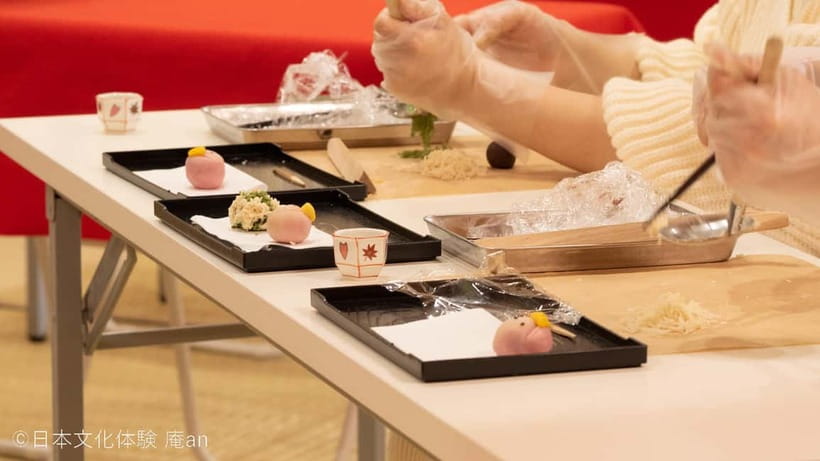
The best part of this Osaka experience is that you do not just watch a tea ceremony. You make two seasonal nerikiri sweets yourself, starting with plain white bean paste and turning it into flowers, fruit, and other delicate shapes. Then you prepare Uji matcha and eat your creations with it. I like the use of bean paste from long-established Kyoto shops, and I like the way the class connects the sweets to the season. The main catch is that English support is not automatic, so request it ahead of time.
I also like the price. At $18 for 95 minutes, this is one of Osaka’s more affordable hands-on culture activities. You will need to climb stairs because the building has no elevator, and finding the gray building can take extra care, so arrive early rather than rushing in from the station.
Key points at a glance
- Two seasonal sweets to shape yourself: Make a flower-shaped nerikiri and a kinton nerikiri using Kyoto-made white and red bean paste.
- A real matcha lesson: Watch matcha being ground, learn basic tea etiquette, and prepare your own cup with Uji matcha.
- Friendly, patient teaching: Instructors including Maiko and Jun have been praised for clear explanations, humor, and efforts to include both Japanese and English speakers.
- A short, good-value activity: The full session lasts 95 minutes and costs $18 per person, with tools included.
- Easy central Osaka access: Higobashi Station is only a one-minute walk away, with other stations within 5 to 15 minutes.
- A few practical limits: English translation must be requested, the building has stairs only, and a take-home box costs an extra 100 JPY.
Making nerikiri from Kyoto bean paste
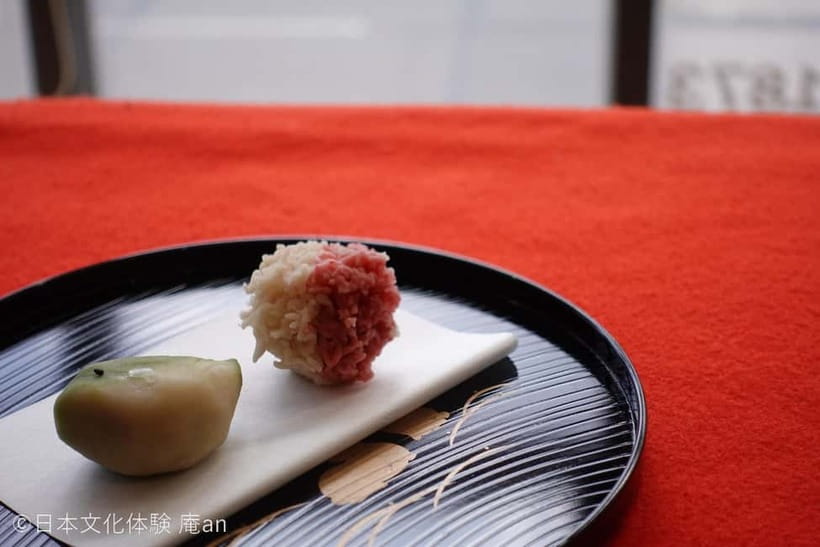
Nerikiri is a refined Japanese sweet made from colored white bean paste, often shaped to look like a flower, leaf, fruit, or another seasonal subject. It is not a dense Western-style dessert. The beauty lies in the fine shaping, the gentle colors, and the small story suggested by the form.
You begin with the coloring. This is a useful step because it shows how much work can hide inside a tiny Japanese sweet. The pale bean paste becomes the base, and you gradually give it the color needed for the design. From there, you shape the first sweet, a flower-style nerikiri.
The second sweet is a kinton nerikiri. Kinton refers to a style with fine strands or a textured surface, giving the sweet a different look from the first one. Making two types gives you enough variety to learn the basic handling of the paste without turning the session into a long pastry class.
I like this approach because it gives you something to do with your hands from the start. You are not simply listening to a talk about wagashi, the broad Japanese term for traditional sweets. You are learning by pressing, shaping, coloring, and correcting small mistakes as you go.
The ingredients matter, too. The class uses white and red bean paste supplied by long-established Kyoto shops. That does not mean the experience becomes a professional confectionery course, but it does give you a chance to work with the same kind of carefully prepared base used in high-quality wagashi.
Do not expect every sweet to look perfect. Nerikiri rewards patience more than artistic skill. The instructor guides you through the forms, and the activity is designed so that beginners can take part. Your finished sweets become part of the tea session, which gives the craft a clear purpose rather than leaving you with two decorative objects.
Other tea rooms and ceremonies in Osaka:
- Osaka: Tea Ceremony Experience
★ 4.9 · 1,426 reviews - Tea Ceremony Experience in Osaka Doutonbori
★ 5.0 · 754 reviews - Matcha Making Class in Osaka with Authentic Japanese Sweets Set
★ 5.0 · 509 reviews
What the 95-minute schedule feels like
The class is organized in a tidy sequence. At the start, the instructor explains traditional Japanese sweets and introduces the techniques you will use. This opening helps you understand why seasonal shapes matter before you begin handling the paste.
The first nerikiri follows, then the kinton nerikiri. The main making period lasts about 55 minutes. That is enough time to work carefully, though not so long that the activity becomes tiring. If you enjoy detailed crafts, you may wish for more time. If you are traveling with children or adding this between sightseeing stops, the pace should feel manageable.
Around the 55-minute mark, there is a short break. The tea portion begins at about 65 minutes, with an explanation of the ceremony and the role of matcha. You then see a matcha grinding demonstration before preparing tea yourself.
The session formally reaches its end around 85 minutes, followed by about 10 minutes for eating and drinking. The room departure time is listed as 95 minutes. This final stretch matters. You are not expected to pack up immediately after making the sweets. You have time to taste them with your tea and take pictures.
The schedule also means you should not arrive late. The class cannot be held for delayed arrivals, and the provider does not cover travel costs if you miss it. I would plan to reach the area at least 10 to 15 minutes early, especially if you are coming from Osaka Station or have not visited Higobashi before.
Preparing and drinking Uji matcha
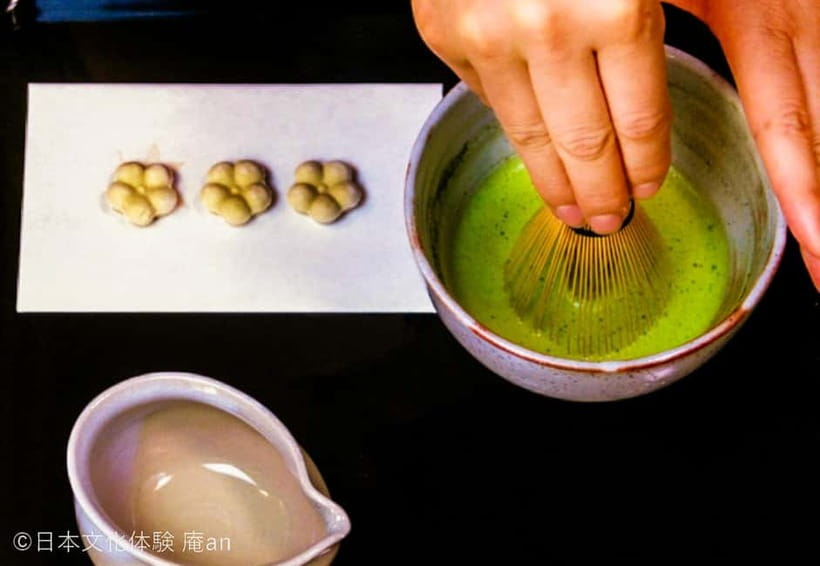
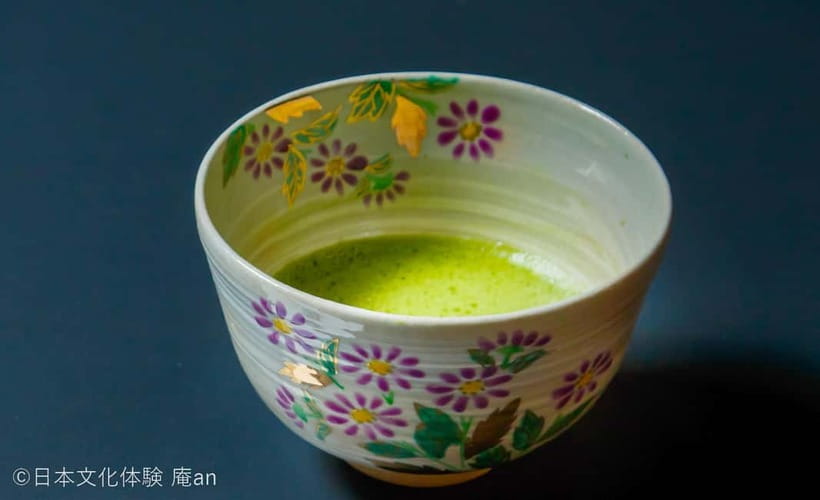
The tea portion uses single-origin Uji matcha. Uji, near Kyoto, is one of Japan’s best-known tea-producing areas, and the use of a named origin gives the lesson more substance than a generic green tea tasting.
First, you receive an explanation of tea and its place in Japanese culture. The matcha grinding demonstration is a particularly good touch. It shows how the powder is made before you whisk or prepare your own drink. This physical step helps explain why matcha has such a fine texture and concentrated flavor.
You then prepare your own matcha. The class teaches the proper way to drink it and the expressions of appreciation used in the tea setting. Details like these are valuable because tea etiquette can otherwise seem mysterious or overly formal. Here, the instructor explains the meaning behind the actions rather than asking you to copy movements without context.
The tea ceremony should be understood as a casual, introductory experience rather than a long formal ceremony in a traditional tea house. One class participant described the session as a more relaxed tea ceremony, which is likely the right expectation. Another found that the teacher explained the ceremony but did not have everyone practice every formal movement. The exact balance may vary with the instructor and group.
That flexibility is a strength if you want a friendly introduction. It may disappoint you if you are seeking a highly formal, silent ceremony with strict choreography. The focus here is learning, making, and tasting.
The matcha is served with the sweets you prepared. The mild sweetness of the white and red bean paste balances matcha’s distinct bitter edge. This pairing is not accidental. Traditional wagashi often provides sweetness before or alongside tea, allowing the tea’s flavor to come through without tasting harsh.
Instructors, language, and the feel of the class
The official teaching language is Japanese, but English help can be provided when requested. This point deserves attention. Some sessions have had instructors moving between Japanese and English with ease. Maiko has been praised for cheerful guidance in both languages, while Jun has been described as patient and clear. Other instructors, including Mihiko, have made a strong effort to explain the steps despite being less experienced in English.
The experience is not built around a polished English script. It is a practical class where the instructor demonstrates, explains, and checks that people can follow along. That can work very well, but you should request English translation in advance if you need detailed explanations.
One useful detail is that the instructors appear willing to include mixed-language groups. Questions in both Japanese and English can be handled, and the teaching style has been described as warm and energetic. At the same time, at least one person found the instructions primarily Japanese and wished for written English support.
My advice is simple: send the request before booking or as soon as you reserve. Do not assume that English materials will be waiting on every table. You can still follow a demonstration without perfect language skills, but advance notice gives the provider a better chance to arrange suitable support.
The class can also work well for families. Children aged under two who sit on a parent’s lap are free. Children who participate need a paid place, and the hands-on format has suited older children, including a 10-year-old and a 12-year-old. Younger children may need help with the fine shaping and with staying focused during the tea explanation.
A few more things to do in Osaka worth a look
- Osaka: Matcha Making Experience with Japanese Sweets
★ 5.0 · 146 reviews - Matcha Making Class in Tokyo with Authentic Japanese Sweets Set
★ 5.0 · 744 reviews - Tokyo: Matcha Making Experience with Mochi Sweets in Asakusa
★ 4.9 · 388 reviews - Kyoto: Japanese Traditional Sweets Making and Tea Ceremony
★ 4.4 · 314 reviews
Getting to the Higobashi meeting point
The activity is in central Osaka, close to several rail stations. The easiest route is Osaka Metro’s Yotsubashi Line to Higobashi Station. From Exit 10, the walk is about one minute.
You can also reach the venue from Watanabebashi Station on the Keihan Nakanoshima Line in about five minutes. Yodoyabashi Station is about seven minutes away, Kitashinchi Station is about 10 minutes away, and Osaka Station’s South Central Gate is about 15 minutes away.
Those distances make this a useful activity to pair with sightseeing or a meal in central Osaka. I would still use the map link and confirm the building entrance before leaving the station. The venue can be hard to spot, and one person lost time looking for a gray building that Google Maps did not make obvious.
If you drive, nearby coin parking is available, but this is not the option I would choose unless you already have a reason to use a car. Train access is better and avoids the uncertainty of parking in central Osaka.
The building has no elevator. You must use stairs to reach each venue, so this experience is not suitable for anyone who cannot comfortably climb stairs. That detail is easy to miss when planning a short activity, but it can affect your decision.
Is $18 good value for Osaka?
Yes, provided you want participation rather than a grand ceremony setting. The $18 price includes the class and the required tools. In 95 minutes, you make two sweets, learn about wagashi, watch matcha being ground, prepare tea, and eat what you made.
The value comes from the combination. A basic tea presentation might cost less, but it would not give you the same hands-on work. A cooking class might last longer and include more food, but it might not include tea etiquette or a matcha demonstration.
There are two small extra charges. A sweets take-out box costs 100 JPY, and an experience completion certificate costs 300 JPY. The box is worth considering if you want to save your sweets for later, though the activity is designed around eating them with your matcha.
The class does not promise a full meal. The sweets are small and delicate, and the tea portion is a cultural lesson as much as a tasting. I would schedule lunch or dinner separately.
The 4.7 rating from 118 bookings suggests a consistently positive response, and the most praised qualities are clear instruction, patient teachers, tasty sweets, and the low price. I would put special weight on the teaching. At this price, the instructor’s ability to bridge language differences makes a major difference to the experience.
Who should book this activity?
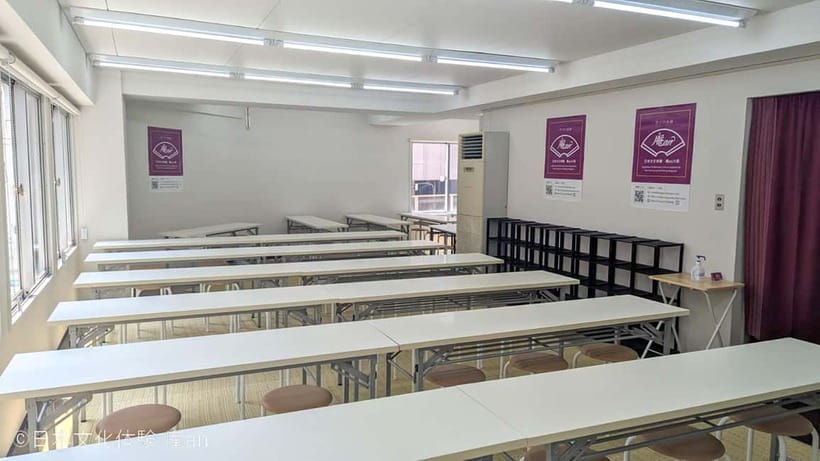
I would recommend it to you if you want a compact cultural activity that breaks up a day of Osaka sightseeing. It suits first-time visitors who want some context for wagashi and matcha without committing to a long formal ceremony.
It is also a good choice for families with older children, couples, and solo visitors who enjoy crafts. The activity gives you a finished result, a drink, and a clear sense of participation. You do not need to be artistic. The instructor demonstrates the shapes, and the point is to learn the process.
You might also choose it on a rainy day. The entire activity takes place indoors, and the short duration leaves room for other plans. The central location makes it easy to fit into a day around Osaka Station, Nakanoshima, or Yodoyabashi.
I would hesitate if your main goal is a formal tea ceremony with traditional dress, a quiet tea room, or a long study of tea philosophy. This is more relaxed and practical. I would also think twice if stairs are a problem or if you need guaranteed English without making a request.
Cancellation is free up to 24 hours before the start time, and you can reserve now and pay later. Those policies help if your Osaka schedule is still moving, but they do not change the need to arrive on time.
Should you book the Osaka sweets and tea class?
Book it if you want to make something with your own hands and leave with a better understanding of why Japanese sweets and matcha are served together. The two nerikiri designs give you a creative task, while the tea lesson adds cultural meaning to the tasting.
The strongest reason to choose it is the balance of price, location, and content. For $18, you get a friendly 95-minute class, good ingredients, tools, a matcha demonstration, and a chance to enjoy your own work. Request English assistance early, allow time to find the gray building, and plan for stairs.
Skip it only if you are seeking a formal tea ceremony or need fully guaranteed English instruction without advance notice. For most visitors who want an approachable introduction to wagashi and matcha, this is a sensible, low-cost addition to an Osaka itinerary.
FAQ
How long does the Japanese sweets and tea experience last?
The full experience lasts 95 minutes. Sweet making begins at the start, the tea portion begins at about 65 minutes, and eating and drinking time follows near the end.
How much does the activity cost?
The listed price is $18 per person. The experience and required tools are included.
Which sweets will I make?
You will make two seasonal Japanese sweets. They include a flower-shaped nerikiri and a kinton nerikiri.
What ingredients are used?
The class uses white and red bean paste made by long-established shops in Kyoto. The tea is single-origin Uji matcha.
Is English available?
The official language is Japanese, but English translation can be provided as much as possible. Contact the provider in advance if you would like English support.
Where is the meeting point?
The venue is one minute from Exit 10 of Higobashi Station on the Osaka Metro Yotsubashi Line. It is also five minutes from Watanabebashi Station, seven minutes from Yodoyabashi Station, 10 minutes from Kitashinchi Station, and 15 minutes from Osaka Station.
Is the building accessible by elevator?
No. There is no elevator, and you must use stairs to reach each venue.
Can I take the sweets home?
You can purchase a sweets take-out box for 100 JPY. The box is not included in the activity price.
What happens if I need to cancel?
You can cancel up to 24 hours before the experience for a full refund. The provider cannot hold the event for late arrivals or compensate you for travel expenses if you miss it.
Just added in Osaka
- Private arrival transfer from Kansai International airport to Kyoto City★ 5.0 · 32 reviews
- (Ticket Included) Explore Osaka Castle & Museum of History★ 4.8 · 21 reviews
- Hidden Osaka – Yukaku Red Light Tour & Culinary Adventure★ 4.8 · 96 reviews
- Osaka: Walking Tour and Top Highlights★ 4.8 · 104 reviews
- Pickleball in Osaka, Kobe & Kyoto with Locals!★ 4.7 · 80 reviews
- Osaka: Private Ceramic Painting Workshop★ 5.0 · 13 reviews
- Eat Like a Local in Osaka – Private Custom Street Food Tour★ 4.3 · 33 reviews
- Osaka:SUMO BEATS SHOWCASE: Taiko Drum and Wagyu burger!★ 4.2 · 37 reviews
Tea Ceremony Experiences, compared.
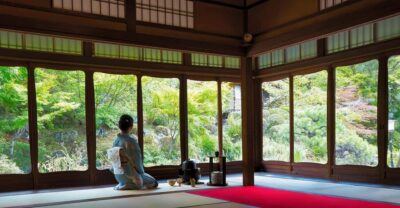
Tea Ceremony in a Traditional Tea House in Kiyomizu
Read our review →
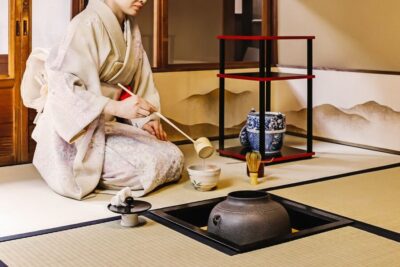
World Heritage Kyoto & Nara Uji Authentic Matcha Experience
Read our review →
Arashiyama Bamboo Forest, Monkeys, Matcha & Temple Tour
Read our review →Browse the lists this tour appears in