
Reviewed · CALLIGRAPHY & CRAFT WORKSHOPS
Osaka: Temple Tour and Traditional Calligraphy Lesson
The best part of this one-hour experience is the setting. Saishoji Temple gives you a quiet room and a slow brush instead of another noisy Osaka attraction. You begin with a short lesson on local history and temple customs, then use breathing and calligraphy to settle your attention. I especially like the meditation before writing and the chance to take home a personal kanji card and ceramic plate.
The $20 price is easy to justify if you want a hands-on cultural activity close to Shinsaibashi. It is also friendly to solo participants, with patient instruction for first-time writers. The main consideration is time: one hour goes quickly, so this is a compact introduction, not an extended temple retreat or a full Japanese language course.
Key points to know before booking
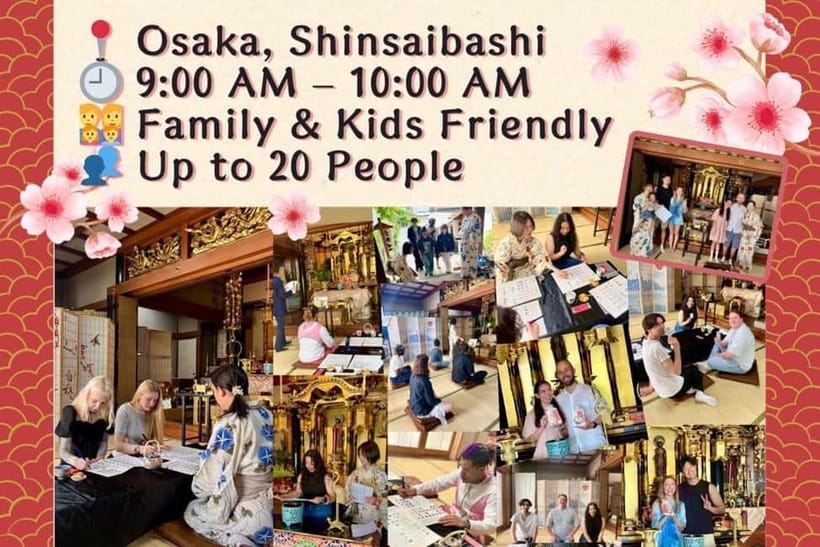
- Three minutes from Yotsubashi Station: Saishoji Temple is easy to reach from Osaka’s central shopping and dining areas.
- A calm start with Zazen meditation: You are guided to focus on breathing before handling the brush.
- Beginner-friendly calligraphy: You practice basic strokes, then write one favorite kanji on a mini shikishi.
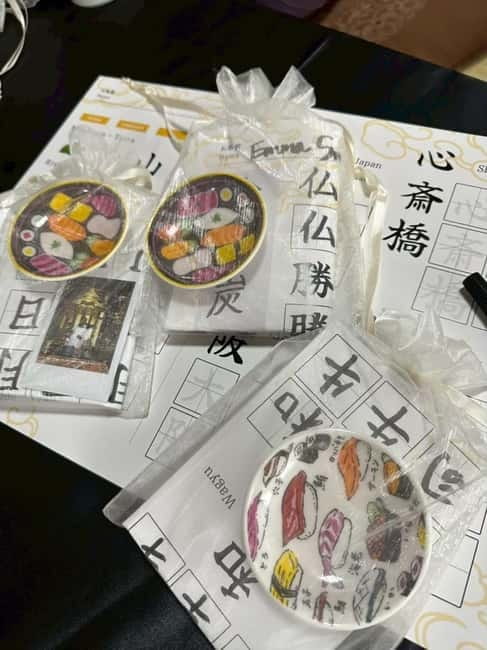
- Personal souvenirs are included: You receive a Japanese kanji name card and an 8 cm ceramic plate.
- English instruction and small-group attention: The activity is designed for beginners and more advanced learners alike.
- A good $20 short stop: The experience fits neatly into a day around Shinsaibashi, Yotsubashi, or Namba.
A quiet temple experience in the middle of Osaka
Osaka is often presented through food, shopping arcades, bright signs, and fast-moving streets. This activity gives you a different hour. Saishoji Temple is in Kitahorie, only a short walk from Yotsubashi Station, yet the activity centers on stillness rather than sightseeing crowds.
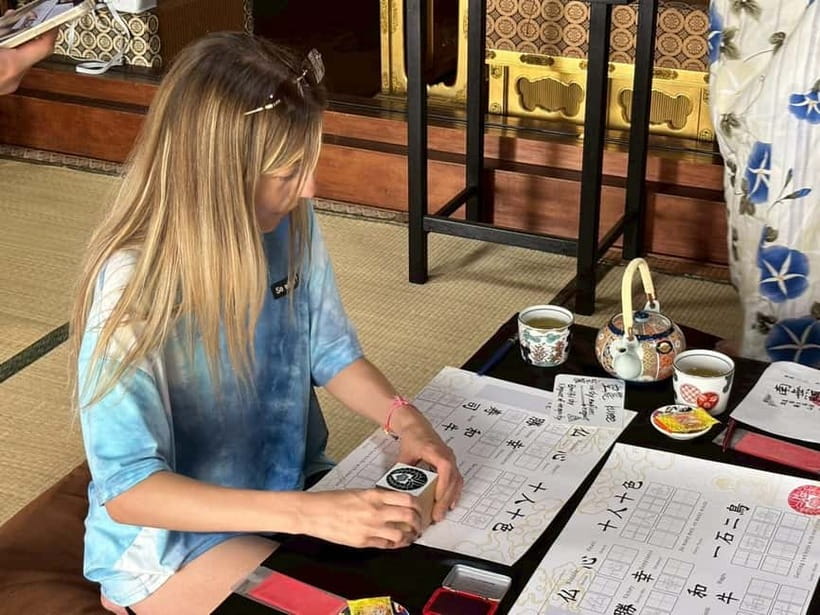
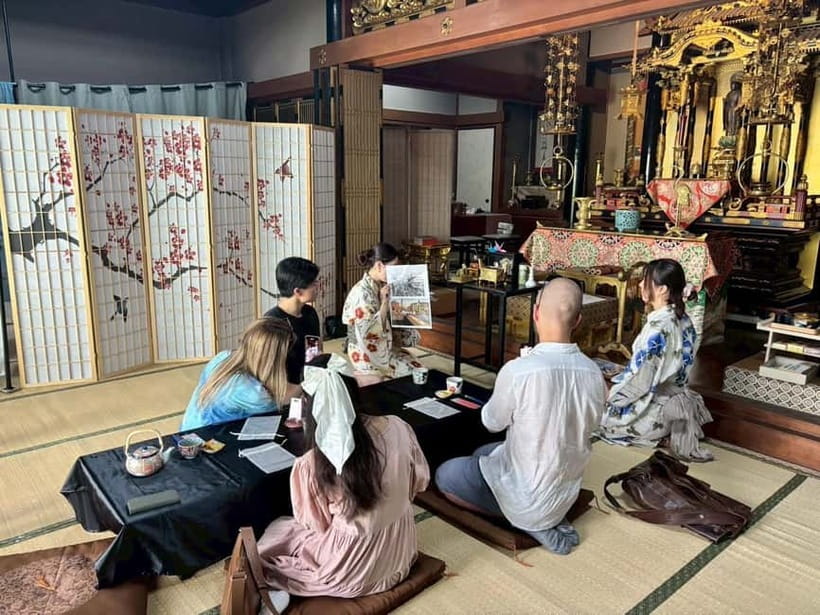
You do not simply watch a demonstration. You sit, listen, breathe, hold the brush, and make something yourself. That matters because Japanese calligraphy is not only about producing an attractive character. The slow movement of the brush asks you to pay attention to pressure, balance, spacing, and rhythm.
The setting also gives the lesson more meaning. You hear about the difference between Japanese temples and shrines while sitting inside a temple environment, rather than trying to remember the distinction from a guidebook. The result is a practical cultural introduction with a physical activity attached to it.
The experience is conducted in English. That makes it a useful choice if you want more context than a self-guided visit can offer, but do not speak Japanese. The program also includes conversational phrases and cultural expressions, so it is not limited to silent brushwork.
Other temples and shrines in Osaka people book:
- Osaka: Minoh, Katsuoji Temple, & Minoh Falls Full-day Tour
★ 4.9 · 172 reviews - Full Day Kyoto Tour : Bamboo Forest, Golden Temple, Fushimi Inari
★ 5.0 · 84 reviews - Osaka Temple Cool Foot Bath & Matcha Experience〈45min〉
★ 4.9 · 82 reviews
What happens during the one-hour program
The precise order can vary, but the advertised program brings together several short parts: a Japanese history and language lesson, meditation, calligraphy, and traditional tea-related culture. Since the whole experience lasts one hour, expect each part to be focused rather than lengthy.
You begin with an introduction to the area and to Japanese religious buildings. The lesson covers Shinsaibashi, Yotsubashi, and Osaka Castle, along with the difference between temples and shrines. This is useful background for a first visit to Japan, since the two types of sites can look similar to an untrained eye while serving different religious traditions.
You also learn simple phrases and idiomatic cultural expressions. The language element is best viewed as a practical bonus, not a structured language class. You will not leave fluent in Japanese, but you will have a little more sense of how words and manners fit together.
Next comes the calming part. Zazen meditation, or seated meditation, directs your attention toward breathing and mental focus. You do not need previous meditation experience. The value here is simple: it creates a clean break between the hurried Osaka outside and the careful work that follows.
The calligraphy lesson then introduces basic brush technique. You practice before committing to your final character, which is important for beginners. Japanese calligraphy can look effortless when an experienced writer works, but the brush reacts to speed, angle, and pressure. A short practice session lets you make mistakes without sacrificing the final keepsake.
You eventually choose one favorite kanji and write it on a mini shikishi. A shikishi is a small, firm art board often used for calligraphy and signatures. It is easier to pack than a large scroll and gives your work a clear finished form.
The program also includes a traditional matcha tea ceremony as part of its cultural activities. Because the experience is only an hour, do not expect a long tea-school performance. Think of it as a compact introduction to the manners and atmosphere connected with tea.
Why the meditation improves the calligraphy
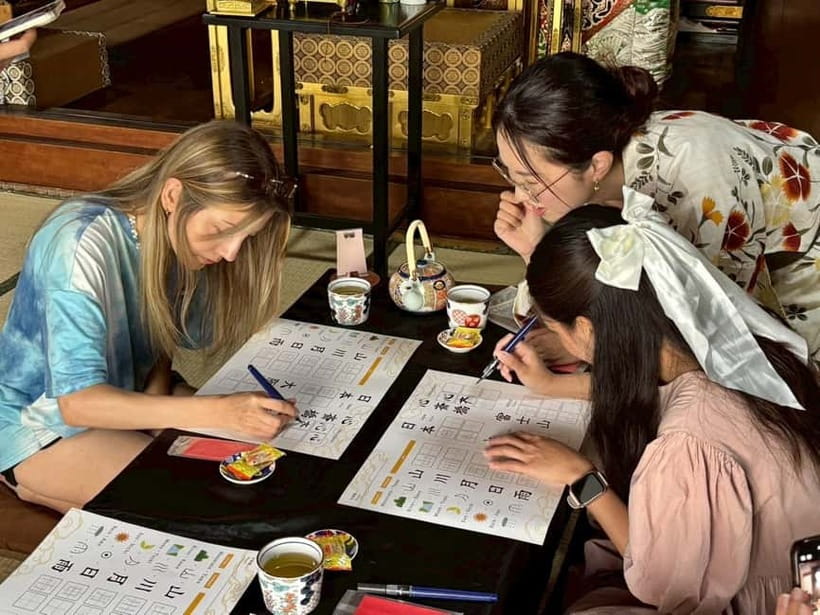
The meditation is not filler before the main event. It changes how you approach the brush. Instead of rushing to make a perfect character, you are encouraged to slow down and pay attention to each stroke.
That helps explain why this activity appeals to people who are not normally interested in art classes. You do not need a steady artistic hand or a background in Japanese culture. The focus is on concentration and participation. Even an uneven character can be a useful souvenir because it records your own attempt.
The quiet setting also gives solo participants an advantage. You do not need a companion to make the hour feel complete, and you will not be left standing awkwardly while a group activity unfolds. The instruction is designed to make first-time participation comfortable.
If your main goal is a polished piece of professional calligraphy, this may feel too short. The activity is about trying the discipline, not mastering it. For most people, that is the right tradeoff at this price and duration.
Choosing your kanji and personal keepsakes
The most personal part of the experience is choosing one favorite kanji. You may already have a character in mind, or you may need help understanding its meaning and form. The program includes a name card with Japanese kanji and its meaning, which gives you another personal item to take away.
The name card is especially useful for visitors who want something connected to language rather than a generic souvenir. It can help you remember how Japanese characters carry ideas through shape and meaning, not just sound.
You also receive a small ceramic plate measuring 8 centimeters in diameter. This is a modest gift, but its size makes it practical to carry in luggage. You should not expect a large handmade dish or a major piece of pottery. Its value is as a small reminder of the temple activity.
Intricate stamps are also part of the appeal of the visit. They add another visual detail to the experience and give you something to examine beyond your own writing. If you enjoy collecting temple or shrine stamps, ask the staff how they fit into the activity when you arrive.
Other things to make with your hands in Osaka:
- Osaka Sushi Making Experience
★ 5.0 · 400 reviews - Osaka: Matcha Making Experience with Japanese Sweets
★ 5.0 · 146 reviews - Osaka Dotonbori: Sushi Making Experience
★ 4.9 · 122 reviews - Osaka: Private Japanese Calligraphy Experience
★ 5.0 · 66 reviews
The temple setting and what it adds
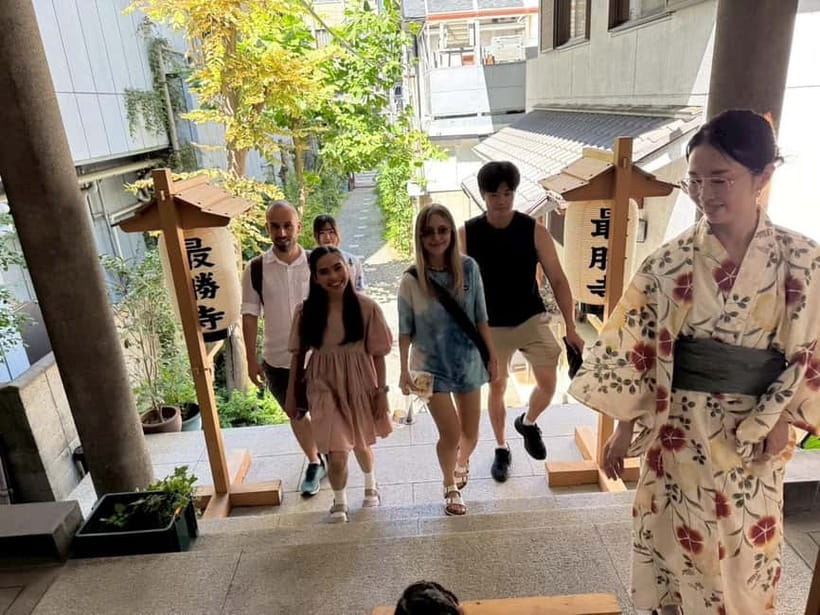
Saishoji Temple is at 1-6-18 Kitahorie in Osaka’s Nishi Ward. Its location is one of the strongest practical features. You are not giving up half a day to reach a remote cultural site.
From Yotsubashi Station on the Osaka Metro Yotsubashi Line, Exit 4, it is about a three-minute walk. Shinsaibashi Station on the Midosuji Line is about ten minutes away on foot, and Namba is about fifteen minutes away. That makes the activity easy to pair with shopping, dining, or an evening around those districts.
The temple setting is also more than decoration. A calligraphy class in a bright commercial studio would teach the same basic brush movements, but the quiet religious surroundings change your pace. You become more aware of the ink, the paper, and the sound of the brush.
Remember that this remains an active religious setting, not a theme park set. Dress and behave respectfully, follow staff instructions, and keep your voice low during meditation and writing. The supplied information does not specify a dress code, so simple respectful clothing is the sensible approach.
Is the $20 price good value?
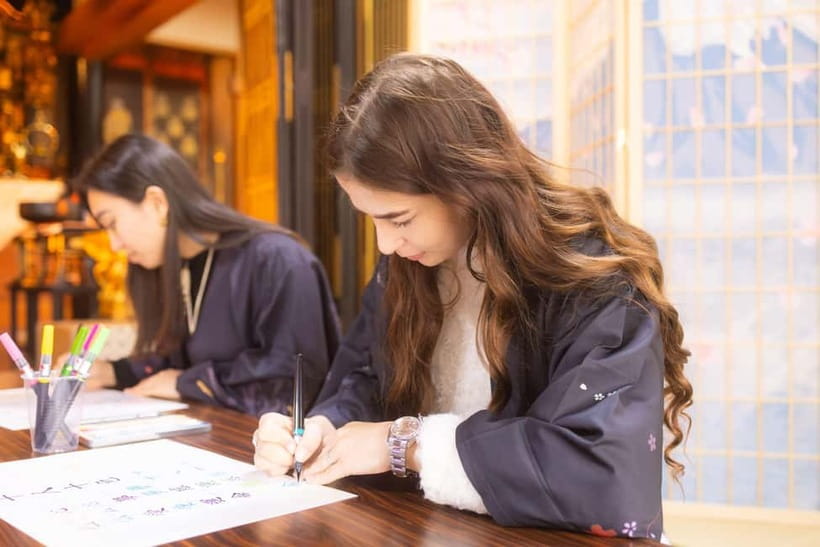
At $20 per person, this is inexpensive by Osaka activity standards, especially because materials are included and you receive several keepsakes. You are paying for instruction, cultural explanation, meditation, calligraphy practice, and the temple setting in a short package.
The strongest value comes from convenience. You can reach the temple quickly from central Osaka, spend one focused hour there, and continue with your day. A longer class might teach more brush technique, but it would also take more time and probably cost more.
The price is less attractive if you want a detailed history lecture, a long meditation session, or advanced calligraphy coaching. The activity introduces several cultural elements rather than exploring one of them in depth.
For a first taste, though, the balance is good. You get context, personal guidance, materials, and souvenirs without making a major financial or time commitment.
Who will enjoy this most
I would recommend this experience to several kinds of visitors:
- First-time visitors to Japan who want a clear introduction to temple and shrine customs.
- Solo visitors looking for an activity that feels comfortable without needing a partner.
- Families wanting a hands-on cultural stop rather than another observation-only attraction.
- People curious about meditation who prefer a short guided introduction.
- Language learners who want basic phrases and cultural expressions alongside a physical activity.
- Visitors with a tight Osaka schedule who can spare one hour near Shinsaibashi or Yotsubashi.
It also suits adults who want a quiet pause after a day of shopping. The activity is not built around speed, competition, or a large performance. It rewards patience.
I would be more cautious about booking if your priority is advanced calligraphy technique. You will practice the basics and create one character, but the one-hour format cannot provide extensive correction or a serious study of brush styles.
Practical details that affect your decision
The instructor language is English. All materials needed for the activities are included, so you do not need to bring brushes, ink, paper, or a plate. The program is suitable for beginners and more advanced learners, with small-group attention intended to allow personal guidance.
Starting times vary, so you need to check availability for your chosen date. The meeting point is Saishoji Temple itself, not a nearby station exit. Build in enough time to walk from Yotsubashi Station and locate the temple without rushing.
The activity offers free cancellation up to 24 hours before the scheduled time for a full refund. You can also reserve and pay later, which helps if your Osaka plans are still changing.
The experience has a 4.9 rating based on 24 reviews, and the most consistent praise centers on polite instruction, a calming atmosphere, and the ease of participating alone. That pattern matches the design of the activity: the staff guide you through unfamiliar steps, and the temple gives the session a peaceful rhythm.
How to fit it into an Osaka day
The location makes this easy to place between major stops. You could schedule it before exploring Shinsaibashi, after visiting the shopping streets, or on the way toward Namba. Since the activity lasts only one hour, it does not require the planning needed for a full-day excursion.
If you are staying near Namba, allow about fifteen minutes to walk to the temple. From Shinsaibashi, allow about ten minutes. From Yotsubashi Station, the short three-minute walk is the simplest route.
Try not to book it immediately before a fixed reservation if you dislike rushing. Meditation and calligraphy work best when you arrive with a little breathing room. The program is short, but the point is to slow down, not to sprint in from the station and check the time every few minutes.
You may also want to leave room in your luggage for the plate and shikishi. Both are small, but the shikishi should be kept flat and protected from bending.
Should you book the Saishoji Temple calligraphy experience?
Book it if you want a short, affordable, hands-on introduction to Japanese culture in central Osaka. The combination of temple surroundings, guided breathing, beginner calligraphy, language notes, and personal keepsakes gives you more substance than a quick photo stop.
I especially recommend it for solo visitors and first-time calligraphy students. The staff’s patient approach and the calm room make it easy to participate without prior skill. Families and language learners should also find plenty to take from the hour.
Skip it if you want an extended meditation retreat, a full tea ceremony, or serious calligraphy training. The experience is intentionally compact. Its strength is that it gives you a peaceful, personal encounter with Japanese tradition without taking over your day.
FAQ
Where does the activity take place?
The activity takes place at Saishoji Temple, located at 1-6-18 Kitahorie, Nishi-ku, Osaka, 550-0014, Japan.
How do I reach Saishoji Temple?
The temple is about a three-minute walk from Exit 4 of Yotsubashi Station on the Osaka Metro Yotsubashi Line. It is about ten minutes from Shinsaibashi Station and fifteen minutes from Namba Station on foot.
How long does the experience last?
The experience lasts one hour. Starting times vary, so you need to check availability for your preferred date.
How much does it cost?
The price is $20 per person.
Is the activity conducted in English?
Yes. The instructor language is English.
What activities are included?
The program includes a guided Japanese history and language lesson, Zazen meditation, calligraphy practice, and cultural activities that include traditional matcha tea. The program also explains the difference between Japanese temples and shrines.
What souvenirs do I receive?
You receive a name card with Japanese kanji and its meaning, a mini shikishi featuring one favorite kanji that you write, and a small ceramic plate measuring 8 centimeters in diameter.
Are materials included?
Yes. All materials needed for the activities are included.
Can I cancel for a refund?
Yes. You can cancel up to 24 hours in advance for a full refund. You can also reserve now and pay later.
More temples and shrines elsewhere in Japan
- Osaka: Mind & Spirit Balance Temple Reiki Healing
★ 5.0 · 41 reviews - Osaka: Minoh Waterfall & Katsuo-ji Temple Half-Day Tour
★ 4.7 · 27 reviews - Osaka Temple Head Spa &Matcha Facial – Refresh & Glow〈90min〉
★ 5.0 · 24 reviews - Osaka Morning Tour: Shitennoji Temple, Shinsekai &Doutonbori
★ 5.0 · 23 reviews
Just added in Osaka
- Private arrival transfer from Kansai International airport to Kyoto City★ 5.0 · 32 reviews
- (Ticket Included) Explore Osaka Castle & Museum of History★ 4.8 · 21 reviews
- Hidden Osaka – Yukaku Red Light Tour & Culinary Adventure★ 4.8 · 96 reviews
- Osaka: Walking Tour and Top Highlights★ 4.8 · 104 reviews
- Pickleball in Osaka, Kobe & Kyoto with Locals!★ 4.7 · 80 reviews
- Osaka: Private Ceramic Painting Workshop★ 5.0 · 13 reviews
- Osaka:SUMO BEATS SHOWCASE: Taiko Drum and Wagyu burger!★ 4.2 · 37 reviews
- Eat Like a Local in Osaka – Private Custom Street Food Tour★ 4.3 · 33 reviews
Calligraphy & Craft Workshops, compared.
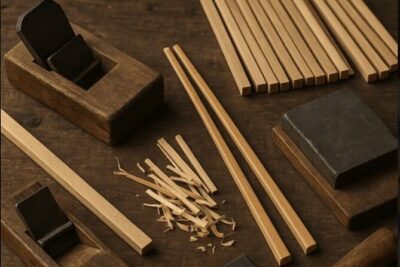
Chopsticks Making Workshop in Gion with Engraving Option
Read our review →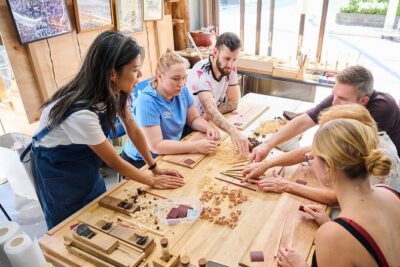


Matcha Making Experience with Mochi Sweets in Asakusa
Read our review →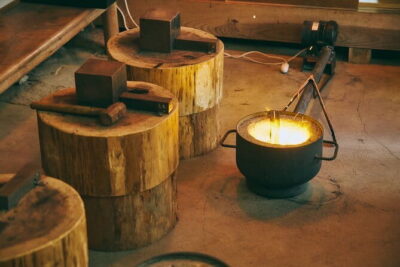
Authentic knife making experience at a blacksmith in Kyoto
Read our review →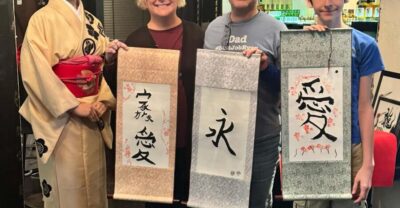
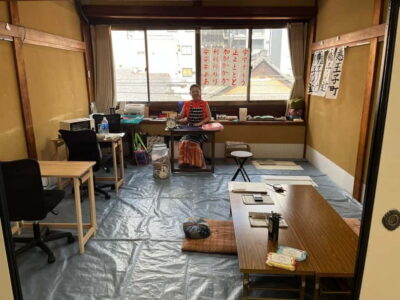
Calligraphy class at Buddhist temple in city center
Read our review →Browse the lists this tour appears in