
Reviewed · WALKING TOURS
Osaka: Walking Tour to Local Gems, Food & Culture
Osaka is easiest to understand on foot, one lively neighborhood at a time. This 150-minute tour links Dotonbori, Hōzenji Temple, Kuromon Ichiba Market, and Nipponbashi Denden Town, giving you a useful first look at the city without taking up a full day.
I like the tour’s compact route and its focus on stories rather than simple photo stops. I also like that guides such as Rico and J. have been praised for clear English, cultural detail, and answering questions beyond the sights in front of you. The main drawback is that food costs extra, and the walking route is not suitable for wheelchair users.
Key points at a glance
- Starts at Apple Shinsaibashi: Meet your English-speaking guide in front of the Apple store, where the guide will hold a sign.
- Covers Osaka’s southern center: The route connects Shinsaibashi, Dotonbori, Hōzenji, Kuromon Market, Denden Town, and Namba.
- Dotonbori gets 20 minutes: You have time for photos, a short visit, and an explanation of one of Osaka’s best-known areas.
- Kuromon Ichiba Market is for looking and learning: Food is not included, but you can decide what to buy after the guide introduces the market.
- Guides add cultural context: Rico and J. are named in booking feedback, with praise for English, humor, and detailed answers.
- Good value at $25: The price includes the licensed guide and all listed fees, but not snacks or meals.
Why this short Osaka walk works well
This is a city-orientation tour more than a full food tour. In two and a half hours, you move through several parts of Osaka that feel different from one another, from the polished shopping streets around Shinsaibashi to the bright signs of Dotonbori, the quiet religious setting of Hōzenji, the food stalls of Kuromon, and the pop-culture shops of Denden Town.
That variety is the tour’s best feature. You are not spending the whole afternoon in one district, and you are not wasting time on a long ride between far-flung sights. The route gives you a practical sense of how Osaka’s shopping, dining, religious, and entertainment areas fit together.
I would think of this as a first-day walk. It helps you identify places to return to later. After the tour, you may want to revisit Dotonbori at night, shop around Shinsaibashi, or return to Kuromon when you have more time to eat.
The 4.9 rating from 21 verified bookings points to a consistently strong experience. The most useful comments focus on the guides. Rico is praised for sharing many interesting details, while J. is described as especially good at moving from a slower opening into more detailed discussion of Osaka culture and small historical points. That suggests the quality depends partly on the individual guide and how actively you ask questions.
Other walking tours in Osaka people book:
- Osaka: Hotspots & Hidden Gems Walking Tour Private or Group
★ 4.9 · 1,300 reviews - Osaka Local Foodie Walking Tour in Dotonbori and Shinsekai
★ 5.0 · 985 reviews - Osaka Bar Hopping Night Walking Tour in Namba (3 bars, 6 tastes)
★ 5.0 · 958 reviews
Meeting at Apple Shinsaibashi
The meeting point is in front of the Apple store in Shinsaibashi. Your guide will hold a sign, which makes the meeting fairly simple even in a busy commercial area.
Give yourself a little extra time to find the correct side of the store and get settled. Shinsaibashi is a major shopping district, so it is not the kind of place where you want to arrive at the last second while checking your phone and watching the clock.
The opening guided portion lasts about 15 minutes. Since the exact name of that first stop is not provided, you should expect the guide to begin with orientation and local context rather than a major standalone attraction. This is useful if you are new to Osaka, because the guide can explain what you are seeing before the route grows busier.
The first part of a walking tour often sets the tone. If you want the most from it, ask about Osaka customs, local food, neighborhood differences, and the places you plan to visit afterward. J. was specifically praised for answering questions about Japanese culture and more, so this is the sort of tour where curiosity pays off.
Moving through the first local stops
Two early stops are listed as guided visits of about 10 minutes each, but their names are not specified in the available details. That means you should not book this tour expecting a fixed list of major monuments at every stage.
Instead, treat these stops as short teaching points along the route. The guide’s job is to connect the streets and smaller places to the larger character of Osaka. Short visits can work well here because they keep the pace moving and leave room for the major stops later.
The tradeoff is clear. You get a broad introduction, not a long museum visit or a detailed architectural tour. If you want extended time at one temple, market, or historic building, you may need to return on your own.
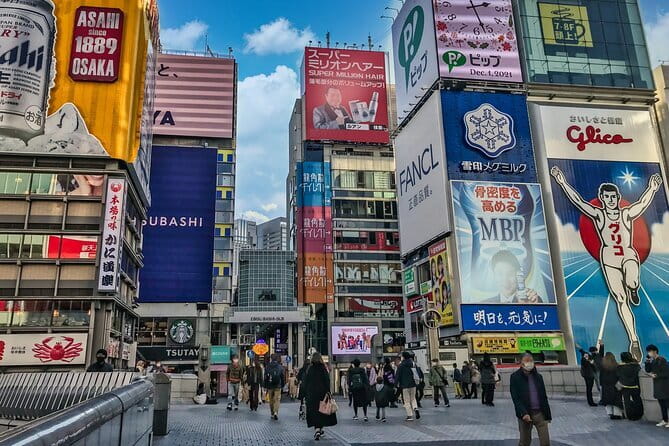
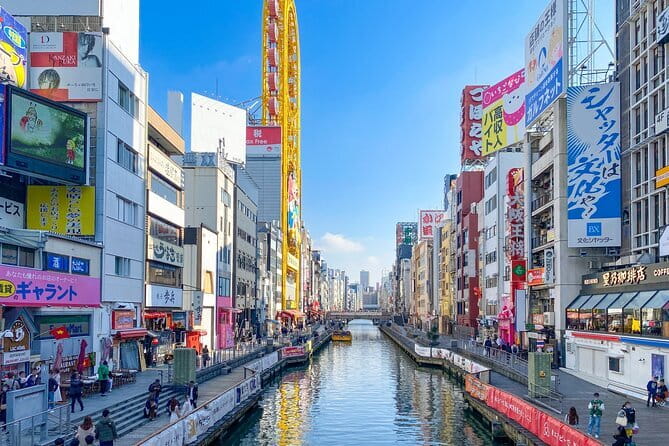
Dotonbori in a focused 20 minutes
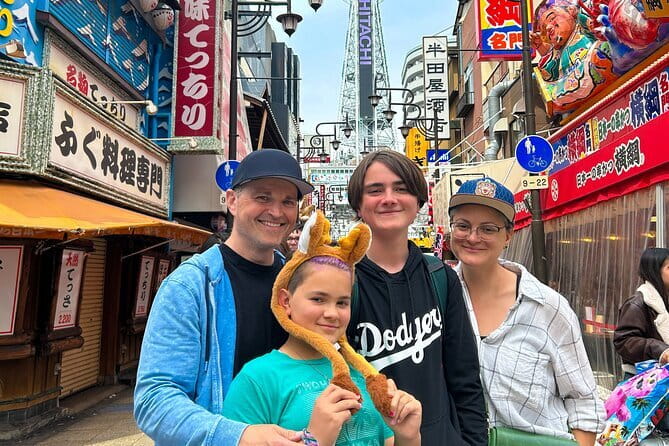
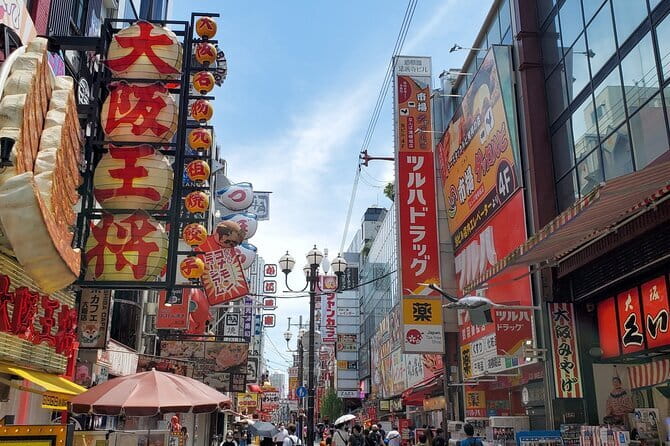
Dotonbori receives the longest early stop, about 20 minutes, with time for photos, a visit, and guided explanation. This is one of the most recognizable parts of Osaka, known for its strong visual identity and concentration of restaurants, signs, and entertainment.
A short stop here is sensible. Dotonbori can easily fill an entire evening, but a tour does not need to spend hours repeating the same view from different angles. Twenty minutes gives you a chance to take photographs and hear why the area matters before continuing to the next neighborhood.
You should keep your camera ready, but do not expect a full meal break. The tour description does not include food, and the time is scheduled for a guided stop rather than an unhurried restaurant visit.
Dotonbori is also a place where local stories help. On your own, you can see the signs and crowds, but a guide can add meaning to the district’s role in Osaka’s food and entertainment culture. The tour promises local insight beyond standard sightseeing, and this is one of the stops where that promise matters most.
Other guided walks in Osaka:
- Osaka: Deep Backstreets Walking Tour with Dinner Option
★ 4.9 · 902 reviews - Ultimate Osaka Walking Tour: Castle, Dotonbori & Hidden Gems
★ 5.0 · 862 reviews - Osaka: Main Sights and Hidden Spots Guided Walking Tour
★ 4.9 · 702 reviews - Private Osaka Walking Tour: Highlights & Hidden Gems
★ 5.0 · 569 reviews
A quieter pause at Hōzenji Temple
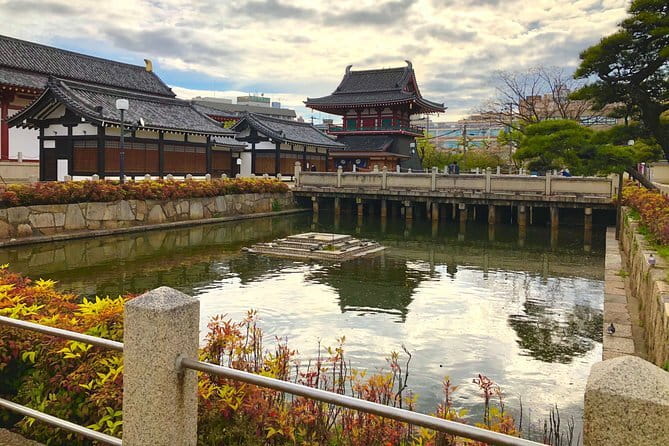
After Dotonbori, the route visits Hōzenji Temple for about 10 minutes. The shift in mood is part of the appeal. You move from a highly commercial street into a religious setting, showing how Osaka places old traditions close to modern entertainment.
Ten minutes is enough for a brief look and explanation, but it is not enough for a slow, reflective visit. If you are interested in the temple, its customs, or the surrounding lane, make a note to return later.
This stop also helps balance the tour. Without it, the route could feel like a walk through shopping and restaurant districts alone. Hōzenji adds a cultural and religious layer, while the guide’s explanation gives you a reason to pay attention to a place you might otherwise pass quickly.
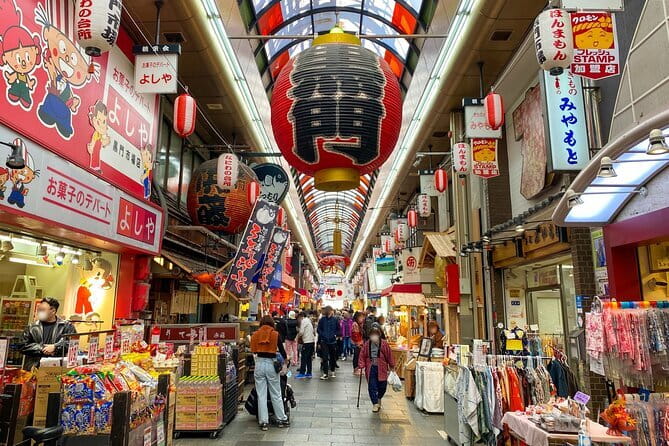
Kuromon Ichiba Market without a set food tasting
The tour allows 20 minutes at Kuromon Ichiba Market, including a visit and guided explanation. This is the practical food stop, but you need to understand the arrangement: food is not included.
That can be a benefit if you prefer to choose your own snack instead of being given a fixed tasting menu. You can see what is available, listen to the guide’s advice, and decide how much you want to spend. It also keeps the base price low at $25.
The downside is that 20 minutes is short for serious market eating. If you stop at a stall, ordering, paying, and eating can use most of the time. I would either plan to sample one small item or return later with a larger budget and a free schedule.
The guide’s role here is especially useful for understanding what you are seeing. A market can look like a row of attractive food counters, but local context helps you make better choices. Ask about unfamiliar foods, local eating habits, and which parts of the market deserve a second visit.
Nipponbashi Denden Town and Osaka’s pop culture side

Nipponbashi Denden Town receives about 10 minutes, including a photo stop, visit, and guided talk. This area adds another contrast to the route, shifting from food and temples toward electronics, anime, games, and Japanese pop culture.
The stop is brief, so think of it as an introduction rather than a shopping session. You will not have much time to browse carefully or compare products. If this is a major interest for you, note the area and come back after the tour.
For a first visit, the value is in seeing another side of Osaka. The city is not only about historic places and food streets. Denden Town helps show its modern entertainment culture, and the guide can explain how it fits into the neighborhood’s identity.
The final guided stop and Namba Grand Kagetsu
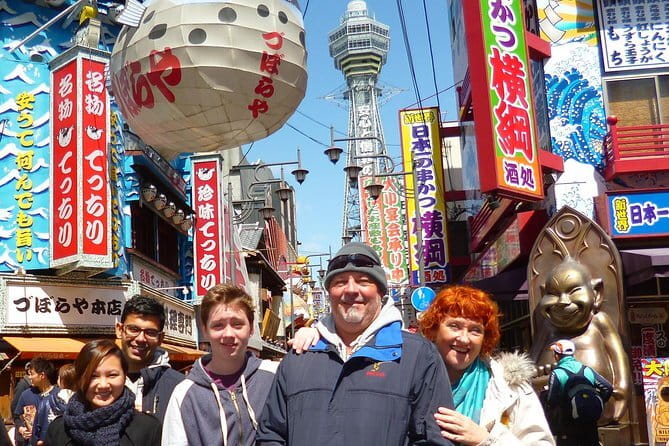
One additional visit of about 10 minutes appears before the tour ends, but the stop is not named in the available details. As with the two early unnamed stops, you should see this as part of the guide-led route rather than plan around a specific attraction.
The tour finishes at Namba Grand Kagetsu. That gives you a useful ending point in the Namba area, close to many restaurants, shopping streets, and transport connections. The experience does not include a return transfer, so you are free to continue exploring once the guide says goodbye.
Finishing in Namba is convenient for dinner or for returning to a hotel in the wider central Osaka area. You may also choose to walk back toward Dotonbori or explore more of the entertainment district on your own.
Guide quality and the value of local questions
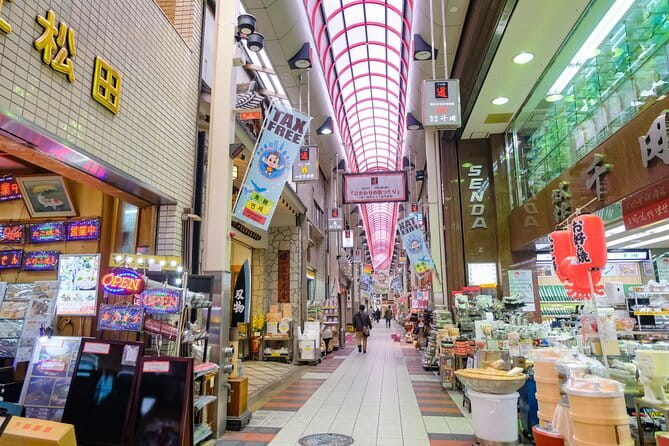
The guide is the part of this experience that can turn a basic neighborhood walk into a useful introduction to Osaka. The tour is conducted in English by a licensed guide, and the strongest comments focus on clear language, good information, and an entertaining manner.
Rico is specifically praised for sharing many points of interest during the walk. J. is described as an impressive guide who moved from a slow beginning into detailed cultural and historical explanations, while remaining available for questions about Japan beyond the immediate route.
That gives you a practical tip: ask questions. Do not wait for the guide to cover every subject automatically. Ask about dining customs, local etiquette, the meaning of a temple visit, or which neighborhood deserves more time after the tour.
The available comments are not all equally detailed. One is simply very brief, while the stronger comments point to informative and friendly guiding. I would book this for the chance to learn from the guide, not because every stop promises a long, formal presentation.
Is $25 a fair price?
At $25 per person, this is a good-value orientation walk. The price includes all fees and taxes plus a licensed English-speaking guide. For a route that links several major areas over 150 minutes, the cost is reasonable.
You are paying for structure and explanation. You could walk through Dotonbori, Hōzenji, Kuromon, and Denden Town yourself, but you would need to research the route and supply your own cultural background. The tour saves that preparation time.
Food is the main extra cost. Because tastings and meals are not included, your final spending depends on what you buy at Kuromon or elsewhere. That is worth remembering if you are comparing this with a dedicated food tour.
The tour also offers free cancellation up to 24 hours before the start and a reserve-now, pay-later option. Those terms are useful if your Osaka plans are still changing.
Who should book this Osaka walk?
I would recommend it to first-time visitors who want a quick introduction to central Osaka. It also suits solo visitors and couples who like to ask questions while walking rather than read a guidebook alone.
It is a good choice if you want to combine several themes in one outing:
- Osaka street life and shopping areas
- Food-market culture without a fixed tasting menu
- A short temple visit
- Pop culture and entertainment districts
- Local stories in clear English
You should choose something else if you want a slow gourmet experience, extensive temple time, or a fully accessible route. The tour is specifically not suitable for wheelchair users, and the format requires walking between stops.
Wear comfortable shoes and arrive ready to keep moving. The listed stops are short, especially at Hōzenji and Denden Town, so you will get more from the experience if you accept that it is a sampler rather than a series of long visits.
Should you book it?
Book this tour if you want to get your bearings in Osaka quickly and prefer local explanation to a simple sightseeing checklist. The route covers a strong mix of food, religion, shopping, and pop culture, and $25 is a fair price for the guide-led structure.
Skip it if your priority is included food, extended time at each stop, or wheelchair access. For most first-time visitors who can walk comfortably, this is a useful opening look at Osaka, with enough free time afterward to return to the places that catch your interest.
FAQ
Where does the Osaka walking tour start?
It starts in front of the Apple store in Shinsaibashi. The guide will be holding a sign.
Where does the tour finish?
The tour finishes at Namba Grand Kagetsu.
How long does the experience last?
The tour lasts 150 minutes, or two and a half hours.
Is food included in the price?
No. Food is not included, so any items you choose to buy at Kuromon Ichiba Market or elsewhere cost extra.
What language is the tour conducted in?
The tour is conducted in English by a live licensed guide.
Is the tour suitable for wheelchair users?
No. The experience is listed as not suitable for wheelchair users.
Just added in Osaka
- Private arrival transfer from Kansai International airport to Kyoto City★ 5.0 · 32 reviews
- (Ticket Included) Explore Osaka Castle & Museum of History★ 4.8 · 21 reviews
- Hidden Osaka – Yukaku Red Light Tour & Culinary Adventure★ 4.8 · 96 reviews
- Osaka: Walking Tour and Top Highlights★ 4.8 · 104 reviews
- Pickleball in Osaka, Kobe & Kyoto with Locals!★ 4.7 · 80 reviews
- Osaka: Private Ceramic Painting Workshop★ 5.0 · 13 reviews
- Eat Like a Local in Osaka – Private Custom Street Food Tour★ 4.3 · 33 reviews
- Osaka:SUMO BEATS SHOWCASE: Taiko Drum and Wagyu burger!★ 4.2 · 37 reviews
Walking Tours, compared.

Kyoto Geisha Walking Tour: Gion District & Hidden Gems
Read our review →
Tokyo Tsukiji Fish Market Food and Culture Walking Tour
Read our review →
Imperial Palace and Shogun Historical Walking Tour
Read our review →
Gion Geisha District Walking Tour – Stories of Geisha
Read our review →
Shinjuku Local Bar and Izakaya Guided Walking Tour
Read our review →
Asakusa Walking Tour with Sensoji Temple Visit
Read our review →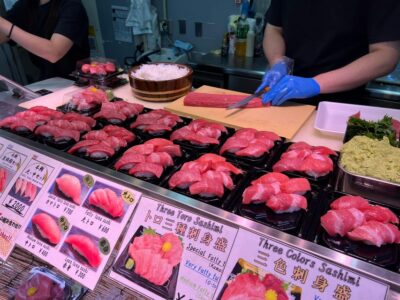
Nishiki Market Brunch Walking Tour (7 Tastings + Brunch)
Read our review →Browse the lists this tour appears in