
Reviewed · SUSHI-MAKING CLASSES
Shibuya Tokyo: Sushi Making Class (Vegan/Vegetarian/Halal)
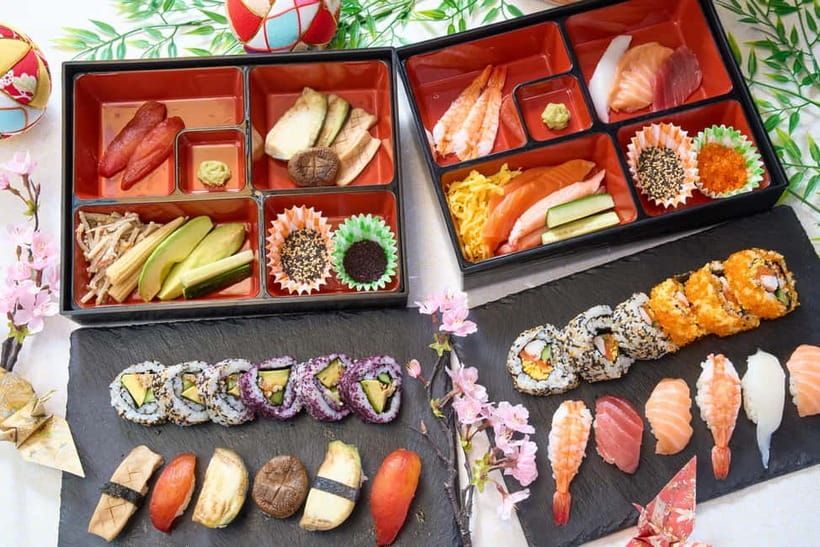
Making sushi without fish is the clever twist here. In 90 minutes, you learn California rolls and nigiri with fresh vegetables such as eggplant, mushrooms, tomato, and avocado, then sit down to eat your work. I like the English-speaking instruction and the short sushi quiz, which gives the class some cultural context before the rice starts flying.
I also like the flexible menu. You can book vegan, vegetarian, halal, or gluten-free options, which makes this a useful food activity in Tokyo for people who cannot simply walk into any sushi shop. The main drawback is practical: the studio can take a little time to find, so allow more than the seven-minute walk from Shibuya Station suggests.
Key points to know before booking
- Make both California rolls and nigiri: You get more than a single rolling lesson.
- Choose your dietary option in advance: Vegan, vegetarian, halal, and gluten-free choices are available.
- Meet near Shibuya Station: The studio is about a seven-minute walk from the station, though finding the exact venue may take extra time.
- Learn from English-speaking instructors: Momoyo and Kaito are among the instructors named in participant feedback.
- Eat what you prepare: The class ends with a proper meal, not just a quick sample.
- Plan around 90 minutes: It fits neatly between Shibuya sightseeing, shopping, or an evening meal.
What this Shibuya sushi class is really like
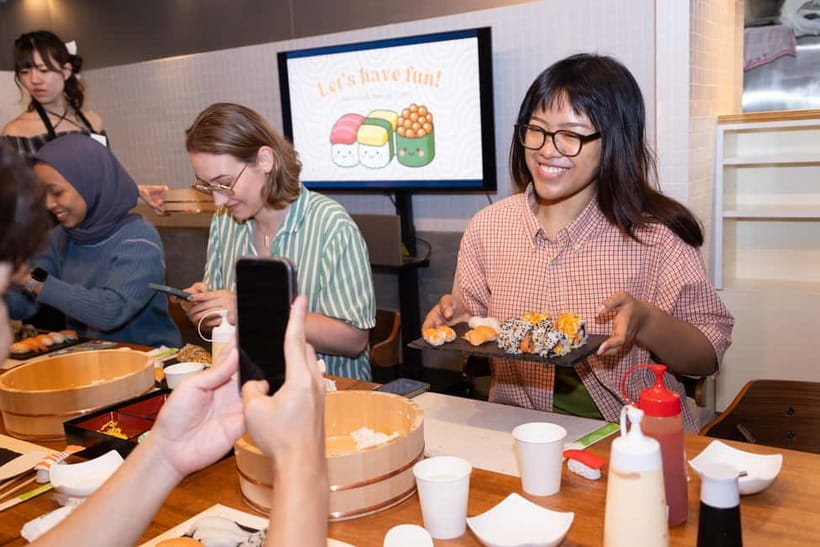
This is a hands-on cooking activity rather than a formal chef demonstration. You sit down with the group, hear a short introduction, and then work through the sushi-making process with help from local instructors.
You do not need previous cooking experience. The class is designed for beginners, and the instructors explain each stage in English. That matters because sushi looks simple until you try to make neat pieces yourself. Rice placement, rolling pressure, and shaping nigiri all take a bit of guidance.
The class is also a useful answer to a common Tokyo food problem. Traditional sushi is often built around raw fish, so vegan and vegetarian visitors can find the choice limited. Here, vegetables are treated as the main event rather than a side dish.
The atmosphere is intended to be light and social. You begin with a sushi quiz, learn a little about the dish’s background, and then move quickly into the practical work. You will not spend the whole 90 minutes listening to a lecture.
Other classes behind the counter in Tokyo:
- Sushi Making Tokyo Roll and Authentic Japanese Sushi Class
★ 5.0 · 3,971 reviews - Tokyo: Roll and Authentic Sushi Making Class in Asakusa
★ 4.9 · 1,957 reviews - Tokyo: Sushi Making Class in a Happi Coat near a Famous Spot
★ 4.9 · 1,377 reviews
Starting with a sushi quiz and a little context
The opening quiz covers the history of sushi. It is short and informal, designed to get everyone talking before the cooking begins.
I like this approach because sushi has a story beyond the familiar restaurant version. A few basic facts can help you understand why rice, vinegar, presentation, and small portions matter. The quiz also gives solo visitors and mixed groups an easy way to start chatting.
The activity does not promise an extensive food-history lesson, so keep your expectations in check. If you want a detailed course on regional sushi traditions or the technical work of a professional sushi chef, this is not that kind of class. The value is in getting just enough background to make the cooking feel connected to Japanese food culture.
The opening section also gives the instructor a chance to explain the ingredients and the plan for the class. That early clarity is useful when several dietary choices are being handled at the same time.
Making fresh vegetable sushi from scratch
The main work begins with the ingredients and tools. For the vegan and vegetarian versions, the menu can include vegetables such as eggplant, mushrooms, tomato, and avocado. You use the provided cooking utensils and sushi-making tools rather than needing to bring anything from home.
The first lesson covers the key ingredients and basic methods. You learn how to handle the rice, arrange fillings, and create a roll that holds together. The instructors then guide you through rolling California rolls, offering tips on shape and technique.
This is where the class earns its price. You are not simply watching someone prepare a plate. You are practicing a skill that you can repeat at home, even if your first roll looks more rustic than restaurant-ready.
The ingredients are fresh, and the vegetable combinations give the class enough variety to feel like a meal. The menu is not presented as a substitute for every type of sushi. Instead, it shows how much texture and color you can get from produce, rice, and careful presentation.
A little patience helps. Rolling neatly takes coordination, and beginners may need several attempts before the shape looks tidy. That is part of the fun, but it is worth knowing that the activity involves actual hands-on work rather than a polished result at every stage.
Learning nigiri without the raw fish
Nigiri is one of the most recognizable forms of sushi: a small piece of rice shaped by hand with a topping placed above it. In this class, you learn the basic form using the ingredients provided for your dietary selection.
For many people, nigiri is the more interesting skill. Rolls can hide uneven filling, but nigiri puts the shape of the rice and the placement of the topping on display. The instructor’s tips help you understand how much pressure to use and how to keep each piece compact.
The class presents nigiri as a practical Japanese food skill, not as a high-pressure chef exam. That makes it suitable for families, couples, solo visitors, and anyone who wants to try something new without needing a kitchen background.
I would not book this expecting professional knife training. The information provided focuses on making sushi, choosing ingredients, rolling, and shaping. It is a friendly introduction rather than an advanced culinary workshop.
A few more things to do in Tokyo worth a look
- Tokyo: 2-Hour Vegan and Vegetarian Ramen Guided Walking Tour
★ 4.8 · 33 reviews
Dietary choices need to be arranged before class
The menu can accommodate vegan, vegetarian, halal, and gluten-free requirements. You need to state your preference or restriction when booking.
This advance notice is important. Menu changes cannot be made on the day of the activity, so do not assume you can arrive and switch from one option to another. If you have an allergy, include that information clearly when you reserve your place.
The halal option is especially useful for visitors who need more than a vegetarian meal. The gluten-free option is also available, described as a normal option in the activity details. Since the exact ingredients and arrangements depend on the option you book, read the selection carefully and provide all needed information in advance.
For strict dietary needs, this kind of planning is part of using the experience well. The class is designed to be accommodating, but the kitchen needs notice to prepare the correct ingredients.
Eating your own sushi at the end
After the making comes the best part: you eat what you have prepared. The class gives you time to sit down and enjoy the finished sushi rather than rushing straight out after the lesson.
This turns the activity into a full food experience. At $58 per person, the price is easier to justify when you consider the instruction, ingredients, equipment, cultural introduction, and meal. You are paying for an activity and lunch or a substantial snack, depending on when you schedule it.
The meal also lets you see how your technique affected the final result. A roll that looked slightly uneven on the board may still taste good. A piece of nigiri that took several attempts to shape becomes a small reward when you finally eat it.
Staff can take photos of your finished sushi before you eat. That is a nice touch for anyone who wants a record of the activity without having to stop and photograph every stage personally.
The instructors make the class approachable
The strongest pattern in the feedback is the instructors’ friendly, patient manner. Momoyo is specifically praised for making the class easy and enjoyable, while Kaito and Momoyo are both named as instructors who helped make the experience special.
You can expect English instruction and clear explanations. The teaching style appears conversational rather than stiff, with room for questions and friendly chat. That suits a class where many participants may be handling sushi tools for the first time.
The staff also help create a comfortable setting for people with dietary restrictions. That is important here because food concerns can make a cooking class stressful if the instructions are vague or the menu is unclear.
The available information does not give a fixed group size, so I would not book this assuming a private lesson. You should expect to share the studio and instruction with other participants. The social format is part of the appeal, though anyone wanting quiet one-to-one coaching should check the specific booking option.
Finding the studio in central Shibuya
The studio is about a seven-minute walk from Shibuya Station. That is convenient, especially if you are already planning to see the crossing, shop in the area, or visit nearby attractions.
Still, do not leave the station at the last possible minute. The exact venue can take extra time to locate, and one participant specifically advised allowing time to find it. Meeting points may vary depending on the option booked, so check your confirmation rather than relying only on a map pin.
This is a good activity for a Shibuya day because it does not require a long train ride or a half-day commitment. The 90-minute duration leaves room for other plans. You can schedule it before shopping, after sightseeing, or as a midday meal.
The central location is also helpful for families and first-time visitors who want a straightforward activity. You get a guided experience without giving up much of your day.
Is $58 a fair price?
At $58, this is not the cheapest meal you will find in Tokyo. You can eat a simple bowl of noodles or a convenience-store lunch for much less.
The comparison is not quite fair, though. This price includes a 90-minute English-language lesson, fresh ingredients, equipment, a sushi-history introduction, several types of sushi, dietary preparation, and the meal you create. You also leave with techniques you can try at home.
I see it as fair value for someone who wants an activity, not just food. If your main goal is to eat inexpensive sushi, spend your money at a restaurant. If you want to understand how sushi is assembled and have a memorable food-centered stop in Shibuya, the price makes more sense.
The value is strongest for vegan and vegetarian visitors. Finding a suitable cooking activity with clear menu choices can be harder than finding a standard sushi meal. Halal and gluten-free options add further usefulness, provided you arrange them ahead of time.
Who should book this experience?
I would recommend it to:
- First-time sushi makers: The class starts with the basics and gives you guided practice.
- Vegan and vegetarian visitors: The vegetables are central to the meal, not an afterthought.
- Solo visitors: The quiz and group cooking create easy chances for conversation.
- Families: The hands-on format is more engaging than a long food lecture.
- Couples: You can make food together and share the final meal.
- Food-focused visitors with limited time: The central location and 90-minute schedule fit neatly into a busy Tokyo day.
- Visitors who want a souvenir skill: The techniques are simple enough to repeat at home.
I would be more cautious if you want raw fish, advanced knife skills, or a long, highly technical chef course. This experience focuses on accessible vegetable sushi and social learning. It is also not ideal for a last-minute dietary change, since the menu must be selected before the class.
Practical details for a smooth visit
Book the dietary option that matches your needs and list allergies or restrictions when you reserve. Do not count on changing the menu once you arrive.
Check the meeting point for your specific booking. The location is near Shibuya Station, but the activity details say the meeting point can vary by option.
Give yourself extra time beyond the stated seven-minute walk. Shibuya Station is large, and finding the correct studio can be slower than the walking distance suggests.
The activity is offered in English. Audio recording is not allowed, but you may have the chance to take photos of the finished sushi with help from the staff.
Cancellation is free up to 24 hours before the start time for a full refund. You can also reserve now and pay later, which is useful if your Tokyo schedule is still shifting.
Should you book the Shibuya sushi class?
Book it if you want a friendly, practical food activity and need vegan, vegetarian, halal, or gluten-free choices. The best parts are the clear English instruction, the chance to make both rolls and nigiri, and the fact that you eat a proper plate of your own work at the end.
I especially recommend it for visitors who want more than a restaurant meal but less than a full-day cooking course. Just arrange dietary needs in advance, allow extra time to find the studio, and remember that the focus is on fun beginner instruction rather than professional sushi training.
FAQ
Where is the sushi-making class held?
The studio is in central Shibuya, about a seven-minute walk from Shibuya Station. The meeting point may vary depending on the option booked.
How long does the experience last?
The class lasts 90 minutes.
How much does the class cost?
The listed price is $58 per person.
Is the class taught in English?
Yes. An English-speaking local instructor leads the activity.
What types of sushi will I make?
The class includes California rolls and nigiri.
Are vegan options available?
Yes. Vegan sushi options are available, using vegetables such as eggplant, mushrooms, tomato, and avocado.
Can I book a vegetarian option?
Yes. Vegetarian choices are available.
Are halal and gluten-free options available?
Yes. Halal-friendly and gluten-free options are available.
When should I provide dietary restrictions?
You should provide food preferences, dietary restrictions, and allergy information when making your booking. Menu changes cannot be made on the day of the activity.
Can I cancel for a refund?
You can cancel up to 24 hours in advance for a full refund. Reserve now and pay later is also available.
Just added in Tokyo
- The 10 Tastings of Tokyo With Locals: Private Street Food Tour★ 5.0 · 48 reviews
- Small Town in the Big City: Tasting Tokyo’s Kichijoji★ 5.0 · 195 reviews
- Small Town in the Big City: Tasting Tokyo’s Kichijoji★ 5.0 · 16 reviews
- EXCLUSIVE Tokyo Secret: Kichijoji Small-Group Food & Bar Hopping★ 5.0 · 29 reviews
- Explore Kichijoji: Walk Through One of Tokyo’s Beloved Districts★ 5.0 · 21 reviews
- :Tokyo,Shibuya/ Pro Photography in Kimono / English-Friendly★ 5.0 · 26 reviews
- 【R34】Tokyo:Private Daikoku tour in Modified R34★ 4.9 · 92 reviews
- Tokyo:Calligraphy &Make your original folding fan in Asakusa★ 5.0 · 62 reviews
Sushi-Making Classes, compared.
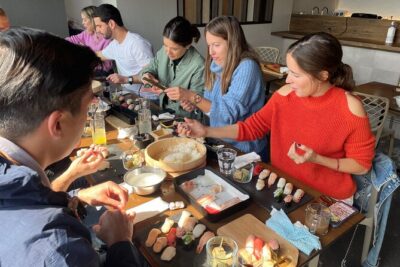
Sushi Making Tokyo Roll and Authentic Japanese Sushi Class
Read our review →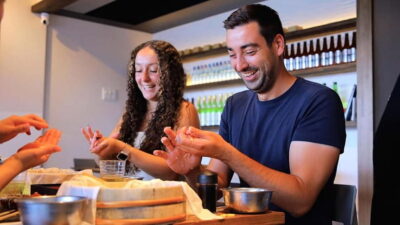
Roll and Authentic Sushi Making Class in Asakusa
Read our review →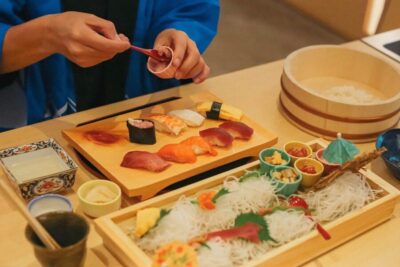
Sushi Making Class in a Happi Coat near a Famous Spot
Read our review →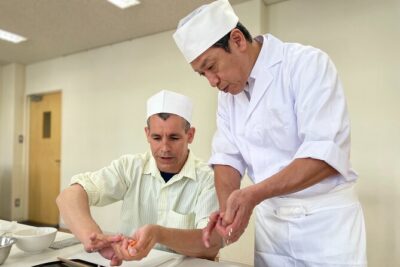
Tokyo Sushi Making Class in Tsukiji with Professional Chef
Read our review →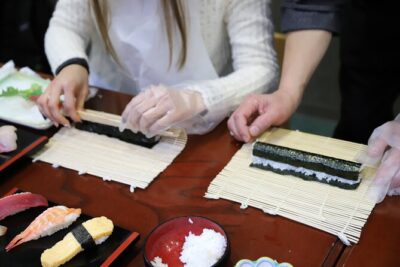
Tsukiji Fish Market Guided Tour and Sushi Making with Pro Chef
Read our review →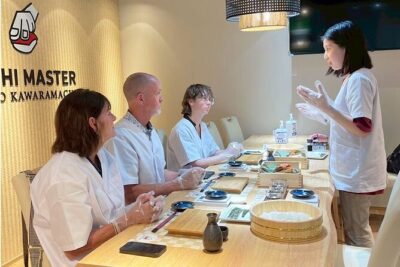
Sushi Making in Kyoto! Same-day bookings welcome!
Read our review →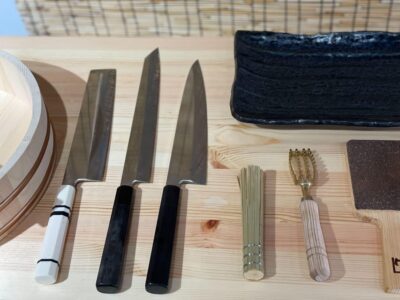
Tsukiji Fish Market Sushi Making Class with Pro Chef
Read our review →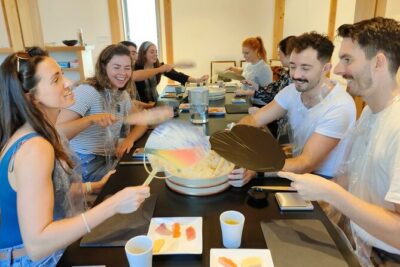
The Original Small-Group Sushi Making Class in Kyoto
Read our review →Browse the lists this tour appears in