
Reviewed · WALKING TOURS
Tokyo: Shibuya Crossing & Hidden Streets Walking Tour
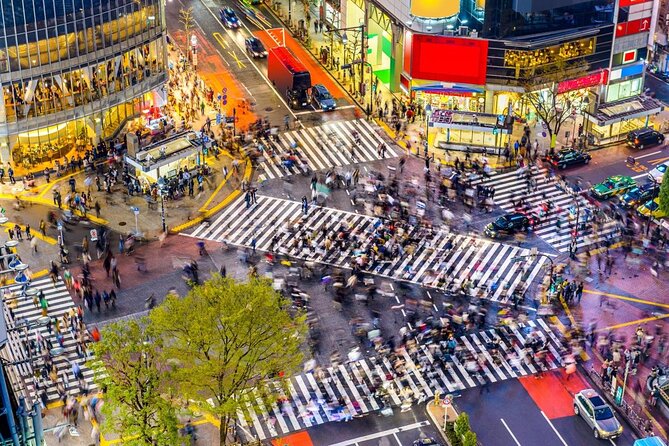
Shibuya can feel like Tokyo turned up too loud: giant screens, packed sidewalks, glowing signs, and the famous crossing sweeping people across the street in every direction. This walk gives that spectacle some context, starting near Shibuya Station and moving from old alleyways to new public spaces before finishing at Hachiko.
I like the sharp mix of places. Nonbei Yokocho gives you a glimpse of older Shibuya, while Miyashita Park and Center Gai show how young and polished the district has become. Guides such as Loc, Kumi, Rio, Grey, and Daichi are praised for clear explanations, good local tips, and help with photos.
The main drawback is the pace. Two hours is enough for an introduction, not a full study of Shibuya, and some stops are brief. The meeting point inside Mark City can also be tricky to find, so arrive early rather than trying to locate it at the last minute.
Why this short Shibuya walk works
- The route joins old and new Tokyo: Move from Nonbei Yokocho’s tiny lanes to Miyashita Park’s modern urban design.
- The Myth of Tomorrow adds substance: Taro Okamoto’s powerful mural gives the tour a serious historical and artistic pause.
- Shibuya Crossing is easier with a guide: You get help finding the right viewing and photo spots instead of simply being swept along.
- The guides add practical value: Loc, Kumi, Rio, Grey, Daichi, Zach, and others are praised for history, culture, food, shopping, and photo advice.
- The $22 price suits a first visit: For two hours and a live English guide, this is a useful orientation rather than an expensive full-day commitment.
- You finish in a useful location: Hachiko Statue is close to the station, shops, restaurants, and the rest of central Shibuya.
Meeting your guide inside Mark City
The tour begins at SABON Shibuya Mark City, inside the Mark City building on the third floor. This sounds simple, but the instructions warn that the spot can be hard to find if you have just arrived in Tokyo.
Take that warning seriously. Mark City is part of the large Shibuya Station complex, and station exits, department stores, walkways, and building levels can blur together when you are new to the area. Allow extra time to reach the third floor, and look for a guide holding a sign. The listed coordinates are 35.6586643, 139.6999525.
Do not plan to arrive exactly at the start time. A guide may be able to help if you are delayed, but the official advice is clear: do not be late. You will get more from the walk if you begin calmly, rather than arriving breathless after a maze through the station.
The live tour is in English. The guide fee is included, and the experience lasts two hours. The tour can be booked with pay later, and cancellation is free up to 24 hours before the start time for a full refund.
Other walking tours in Tokyo people book:
- Tokyo Tsukiji Fish Market Food and Culture Walking Tour
★ 5.0 · 3,184 reviews - Tokyo: Imperial Palace and Shogun Historical Walking Tour
★ 5.0 · 2,251 reviews - Tokyo: Shinjuku Local Bar and Izakaya Guided Walking Tour
★ 4.9 · 1,794 reviews
Nonbei Yokocho, a small taste of old Shibuya
The first listed stop is Shibuya Nonbei Yokocho, also called Drunkard’s Alley. Its narrow lanes and small eating and drinking establishments offer a striking change from the huge roads and bright commercial towers nearby.
This is one of the most useful stops for understanding that Shibuya is not just a shopping district. The alley has a compact, local feel, and a guide can explain how these older lanes fit into the area’s past and present. You are not simply looking at a pretty side street. You are seeing a smaller-scale form of Tokyo that can disappear quickly as neighborhoods change.
The stop is scheduled for about 10 minutes, so expect an introduction rather than time for a meal. That short timing is sensible for a walking tour, but it also means you should not expect to explore every lane or sit down for drinks. If Nonbei Yokocho catches your interest, ask your guide for advice about returning later.
This is also where the tour begins to earn its title. You are shown a part of Shibuya that is easy to miss when your attention is fixed on the crossing and department stores.
The Myth of Tomorrow, a serious pause near the station
The next stop is The Myth of Tomorrow, a large mural by Taro Okamoto. It addresses the impact of nuclear weapons while carrying a message of hope. The subject gives the tour a needed change of mood after the lively station area.
The mural is especially valuable because it adds modern Japanese art and postwar reflection to a route otherwise centered on shopping, nightlife, and urban energy. A guide can help you read the imagery and understand why the work matters, rather than treating it as a quick photo background.
The visit is listed at about 10 minutes, with time for a photo and guided explanation. That is enough to appreciate the work and hear its central message, though art lovers may want longer. I would pay attention here even if you booked the tour mainly for Shibuya Crossing. This stop gives the neighborhood more depth and keeps the walk from becoming a string of famous photo points.
The order may feel slightly different from the way the highlights are described, but the route brings you from old Shibuya to a major public artwork and then toward the district’s best-known scene.
Shibuya Crossing, Tokyo’s great people-watching stage
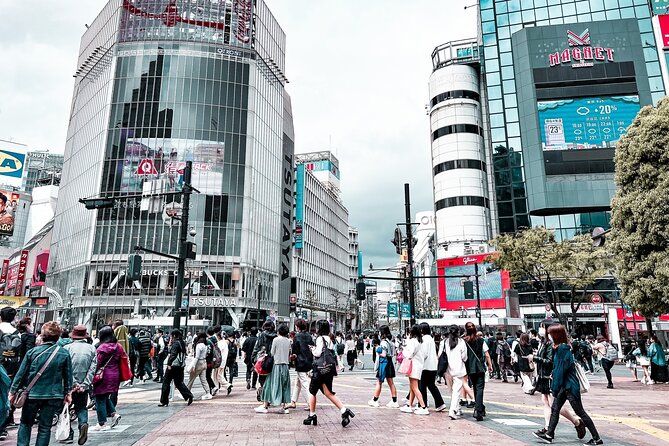
At Shibuya Crossing, the city puts on its most famous show. When the signals change, pedestrians move across the broad intersection from several directions at once. It is organized, fast, and surprisingly easy to watch for several minutes.
The scheduled stop is about 10 minutes, including a photo stop and guide commentary. That is enough to see the crossing in action and learn how to approach it, but it is not a long viewing session. If you want photographs, have your phone ready before the signal changes.
Solo visitors benefit from the guide’s help here. Mira, traveling alone, appreciated getting good photos at the crossing, and other participants valued guidance on how to experience it without feeling lost. A guide can also help you avoid spending your entire Shibuya visit searching for a useful viewpoint.
The crossing itself is free and easy to visit independently, so this is not the part that alone justifies the tour price. The value comes from placing it in a route with quieter streets, cultural context, and practical advice. If you already know Shibuya well, the crossing may feel familiar. If this is your first Tokyo visit, it is an efficient introduction to the district’s scale and energy.
Other guided walks in Tokyo:
- Tokyo: Tsukiji Fish Market Food and Walking tour
★ 5.0 · 1,724 reviews - Tokyo: Asakusa Walking Tour with Sensoji Temple Visit
★ 4.8 · 1,583 reviews - Tokyo: Tsukiji Fish Market Guided Walking Tour
★ 4.9 · 1,397 reviews - Tokyo Castle & Imperial PalaceーShogun Walking Tour
★ 4.7 · 1,068 reviews
Miyashita Park, a new kind of city space
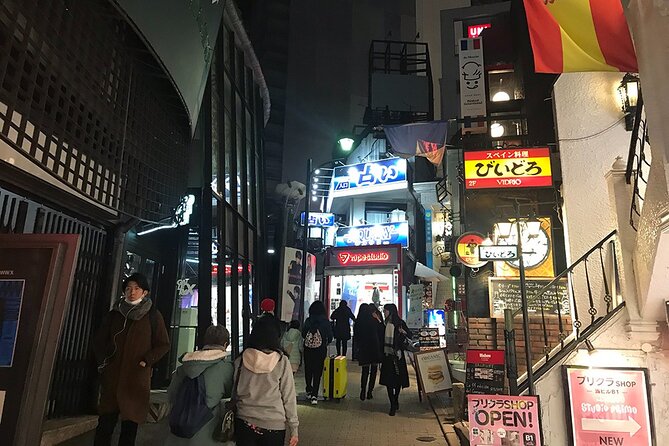
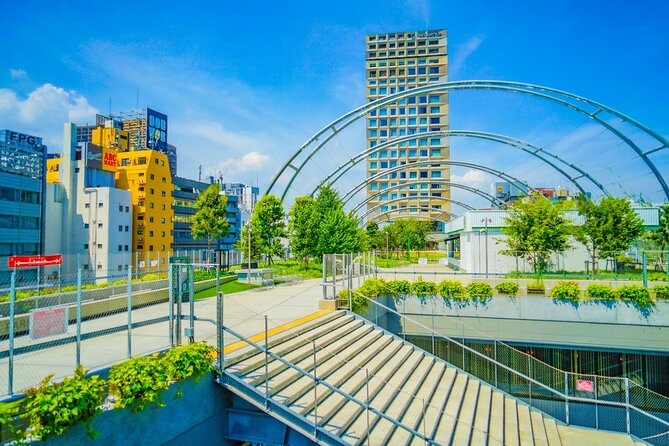
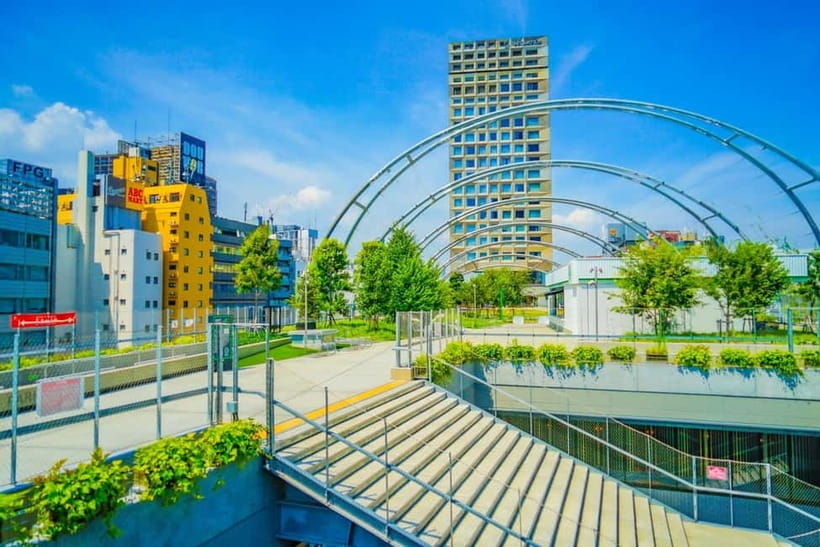
Miyashita Park receives the longest stop, about 20 minutes. This multi-level urban park offers a calmer break from the roads and crowds, while still keeping you close to Shibuya’s shops and nightlife.
The park is a useful example of how Tokyo makes room for public space in a dense city. Its design feels modern and polished, and it gives the group a chance to pause while the guide explains how the area has changed. That break matters on a two-hour walk. Without it, the route could become a tiring march through traffic and signs.
You might enjoy this stop most if you like architecture, city planning, or contemporary Tokyo. It is not a traditional garden, and you should not expect a quiet rural escape. The appeal is the contrast: a raised urban space surrounded by one of the world’s most active city districts.
The longer pause also gives you time to ask questions. Several guides, including Loc, Rio, and Grey, are praised for adapting explanations to the group and answering questions about Japanese culture, food, and daily life. That sort of conversation can turn a standard sightseeing route into a useful orientation for the rest of your stay.
Center Gai, where Shibuya’s youth culture is on display
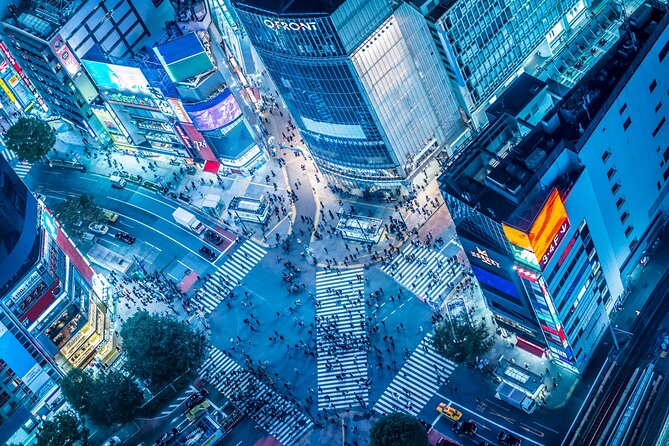
Center Gai is a 10-minute stop in the heart of Shibuya’s youthful shopping and entertainment zone. This is the side of the district many people expect to see: narrow streets, fashion, signs, restaurants, and a constant flow of people.
The point is not to inspect one monument. It is to understand the social feel of the area. Your guide can explain what makes Center Gai different from the quieter lanes and the more polished public spaces you have already visited.
Because the stop is short, treat it as an introduction. You will not have time to browse every shop or decide where to eat. The practical benefit is that you get your bearings. After the walk, you can return with a better sense of where to look for food, drinks, or shopping.
This is also a good place to ask for specific recommendations. Grey is praised for offering vegan food and shopping suggestions, while other guides have helped with restaurant choices and places to visit later. The quality of those tips will depend on your guide, so bring questions rather than waiting for a generic speech.
Maruyama-cho, from historic lanes to nightlife
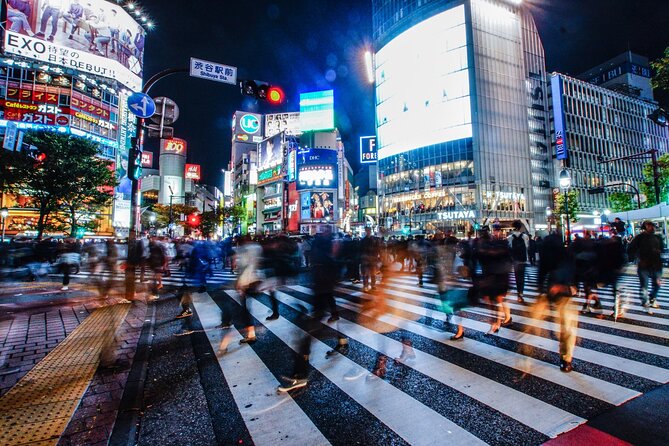
The route then turns toward Maruyama-cho, an area known for older streets and modern nightlife. The contrast is typical of Shibuya: small roads and traces of the past sit close to entertainment venues and newer development.
The stop lasts about 10 minutes. You will get a guided look at the area and its character, but not an extended evening out. If you are curious about Shibuya after dark, this section can help you decide where to return later.
Maruyama-cho also keeps the tour from being too centered on the station. The famous crossing is only one piece of the district. Walking through this area shows how Shibuya changes from major pedestrian corridors to more intimate streets within a few minutes.
The route does involve walking through busy areas and pausing while the guide speaks. Trisha liked the information but noted that sitting would be easier at times. That is a fair consideration for anyone who finds long periods of standing tiring. The tour is designed as an active walk, not a seated lecture.
Hachiko Statue, a fitting finish
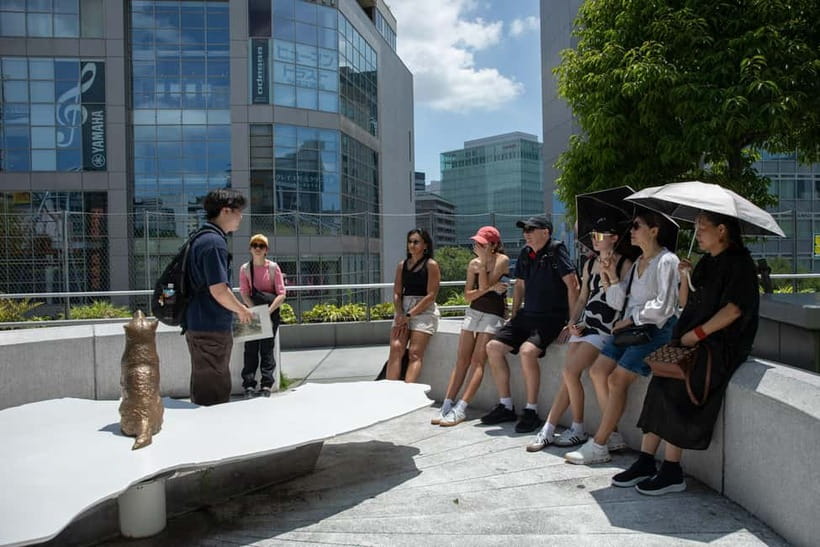
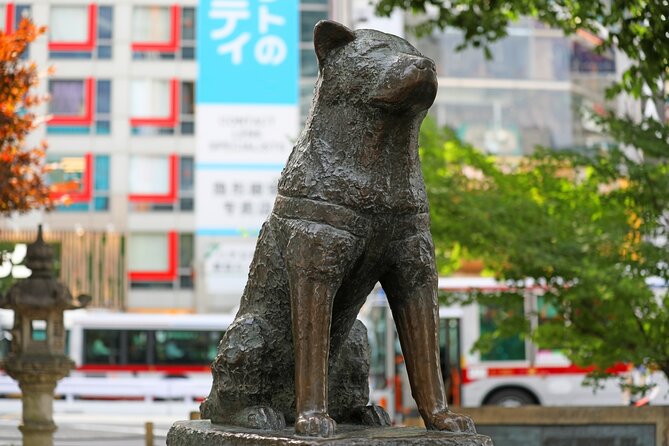
The tour ends at the Hachiko Memorial Statue, one of Shibuya’s best-known meeting points. Hachiko is remembered as a symbol of loyalty, and the statue has become a familiar landmark in the center of the district.
Ending here makes practical sense. You finish near Shibuya Station, so you can continue shopping, find a meal, meet friends, or use the station for your next stop. It is also an easy place to return to after the tour if you want another look at the surrounding streets.
The statue is small compared with the surrounding station and commercial buildings. Its importance comes from the story and its role as a meeting place, not from its size. A guide can give you the cultural context before you continue on your own.
For a first-time visit, the ending feels tidy. You have seen the famous landmark, but you have also visited places that are less obvious. That balance is the strongest feature of the route.
What the guides add to the experience
The tour has several named guides, including Loc, Kumi, Rio and Ryo, Grey, Daichi, Zach, and Annette. Names and spellings vary in the available information, but the repeated strengths are clear: friendly communication, strong English, historical context, flexibility, and practical local suggestions.
Loc is especially praised for explaining the meaning behind each stop, taking photos, and answering questions about Japanese culture. Kumi receives warm praise for making the walk enjoyable, while Rio and Ryo are noted for clear English, humor, and an easy manner. Daichi is described as flexible about pace and questions, which can matter if your group includes children or teenagers.
The best guide-led walks leave room for conversation. You can ask about vegan food, shopping areas, nightlife, restaurants, or how to navigate Shibuya after the tour. Families have also found that the content can be adjusted for teenagers, while solo visitors may appreciate help with photos.
Still, guide experiences can vary. A two-hour walk cannot cover every part of the neighborhood, and the amount of detail you receive may depend on the guide and the group. Go in ready to ask questions. You will get more value that way.
Is $22 a fair price for two hours?
At $22 per person, this is a reasonable price for a short guided introduction to one of Tokyo’s most confusing and rewarding districts. You could visit Shibuya Crossing, Hachiko, Center Gai, and Miyashita Park without paying for a guide, but you would need to build your own route and find your own context.
The price makes the most sense for a first visit, a short stay, or a morning or evening when you want structure without giving up a full day. It is also useful for solo visitors who want someone to take photos and explain what they are seeing.
The value is weaker if you already know Shibuya well or mainly want free time for shopping. The itinerary moves through several areas, and the stops are brief. Think of the tour as a well-organized orientation, not a deep look at every attraction.
The rating is 4.8 from 128 ratings, which supports the idea that the guide quality is a major part of the experience. Still, judge the tour by your needs: it is best for context, direction, and an efficient first look.
Who should book this Shibuya walk?
I would choose this tour if you are visiting Tokyo for the first time and want to understand Shibuya before exploring it on your own. It suits solo visitors, couples, families with older children, and anyone who prefers a guide to explain the cultural meaning behind busy streets.
It is also a good fit if you have only a few hours. The route covers old lanes, public art, the crossing, a city park, youth culture, nightlife streets, and Hachiko without taking the whole day.
You might skip it if your priority is shopping time, nightlife, or a long meal. You might also prefer independent sightseeing if you are comfortable navigating huge stations and researching the neighborhood yourself.
For the rest of us, the route offers a useful first map of Shibuya. It shows you where the famous sights are, points out the less obvious streets, and gives you practical ideas for returning later.
FAQ
How long does the Shibuya walking tour last?
The tour lasts two hours.
What language is the tour conducted in?
The live tour guide speaks English.
Where does the tour start?
It starts at SABON Shibuya Mark City, inside Mark City on the third floor. The guide will be holding a sign.
Where does the tour finish?
The tour finishes at the Hachiko Memorial Statue.
What places are included on the route?
The route includes Shibuya Nonbei Yokocho, The Myth of Tomorrow mural, Shibuya Crossing, Miyashita Park, Center Gai, Maruyama-cho, and Hachiko Statue.
Is the guide fee included?
Yes. The local guide fee is included in the price.
Can I cancel the booking?
You can cancel up to 24 hours in advance for a full refund. You can also reserve now and pay later.
Just added in Tokyo
- The 10 Tastings of Tokyo With Locals: Private Street Food Tour★ 5.0 · 48 reviews
- Small Town in the Big City: Tasting Tokyo’s Kichijoji★ 5.0 · 195 reviews
- Small Town in the Big City: Tasting Tokyo’s Kichijoji★ 5.0 · 16 reviews
- EXCLUSIVE Tokyo Secret: Kichijoji Small-Group Food & Bar Hopping★ 5.0 · 29 reviews
- Explore Kichijoji: Walk Through One of Tokyo’s Beloved Districts★ 5.0 · 21 reviews
- :Tokyo,Shibuya/ Pro Photography in Kimono / English-Friendly★ 5.0 · 26 reviews
- 【R34】Tokyo:Private Daikoku tour in Modified R34★ 4.9 · 92 reviews
- Tokyo:Calligraphy &Make your original folding fan in Asakusa★ 5.0 · 62 reviews
Walking Tours, compared.

Kyoto Geisha Walking Tour: Gion District & Hidden Gems
Read our review →
Tokyo Tsukiji Fish Market Food and Culture Walking Tour
Read our review →
Imperial Palace and Shogun Historical Walking Tour
Read our review →
Gion Geisha District Walking Tour – Stories of Geisha
Read our review →
Shinjuku Local Bar and Izakaya Guided Walking Tour
Read our review →
Asakusa Walking Tour with Sensoji Temple Visit
Read our review →
Nishiki Market Brunch Walking Tour (7 Tastings + Brunch)
Read our review →Browse the lists this tour appears in