
Reviewed · TSUKIJI & TOYOSU FISH MARKET TOURS
Tokyo Tsukiji Food & Culture Private Tour Licensed Guide
Tokyo’s food story comes alive best in its markets, and this private tour lets you link Toyosu’s modern fish-market world with old Tsukiji’s street food in one day. Your guide meets you at your hotel or a requested train station, then helps shape the route around what you actually want to eat, see, and understand.
I like two things right away: you get a private guide instead of a fixed group route, and you can choose from food-focused districts such as Kappabashi, Tsukishima, and Yanaka Ginza. The main caution is cost control. At $141 per person, food, transit, taxis, and entrance fees are extra, so your final bill depends on the route and what you buy.
Key points to know before booking
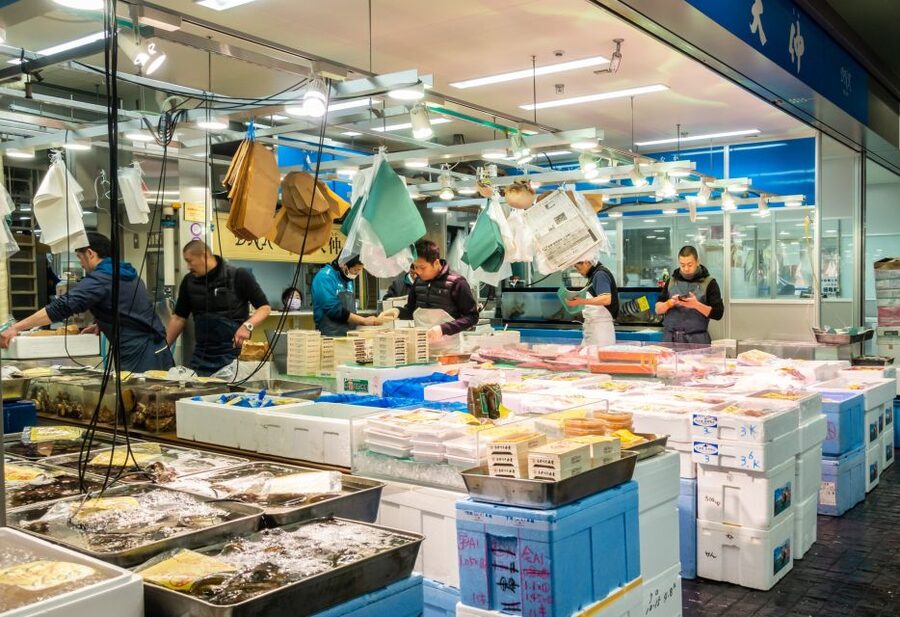
- Toyosu and Tsukiji can be combined: See Tokyo’s newer fish-market setting and the older outer market in one six-hour day.
- You choose the stops: Pick two or three sites on the four-hour option, or three to four on the six-hour option.
- Private guiding changes the pace: Guides can adjust plans for food interests, shopping, family needs, or cultural questions.
- Kappabashi is made for food lovers: Find kitchen tools, restaurant supplies, and remarkably convincing plastic food displays.
- Transit is part of the lesson: Guides can help you use Tokyo’s railway system, though you pay transport costs separately.
- Come ready to walk and snack: Food is not included, and the experience runs rain or shine.
Why this private Tokyo food tour works
Many food tours hand you a set route and a fixed menu. This one gives you a local guide and a menu of neighborhoods instead. That difference matters in Tokyo, where a single district can fill half a day and rail connections can eat up time if you do not know the city.
You tell the guide what interests you after booking. You might focus on fish markets and sushi, Japanese cooking tools, street snacks, old neighborhood shopping streets, or a mix of food and culture. The guide then builds a practical route, with the four-hour option covering two or three places and the six-hour option covering three or four.
The experience is private, so you are not trying to keep up with strangers or wait while a large group orders food. Families can ask for a slower pace. Couples can spend more time shopping. A solo visitor can ask detailed questions without worrying about holding anyone up.
The guides bring different strengths. Kenji Kasama has helped visitors manage Tokyo’s public transportation while building a route around specific requests. Fumiko has planned tightly timed days with carefully chosen food stops. Michio Akutsu has combined a broad introduction to Japanese history with a family-friendly day and a well-chosen sushi lunch. These examples show the value of the private format: the quality of the day depends partly on how clearly you explain what you want.
Other market mornings in Tokyo:
- Tokyo Tsukiji Fish Market Food and Culture Walking Tour
★ 5.0 · 3,184 reviews - Tokyo: Tsukiji Fish Market Food and Walking tour
★ 5.0 · 1,724 reviews - Tokyo: Tsukiji Fish Market Guided Walking Tour
★ 4.9 · 1,397 reviews
Starting at Toyosu Market
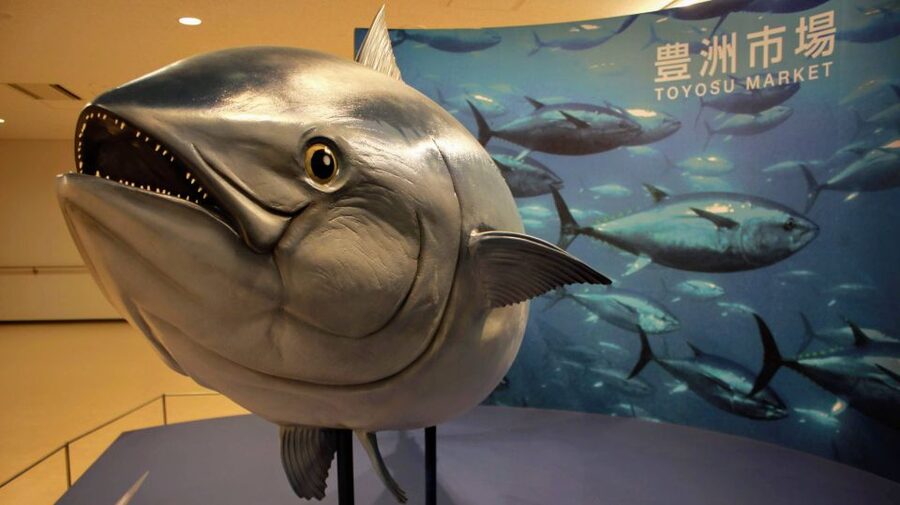
Toyosu is the modern fish-market choice. It gives you a look at the current center of Tokyo’s wholesale seafood trade, rather than the older market setting many people picture when they hear the word Tsukiji.
Your guide can help you understand how Toyosu fits into Tokyo’s food system and explain the market culture around it. That context is useful because a wholesale market is not simply a row of stalls built for casual browsing. You are seeing a working part of the city’s food supply, and the guide can help you make sense of what you see.
Toyosu works well at the beginning of a longer day because it gives you a broad introduction to Tokyo’s seafood culture. It also suits visitors who want to understand the difference between a working wholesale market and a shopping street aimed at the public.
The limitation is simple: Toyosu and Tsukiji are not next door to each other. Moving between them uses public transportation or a taxi, and that cost is not covered. If you try to add too many distant stops, the day can become more about changing trains than enjoying food.
Ask your guide to keep the route realistic. On a six-hour booking, three or four sites are possible, but each additional district takes time. If Toyosu is your top priority, give it enough room rather than treating it as a quick photo stop.
Tasting the outer Tsukiji market
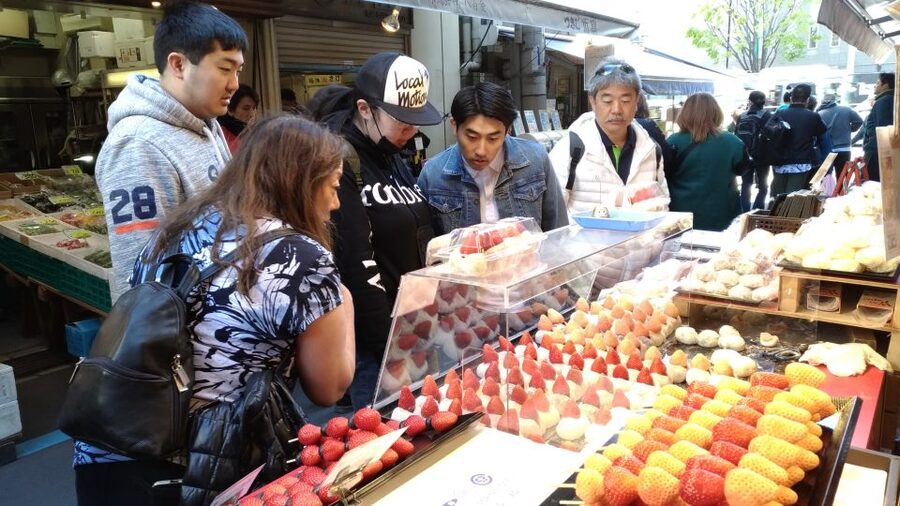
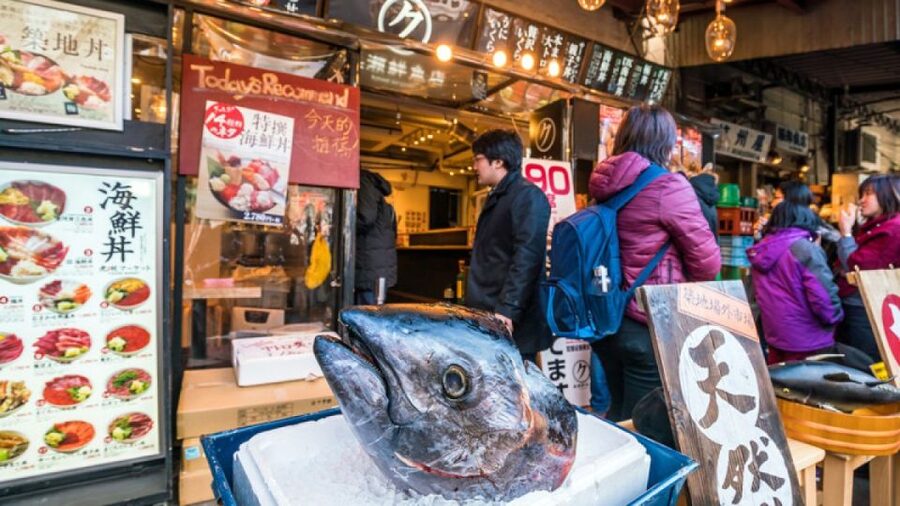
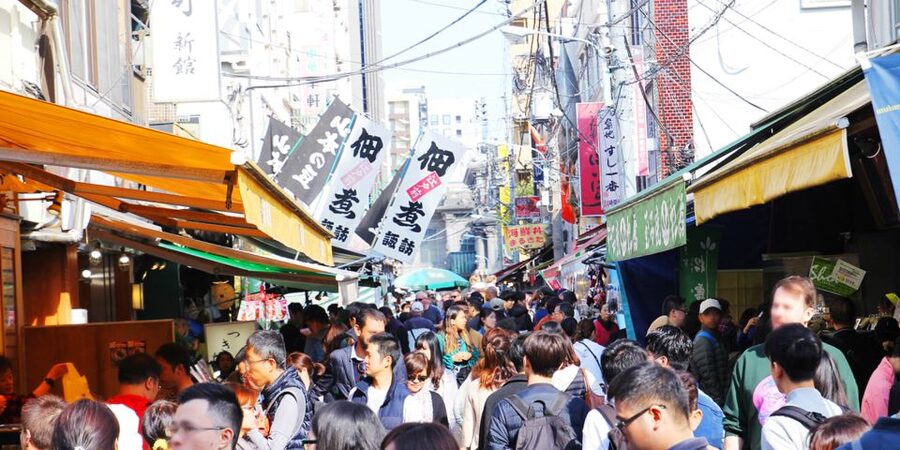
The outer Tsukiji fish market is likely to feel more immediately accessible to many visitors. It is a public-facing food district where you can browse shops, look for fresh foods, and stop for something to eat.
This is the place to ask your guide about what you are seeing and how to behave around food stalls and busy shopfronts. Ilze’s guide, Katsu, provided food tasting and explanations of Japanese cuisine and dining behavior, but you should not assume tastings are included in every booking. Food and drink are explicitly extra.
Tsukiji is a strong pick if you want your tour to feel edible from the first hour. You can ask the guide to help identify local specialties, explain unfamiliar ingredients, or assist with purchases. A private guide is especially useful if you do not speak Japanese and want help ordering or buying food correctly.
The market can be crowded, and the walking surface may be uncomfortable in wet weather. Naomi guided one visitor through the railway system on a cold, rainy day before continuing to market areas, which is a useful reminder to dress for conditions. This tour goes ahead rain or shine, so bring suitable shoes and a light waterproof layer.
Tsukiji also rewards restraint. You do not need to buy every tempting snack. Since food is not included, set a rough spending limit before you begin, then choose a few things that genuinely interest you.
Kappabashi, Tokyo’s kitchenware street
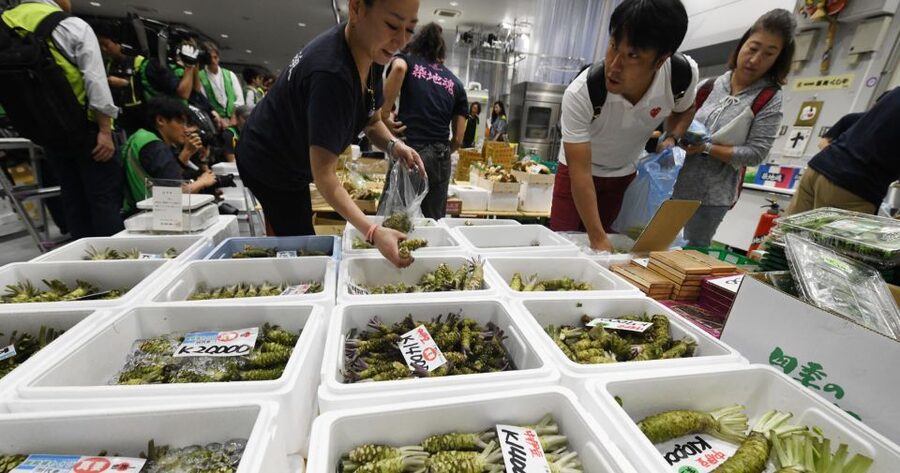
Kappabashi is the tour’s best stop for cooks, food photographers, restaurant fans, and anyone who likes practical souvenirs. It is known for kitchen supply shops, and the displays include the highly realistic plastic food samples used outside Japanese restaurants.
You may find knives, tableware, cooking tools, restaurant signs, serving pieces, and other food-related goods. The tour information does not promise that every shop or product will be available on a particular day, but the district is specifically included for its kitchen supplies and sample foods.
Your guide can explain what different items are used for and help you compare Japanese kitchen traditions with your own. If you plan to buy a knife or another specialist tool, ask about packing and transport before purchasing. The guide can also help you handle basic communication in shops, though the cost of all purchases is yours.
Kappabashi is less about eating your way through a market and more about seeing how food is presented and prepared. That makes it a good counterpoint to Toyosu or Tsukiji. Put it on the route if you want a souvenir with a daily use, not just a decorative token.
Other tours with a licensed guide in Tokyo:
- Tokyo 6hr Private Tour with Government-Licensed Guide
★ 5.0 · 3,902 reviews - Tokyo 4hr Private Tour with Government-Licensed Guide
★ 5.0 · 1,394 reviews - Kyoto 6hr Private Tour with Government-Licensed Guide
★ 5.0 · 1,369 reviews - Hiroshima / Miyajima Full-day Private Tour with Government Licensed Guide
★ 5.0 · 1,298 reviews
Tsukishima and the appeal of monja
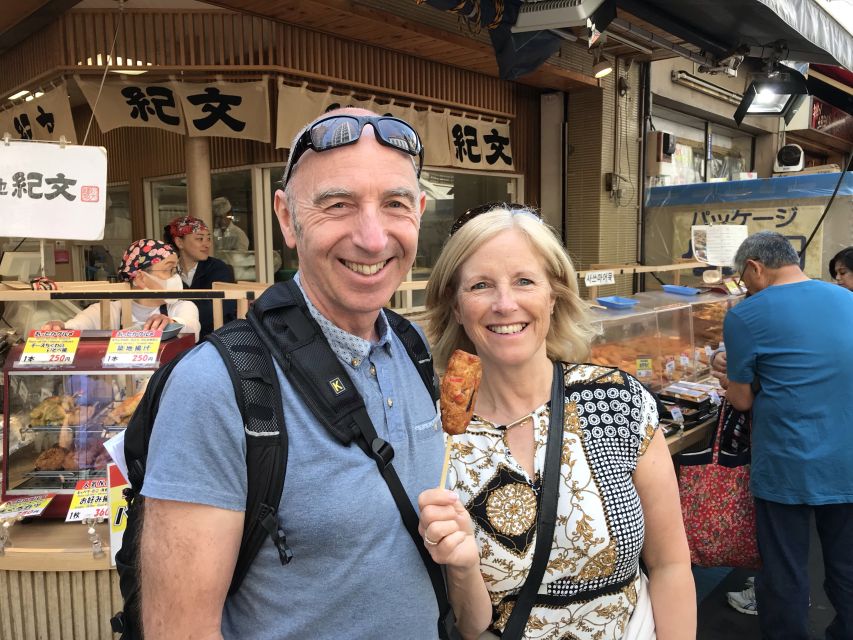
Tsukishima’s Monja Street offers a different food experience. The focus is monjayaki, a Tokyo-style dish associated with the neighborhood. The street is included among the sites you can request, making it a useful choice if you want a meal-centered stop rather than a general market walk.
Your guide can help explain the local food tradition and direct you toward an appropriate place. Because meals are not included, check the menu and prices before ordering. The guide’s role is to help you understand the setting and make the experience easier, not to cover the bill.
Tsukishima is best paired with one major market rather than several other distant stops. On a six-hour tour, it may fit comfortably with Toyosu or Tsukiji and one nearby cultural stop, depending on your starting point and how long you spend eating.
Yanaka Ginza and old-neighborhood Tokyo
Yanaka Ginza gives the day a change of pace. This shopping street is known for local snacks, including fried croquettes, and it offers a look at neighborhood Tokyo beyond the major fish markets.
Choose Yanaka Ginza if you want casual food, small shops, and a less market-centered view of daily life. It can also suit families because the food is easy to approach and the route offers more variety than a seafood-only day.
The tradeoff is distance. Yanaka is not a natural extension of every Toyosu or Tsukiji route, so you should make it a priority rather than adding it at the last minute. Tell the guide early if this street matters to you.
Adding Asakusa and Ameyoko
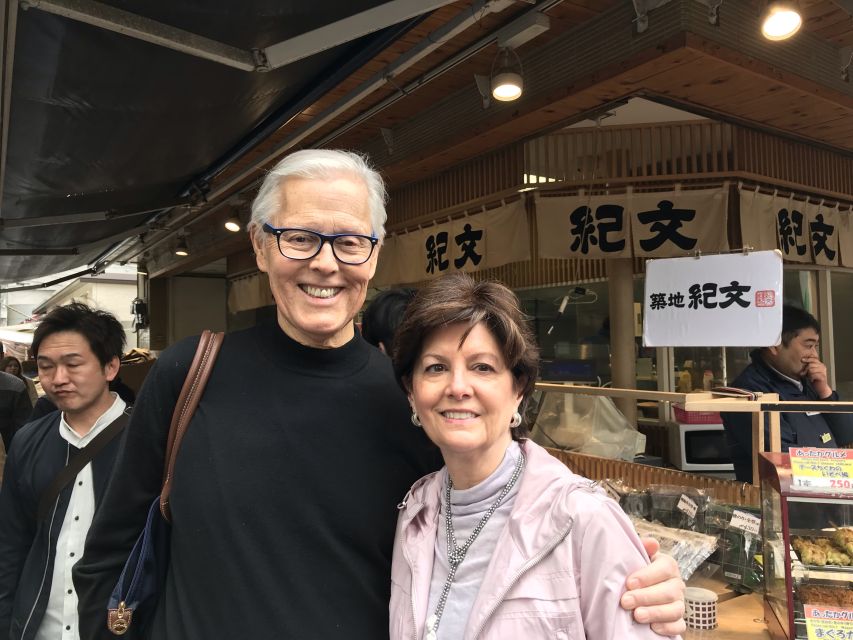
The tour description also points to Asakusa and Ueno’s Ameyoko as possible food and shopping areas. Asakusa is associated with traditional Tokyo street food and gives the day a strong cultural setting. Ameyoko, near Ueno, adds a busy shopping atmosphere and more chances to browse food stalls and everyday goods.
These areas can help you build a broader day, especially if your interests go beyond seafood. You might choose Asakusa with Kappabashi for a traditional food and kitchenware theme, or combine Ameyoko with Yanaka Ginza for a day focused on neighborhood shopping.
Do not try to force every district into six hours. Tokyo’s rail system is efficient, but transfers, walking, meal stops, and shopping all take time. A short list of priorities usually produces a better day than an ambitious checklist.
What the guide adds beyond directions
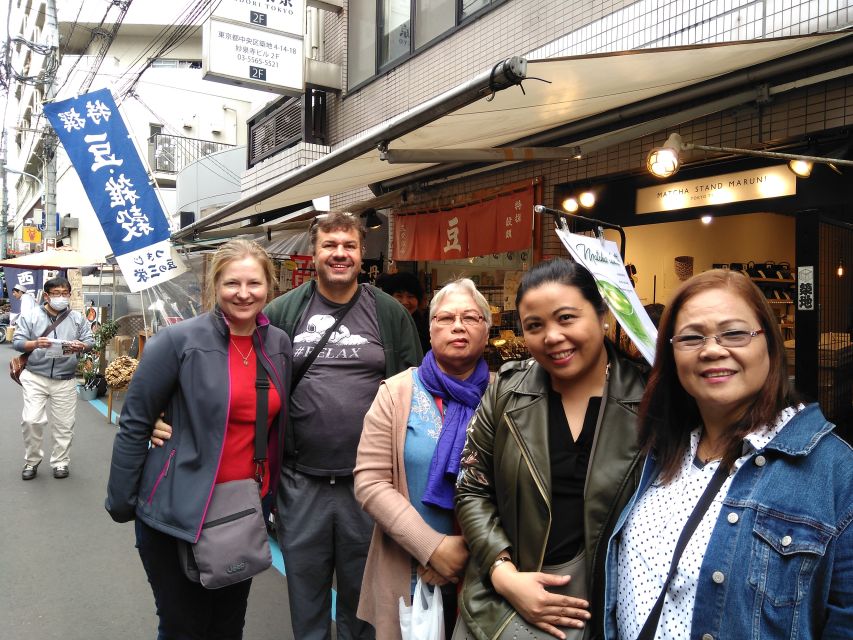
A licensed guide is useful here for more than pointing out market entrances. Tokyo food customs can be easy to miss when you are on your own. A guide can explain what you are buying, how a dish fits Japanese food culture, and how to behave in a market or small shop.
The guide can also make the railway system less intimidating. Naomi helped with buying a train card, while Kenji patiently led a family through public transportation. Transit costs remain your responsibility, but the help can save time and reduce stress.
The history side should not be overlooked. Michio gave one family a high-level introduction to Japan’s past before visiting selected areas, while another visitor found an art museum to be the day’s highlight after Naomi adjusted the plan. That flexibility is important. You are not limited to food if a cultural stop becomes more appealing during the day.
Several guides are praised for being patient, friendly, punctual, and attentive. Show has been described as careful with a family member in hot weather, and Yasuho Suzuki combined practical organization with a relaxed, safe approach. These details matter because six hours together is a long time. You want someone who listens, not just someone who recites facts.
Price, timing, and the real value
The listed price is $141 per person. That is a serious price for a walking and public-transport day, but the value improves if you are traveling as a small private group and want personal planning rather than a generic route.
Remember that the price does not include food, drinks, entrance fees, or transportation. A market lunch, several tastings, rail fares, taxis, and shopping can add up. Ask yourself what you are paying for: mainly the guide’s time, language help, route planning, cultural explanation, and the ability to change plans.
The six-hour option offers the better value if you have several priorities. It gives you room for three or four sites and leaves more time for food and questions. The four-hour version makes sense if you want a focused morning or afternoon, perhaps Toyosu and Tsukiji, or Kappabashi with Asakusa.
The tour is private and wheelchair accessible, but the exact ease of each route can depend on the selected markets, shops, stations, and public transportation. Tell the local partner about your needs before the day begins.
How to prepare for a smoother day
After booking, contact the guide or local partner with a short list of priorities. Write down your top two sites, foods you want to try, foods you avoid, and whether you care more about shopping, history, or eating.
Wear comfortable shoes. The day involves walking, market browsing, and public transportation. Bring a method of payment for food and purchases, and budget separately for rail fares or taxis.
Allow for weather. The tour operates in rain or shine, and cold or wet conditions can affect your enjoyment of an outdoor market. A small umbrella or waterproof layer is sensible, especially outside the warmer months.
Do not wait until the morning of the tour to decide what you want. The experience is not confirmed until a guide accepts it, and the local team may contact you to confirm arrangements. Most guides make contact within seven days, but an available guide is not guaranteed until confirmation.
Who should book this Tokyo food tour?
I would choose this for a first visit when Tokyo feels too large to organize alone. It is also a strong fit for families, couples, solo visitors, and anyone who wants food explained rather than simply photographed.
Families may value the private pace and the ability to adjust the day. Food-focused visitors should consider Toyosu, Tsukiji, and Tsukishima. Cooks and design-minded shoppers should put Kappabashi near the top. Visitors who already know the major sights may prefer Yanaka Ginza, Ameyoko, or a custom mix.
I would be more cautious if you want an all-inclusive food tour with a fixed number of tastings. You pay for food separately, and the exact guide and route are not guaranteed until the booking is accepted. I would also avoid packing in every listed district. Tokyo rewards a slower plan.
Should you book it?
Book this tour if you want a private, flexible introduction to Tokyo’s food culture and appreciate having a local guide handle the route and language details. The strongest reason to choose it is customization, backed by guides who can adapt plans, assist with transit, and explain more than what you can see from a market sign.
Choose the six-hour option if Toyosu, Tsukiji, and at least one other district all matter to you. Choose four hours for a tighter focus. Bring extra money for meals and transit, send your priorities early, and let the guide build a sensible route instead of trying to conquer all of Tokyo before dinner.
FAQ
How long does the tour last?
You can select a four-hour or six-hour private tour. The six-hour option generally allows three to four sites, while the four-hour option allows two to three sites.
What locations can I request?
Possible locations include Toyosu Market, the outer Tsukiji fish market, Kappabashi Street, Tsukishima’s Monja Street, and Yanaka Ginza. Asakusa and Ueno’s Ameyoko are also described as possible areas for food and shopping.
Is the tour private?
Yes. The experience is arranged as a private group tour with a local licensed guide.
What languages are available?
Live guiding is available in English and Japanese.
Does the price include food and drinks?
No. Food and drinks are not included, so you pay for anything you choose to eat or buy during the day.
Are transportation costs included?
No. Public transportation or private taxi costs during the tour are paid separately.
Where does the guide meet me?
The guide can meet you in your hotel lobby or at a train station you request within the 23 wards of Tokyo. The guide is scheduled to arrive 10 minutes before pickup, and you set off on foot from there.
Can I cancel the tour?
You can cancel up to 24 hours before the start time for a full refund. The booking is not confirmed until a guide accepts it, and the local partner contacts you to confirm the arrangements.
Just added in Tokyo
- The 10 Tastings of Tokyo With Locals: Private Street Food Tour★ 5.0 · 48 reviews
- Small Town in the Big City: Tasting Tokyo’s Kichijoji★ 5.0 · 195 reviews
- Small Town in the Big City: Tasting Tokyo’s Kichijoji★ 5.0 · 16 reviews
- EXCLUSIVE Tokyo Secret: Kichijoji Small-Group Food & Bar Hopping★ 5.0 · 29 reviews
- Explore Kichijoji: Walk Through One of Tokyo’s Beloved Districts★ 5.0 · 21 reviews
- :Tokyo,Shibuya/ Pro Photography in Kimono / English-Friendly★ 5.0 · 26 reviews
- 【R34】Tokyo:Private Daikoku tour in Modified R34★ 4.9 · 92 reviews
- Tokyo:Calligraphy &Make your original folding fan in Asakusa★ 5.0 · 62 reviews
Tsukiji & Toyosu Fish Market Tours, compared.
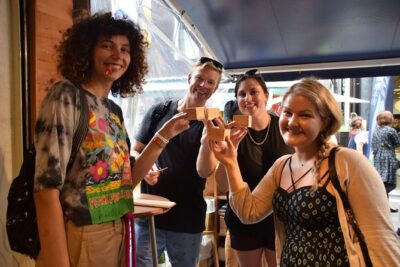
Tokyo Tsukiji Fish Market Food and Culture Walking Tour
Read our review →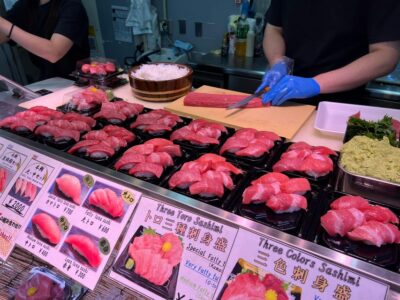
Tokyo Sushi Making Class in Tsukiji with Professional Chef
Read our review →
Tsukiji Fish Market Guided Tour and Sushi Making with Pro Chef
Read our review →
Tsukiji Fish Market Small-Group Food Walking Tour
Read our review →
Tsukiji Fish Market Sushi Making Class with Pro Chef
Read our review →
Tokyo Food Tour Taste Fresh Delights at Tsukiji Market
Read our review →
Tokyo Tsukiji Fish Market Tour and Sushi Making Lesson
Read our review →Browse the lists this tour appears in