
Reviewed · WALKING TOURS
Kamakura Walking Tour – The City of Shogun
Kamakura packs medieval Japan, temple gardens, a giant bronze Buddha, and the sea into one easy half-day. This tour gives you the useful introduction first, then leaves you near Hase Station with time to keep exploring. I especially like the clear route from Tsurugaoka Hachimangu to Hasedera and the chance to ask a guide about the difference between Shinto shrines and Buddhist temples.
I also like the small maximum group of 10 and the practical advice guides such as Maki, Miyu, and Midori have offered, including photo spots and ideas for the afternoon. The main consideration is cost: the $35 fee covers the guide, but transport and admission add about 1,200 yen, and food is not listed as included.
Key points to know before you book
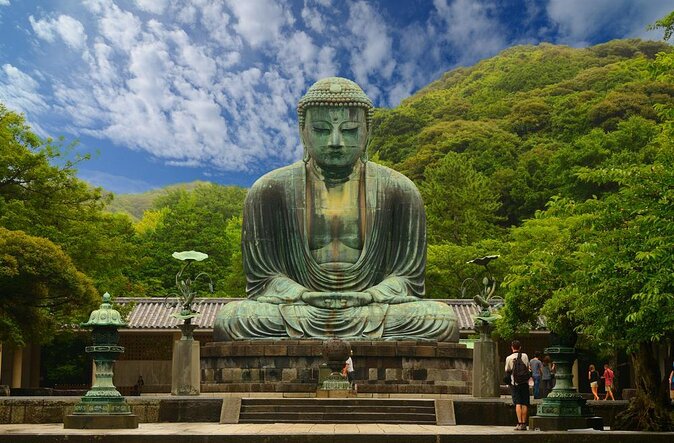
- Four major Kamakura stops: See Tsurugaoka Hachimangu, Komachi Street, the Great Buddha, and Hasedera in about three and a half hours.
- A useful culture lesson: Guides explain Shinto shrines, Buddhist temples, rituals, and how Japanese customs continue today.
- Small-group format: The group is capped at 10, which makes questions and personal help easier.
- Easy one-way route: Start near Kamakura Station and finish at Hase Station, a practical setup for continuing your day.
- Extra costs are clear: Transportation and admission are not included and total about 1,200 yen.
- Weather matters: The tour requires good weather, with a new date or full refund offered if poor conditions cause cancellation.
Why Kamakura works well with a guide
Kamakura is easy to reach and pleasant to walk, but its sights can blur together if you do not know what you are seeing. A shrine gate, a Buddhist hall, a stone lantern, and a ritual basin each carry different meaning. This tour gives you the basic framework, so the buildings feel less like a parade of pretty places and more like parts of a living culture.
The route also tells Kamakura’s story through its major sights. Tsurugaoka Hachimangu introduces the city’s samurai-era identity. Komachi Street shows the modern visitor side of town. The Great Buddha offers a single unforgettable work of art, while Hasedera brings together worship, gardens, and views toward the coast.
The timing is sensible for a first visit. You begin at 10:00 am at the Kamakura City Tourist Information Center, then finish around Hase Station after approximately three and a half hours. You are not locked into a return journey with the group, so the afternoon remains open for more temples, the beach area, shopping, or a meal.
The small-group limit is another real advantage. With no more than 10 people, you can ask about temple customs, local food, or the symbols you see along the way. Guides have included Maki, Miyu, and Midori. The feedback supplied for the tour repeatedly highlights their friendly manner, clear explanations, family-friendly approach, and willingness to suggest places to visit after the walk.
Other guided walks in Kamakura:
- Kamakura Historical Walking Tour with the Great Buddha
★ 5.0 · 129 reviews - Buddha, Bamboo & Zen – Bespoke Kamakura Private Walking Tours
★ 5.0 · 25 reviews - Kyoto Geisha Walking Tour: Gion District & Hidden Gems
★ 4.7 · 3,273 reviews
Tsurugaoka Hachimangu sets the historical stage
Your first stop is Tsurugaoka Hachimangu, Kamakura’s major Shinto shrine. It was founded in the 12th century by Minamoto no Yoritomo and dedicated to Hachiman, the Shinto god associated with the city’s samurai past.
Allow about 30 minutes here. That is enough for an introduction to the shrine’s purpose, its rituals, and its role in Kamakura. A guide adds value because Shinto customs are easy to misread when you are moving quickly. You can ask about the proper approach, the meaning of shrine features, and the difference between worship here and prayer at a Buddhist temple later in the route.
This stop is also a good place to settle into the walking pace. You are starting at a major site, not a minor side street, so the guide can give you the broad story before the tour narrows its focus. If you like history, this is probably the most important early explanation of why Kamakura matters.
Thirty minutes is not enough for every corner of the shrine grounds. You should see this tour as an introduction rather than a complete visit. If the shrine captures your interest, return later in the day when you can set your own pace.
Komachi Street adds a taste of present-day Kamakura
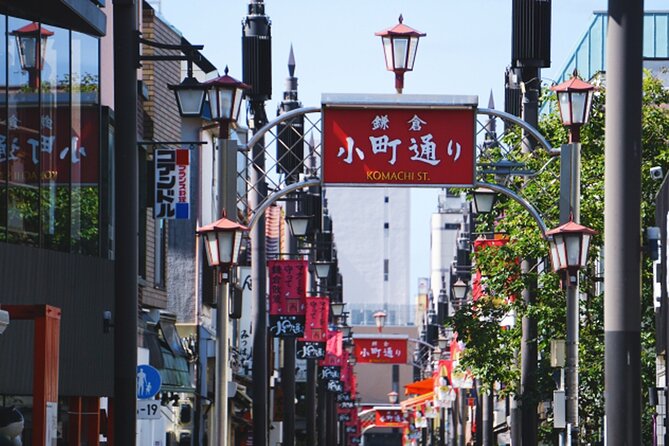
From the shrine area, the route includes about 20 minutes on Komachi Street. Named after the poet Ono no Komachi, this pedestrian shopping street gives you a change of mood after the formal shrine grounds.
You can expect shops, food options, and the everyday tourist energy of central Kamakura. The tour description points to local cuisine, traditional dishes, and less obvious places to eat. Still, no meal or tasting is listed as part of the price, so plan to pay separately if you stop for food.
I like this short section because it connects the old city with the one you see today. Kamakura is not only a collection of religious monuments. It is also a place where people shop, eat, meet friends, and move through the same streets used by sightseers.
The drawback is time. Twenty minutes gives you an orientation, not a serious shopping session. If you want souvenirs or a full lunch, save that for after the tour or ask your guide where to return.
The Great Buddha delivers the big visual moment
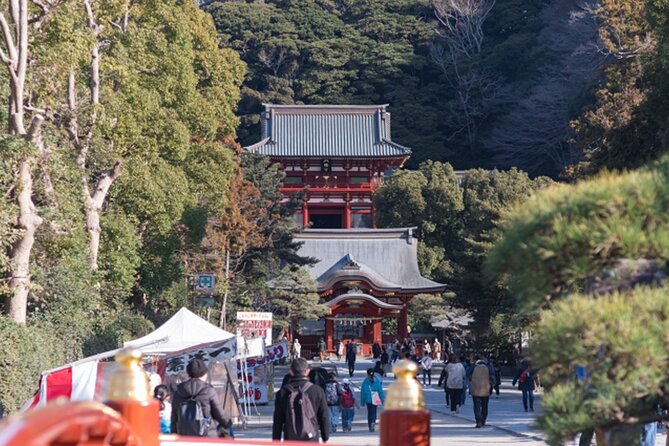
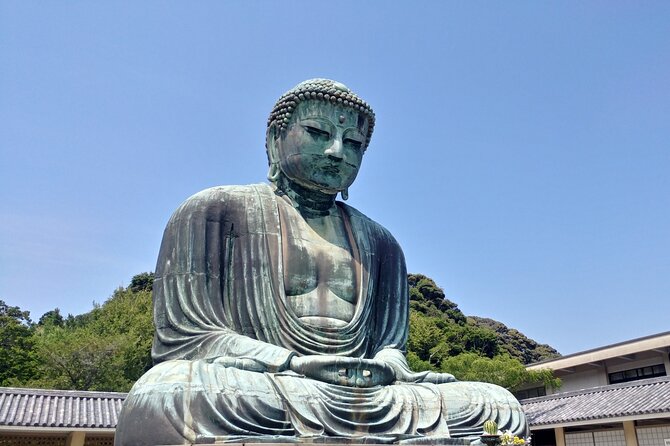
Kotoku-in, home of the Kamakura Great Buddha, receives about 30 minutes. The bronze statue is approximately 13.35 meters, or 44 feet, tall, and dates back to the 13th century.
This is the stop most people picture when they think of Kamakura. The scale is impressive, but a guide helps you look past size alone. You can ask about the Buddha’s religious role, the artistic details, and the place of this monument within Kamakura’s Buddhist tradition.
Admission is not included. The supplied tour information gives the combined cost of transport and admission as about 1,200 yen, so carry yen for these extras. The exact split is not provided, but you should budget for the additional amount rather than assuming the $35 price covers every entrance.
Thirty minutes is a brisk visit. It works well if you want the essential view and a clear explanation, but it may feel short if you want extended photography or a quiet period of reflection. The tour keeps moving because Hasedera is still ahead.
Same base, a different sort of day:
- Tokyo: Kamakura & Enoshima Day Trip including Temple Tickets
★ 4.5 · 1,375 reviews - From Tokyo: Kamakura & Enoshima 1-Day Bus Tour
★ 4.5 · 189 reviews - Kamakura Private Tour: Temples, Nature, and the Great Buddha
★ 5.0 · 121 reviews - Kamakura 4hr Private Trip with Government-Licensed Guide
★ 5.0 · 58 reviews
Hasedera closes the walk with gardens and views
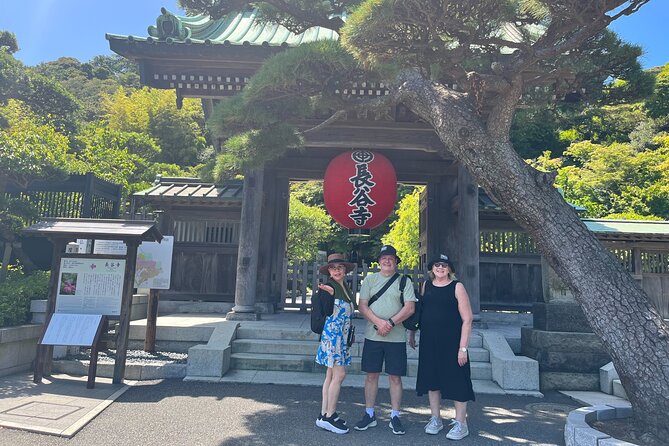
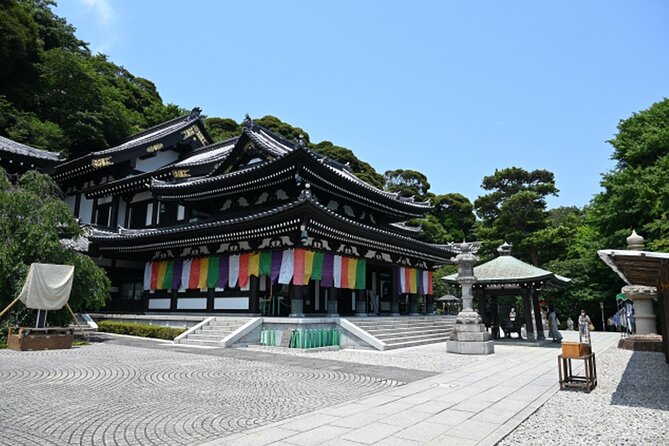
The final major stop is Hasedera, also called Hase Kannon Temple. The visit lasts about 40 minutes, making it the longest stop in the formal route.
Hasedera is known for its calm setting, gardens, and a towering wooden statue. The temple gives you a different experience from the Great Buddha. Instead of one enormous bronze figure dominating the visit, you get a broader combination of religious art, natural surroundings, and coastal views.
This is where the tour’s balance works best. You have seen a Shinto shrine, walked through a commercial street, visited a huge Buddhist statue, and now finish at a temple with a more spacious, reflective feel. Guides also point out viewing areas, and the supplied comments specifically praise help with taking photographs.
Admission is not included here either. Keep the extra 1,200 yen in mind as a total transport and admission estimate for the tour. Hasedera can be especially rewarding if you enjoy gardens and religious art, though 40 minutes still means you will see highlights rather than every feature.
The tour ends at Hase Station. That matters because you are not returned to the original meeting point. You finish in a useful part of Kamakura, with the option to continue on your own after saying goodbye to the guide.
What the guides add to the day
The strongest feature of this experience is not simply the list of sights. It is the interpretation between them. Maki is described as energetic, personal, and easy to understand. Miyu is praised for explaining Japanese culture and history in a way that makes the major sites easier to appreciate. Midori is noted for clear explanations, kind treatment of children, and good photo help.
Those details matter if you are traveling with family or if religious customs feel unfamiliar. You can ask a question at the moment you see something, rather than trying to remember it for later. You also get a local point of view on where to go after the tour.
The guide assignment is not specified in advance, so you should not book on the assumption that you will receive one particular person. The useful point is that the tour has received strong feedback across several guides, not just one.
A guide can also help you avoid wasting time. Kamakura’s main sights are spread across the city, and the tour includes transportation as part of the route. Since transportation is not included in the fee, the guide-led structure gives you direction while you handle the extra fare yourself.
Price, group size, and practical value
At $35 per person, this is a reasonable price for a three-and-a-half-hour guided introduction, especially if you want historical and cultural context rather than a simple photo walk. The value rests on the guide’s explanations and the efficient route, not on included admissions or meals.
You should add approximately 1,200 yen for transportation and admission. Food is also extra. That makes the full cost higher than the headline price, but it remains a modest way to organize the main Kamakura sights in one morning or early afternoon.
The group maximum of 10 is a good middle ground. You get more personal attention than on a large coach excursion, while the price stays below that of a private guide. If you need a fully flexible schedule, this is not the right format. The stops and timing are set, and the walk moves on after each allotted period.
Wear comfortable shoes. The experience is a walking tour with several religious sites and city connections, and the time is spread across different parts of Kamakura. The booking information says most people can participate and that service animals are allowed. It also says the meeting point is near public transportation.
Confirmation arrives at booking, and the mobile ticket makes access simple. The start time is 10:00 am at the Kamakura City Tourist Information Center, located at 1-chōme-1-1 Komachi. The end point is Hase Station at 2 Chome-14 Hase.
Who should choose this Kamakura walk
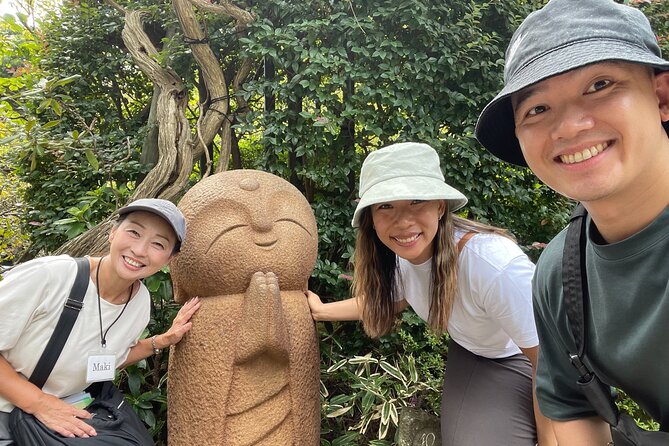
I would choose this tour if you are visiting Kamakura for the first time and want the main sights explained in one organized outing. It suits people who enjoy history, architecture, religious customs, photography, and local food suggestions but do not want to plan every connection themselves.
Families may also find it useful. The route includes memorable visual stops, and the guide style described in the feedback has worked well with children. The short explanations and variety of locations help prevent the day from becoming a long series of similar temple visits.
This is also a good fit if you have only part of a day in Kamakura. You get a clear introduction, then finish near Hase Station with time to continue independently. If you have a full day, you can use the tour as your morning structure and return to the places that deserve a slower look.
I would be more cautious if you already know Kamakura well or want long, quiet visits at each temple. Thirty minutes at the shrine and Great Buddha, plus 40 minutes at Hasedera, gives you highlights. It does not offer the freedom to linger whenever something catches your eye.
The tour requires good weather. If poor weather causes cancellation, you are offered another date or a full refund. You can cancel for a full refund up to 24 hours before the start time, but changes or cancellations inside that window are not accepted.
Should you book the Kamakura Walking Tour?
Book it if you want a well-organized first look at Kamakura, clear explanations of Shinto and Buddhism, and a small group that keeps the morning manageable. The route covers the city’s essential sights without taking your entire day, and the finish at Hase Station is convenient for continuing on your own.
Skip it if your priority is a slow, independent temple day or if you want meals and admissions bundled into one price. For most first-time visitors, though, the $35 fee plus about 1,200 yen in extra costs buys a useful introduction, good cultural context, and a practical route through the City of the Shogun.
FAQ
Where does the Kamakura walking tour start?
The tour starts at the Kamakura City Tourist Information Center, 1-chōme-1-1 Komachi, Kamakura, Kanagawa 248-0006, Japan.
What time does the tour begin?
The start time is 10:00 am.
Where does the tour end?
The tour ends at Hase Station, 2 Chome-14 Hase, Kamakura, Kanagawa 248-0016, Japan.
How long does the Kamakura walking tour last?
The tour lasts approximately 3 hours and 30 minutes.
What sights are included?
The route includes Tsurugaoka Hachimangu Shrine, Komachi Street, the Kamakura Great Buddha at Kotoku-in, and Hasedera Temple.
Are admission fees included?
No. Transportation and admission fees are not included. The total additional cost is listed as approximately 1,200 yen.
How many people can join the tour?
The tour has a maximum group size of 10 people.
Is the tour available with a mobile ticket?
Yes. The experience includes a mobile ticket.
Can I cancel for a full refund?
Yes. You can cancel at least 24 hours before the start time for a full refund. If poor weather causes the experience to be canceled, you are offered another date or a full refund.
Just added in Kamakura
- First time in Kamakura? Enjoy a Tour of All Must-sees!★ 5.0 · 15 reviews
- Your Own HANKO Name Seal Activity in Kamakura.★ 5.0 · 24 reviews
- When Emperors Reigned and Shoguns Ruled★ 5.0 · 43 reviews
- Buddha, Bamboo & Zen – Bespoke Kamakura Private Walking Tours★ 5.0 · 25 reviews
- Kamakura 4hr Private Trip with Government-Licensed Guide★ 5.0 · 58 reviews
- Kamakura Bamboo Forest and Great Buddha Private Tour★ 5.0 · 12 reviews
- Exciting Kamakura – One Day Tour from Tokyo★ 5.0 · 40 reviews
- Kamakura Tours Half Day or Full Day Tours with a local guide.★ 5.0 · 12 reviews
Walking Tours, compared.

Kyoto Geisha Walking Tour: Gion District & Hidden Gems
Read our review →
Tokyo Tsukiji Fish Market Food and Culture Walking Tour
Read our review →
Imperial Palace and Shogun Historical Walking Tour
Read our review →
Gion Geisha District Walking Tour – Stories of Geisha
Read our review →
Shinjuku Local Bar and Izakaya Guided Walking Tour
Read our review →
Asakusa Walking Tour with Sensoji Temple Visit
Read our review →
Nishiki Market Brunch Walking Tour (7 Tastings + Brunch)
Read our review →Browse the lists this tour appears in