
Reviewed · NARA & THE DEER PARK
One-Day Walking Tour of Amazing 8th Century Capital Nara
Nara’s appeal comes from the way its past sits out in the open: old merchant houses, sacred lanterns, roaming deer, and the enormous wooden Todai-ji Temple all fit into one long day. This private walking tour gives you a guide to handle the route and explain how Japan’s eighth-century capital still shapes the city.
I like the small private format, since your group can ask questions without waiting for a busload of strangers. I also like the human touch: Satomi helped with an unplanned museum visit, and Tomoko adjusted the pace for a husband with a bad knee. The main catch is cost. At $137.17 per person, you still pay about ¥2,000 for public transport and ¥1,500 for the two main entrance fees.
Key points to know before booking
- Naramachi begins the day: See old latticed merchant houses in a district that grew from an eighth-century temple town.
- Todai-ji is the big finish: The UNESCO-listed temple contains a huge wooden hall and an enormous Buddha image.
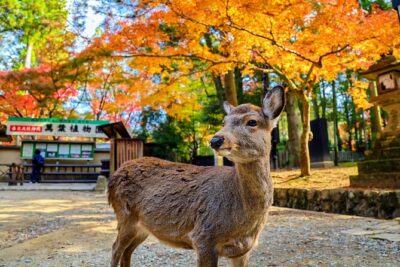
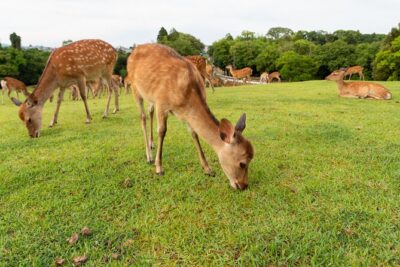
- Deer are part of the setting: Nara Park’s deer roam freely around the historic sites.
- Your guide handles the route: You avoid the work of piecing together Nara’s major sights yourself.
- Private means personal, not fully custom: The guide can respond to your interests, but the planned route remains centered on three main stops.
- Budget for extras: Transport and admission are not included in the advertised price.
Why this private Nara day works well
Nara is close enough to visit from Kyoto, yet it feels different from Kyoto once you leave the station area. The city was Japan’s capital in the eighth century, and its temples and shrines reflect that early period of Japanese state and religious life.
The appeal of this tour is not simply seeing three famous places. It is having someone connect them. Naramachi shows the city as a place of trade and daily life. Kasuga Grand Shrine brings in the power of the Fujiwara clan and Shinto ritual. Todai-ji presents imperial ambition on a massive scale.
You spend about eight hours on the experience, starting at 8:30 a.m. The activity ends in a different location, so you should check the exact meeting and finish details before booking. Since this is a private activity, only your own group takes part. That makes it easier to stop for questions, change the pace, or make a reasonable detour.
The price is best judged against what you want from the day. A private guide costs more than joining a basic group excursion, but you get direct attention and help with navigation. The added charges are not trivial, so the total cost will be higher than $137.17 per person. Still, if you want context rather than a checklist of sights, the format can make sense.
Other walking tours in Kyoto people book:
- Kyoto Geisha Walking Tour: Gion District & Hidden Gems
★ 4.7 · 3,273 reviews - Kyoto: Gion Magical Night Walking Tour with Geisha Trivia
★ 4.9 · 2,393 reviews - Kyoto: Gion Geisha District Walking Tour – Stories of Geisha
★ 4.7 · 2,187 reviews
Naramachi: from temple town to merchant quarter
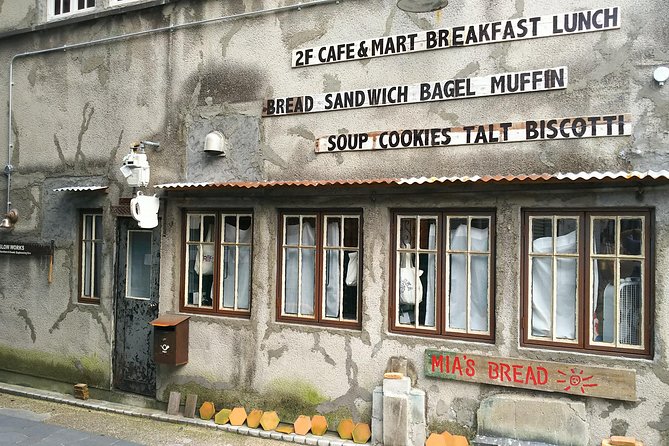
The tour opens in Naramachi, where the tone is quieter and more local than at Todai-ji. The area began as a temple town in the eighth century and later became a merchant district. Its traditional latticed houses, many more than 100 years old, give you a look at how commerce and home life once shared the same narrow streets.
This is a useful first stop because it gives you a scale for old Nara. You are not starting with the largest building in Japan. Instead, you begin with the smaller details of urban life: house fronts, wooden construction, and the shape of a district that changed as Nara changed.
You have about 90 minutes here, and there is no admission fee for the stop itself. That makes it a good place to ask your guide basic questions about Japanese architecture and social history before moving to the grand religious sites.
I would pay attention to the guide’s explanations rather than rushing through the streets. Without context, old houses can blur together. With a good guide, the latticed fronts and merchant layout become clues about the people who lived and worked here.
One limitation is that the supplied details do not identify specific houses or private interiors included in the visit. You should therefore think of Naramachi as a guided neighborhood walk, not a guaranteed series of indoor house tours.
Kasuga Grand Shrine and the Fujiwara legacy
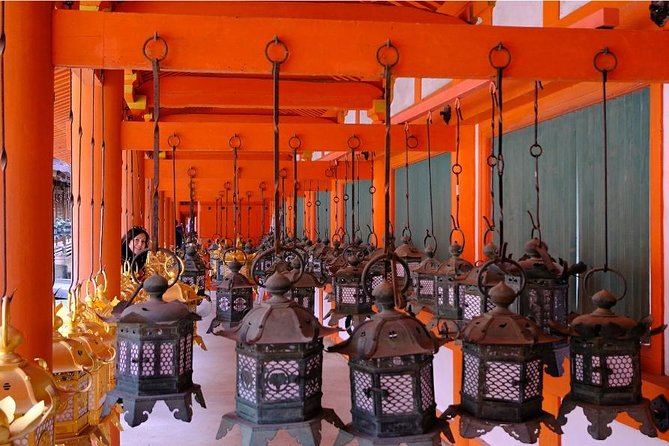
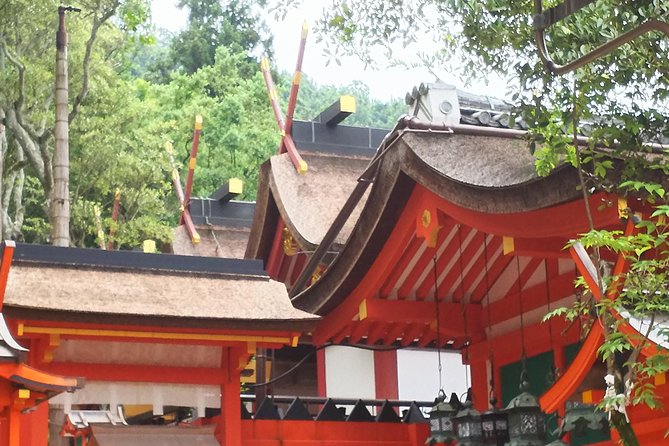
Next comes Kasuga Grand Shrine, founded in the eighth century by the Fujiwara clan. The Fujiwara were the most powerful aristocratic family in Japanese history, and the shrine remains linked to that family. Even its head priest is described as a descendant of the Fujiwara line.
That detail gives this stop a clear focus. You are not only looking at a shrine as a beautiful religious site. You are seeing a place tied to the family that helped shape Japan’s court politics during the capital’s early years.
The visit lasts about an hour. Admission is not included, so plan on part of the stated ¥1,500 entrance cost for Kasuga Taisha and Todai-ji. The tour description also places the shrine near Nara Park, where deer roam freely. Their presence is memorable, but the shrine deserves your full attention. The deer are part of the setting, not the whole reason to visit.
A guide adds real value here because shrine customs and symbols can be hard to read on your own. You can ask how the Fujiwara connection matters, how the shrine fits into Nara’s religious life, and what you are seeing beyond the surface details.
The route is a walking tour, and the full day is fairly long. If you have a knee problem or tire easily, say so early. Tomoko was able to adjust the pace for one guest with a bad knee, which suggests that the private format can help when your group needs a little more time.
Todai-ji: the day’s grandest sight
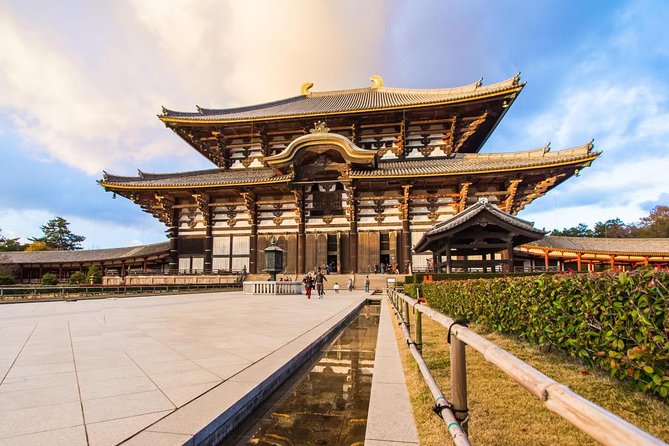
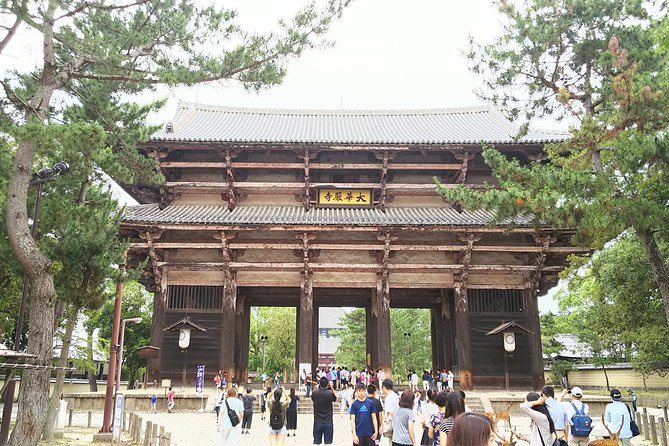
Todai-ji is the main event for many people. Founded by Emperor Shomu more than 1,300 years ago, the temple is a UNESCO World Cultural Heritage site. It sits beneath Mount Wakakusa and occupies a large precinct with several historic buildings.
The most powerful moment is the scale. Todai-ji is famous for its huge wooden structure and enormous Buddha image. You do not need a long religious lecture to understand the impact. The building itself communicates the ambition of the early Japanese state, while the Buddha reflects the importance of Buddhism to Emperor Shomu’s rule.
You have about an hour at Todai-ji, with admission extra. That is enough for a focused visit, but it is not an unlimited exploration of every building in the temple grounds. If Todai-ji is your top priority, tell the guide. The private setting makes it easier to spend your attention where it matters most.
The temple can also be the busiest part of the day. Your guide can help you move through the precinct without wasting time figuring out the route, but no guide can make a major UNESCO site feel private. Expect the biggest crowds and the most visual impact here.
I like the way Todai-ji completes the story begun in Naramachi. You move from ordinary merchant houses to an imperial religious project on a monumental scale. That contrast is one of the strongest reasons to see Nara with a guide instead of treating the city as a series of unrelated photo stops.
Other day trips out of Kyoto:
- Kyoto/Osaka: Nara, Fushimi Inari Taisha, Arashiyama Bus Tour
★ 4.7 · 1,275 reviews - Osaka/Kyoto: Arashiyama, Nara & Fushimi Inari Shrine w/Lunch
★ 4.4 · 754 reviews - Kyoto and Nara Day Trip from Kyoto
★ 4.5 · 445 reviews - Full Day Guided Tour to Kyoto and Nara from Osaka by Van
★ 5.0 · 420 reviews
Nara Park deer and the meaning behind the scene
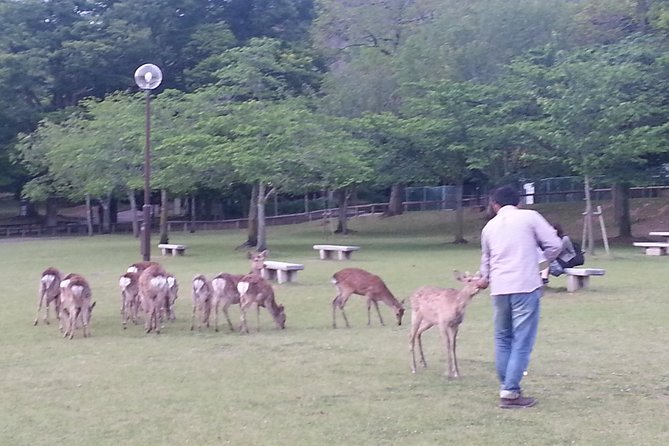
Nara Park’s deer are one of the easiest parts of the day to remember. They roam freely around the historic area, sometimes close to the paths and temples. You may have the chance to feed them, and the encounter feels unusual because the animals are woven into the city rather than kept behind a zoo fence.
The deer also have religious significance in Nara, so your guide can explain why they are such a familiar part of the area. That context matters. Otherwise, it is easy to treat them as a cute interruption between temples.
Use ordinary care around any free-roaming animal. Keep your attention on the deer and your belongings, and follow local guidance. The tour information confirms the chance to see them, but it does not promise a specific interaction or feeding session.
For families and first-time visitors to Japan, the deer can be a strong reason to choose this day trip. For culture-focused visitors, they work best as part of the larger story, alongside Kasuga Grand Shrine and Todai-ji.
What the guides add to the day
The strongest feature of this experience is the guide. Several guides are named in the supplied material, including Satomi, Emi Rigano, Tomoko, Fumiko, Noriko, and Fuji. You may not receive a particular guide, but the pattern is clear: the experience depends heavily on the person leading your group.
Satomi handled an unexpected change when one group chose to visit the Nara National Museum. She had not prepared specifically for that detour, yet still helped explain the exhibits and later suggested a good dinner spot. That tells you what a private guide can do well: respond to your interests instead of simply reciting a fixed script.
Fuji tailored the day to one guest’s interests and helped choose a good lunch. Noriko was described as patient, friendly, and fun, while Fumiko answered questions about Japanese culture and history. These details point to a relaxed style rather than a rushed march between landmarks.
There is one important distinction to understand. Private does not automatically mean fully customized. One guest did not realize this was a personalized private activity, and the provider clarified that it was private but not a fully custom tour. You can expect some flexibility, but the core plan remains Naramachi, Kasuga Grand Shrine, and Todai-ji.
Cost, transport, and the length of the day
The listed price is $137.17 per person, and group discounts are available. The professional guide is included. Public transport costs about ¥2,000 per person, and entrance to Todai-ji and Kasuga Taisha adds about ¥1,500 per person.
That extra cost changes the value calculation. You are paying mainly for private guiding, historical explanation, and route planning, not for an all-inclusive ticket. If your group already enjoys researching temples and managing transport, you may find a cheaper independent day possible. If you want someone to connect the sites and answer questions as you go, the fee is easier to justify.
The 8:30 a.m. start is sensible for a full day in Nara. You have time for all three principal areas without turning the visit into a short afternoon outing. It is also a commitment. Comfortable shoes and a realistic sense of your walking ability matter more here than they would on a brief temple visit.
The tour is near public transportation, and most people can participate. Service animals are allowed. Since the end point differs from the start, confirm where you will finish and how that fits your next plan.
Who should book this Nara tour?
I would choose this experience if you are staying in Kyoto, want Nara’s major sights in one day, and prefer explanations to silent sightseeing. It also suits families and small groups that want their own guide and a little room to ask questions.
The tour is especially useful if you care about Japanese history, architecture, and the link between political power and religious buildings. Naramachi, Kasuga Grand Shrine, and Todai-ji offer three different ways to read Nara.
I would hesitate if you dislike walking, want a completely improvised day, or need every admission and transport cost bundled into one payment. The schedule is long, the route is not presented as fully custom, and the extra fees add up.
The booking terms are fairly forgiving. You can cancel for a full refund up to 24 hours before the start time. Changes made inside that window are not accepted, and poor weather may lead to a different date or a full refund.
Final call: a strong private introduction to Nara
Book this tour if you want Nara’s essential sights explained by a guide who can adjust to your questions and pace. The strongest parts are the private format, the clear historical thread, and the chance to see deer around major cultural sites.
Skip it if you are comfortable planning your own route and want to spend the day moving at your own speed. For everyone else, the price buys more than directions. It buys a person who can turn Naramachi’s houses, Kasuga’s Fujiwara connection, and Todai-ji’s vast Buddha hall into one coherent day.
FAQ
Where does the tour take place?
The tour takes place in Nara, with the activity starting from Kyoto according to the tour information. The exact meeting point details should be checked before booking.
How long does the tour last?
The experience lasts approximately eight hours.
What time does the tour start?
The stated start time is 8:30 a.m.
Is this a private tour?
Yes. Only your group participates in the activity.
Is the tour fully customized?
No. It is a private tour, but it is not described as a fully customized tour. The planned route centers on Naramachi, Kasuga Grand Shrine, and Todai-ji.
What places are included?
The route includes Naramachi, Kasuga Grand Shrine, and Todai-ji Temple. It also includes the chance to see the freely roaming deer of Nara Park.
Are entrance fees included?
No. Entrance fees for Todai-ji Temple and Kasuga Taisha Shrine cost about ¥1,500 per person.
Is public transportation included?
No. Public transportation costs about ¥2,000 per person.
Can I cancel for a full refund?
Yes, if you cancel at least 24 hours before the local start time. Cancellations made less than 24 hours before the start are not refunded.
What happens if the weather is poor?
The experience requires good weather. If it is canceled because of poor weather, you will be offered another date or a full refund.
More walking tours elsewhere in Japan
- Kyoto Gion Geisha District Walking Tour – The Stories of Geisha
★ 5.0 · 1,441 reviews - Nishiki Market Brunch Walking Tour (7 Tastings + Brunch)
★ 5.0 · 1,355 reviews - Kyoto Arashiyama Walking Tour: Bamboo, Monkeys, Gardens & Secrets
★ 5.0 · 1,216 reviews - Kyoto Gion: 2-Hour Geisha Culture & History Walking Tour
★ 5.0 · 1,186 reviews
Just added in Kyoto
- Private Cooking Class Udon in Kyoto Japan★ 5.0 · 23 reviews
- Your Private Vacation Photography Session In Kyoto★ 5.0 · 110 reviews
- Kyoto: Zen Meditation at a Private Temple with a Monk★ 5.0 · 25 reviews
- Kyoto Wagashi(Japanese sweets) Cooking Class near Fushimiinari★ 5.0 · 60 reviews
- Private Pewter Sake Cup Experience with a Kyoto Artisan★ 5.0 · 31 reviews
- Kyoto:Family-Friendly Kimono & Yukata Experience at WARGO★ 5.0 · 147 reviews
- Private Guided Traditional Buddhist Cooking in Japan★ 5.0 · 16 reviews
- Kyoto: Gion Geisha District & Sake-in-Hand Walking Tour★ 5.0 · 37 reviews
Nara & the Deer Park, compared.
World Heritage Kyoto & Nara Uji Authentic Matcha Experience
Read our review →
Kyoto/Osaka: Nara, Fushimi Inari Taisha, Arashiyama Bus Tour
Read our review →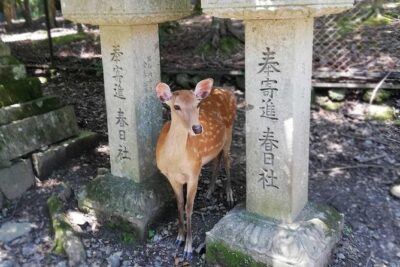
Nara Half Day Trip Walking Tour (Private Option Available)
Read our review →
Osaka/Kyoto: Arashiyama, Nara & Fushimi Inari Shrine w/Lunch
Read our review →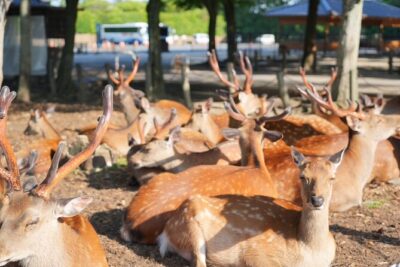
Nara Early Morning Tour (Kyoto or Osaka Departure Available)
Read our review →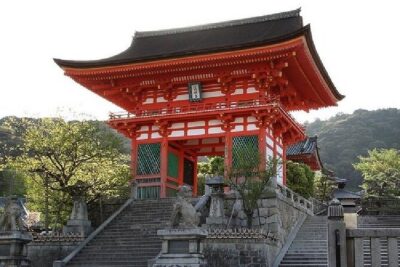
Full Day Guided Tour to Kyoto and Nara from Osaka by Van
Read our review →
Browse the lists this tour appears in