
Reviewed · GEISHA & GION DISTRICT TOURS
Kyoto : Chopsticks Making Workshop in Gion with Engraving Option
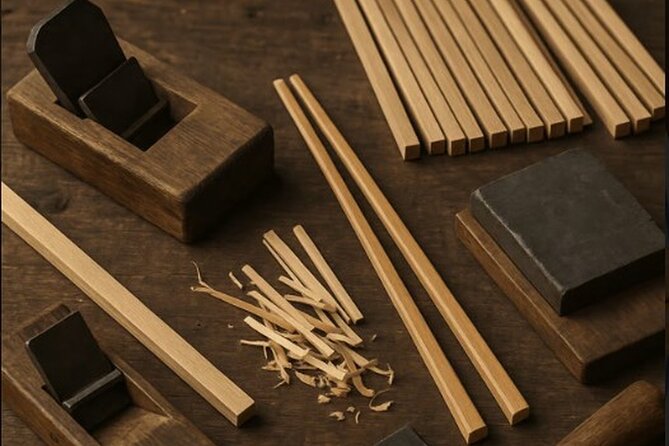
Making chopsticks from raw wood gives this Gion activity more substance than a quick souvenir stop. You choose your wood, shape each piece with a traditional kanna hand plane, sand the edges, and finish the pair with natural oil. The work is simple, but it lets you feel how Japanese craft turns a plain blank into an everyday object.
I like the hands-on pace and the useful result. You are not just watching a demonstration, and you leave with chopsticks you can actually use. I also like the optional engraving, which can add your name in Japanese or your own language. The main caution is that the workshop can feel a little like a production line when the room is busy, and wood choices may not always match your first preference.
Key points at a glance
- Traditional kanna work: Shape the chopsticks with a Japanese hand plane rather than simply decorating a finished pair.
- Two wood types included: Choose from the available standard woods, with premium options offered for an extra charge.
- A one-hour activity in Gion: The workshop starts and ends at ZEN Chopsticks Making Workshop on Yasaka Koji South.
- Optional personal engraving: Add a name in Japanese or your native language for an extra personal touch.
- Beginner-friendly instruction: English-speaking staff guide each step, so you do not need woodworking experience.
- Good value at $15.25: The price includes the making session and a finished souvenir, with upgrades costing extra.
Shaping a pair from plain wooden blanks
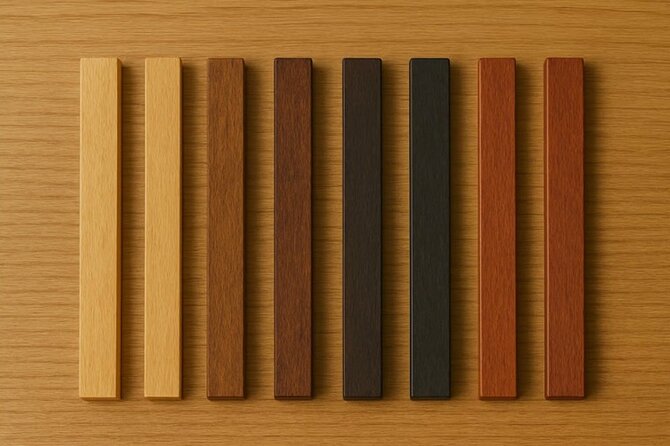
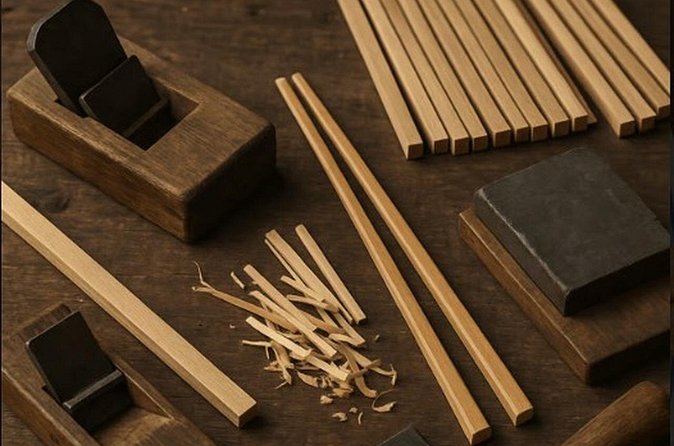
The workshop begins with simple wooden blanks. That starting point matters. Instead of choosing from a rack of finished chopsticks, you take part in the change from rough wood to a polished eating tool.
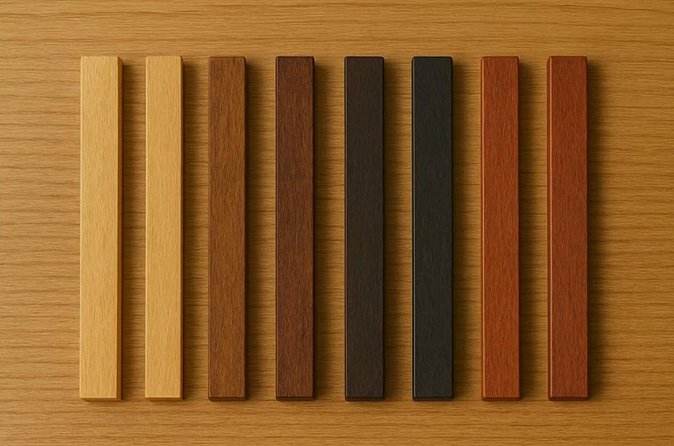
You first select from the available Japanese woods. Each type can have a different color, grain, texture, and aroma. Lighter and darker tones are offered, although availability can vary. Two standard wood choices are included in the price, while premium woods may cost extra.
The choice is not just visual. Wood grain affects how the surface feels as you work it, and the natural color gives the finished pair its character. If you are choosing for a child or family member, let that person pick the tone they like. This small decision makes the final souvenir feel more personal.
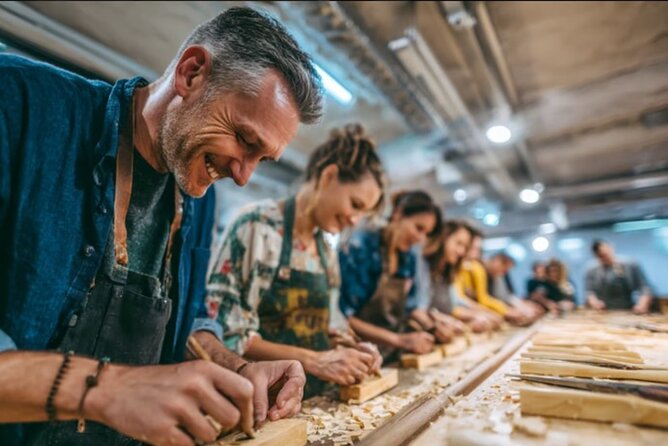
You then place the blanks on a stand and use the kanna to remove thin layers of wood. The instructor shows you how to hold and guide the tool, then helps you shape the chopsticks evenly.
This is beginner-level woodworking, not a test of skill. You do not need to arrive knowing how to use a hand plane. The staff provide clear guidance throughout, and English-speaking assistance is available.
The kanna is the most interesting part of the session. You can feel the wood resisting and then giving way as the blade moves along the grain. It is a quieter, slower task than many Kyoto activities, and the repeated motion gives the hour a calm rhythm.
You still need to pay attention. The two chopsticks should look like a pair, so you will want to compare their length and shape as you go. The instructor’s help is useful here, especially if one piece starts to look thicker or more rounded than the other.
Other evenings in the old entertainment quarters of Kyoto:
- Kyoto Geisha Walking Tour: Gion District & Hidden Gems
★ 4.7 · 3,273 reviews - Kyoto: Gion Magical Night Walking Tour with Geisha Trivia
★ 4.9 · 2,393 reviews - Kyoto: Gion Geisha District Walking Tour – Stories of Geisha
★ 4.7 · 2,187 reviews
Sanding turns rough edges into usable chopsticks
After the main shaping, you smooth the surface and edges with sandpaper. This step may sound minor, but it changes the feel of the chopsticks in your hand.
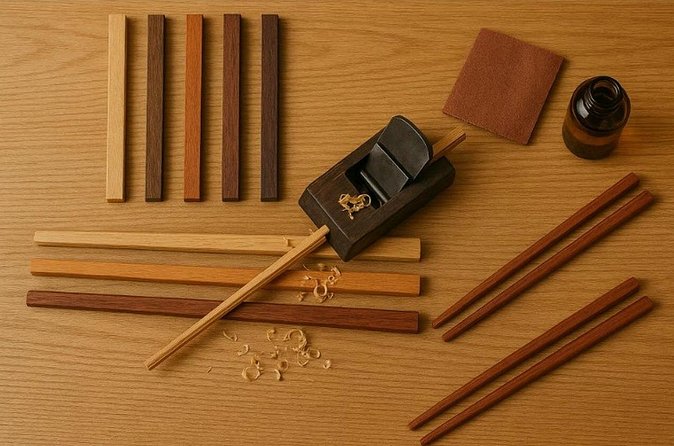
The hand plane creates the basic form. Sanding removes rough spots and softens the edges, making the pair more comfortable to hold. You get a direct sense of how small amounts of finishing work affect an everyday object.
I would not rush this part. If you want the chopsticks to feel smooth, take care around the ends and along the sides. The workshop is short, but the process gives you enough time to make the finish feel like your own work rather than something completed entirely by staff.
The final step is natural oil. The oil protects the wood and brings out its color and grain. It also gives the chopsticks a soft, polished appearance.
That finish is one reason the activity works well as a souvenir. You are not taking home a fragile display piece with no purpose. You are making a pair of chopsticks intended for use, while still carrying a clear memory of your time in Kyoto.
The result will not have the uniform perfection of a factory-made pair. That is part of the appeal. Small differences in shape or grain show that you made them yourself.
Engraving adds a personal Kyoto keepsake
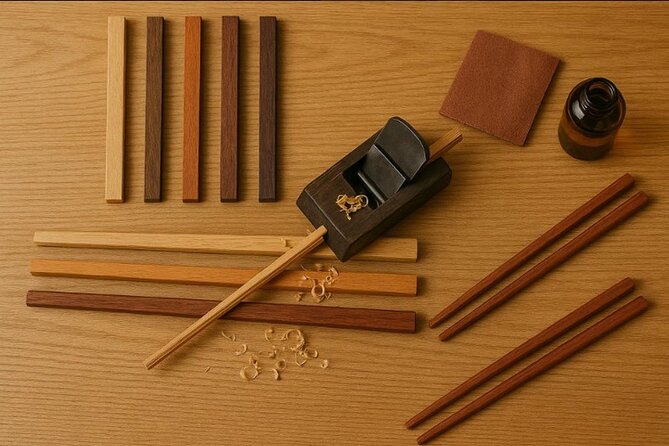
You can add optional engraving after making the chopsticks. Your name may be engraved in Japanese or in your native language, creating a more distinctive souvenir.
The engraving is especially useful if you are making chopsticks for a child, partner, or family member. It helps identify each pair and gives the object a stronger connection to the person who will use it.
This option costs extra, so check the final price before choosing it. The base activity already includes the wood choices and the making session, while premium woods and engraving are add-ons.
The engraving is also a good reason to plan ahead about whose name you want. If you are making several pairs, decide the names before you arrive. That keeps the workshop moving and avoids trying to settle the details while you are handling the wood.
One important distinction: the experience lets you make the chopsticks yourself, but the engraving is an added finishing service. You should not expect to carve the lettering by hand as part of the standard process.
What the one-hour schedule feels like
The full activity lasts about one hour. That is long enough to learn the process and complete the pair, but short enough to fit neatly into a day of sightseeing around Gion.
The likely flow is straightforward:
- Choose the wood.
- Shape the blanks with the kanna.
- Smooth the chopsticks with sandpaper.
- Apply natural oil.
- Add optional engraving if selected.
The compact schedule is a benefit if you are building a busy Kyoto day. You can place it between visits in Gion without giving up half a day. It also suits families, since the task has a clear beginning and end.
The tradeoff is that you should not expect a long craft lesson or a slow visit with an artisan working alone with you. The workshop can accommodate up to 32 people, so the atmosphere may be shared and organized. One person described the setup as having a production-line feel, even while finding the tools and instruction effective.
That criticism is worth taking seriously. If you want a private, highly individual session with long conversations about woodcraft, this may feel too structured. If you want an accessible activity that gets you making something quickly, the format works better.
The staff are described as patient, friendly, and attentive to details. That matters for first-timers. The activity depends on clear instruction, particularly when you first handle the plane and when you try to make the two chopsticks match.
Other things to make with your hands in Kyoto:
- Authentic knife making experience at a blacksmith in Kyoto
★ 4.8 · 350 reviews - Chopstick Making Workshop in Ginza
★ 4.8 · 1,366 reviews - Tokyo Chopstick Making Workshop with Artisan
★ 5.0 · 466 reviews - Osaka Sushi Making Experience
★ 5.0 · 400 reviews
Why this works well for families
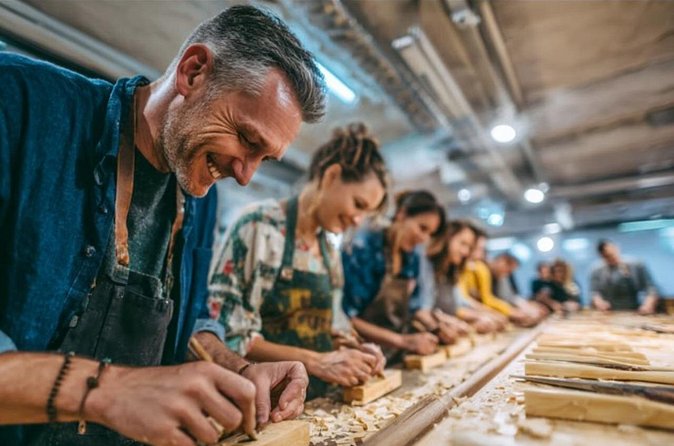
The workshop has several features that make it a good family choice. The task is practical, the finished object is easy to carry, and each person can make a pair with a different look.
The sanding and oiling stages are simple enough to keep the process moving, while the hand plane provides the memorable part. Children may need close help with the tool, but no previous woodworking skill is required.
The engraving option adds a nice family touch. You can put each person’s name on a pair, or make a set for someone who could not join the trip. The finished chopsticks become a souvenir with a clear owner rather than another generic item packed into a suitcase.
You should still consider attention spans and group size. This is a focused craft session, not a free-form play activity. A child who enjoys making things will likely get more from it than a child who wants constant movement.
A useful souvenir instead of another trinket
Kyoto has no shortage of small gifts. The advantage here is that the souvenir has a job to do.
Chopsticks are light, compact, and easy to pack. They also connect directly to daily Japanese meals, so the object carries a bit of local life into your home. Each time you use the pair, the wood grain and engraved name can bring back the workshop and your time in Gion.
I like souvenirs that show how they were made. These chopsticks do that without being too delicate or expensive. The natural oil finish gives them a finished look, while the visible grain and small handmade differences keep them from feeling mass-produced.
Do remember that the base price is modest, not all-inclusive for every option. At $15.25 per person, you get a one-hour making experience and the standard pair. Premium wood and engraving can raise the total.
That price is good value if you want an activity as well as an object. A finished pair of chopsticks from a shop might cost less, but it would not give you the process of shaping, sanding, and oiling them. You are paying for guided participation, not only for the wood.
The Gion location makes planning easy
The meeting point is ZEN Chopsticks Making Workshop, at Yasaka Koji South, machi-71-13 Tamamizu, in Kyoto’s Higashiyama Ward. The address is in Gion, one of Kyoto’s most visited areas, and the activity is near public transportation.
The workshop begins and ends at the same place. That simple arrangement helps you fit it into a larger day without arranging a separate return transfer or wondering where the activity finishes.
I would allow a little extra time to find the exact entrance. Gion has compact streets and many addresses, so arriving early is sensible even though the session itself lasts only about an hour.
The location pairs well with other sightseeing in the area. You can treat the workshop as a break from temples, lanes, and photo stops, then continue exploring nearby. The activity does not require a full day away from central Kyoto.
A mobile ticket also makes the booking easy to carry on your phone. Confirmation is provided at booking, and free cancellation is available until 24 hours before the start time. Changes or cancellations inside that 24-hour window are not accepted for a refund, so keep the local Kyoto start time in mind.
Who should book this workshop
I would recommend it to you if you want a short cultural activity with a finished object to take home. It fits first-time woodworkers, families, couples, solo visitors, and anyone who prefers making a souvenir over shopping for one.
It is also a good pick if you have only a little free time in Gion. The one-hour length gives you a clear, manageable appointment rather than a large commitment.
You may want to choose something else if your main goal is a quiet private lesson or a highly detailed study of Japanese woodworking. A group of up to 32 and the organized setup can make the session feel more like a shared workshop than a one-on-one craft class.
Wood choice is another reason to keep expectations sensible. The standard price includes two wood types, but availability can change. One experience had only one advertised choice available, which was disappointing. If selecting a particular wood matters greatly to you, ask what is available when you arrive rather than assuming every option will be in stock.
My booking advice
I would book this workshop if you want to make a small, useful souvenir while staying in Gion. The strongest parts are the traditional hand plane, the patient English-speaking support, and the chance to finish the pair with oil and optional engraving.
The activity offers real value at $15.25 because the price covers both instruction and participation. Just treat premium wood, engraving, and wood availability as variables, and accept that a larger group may give the session a practical workshop feel rather than an intimate artisan lesson.
If that sounds right for your Kyoto plans, this is an easy hour to fit in and a souvenir you are likely to use long after you get home.
FAQ
How long does the chopsticks workshop last?
The experience lasts approximately one hour.
Where does the workshop begin and end?
It begins at ZEN Chopsticks Making Workshop on Yasaka Koji South, machi-71-13 Tamamizu, Higashiyama Ward, Kyoto. It ends back at the same meeting point.
Do I need woodworking experience?
No. The workshop is designed for beginners, and the English-speaking staff explain and support each step.
What does the chopsticks-making process include?
You choose wood, shape the blanks with a traditional kanna hand plane, smooth them with sandpaper, and apply natural oil for protection and finish.
Is engraving available?
Yes. Optional engraving is available in Japanese or your native language. It is an added option.
What is the cancellation policy?
You can cancel up to 24 hours before the experience start time for a full refund. Cancellations or changes made less than 24 hours before the start time are not accepted for a refund.
Just added in Kyoto
- Kyoto: Private Photoshoot Service★ 5.0 · 158 reviews
- Kyoto Rickshaw Tour★ 5.0 · 210 reviews
- Kyoto: Arashiyama Bamboo, Temple, Matcha, Monkeys & secret spots★ 5.0 · 219 reviews
- Izakaya Style Cooking Class★ 5.0 · 219 reviews
- Kyoto: Traditional Concert at Townhouse or Bathhouse★ 4.9 · 224 reviews
- Ninja 2-hour Hands-on Lesson by Japanese master in Kyoto -Medium★ 5.0 · 218 reviews
- Kyoto: Afternoon Japanese Izakaya Cooking Class★ 4.9 · 241 reviews
- Samurai Training with Modern day Musashi in Kyoto★ 5.0 · 256 reviews
Geisha & Gion District Tours, compared.
Kyoto Geisha Walking Tour: Gion District & Hidden Gems
Read our review →
Gion Geisha District Walking Tour – Stories of Geisha
Read our review →
Best of Kyoto: Gion, Geisha, Pagodas & Cobblestones
Read our review →
Kyoto Night Foodie Tour in Gion (9+ dishes + 6 Sake tastings)
Read our review →
Kyoto Gion: 2-Hour Geisha Culture & History Walking Tour
Read our review →
Kyoto Night All-Inclusive Eats and Streets, Gion and Beyond
Read our review →Browse the lists this tour appears in