
Reviewed · WALKING TOURS
Kuromon Market Food Walking Tour in Osaka (6 stops, 6 tastes)
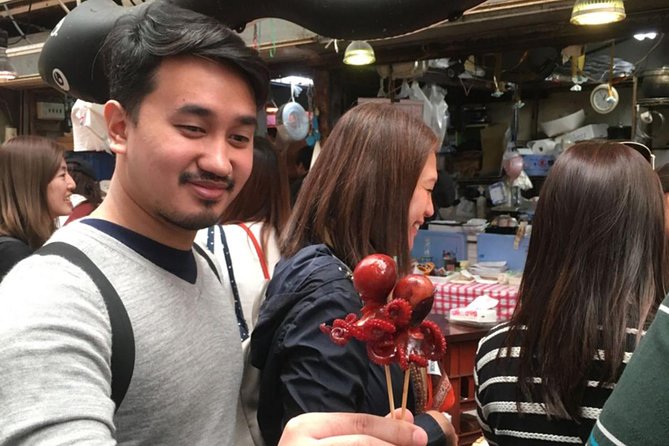
Osaka’s food culture is easiest to understand one bite at a time, and this tour puts you in the middle of it at Kuromon Market. You’ll move through the covered shopping street, sample familiar Osaka favorites such as takoyaki, and get help ordering when Japanese menus or market counters become hard to read.
I like the small group limit of seven, which gives guides such as Nina, Niko, Rie, Yuto, and Aina room to answer questions and adjust the pace. I also like the extra stop along Doguyasuji street, where kitchen knives, dishes, restaurant signs, and cooking tools offer a look at Osaka’s food trade beyond the plate. The main caution is that two hours can feel short, and the food allowance or number of substantial portions may not suit a very hungry eater.
Key points at a glance
- Six tastes in two hours: Try a selection of Osaka foods while walking through Kuromon Market, with examples including takoyaki, sushi, yakitori, dumplings, sweets, gyoza, and oden.
- A group of no more than seven: The limited size makes it easier to ask questions, get ordering help, and follow a guide through busy market lanes.
- Doguyasuji adds useful context: Browse cooking equipment, tableware, kitchen knives, and restaurant supplies on Osaka’s famous kitchenware street.
- Good for first-time Osaka visits: You’ll get food ideas and neighborhood suggestions to use after the tour ends.
- A practical guide makes a difference: Guides including Nina, Niko, Rie, Megumi, Aina, and Taku have been praised for warmth, flexibility, English communication, and local tips.
- Come ready and on time: Meet at the SMBC ATM near Kintetsu Nippon-bashi Station Exit 10, and bring cash for anything extra.
Why Kuromon Market makes a useful first food stop
Kuromon Market sits in Minami, the central Osaka district that includes Nipponbashi, Namba, and Dotonbori. It is a shopping street rather than a single indoor hall, so you move between food counters, produce sellers, specialty shops, and small stores as the guide points out what matters.
The market takes its name from the black gate of Enmyoji Temple. That small detail helps place Kuromon in Osaka’s older commercial world, instead of treating it as just another place to buy street food. The guide also connects what you eat with local habits, food customs, and the way Osaka presents itself as a city that takes eating seriously.
I would choose this tour early in an Osaka stay. You get recommendations to use later, and you can return to Kuromon with a better sense of what to order. One useful tip is to walk through the area before your tour if you have time, then tell your guide which stalls or foods caught your eye.
Other walking tours in Osaka people book:
- Osaka: Hotspots & Hidden Gems Walking Tour Private or Group
★ 4.9 · 1,300 reviews - Osaka Local Foodie Walking Tour in Dotonbori and Shinsekai
★ 5.0 · 985 reviews - Osaka Bar Hopping Night Walking Tour in Namba (3 bars, 6 tastes)
★ 5.0 · 958 reviews
Six tastes, not simply a walk through the stalls
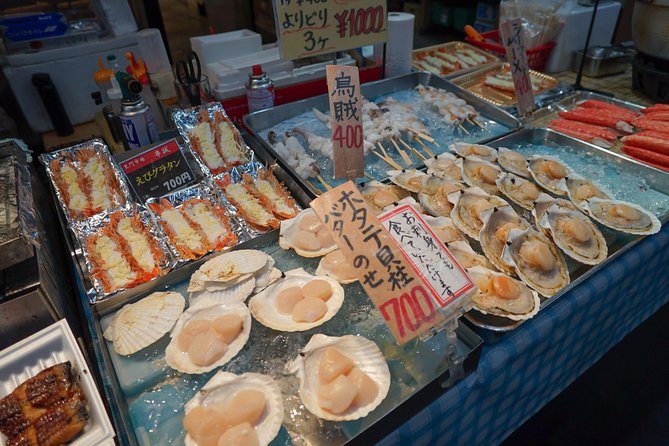
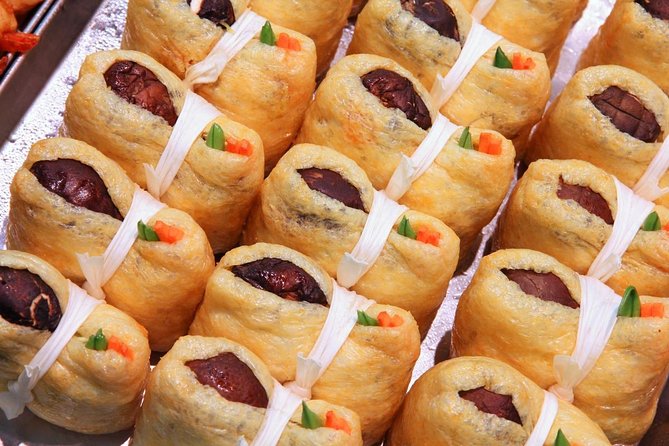
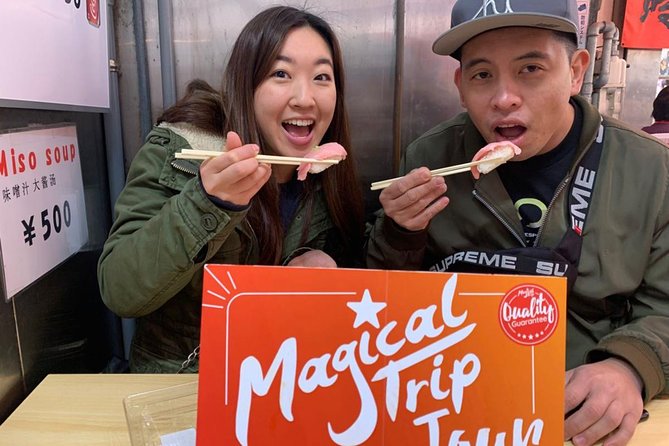
The advertised format is six tastes. Exact dishes can vary, but the food examples associated with the tour include takoyaki, fresh sushi, yakitori, dumplings, gyoza, oden, mushrooms, and sweets. That range matters because Osaka’s food culture is not just one famous snack.
Takoyaki is the obvious Osaka classic: a hot, round batter snack with octopus inside. It is fun to try with guidance, since the texture, heat, and toppings may be unfamiliar. Sushi gives you a different experience, while yakitori and dumplings provide more savory variety.
Oden, gyoza, and grilled mushrooms also show why it is useful to have someone choose or explain food. A guide can help you ask questions, point out ingredients, and avoid ordering blindly. Taku, for example, is especially noted for helping with communication at local shops and for recommending gyoza and oden.
Do not assume six tastes means six full meals. The tour lasts about two hours and is built around sampling while walking. If you want a large lunch, plan to buy extra food afterward. The tour information says you do not pay for the guide’s food and drinks, but you should bring cash for extra snacks or beverages. It does not clearly spell out the value of the included food, so I would confirm that point before booking if the eating matters more to you than the sightseeing.
Doguyasuji turns food into a look at Osaka life
The stop at Doguyasuji is one of the best reasons to choose this experience over a simple walk through Kuromon Market. This street is lined with kitchenware, tableware, cooking equipment, restaurant tools, and other supplies used by food businesses.
You might find this especially useful if you enjoy Japanese knives, ceramic dishes, cooking utensils, or the visual side of restaurants. Even if you do not plan to shop, the street explains how Osaka’s food culture is supported behind the scenes. A plate, knife, noren curtain, or cooking tool can tell you as much about a restaurant as its menu.
This part also gives the tour some breathing room. Kuromon is about tasting and browsing food counters. Doguyasuji shifts the focus to objects, trade, and the practical work of preparing and serving meals. The combination creates a fuller picture of the district.
The route through Namba and Dotonbori
The tour begins near Nipponbashi and returns to the same meeting point. Along the way, you pass Namba Grand Kagetsu, a comedy theater operated by Yoshimoto Kogyo. That is a useful cultural marker because comedy is a major part of Osaka’s public identity.
You also pass through the Namba area, a busy entertainment and transport district. Namba Parks, with its shops and restaurants, is part of this wider scene. The route then touches Dotonbori, the famous canal-side entertainment zone known for giant signs including the Glico running man and the Kani Douraku crab.
These areas are not described as long guided visits, so do not book this expecting a full Dotonbori tour. They work better as context around the market walk. You get a feel for how Kuromon connects to Osaka’s major food and nightlife neighborhoods, then can return later for a closer look.
One useful comparison: Kuromon and Dotonbori offer different moods. Dotonbori is more polished for quick photos and famous signs. Kuromon gives you more time around market counters and smaller food shops. If you already spent a day buying snacks around Dotonbori, this tour can provide a more focused look at the market side of Osaka.
Other guided walks in Osaka:
- Osaka: Deep Backstreets Walking Tour with Dinner Option
★ 4.9 · 902 reviews - Ultimate Osaka Walking Tour: Castle, Dotonbori & Hidden Gems
★ 5.0 · 862 reviews - Osaka: Main Sights and Hidden Spots Guided Walking Tour
★ 4.9 · 702 reviews - Private Osaka Walking Tour: Highlights & Hidden Gems
★ 5.0 · 569 reviews
The guide can make or break the experience
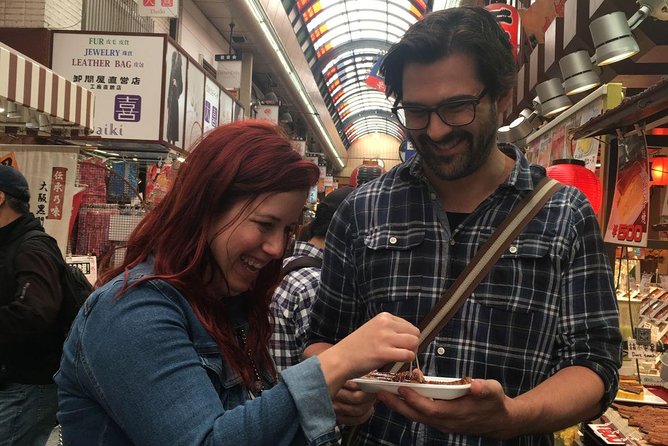
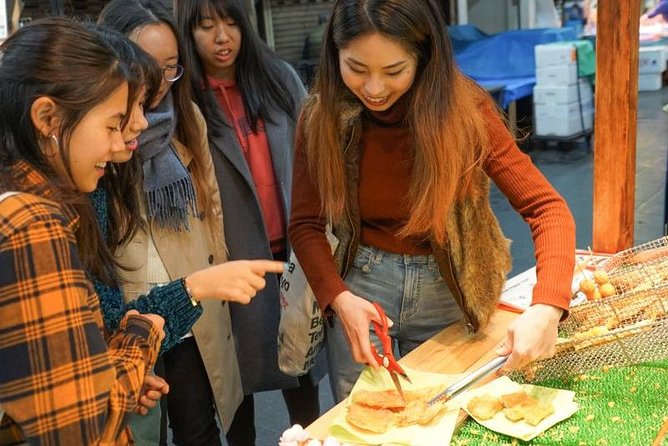
The strongest part of this tour is the human help. Nina is praised for being funny, kind, and patient with children. Niko is described as energetic and flexible, including in difficult weather. Rie, Megumi, Aina, Yuto, Aya, Peco, Mari, Mitch, Anne, and Taku are also associated with friendly guiding, food explanations, cultural information, and practical help.
That range of names also means your experience depends on who leads your group. The best guides do more than point at food. They ask what you like, adjust where possible, explain how to eat or order something, and fill the walk with stories about Japanese food and daily life.
For families, this can be a good fit. One guide helped children with questions, another kept a comfortable pace, and a family with an 18-month-old used a sling successfully. A stroller may be less convenient in crowded market lanes, so a sling is the safer choice if you are traveling with a small child.
Solo visitors can also get real value from the format. Taku helped a solo participant communicate with shopkeepers and took photos along the way. A small group feels less awkward when you are tasting several things and need help ordering.
The tour has a current rating of 4.9 from 551 ratings, with 98 percent recommending it. Those numbers point to a strong overall experience, but they do not remove the need to check what food is included or to match your expectations to a short market walk.
Price and the question of value
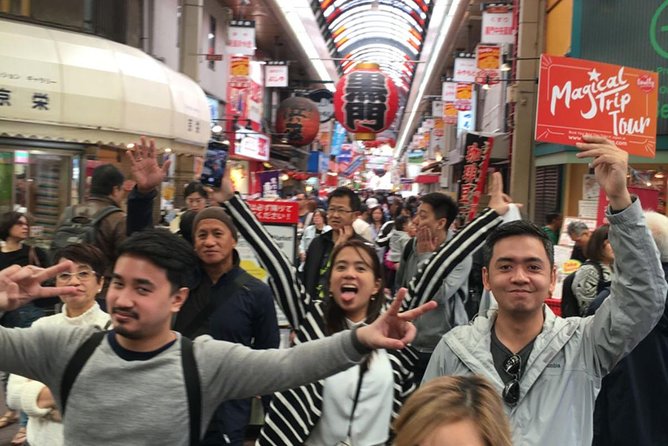
At $50.41 per person, this is not the cheapest way to eat at Kuromon Market. You can walk through the market yourself, select food, and control exactly how much you spend. The market is accessible without an admission charge.
The fee pays for more than ingredients. You are paying for a local guide, small-group attention, ordering assistance, cultural explanation, route planning, and recommendations for the rest of your Osaka stay. That is useful if you are unsure what to eat, cannot read menus easily, or want a gentle introduction rather than a self-guided experiment.
The value is weaker if you already feel comfortable ordering in Japan and prefer to make every food decision yourself. A short tour also cannot provide a full meal for everyone unless the included portions are generous. One poor experience involved a food budget of about 1,200 yen for two people, which was not enough for a satisfying meal. Since the exact food arrangement can matter greatly, ask for clarification before booking if you expect lunch-sized portions.
I would see the price as fair for an orientation tour, not as a bargain meal. Use it to learn the area and discover what you want to revisit. Then return on your own for larger portions, souvenirs, or a slower look at the stalls.
Timing, weather, and what to bring
The experience lasts approximately two hours. The meeting point is in front of the SMBC ATM at Nippon-bashi 1chome, near Kintetsu Nippon-bashi Station, Exit 10. The listed address is in Nipponbashi, Chuo Ward, Osaka.
Be early. The tour starts on time, and if you miss the group, you cannot join later, reschedule, or receive a refund. That policy is strict enough that I would allow extra time for finding Exit 10 and the ATM.
Wear comfortable shoes. You will be walking and eating, sometimes while moving between shops. Bring cash for additional food and drinks, and carry something to deal with messy snacks. One guide was praised for bringing hand wipes, but you should not rely on every guide doing the same.
Osaka’s weather can be severe. Summer temperatures may reach 40°C, while winter temperatures can fall to -5°C. Choose light clothing and sun protection in summer, and proper warm layers in winter. Rain can also affect the pace, although one guide was able to keep much of a tour under cover during torrential weather.
Free cancellation is available up to 24 hours before the start time. Changes or cancellations inside that window are not accepted, so check your plans before the deadline.
Dietary needs require advance planning
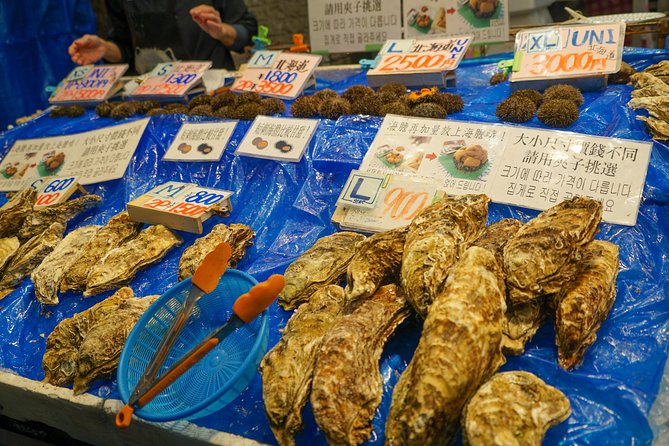
Vegetarian and vegan requests may be possible if you provide them at least one day ahead. Options may be limited because many Japanese restaurants and food counters are not fully set up for these diets.
The food information is less reassuring for gluten-free eating. One section says gluten-free requests cannot be accommodated, while another says vegetarian, vegan, and gluten-free requests can be considered with limited options. The safe reading is that gluten-free needs are not guaranteed. Tell the provider at least one day before the tour, explain allergies clearly, and do not expect substitutions or an allergy-free meal.
Food is prepared in kitchens the tour company does not operate. If you have a serious allergy, you may be better off choosing your own food carefully rather than relying on this experience.
Who should book this Kuromon tour?
I would recommend it to first-time visitors who want a friendly introduction to Osaka food, families who appreciate help and a manageable pace, solo visitors who want company, and anyone uneasy about ordering at Japanese counters.
It is also a good choice if you want more than a snack crawl. Doguyasuji, Namba Grand Kagetsu, Namba, and Dotonbori give the walk a local-cultural frame, while the food stops keep it lively.
I would skip it if you are already comfortable navigating Kuromon, want a large meal, dislike group schedules, or prefer complete control over every purchase. The market is easy to visit independently, and some people will find the guide unnecessary.
Should you book it?
Book this tour if you want a small, social introduction to Osaka’s food scene, with help choosing dishes and understanding the neighborhoods around Kuromon. Choose an early slot in your Osaka stay so you can use the recommendations later.
Do not book it expecting an unlimited tasting menu or a full lunch. Confirm the food allowance if that point affects your decision, report dietary needs a day ahead, arrive early, and bring cash. At $50.41, the best value comes from the guide’s explanations, language help, and local direction, not simply from the amount of food on the table.
FAQ
How long is the Kuromon Market Food Walking Tour?
The tour lasts approximately two hours.
Where does the tour begin?
You meet in front of the SMBC ATM at Nippon-bashi 1chome, near Kintetsu Nippon-bashi Station Exit 10. The address is in Nipponbashi, Chuo Ward, Osaka.
Where does the tour finish?
The activity ends back at the meeting point.
How many people can join the tour?
The maximum group size is seven travelers.
Are food and drinks included?
The tour is described as offering six tastes, with examples such as takoyaki, sushi, yakitori, dumplings, oden, gyoza, and sweets. Bring cash for additional snacks or drinks. You do not need to pay for the guide’s food and drinks.
Can the tour accommodate dietary restrictions?
You must provide dietary requests or allergy information at least one day before the tour. Vegetarian and vegan options may be possible but limited. Gluten-free needs cannot be guaranteed, and substitutions or allergy-free meals are not assured.
Just added in Osaka
- Osaka: Mind & Spirit Balance Temple Reiki Healing★ 5.0 · 41 reviews
- Osaka Temple Cool Foot Bath & Matcha Experience〈45min〉★ 4.9 · 82 reviews
- Full Day Kyoto Tour : Bamboo Forest, Golden Temple, Fushimi Inari★ 5.0 · 84 reviews
- Osaka: Minoh, Katsuoji Temple, & Minoh Falls Full-day Tour★ 4.9 · 172 reviews
- Ramen and Gyoza Cooking Class in Osaka★ 5.0 · 202 reviews
- OSAKA NIGHT FUSION Japanese Taiko Kabuki Samurai Dance Show★ 4.8 · 155 reviews
- Osaka: A Modern Samurai, Kabuki, Taiko, & Dance Show★ 4.5 · 66 reviews
- Osaka: Samurai Training Experience KENDO in Osaka★ 5.0 · 111 reviews
Walking Tours, compared.
Kyoto Geisha Walking Tour: Gion District & Hidden Gems
Read our review →
Tokyo Tsukiji Fish Market Food and Culture Walking Tour
Read our review →
Imperial Palace and Shogun Historical Walking Tour
Read our review →
Gion Geisha District Walking Tour – Stories of Geisha
Read our review →
Shinjuku Local Bar and Izakaya Guided Walking Tour
Read our review →
Asakusa Walking Tour with Sensoji Temple Visit
Read our review →
Nishiki Market Brunch Walking Tour (7 Tastings + Brunch)
Read our review →Browse the lists this tour appears in