
Reviewed · IMPERIAL PALACE & HISTORIC SITES
Imperial Palace East Garden and Edo Castle Walking Tour in Tokyo
Tokyo’s Imperial Palace East Garden is less about grand palace rooms and more about what survives outside them: stone walls, castle foundations, carefully shaped gardens, and the open spaces where Edo once ruled Japan. This 2.5-hour walking tour connects those pieces with stories that are easy to miss on your own.
I like the small group, capped at 12, and the chance to ask questions without shouting across a crowd. I also like the range of guides, including Kenta, Glenda, Sato, Kei, Miki, Miko, and Kaz, who are praised for clear English, humor, visual aids, and strong knowledge of Japanese history. The main drawback is simple: you do not enter the Imperial Palace buildings, and some people may find the garden less spectacular than expected.
Key points
- Wadakura Fountain Park begins the walk: A calm meeting point near the Imperial Palace, with striking water features and a royal story of its own.
- Edo Castle survives in ruins: Stonework, foundations, gates, and raised ground help explain the power of the former shogun’s seat.
- The East Gardens are free to enter: Your $25 pays for the guide, organization, and historical context rather than an admission ticket.
- Expect a real two-and-a-half-hour outing: It can include hills and steep paths, though one account noted no stairs.
- Guide quality is a major strength: Kenta is praised for humor and visual aids, while Glenda, Sato, Kei, and others receive high marks for clear explanations.
- The palace interior is off-limits: This is an outdoor history walk, not an inside tour of imperial rooms.
What this Tokyo walking tour actually covers
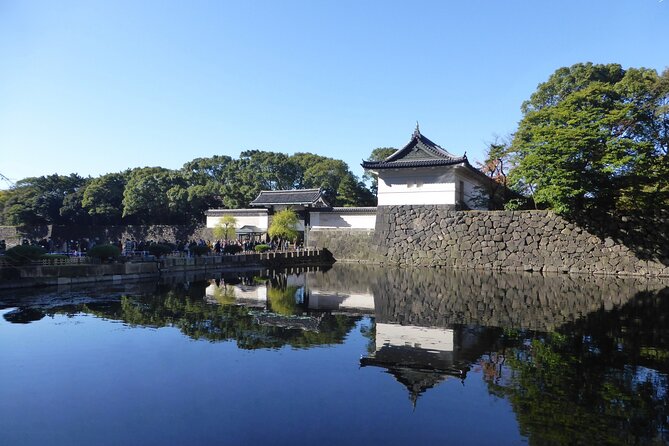
This experience begins at the Starbucks Coffee in Wadakura Fountain Park, at 3-1 Kōkyogaien in Chiyoda City. You meet an English-speaking local guide there, then spend about 30 minutes around the fountain park before moving into the East Gardens of the Imperial Palace.
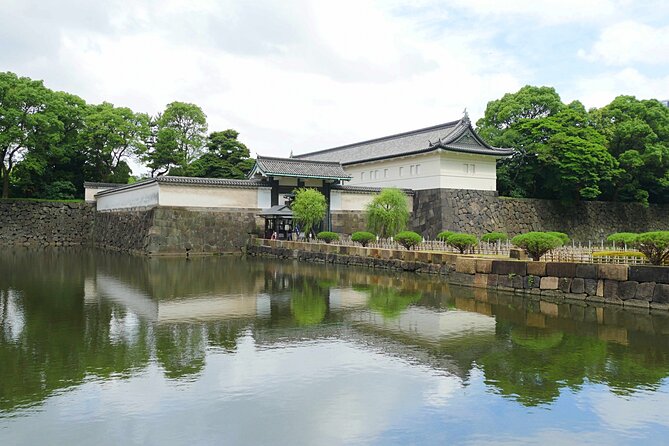
The larger part of the outing, about two hours, takes place in the former Edo Castle grounds. You see garden paths, ponds, castle ruins, stone walls, and the Honmaru and Ninomaru areas. The guide explains how the site worked in the past, what the ruins meant, and how the story connects the shoguns, samurai, emperors, and modern Japan.
This is a walking tour in the true sense. You are not simply taken to one viewpoint, given a short talk, and sent away. You move through a broad outdoor site, so comfortable shoes matter. Some paths can be steep, and a long stretch outdoors may feel tiring if you are not used to walking.
The group maximum of 12 is a useful limit. You should be able to hear the guide and ask questions. It also gives the experience a more personal feel than a large coach excursion, while keeping the price low at $25 per person.
Other walking tours in Tokyo people book:
- Tokyo Tsukiji Fish Market Food and Culture Walking Tour
★ 5.0 · 3,184 reviews - Tokyo: Imperial Palace and Shogun Historical Walking Tour
★ 5.0 · 2,251 reviews - Tokyo: Shinjuku Local Bar and Izakaya Guided Walking Tour
★ 4.9 · 1,794 reviews
Starting with fountains and a royal wedding story
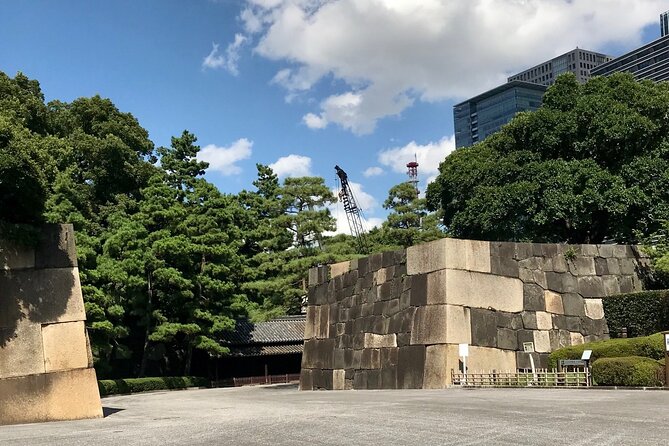
Wadakura Fountain Park is a sensible starting point because it gives you a quiet introduction before the castle material begins. The park was first built in 1961 to mark the wedding of Emperor Akihito and Empress Michiko. It was redesigned and reopened in 1995 for the wedding of Crown Prince Naruhito and Crown Princess Masako.
That detail makes the park more than a pretty meeting spot. Its water features and open design connect the modern imperial family with the ceremonial role of the surrounding grounds. Your guide can use the setting to explain the difference between the current Imperial Palace, the former Edo Castle, and the political systems linked to each period.
You receive about 30 minutes here, and admission is free. Do not expect a long independent park visit before the tour starts. This is the opening chapter, where you meet the guide, settle into the group, and begin placing Tokyo’s imperial center on a timeline.
The Starbucks meeting point should be easy to identify, but give yourself enough time to arrive. The tour starts in central Tokyo, near public transportation, and finding a guide in a busy city is easier when you are not rushing. A mobile ticket is provided, so keep your booking accessible on your phone.
Seeing Edo Castle through its remaining stones
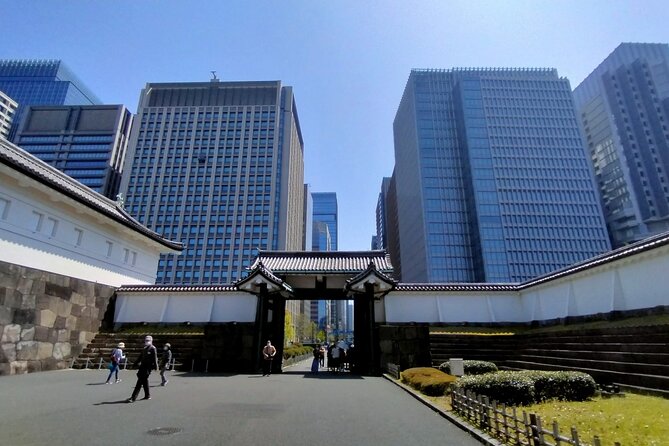
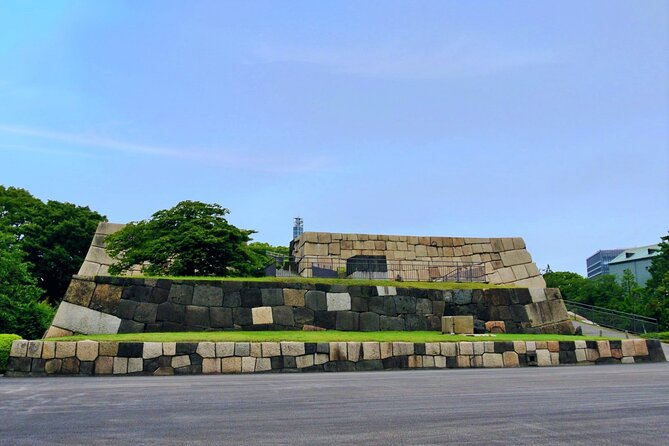
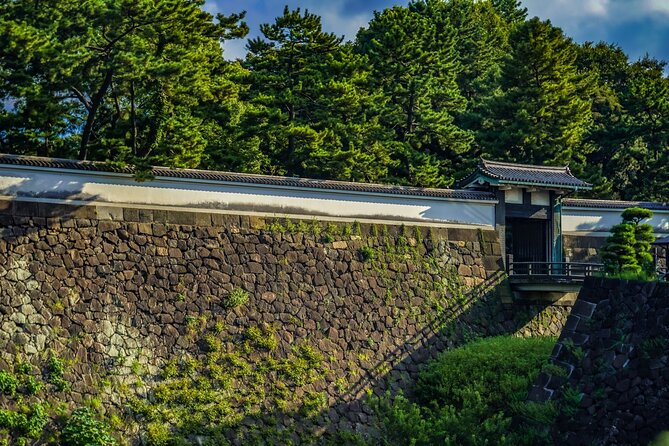
The East Gardens are the main event. This was once part of Edo Castle, the seat of the Tokugawa shogunate and one of the most important political centers in Japan. Today, you do not see a complete castle rising above the trees. Instead, you read the site through foundations, walls, raised areas, gates, and traces of the old castle layout.
That difference matters. If you want a preserved European-style palace with furnished rooms, this will not meet that expectation. If you enjoy working out how a place functioned from what remains, the East Gardens offer much more.
The guide helps explain what you are looking at. A large stone base is not just a wall. A quiet garden is not simply decoration. The open spaces, paths, and surviving ruins show how the castle was arranged and how power was displayed. The tour also covers the samurai and Edo periods, the shoguns, the imperial family, and the changing role of the palace grounds.
Several guides are singled out for making these details easy to follow. Kenta is praised for using visual aids and explaining the subject with humor. Miko is noted for showing photographs while discussing the gardens, former castle tower, and surrounding grounds. Glenda is praised for explaining the connections between emperors, shoguns, samurai, and the gardens in clear English.
You may hear a slightly different style depending on who leads your departure. That is worth knowing before you book. The common thread is a focus on history and culture, but the experience is not built around one guaranteed guide.
The East Gardens, from Ninomaru to Honmaru
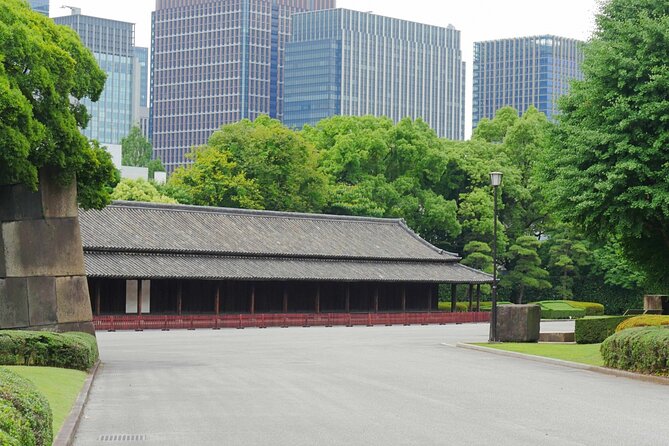
The garden areas give the tour a change of pace. Ninomaru Garden is known for traditional Japanese scenery, with ponds, plantings, and carefully maintained paths. The gardens can feel calm even though Tokyo’s central business districts are close by.
Season matters here. Spring can bring cherry blossoms, while autumn may offer changing foliage. Do not assume that every visit will deliver peak flowers or fall color. One October visit had plenty of greenery but few flowers and limited autumn color. Another account praised the grounds while also warning about steep paths.
This is one of the tour’s useful realities. The East Gardens are attractive, but their appeal is not the same in every month or under every sky. You may find the most value in the combination of scenery and explanation rather than in flowers alone.
The ponds and neatly kept plantings provide good photo opportunities. Carp can catch the light in the water, adding a small but memorable detail. Still, the gardens are not enormous botanical displays. If you are looking for flower beds at their peak, check the season and keep your expectations measured.
The Honmaru area adds the castle story. Here, remnants of the former central compound and the castle tower help you picture the scale and role of Edo Castle. The tour does not simply point out a ruin and move on. Your guide explains what once stood there and how the site fits into Japan’s political past.
Other historic grounds in Tokyo:
- Tokyo: Imperial Palace Japanese History Walking Tour
★ 4.9 · 987 reviews - Tokyo: Imperial Palace and Shogun Walking Tour
★ 4.9 · 935 reviews - Tokyo: Imperial Palace East Gardens Walking Tour
★ 4.8 · 353 reviews - Tokyo: Imperial Palace, Sensō-ji Temple, & Tokyo Tower Tour
★ 4.5 · 339 reviews
Why the guide makes the difference
At $25, you are paying mainly for interpretation. Admission to the two stops is free, so the value depends on how much context you want and how well the guide handles the group.
The strongest part of the experience is the guide’s ability to turn scattered remains into a connected story. Sato is praised for explaining buildings, daily life, and historical facts while keeping the amount of information manageable. Kei is noted for maintaining a steady pace in rain and moving the group to more sheltered locations when possible.
Kenta receives especially strong praise for being energetic, funny, and well prepared. The visual pages he carries can help when a castle tower, building, or former arrangement no longer exists. That is important at a site where you often need an old image or a good explanation to understand what you are seeing.
Other guides, including Miki, Miyu, Satoko, Kaz, and Miko, are praised for friendliness, clear speech, and answers to questions. One guide assisted a tired participant by finding a wheelchair. That does not turn the route into a fully accessible outing, but it suggests a caring approach when someone needs help.
The experience is conducted in English. Some guides are also praised for speaking slowly and clearly, which helps with historical names and unfamiliar terms. The group size gives you a better chance to ask about details that interest you, from the Edo period to the modern imperial family.
A realistic look at walking, weather, and timing
The advertised duration is approximately two hours and 30 minutes. Plan your day around the full length, not a quick one-hour garden visit. One person found that the longer timing affected a tight schedule, even though the tour itself was considered good.
The route has hills and can include steep paths. One account described no stairs, but you should still expect uneven or sloping ground because this is an outdoor castle site. Wear shoes that you can walk in comfortably for several hours.
Weather also matters. The experience requires good weather, and poor conditions can lead to a cancellation, a different date, or a full refund. Light rain has not stopped every departure, and guides have sometimes adjusted the route to provide more shelter, but you should bring suitable protection rather than count on perfect conditions.
There are no snacks included, so bring water and anything you may need for the walk. The activity ends back at the starting point, which makes it easier to continue sightseeing or return to a nearby station afterward.
Most people can take part, and service animals are allowed. Still, if anyone in your group has mobility concerns, fatigue, or difficulty with hills, contact the provider before booking. The route is manageable for many people, but it is not an indoor, flat-floor palace visit.
What you will not see inside the Imperial Palace

The most important limitation is also the one most likely to cause confusion: the palace buildings are not open to the public as part of this experience.
You explore the East Gardens and surrounding grounds. You do not enter imperial rooms, private palace areas, or furnished sections of the former castle. The best way to think of this tour is as an outdoor history walk focused on ruins, gardens, and the setting around the palace.
That can still be a satisfying visit. The gardens provide space, views, and photographs, while the guide supplies the missing pieces. But if stepping inside a palace is your main goal, you need a different activity.
The tour is especially useful for a first visit to Tokyo when you want a short introduction to Japanese power and history without spending a large amount of money. It gives you a framework for later visits to museums, temples, castles, or other sites connected with the Edo period.
Is $25 good value for two and a half hours?
The $25 price is modest for a guided central Tokyo outing lasting roughly 150 minutes. Since admission is free, you are not buying access to a paid attraction. You are paying for the guide’s time, the small-group format, and the explanations that help you understand a site you could otherwise walk through without much context.
That is good value if you enjoy history and want someone to identify the ruins, explain the former castle layout, and answer questions. It is less compelling if you mainly want a quick stroll through attractive gardens or already know the site well.
The free entry also means the tour cannot guarantee special access. The guide does not take you behind closed doors or into restricted palace buildings. Its value rests on interpretation, not exclusivity.
The 98 percent recommendation rate and 4.9 rating from 510 reviews suggest a reliable overall experience, but the lower score included a fair warning: the gardens may feel less impressive than expected. I would book this for the story, setting, and guide, not because you expect a spectacular palace interior or a botanical show.
Who should book this experience?
I would recommend it to first-time visitors who want a clear introduction to Tokyo’s imperial center. It suits people who enjoy learning how political power shaped a place and who prefer a guide to wandering without context.
It is also a good fit for families and mixed-age groups. The guides are described as friendly with children, patient with questions, and able to keep the material lively with humor. The small group helps prevent the outing from feeling like a lecture.
You should also consider it if you want a gentle cultural start to a Tokyo day. Wadakura Fountain Park is calm, the gardens offer a break from dense city streets, and the castle ruins provide a useful link between the Edo period and present-day Japan.
I would hesitate if your schedule is tight, if you dislike walking on slopes, or if you want to see palace rooms. I would also think twice if flowers and seasonal color are your main reason for going. The gardens can be beautiful, but the display changes with the time of year.
Should you book the Imperial Palace East Garden tour?
Book it if you want history brought to life outdoors, a small group, and a guide who can explain what the ruins and gardens once meant. At $25, it is an efficient way to get your bearings in central Tokyo and learn about samurai rule, Edo Castle, emperors, and Japanese culture.
Skip it if you need an indoor palace visit or a short stop that ends well before two hours. Go with comfortable shoes, allow the full two and a half hours, and treat the garden scenery as part of the setting rather than the entire purpose.
Free cancellation is available up to 24 hours before the start time for a full refund. Changes made within 24 hours are not accepted, and a weather cancellation brings an alternative date or full refund.
FAQ
Does the tour enter the Imperial Palace buildings?
No. The experience visits the Imperial Palace East Gardens and surrounding grounds. Entry to the palace buildings is not permitted to the public as part of this tour.
How long does the walking tour last?
The tour lasts approximately two hours and 30 minutes. The timing includes about 30 minutes at Wadakura Fountain Park and about two hours in the East Gardens and former Edo Castle grounds.
What is included in the $25 price?
The price includes all fees and taxes and an English-speaking local guide. Snacks are not included.
Where does the tour start and finish?
The meeting point is Starbucks Coffee in Wadakura Fountain Park, at 3-1 Kōkyogaien, Chiyoda City, Tokyo 100-0002. The activity ends back at the meeting point.
How large is the group?
The tour has a maximum of 12 participants. This keeps the group small enough for questions and easier communication with the guide.
What happens if the weather is poor?
The experience requires good weather. If the provider cancels because of poor conditions, you can choose a different date or receive a full refund. You can also cancel at least 24 hours before the start time for a full refund.
More gardens in Tokyo
- Osaka: teamLab Botanical Garden Entry Ticket
★ 4.5 · 1,710 reviews - Kyoto Arashiyama Walking Tour: Bamboo, Monkeys, Gardens & Secrets
★ 5.0 · 1,216 reviews - Kyoto Zen Meditation & Garden Tour at a Zen Temple with Lunch
★ 5.0 · 441 reviews - Kyoto Arashiyama Bamboo forest & Garden Half-Day Walking Tour
★ 5.0 · 413 reviews
More castle tours elsewhere in Japan
- Tokyo Castle & Imperial PalaceーShogun Walking Tour
★ 4.7 · 1,068 reviews - Tokyo Castle & Imperial PalaceーShogun Walking Tour
★ 5.0 · 724 reviews - Tokyo Castle, Imperial Palace, Shogun & Garden Walking Tour
★ 5.0 · 211 reviews - Osaka Castle: Museum and Tower Entry Ticket
★ 4.5 · 2,380 reviews
Just added in Tokyo
- Nikko: Edo Wonderland Edomura Cultural Theme Park Ticket★ 4.3 · 205 reviews
- 《MEMBERS-ONLY-BAR-HOPPING》Discover Your Special Whiskey in Tokyo!★ 5.0 · 29 reviews
- Japanese Whisky Hunting《HIGH-QUALITY-ONLY》Rare Tasting Class★ 5.0 · 20 reviews
- Luxury Tokyo Sake, Cocktail, Whisky and Pairing Tour★ 5.0 · 18 reviews
- Wagyu & Sake Pairing in Shinjuku – Steak, Shabu-Shabu & More★ 5.0 · 112 reviews
- Small-Group Wagyu Beef and 7 Japanese Dishes Tokyo Cooking Class★ 5.0 · 190 reviews
- From Tokyo: Private Tour to Fuji/Hakone – Onsen, Art, Nature★ 5.0 · 116 reviews
- Tokyo: KABUKI Show at Kabukiza Theatre Admission Ticket★ 4.8 · 152 reviews
Imperial Palace & Historic Sites, compared.
Imperial Palace and Shogun Historical Walking Tour
Read our review →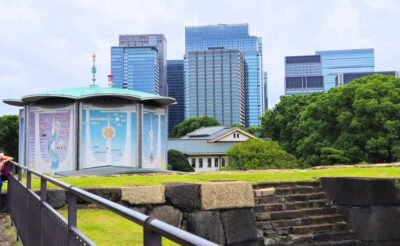
Imperial Palace & Nijo Castle Guided Walking Tour
Read our review →
Imperial Palace, Sensō-ji Temple, & Tokyo Tower Tour
Read our review →
Tokyo Castle, Imperial Palace, Shogun & Garden Walking Tour
Read our review →Browse the lists this tour appears in