
Reviewed · IMPERIAL PALACE & HISTORIC SITES
Tokyo Castle, Imperial Palace, Shogun & Garden Walking Tour
Tokyo’s Imperial Palace is less a grand palace visit than a walk through the remains of Edo Castle, once the seat of shogun power. You’ll pass through Ōtemon Gate, trace old stone defenses, see the castle’s surviving foundations, and wander the East Gardens while your guide explains how Japan’s political center shifted from shoguns to emperors.
I like the small-group format, with the advertised group capped at 10 travelers in one section of the information and 15 in another. I also like the guides’ practical approach. Guides including Mika, Natsumi, Lakki, and Nicolas have been praised for clear historical explanations, photo help, and local tips.
The main drawback is simple: you do not enter the Emperor’s palace. Much of the former castle was destroyed, so this tour works best if you enjoy history, gardens, stonework, and helpful context more than grand interiors.
Key points to know before booking
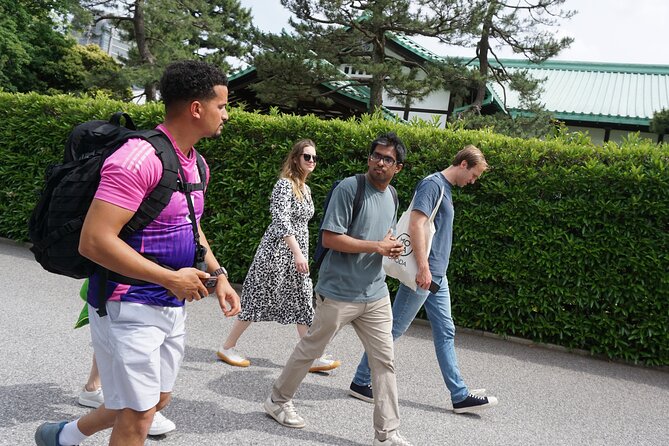
- You visit Edo Castle remains, not the Inner Palace: The tour focuses on the East Gardens, Ōtemon Gate, old guardhouses, stone foundations, and Ninomaru Garden.
- The guide supplies the missing story: Maps, photos, and explanations help you picture buildings that are no longer standing.
- Two hours is an easy introduction: The route is short enough to fit into a busy Tokyo day, though summer heat and winter cold can make the walk feel tougher.
- Guides make the difference: Mika, Natsumi, Lakki, and Nicolas are among the named guides praised for history, English, friendliness, and photo help.
- The meeting point is convenient: Begin at Starbucks Coffee in Wadakura Fountain Park, near public transportation, and finish back there.
- The price is reasonable for context, not admission: At $31.84 per person, you are mainly paying for interpretation and direction, since entry to the grounds is free.
What this Tokyo Castle tour actually covers
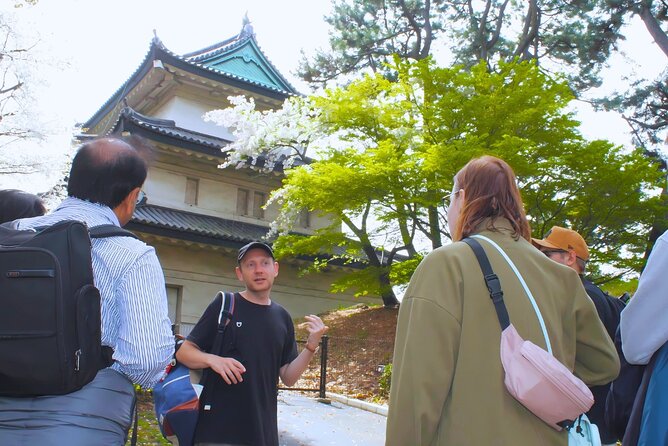
The name can create the wrong picture. This is not a tour of a furnished castle, and it is not an inside visit to the current Imperial Palace. The Inner Palace remains closed to the public, and the main palace area is reserved for the Emperor and imperial family.
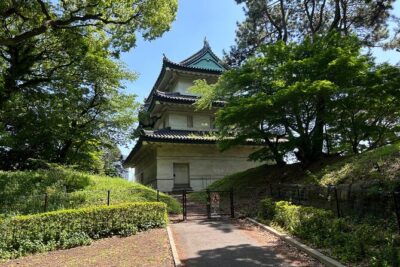
Instead, you explore the East Gardens of the Imperial Palace, the former site of Edo Castle. The castle was damaged and destroyed over time, including by fire, and many structures were never rebuilt. What remains is a set of gates, walls, guardhouse traces, gardens, stone bases, and open spaces.
That may sound modest beside Tokyo’s major modern sights. Yet the setting gives you a useful way to understand Japan’s past. The stones and garden are not just scenery. They help explain the power of the Tokugawa shoguns, the role of the Emperor, and the way Tokyo developed around this former center of government.
I would book this tour for the story behind the site. If you only want to photograph palace buildings, you may leave disappointed. If you want someone to point out what used to stand where, the experience makes far more sense.
Other walking tours in Tokyo people book:
- Tokyo Tsukiji Fish Market Food and Culture Walking Tour
★ 5.0 · 3,184 reviews - Tokyo: Imperial Palace and Shogun Historical Walking Tour
★ 5.0 · 2,251 reviews - Tokyo: Shinjuku Local Bar and Izakaya Guided Walking Tour
★ 4.9 · 1,794 reviews
Meeting at Wadakura Fountain Park
The tour begins at Starbucks Coffee in Wadakura Fountain Park, at 3-1 Kōkyogaien in Chiyoda City. This is a practical starting point near public transportation and gives you a clear place to meet before entering the palace grounds.
Your guide leads the group from the park toward Ōtemon Gate. That matters because the Imperial Palace grounds are large, and the East and West areas can be confusing if you arrive without a plan. You will not spend the opening minutes wondering which entrance to use or which direction leads to the gardens.
Allow enough time to find the Starbucks and arrive before the start time. The meeting point is specific, but the palace district is spacious, so arriving at the last second is not wise.
The experience ends back at the same meeting point. That makes it easy to continue to another part of central Tokyo, return to your hotel, or plan lunch nearby.
Passing through Ōtemon Gate
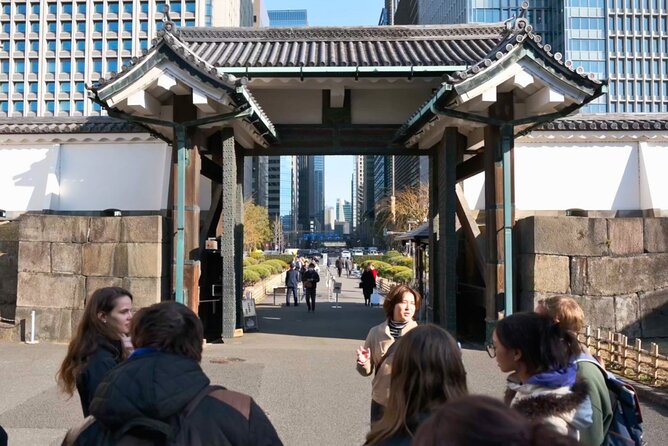
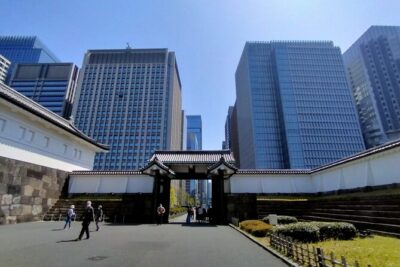
Ōtemon Gate is the first major historical stop. It once served as an important entrance to Edo Castle, and its scale helps you picture the defensive thinking behind the old castle complex.
The guide’s role is especially useful here. A casual walk through the gate might give you a pleasant view of stone, timber, and open space. A guided visit can explain how the gate, guardhouses, walls, and controlled entrances worked together.
The tour includes the guardhouse ruins, which add a human detail to the site. This was not only a residence or ceremonial compound. It was a defended seat of power, and the layout reflected concerns about access and security.
The route is a walking tour, so expect to remain on your feet for about two hours. The pace is described as relaxed, with time for questions and photographs. That slower rhythm suits the setting. You can look closely at the stonework rather than rushing from one checkpoint to the next.
Reconstructing Edo Castle from foundations
The most important adjustment is to understand that you will mostly see remains and open grounds, not reconstructed rooms. The former palace buildings are largely gone, leaving stone foundations and traces of the castle’s original layout.
A guide can make those foundations useful. Maps and images have been used during some tours to help visitors picture the original buildings and understand how the compound was arranged. This is where the tour earns its price. Without explanation, a stone base can look like little more than a low wall. With context, it becomes evidence of a former political center.
The shogun theme also gives the walk a clear focus. You learn how the Edo period government operated, how the shoguns and Emperors related to one another, and how the old power structure connects with modern Tokyo.
The tour does not appear designed as a long academic lecture. It is a moving lesson, with stops for photos and questions. Guides such as Natsumi have been praised for explaining the Edo period in clear English and connecting the site to the development of modern Japan. Mika has also been praised for keeping younger family members interested with historical references.
That family appeal is worth noting. The subject matter can sound serious, but a good guide can turn castle defenses, political rivalries, and palace changes into a story that works for children and adults.
Other historic grounds in Tokyo:
- Tokyo: Imperial Palace Japanese History Walking Tour
★ 4.9 · 987 reviews - Tokyo: Imperial Palace and Shogun Walking Tour
★ 4.9 · 935 reviews - Imperial Palace East Garden and Edo Castle Walking Tour in Tokyo
★ 5.0 · 510 reviews - Tokyo: Imperial Palace East Gardens Walking Tour
★ 4.8 · 353 reviews
Ninomaru Garden and the calmer side of Tokyo
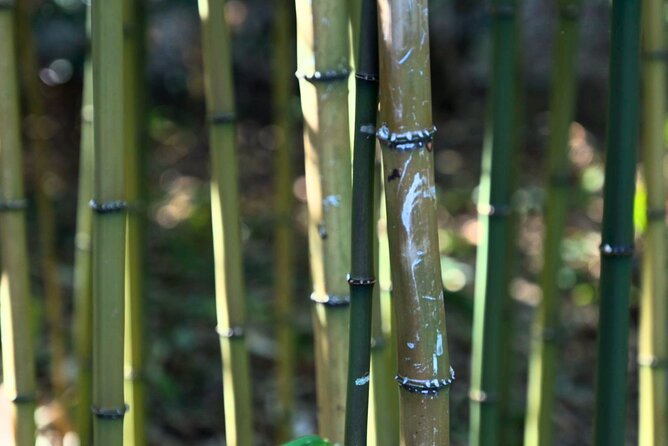
The Ninomaru Garden is the gentler part of the route. Here, the hard defensive lines of gates and stone walls give way to planted paths, ponds, and garden views.
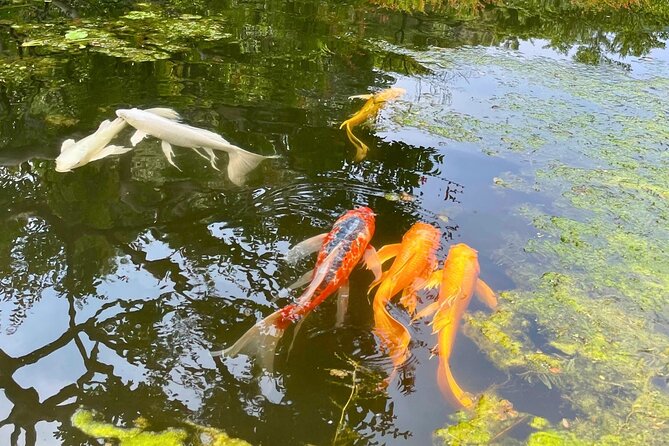
The garden is especially pleasant when you want a break from Tokyo’s crowds and traffic. Koi ponds, seasonal greenery, and quiet paths provide a softer setting for the historical discussion. Cherry blossom season can make the walk particularly attractive, while winter still offers a calm and open garden experience.
The garden is not merely a decorative ending. It shows another side of the former castle grounds, where formal design and controlled space mattered alongside military defenses. Your guide may point out details you would otherwise pass without noticing, including photo locations and features connected with the old compound.
Nicolas, also identified as Nicola in one account, has been praised for bringing meaning to the gardens and helping with photographs. That kind of assistance is practical. You can ask the guide to take a group picture rather than trying to balance a phone on a wall or rely on a hurried selfie.
The garden section is also where weather matters most. Rain can make the paths less comfortable, and summer heat can be tiring in the open grounds. Winter is often easier for walking, but you still need suitable clothing.
Guides who shape the experience
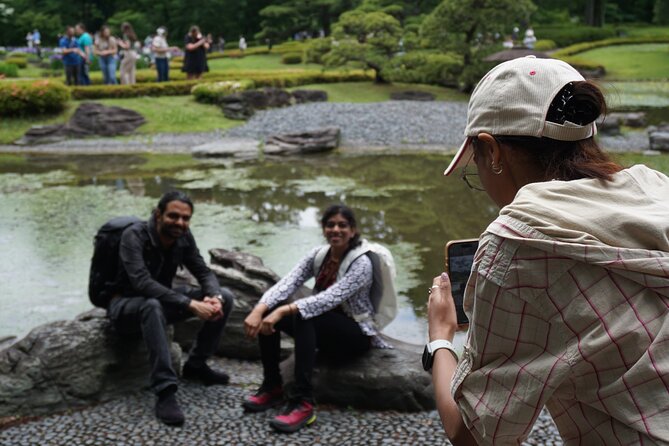
The quality of this tour depends heavily on who leads it. The strongest guide reports describe clear English, an easy pace, detailed answers, and a warm manner.
Mika is noted for engaging younger participants and using maps or images to clarify the setting. Natsumi is praised for explaining the Edo period, the shoguns, the Emperor, and the rise of Tokyo as a center of leadership. Lakki is described as especially strong on shogun history and as an engaging guide even in rainy conditions.
Nicolas is praised for explaining the eras, palace grounds, gardens, and photo spots. Other guides have also been described as friendly, professional, and willing to offer suggestions about local restaurants and shrines.
That is a strong pattern, but you should keep expectations realistic. One less positive experience described a guide whose explanations were difficult to understand and not detailed enough. Another assessment found two hours and limited information hard to justify at this price.
In other words, the tour is not a museum audio guide with a fixed script. Your experience may depend on the individual guide, the weather, and the questions your group asks. The good news is that the format allows questions, so speak up if you want more detail about a gate, garden feature, or historical period.
How much walking and weather to expect
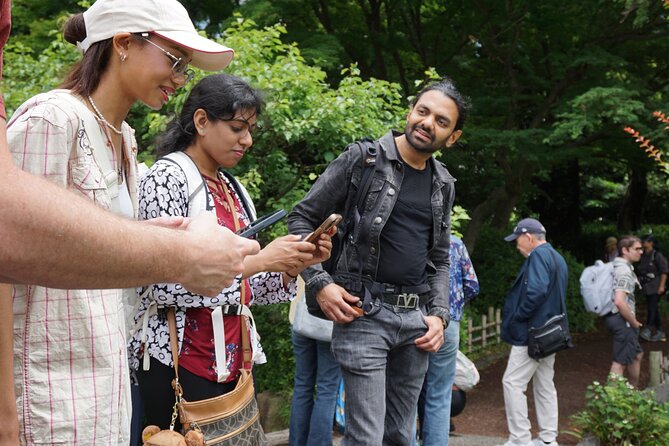
The tour lasts about two hours and takes place outdoors. Most people can participate, but it is not a seated sightseeing activity.
The grounds are extensive, and heat or cold can make the walk harder than the duration suggests. Summer visitors should bring water, sun protection, and comfortable shoes. On a rainy day, an umbrella or rain jacket will help, although the guide may still be able to make the history engaging.
There is no dress code, and tattoos are welcome. That makes the activity easy to fit into a normal sightseeing day. You do not need formal clothing or special preparation beyond dressing for the forecast.
Because the tour is limited to a small group, it should be easier to hear the guide and ask questions than on a large bus excursion. The supplied information gives two different maximum sizes, 10 and 15. Treat it as a small-group tour, but check the final booking details if the exact group limit matters to you.
Is $31.84 good value?
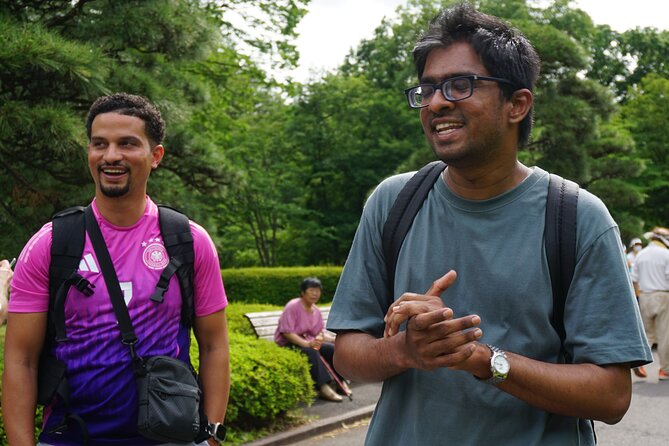
At $31.84 per person, the tour is priced as a modest guided experience rather than a major palace admission. Entry to the East Gardens is listed as free, so the fee mainly covers the guide, organization, route planning, and historical explanation.
That can be good value if you would otherwise wander past the ruins without understanding them. The guide helps you avoid getting lost, identifies good photo spots, and gives the surviving stones a clear place in Japanese history.
The value is weaker if you expect access to the Inner Palace or a full castle reconstruction. You are not paying to enter grand royal rooms. You are paying for a two-hour explanation of a site where much of the original architecture has disappeared.
I would compare this tour with your own interests and schedule. First-time visitors who have limited time may prefer Tokyo’s most visually dramatic sights. For a second visit, or for anyone interested in Edo Japan, shoguns, gardens, and political history, the tour becomes a more sensible choice.
A few practical factors improve the value:
- Small group: You can usually hear the guide and ask questions more easily.
- Short duration: Two hours leaves room for other Tokyo plans.
- Free cancellation: You can cancel up to 24 hours before the start for a full refund.
- Weather policy: If poor weather cancels the tour, you are offered another date or a full refund.
- No Inner Palace access: This should be clear before you pay.
Who should book this walk?
I would recommend it to anyone who likes history but does not want to spend hours reading about Edo Castle before arriving. It also suits families, especially if your children respond well to stories about samurai, shoguns, palace defenses, and changing political power.
It is a good match for photographers who enjoy gardens, stone walls, gates, koi, and seasonal scenery. The guide can point out photo spots and take pictures for your group.
The tour also fits a first morning or final morning in Tokyo. Several accounts describe it as pleasant and calm, and the two-hour length is easy to place between other activities.
I would be more cautious if your main goal is to enter the current palace. You cannot do that here. I would also reconsider if you dislike outdoor walking, have little interest in historical explanation, or expect a large number of surviving castle buildings.
Should you book the Imperial Palace East Gardens tour?
Book it if you want context, gardens, and Edo Castle remains in a compact format. The guide is the heart of the experience, and the strongest names associated with it, including Mika, Natsumi, Lakki, and Nicolas, are praised for clear history, friendly conversation, and useful help with photographs.
Skip it if you want lavish palace interiors or a fully rebuilt castle. The site is more subtle than spectacular, and the history often matters more than what remains above ground.
For $31.84, I see it as a fair introduction to one of Tokyo’s most important historic sites, provided you understand exactly what you are seeing. Go for the story behind the stones, not the expectation of walking through an imperial palace.
FAQ
Can I enter the Emperor’s palace on this tour?
No. Access to the Inner Palace is not included and the Inner Palace is not open to the public. The tour visits the East Gardens and the historic Edo Castle area.
How long does the tour last?
The tour lasts approximately two hours.
Where does the tour begin?
It begins at Starbucks Coffee in Wadakura Fountain Park, at 3-1 Kōkyogaien, Chiyoda City, Tokyo.
Where does the tour finish?
The tour finishes back at the meeting point in Wadakura Fountain Park.
What places are included?
The route includes Ōtemon Gate, guardhouse ruins, Edo Castle remains, and Ninomaru Garden within the East Gardens of the Imperial Palace.
Is admission included?
The guided walk includes access to the grounds listed in the tour details, and no separate admission ticket is listed. The experience does not include access to the Inner Palace.
How many people are in the group?
The information describes a small group, with one section listing a maximum of 10 travelers and another listing a limit of 15. Check the booking details for the exact limit on your date.
Is there a dress code?
No. The tour information states that there is no dress code and that tattoos are welcome.
What happens if the weather is poor?
The tour requires good weather. If the operator cancels because of poor weather, you will be offered another date or a full refund.
Can I cancel for a full refund?
Yes. You can cancel at least 24 hours before the start time for a full refund. Cancellations or changes made within 24 hours are not refunded.
More gardens in Tokyo
- Osaka: teamLab Botanical Garden Entry Ticket
★ 4.5 · 1,710 reviews - Kyoto Arashiyama Walking Tour: Bamboo, Monkeys, Gardens & Secrets
★ 5.0 · 1,216 reviews - Kyoto Zen Meditation & Garden Tour at a Zen Temple with Lunch
★ 5.0 · 441 reviews - Kyoto Arashiyama Bamboo forest & Garden Half-Day Walking Tour
★ 5.0 · 413 reviews
More castle tours elsewhere in Japan
- Tokyo Castle & Imperial PalaceーShogun Walking Tour
★ 4.7 · 1,068 reviews - Tokyo Castle & Imperial PalaceーShogun Walking Tour
★ 5.0 · 724 reviews - Osaka Castle: Museum and Tower Entry Ticket
★ 4.5 · 2,380 reviews - Kyoto: Nijo-jo Castle and Ninomaru Palace Guided Tour
★ 4.7 · 1,020 reviews
Just added in Tokyo
- Nikko: Edo Wonderland Edomura Cultural Theme Park Ticket★ 4.3 · 205 reviews
- 《MEMBERS-ONLY-BAR-HOPPING》Discover Your Special Whiskey in Tokyo!★ 5.0 · 29 reviews
- Japanese Whisky Hunting《HIGH-QUALITY-ONLY》Rare Tasting Class★ 5.0 · 20 reviews
- Luxury Tokyo Sake, Cocktail, Whisky and Pairing Tour★ 5.0 · 18 reviews
- Wagyu & Sake Pairing in Shinjuku – Steak, Shabu-Shabu & More★ 5.0 · 112 reviews
- Small-Group Wagyu Beef and 7 Japanese Dishes Tokyo Cooking Class★ 5.0 · 190 reviews
- Mt. Fuji, Hakone Private Tour from Tokyo – Onsen, Arts and Nature★ 5.0 · 79 reviews
- Tokyo Cyberpunk Street Photo Tour★ 5.0 · 165 reviews
Imperial Palace & Historic Sites, compared.
Imperial Palace and Shogun Historical Walking Tour
Read our review →
Imperial Palace East Garden and Edo Castle Walking Tour in Tokyo
Read our review →
Imperial Palace & Nijo Castle Guided Walking Tour
Read our review →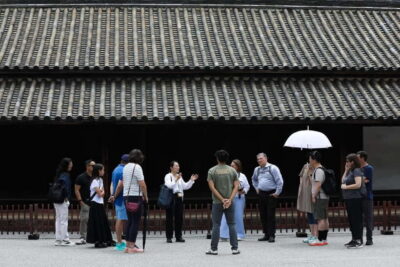
Imperial Palace, Sensō-ji Temple, & Tokyo Tower Tour
Read our review →Browse the lists this tour appears in