
Reviewed · TEMPLE & SHRINE TOURS
Kyoto: Hidden Gems E-Bike Tour Through Backstreets & Temples
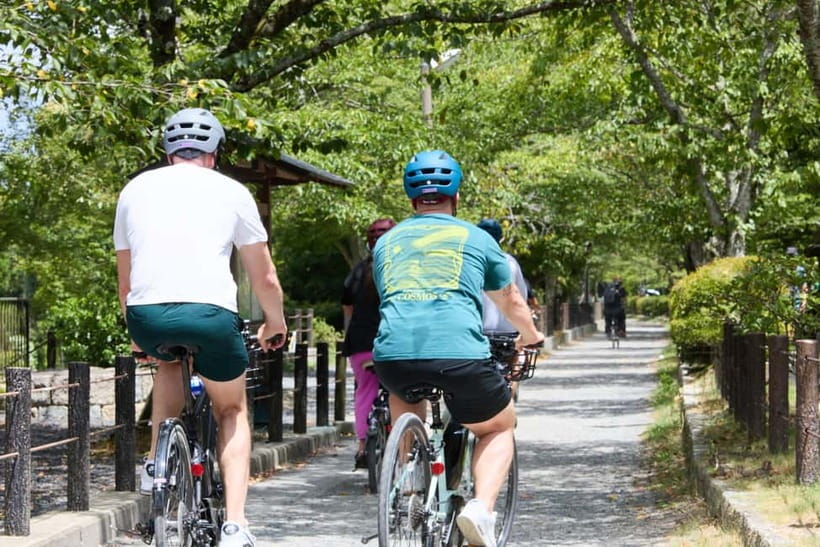
Kyoto’s best moments are often found between the famous sights, and this small-group e-bike ride makes those quieter corners reachable without wearing out your legs. Starting in Gion, you pedal through eastern Kyoto to temples, shrines, leafy paths, and the Imperial Palace, with an English-speaking guide explaining the customs and stories behind each stop.
I like two things here: the easy range of the e-bikes, especially on Kyoto’s lower eastern hills, and the guides’ personal touch. Ben, Yuki, Kenji, and Yukio have been praised for safe riding, clear explanations, good photos, and adjusting the pace to suit the group. The one caution is practical: the start can be hard to spot, and you need to be over 145 centimeters tall, so this is not a ride for small children.
Key points to know before you book
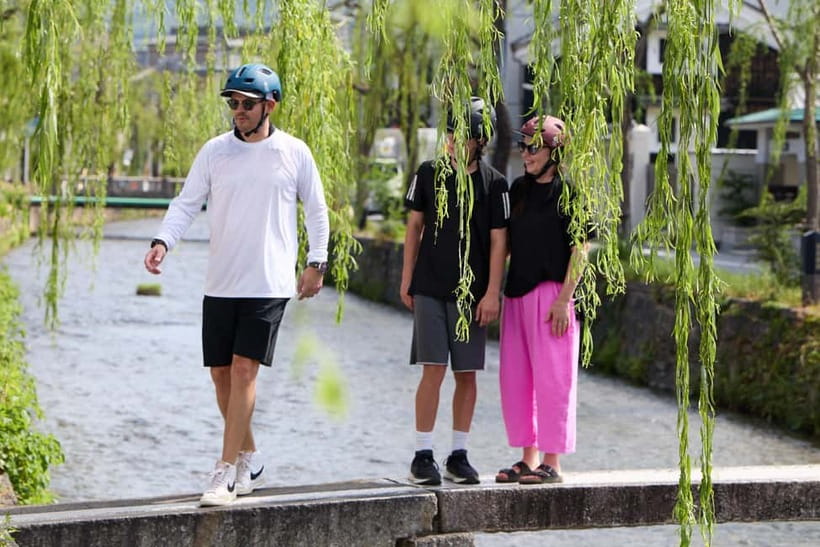
- A broad slice of Kyoto in four hours: The route links Gion, Nanzenji, Heian Shrine, the Philosopher’s Path, Shimogamo-jinja, and Kyoto Imperial Palace.
- E-bikes help on the eastern hills: You still pedal, but the motor makes the ride less demanding.
- Quiet streets are the main attraction: The route favors less crowded places instead of simply repeating Kyoto’s busiest stops.
- Guides make the difference: Ben, Yuki, Kenji, and Yukio have all been praised for local stories, patience, safety, and tailoring the ride.
- A compact group: With no more than eight participants, it is easier to ask questions and stay together.
- Plan for practical limits: Insurance is not included, alcohol and drugs are not allowed, and the ride is unsuitable for children under 10 or anyone under 145 centimeters.
Why an e-bike is a smart way to see Kyoto
Kyoto is spread out enough that walking between major sights can consume much of your day. Public transport helps, but trains and buses do not show you the small streets between destinations. An e-bike fills that gap nicely.
You still get the feel of moving through the city under your own power, but the motor takes the sting out of the route. That matters on the eastern side of Kyoto, where the ride includes lower hills. One experienced rider specifically noted that electric assistance was useful in a couple of places.
This is not a hard-core cycling trip. The four-hour schedule includes stops at each major site, time for explanations, and pauses to look around. One useful description of the pace is a good balance between pedaling and talking. If you want a serious athletic workout, this may feel too gentle. If you want to cover a lot of ground without arriving at every temple hot and tired, it makes good sense.
The route also lets you see how Kyoto changes from one district to the next. Gion brings traditional streets and famous old-town character. Eastern Kyoto gives you temple grounds and tree-lined routes. The northern section around Shimogamo-jinja feels calmer, while the Imperial Palace offers a broad change of scale. You get a fuller sense of the city than you would from visiting one temple by taxi.
Other cycling tours in Kyoto people book:
- Bike Tour Exploring North Kyoto plus Lunch
★ 5.0 · 1,087 reviews - Arashiyama Bamboo Forest & Hidden Gems Bike Tour (Early Bird)
★ 5.0 · 613 reviews - 5 Top Highlights of Kyoto Full Day Bike Tour (E-bike option)
★ 5.0 · 511 reviews
Meeting in Gion and setting out
The meeting point is in front of Kyoto Tourist Lounge Gion on Yamatoooji-dori Street. Your guide waits there with the bikes. Use the Google Maps location carefully before setting out, since the signage at the start has been described as limited. I would arrive a little early and look for the guide rather than assuming the storefront will make the meeting point obvious.
Gion is a useful starting place because it puts you close to one of Kyoto’s most recognizable districts. It also gives the guide a chance to explain how the ride will work before you leave the busier streets. The group is limited to eight people, which is a sensible size for cycling through narrow roads and keeping track of everyone at crossings.
The English-speaking guides are a major part of the appeal. Ben is repeatedly praised for safe leadership, clear stories, patience, and a lively manner. Yuki is a Kyoto local who brings pride in his home city and has been especially appreciated for finding peaceful places. Kenji has adjusted the route to match a group’s skill and interests. Yukio has also been praised for his English and for guiding safely through narrow streets.
Names and guide assignments can change, so you should not book on the assumption that one particular guide is guaranteed. Still, the repeated pattern is encouraging: the human side of the tour matters as much as the bicycle.
Gion: a short introduction to old Kyoto
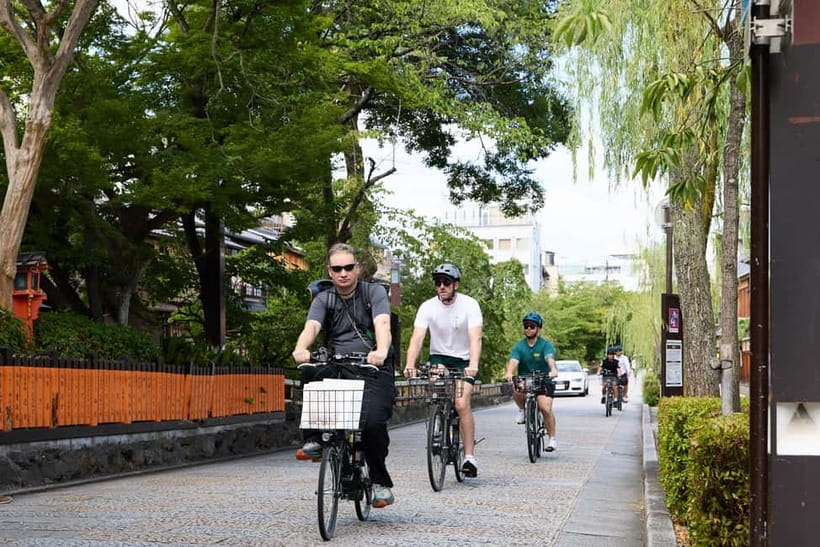
The first stop is Gion, with about 20 minutes to look around. This is a short visit rather than a full walking tour, but it gives you a quick introduction to Kyoto’s traditional side before the ride moves into quieter territory.
Gion is one of the places where Kyoto’s old-town image is most visible. Its narrow streets and traditional buildings can be busy, so the value here is not solitude. Instead, it provides a useful contrast with the less visited stops later in the morning.
Keep your expectations in check. Twenty minutes is enough for orientation, a few photos, and an opening explanation. It is not enough to explore every lane or spend time seeking out particular shops. The tour’s purpose is to use Gion as a starting point, then show you parts of Kyoto that are harder to connect on foot.
Nanzenji Temple and the eastern hills
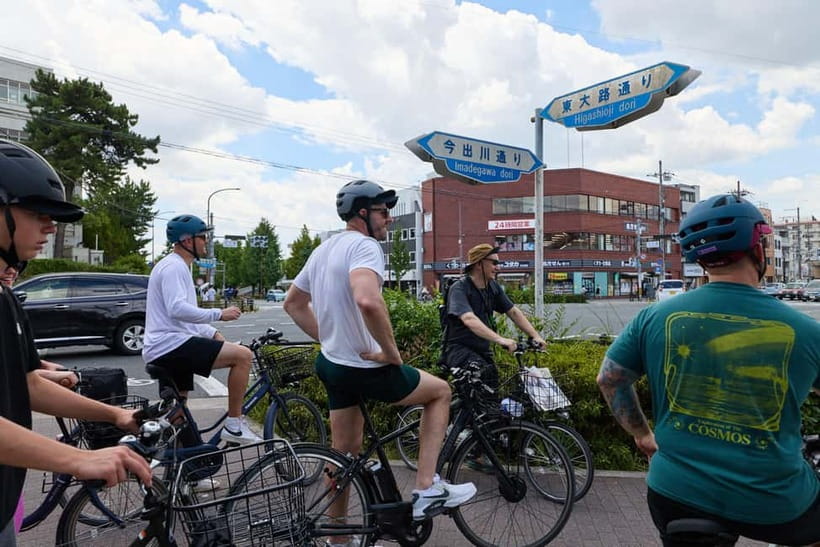
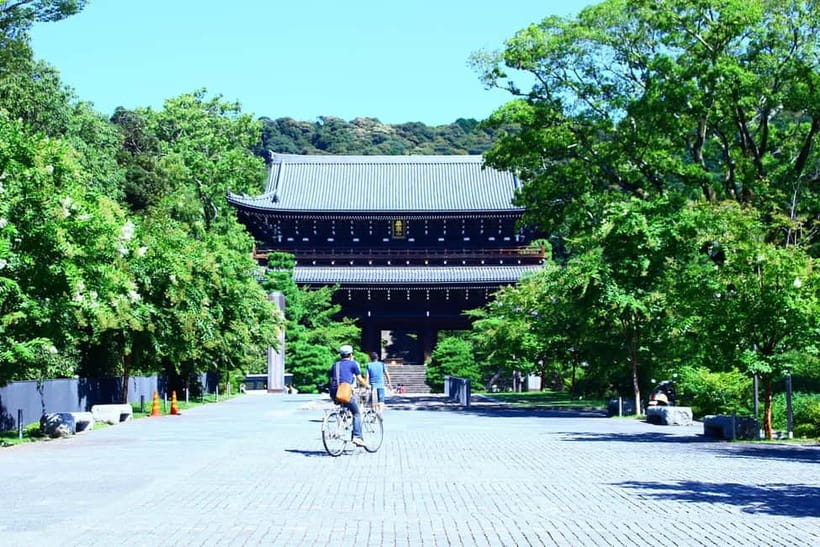
Nanzenji receives about 30 minutes. This is one of the more substantial temple stops and an important point in the eastern Kyoto portion of the route.
The e-bike is particularly helpful around this section. You are not simply rolling along flat central streets, and the electric motor gives you support when the road tilts upward. You remain active, but the ride is more accessible to people who are comfortable on a bicycle but not eager to spend the day climbing.
Thirty minutes gives you time to see the setting and listen to the guide without turning the stop into a rushed photo dash. The explanations about religion, customs, and local traditions are an important part of the experience. The guides are not only pointing out buildings. They are helping you understand how the places function within Kyoto’s culture.
As with the other temples, remember that this is a survey visit. If Nanzenji is high on your personal list, you may want to return later for a longer look. The benefit of this tour is breadth, not extended time at one site.
Other temples and shrines in Kyoto people book:
- Kyoto: Tea Ceremony Ju-An at Jotokuji Temple
★ 4.9 · 3,207 reviews - Arashiyama Bamboo, Temple, Monkeys, or Secret Sake Brewery
★ 4.8 · 886 reviews - Kyoto: Arashiyama Bamboo Forest, Monkeys, Matcha & Temple Tour
★ 5.0 · 759 reviews - Osaka/Kyoto: Arashiyama, Nara & Fushimi Inari Shrine w/Lunch
★ 4.4 · 754 reviews
Heian Shrine: a change of scale
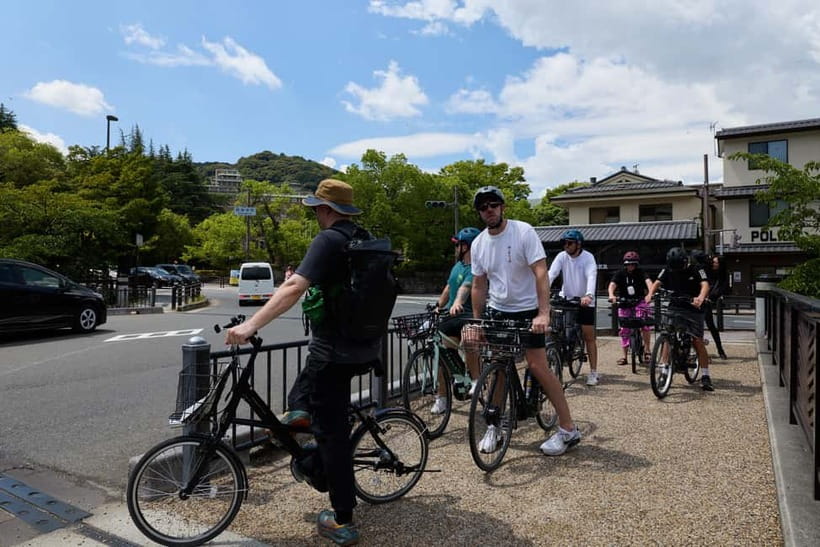
The next 30-minute stop is Heian Shrine. After the tighter streets and temple atmosphere around eastern Kyoto, the shrine gives the ride a different visual rhythm.
The itinerary allows enough time to pause, hear the guide’s explanation, and take photos. Guides have been praised for giving concise information rather than filling every moment with talk, which suits a cycling tour. You get context, then space to look around on your own.
That balance is worth noticing. A poor bike tour can become a moving lecture, with everyone trying to listen while watching traffic. Here, the stops provide the proper place for explanations. The riding connects the locations, while the site visits handle the cultural detail.
If you prefer to linger quietly at one shrine, 30 minutes may feel short. If you want to compare several types of religious and civic spaces in one morning, this stop fits the plan well.
The Philosopher’s Path at a manageable pace
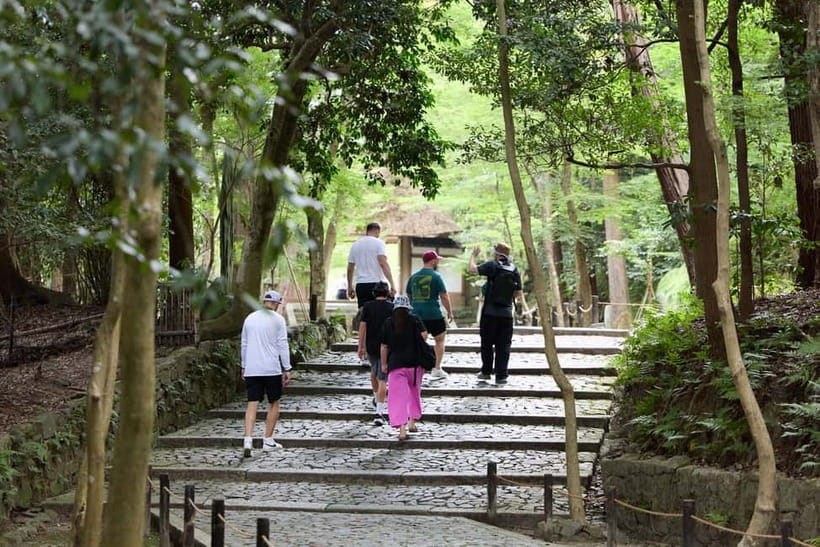
The Philosopher’s Path is another 30-minute visit. It is one of the most pleasant sections for a slower ride and a natural place to pause after the eastern temple stops.
The route’s appeal is not only the path itself. It is the change in pace. You move away from the busiest sightseeing corridors and get time to notice the quieter side of Kyoto. Several guides have been praised for taking groups to peaceful places away from the main crowds, and this part of the route fits that goal.
The exact feel will depend on the day and season. The path is still a known Kyoto sight, so do not expect complete emptiness. The tour’s advantage is that you are not treating it as an isolated attraction. You arrive by bike, spend time there, then continue to another part of the city without retracing a long walk.
Bring insect repellent if you are sensitive to bites. One rider specifically offered that advice, and it is a small, sensible precaution for a route that includes greener, quieter areas.
Shimogamo-jinja and a calmer northern Kyoto
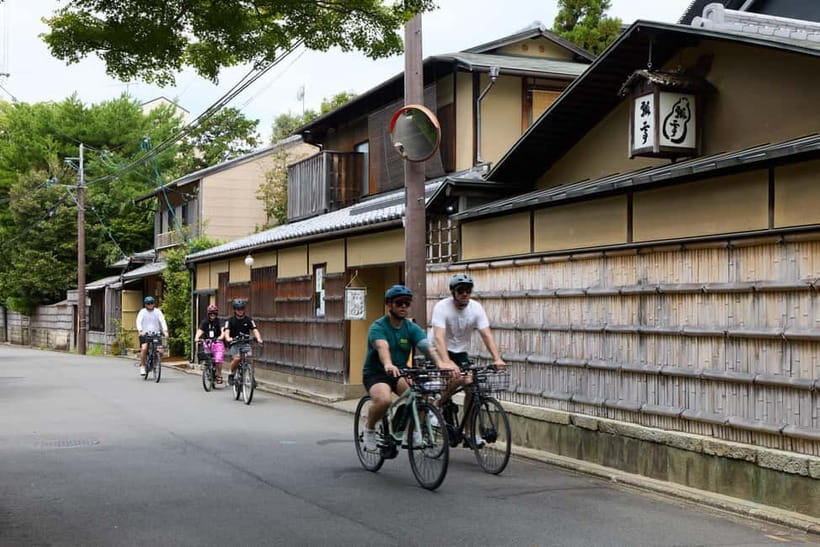
Shimogamo-jinja receives about 20 minutes. This is a shorter stop, but it adds an important regional shift to the morning.
By this point, you have seen Gion, temples, a major shrine, and a scenic path. Shimogamo-jinja broadens the picture again, showing you another kind of sacred space and another part of Kyoto. The guide’s commentary helps connect the stops, especially if you are interested in how Shinto traditions and Buddhist sites differ.
Twenty minutes is enough for an introduction and photos, but not a full exploration. That is the trade-off of covering so much ground in four hours. I see this as a strong choice for a first morning in Kyoto, when you want to learn where the main districts sit and decide where to return later.
The ride also gives you something a standard sightseeing bus cannot: a sense of distance and neighborhood change. You are not just appearing at one attraction after another. You are passing through the city between them.
Kyoto Imperial Palace and the ride back to Gion
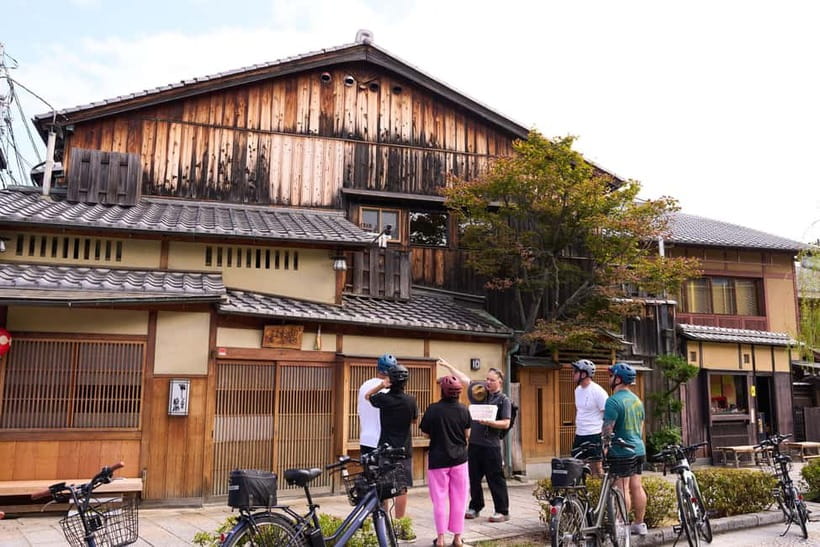
The final major stop is Kyoto Imperial Palace, with about 30 minutes to visit. Its open scale offers a fitting contrast to the narrower lanes, temple grounds, and wooded paths earlier in the tour.
The palace area gives you room to step off the bike, hear the guide’s background, and take photographs. Guides have also offered practical advice about visiting Kyoto’s most popular sights at less crowded times, so this is a useful moment to ask questions about the rest of your stay.
After the palace, the group returns to Kyoto Tourist Lounge Gion. The route ends where it began, which simplifies your plans for lunch or your next sightseeing stop. You will have covered a surprisingly wide area without having to arrange several separate train or bus journeys.
Do not expect every site to receive equal time. The schedule gives each place a short, purposeful visit, with the ride itself forming part of the experience. That is the right way to judge this tour. It is not a collection of long temple visits. It is a moving introduction to several sides of Kyoto.
What the guide adds to the ride
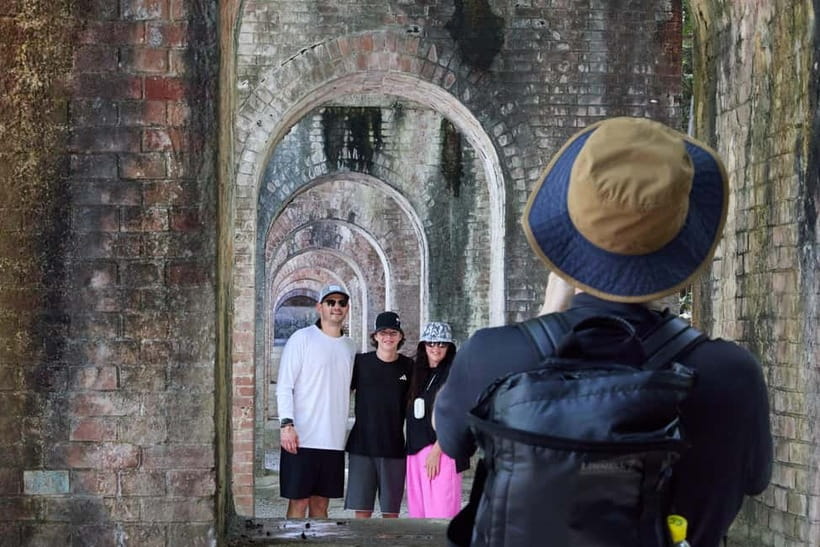
The strongest part of this experience is the guide’s role. The bike gets you there, but the guide helps you understand why each place matters.
Ben has been praised for checking that everyone was following, putting safety first, answering questions, and taking photos at good spots. Yuki has been described as friendly and proud of Kyoto, with a knack for finding quiet locations. Kenji has shown flexibility by adjusting the ride to the group’s ability and interests.
That flexibility matters in a small group. If one person is a confident cyclist and another is more cautious, a patient guide can keep the ride enjoyable for both. The ride is described as suitable for a relaxed or more adventurous approach, but your actual pace will still depend on the group and the guide.
You should also expect short stories about religion, traditions, local customs, and Kyoto’s past. The best comments are the ones that help you see the city differently after the tour. Several guides have also taken photos for participants, which is a useful bonus when you are busy riding and do not want to rely only on self-timer shots.
Price, group size, and practical value
At $87 per person, the tour is not the cheapest way to see Kyoto, but it offers more than a basic bicycle rental. The fee includes the e-bike, an English-speaking local guide, the four-hour route, visits to six named areas, and a small group capped at eight participants.
I think the value is strongest if you have limited time in Kyoto or want help connecting districts that would be awkward to combine on foot. A rental bike alone may cost less, but you would need to plan the route, navigate, choose which sites to visit, and supply your own cultural context. Here, those tasks are handled for you.
The value is weaker if you already know Kyoto well, prefer long unhurried visits, or want to choose every stop yourself. You are paying for a set route and a guide-led experience. Insurance is not included, so check your own coverage before booking.
Free cancellation is available up to 24 hours before the start for a full refund, and you can reserve now and pay later. Starting times vary, so check availability for your date.
Who should book this e-bike tour?
I would choose this tour for a first or second day in Kyoto. It gives you a useful city overview, introduces several major religious and civic sites, and points out quieter places you might otherwise miss. You can then return to the stops that interest you most.
It suits adults and older children who are comfortable on bicycles and meet the 145-centimeter height requirement. Children under 10 are not suitable, and babies under 1 year are excluded. The small group works well for couples, friends, and solo riders who want conversation without a large crowd.
You should be comfortable cycling on city streets and following a guide through narrow roads. The experience is not presented as a strenuous ride, but it is still a bicycle tour. Wear clothing that lets you pedal comfortably, and consider insect repellent for the greener sections.
Should you book it?
Book it if you want to see Kyoto by moving through it, not simply being dropped at one sight after another. The e-bikes make the eastern hills manageable, the small group keeps the ride personal, and guides such as Ben, Yuki, and Kenji add local detail that a self-guided route cannot provide.
Skip it if your priority is spending an hour or more inside each temple, or if your group includes young children below the stated limits. For most visitors with four free hours and a willingness to cycle, $87 is a fair price for the range of sights, transport, local explanation, and route planning included.
FAQ
How long does the Kyoto e-bike tour last?
The tour lasts four hours, with visits to Gion, Nanzenji Temple, Heian Shrine, the Philosopher’s Path, Shimogamo-jinja Shrine, and Kyoto Imperial Palace.
Where does the tour start and finish?
It starts and finishes at Kyoto Tourist Lounge Gion. The guide waits in front of the lounge on Yamatoooji-dori Street.
What language is the tour conducted in?
The tour is conducted in English with a live guide.
How many people can join the group?
The group is limited to eight participants.
Is the e-bike rental included?
Yes. A comfortable e-bike rental is included in the price.
Is the tour suitable for young children?
Children under 10 are not suitable for this activity, and participants must be over 145 centimeters tall. Babies under 1 year are also not suitable.
Can I cancel the booking for a refund?
Yes. You can cancel up to 24 hours in advance for a full refund. You can also reserve now and pay later.
More cycling tours elsewhere in Japan
- E-Bike Tours of the highlights of Kyoto!!!
★ 5.0 · 291 reviews - Afternoon Kyoto Bike Tour: Bamboo Forest, Monkeys & Hidden Spots
★ 5.0 · 283 reviews - South Kyoto in a Nutshell: Gentle Backstreet Bike Tour!
★ 5.0 · 225 reviews - Pedal Adventure Kyoto’s iconic landmarks on an e-bike tour
★ 5.0 · 189 reviews
More temples and shrines elsewhere in Japan
- Kyoto: Ninnaji Temple Entry Ticket
★ 4.2 · 650 reviews - Kyoto Zen Meditation & Garden Tour at a Zen Temple with Lunch
★ 5.0 · 441 reviews - Kyoto: Zen Experience in a Hidden Temple
★ 5.0 · 437 reviews - KYOTO Tea Ceremony with kimono near by Imamiya Jinjya Shrine
★ 5.0 · 343 reviews
Just added in Kyoto
- Private Cooking Class Udon in Kyoto Japan★ 5.0 · 23 reviews
- Your Private Vacation Photography Session In Kyoto★ 5.0 · 110 reviews
- Kyoto: Zen Meditation at a Private Temple with a Monk★ 5.0 · 25 reviews
- Private Pewter Sake Cup Experience with a Kyoto Artisan★ 5.0 · 31 reviews
- Kyoto Wagashi(Japanese sweets) Cooking Class near Fushimiinari★ 5.0 · 60 reviews
- Kyoto:Family-Friendly Kimono & Yukata Experience at WARGO★ 5.0 · 147 reviews
- Private Guided Traditional Buddhist Cooking in Japan★ 5.0 · 16 reviews
- Kyoto: Gion Geisha District & Sake-in-Hand Walking Tour★ 5.0 · 37 reviews
Temple & Shrine Tours, compared.

Meiji Shrine, Asakusa, Skytree Bus Tour and Cruise
Read our review →
Asakusa Walking Tour with Sensoji Temple Visit
Read our review →
Kamakura & Enoshima Day Trip including Temple Tickets
Read our review →
Nikko Toshogu Shrine and Kegon Waterfall Tour
Read our review →
Tokyo Panoramic 1 Day: Meiji Shrine, Asakusa, Odaiba and SKYTREE®
Read our review →
1-Day Snow Monkeys, Zenko-ji Temple & Sake in Nagano
Read our review →Browse the lists this tour appears in