
Reviewed · FUSHIMI INARI TOURS
Gion and Fushimi Inari Shrine Kyoto Highlights with Government-Licensed Guide
Fushimi Inari’s rows of orange torii gates and Gion’s narrow geisha lanes give you two very different views of Kyoto in one outing. A licensed English-speaking guide adds useful context, especially around the difference between maiko and geiko, the local terms for apprentice and experienced geisha.
I like the small group size, capped at 10, and the chance to reach lanes that cars cannot use. I also like the route’s mix of major sights and lesser-known corners, including Tatsumi Daimyojin Shrine and the Shirakawa canal. The main caution is practical: this is a walking tour with no private vehicle, and the route covers several separate areas, so confirm how the group moves between them before booking.
Key points at a glance
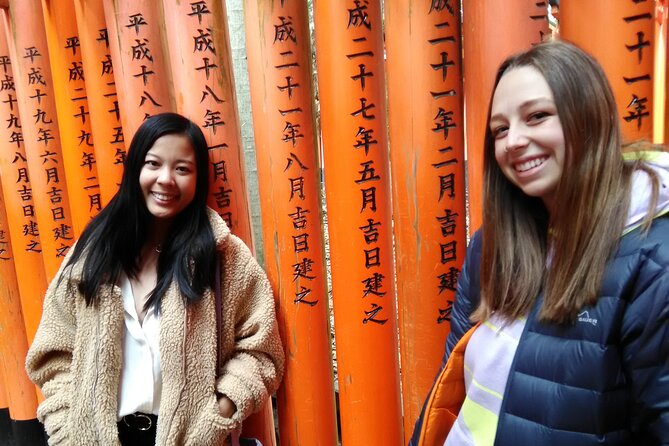
- Fushimi Inari in the plan: Begin with about an hour at Kyoto’s famous vermilion torii shrine.
- Gion beyond the postcard view: Walk Gion, Pontocho, Miyagawacho, Shirakawa, and Hanamikoji-area lanes with a guide.
- Geisha traditions explained: Learn about maiko and geiko, their training, and the role of Kyoto’s teahouse districts.
- Several historic stops: Yasaka Shrine, Kiyomizu-dera, Kennin-ji, and the tiny Tatsumi Daimyojin Shrine add variety.
- A genuine walking format: Pickup and drop-off are on foot, and private transportation is not included.
- Small-group advantage: A maximum of 10 people makes it easier to hear the guide and ask questions.
Fushimi Inari starts the Kyoto story
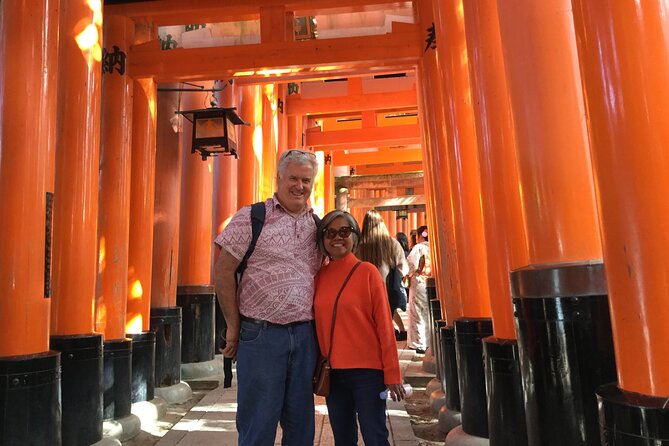
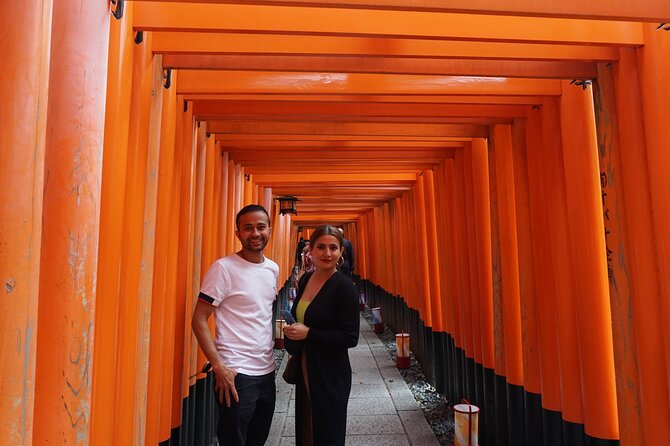
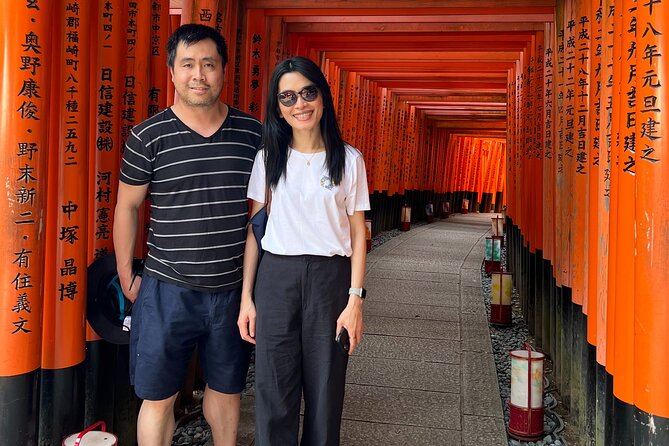
Fushimi Inari-taisha is one of Kyoto’s best-known Shinto shrines, located in the city’s southern area. Its signature feature is the long sequence of vermilion torii gates that climbs through the wooded hills behind the main shrine buildings.
The tour allows about one hour here, with admission included at no extra cost. That is enough to see the shrine’s central area and walk into the gate-lined route, but it is not enough for a full climb through every section of the mountain. If you want to hike far beyond the lower gates, you may need extra time before or after the tour.
A guide is useful at Fushimi Inari because the shrine can feel like a beautiful maze. You get more than an orange tunnel for photographs. You can also learn how the shrine fits into Shinto practice and why so many gates have been dedicated.
The timing matters. Fushimi Inari is physically separate from the Gion sights, and this experience does not include a private vehicle. The meeting point is at Tatsumi-jinja Shrine in Gion, while Fushimi Inari appears first in the stated route. Ask Japan Guide Agency to confirm the exact meeting arrangement and how the group travels between these areas. The supplied details clearly say that pickup and drop-off are on foot, so you should not expect a tour van.
Other temples and shrines in Kyoto people book:
- Kyoto: Tea Ceremony Ju-An at Jotokuji Temple
★ 4.9 · 3,207 reviews - Arashiyama Bamboo, Temple, Monkeys, or Secret Sake Brewery
★ 4.8 · 886 reviews - Kyoto: Arashiyama Bamboo Forest, Monkeys, Matcha & Temple Tour
★ 5.0 · 759 reviews
Gion reveals more on foot
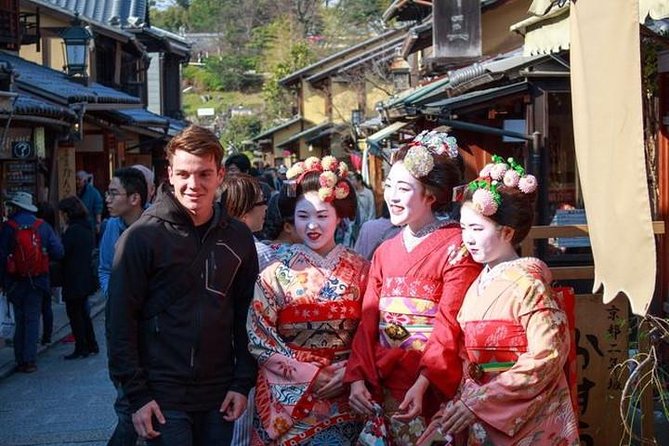
Gion is Kyoto’s most famous geisha district, spread around Shijo Avenue between Yasaka Shrine and the Kamo River. Its lanes hold restaurants, shops, traditional teahouses, and carefully preserved wooden buildings.
This is the part of the experience where a guide earns the fee. On your own, it is easy to walk through Gion, take a few photographs, and miss the meaning of what you are seeing. A guide can point out how the district works, explain the difference between maiko and geiko, and help you understand why the area is more than a pretty backdrop.
The walking route includes Gion, Pontocho, and Miyagawacho, three districts with strong links to Kyoto’s traditional entertainment culture. You will also pass through smaller lanes that cars cannot reach. Those narrow paths are a good reason to choose a walking tour rather than a vehicle-based city circuit.
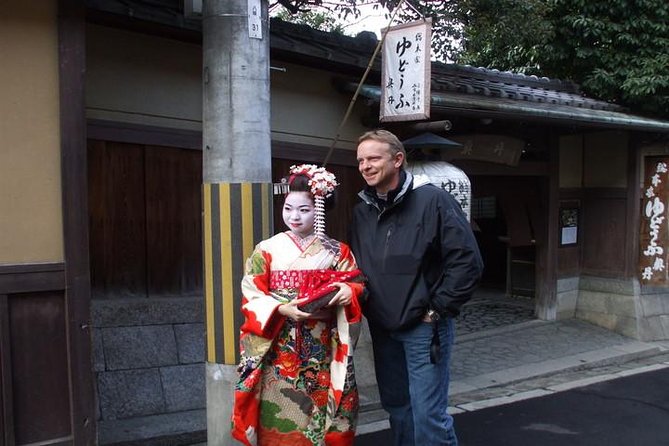
Do not book this outing mainly to see a geisha. You might spot a maiko or geiko, as happened for one group during a walk with the guide, but there is no guarantee. The real value is learning about the districts and their customs without treating the people who work there as a photo attraction.
The guide’s manner matters here. One especially praised guide was Mari, who was described as warm, clear, and helpful. The assigned guide can vary, so Mari’s name should not be treated as a promise. Still, the positive comments about her suggest the agency understands that Gion needs a respectful and well-explained approach.
Shirakawa and Tatsumi Daimyojin slow the pace
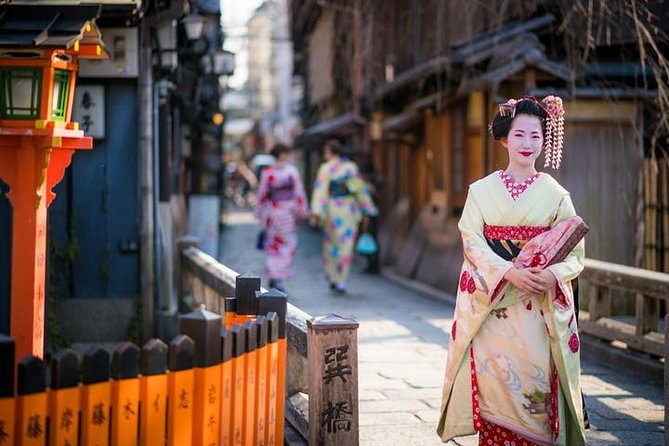
The Shirakawa area follows a canal parallel to Shijo Avenue. Willow trees, traditional restaurants, and teahouses line the water, creating one of Gion’s most attractive walks.
This section gives the tour a quieter rhythm. You leave the larger streets and follow a narrow canal-side route where the architecture and waterway do most of the work. It is also a useful place for your guide to explain the relationship between Gion’s streets, teahouses, and traditional performers.
Tatsumi Daimyojin Shrine is a much smaller stop near Shirakawa. The inner torii makes a fine photograph, but the shrine’s history is not as clearly documented in the supplied details as that of Yasaka Shrine or Kiyomizu-dera. Your guide may offer local context, but you should expect only about 10 minutes here.
The meeting point is also at Tatsumi-jinja Shrine, at Motoyoshicho 59 in Kyoto’s Higashiyama Ward. Read the location details carefully. This is not a hotel pickup, and the tour does not collect you by car.
Yasaka Shrine links Gion with old Kyoto
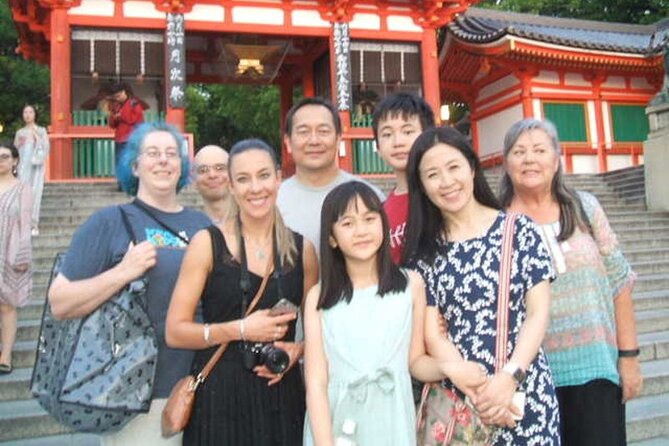
Yasaka Shrine, also called Gion Shrine, sits between Gion and the Higashiyama area. It was founded more than 1,350 years ago and remains one of Kyoto’s best-known Shinto shrines.
The tour allows about 10 minutes at Yasaka Shrine. That is a brief visit, so expect an orientation rather than a detailed examination of every building, gate, and ritual space. The stop works well as a connector between Gion’s entertainment district and the temples farther east.
I like this inclusion because it gives the geisha district a wider setting. Gion is not an isolated theme park. It sits beside long-established religious sites, shopping streets, and residential areas. Yasaka Shrine helps you see how those parts of Kyoto fit together.
If religious history is your main interest, the short timing may feel thin. If you want a broad introduction to Kyoto’s traditional districts, 10 minutes is enough to make the shrine meaningful without taking time away from the longer walks.
Other shrine walks around Kyoto:
- Kyoto: Fushimi Inari, Kinkakuji, Bamboo Grove 1 Day Bus Tour
★ 4.8 · 4,316 reviews - Fushimi Inari Hidden Hiking Tour (Private Option Available)
★ 5.0 · 1,750 reviews - Kyoto/Osaka: Nara, Fushimi Inari Taisha, Arashiyama Bus Tour
★ 4.7 · 1,275 reviews - Osaka/Kyoto: Arashiyama, Nara & Fushimi Inari Shrine w/Lunch
★ 4.4 · 754 reviews
Kiyomizu-dera brings the biggest historic stop

Kiyomizu-dera has more than 1,250 years of history and sits partway up Mount Otowa in Kyoto’s Higashiyama range. It is one of the city’s essential temple visits, with broad views and a large complex of buildings, paths, and religious spaces.
The tour gives you about an hour here. That is the right amount of time for a guided introduction, though you will still need to keep moving. Kiyomizu-dera is not a quick roadside photo stop, and the slopes can make this section more demanding than the flat lanes around Gion.
Admission to Kiyomizu-dera is not included. That cost is separate, so allow for it when judging the total price. The same applies to Kennin-ji.
The temple is valuable in this tour because it changes the subject. After learning about Gion’s entertainment culture, you get a major religious and architectural site. You also see why the Higashiyama area is one of Kyoto’s most popular walking zones.
A one-hour visit will not cover every corner of the complex. I would treat the stop as a strong first look, then return on another day if Kiyomizu-dera becomes a personal highlight.
Kennin-ji offers a quieter temple finish
Kennin-ji is close to Hanamikoji and Shijo streets, yet its grounds feel more spacious and calm than the surrounding lanes. The temple includes two dry gardens and offers a welcome change from the crowds and commercial activity nearby.
The stated visit is only about one minute, which is the clearest weakness in the route. That timing is enough to point out the temple, but not enough for a meaningful visit inside the grounds. Admission is not included, either.
If Kennin-ji matters to you, confirm whether the one-minute listing reflects a brief exterior orientation or a data error. The temple deserves more than a glance, especially if you want to see its gardens. The short stop may be fine for someone who wants a quick overview of Kyoto’s major districts, but it will disappoint anyone expecting a full temple visit.
This is a good example of why you should judge the tour as an introduction, not a complete examination of each sight. The guide connects many places in one day, but the trade-off is limited time at some stops.
What the six-hour format is really worth
The price is $154.37 per person. That is a serious outlay for a walking tour, especially since admission to Kiyomizu-dera and Kennin-ji is not included and no private vehicle is provided.
The value depends on what you need. If you are comfortable navigating Kyoto alone, you can visit Fushimi Inari, Gion, and the Higashiyama temples independently for less. You will need to plan transport, read up on the sites, and work out how to connect districts that are not next door to one another.
You are paying here for structure, a licensed guide, language help, and local explanation. The strongest value comes from the Gion portion, where etiquette and cultural context matter. The guide can also keep a small group moving through narrow lanes without wasting time on wrong turns.
The group discount may improve the price for people booking together. Since the maximum is 10, the experience should feel more personal than a large bus tour, though you should not expect a private guide.
The tour is commonly booked well in advance, with an average lead time of 89 days. That suggests you should reserve early if your Kyoto dates are fixed, especially during busy travel periods. Free cancellation is available up to 24 hours before the start time. Changes or cancellations inside that 24-hour window are not accepted for a refund.
Who should book this walking tour
I would recommend this experience to a first-time Kyoto visitor who wants a guided introduction to Gion and does not want to spend a day studying maps. It also suits people who enjoy walking, small groups, and cultural explanation more than luxury transport.
It can work well for friends or families who want to see several major places in one outing. Most people can participate, and service animals are allowed. You should still be ready for several hours on foot, uneven temple approaches, and the possibility of a busy route.
This is less suitable if you want a relaxed pace, a private vehicle, a guaranteed geisha sighting, or a detailed visit inside every temple. It is also not the best choice if Kennin-ji is your main goal, since the stated stop there is extremely short.
The route is broad rather than slow. You get a taste of Fushimi Inari, Gion, Yasaka Shrine, Kiyomizu-dera, and Kennin-ji, along with smaller lanes and shrines. The guide helps tie those places together, but you should not expect a full half-day at each one.
Should you book it?
Book this tour if you want Gion explained rather than simply photographed, and if a small group with a licensed local guide sounds more useful than independent wandering. The strongest reasons are the geisha history, car-free lanes, and clear mix of religious and cultural sights.
Think twice if you dislike long walks or need private transportation. Before paying, confirm the exact start time, the movement between Fushimi Inari and Gion, and what the one-minute Kennin-ji stop means. With those details clear, this is a practical first look at Kyoto’s most famous traditional districts, not a substitute for returning to your favorite temples on your own.
FAQ
How long does the tour last?
The experience lasts approximately six hours.
Where does the tour start?
It starts at Tatsumi-jinja Shrine, also called Tatsumi Daimyojin Shrine, at Motoyoshicho 59 in Kyoto’s Higashiyama Ward.
Where does the tour end?
The activity ends back at the meeting point.
Is transportation included?
No private vehicle is included. Pickup and drop-off are on foot, so confirm how the group moves between the separate sightseeing areas.
Is admission to the sights included?
Admission is free at Fushimi Inari-taisha Shrine, Yasaka Shrine, and Tatsumi Daimyojin Shrine. Admission to Kiyomizu-dera and Kennin-ji is not included.
How large is the group?
The tour has a maximum of 10 people.
Can I cancel for a full refund?
Yes. You can cancel at least 24 hours before the experience start time for a full refund. Cancellations or changes made less than 24 hours before the start time are not accepted for a refund.
More temples and shrines elsewhere in Japan
- Kyoto: Ninnaji Temple Entry Ticket
★ 4.2 · 650 reviews - Kyoto Zen Meditation & Garden Tour at a Zen Temple with Lunch
★ 5.0 · 441 reviews - Kyoto: Zen Experience in a Hidden Temple
★ 5.0 · 437 reviews - KYOTO Tea Ceremony with kimono near by Imamiya Jinjya Shrine
★ 5.0 · 343 reviews
More geisha district tours in Kyoto
- Kyoto Geisha Walking Tour: Gion District & Hidden Gems
★ 4.7 · 3,273 reviews - Kyoto: Gion Magical Night Walking Tour with Geisha Trivia
★ 4.9 · 2,393 reviews - Kyoto: Gion Geisha District Walking Tour – Stories of Geisha
★ 4.7 · 2,187 reviews - Best of Kyoto: Gion, Geisha, Pagodas & Cobblestones
★ 4.9 · 2,058 reviews
Just added in Kyoto
- Private Cooking Class Udon in Kyoto Japan★ 5.0 · 23 reviews
- Your Private Vacation Photography Session In Kyoto★ 5.0 · 110 reviews
- Kyoto: Zen Meditation at a Private Temple with a Monk★ 5.0 · 25 reviews
- Private Pewter Sake Cup Experience with a Kyoto Artisan★ 5.0 · 31 reviews
- Kyoto Wagashi(Japanese sweets) Cooking Class near Fushimiinari★ 5.0 · 60 reviews
- Kyoto:Family-Friendly Kimono & Yukata Experience at WARGO★ 5.0 · 147 reviews
- Private Guided Traditional Buddhist Cooking in Japan★ 5.0 · 16 reviews
- Kyoto: Gion Geisha District & Sake-in-Hand Walking Tour★ 5.0 · 37 reviews
Fushimi Inari Tours, compared.
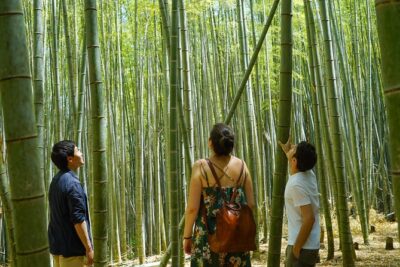
Fushimi Inari Hidden Hiking Tour (Private Option Available)
Read our review →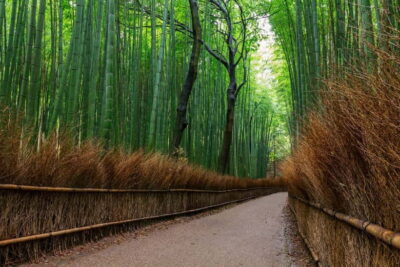
Kyoto/Osaka: Nara, Fushimi Inari Taisha, Arashiyama Bus Tour
Read our review →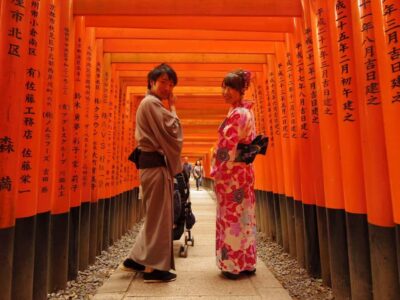
Osaka/Kyoto: Arashiyama, Nara & Fushimi Inari Shrine w/Lunch
Read our review →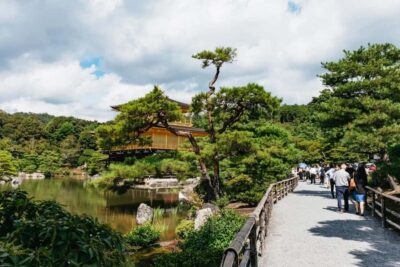
Nijo Castle, Kiyomizu & Fushimi Inari Guided Tour
Read our review →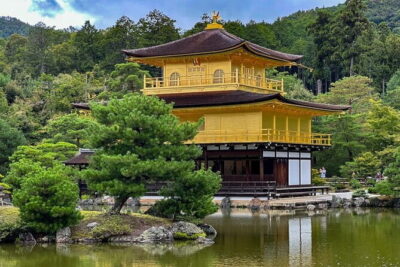
Nijo, Kinkaku-ji, Arashiyama, Kiyomizu & Fushimi Inari
Read our review →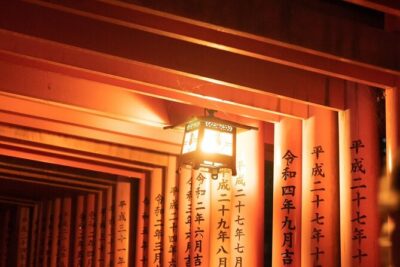
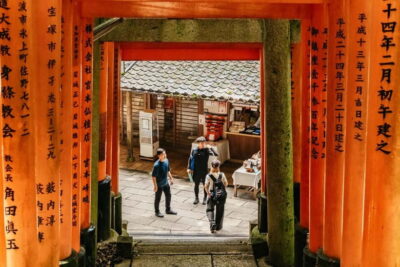
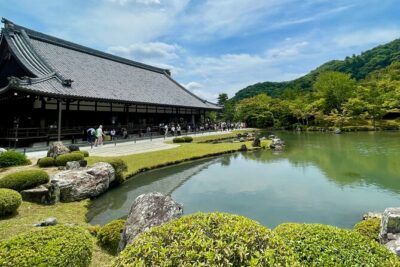
Kyoto Early Bird English Tour: Fushimi-Inari and Arashiyama
Read our review →Browse the lists this tour appears in