
Reviewed · WALKING TOURS
Graffiti in Tokyo Walking Tour: Shibuya and Harajuku
Tokyo’s famous streets are polished, busy, and carefully ordered. Yet behind that clean surface sits a much rougher art scene. This two-hour walk with Elena Calderon takes you through Shibuya and Harajuku to find tags, stickers, murals, and illegal street pieces that most visitors walk past without seeing.
I like two things right away: Elena brings more than 10 years of graffiti research and work as an art curator, and the tour looks beyond large murals to the small marks that give a neighborhood its character. The main drawback is that this is a walking tour for people who can manage city streets comfortably, and the meeting-point details should be confirmed before you set out.
Key points to know
- Look closely: Elena helps you spot small tags, stickers, and pieces tucked into ordinary streets.
- Shibuya beyond the crossing: The route shows a less polished side of one of Tokyo’s most visited districts.
- Harajuku adds a creative edge: The walk reaches back streets, galleries, studios, and street art around the neighborhood.
- A guide with a specialist focus: Elena has researched Tokyo graffiti for more than 10 years and works as an art curator.
- Useful art tips: You may receive suggestions for galleries and restaurants, plus discounts connected with the tour.
- Bring practical basics: Wear comfortable shoes, carry water and cash, and prepare for changing weather.
Tokyo’s street art is easy to miss
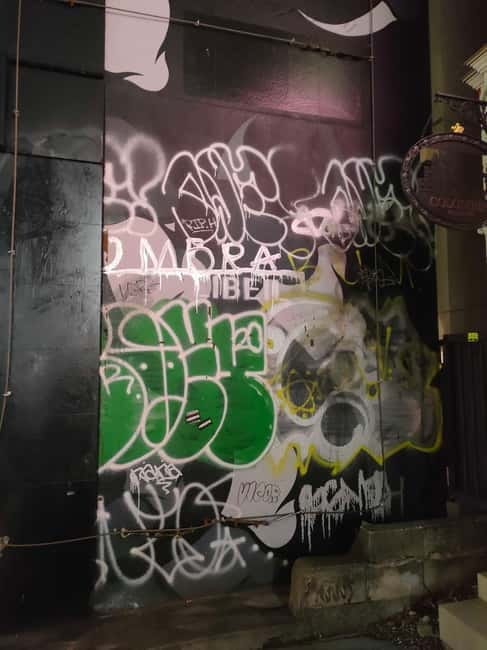
Tokyo is not a city where graffiti announces itself at every turn. Many pieces are small, partly covered, tucked behind shops, or placed on side streets away from the best-known sights. That makes a guide especially useful here.
I like the idea of learning how to see the city rather than simply walking past it. A quick tag on a shutter, a sticker on a pole, or a piece squeezed into an overlooked corner can mean little if you do not know what to look for. Elena’s role is to point out those details and explain the artists, crews, styles, and setting behind them.
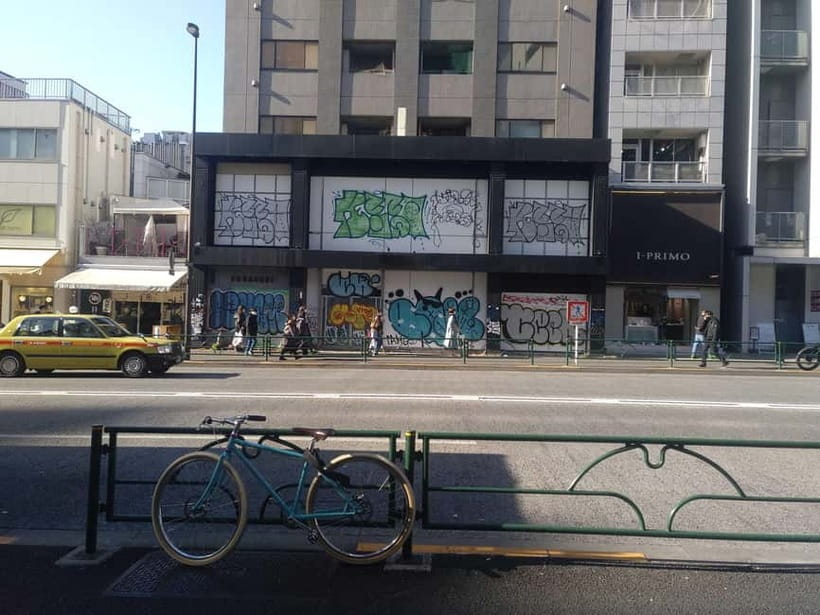
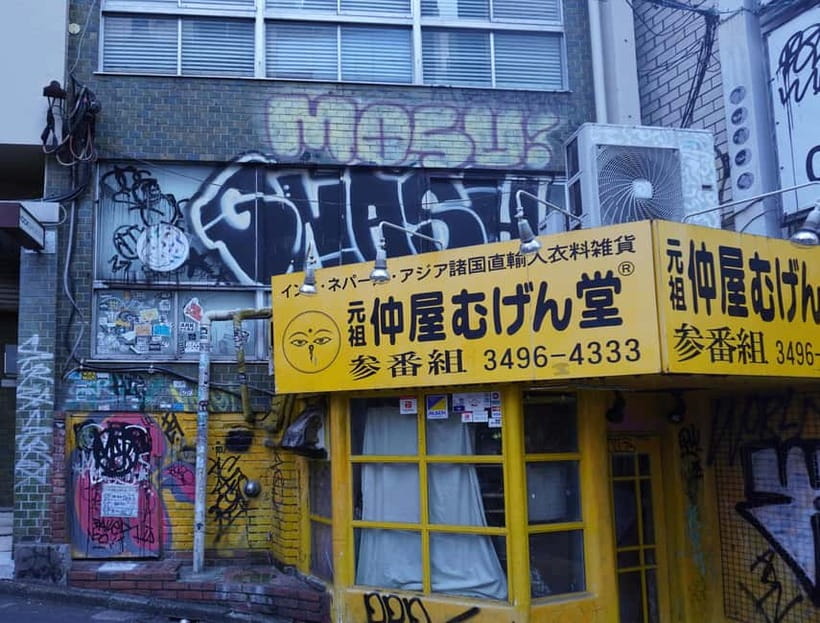
The focus is not only on large, legal murals. You can expect a mix of tags, throw-ups, stickers, murals, legal walls, and street pieces made without official permission. That mix gives the walk a more honest view of urban art. It also means the exact pieces may change over time, since unauthorized work can be painted over, removed, or altered.
This is not a standard sightseeing route with a list of famous buildings. You will still be in central Tokyo, but the attention shifts to service alleys, back streets, walls, shutters, and places that are easy to overlook. For me, that is the main reason to book it.
Other walking tours in Tokyo people book:
- Tokyo Tsukiji Fish Market Food and Culture Walking Tour
★ 5.0 · 3,184 reviews - Tokyo: Imperial Palace and Shogun Historical Walking Tour
★ 5.0 · 2,251 reviews - Tokyo: Shinjuku Local Bar and Izakaya Guided Walking Tour
★ 4.9 · 1,794 reviews
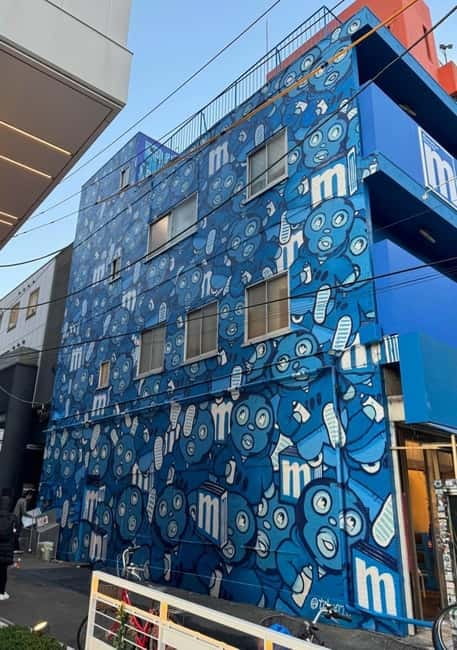
Meeting in Shibuya near Manhattan Records
The stated meeting place is Manhattan Records shop in Shibuya. The itinerary also refers to the Kifune Building as the starting and ending location, so I would confirm the exact rendezvous point with the operator before the day of the tour. That small check matters in Shibuya, where a wrong exit or a few extra blocks can cost you valuable time.
Once the group is together, expect a walking format rather than a seated presentation. You will move through the city while Elena explains what you are seeing. The pace should allow for stops at individual pieces, though the total length is only two hours, so this is a compact introduction rather than an exhaustive survey of Tokyo’s art scene.
Shibuya is a good place to begin because it contains several versions of Tokyo at once. You have major commercial streets, youth fashion, music shops, narrow lanes, and walls that carry a very different visual language from the bright signs nearby. Starting close to Manhattan Records also places the tour near a part of Shibuya with a strong connection to music and youth culture, though the supplied details do not promise an interior visit or a record-shopping stop.
Wear shoes you can walk in for two hours. Bring water, a camera, and some cash. The tour asks you not to smoke, drink alcohol, use drugs, or litter, which is sensible in a city where public spaces are closely managed.
Reading tags, throw-ups, stickers, and murals
A useful feature of the walk is its range. If you only see large painted walls, you get one part of graffiti culture. Tags and throw-ups show another side: speed, repetition, name recognition, and the claim to a place. Stickers can be tiny and easy to overlook, but they often travel farther and appear in surprising clusters.
Elena’s job is to add meaning without turning every piece into a lecture. The supplied experience describes her as a graffiti researcher and art curator, and the strongest feedback focuses on her ability to explain Japanese culture, artists, and the details that an untrained eye might miss.
That specialist background should suit you if you already follow street art or make art yourself. It also works for a beginner. You do not need to know the difference between a tag and a throw-up before arriving. The point is to leave with a better sense of why those forms matter and how to identify them.
One useful expectation to set: not every piece will be beautiful in the conventional sense. Some may be rough, faded, illegal, partly erased, or hard to photograph. That is part of the subject. Graffiti is temporary, and its condition is often part of the story.
Shibuya’s less polished side
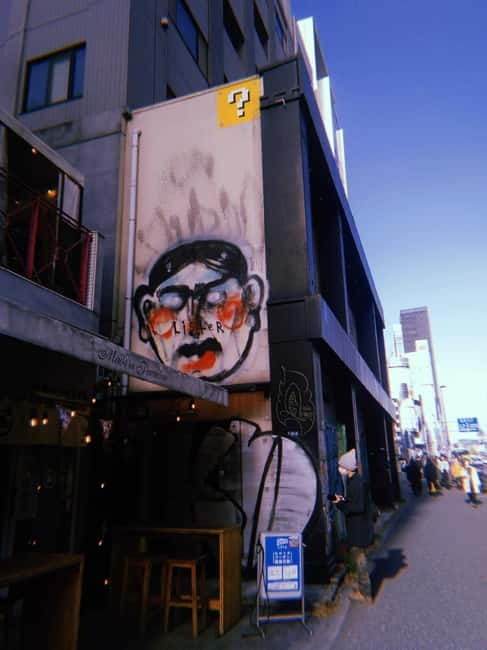
The Shibuya portion lasts most of the guided walk and is where the tour’s local access matters most. You will move away from the familiar tourist view and into corners where art is placed on walls, shutters, signs, and other urban surfaces.
I like this contrast. You can spend the morning surrounded by Tokyo’s famous commercial energy, then turn down a quieter street and find a work by a local or international artist that is not marked on a sightseeing map. The experience makes Shibuya feel less like a set of famous photo stops and more like a living neighborhood.
The walk also appears to include local hangouts, art studios, galleries, and exhibition suggestions. These are useful additions because they help you continue exploring after the two hours end. You may also receive information about top art galleries and discounts at selected galleries and restaurants connected with the tour.
Do not expect admission to every art space. Gallery and museum entry is not included, although most are free of charge according to the activity details. That is good news for budget-minded visitors, but you should still treat these recommendations as optional extras rather than part of the core walking route.
One practical limit is the weather. Graffiti is outdoors, and the tour does not offer an indoor replacement in the information provided. Prepare for changing conditions and carry water. A camera is worth bringing, though you should photograph respectfully and follow any local restrictions.
Other guided walks in Tokyo:
- Tokyo: Tsukiji Fish Market Food and Walking tour
★ 5.0 · 1,724 reviews - Tokyo: Asakusa Walking Tour with Sensoji Temple Visit
★ 4.8 · 1,583 reviews - Tokyo: Tsukiji Fish Market Guided Walking Tour
★ 4.9 · 1,397 reviews - Tokyo Castle & Imperial PalaceーShogun Walking Tour
★ 4.7 · 1,068 reviews
Harajuku adds studios, galleries, and side streets
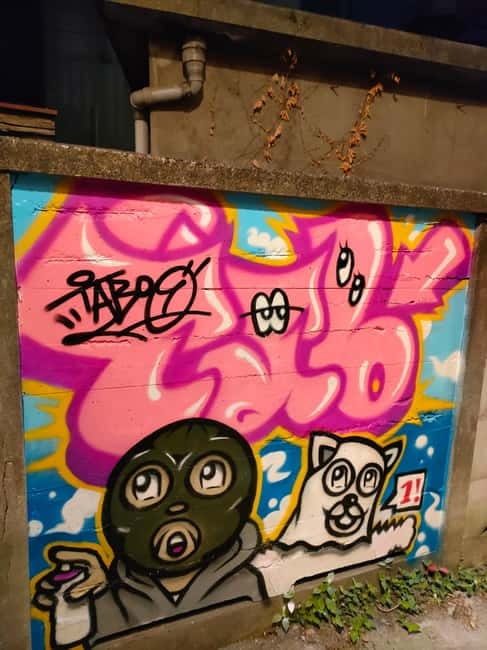
The route includes a visit to Harajuku for about 10 minutes, while the main guided tour remains listed as two hours. The supplied timing does not explain exactly how that short Harajuku stop is structured, so I would treat it as a brief part of the route rather than a full neighborhood tour.
Even a short Harajuku segment can add a useful contrast. The area is associated with fashion, youth culture, design, and creative businesses, so street art fits naturally into the wider setting. Elena can help connect what you see on the street with the artists, studios, exhibitions, and galleries operating nearby.
The best reason to value this part is not the amount of time spent there. It is the chance to see how public art sits beside shops, fashion, music, and everyday city life. You may find a piece that looks separate from the surrounding neighborhood at first, then understand its connection through the guide’s explanation.
If you want a long, slow exploration of Harajuku itself, this is not the right tour. The emphasis stays on graffiti and street art, not on shopping, food, shrines, or fashion history. You can return later if Elena points out a location you want to photograph or investigate.
Elena’s role makes the difference
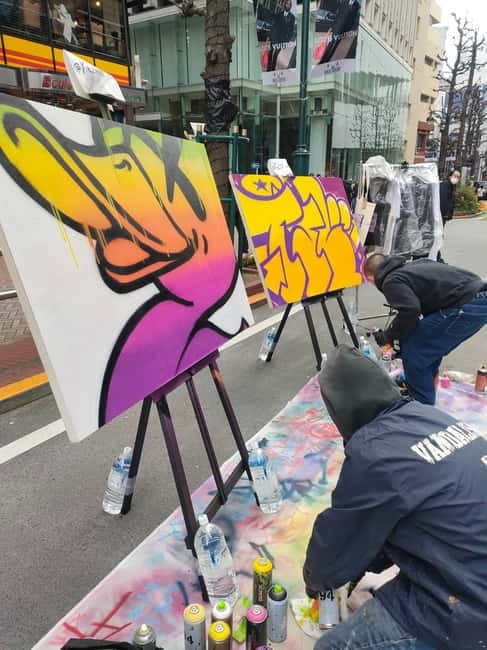
The most praised part of this experience is Elena herself. She is described as easy to understand, passionate about the subject, flexible with the group, and able to explain both the art and its place in Japanese culture.
That matters because street art tours can go wrong in two ways. A guide can simply point at walls without offering useful background, or talk so much about theory that the walk stops feeling relaxed. The feedback here points to a more approachable balance: art, artist stories, local knowledge, and a casual walk through the city.
Several useful details emerge from the experience. Elena can help you notice work by local and international artists, point out stickers and tags, suggest galleries and studios, and help you find murals again after the tour. One piece of practical feedback suggested that extra locations not covered on the walk, or visual material on a tablet, could add even more value. So you should expect strong spoken guidance, but not necessarily a large visual presentation.
The tour is available in English and Spanish. If you have a specific interest, such as murals, illegal graffiti, Japanese artists, galleries, or photography, tell Elena early. The experience is small and personal in feel, and the information says she can be flexible to the group’s needs.
Is $38 a fair price?
At $38 per person, this is not the cheapest way to walk around Shibuya. You can explore the neighborhoods on your own for free, and most public street art costs nothing to view. The real question is what you gain from having a specialist beside you.
For me, the price makes sense if you want interpretation rather than a self-guided stroll. Elena’s research background can save you time, help you notice work you would miss, and give you context for a scene that is not always easy to find in guidebooks. The information about galleries, studios, restaurants, and possible discounts adds some value beyond the two-hour route.
The price does not include meals, drinks, transport to the meeting point, or gallery and museum admission. Those costs are easy to control, especially since many art spaces are free, but budget for your own food and local transport.
I would skip the tour if you only want large, officially commissioned murals or if you dislike walking through ordinary commercial streets in search of small pieces. I would consider it good value if you already like graffiti, street photography, contemporary art, or alternative city culture.
Who should book this walk?
This tour suits:
- Street-art fans who want more than famous murals
- Photographers looking for unusual urban details
- Visitors who have already seen the main Shibuya sights
- Beginners who want a clear introduction to graffiti culture
- Art students, designers, and people interested in artist networks
- Independent visitors who want gallery and studio suggestions
Families can enjoy it if everyone is comfortable walking and listening for two hours. The activity is not suitable for babies under one year, people with mobility impairments, or people over 95. Those limits are broad, but they signal that you should expect normal city walking with no special mobility support.
You should also respect local laws. Some of the work discussed may be unauthorized, but the tour is about observing and understanding it, not copying it, touching it, or adding to it.
Useful booking details before you go
The walk lasts two hours and is offered with a live guide in English or Spanish. The listed starting point is Manhattan Records shop in Shibuya, while the itinerary names the Kifune Building, so confirm the precise meeting location before departure.
You can cancel up to 24 hours in advance for a full refund, and the reserve-now, pay-later option keeps you from paying at the time of booking. Starting times vary, so check availability for your date.
Pack comfortable shoes, water, a camera, and cash. Be ready for changing weather, and avoid assuming that every piece will still be there when you return. Street art changes quickly, which is one reason the guide’s current local knowledge matters.
My verdict: book it if you want Tokyo with the gloss removed
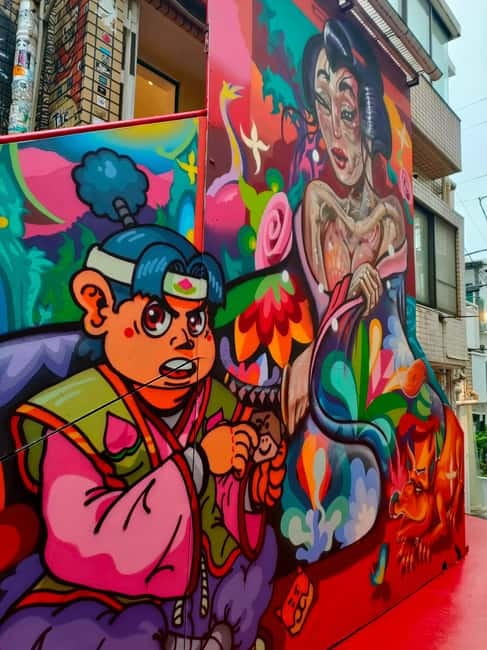
I would book this tour if I wanted to see Shibuya and Harajuku through art rather than landmarks. The best part is not simply finding painted walls. It is learning where to look, understanding the difference between forms, hearing about artists and crews, and seeing how a quiet mark can change your sense of a street.
The $38 cost is reasonable for a specialist-led walk, especially if you use Elena’s gallery and restaurant tips afterward. Just keep your expectations focused: this is a short, outdoor graffiti tour, not a general Tokyo sightseeing walk and not a guaranteed parade of giant murals.
Confirm the meeting point, wear good shoes, and bring curiosity. If you enjoy street art, this is an unusually personal way to read two of Tokyo’s best-known neighborhoods.
FAQ
Where does the tour meet?
The meeting point is listed as Manhattan Records shop in Shibuya. The itinerary also names the Kifune Building, so confirm the exact location before the tour.
How long does the tour last?
The guided walking tour lasts two hours.
Which neighborhoods does the tour cover?
The main walk covers Shibuya and includes a visit to Harajuku.
What languages are available?
The live tour guide is available in English and Spanish.
Who leads the tour?
Elena Calderon leads the experience. She is described as a graffiti researcher with more than 10 years of experience and an art curator.
What is included in the price?
The price includes the expert guide, access to selected hidden graffiti spots, insider information about Tokyo’s graffiti scene and art galleries, and discounts at certain galleries and restaurants connected with the tour.
Are meals, drinks, and gallery admission included?
No. Meals and drinks are not included, and entrance to galleries or museums is not included. Most of those venues are free of charge.
What should I bring?
Bring comfortable walking shoes, a camera, water, and cash. Prepare for changing weather and respect local laws during the walk.
Just added in Tokyo
- The 10 Tastings of Tokyo With Locals: Private Street Food Tour★ 5.0 · 48 reviews
- Small Town in the Big City: Tasting Tokyo’s Kichijoji★ 5.0 · 195 reviews
- Small Town in the Big City: Tasting Tokyo’s Kichijoji★ 5.0 · 16 reviews
- EXCLUSIVE Tokyo Secret: Kichijoji Small-Group Food & Bar Hopping★ 5.0 · 29 reviews
- Explore Kichijoji: Walk Through One of Tokyo’s Beloved Districts★ 5.0 · 21 reviews
- :Tokyo,Shibuya/ Pro Photography in Kimono / English-Friendly★ 5.0 · 26 reviews
- 【R34】Tokyo:Private Daikoku tour in Modified R34★ 4.9 · 92 reviews
- Tokyo:Calligraphy &Make your original folding fan in Asakusa★ 5.0 · 62 reviews
Walking Tours, compared.

Kyoto Geisha Walking Tour: Gion District & Hidden Gems
Read our review →
Tokyo Tsukiji Fish Market Food and Culture Walking Tour
Read our review →
Imperial Palace and Shogun Historical Walking Tour
Read our review →
Gion Geisha District Walking Tour – Stories of Geisha
Read our review →
Shinjuku Local Bar and Izakaya Guided Walking Tour
Read our review →
Asakusa Walking Tour with Sensoji Temple Visit
Read our review →
Nishiki Market Brunch Walking Tour (7 Tastings + Brunch)
Read our review →Browse the lists this tour appears in