
Reviewed · FUSHIMI INARI TOURS
Kyoto Guided Walking Tour: Secret Zen Garden and Fushimi Inari
Kyoto’s famous torii gates are only half the story on this small-group walk from Tofukuji to Fushimi Inari. You begin among quiet temple grounds and a lesser-visited Zen garden, then take a hill route toward the shrine’s best-known paths and viewpoints.
I like the way the tour joins famous sights with calmer corners, especially Komyo-in Temple and the lesser-used paths around Fushimi Inari. I also like the flexible pace reported with guides such as Mika and Kenta, a real help on the uphill sections.
The main drawback is physical: this is not a flat temple stroll. You will walk and climb for much of four hours, and Fushimi Inari can become crowded near the lower torii gates even after a peaceful start.
Key points at a glance
- A quieter beginning at Tofukuji: Start among temple grounds, maple trees, and the scenic Gaun-kyo Bridge before reaching the shrine crowds.
- Komyo-in’s Zen garden: Spend about 25 minutes at a lesser-known sub-temple where the garden and stillness are the main attractions.
- A local guide for context: Mika, Kenta, and Naomi are among the guides named in feedback, with particular praise for clear explanations and thoughtful pacing.
- A different route through Fushimi Inari: Reach Yotsuji, Kumataka Shrine, the Okusha Worship Center, and Senbon Torii by a path designed to avoid some of the busiest areas.
- A compact group: The maximum group size is eight, making questions and pace adjustments more practical than on a large coach tour.
- A proper half-day outing: The four-hour schedule ends at Fushimi Inari, leaving the rest of your day open.
Why this Kyoto walk works so well
Many first visits to Kyoto divide the city into separate stops: one temple in the morning, one shrine later, and a lot of time spent working out trains, walking routes, and entrances. This tour links several sights in one continuous route.
That matters most in the Tofukuji and Fushimi Inari area. The two sites are close enough to combine, but the route between them is more enjoyable when someone else handles the direction and explains what you are seeing. You begin with Zen architecture and garden design, then move into Shinto worship, fox symbolism, torii gates, and mountain paths.
The contrast gives the morning a useful shape. Tofukuji is measured and quiet. Fushimi Inari is more theatrical, with thousands of orange gates climbing the hillside. You get both without spending time on a complicated plan of your own.
The group is capped at eight people. That does not guarantee solitude, especially at Fushimi Inari, but it does create a more personal setting. You can ask why a garden is arranged a certain way, what a shrine stamp means, or how to behave at a worship hall without trying to catch a guide’s words across a large crowd.
Other walking tours in Kyoto people book:
- Kyoto Geisha Walking Tour: Gion District & Hidden Gems
★ 4.7 · 3,273 reviews - Kyoto: Gion Magical Night Walking Tour with Geisha Trivia
★ 4.9 · 2,393 reviews - Kyoto: Gion Geisha District Walking Tour – Stories of Geisha
★ 4.7 · 2,187 reviews
Starting at Tofukuji and Gaun-kyo Bridge
The meeting point is outside FamilyMart Nakai Tofukuji at 9:00 am. From there, the walk begins around Tofukuji, one of Kyoto’s major Zen temples, founded in the 13th century.
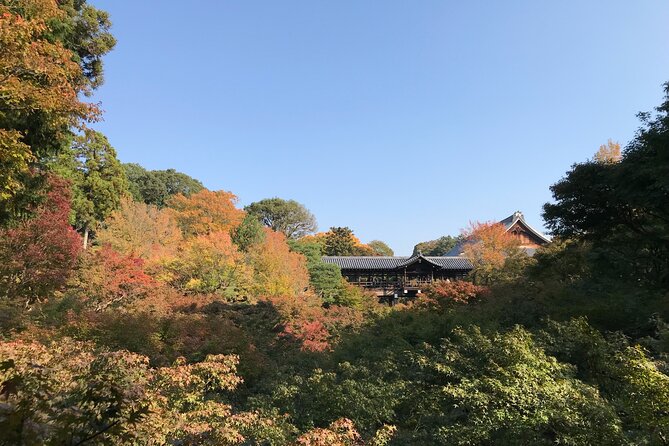
The first listed stop is Gaun-kyo Bridge, a wooden bridge crossing a leafy valley. It offers a view toward Tsutenkyo Bridge and the maple-covered slopes below. The stop itself is short, about five minutes, but it sets the tone for the morning: this is not only a checklist of buildings. Views, gardens, trees, and the movement between sites are part of the experience.
The maple setting is especially appealing in autumn, though the tour information also describes green maple leaves at other times. You should not book this as a guaranteed peak-season foliage outing, but the bridge gives you a worthwhile viewpoint in any season.
The bridge can also be a useful early photo stop. Since the visit is brief, have your camera ready and avoid lingering too long if the guide is moving the group onward.
Komyo-in Temple and the meaning of a Zen garden
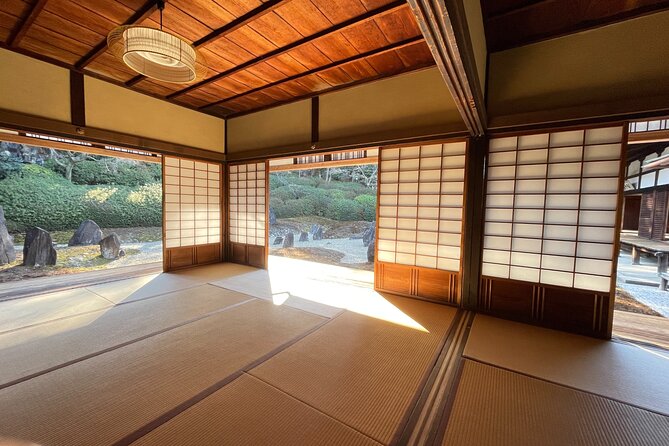
The most distinctive stop is Komyo-in Temple, a sub-temple known for its Zen garden and quiet atmosphere. The visit lasts about 25 minutes, which is enough time to sit, look carefully, and hear an explanation without turning the stop into a rushed photograph.
This is where the tour offers something that a standard Fushimi Inari visit does not. The garden is not simply a pretty space. Its pared-back design gives your guide a natural opening to discuss Zen ideas, meditation, and the way Japanese gardens use empty space, stones, plants, and carefully framed views.
You should expect a calm visit rather than an activity-heavy one. If you need constant movement, 25 minutes may feel long. I think that pause is useful, though, especially before the climb toward Fushimi Inari. Kyoto is easier to appreciate when you allow a little silence between the major sights.
Komyo-in is also a good reason to choose this tour instead of visiting Fushimi Inari alone. The shrine is easy to find, but a small sub-temple such as this can be missed unless you know where to go and understand why it matters.
Admission to Komyo-in is included. The other listed stops do not require an admission charge, although the price of $78.83 per person is paying mainly for the guide, route, and interpretation rather than for a package of expensive entrance tickets.
Araki Shrine and the shift from Zen to Shinto
Araki Shrine is a short stop of about ten minutes. It is associated with prayers for love, strong relationships, and general well-being, making it a more personal stop than the grander temple and shrine complexes.
This is a useful moment to see the difference between the morning’s religious settings. Komyo-in introduces Zen practice and garden aesthetics. Araki Shrine offers a smaller Shinto setting connected with everyday hopes and personal concerns.
Do not expect a large ceremonial spectacle here. The value is in the contrast and in the guide’s explanation. You can ask about the customs, prayers, or symbols that might otherwise seem mysterious if you were walking past on your own.
Other shrine walks around Kyoto:
- Kyoto: Fushimi Inari, Kinkakuji, Bamboo Grove 1 Day Bus Tour
★ 4.8 · 4,316 reviews - Fushimi Inari Hidden Hiking Tour (Private Option Available)
★ 5.0 · 1,750 reviews - Kyoto/Osaka: Nara, Fushimi Inari Taisha, Arashiyama Bus Tour
★ 4.7 · 1,275 reviews - Osaka/Kyoto: Arashiyama, Nara & Fushimi Inari Shrine w/Lunch
★ 4.4 · 754 reviews
Reaching Yotsuji for a Kyoto view
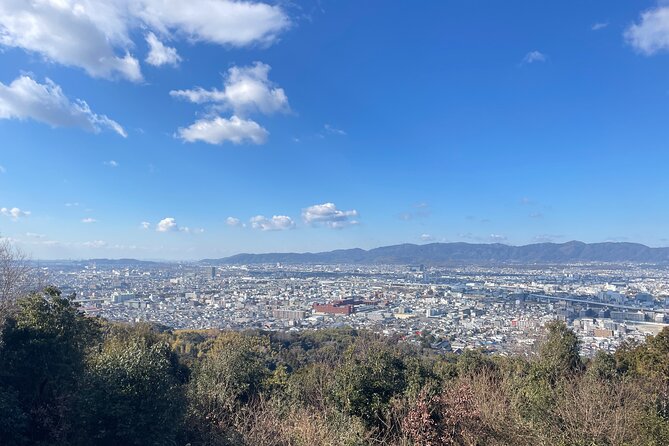
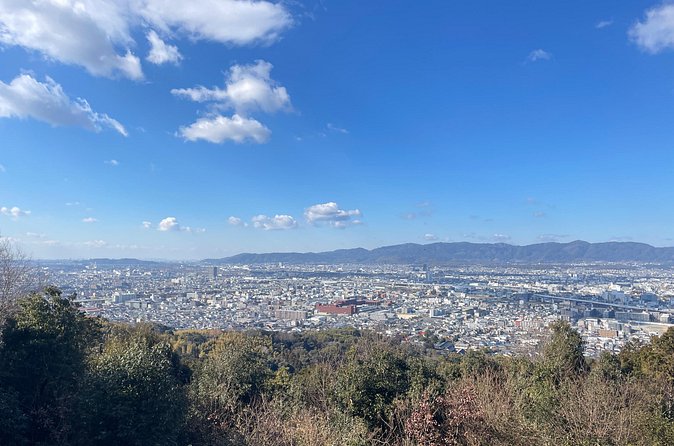
The route then climbs toward Fushimi Inari Yotsuji, a four-way crossing on the mountain trail. The stop takes about 20 minutes and is one of the more rewarding parts of the walk for anyone who wants a view beyond the torii gates.
The climb is important to understand before booking. The tour description calls for moderate fitness, and the route includes walking and hiking. Comfortable shoes are essential. You do not need to be an athlete, but you should be comfortable with uphill walking and uneven temple or mountain paths.
At Yotsuji, you can pause, catch your breath, and look out across Kyoto. The view gives the shrine visit a wider sense of place. Instead of seeing only the gates directly in front of you, you understand that Fushimi Inari extends up a wooded hillside above the city.
Guides have been praised for walking at the group’s pace and allowing people to decide how long they want at different points. That flexibility matters here. A fixed, hurried climb would make the morning less pleasant, particularly in warm or wet weather.
Kumataka Shrine and the quieter side of Fushimi Inari
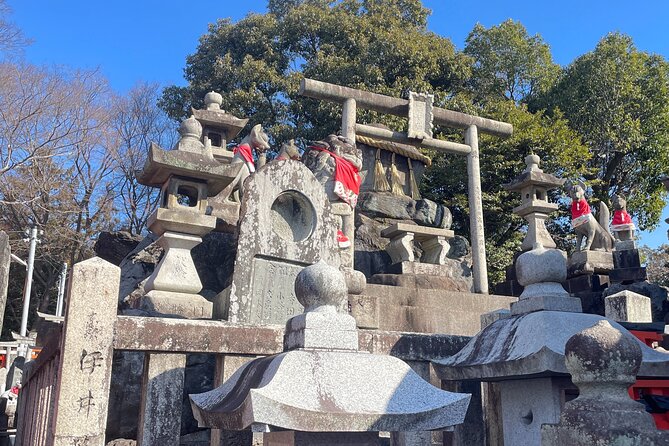
Kumataka Shrine is a 15-minute stop away from the busiest torii-gate paths. It is described as a secluded place with a strong spiritual character, and its quiet setting provides one of the clearest contrasts with the lower shrine grounds.
This is the kind of stop that gives the tour its purpose. You are not simply being taken to the standard photo locations. You are also shown smaller religious sites that are easy to miss when following the main flow of people.
The word secluded should not lead you to expect total isolation. Fushimi Inari is one of Kyoto’s most popular places, and conditions change by time of day and season. Still, a guide who knows the route can help you find a calmer stretch and explain what you are looking at instead of leaving you to follow the crowd.
The Okusha Worship Center and shrine customs
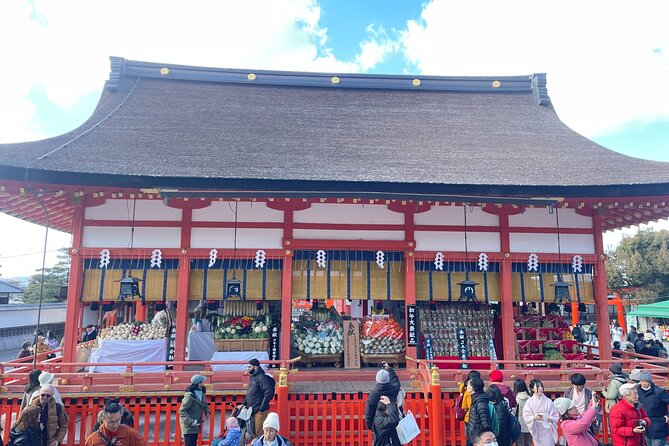
The Okusha Worship Center, also called Nosatsusho in the tour details, is a ten-minute stop within the Fushimi Inari complex. Here you can learn about ofuda, omamori, and goshuin.
These are not interchangeable souvenirs. Ofuda are sacred talismans, omamori are protective charms, and goshuin are shrine stamps recorded in a special book. Your guide can help put these objects in context so you know what you are seeing and how they fit into Japanese religious practice.
This stop may appeal to you if you want more than photographs. It connects the visual drama of the torii gates with the daily acts of worship that keep the shrine meaningful to local people.
The tour does not state that a charm, stamp, or book is included in the price. If you want one, ask the guide about the process and any separate purchase cost at the shrine.
Walking through Senbon Torii
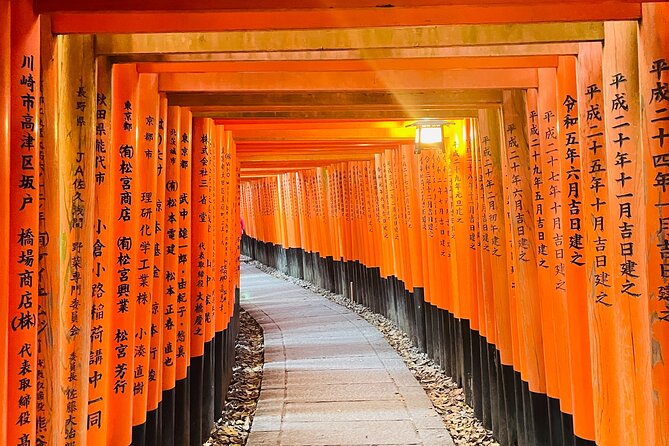
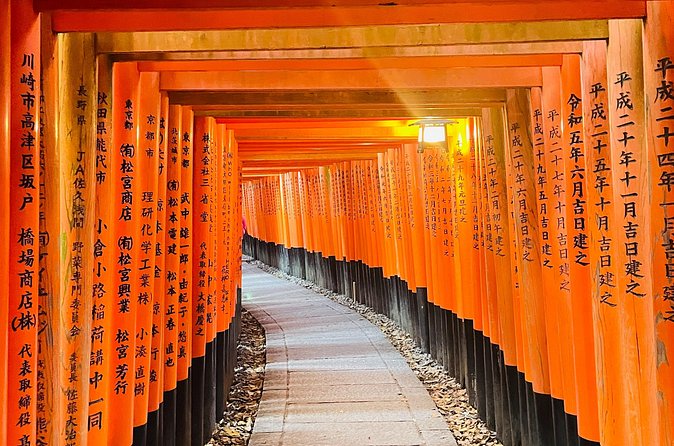
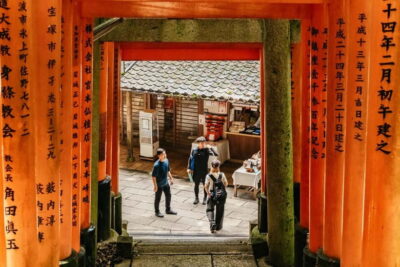
Senbon Torii is the best-known section of Fushimi Inari. Thousands of vermilion torii form a long passage up the hillside, creating one of Kyoto’s most recognizable scenes.
The gates were donated by individuals and businesses, and each one carries the name of its donor and a date. That detail gives the famous path a more human meaning. You are walking through a record of ongoing offerings, not just a line of decorative arches.
The lower part of the route is usually the place where crowd pressure is most noticeable. A guide cannot remove the crowds, but the timing and route can make the visit easier. The tour reaches the better-known gates after taking you through quieter temple and shrine areas, so you have already had a peaceful introduction before arriving at the most photographed section.
Be patient with your camera. People pause in the gate tunnels, and the narrow path is used in both directions. Your guide may point out better moments for photographs, but you should avoid blocking the route.
The main sanctuary and the end at the Outer Oratory
The final listed stop is Fushimi Inari Taisha Honden, the main sanctuary. The visit lasts about ten minutes and gives you time to see the principal worship area rather than treating the torii gates as the entire shrine.
The main sanctuary can feel calmer than the famous gate path, although it remains an active religious site. Keep your behavior respectful, and remember that people may be there to pray rather than take pictures.
The tour ends at the Outer Oratory in Fushimi Inari Shrine, not back at the Tofukuji meeting point. This one-way design is practical. You do not waste time retracing the route, and you finish at a major Kyoto sight with the rest of the day free.
The end point is near public transportation, according to the tour information. Since the activity finishes inside the shrine complex, you should confirm your onward plan before starting, especially if you have a timed reservation elsewhere.
Guides, group size, and the pace of the morning
The strongest part of this experience is the human guidance. Guides named in the feedback include Mika, Kenta, and Naomi. Mika is especially associated with clear explanations, written notes or illustrations, and choosing routes that reduce crowd pressure. Kenta is praised for adapting the pace and answering questions about culture and history. Naomi is described as informative and willing to answer questions.
Guide assignments can change, so you should not book on the assumption that one specific person will lead your departure. The pattern to look for is a guide who explains religious customs in plain English and adjusts the walking speed when needed.
The maximum group size is eight. That is small enough for a guide to notice if you are struggling on a hill or want more time at a garden. It also gives you a better chance to ask questions than you would on a large group outing.
The total time is about four hours, though one description indicates that four to five hours can feel right depending on pace. Plan for a full morning, not a quick two-hour orientation.
Is $78.83 good value?
At $78.83 per person, this is not the cheapest way to see Fushimi Inari. The shrine itself is free, and you can walk through the torii gates without paying for a tour.
The value comes from the route and the interpretation. You are paying to connect Tofukuji, Komyo-in, Araki Shrine, quieter parts of Fushimi Inari, and the main sanctuary in one organized morning. You are also paying to avoid spending your own time researching which sub-temples and side paths are worth the effort.
I think the price makes the most sense for a first visit, a short Kyoto stay, or anyone who wants religious and garden context rather than photographs alone. It is less compelling if you enjoy planning every detail yourself, already understand Japanese temple customs, or only want to walk the main torii path.
Admission is included at Komyo-in, while the other listed stops are free. The mobile ticket is convenient, but the real benefit is the guide’s time and local route knowledge.
Practical details before you book
The tour begins at 9:00 am at FamilyMart Nakai Tofukuji, at 12-chome-232 Honmachi in Kyoto’s Higashiyama Ward. Arrive ready to start walking rather than expecting a long registration process.
Wear comfortable shoes with good support. The route includes uphill walking and hiking, and the tour runs rain or shine. Bring clothing suited to the forecast, since the experience spends much of its time outdoors.
The activity is near public transportation and ends at Fushimi Inari’s Outer Oratory. It is suitable for people with moderate fitness, but it is not the right choice if you need a flat, low-effort itinerary.
Free cancellation is available up to 24 hours before the start time. Cancellations or changes made inside that period are not accepted for a refund.
Who should book this walk?
I would choose this tour if you want Fushimi Inari but also want to understand Kyoto’s religious traditions. It suits first-time visitors, couples, solo visitors who prefer company, and anyone who likes gardens, nature, and walking routes with a purpose.
It is particularly good for people who want to avoid spending the whole morning in the busiest part of Fushimi Inari. The route begins quietly, includes a lesser-known Zen garden, and reaches the iconic gates later.
I would skip it if you dislike hills, need guaranteed shelter, or prefer to move independently with no fixed meeting time. The price is also hard to justify if your only goal is a quick photograph at Senbon Torii.
For the right person, this is a well-shaped Kyoto morning: a bridge and maple valley, a thoughtful Zen garden, small shrines, a hilltop view, and the famous torii gates at the end. Book it when you want the route and meaning explained, not simply the sights pointed out.
FAQ
How long does the Kyoto walking tour last?
The tour lasts approximately four hours. The pace and time spent at stops can vary, and one description notes that four to five hours may be possible.
Where does the tour begin?
The meeting point is FamilyMart Nakai Tofukuji, 12-chome-232 Honmachi, Higashiyama Ward, Kyoto. The start time is 9:00 am.
Where does the tour end?
The tour ends at the Outer Oratory at Fushimi Inari Shrine. It does not return to the Tofukuji meeting point.
How large is the tour group?
The tour has a maximum of eight travelers.
Is the tour physically demanding?
A moderate fitness level is recommended. The route includes a moderate amount of walking and hiking, including uphill sections, so comfortable walking shoes are advised.
What happens if it rains?
The tour operates rain or shine. You should dress for the weather and be prepared to walk outdoors in wet conditions.
More gardens in Kyoto
- Kyoto Arashiyama Walking Tour: Bamboo, Monkeys, Gardens & Secrets
★ 5.0 · 1,216 reviews - Kyoto Arashiyama Bamboo forest & Garden Half-Day Walking Tour
★ 5.0 · 413 reviews - Kyoto: Zen Garden, Zen Mind (Private)
★ 5.0 · 126 reviews - Kyoto Kiyomizu Tea Ceremony with Scenic Garden Views
★ 5.0 · 101 reviews
More meditation sessions in Kyoto
- Kyoto Zen Meditation & Garden Tour at a Zen Temple with Lunch
★ 5.0 · 441 reviews - Kyoto: Zen Experience in a Hidden Temple
★ 5.0 · 437 reviews - Kyoto: Tea Ceremony Meditation – Make Matcha with Tea Master
★ 4.8 · 406 reviews - Kyoto: Zen Meditation at a Private Temple with a Monk
★ 5.0 · 202 reviews
Just added in Kyoto
- Private Cooking Class Udon in Kyoto Japan★ 5.0 · 23 reviews
- Your Private Vacation Photography Session In Kyoto★ 5.0 · 110 reviews
- Kyoto: Zen Meditation at a Private Temple with a Monk★ 5.0 · 25 reviews
- Private Pewter Sake Cup Experience with a Kyoto Artisan★ 5.0 · 31 reviews
- Kyoto Wagashi(Japanese sweets) Cooking Class near Fushimiinari★ 5.0 · 60 reviews
- Kyoto:Family-Friendly Kimono & Yukata Experience at WARGO★ 5.0 · 147 reviews
- Private Guided Traditional Buddhist Cooking in Japan★ 5.0 · 16 reviews
- Kyoto: Gion Geisha District & Sake-in-Hand Walking Tour★ 5.0 · 37 reviews
Fushimi Inari Tours, compared.
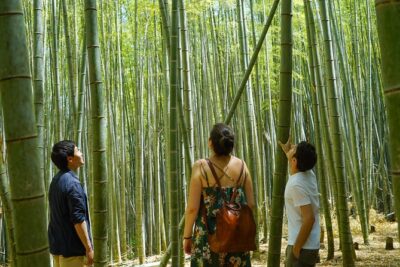
Fushimi Inari Hidden Hiking Tour (Private Option Available)
Read our review →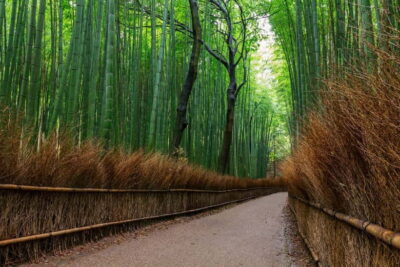
Kyoto/Osaka: Nara, Fushimi Inari Taisha, Arashiyama Bus Tour
Read our review →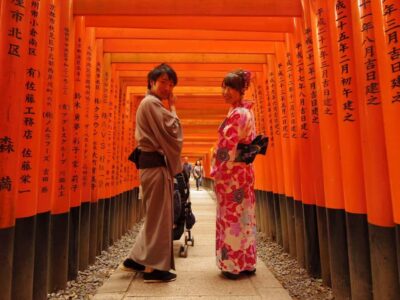
Osaka/Kyoto: Arashiyama, Nara & Fushimi Inari Shrine w/Lunch
Read our review →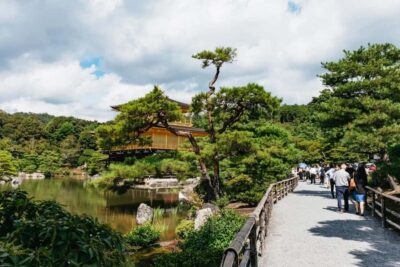
Nijo Castle, Kiyomizu & Fushimi Inari Guided Tour
Read our review →
Nijo, Kinkaku-ji, Arashiyama, Kiyomizu & Fushimi Inari
Read our review →
Kyoto Early Bird English Tour: Fushimi-Inari and Arashiyama
Read our review →Browse the lists this tour appears in