
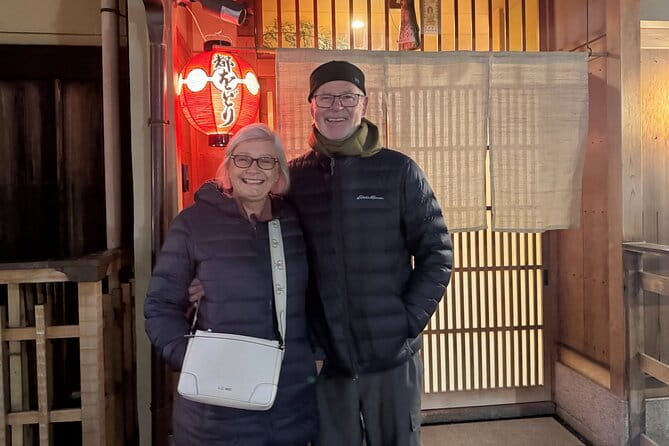
Reviewed · FUSHIMI INARI TOURS
Kyoto Magical Night English Tour: Gion & Fushimi Inari Shrine
Fushimi Inari’s red torii gates after dark make a fine opening to Kyoto, then the tour shifts to lantern-lit Gion, stone lanes, old wooden houses, and Yasaka Shrine. I like the contrast between the forested shrine and the quiet city streets, and I like that your guide takes professional photos while explaining how to behave at Shinto shrines. The $26.43 price is modest for a private experience, though the evening covers a lot of ground.
The main catch is pace. This is a walking tour with public transportation, not a slow sightseeing stroll. You should be comfortable on your feet, wear good shoes, and arrive early because late arrivals cannot join or receive a refund.
Key points at a glance
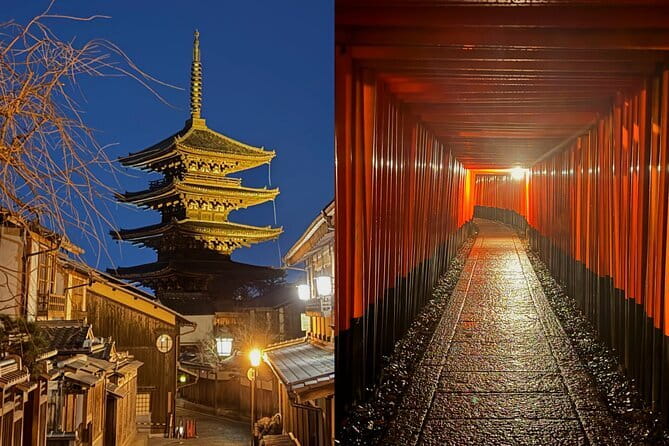
- Fushimi Inari after sunset: Walk beneath the famous torii gates when the site takes on a quieter, more atmospheric feel.
- A private experience: Only your own group participates, with guide attention that can be adapted to children, older family members, or your interests.
- Eight Kyoto stops: The route connects Fushimi Inari, Gion, Yasaka Pagoda, Ninenzaka, Nene-no-Michi, and Yasaka Shrine.
- Useful cultural guidance: Learn the difference between temples and shrines, how to pay your respects, and the stories behind places such as Yasui-Konpiragu.
- Photos included: Your guide takes professional photos, with several past groups receiving dozens of pictures and short videos soon after the walk.
- Allow for transport and hills: Public transportation costs ¥480 per person, and the route includes stone streets, shrine approaches, and plenty of walking.
Why this Kyoto night walk works so well
Kyoto can feel like a collection of famous sights until someone explains how the pieces fit together. This tour gives you a useful first look at that puzzle in two and a half hours, moving from Fushimi Inari to Gion and the Higashiyama district.
I especially like the timing. Fushimi Inari is famous at any hour, but evening changes the mood. The gates glow against the dark forest, and the route feels less like a daytime photo queue. Later, Gion’s wooden buildings and narrow lanes take over. You get two different faces of Kyoto in one outing.
The guides also add practical value. Ikki is frequently praised for using visual aids, explaining customs in clear terms, and helping with restaurant and transit questions. Yui, Yuki, Mariko, and Joi are also named in the tour’s feedback as warm, capable guides. Guide assignment can vary, so book this for the format and route rather than for a guaranteed individual guide.
At $26.43 per person, the price is attractive, especially for a private activity. Admission to the shrines and temples is included, as are professional photos. Add ¥480 per person for public transportation, plus anything you buy or eat, and you still have a reasonably priced introduction to Kyoto’s evening sights.
Other temples and shrines in Kyoto people book:
- Kyoto: Tea Ceremony Ju-An at Jotokuji Temple
★ 4.9 · 3,207 reviews - Arashiyama Bamboo, Temple, Monkeys, or Secret Sake Brewery
★ 4.8 · 886 reviews - Kyoto: Arashiyama Bamboo Forest, Monkeys, Matcha & Temple Tour
★ 5.0 · 759 reviews
Starting beneath the Fushimi Inari torii gates
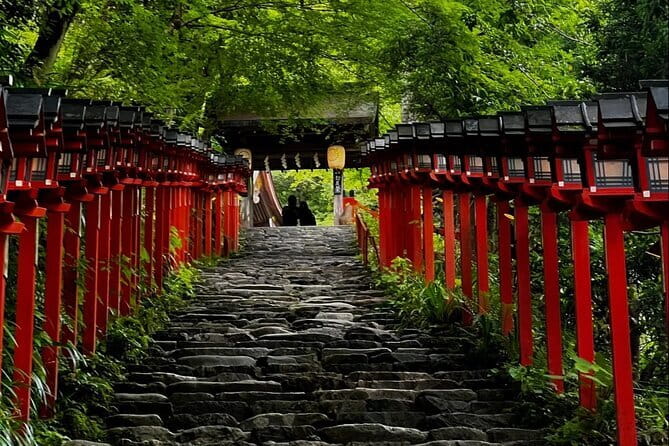
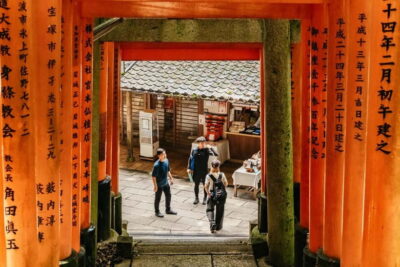
The first stop is Fushimi Inari-taisha, one of Kyoto’s best-known Shinto shrines. It is dedicated to Inari, associated with rice and prosperity, and its hillside paths are lined with thousands of red-orange torii gates.
You will spend about an hour here. That is enough time to walk into the gate-covered paths, stop for explanations, and take photographs without trying to climb the entire mountain. The tour description does not promise a full ascent, so think of this as an atmospheric introduction rather than a hiking expedition.
This is also where the cultural explanations matter most. Guides have shown how to pay respects at shrines and explained the myths connected with Inari. You may learn what makes a Shinto shrine different from a Buddhist temple, a distinction that will help you make sense of the rest of Kyoto.
Bring coins if you would like to make a wish at a shrine. One past guide specifically encouraged this, and it is a small detail that makes the visit feel more connected to local practice.
The drawback is that the torii paths are not flat city sidewalks. You will be walking uphill and on uneven ground, sometimes in low light. Good footwear is not optional if you want to enjoy the stop.
Hanamikoji Street and the evening side of Gion
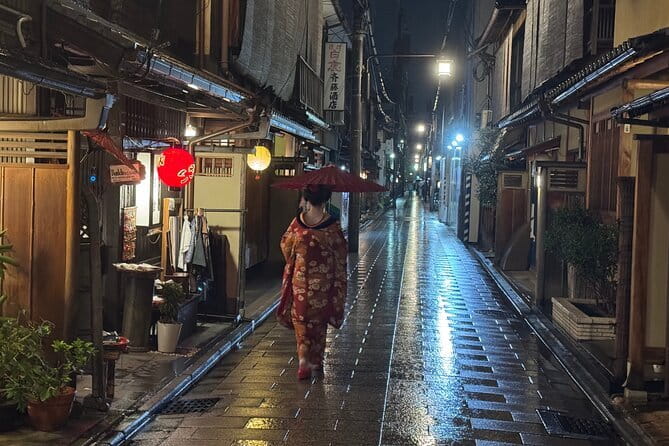
After Fushimi Inari, the route moves into Gion and Hanamikoji Street. This is the Kyoto of wooden machiya houses, traditional teahouses, and carefully preserved streets.
Hanamikoji is associated with geisha and maiko, so you may have the chance to see one. That possibility should be treated as a bonus, not a promise. The area is a working neighborhood, and respectful behavior matters. Your guide can help you understand what you are seeing without turning the evening into a hunt for photographs.
The scheduled time at Hanamikoji is about ten minutes, followed by another ten minutes in Gion. That sounds brief, but the broader walk through the district gives those stops more meaning. You are not being asked to spend an hour in one street. Instead, the guide uses Gion as part of a moving route through old Kyoto.
I like this section for its contrast with Fushimi Inari. The shrine is about gates, forest, and worship. Gion is about streets, homes, performance traditions, and the careful preservation of an older city pattern.
Yasui-Konpiragu and the relationship stone
Yasui-Konpiragu is a small but memorable stop. The shrine is known for prayers to sever harmful relationships and encourage better connections.
The central custom involves a relationship stone. The exact experience can feel more personal than simply taking a picture outside a major shrine, and guides explain the meaning before you try it. One guide also connected the visit with other small acts of prayer, including a stop to ask for recovery from a knee injury.
You have about ten minutes here. That is enough to understand the shrine’s purpose and take part if you wish, but not enough for a long private reflection if the group is moving on. Since this is a private tour, you can ask your guide for a little more time, though the full route still has to fit into the two-and-a-half-hour schedule.
Other shrine walks around Kyoto:
- Kyoto: Fushimi Inari, Kinkakuji, Bamboo Grove 1 Day Bus Tour
★ 4.8 · 4,316 reviews - Fushimi Inari Hidden Hiking Tour (Private Option Available)
★ 5.0 · 1,750 reviews - Kyoto/Osaka: Nara, Fushimi Inari Taisha, Arashiyama Bus Tour
★ 4.7 · 1,275 reviews - Osaka/Kyoto: Arashiyama, Nara & Fushimi Inari Shrine w/Lunch
★ 4.4 · 754 reviews
Yasaka Pagoda and the stone streets of Higashiyama
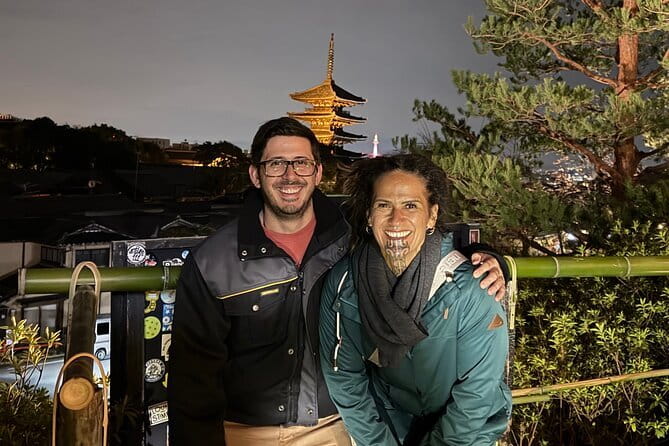
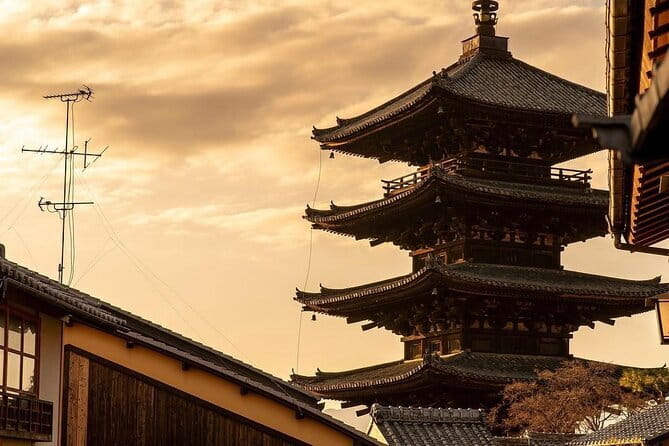
The route then reaches Yasakanoto, better known as Yasaka Pagoda or Hokanji Temple. The pagoda is one of Kyoto’s oldest wooden structures and a familiar symbol of the city.
You will spend about fifteen minutes here. The point is not a long temple visit, but a close look at the structure and the surrounding street scene. The pagoda’s scale is impressive, especially when viewed from the traditional lanes around it.
From there, the tour continues through Sannenzaka and Ninenzaka. These stone-paved paths are lined with shops and restaurants in old wooden buildings. They are among the most photogenic parts of Kyoto, but they are also working commercial streets, so you may find more activity here than in the quieter lanes.
Your guide can explain the local warning connected with the steps and slopes. The names Sannenzaka and Ninenzaka are tied to old beliefs about stumbling, which makes careful footing more than a practical concern. Regardless of what you make of the legend, watch your step. Stone paving can be slippery in rain.
The scheduled time for this section is about fifteen minutes. If shopping is a priority, this will not be enough time to browse at length. The tour is designed to show you the area, explain its character, and keep the evening moving.
Nene-no-Michi and the quieter lanes
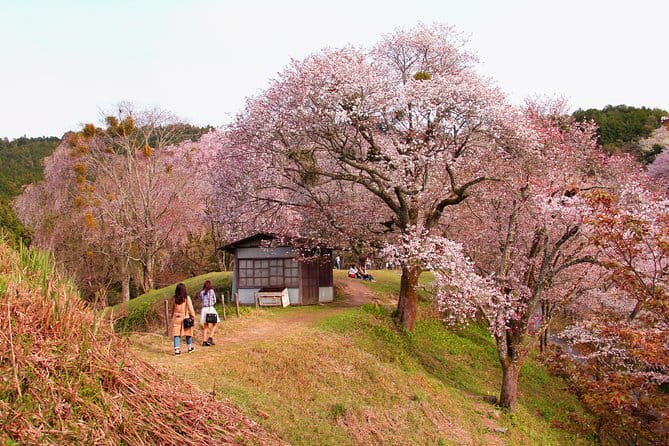
Nene-no-Michi offers a calmer stretch of the route. Named after Nene, the wife of a powerful shogun, this path passes historic temples and offers a more peaceful walk through the Higashiyama area.
This is one of the places where a local guide adds something you would not get from simply following a map. A guide can point out side lanes, explain the setting, and choose photo spots away from the busiest routes. Several past groups particularly valued being taken through quiet alleys with attractive old buildings and few people around.
You have about fifteen minutes here. It is a short stop, but it helps keep the tour from becoming a checklist of major sights. Kyoto’s appeal is often strongest in the spaces between the headline attractions, where the street itself becomes the scene.
Finishing at Yasaka Shrine
The final destination is Yasaka Shrine, the headquarters of about 2,300 related shrines throughout Japan. It is associated with prosperity and protection and has long been important to Kyoto’s religious and cultural life.
The tour allows about fifteen minutes at Yasaka Shrine. Guides have explained shrine customs here, including how to pay respects, and the open setting makes a fitting end to a route that began at Fushimi Inari.
The activity ends back at the meeting point, so you are not left trying to find your way from a distant final stop. That is useful if you are still learning Kyoto’s layout, though it also means the tour does not function as a one-way transfer to a restaurant or hotel.
Photos, pace, and the private format

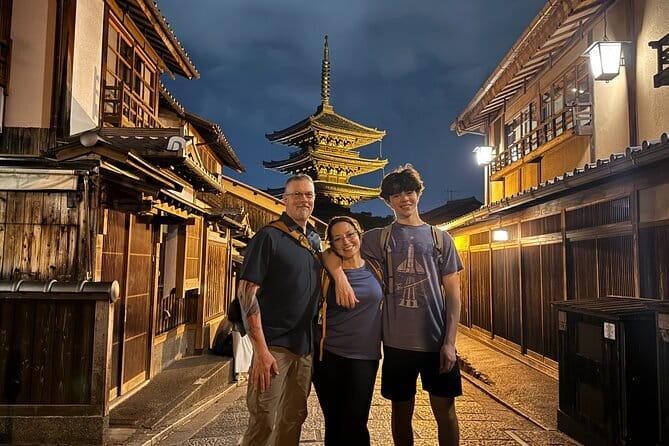
Professional photos are included, and this is more than a minor extra. Night photography can be difficult, especially with a group, moving people, and bright shrine lights. Guides such as Mariko and Ikki have been praised for finding good photo locations and sending images quickly. One group received more than 40 photos and a couple of short videos within about an hour after finishing.
You should still bring your own phone or camera if photography is a main goal. The included pictures are a welcome record of the evening, not a substitute for unlimited personal shooting time.
The private format is another strong point. Only your group participates, and past groups have included couples, families with children from ages five to twelve, and an 89-year-old participant. Guides have adjusted the pace for breaks and answered children’s questions, but you should not mistake private for effortless. The route still involves a steady amount of walking.
Some guides walk quickly, particularly when trying to fit all eight stops into 150 minutes. If someone in your group needs frequent breaks, say so early. The private setup makes that conversation easier, but the route may need small adjustments.
What the $26.43 price really buys
The base price is $26.43 per person. For that, you receive an English-speaking local guide, admission fees for the temples and shrines, and professional photos.
Public transportation is not included and costs ¥480 per person. Food and drinks are also extra. Those costs are easy to overlook, so add them before comparing this activity with a free self-guided evening.
The value is strongest if you want explanation and orientation. You could walk through Gion and Fushimi Inari without paying for a guide, but you would need to research shrine customs, plan the public transportation, find the route between districts, and take your own photos. The tour packages those tasks into one short evening.
It is also good value for a small private group. A couple pays more in total than a large group sharing a public tour, but gets direct access to the guide. Group discounts may be available, making the cost more appealing for families or friends traveling together.
Timing, meeting point, and practical cautions
Meet at the Statue of Izumo-no-Okuni in Kawabatacho, Higashiyama Ward, Kyoto. The tour ends back at that meeting point.
The experience lasts about two hours and thirty minutes. Confirmation arrives at booking, and the meeting area is near public transportation. Even so, give yourself extra time to find the statue. A past group was briefly lost at a train station pickup area before the guide located them, but you should not count on that kind of rescue.
The late-arrival rule is strict. If you miss the meeting time, you cannot join and will not receive a refund. Free cancellation is available if you cancel at least 24 hours before the start time. Cancellations or changes made within 24 hours are not refunded or accepted.
Rain does not automatically ruin the experience. One group found that wet weather added atmosphere, but you will want suitable shoes and clothing. The tour provider recommends a moderate level of physical fitness, and that is a fair description of the route.
Who should book this evening experience?
I would choose this tour for a first evening in Kyoto, especially if you want a quick sense of how the city’s shrines, temples, old districts, and customs fit together. It also suits families who want a guide able to answer questions and take group photos.
It is a good match for visitors who enjoy cultural context but do not want a long lecture. Guides explain the difference between Shinto shrines and Buddhist temples, share local stories, and offer practical advice for the rest of your stay.
I would be more cautious if you want a slow, quiet photography walk or a full visit inside every site. The schedule is tight, some guides walk briskly, and several stops last only ten or fifteen minutes.
You should also avoid booking it if anyone in your group struggles with hills, steps, uneven stone, or a steady walking pace. The private format helps, but it does not remove the physical demands of Fushimi Inari and Higashiyama.
Should you book the Kyoto Magical Night Tour?
I would book it if you want a compact, well-guided introduction to Kyoto after dark. The combination of Fushimi Inari, Gion, Yasaka Pagoda, Ninenzaka, Nene-no-Michi, and Yasaka Shrine gives you a broad view of the city in one evening.
The strongest reasons are the private format, cultural explanations, included photos, and the quieter mood of the route at night. The main limitations are the brisk pace, extra transport fare, and the need to arrive exactly on time.
Choose it early in your Kyoto stay if you want help getting your bearings and practical tips for later sightseeing. Choose another format if you prefer to linger at each shrine, shop slowly, or climb deep into the Fushimi Inari mountain paths.
FAQ
How long does the Kyoto Magical Night English Tour last?
The tour lasts approximately two hours and thirty minutes.
How much does the tour cost?
The listed price is $26.43 per person. Group discounts are available.
Is public transportation included?
No. Public transportation costs ¥480 per person and is not included in the tour price.
Are shrine and temple admission fees included?
Yes. Admission fees for all temples and shrines visited during the experience are included.
Is this a private tour?
Yes. Only your group participates in the activity.
Where does the tour start?
The meeting point is the Statue of Izumo-no-Okuni in Kawabatacho, Higashiyama Ward, Kyoto.
Where does the tour end?
The activity ends back at the meeting point.
Are photos included?
Yes. A local guide takes professional photos during the tour.
What happens if I arrive late or need to cancel?
Late arrivals cannot join the tour and will not receive a refund. You can cancel for a full refund up to 24 hours before the start time. Changes or cancellations within 24 hours are not accepted or refunded.
More temples and shrines elsewhere in Japan
- Kyoto: Ninnaji Temple Entry Ticket
★ 4.2 · 650 reviews - Kyoto Zen Meditation & Garden Tour at a Zen Temple with Lunch
★ 5.0 · 441 reviews - Kyoto: Zen Experience in a Hidden Temple
★ 5.0 · 437 reviews - KYOTO Tea Ceremony with kimono near by Imamiya Jinjya Shrine
★ 5.0 · 343 reviews
More geisha district tours in Kyoto
- Kyoto Geisha Walking Tour: Gion District & Hidden Gems
★ 4.7 · 3,273 reviews - Kyoto: Gion Magical Night Walking Tour with Geisha Trivia
★ 4.9 · 2,393 reviews - Kyoto: Gion Geisha District Walking Tour – Stories of Geisha
★ 4.7 · 2,187 reviews - Best of Kyoto: Gion, Geisha, Pagodas & Cobblestones
★ 4.9 · 2,058 reviews
Just added in Kyoto
- Private Cooking Class Udon in Kyoto Japan★ 5.0 · 23 reviews
- Your Private Vacation Photography Session In Kyoto★ 5.0 · 110 reviews
- Kyoto: Zen Meditation at a Private Temple with a Monk★ 5.0 · 25 reviews
- Private Pewter Sake Cup Experience with a Kyoto Artisan★ 5.0 · 31 reviews
- Kyoto Wagashi(Japanese sweets) Cooking Class near Fushimiinari★ 5.0 · 60 reviews
- Kyoto:Family-Friendly Kimono & Yukata Experience at WARGO★ 5.0 · 147 reviews
- Private Guided Traditional Buddhist Cooking in Japan★ 5.0 · 16 reviews
- Kyoto: Gion Geisha District & Sake-in-Hand Walking Tour★ 5.0 · 37 reviews
Fushimi Inari Tours, compared.
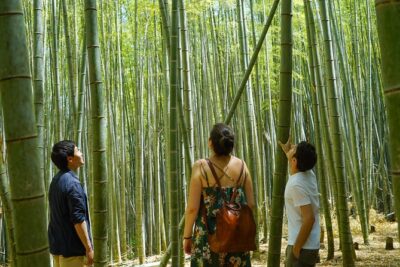
Fushimi Inari Hidden Hiking Tour (Private Option Available)
Read our review →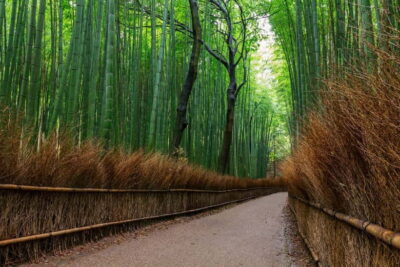
Kyoto/Osaka: Nara, Fushimi Inari Taisha, Arashiyama Bus Tour
Read our review →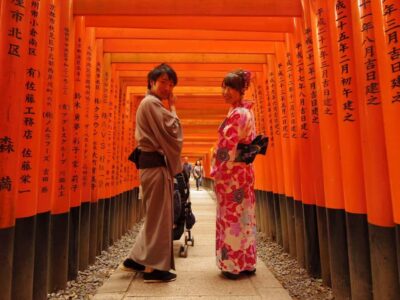
Osaka/Kyoto: Arashiyama, Nara & Fushimi Inari Shrine w/Lunch
Read our review →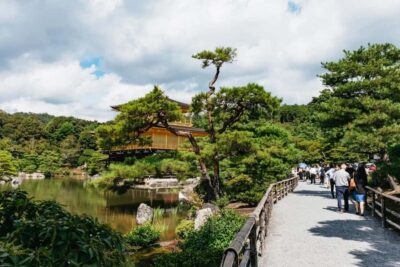
Nijo Castle, Kiyomizu & Fushimi Inari Guided Tour
Read our review →
Nijo, Kinkaku-ji, Arashiyama, Kiyomizu & Fushimi Inari
Read our review →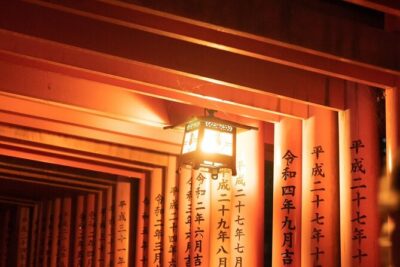
Kyoto Early Bird English Tour: Fushimi-Inari and Arashiyama
Read our review →Browse the lists this tour appears in