Reviewed · GEISHA & GION DISTRICT TOURS
Kyoto: Maiko, Samurai, or Kimono Rental and Tea Ceremony
The best part of this Kyoto outing is the setting: you dress up near Kiyomizu-dera, then walk through the old Higashiyama area for matcha and sweets. You can choose a maiko costume, samurai style, or a regular kimono, with a summer yukata option from June 1 through September 15.
I like the family-friendly format, especially the short tea session, and I like that the kimono rental can continue until 5pm, giving you time for photos around Ninenzaka and Sannenzaka. The catch is that this is a polished tourist activity rather than a full ceremonial lesson, and the schedule leaves little room for lateness.
Key points to know before booking
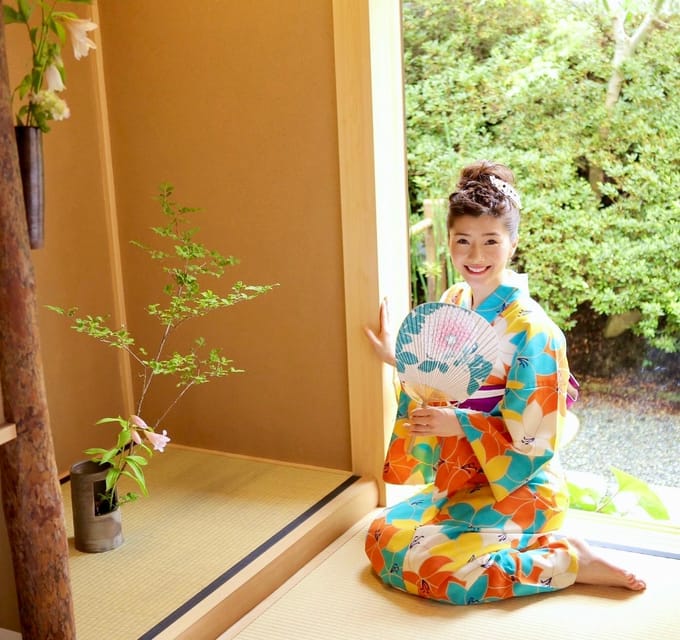
- Three costume choices: Pick a maiko look, samurai style, or a standard kimono and yukata.
- Three-minute walk to tea: The matcha session takes place at Akebonotei, close to the rental shop.
- Rental time matters: Your kimono can be used until 5pm, but the tea appointment comes 90 minutes after dressing.
- Hair styling costs extra: The supplied information lists hairstyling at 1,650 yen.
- Best for small family groups: Children must be at least five years old, and the family limit is four people.
- Prime sightseeing location: Kiyomizu-dera, Yasaka Five-Story Pagoda, Kodaiji Temple, and Gion-area sights are nearby.
Dressing near Kiyomizu-dera
Studio Shiki puts you in one of Kyoto’s most useful sightseeing locations. The shop sits close to Kiyomizu-dera, with the famous temple and the old Higashiyama streets just outside your day’s plan. After dressing, you can walk toward Ninenzaka, Sannenzaka, Yasaka Koshindo, Kodaiji Temple, or Yasaka Shrine without arranging another ride.
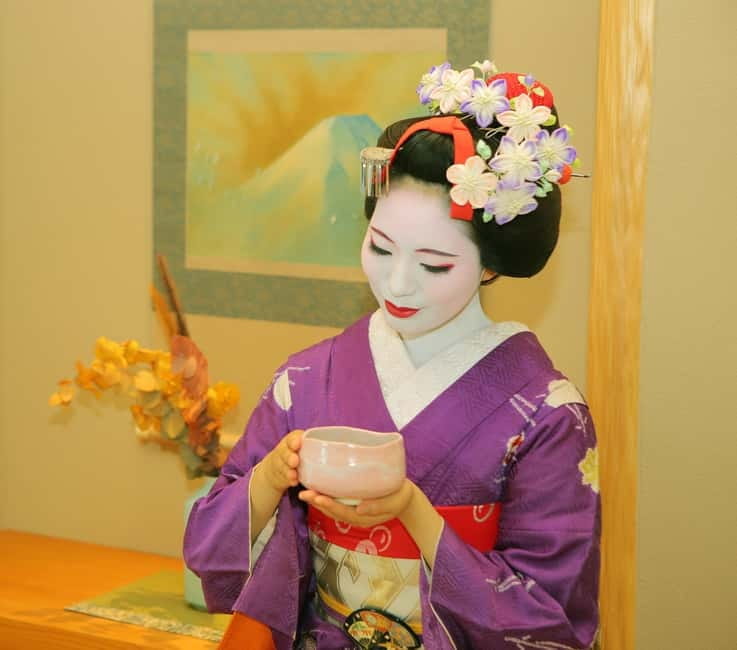
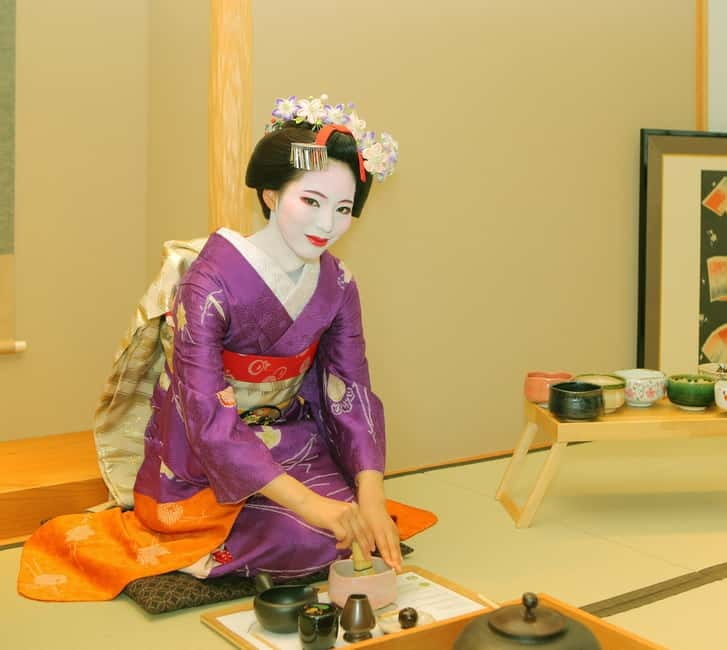
The first decision is your look. A maiko costume gives you the most theatrical transformation. Maiko are apprentice geisha, known for elaborate dress and a formal appearance, so this option is mainly about the visual experience and photographs. It is not the same as becoming a working maiko or learning the full customs of that profession.
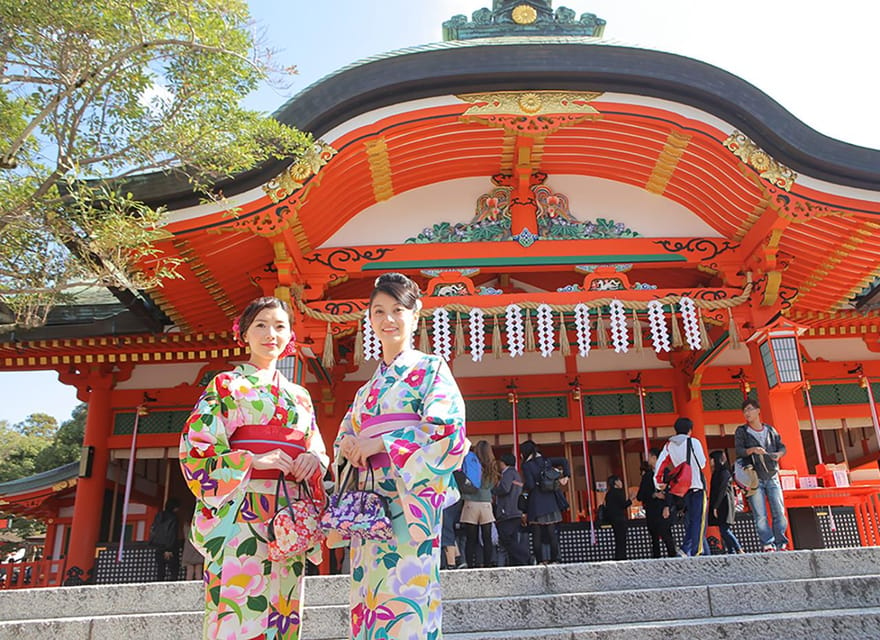
The samurai option gives families and couples a different angle. It can be a good pick if one person does not want a traditional women’s kimono, or if children are more excited by historical costume than by tea etiquette. The regular kimono plan is the more understated choice, and a yukata is available seasonally from June 1 through September 15.
The package includes the kimono, obi sash, bag, underwear, and sandals. That matters because you do not need to assemble the outfit yourself or bring special clothing. The selection is described as correct rather than enormous, so you may find a good range without the feel of a high-end costume wardrobe.
Hair styling is not included. A price of 1,650 yen is given for the optional service. If the finished look matters to you, budget for it before you arrive. If you are mainly interested in the walk and tea, you can keep the extra cost down.
Other kimono experiences in Kyoto people book:
- Kimono Tea Ceremony at Kyoto Maikoya, NISHIKI
★ 5.0 · 911 reviews - Kyoto: Kimono Rental with Hairstyling and Accessories
★ 4.8 · 653 reviews - Kyoto: Kimono Tea Ceremony at Orizuruya Gion
★ 4.9 · 618 reviews
The 90-minute gap before matcha
Your tea ceremony appointment comes 90 minutes after the kimono appointment. The published schedule is straightforward:
- Dressing at 9:00am, tea at 10:30am
- Dressing at 10:00am, tea at 11:30am
- Dressing at 11:00am, tea at 12:30pm
- Dressing at noon, tea at 1:30pm
- Dressing at 1:00pm, tea at 2:30pm
- Dressing at 2:00pm, tea at 3:30pm
- Dressing at 3:00pm, tea at 4:30pm
This spacing is useful. It gives you time to finish dressing and make the short walk to Akebonotei. It also means you should not treat the 90-minute gap as spare time for a distant attraction. Kiyomizu-dera itself can take much longer than expected, and the sloping streets around the temple are not a place to hurry in formal sandals.
Arrive early for both parts. If you miss the dressing time or the tea appointment, you may have to join halfway through or lose the activity altogether. The schedule is built around fixed sessions, not an open arrival window.
The whole experience lasts from about 150 minutes to three hours, depending on the plan and how much time you spend in the rented outfit. A morning booking gives you the best chance to combine the costume with a long walk through Higashiyama. A late booking works if you mainly want photos and tea, but the 3:00pm dressing appointment leaves only the final 4:30pm tea session before the rental ends at 5pm.
A short walk to Akebonotei
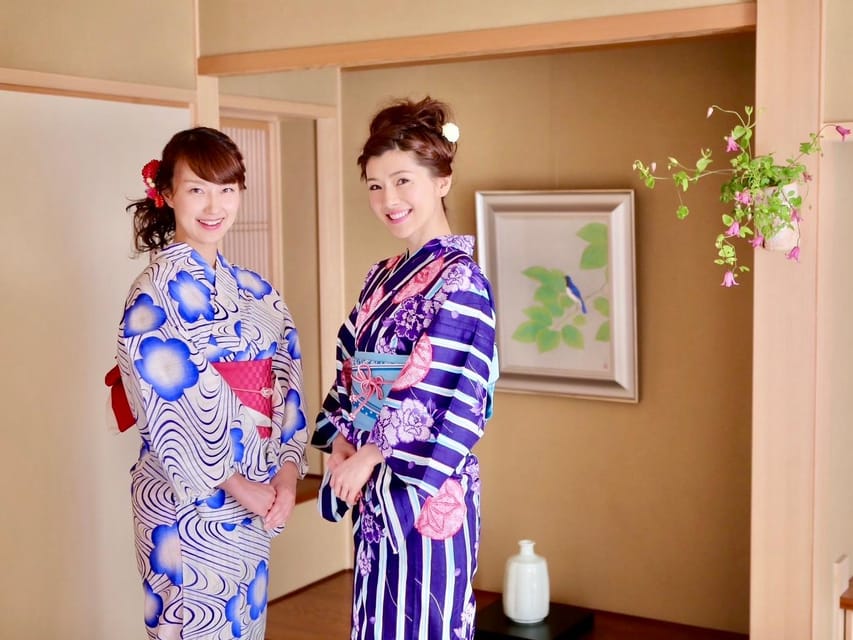
Akebonotei, the tea ceremony parlor, is about three minutes from the rental shop. That short distance is one of the practical strengths of this activity. You do not need to navigate Kyoto buses in a kimono, and you are unlikely to lose much time moving between the two parts.
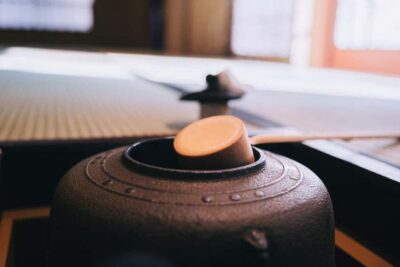
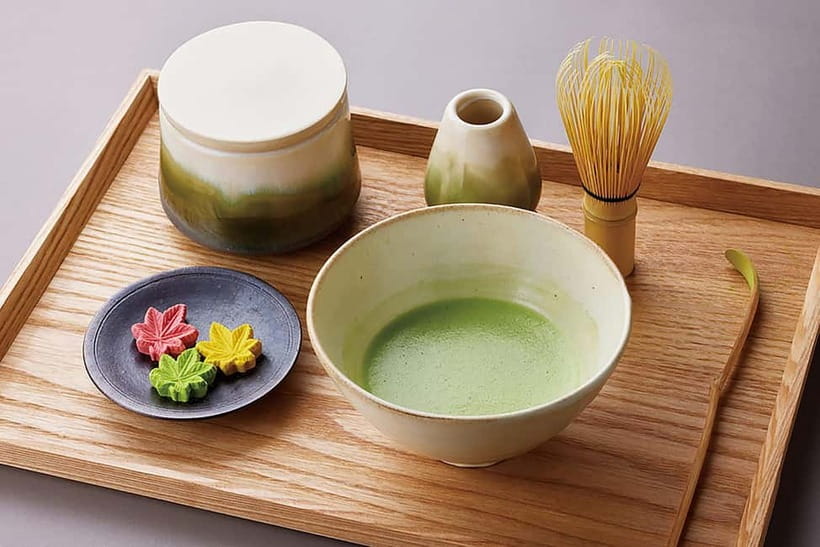
The tea experience centers on matcha and sweets. You learn or watch the basic rhythm of a Japanese tea service, then taste the tea with a small sweet. The setting is designed for an easy introduction, not a several-hour study of tea schools, utensils, or philosophy.
The ceremony is a short version, which can work well with children. Younger participants may find a compact session more enjoyable than a long formal sitting. The activity accepts children from age five, but it does not accept children under five or pregnant women.
You should set your expectations correctly. This is a visitor-friendly tea demonstration connected to a costume rental. It offers a taste of the formality, gestures, and flavor of matcha, but it should not be your only plan if you want an in-depth cultural class or a highly traditional tea-school experience.
English support is available, and the staff member handling the tea session is described as speaking English very well. That makes the process easier for families and first-time visitors, though the information does not identify the staff member by name.
What the costume adds to the tea
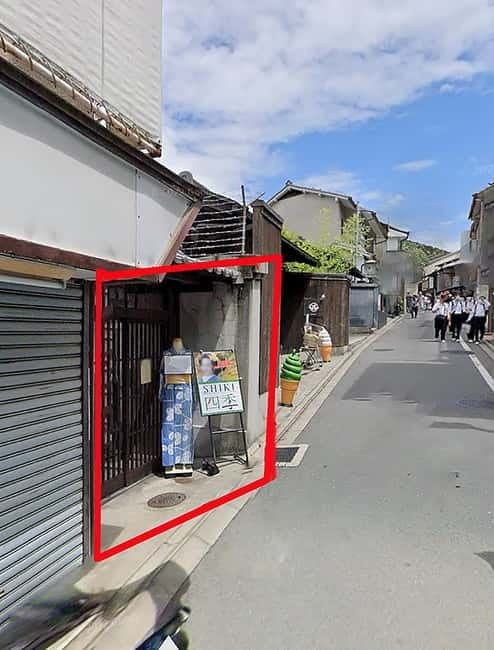
The tea itself is simple: matcha and sweets in a dedicated parlor. The costume changes how you experience it. Wearing an obi and sandals makes you more aware of posture, movement, and the careful pace of the room. Even a short ceremony feels different from ordering a green tea at a cafe.
The maiko and samurai choices also give the session a playful quality. You are not just watching a demonstration in everyday clothes. You are taking part in a staged cultural encounter, which can make the activity memorable for children and useful for family photos.
At the same time, the costume can make the experience feel artificial. That is not automatically a flaw, but it is worth saying plainly. The activity is built for visitors who want a convenient introduction and a memorable photograph. It does not recreate every detail of a professional maiko appointment, samurai training, or formal tea ceremony.
I would think of it as a cultural sampler. You get a costume, a short matcha experience, and access to a superb Kyoto walking area. If you want a specialist lesson, a quiet tea house, or a serious study of Japanese dress, you may find this too packaged.
Other tea ceremonies in Kyoto people book:
- Kyoto: Tea Ceremony in a Traditional Tea House in Kiyomizu
★ 4.9 · 3,519 reviews - Kyoto: Tea Ceremony Ju-An at Jotokuji Temple
★ 4.9 · 3,207 reviews - Kyoto: 45-Minute Tea Ceremony Lesson Experience
★ 4.3 · 2,378 reviews - Kyoto: Table-Style Tea Ceremony at a Kyo-Machiya
★ 4.9 · 1,211 reviews
Making good use of the rental until 5pm
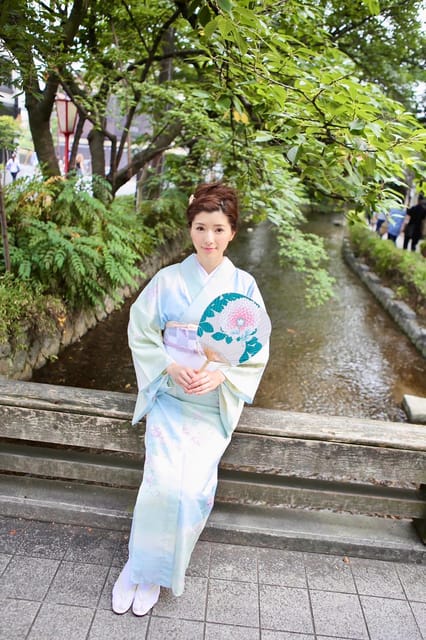
The strongest value comes from using the kimono beyond the tea session. If your appointment is in the morning or early afternoon, you can continue wearing the outfit until 5pm and walk around the surrounding sights.
Kiyomizu-dera is the obvious first stop. Its large wooden stage and hillside position make it one of Kyoto’s essential temple visits. The nearby streets lead toward the Yasaka Five-Story Pagoda, a familiar landmark above the old neighborhood, and Yasaka Koshindo, a small and colorful temple that is easy to combine with a stroll.
Ninenzaka and Sannenzaka are especially convenient after dressing. Their traditional buildings, shops, and rising stone lanes make a natural backdrop for photographs. The streets can be crowded, so you may need patience when moving in sandals and when stopping for pictures.
Kodaiji Temple and Yasaka Shrine extend the route toward Gion. The supplied information also points to stylish cafes in the area, so you can turn the booking into a half-day outing rather than returning immediately to the shop.
Plan the walk before you arrive. A kimono is not ideal for covering large distances, and a maiko outfit can be more restrictive than everyday clothing. Stay near the rental shop until the tea session is over, then choose one or two nearby sights instead of trying to see everything.
Price, group size, and practical value
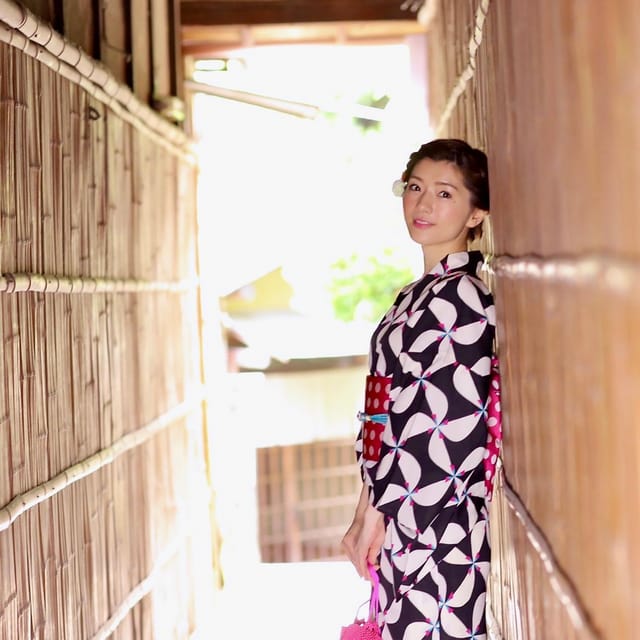
At $77 per person, the price covers more than a simple kimono rental. You receive the outfit, accessories, sandals, and underwear, plus the matcha experience and sweets. The rental time until 5pm can add real value if you use it for temple visits and photographs.
The price is less convincing if you only dress for a short time and attend the tea session. Hair styling costs extra, and admission fees are not included for people who do not take part in the tea ceremony. You should also remember that the experience is limited to families of up to four people, despite the general small-group information allowing up to six participants.
For a family, the price may be easier to justify because everyone can take part in the same activity. Children age five and older can join, and the short ceremony avoids asking them to sit through a lengthy formal event. For a solo visitor who wants an authentic tea lesson, the package may offer less value.
The experience has free cancellation up to 24 hours before the appointment, and you can reserve now and pay later. Those terms help if your Kyoto plans are still shifting, but they do not change the main rule: punctuality is essential on the day.
Getting there from Kyoto’s bus network

If you arrive by city bus, get off at the Kiyomizu-michi stop. The ride takes about 20 minutes, followed by a walk of about 10 minutes to the shop.
The walk is manageable, but allow extra time. Kyoto buses can be busy, and the approach to Kiyomizu-dera includes uphill streets. Arriving in ordinary clothes is much easier than rushing in formal sandals, so plan to reach the area early enough to find the shop without stress.
The location is better suited to a full Higashiyama day than to a quick stop between distant Kyoto neighborhoods. After the tea and rental, you are already close to several major sights. I would book this on a day devoted to Kiyomizu-dera, Gion, and the eastern temple district.
Who will enjoy this experience most
I would recommend it most strongly to families with children over five, couples who want memorable photographs, and first-time Kyoto visitors who want a simple introduction to kimono and matcha.
It also suits you if convenience matters. The two venues are close together, the package includes the basic clothing pieces, and the short tea session is easy to fit into a sightseeing day. The nearby temples and lanes give you plenty to do after the formal activity ends.
You may want another option if you are pregnant, traveling with a child under five, or looking for a serious tea ceremony course. You may also be disappointed if you expect a private, deeply traditional event. The experience is designed for access and ease, not for specialist study.
Should you book the Studio Shiki experience?
Book it if you want costume, matcha, and Kyoto’s old streets in one compact outing. The location near Kiyomizu-dera is excellent, the family format is useful, and the rental lasting until 5pm gives you time to make the most of the area.
Approach it as a staged cultural experience, not a complete portrait of maiko life, samurai culture, or tea ceremony practice. Choose an early appointment, pay for hair styling if photographs are important, and keep your post-tea route close to Higashiyama.
For the right visitor, $77 is fair because it combines clothing rental, accessories, tea, sweets, and a prime location. For a visitor seeking quiet authenticity above all else, the short and tourist-focused format may not be enough.
FAQ
Where does the kimono rental take place?
The rental takes place at Studio Shiki, also called Rental Kimono Shiki Sakura, near Kiyomizu-dera in Kyoto.
Where is the tea ceremony held?
The matcha experience takes place at the tea ceremony parlor Akebonotei, about a three-minute walk from the rental shop.
What costume choices are available?
You can choose a maiko costume, samurai style, or a regular kimono. A yukata plan is available from June 1 through September 15.
What does the package include?
The package includes the kimono, obi, bag, underwear, sandals, matcha tea, and sweets.
Is hair styling included?
No. Hair styling is not included. The supplied price for the optional service is 1,650 yen.
How long can I keep the kimono?
If you rent a kimono, you can enjoy it until 5pm.
How much time is there between dressing and tea?
The tea appointment is scheduled 90 minutes after the kimono appointment. For example, a 9:00am dressing appointment is followed by tea at 10:30am.
Can children join?
Children can join from age five. Children under five are not allowed to participate.
Can pregnant women join?
No. Pregnant women are not allowed to take part in this experience.
How do I get there by city bus?
Take a city bus to the Kiyomizu-michi stop. The ride takes about 20 minutes, followed by a walk of about 10 minutes to the shop.
More samurai and ninja experiences elsewhere in Japan
- Kyoto Samurai Experience
★ 5.0 · 1,294 reviews - Kyoto: Kendo and Samurai Experience with Uniform and Gear
★ 4.9 · 815 reviews - Kyoto: Samurai Sword Class by Experts in Traditional Arts
★ 4.9 · 657 reviews - Skip the lines Basic Ticket at SAMURAI NINJA MUSEUM KYOTO
★ 4.5 · 632 reviews
More geisha district tours in Kyoto
- Kyoto Geisha Walking Tour: Gion District & Hidden Gems
★ 4.7 · 3,273 reviews - Kyoto: Gion Magical Night Walking Tour with Geisha Trivia
★ 4.9 · 2,393 reviews - Kyoto: Gion Geisha District Walking Tour – Stories of Geisha
★ 4.7 · 2,187 reviews - Best of Kyoto: Gion, Geisha, Pagodas & Cobblestones
★ 4.9 · 2,058 reviews
Just added in Kyoto
- Private Cooking Class Udon in Kyoto Japan★ 5.0 · 23 reviews
- Your Private Vacation Photography Session In Kyoto★ 5.0 · 110 reviews
- Kyoto: Zen Meditation at a Private Temple with a Monk★ 5.0 · 25 reviews
- Private Pewter Sake Cup Experience with a Kyoto Artisan★ 5.0 · 31 reviews
- Kyoto Wagashi(Japanese sweets) Cooking Class near Fushimiinari★ 5.0 · 60 reviews
- Kyoto:Family-Friendly Kimono & Yukata Experience at WARGO★ 5.0 · 147 reviews
- Private Guided Traditional Buddhist Cooking in Japan★ 5.0 · 16 reviews
- Kyoto: Gion Geisha District & Sake-in-Hand Walking Tour★ 5.0 · 37 reviews
Geisha & Gion District Tours, compared.

Kyoto Geisha Walking Tour: Gion District & Hidden Gems
Read our review →
Gion Geisha District Walking Tour – Stories of Geisha
Read our review →
Best of Kyoto: Gion, Geisha, Pagodas & Cobblestones
Read our review →
Kyoto Night Foodie Tour in Gion (9+ dishes + 6 Sake tastings)
Read our review →
Kyoto Gion: 2-Hour Geisha Culture & History Walking Tour
Read our review →
Chopsticks Making Workshop in Gion with Engraving Option
Read our review →