
Reviewed · RAMEN TOURS & WORKSHOPS
Kyoto Ramen Spoon Painting & Michelin Cooking Class
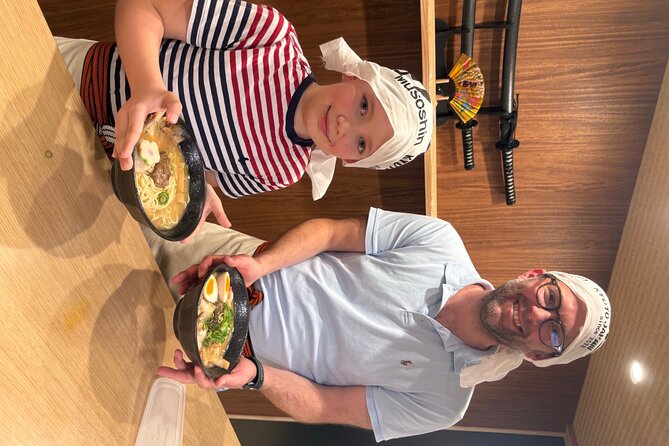
The best part of this Kyoto experience is the two-part ramen lesson: you paint a ceramic spoon, then cook and eat ramen in the same restaurant that makes the ingredients. Chef Shin and his assistants explain the broth, noodles, soy sauce, and roast pork before you assemble your meal.
I like the small group size, capped at 12, and the fact that the class is led by working ramen chefs. I also like the practical souvenir: your spoon is baked in a kiln overnight, so it has a real connection to the class rather than being a generic shop purchase.
The main thing to consider is that you do not make the noodles from scratch. The restaurant prepares its noodles, broth, soy sauce, and roast pork in advance, leaving you to cook and assemble the ramen. Also, the spoon may not be ready to take home until after the kiln firing.
Key points
- Paint and cook in one 90-minute visit: The craft and meal are part of the same compact experience.
- Learn from a working ramen restaurant: Musoshin makes noodles, broth, soy sauce, and roast pork in-house.
- Eat the ramen you prepare: Your bowl is not just a demonstration. You cook the supplied ingredients and sit down to eat.
- Small class, maximum 12 people: The size allows room for individual help from the chef and assistants.
- Vegetarian and vegan options are available: Tell the team about your needs when booking.
- A useful Kyoto souvenir: Your decorated ceramic spoon is fired in a kiln overnight, giving you something personal to take home later.
A ramen class with a real restaurant behind it
Musoshin Ramen Academy began in Kyoto in 2022 and is connected to Musoshin Ramen, which now has six restaurants in Kyoto and Toronto. The Toronto restaurant has received Michelin nominations for three consecutive years, and the recipe used in this class is the same one served by the restaurant group.
That detail matters. This is not simply a generic cooking workshop built around instant noodles. Musoshin says it makes its ingredients in-house, including the noodles, ramen soup, soy sauce, and roast pork. The soup cooks for 12 hours, while the noodles are made each morning and rested overnight for use the next day.
You will not reproduce all of that work in a 90-minute class. Instead, the chefs bring the prepared components from the restaurant and show you how they fit together. That gives you a useful look at ramen as a finished food system: broth, seasoning, noodles, meat or vegetables, and presentation all have a job.
I find that approach sensible for a short class. Making noodles and a 12-hour broth would turn this into a much longer course, and you would spend less time cooking and eating. Here, you get the parts that are realistic to handle during a short visit.
Other cooking classes in Kyoto people book:
- Ramen Cooking Class at Ramen Factory in Kyoto
★ 5.0 · 1,937 reviews - Kyoto: Ramen Cooking Class at a Ramen Factory with Souvenir
★ 4.9 · 532 reviews - Kyoto: Ramen, Gyoza, and Onigiri Cooking Class
★ 5.0 · 445 reviews
Painting your ceramic ramen spoon

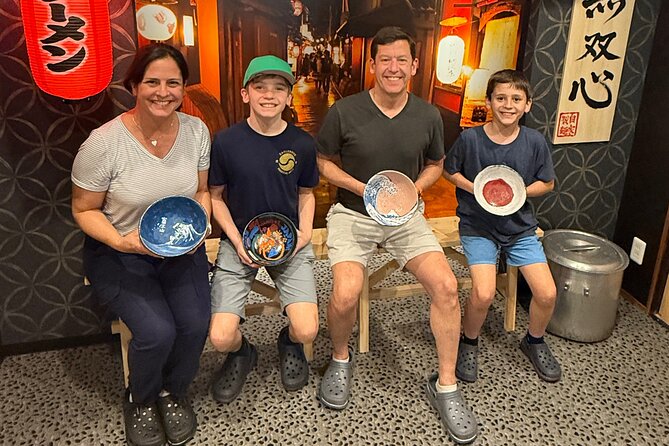
The class begins with the spoon-painting activity. You decorate a ceramic ramen spoon, creating a small souvenir that reflects your own taste. It is a simple craft, but it gives the class a relaxed opening before the kitchen work begins.
The spoon is then fired in a kiln overnight. This is important to know before you book. You may not be able to take it home immediately, and one participant was caught out by the firing time. If your schedule allows, ask the staff when and how the finished spoon will be collected or sent onward.
I like this part because it avoids the usual souvenir problem. You are not just buying a spoon with a Kyoto design printed on it. You are making one during a meal-related activity, and the finished object carries a memory of your class.
The painting also works well for families. A child does not need advanced cooking skills to take part, and adults can enjoy the creative break. The spoon is functional, but it also makes a personal keepsake and a good photo.
From restaurant ingredients to your own bowl
After the craft portion, you move into the practical ramen lesson. The chefs explain the components and the method step by step. You handle the restaurant-prepared ingredients and cook your ramen with guidance from the staff.
The teaching covers more than a quick recipe. You learn about the work behind ramen, including the broth, noodles, seasoning, and toppings. Chef Shin has been praised for staying closely involved with the class, and his warm, energetic approach is especially helpful for children and first-time cooks.
Assistant chefs are also part of the experience. Amiru has led classes here, and the teaching team is described as patient, friendly, and active during the cooking. That matters in a small professional kitchen, where several people may be working at once and you want clear instructions rather than a demonstration from across the room.
The restaurant setting gives the class a useful sense of place. You are not learning ramen in a hotel meeting room. You are inside a ramen business that prepares its own food daily, so the lesson connects directly to the restaurant’s normal work.
The meal is part of the lesson
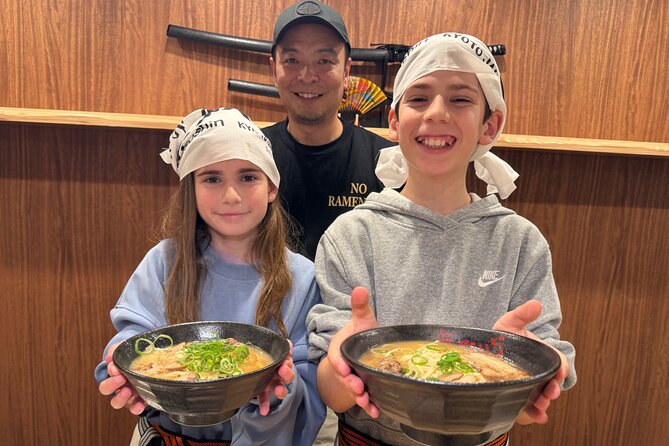
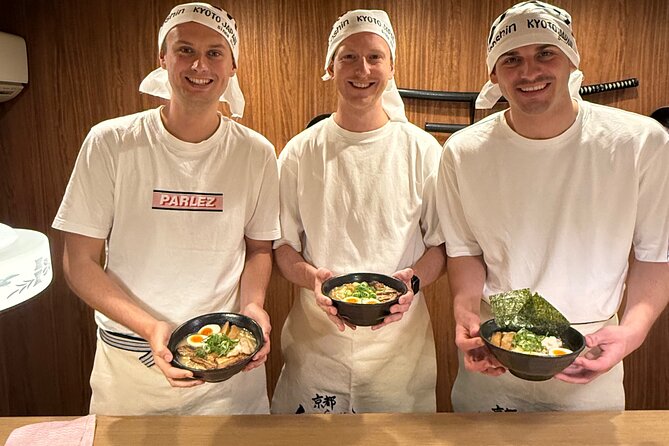
At the end, you eat the ramen you have helped prepare. This is a proper payoff, not an optional tasting. The bowl includes restaurant-made components, but your cooking and arrangement affect the final result.
The experience includes a ramen bowl, ramen spoon, apron, and part of the ramen. The supplied information does not specify every topping or recipe variation, so your exact dish may depend on the class session and dietary choice.
Many people describe the finished ramen as a high point of the experience. One family cooked pork broth and vegetarian options, while another participant used the class to pick up ideas for vegan ramen at home. The vegetarian option is specifically available, and vegan or vegetarian preparation has been accommodated during the class.
If you have an allergy, contact the operator in advance and explain it clearly. The class has handled allergies successfully, but the available information does not list every ingredient or promise a particular allergy-free kitchen setup.
Other bowls worth queuing for in Kyoto:
- Kyoto Ramen and Gyoza Cooking Class with Professional Chefs
★ 5.0 · 282 reviews - Home style Ramen and Homemade Gyoza in Kyoto
★ 5.0 · 152 reviews - Kyoto Michelin Ramen Workshop or Painting Ramen Essentials
★ 4.9 · 100 reviews - Kyoto Ramen Noodle Making Class
★ 5.0 · 58 reviews
What you will not be making
The biggest limitation is that you do not make the noodles yourself. The restaurant produces them in advance, rests them overnight, and brings them to the workshop. That is a sensible choice for the class length, but it may disappoint you if your main goal is a full noodle-making course.
You also will not make the broth from the beginning. Musoshin’s soup takes 12 hours, so the class focuses on cooking and combining prepared components rather than starting a stockpot from raw ingredients.
I would view this as a lesson in ramen preparation and restaurant technique, not a complete chef-training course. You learn how the pieces are handled and assembled, and you get the flavor of a Michelin-nominated restaurant’s recipe. You do not leave knowing how to recreate every component from scratch in your home kitchen.
That distinction helps you decide if the class is right for you. If you want to knead noodles, roll dough, and simmer broth all afternoon, choose a longer cooking course. If you want a fun, manageable introduction with a real meal at the end, this format makes more sense.
The Kyoto temple stops need careful reading
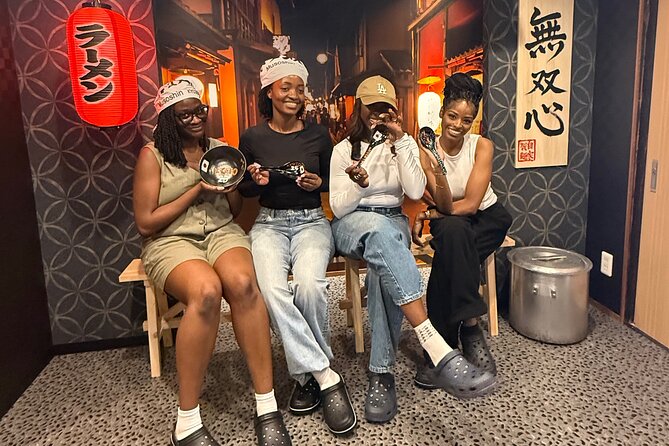
The experience information names Kiyomizu-dera Temple, Kennin-ji Temple, and Sanjusangendo Temple as stops. However, the class description centers on Musoshin Ramen Academy, and the meeting point is at 440-5 Nishigomonchō in Kyoto’s Higashiyama Ward. The activity ends back at that meeting point.
Because no times or transport details are given for the temple names, you should not assume that a temple sightseeing tour is included in the 90-minute cooking class. Treat the ramen academy as the confirmed focus, and verify the temple portion with the operator before booking if those visits are important to you.
Each named site is worth knowing about:
- Kiyomizu-dera: One of Kyoto’s best-known temple visits and a natural pairing with an activity in Higashiyama. It can make a good nearby sightseeing plan before or after the class.
- Kennin-ji: A major Zen temple in the Gion and Higashiyama area. Its location makes it relevant when planning your day around the meeting point.
- Sanjusangendo: Famous for its long hall and rows of Buddhist statues. It is a separate sightseeing highlight, so confirm whether your booked session includes it or simply lists it as part of the wider area itinerary.
The practical lesson is simple: allow extra time if you plan to visit any of these temples. Do not rush from a temple to the cooking class based only on the names provided. The class itself lasts about 90 minutes, but no temple transfer schedule is supplied.
Is $65.89 a fair price?
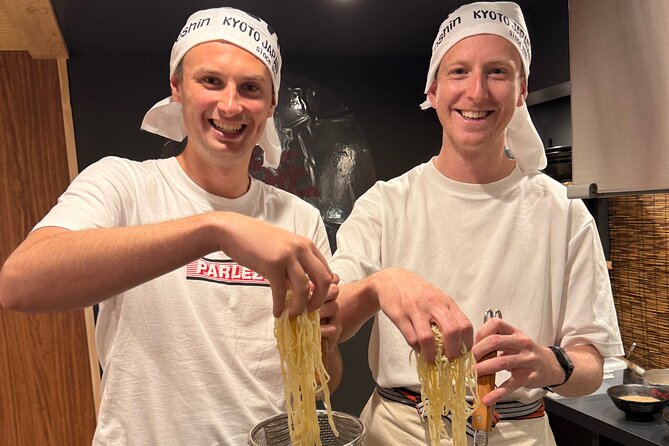
At $65.89 per person, the class is not the cheapest ramen meal in Kyoto. You are paying for more than lunch, though. The price combines instruction from a restaurant chef, a small-group cooking session, the ramen meal, an apron, a bowl, part of the ramen, and a painted ceramic spoon.
The value is strongest if you care about participation. A bowl of ramen alone may cost much less, but it will not teach you how the broth, noodles, soy sauce, and toppings come together. The spoon activity adds another layer, especially for families and anyone who wants a physical souvenir.
The value is less clear if you are only looking for a meal or expect to make every ingredient from scratch. You will be using prepared restaurant components, and the spoon may need to remain behind for kiln firing. Those are fair tradeoffs for a compact class, but they should be part of your calculation.
The small group limit of 12 also supports the price. You are more likely to receive direct help than in a large demonstration class, and the chef or assistant can respond when you need clarification.
Who will enjoy this most?
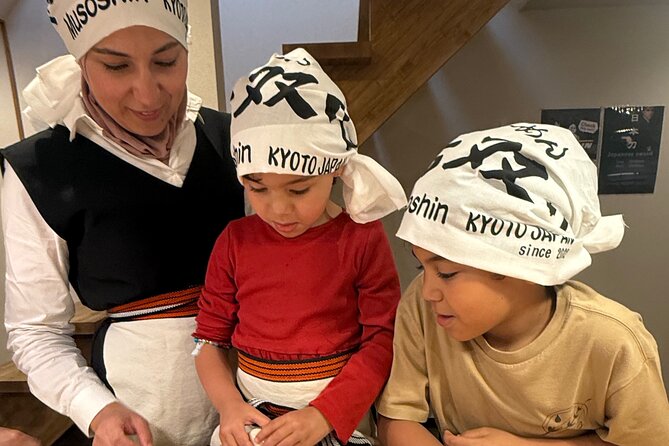
I would recommend this class to several types of visitors:
- Ramen fans: You get a closer look at a restaurant recipe and eat the result.
- Families: The spoon painting gives children a creative task, while the cooking keeps adults involved.
- Vegetarian and vegan diners: Options are available, and the team has handled plant-based meals.
- First-time cooks: The staff gives step-by-step guidance, so you do not need advanced kitchen skills.
- Food-focused visitors with limited time: Ninety minutes is long enough for a real activity without taking half a day.
- People who prefer small groups: The maximum is 12 participants.
I would hesitate if your priority is traditional craft alone, because the spoon painting is brief and tied to the cooking experience. I would also hesitate if you want to make noodles and broth from raw ingredients. This is a polished restaurant lesson, not a full-day culinary apprenticeship.
Timing, meeting point, and cancellation
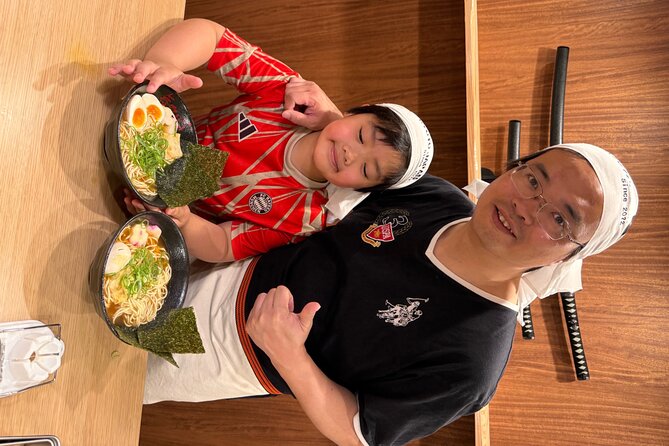
The meeting point is 440-5 Nishigomonchō in Kyoto’s Higashiyama Ward, Japan. The activity ends at the same location, and it is near public transportation.
The total duration is about one hour and 30 minutes. Since the class includes painting, cooking, instruction, and eating, arrive ready to stay for the full session. If your spoon must be fired overnight, plan for a later pickup or ask the provider about the return arrangement.
Mobile tickets are accepted, and booking confirmation is provided at the time of purchase. You can cancel for a full refund up to 24 hours before the local start time. Changes or cancellations made inside that 24-hour window are not accepted for a refund.
Should you book the Musoshin ramen class?
Book it if you want a compact Kyoto food experience with real chef instruction, a meal you prepare yourself, and a personal ceramic souvenir. The strongest features are the small group, the restaurant setting, the careful explanation of ramen components, and the friendly teaching style associated with Chef Shin, Amiru, and the assistant team.
Go in with accurate expectations. You will not make noodles or simmer a 12-hour broth from scratch, and your spoon may not be ready immediately. If that sounds like a reasonable trade for a fun, well-organized ramen lesson, $65.89 is a fair price. If you want a technical noodle-making course, choose another class.
FAQ
Where does the ramen class meet?
The meeting point is 440-5 Nishigomonchō, Higashiyama Ward, Kyoto, 605-0816, Japan. The activity ends back at the meeting point.
How long does the experience last?
The class lasts approximately one hour and 30 minutes.
How many people can join the class?
The activity has a maximum capacity of 12 participants.
Do I make the ramen noodles from scratch?
No. Musoshin prepares its noodles in-house, makes them each morning, and lets them rest overnight. The class uses ingredients brought from the restaurant, and you cook and assemble the ramen.
Are vegetarian or vegan options available?
Yes. Vegetarian and vegan options are available. The team has also accommodated dietary needs and allergies, so explain your requirements when booking.
Can I cancel for a full refund?
Yes. You can cancel at least 24 hours before the local start time for a full refund. Cancellations or changes made less than 24 hours before the start time are not accepted for a refund.
More cooking classes elsewhere in Japan
- Kyoto: Japanese Washoku Bento Small Group Cooking Class
★ 5.0 · 380 reviews - Kyoto: Afternoon Japanese Izakaya Cooking Class
★ 4.9 · 241 reviews - Izakaya Style Cooking Class
★ 5.0 · 219 reviews - Gyoza Cooking Class in Kyoto: Traditional Japanese Dumplings
★ 5.0 · 210 reviews
Just added in Kyoto
- Private Cooking Class Udon in Kyoto Japan★ 5.0 · 23 reviews
- Your Private Vacation Photography Session In Kyoto★ 5.0 · 110 reviews
- Kyoto: Zen Meditation at a Private Temple with a Monk★ 5.0 · 25 reviews
- Private Pewter Sake Cup Experience with a Kyoto Artisan★ 5.0 · 31 reviews
- Kyoto Wagashi(Japanese sweets) Cooking Class near Fushimiinari★ 5.0 · 60 reviews
- Kyoto:Family-Friendly Kimono & Yukata Experience at WARGO★ 5.0 · 147 reviews
- Private Guided Traditional Buddhist Cooking in Japan★ 5.0 · 16 reviews
- Kyoto: Gion Geisha District & Sake-in-Hand Walking Tour★ 5.0 · 37 reviews
Ramen Tours & Workshops, compared.
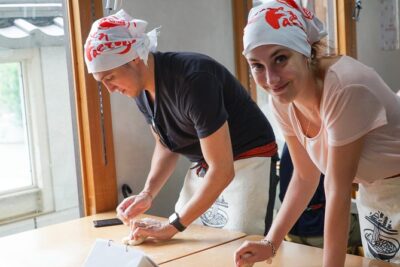
Ramen Cooking Class at Ramen Factory in Kyoto
Read our review →
Eat and Drink Like a Local: Tokyo Ueno Food Tour-Taverns&Ramen
Read our review →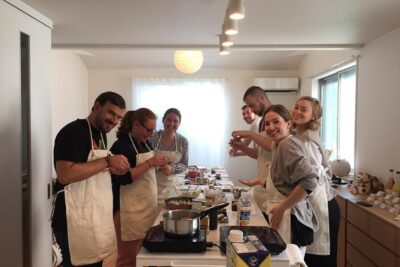
Ramen & Gyoza Cooking Class in Tokyo with Local Supermarket Visit
Read our review →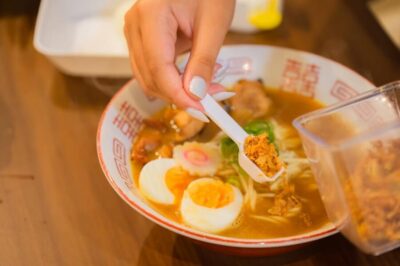
Ramen Cooking Class at a Ramen Factory with Souvenir
Read our review →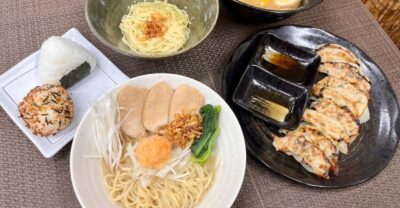
Five Must-See Highlights Walking Tour & Ramen Lunch
Read our review →
Browse the lists this tour appears in