
Reviewed · WALKING TOURS
The Dark Side of Tokyo – Night Walking Tour Shinjuku Kabukicho
Tokyo’s famous neon streets look dazzling, but the real story is harder to read from the signs alone. This walking tour takes you through Shinjuku and Kabukicho after dark, explaining the nightlife economy, local customs, adult-industry laws, narrow drinking alleys, and the LGBTQI district often called Gay Town.
I like two things especially. First, the tour gives you a useful sense of direction before you set off on your own for dinner or drinks. Second, the small-group format, capped at 12 people, leaves room for questions. Guides including Polina, Gray, Danny, Daniel, Kumi, and Loc have been praised for clear English, humor, and practical local insight.
The main drawback is that this is a walking and information tour, not a food tour or pub crawl. Dinner and drinks cost extra, and the tour ends around Shinjuku 3 Chome rather than returning to the police box where you started.
Key points to know before you book
- You see several sides of Shinjuku in one evening: neon Kabukicho, Omoide Yokocho, a narrow bar district, a shrine, and the LGBTQI area.
- The guide adds context you cannot easily get from street signs: expect discussion of nightlife customs, adult-industry laws, local history, food, hotels, and neighborhood etiquette.
- The group is limited to 12 people: that helps you hear the guide and ask questions in crowded streets.
- The $25 price covers the guide only: meals, drinks, and any purchases during the evening are not included.
- The meeting point takes care: it is at the Shinjuku Station East Exit Police Box, not a telephone box. The tour finishes in Shinjuku 3 Chome.
- It works best on your first night in Tokyo: you get a feel for the area before returning independently.
Why Shinjuku is a good place for this kind of walk
Shinjuku can feel like several different cities packed into one district. One street may be lined with giant signs, restaurants, and clubs. A few minutes later, you can be in a narrow alley of tiny bars or standing near a quiet shrine.
That contrast is the point of the tour. You are not simply being led to attractive photo spots. The guide helps explain how different parts of the neighborhood fit together, including the less obvious parts of Tokyo nightlife.
The word dark here means the side of the city that is less likely to appear in a standard sightseeing program. The tour covers adult entertainment and the way businesses operate within Japanese law. It also looks at local food, hotels, traditions, and the people who work in the area.
This subject will not suit everyone. If you want only temples, gardens, and polished shopping streets, choose another evening activity. If you want a frank look at how a major Japanese nightlife district works, this tour gives you a useful introduction without asking you to wander into unfamiliar streets alone.
Other walking tours in Tokyo people book:
- Tokyo Tsukiji Fish Market Food and Culture Walking Tour
★ 5.0 · 3,184 reviews - Tokyo: Imperial Palace and Shogun Historical Walking Tour
★ 5.0 · 2,251 reviews - Tokyo: Shinjuku Local Bar and Izakaya Guided Walking Tour
★ 4.9 · 1,794 reviews
Starting at the East Exit Police Box
The meeting point is the police box near Shinjuku Station East Exit at 3-chome-38-1 Shinjuku. Pay close attention to the wording: you are looking for a koban, or police box, not a telephone box.
That distinction matters because the station area is large, crowded, and full of signs. One person had difficulty finding the meeting point after searching for what they thought was a telephone box. Give yourself extra time, especially if you are new to Shinjuku Station.
The tour uses a mobile ticket, and booking confirmation is provided at the time of booking. Once the group gathers, the guide leads you on foot through the surrounding neighborhoods.
The walking format is practical. You get close to the streets, signs, alley entrances, and small businesses instead of seeing the district through a vehicle window. It also means you should wear comfortable shoes and expect the group to keep moving through crowded areas.
Omoide Yokocho and Tokyo’s drinking alleys
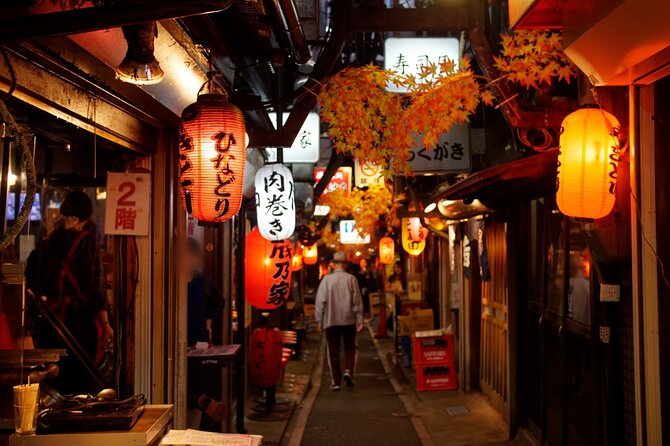
One of the first major themes is Tokyo’s famous drinking-alley culture. Omoide Yokocho is known for its narrow lanes and compact eating and drinking establishments. The setting gives you a sharp contrast with the broad avenues and towering signs around Shinjuku Station.
A guide can explain what you are looking at, how these small venues differ from larger restaurants, and why the alley feels so different from the surrounding district. You will see the area at the right time of day, when the lights and food stalls begin to shape the mood.
Do not expect a meal to be part of the tour. Food and drinks are extra, and the tour fee covers the guide only. That is actually useful for some people. You can take notes on places you like, then return later for a meal that suits your budget and appetite.
The limitation is that a two-hour walk does not leave much time for sitting down. If you want a guided tasting experience, this is not the right product. If you want to identify areas for a later meal, it works well.
Kabukicho and the business of nightlife
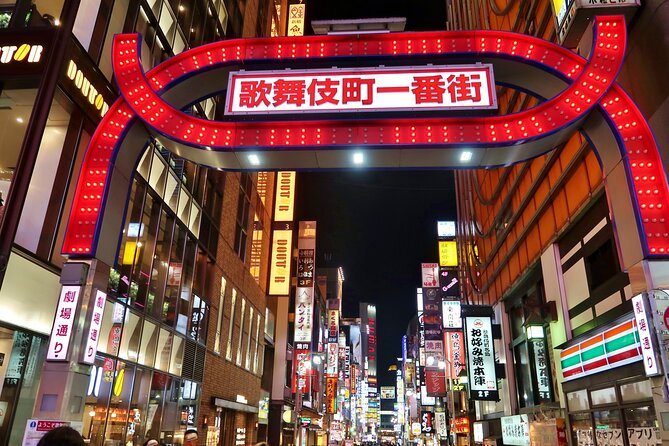
Kabukicho is the largest nightlife area on the route and the part most associated with the tour’s title. Here, the guide explains more about the district’s culture and subculture, including the legal framework around adult entertainment.
This is where a good guide matters. The signs alone tell you very little, and many details are not available in English. The strongest part of the experience is the explanation of how businesses work around Japanese regulations and how workers in the adult industry operate within those rules.
Guides such as Gray, Danny, Daniel, and Loc have been praised for making this material clear, friendly, and sometimes humorous. Polina is also noted for speaking clearly over the noise of the neighborhood while handling sensitive topics in a professional way.
You should not expect a sensational show. The value lies in understanding the district rather than being pushed into any venue. The tour is designed to help you avoid getting lost or wandering into places that do not suit you.
That safety benefit is practical, especially if this is your first visit to Tokyo. Shinjuku is generally easy to reach, but the nightlife streets can be confusing once the signs begin to multiply. After the walk, you will have a better idea of where you are and what kind of place you are approaching.
Other guided walks in Tokyo:
- Tokyo: Tsukiji Fish Market Food and Walking tour
★ 5.0 · 1,724 reviews - Tokyo: Asakusa Walking Tour with Sensoji Temple Visit
★ 4.8 · 1,583 reviews - Tokyo: Tsukiji Fish Market Guided Walking Tour
★ 4.9 · 1,397 reviews - Tokyo Castle & Imperial PalaceーShogun Walking Tour
★ 4.7 · 1,068 reviews
The Godzilla Head and a bit of theatrical Tokyo
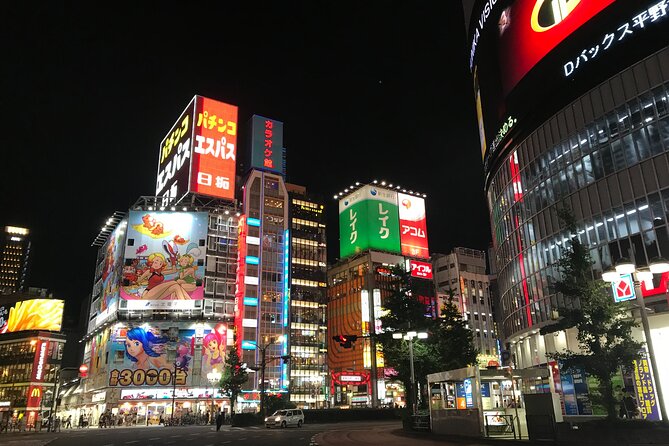
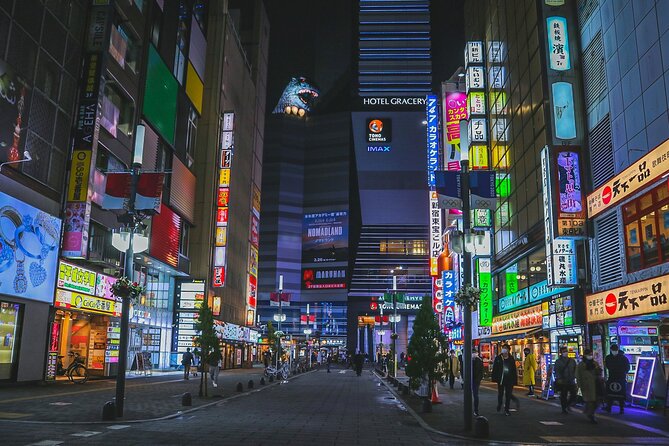
The route includes the famous Godzilla Head, a large landmark above the entertainment district. The guide points out the character and the show associated with it, giving you a playful break from the more serious parts of the tour.
This stop is useful because it shows another side of Kabukicho. The district is not only about bars and adult entertainment. It is also a place of movie theaters, pop culture, giant visual signs, and carefully staged spectacle.
The Godzilla Head is a straightforward photo stop, but the setting around it is part of the appeal. You get a clear sense of how Tokyo mixes commercial entertainment with dense urban streets. The guide can also help you understand where the landmark fits in relation to the rest of the area.
Because this is a walking tour, the stop is not treated as a long attraction visit. You should think of it as one point in a larger evening route, not a separate Godzilla experience.
The narrow bar district
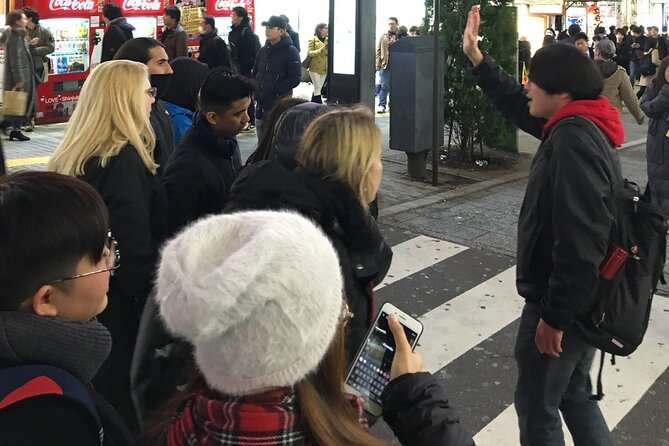
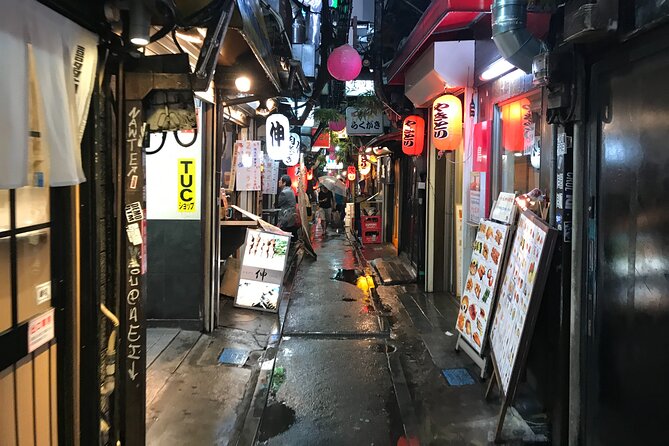
The tour also visits a narrow bar district with tiny venues packed closely together. The small scale is the key feature. These streets feel very different from the wide commercial roads nearby, and they show how Tokyo nightlife can become intimate and highly localized within a few steps.
The guide’s explanations help you understand what you are seeing without requiring you to enter a bar. That is important because tiny venues may have their own customs, limited seating, or charges that are not obvious to someone passing through.
This part of the route is especially useful if you are curious about a later night out but unsure where to begin. You can ask questions, take in the atmosphere, and decide for yourself if you want to return.
The tradeoff is that narrow lanes can become difficult for a group to navigate. In rainy weather or heavy crowds, it may be easy to lose sight of the guide. One person suggested that a raised, colorful sign would help the group stay together. Keep close to the guide, particularly at busy crossings and alley entrances.
A Shinto shrine among the neon
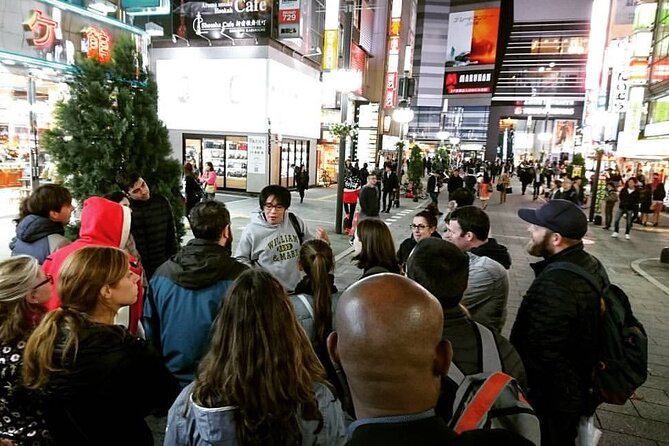
A Shinto shrine appears on the route, providing a quiet change of pace. Its inclusion helps you see that Shinjuku is not only a nightlife zone. Traditional religious spaces remain part of the city, even when surrounded by hotels, restaurants, signs, and entertainment businesses.
The shrine stop also gives the guide a chance to discuss local traditions and respectful behavior. You do not need a separate temple-and-shrine tour to understand that Tokyo’s old and new elements often sit side by side.
I like this part of the route because it prevents the evening from becoming a simple tour of neon. The contrast gives the neighborhood more depth without requiring a long historical lecture.
As with the other stops, the exact amount of time spent there may depend on the group and street conditions. The advertised duration is about two hours, so expect a brisk overview rather than an extended visit at each location.
The LGBTQI district, often called Gay Town
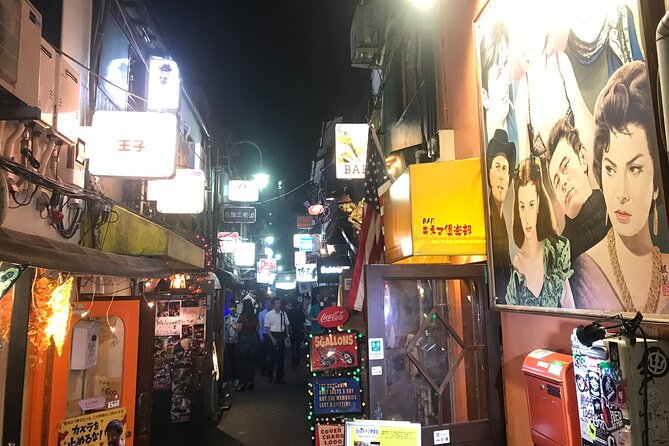
The final major area is Tokyo’s largest LGBTQI district, commonly called Gay Town. The guide introduces the neighborhood as part of Shinjuku’s nightlife and social history, giving you a broader picture of the people and communities that shape the area after dark.
This is a valuable inclusion because it shows that Kabukicho is not the only nightlife story in Shinjuku. The district contains different audiences, businesses, and social spaces, and the tour treats the LGBTQI area as a distinct part of the neighborhood rather than folding everything into one general nightlife label.
You should approach this stop with the same respect you would bring to any working neighborhood. The tour is for learning about the area, not treating it as a spectacle. The guide can offer context, but the tour fee does not include entry to bars or other venues.
The walk finishes around Shinjuku 3 Chome. This is convenient if you want to continue your evening nearby, but it is not a loop back to the starting point. Note the ending location before you set off, particularly if you plan to meet someone at the station afterward.
What the guides add to the experience
The guide is the main reason to book this rather than simply walking through Kabukicho with a map. Names associated with the tour include Polina, Gray, Danny, Daniel, Kumi, and Loc. The exact guide depends on the date, but the strongest pattern is clear: the experience relies on personal explanation, humor, and the ability to answer questions.
Polina has been praised for a calm manner and clear voice. Gray is described as inclusive, entertaining, and well informed about parts of Tokyo that many visitors miss. Danny is noted for friendly delivery, good English, and keeping the group engaged while staying within the time limit.
Loc has been praised for answering questions and explaining the district in a way that gives first-time visitors more confidence. Daniel has been described as especially good at explaining the different parts of Shinjuku and suggesting food and drink ideas for later.
These details matter because the tour covers subjects that can be awkward or confusing when presented badly. A guide who is willing to explain legalities, customs, and local history without making the evening feel lurid adds real value.
Is $25 a fair price?
At $25 per person, the tour is reasonably priced for a two-hour small-group walk in central Tokyo. The fee pays for the guide, interpretation, and route planning. It does not cover dinner, drinks, attraction admissions, or purchases.
The value is strongest if you are a first-time visitor. You are paying to avoid guesswork, learn what the signs and districts mean, and get a practical orientation before exploring independently.
It is less attractive if you already know Shinjuku well or simply want to spend two hours eating and drinking. You could walk around the area without a guide, but you would miss much of the explanation because little of the relevant information is available in English.
The 4.7 rating from 297 ratings and 95 percent recommendation rate suggest that the format works well for its intended audience. Still, do not confuse a high rating with a luxury experience. This is an urban walk through crowded streets, with paid food and drinks left to you.
Timing, weather, and group size
The tour lasts about two hours and allows a maximum of 12 people. That is small enough for personal questions, though the group still needs to stay together in busy streets.
It requires good weather. If poor weather causes cancellation, you can receive a different date or a full refund. If you go ahead in rain, keep the group in sight. Crowds and umbrellas can make it harder to hear or find the guide.
Most people can participate, and service animals are allowed. The route is near public transportation, which makes it practical for an evening in Shinjuku. You receive confirmation when booking, and cancellation is free if you cancel at least 24 hours before the start time. Cancellations or changes inside that period are not refunded or accepted.
Who should book this Shinjuku night walk?
I would book it early in a Tokyo stay, especially if you want to spend later evenings exploring on your own. The route gives you a mental map of Omoide Yokocho, Kabukicho, the narrow bar area, the shrine, and the LGBTQI district.
It suits adults interested in nightlife, urban culture, Japanese laws, and the less polished side of a major city. It also works for solo visitors who want a guided introduction before going out alone.
I would skip it if you want a sit-down meal, a cocktail tour, or a conventional sightseeing route. You should also be comfortable discussing adult-industry topics and walking through crowded nighttime streets.
Should you book it?
Book this tour if you want context more than consumption. For $25, you get a compact introduction to the many faces of Shinjuku, plus a guide who can explain details that are difficult to find in English.
The best plan is to take it near the beginning of your Tokyo visit, then use the ending in Shinjuku 3 Chome as a launch point for your own dinner or drinks. Just remember that the tour ends away from the starting point, food and drinks are extra, and rainy weather may change the plan.
FAQ
How long does the Dark Side of Tokyo walking tour last?
The tour lasts approximately two hours.
How much does the tour cost?
The listed price is $25 per person.
What is included in the tour price?
The price includes the tour guide fee.
Are dinner and drinks included?
No. Dinner, food, and drinks cost extra.
Where does the tour start?
It starts at the Shinjuku Station East Exit Police Box at 3-chome-38-1 Shinjuku, Shinjuku City, Tokyo 160-0022, Japan.
Where does the tour finish?
The tour finishes around Shinjuku 3 Chome. It does not return to the starting point.
How many people can join the tour?
The maximum group size is 12 travelers.
Can I cancel for a full refund?
Yes. You can cancel at least 24 hours before the start time for a full refund. Cancellations or changes made less than 24 hours before the start time are not accepted or refunded.
What happens if bad weather cancels the tour?
If the tour is canceled because of poor weather, you will be offered another date or a full refund.
Just added in Tokyo
- Nikko: Edo Wonderland Edomura Cultural Theme Park Ticket★ 4.3 · 205 reviews
- 《MEMBERS-ONLY-BAR-HOPPING》Discover Your Special Whiskey in Tokyo!★ 5.0 · 29 reviews
- Japanese Whisky Hunting《HIGH-QUALITY-ONLY》Rare Tasting Class★ 5.0 · 20 reviews
- Luxury Tokyo Sake, Cocktail, Whisky and Pairing Tour★ 5.0 · 18 reviews
- Wagyu & Sake Pairing in Shinjuku – Steak, Shabu-Shabu & More★ 5.0 · 112 reviews
- Small-Group Wagyu Beef and 7 Japanese Dishes Tokyo Cooking Class★ 5.0 · 190 reviews
- Tokyo: KABUKI, BUNRAKU, etc. presented by National Theatre★ 4.6 · 135 reviews
- Mt. Fuji & Hakone Cherry Blossom private One Day Tour★ 4.5 · 35 reviews
Walking Tours, compared.
Kyoto Geisha Walking Tour: Gion District & Hidden Gems
Read our review →
Tokyo Tsukiji Fish Market Food and Culture Walking Tour
Read our review →
Imperial Palace and Shogun Historical Walking Tour
Read our review →
Gion Geisha District Walking Tour – Stories of Geisha
Read our review →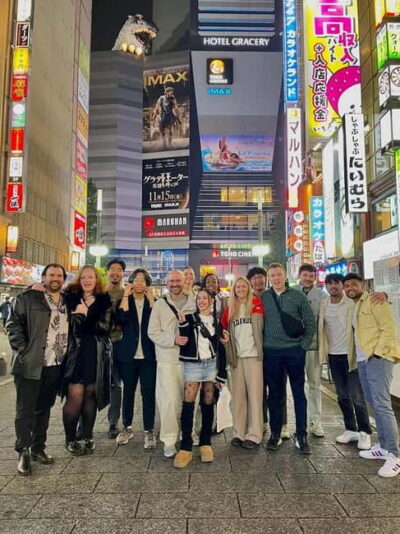
Shinjuku Local Bar and Izakaya Guided Walking Tour
Read our review →
Asakusa Walking Tour with Sensoji Temple Visit
Read our review →
Nishiki Market Brunch Walking Tour (7 Tastings + Brunch)
Read our review →Browse the lists this tour appears in