
Reviewed · WALKING TOURS
Tokyo: Shibuya Highlights Walking Tour & Secret View Spot
Shibuya is easiest to enjoy once someone helps you read its layers. This 90-minute walk takes you from the famous Hachiko statue and scramble crossing into small food alleys and local hangouts, then up to city views that are easy to miss when you are busy watching the crowds. I like the way the tour covers both the postcard sights and the less obvious corners of the district.
I also like the friendly, flexible guiding style. Guides such as Mao, Sakura, Ayaka, Sota, Noa, and Yuki have helped visitors with photos, restaurant ideas, train directions, and questions about Japanese customs. The main trade-off is that 90 minutes goes quickly, and Shibuya’s crowds, stairs, traffic, and changing city streets can make the walk feel brisk.
Key points to know before booking
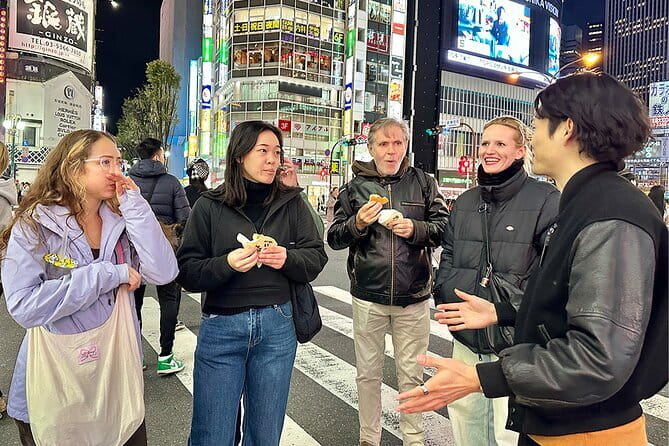
- The scramble crossing is only the beginning: You also visit Center-Gai, Miyashita Park, Nonbei Yokocho, Mark City, and Shibuya Scramble Square.
- You get a local view of the district: Guides explain Shibuya’s culture, food, fashion, history, and day-to-day use.
- The overhead crossing view is a strong bonus: The route includes spots for seeing Shibuya from above, sometimes without waiting in a long line.
- The tour is good early in a Tokyo visit: You can ask where to eat, how to use the trains, and what customs to keep in mind.
- It is an easy price to justify: At $23 per person, the cost is modest for a live guide and a useful first look at one of Tokyo’s busiest districts.
- Plan for the weather: The walk goes ahead in rain, so bring an umbrella or raincoat.
Starting beside Hachiko and Shibuya Station
Your meeting point is in front of SHIBU HACHI BOX, at 2-1-1 Dogenzaka, near the JR Shibuya Station Hachiko Gate and Tokyo Metro Exit A8. Look for a guide holding a Local Guide Stars sign.
This location is practical, but Shibuya Station is a maze of exits, signs, rail lines, and underground passages. Give yourself extra time to get there. If you come out at the wrong exit, you may need a few minutes to orient yourself before reaching Hachiko.
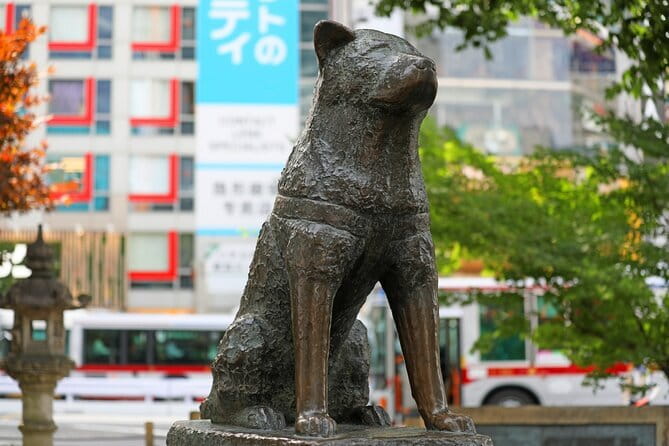
The Hachiko statue is a fitting place to begin. It is one of Tokyo’s best-known meeting points, and your guide uses it to explain the story behind the loyal dog and the area’s growth. This is also a useful moment to ask your first questions. Guides have helped visitors understand the station, locate restaurants, and plan the rest of their day.
I would book this walk near the start of a Tokyo stay rather than at the end. The practical advice can shape the rest of your visit, especially if you want help choosing food or understanding how to move around the city.
Other walking tours in Tokyo people book:
- Tokyo Tsukiji Fish Market Food and Culture Walking Tour
★ 5.0 · 3,184 reviews - Tokyo: Imperial Palace and Shogun Historical Walking Tour
★ 5.0 · 2,251 reviews - Tokyo: Shinjuku Local Bar and Izakaya Guided Walking Tour
★ 4.9 · 1,794 reviews
Shibuya Crossing and the view from above
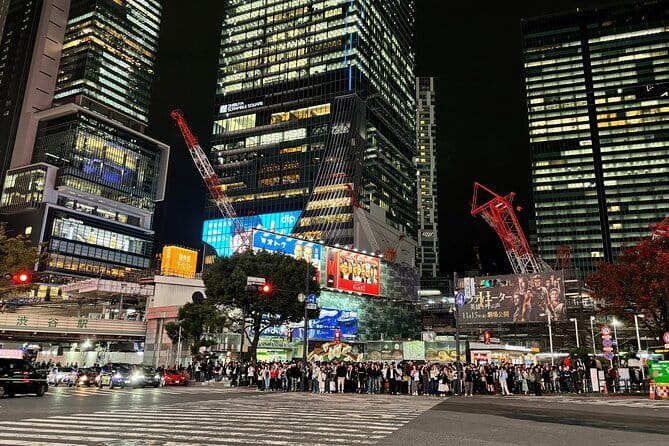
The famous scramble crossing is the main reason many people come to Shibuya. When the signals change, pedestrians move across the wide intersection from several directions at once. It is a brief experience, but the setting gives you a strong sense of Shibuya’s scale and energy.
Your guide can help you decide how to approach the crossing and where to pause for photos. Several guides have also taken photos for people in the middle of the action, which is useful if you are traveling alone or want a picture with your whole group.
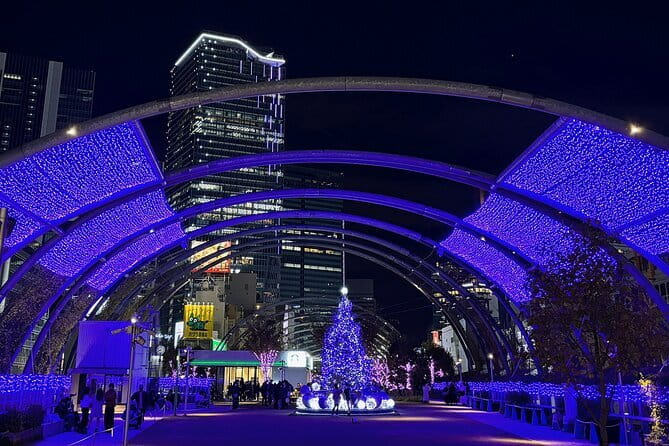
The route includes Shibuya Scramble Square, a tall complex near the station. The tour’s secret view spot is connected with seeing the crossing and the city from above. One guide took visitors to an overhead viewpoint without a long wait, though the exact viewing location can depend on access and the guide’s route that day.
This part is valuable because the crossing looks very different from above. At street level, you notice the crowd and lights. From a higher viewpoint, you can see how the roads, signs, station, and buildings fit together. Do not expect a long observation-deck visit unless your booking details specifically promise one. The stop is part of a walking tour, not a full afternoon at a tower.
Nonbei Yokocho, a smaller side of Shibuya
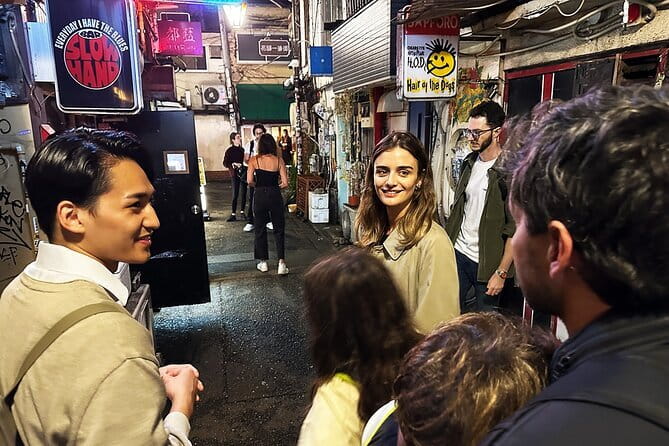
Nonbei Yokocho, often translated as Drunkard’s Alley, gives the walk a change of pace. Instead of huge signs and broad streets, you find a narrow area associated with small eateries and bars.
The visit is short, listed at about 10 minutes, but that is enough to explain why this kind of lane matters. Shibuya is famous for department stores, fashion, music, and bright screens. Places like Nonbei Yokocho show a more intimate side of the district, with compact dining spaces and a neighborhood feel.
You should not expect a long meal here. Food and drinks are not included, and the tour keeps moving. I see this stop as a preview. If you like the look of a particular restaurant, ask your guide for advice about returning later and what kind of food to seek.
Miyashita Park and a pause from the traffic
Miyashita Park receives about 20 minutes on the route. It is an urban recreation area in the middle of Shibuya, popular with younger people and useful as a break from the station crowds.
The park helps explain how Tokyo keeps adding public space in a district where land is limited. It is not a traditional Japanese garden, and you should not come expecting quiet temple grounds. Its appeal is modern city life: people meeting, shopping, eating, and taking a break among the surrounding towers.
This is one of the better places to ask your guide about current Shibuya culture. Several guides have explained local food, fashion, shopping, and the way the area is changing. The stop also offers a little breathing room before the walk returns to the denser shopping streets.
In hot weather, this pause matters. One visitor appreciated moving between air-conditioned areas and outdoor sections to manage the heat. Tokyo summers can be tiring, and even a short break helps. In rain, the park may be less comfortable, so bring proper cover and shoes that can handle wet pavement.
Other guided walks in Tokyo:
- Tokyo: Tsukiji Fish Market Food and Walking tour
★ 5.0 · 1,724 reviews - Tokyo: Asakusa Walking Tour with Sensoji Temple Visit
★ 4.8 · 1,583 reviews - Tokyo: Tsukiji Fish Market Guided Walking Tour
★ 4.9 · 1,397 reviews - Tokyo Castle & Imperial PalaceーShogun Walking Tour
★ 4.7 · 1,068 reviews
Center-Gai, where Shibuya gets loud
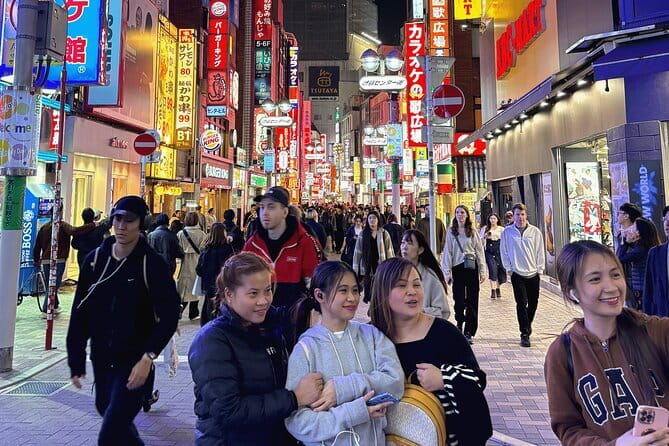
The tour spends about 20 minutes around Shibuya Center-Gai. This is the district many people picture when they hear the word Shibuya: packed pedestrian streets, large signs, fashion shops, restaurants, bars, and a constant flow of people.
Your guide gives context to the area instead of simply leading you through it. You can ask about the young crowds, Japanese street fashion, places to eat, and how the district changes from day to night. At night, neon-lit restaurants and bars add more energy, but the crowds also become harder to manage.
I would keep your belongings secure here and stay close to the guide. The route is not difficult in a technical sense, but busy streets can split a group. Wear shoes that are comfortable for continuous walking and expect some stops in noisy places where you may need to listen carefully.
This is also a useful area for restaurant advice. Guides have suggested ramen, monja, and other local eating options. They may help you decide where to return after the tour, but you pay for any meal yourself.
Mark City and the final city view
The final major stop is Shibuya Mark City, with about 20 minutes before returning to SHIBU HACHI BOX. Mark City is part of the dense transport and shopping zone, so this section reinforces how Shibuya functions as more than a nightlife district.
The route back also helps you connect the landmarks. After walking through the side streets, you can better understand how the station, crossing, shopping complexes, and restaurant lanes relate to one another. That orientation is one of the quiet benefits of the experience. Shibuya can feel confusing when you first arrive, and a guide can turn scattered sights into a usable mental map.
Guides may also point out photo locations or help you continue toward a restaurant, shop, or train line after the formal tour ends. Yuki, for example, went out of his way to help with onward directions, while other guides have helped people navigate the train system.
What makes the guides useful
The guide is the most important part of this experience. The route itself is easy to find online, but a local can add context, answer questions, and adjust the walk to suit the group.
Mao has been praised for clear explanations, practical tips, and a friendly manner. Ayaka has helped with photos and adjusted the route to group preferences. Sota is comfortable discussing both Shibuya and wider Japanese culture, and his English has been described as strong. Noa has guided people to places they would likely have missed, including food and shopping stops.
Sakura has been noted for humor, area knowledge, and restaurant recommendations. Hannah, Tomo, Naito, Akira, and Yuki have also led walks, with different personalities and styles. Because guides vary, your experience may feel more conversational with one person and more history-focused with another.
English and Japanese are available. If you want restaurant help, ask direct questions. Tell the guide if you care most about food, photos, shopping, history, or local customs. The more specific you are, the more useful the short tour can become.
Is $23 good value for 90 minutes?
At $23 per person, I consider this good value if you want an introduction rather than a full-day tour. The price includes a live walking guide but not food, drinks, transport, hotel pickup, or hotel drop-off.
The value comes from saved time and better orientation. You could walk across the crossing and visit several of these areas alone. What you may not get alone is an explanation of how the neighborhood fits together, a quick route to lesser-known lanes, help with photos, or immediate answers about food and etiquette.
The 90-minute limit is both a strength and a weakness. It keeps the experience manageable, especially for families or newly arrived visitors. It also means stops are short. You will not have time for a full meal, extended shopping, or lengthy museum-style explanations.
The activity has a 4.9 rating from 196 reviews, which fits the main strengths reported across the experience: friendly guides, useful local tips, good pacing, and access to places people might not find alone. I would still book it for the route and practical help, not simply for the score.
Who should take this Shibuya walk?

This tour suits first-time Tokyo visitors, couples, families, solo visitors, and anyone who wants help getting oriented quickly. It is especially useful if you have just arrived in Japan and want advice on restaurants, trains, customs, and the best way to spend time in Shibuya.
It also works well for photographers and social media users. The crossing, overhead views, neon streets, and changing city scenery offer plenty of photo opportunities. Guides may take pictures for you, but do not treat that as a guaranteed professional photo service.
You may prefer to skip it if you already know Shibuya well or want a slow, private food tour. The route covers many places in 90 minutes, so it favors variety over long visits. It is also not ideal for anyone who dislikes crowds, loud streets, or walking in uncertain weather.
The activity is listed as wheelchair accessible. Still, Shibuya’s crowded streets and busy station surroundings can make movement slower, so contact the provider if you need route-specific accessibility details.
Rain, timing, and practical preparation
The tour runs rain or shine. Bring an umbrella or raincoat, and wear shoes with a good grip. On wet days, photos may be less clear and outdoor stops may feel less relaxed, but the indoor and covered portions can still provide useful breaks.
Try to arrive early at the meeting point. The sign is the Local Guide Stars sign, and the location is near major station exits, but Shibuya’s layout can cause confusion. One visitor suggested that the guide could use a more distinctive way to be found, so do not rely on a last-second arrival.
Free cancellation is available up to 24 hours before the start time, and you can reserve now and pay later. That is useful when your Tokyo schedule is still shifting. Check the available start times before booking, since the exact departure time is not fixed in the supplied details.
Should you book it?
Book this Shibuya walking tour if you want a friendly first look at the district, practical advice, and a mix of famous sights and smaller streets. The crossing is the hook, but the real value comes from the guide’s help with food, photos, local customs, and navigation.
I would place it early in a Tokyo itinerary and follow it with a meal or shopping time in the area. Skip it only if you prefer to explore independently at a slower pace or already have a strong feel for Shibuya. For $23, the risk is low, and the local guidance can save you plenty of time in one of Tokyo’s most confusing districts.
FAQ
How long does the Shibuya walking tour last?
The tour lasts 90 minutes.
How much does the tour cost?
The listed price is $23 per person.
Where does the tour meet?
The meeting point is in front of SHIBU HACHI BOX near the JR Shibuya Station Hachiko Gate and Tokyo Metro Exit A8.
What address should I use for the meeting point?
The address is 2-1-1 Dogenzaka, Shibuya-ku, Tokyo 150-0043, Japan.
How do I find the guide?
A guide will be waiting with a Local Guide Stars sign.
Which languages are available?
The tour is offered in English and Japanese.
Is food included?
No. Food and drinks are not included in the tour price.
Does the tour include transportation?
No. Transportation is not included.
Does the tour run in bad weather?
Yes. The tour runs rain or shine, so bring an umbrella or raincoat when needed.
Can I cancel the booking?
Yes. You can cancel up to 24 hours in advance for a full refund.
Is the tour wheelchair accessible?
Yes, the activity is listed as wheelchair accessible.
Just added in Tokyo
- The 10 Tastings of Tokyo With Locals: Private Street Food Tour★ 5.0 · 48 reviews
- Small Town in the Big City: Tasting Tokyo’s Kichijoji★ 5.0 · 195 reviews
- Small Town in the Big City: Tasting Tokyo’s Kichijoji★ 5.0 · 16 reviews
- EXCLUSIVE Tokyo Secret: Kichijoji Small-Group Food & Bar Hopping★ 5.0 · 29 reviews
- Explore Kichijoji: Walk Through One of Tokyo’s Beloved Districts★ 5.0 · 21 reviews
- :Tokyo,Shibuya/ Pro Photography in Kimono / English-Friendly★ 5.0 · 26 reviews
- 【R34】Tokyo:Private Daikoku tour in Modified R34★ 4.9 · 92 reviews
- Tokyo:Calligraphy &Make your original folding fan in Asakusa★ 5.0 · 62 reviews
Walking Tours, compared.

Kyoto Geisha Walking Tour: Gion District & Hidden Gems
Read our review →
Tokyo Tsukiji Fish Market Food and Culture Walking Tour
Read our review →
Imperial Palace and Shogun Historical Walking Tour
Read our review →
Gion Geisha District Walking Tour – Stories of Geisha
Read our review →
Shinjuku Local Bar and Izakaya Guided Walking Tour
Read our review →
Asakusa Walking Tour with Sensoji Temple Visit
Read our review →
Nishiki Market Brunch Walking Tour (7 Tastings + Brunch)
Read our review →Browse the lists this tour appears in