
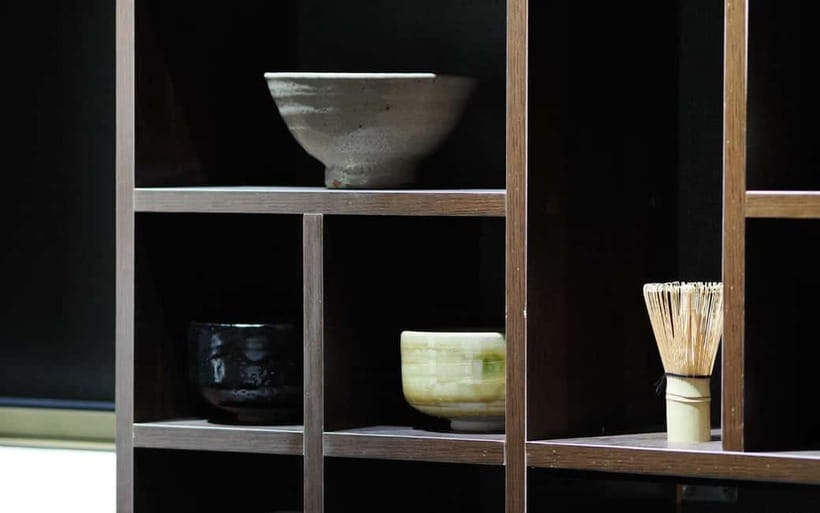
Reviewed · TEA CEREMONY EXPERIENCES
Tokyo: Traditional Tea Ceremony with a Tea Master
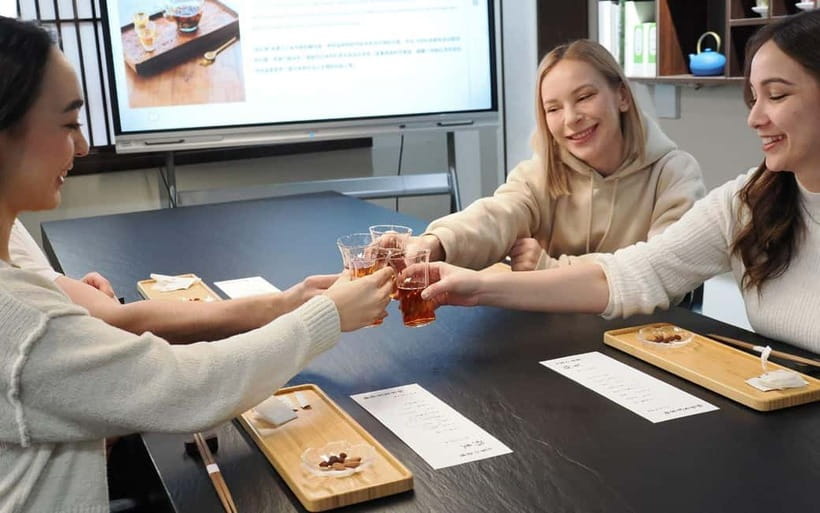
The most interesting part of this Tokyo tea ceremony is the tasting flight. In one hour, you move from fruity Shizuoka wakocha to delicate Gyokuro, hands-on matcha, and comforting Genmaicha. You do not just watch a formal ritual. You taste, whisk, ask questions, and learn why water temperature matters.
I like the friendly teaching style and the chance to make your own matcha with traditional tools. I also like the small, thoughtful food touches: seasonal wagashi from Ougiya, tea cakes, and even the option to taste the Gyokuro leaves. The main consideration is that this is a compact, relaxed introduction rather than a long, highly formal ceremony. The room is not suitable for wheelchair users, and the high green OCHARU sign can be easy to miss.
Key points at a glance
- Four distinct teas: Try wakocha, top-grade Gyokuro sencha, matcha, and Genmaicha, each prepared in a different way.
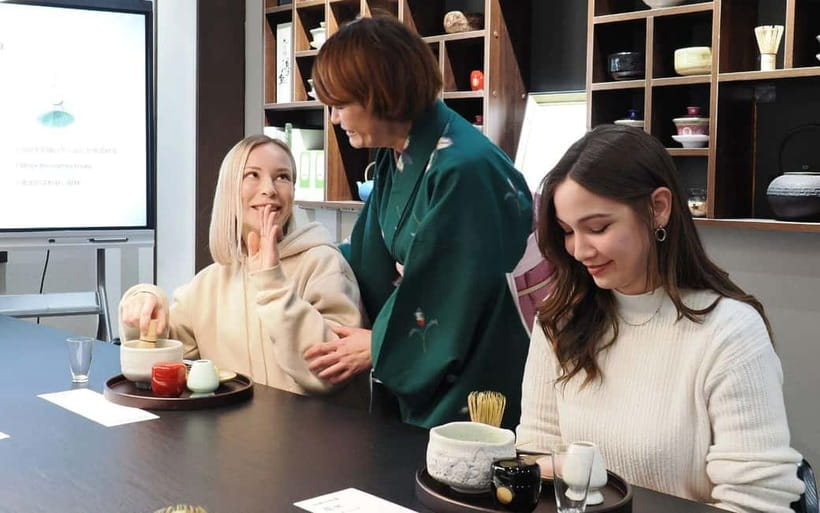
- Hands-on matcha making: Whisk your own tea while an English-speaking tea master shows you the correct method and etiquette.
- Seasonal sweets from Ougiya: The wagashi are made by a long-established confectioner and pair neatly with the teas.
- A relaxed setting: The tone is friendly and conversational, with room for questions about tea, Japan, and daily customs.
- Easy Tokyo pairing: The Ocharu room is across from Tokyo University and close to the University of Tokyo area and the zoo.
- Useful keepsakes: You receive a certificate and group photo, and the first-floor shop sells tea and tea accessories.
Four Japanese teas in one carefully paced hour
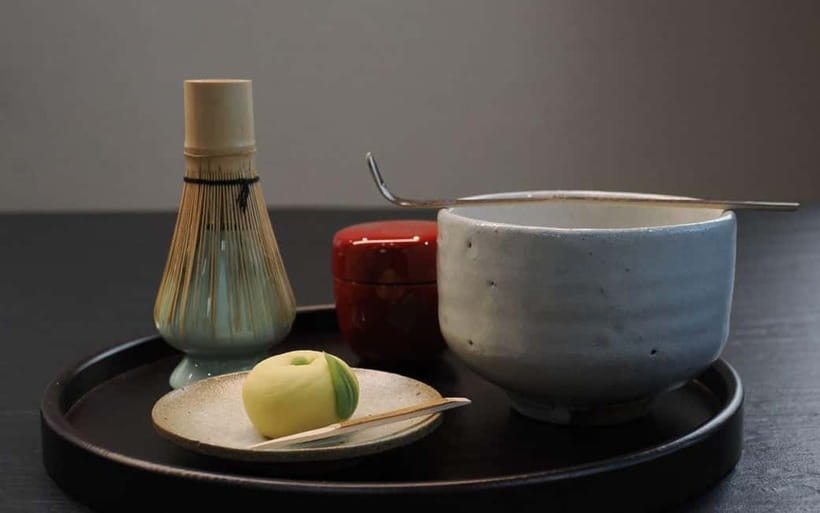
This experience works because it treats tea as food, craft, and culture at the same time. You are not asked to sit silently through a long ceremony without context. Instead, each cup introduces a different side of Japanese tea.
The session takes place in the Ocharu Tea Ceremony Room, opposite Tokyo University. It lasts about one hour, so it fits neatly into a half-day around the university, Nezu, Ueno, or the zoo. You should arrive about five minutes early for check-in.
The teaching is in English. Different hosts lead different sessions, but the guides described for this activity include friendly teachers such as Shinichi-san and Ekiko. The strongest part of the instruction is the personal touch. Guides explain the tea, answer questions, and often chat about Japan, home cities, language, and local customs.
That relaxed approach makes the activity suitable for a first tea experience. You can ask basic questions without feeling foolish. It also gives regular tea drinkers something to think about, especially the effects of water temperature, brewing time, and processing.
Other tea rooms and ceremonies in Tokyo:
- Matcha Making Class in Tokyo with Authentic Japanese Sweets Set
★ 5.0 · 744 reviews - Tokyo: Matcha Making Experience with Mochi Sweets in Asakusa
★ 4.9 · 388 reviews - Tokyo: Matcha and Kimono Experience
★ 4.7 · 219 reviews
Starting with Shizuoka wakocha and a tea cake
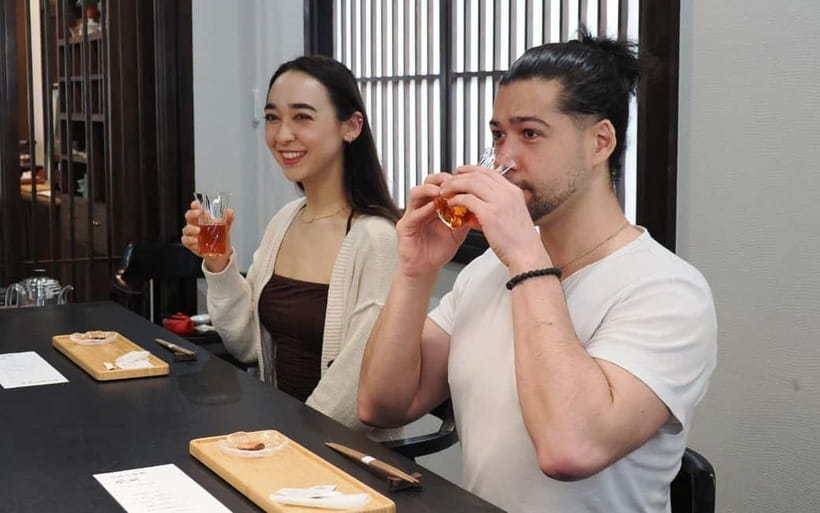
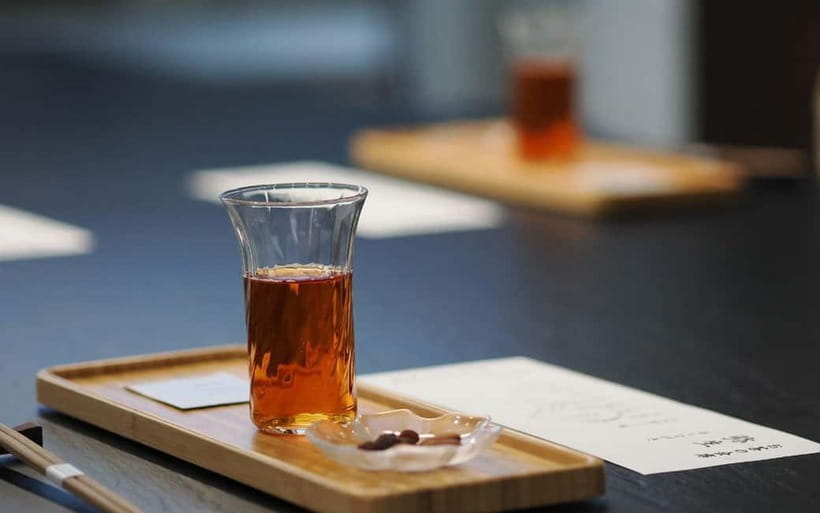
The first cup is wakocha, Japanese black tea from Shizuoka. Japan is best known abroad for green tea, so this opening cup is a useful surprise. Wakocha has a softer, often fruity and floral character, and it sets up a clear contrast with the green teas that follow.
You receive a traditional tea cake with the welcome tea. This is a small serving, not a full meal, but it gives you a sense of how Japanese sweets are used to balance tea. The sweetness prepares your palate for a more concentrated or bitter drink.
I like beginning with wakocha because it avoids treating Japanese tea as one single flavor. You quickly see that growing region, processing, brewing temperature, and serving style all affect the cup.
The explanation also gives the session a useful rhythm. You start with a drink that feels approachable, then move toward more specialized teas. If you are not already a tea enthusiast, this gentle beginning helps you settle into the experience.
Gyokuro, tea leaves, and seasonal wagashi
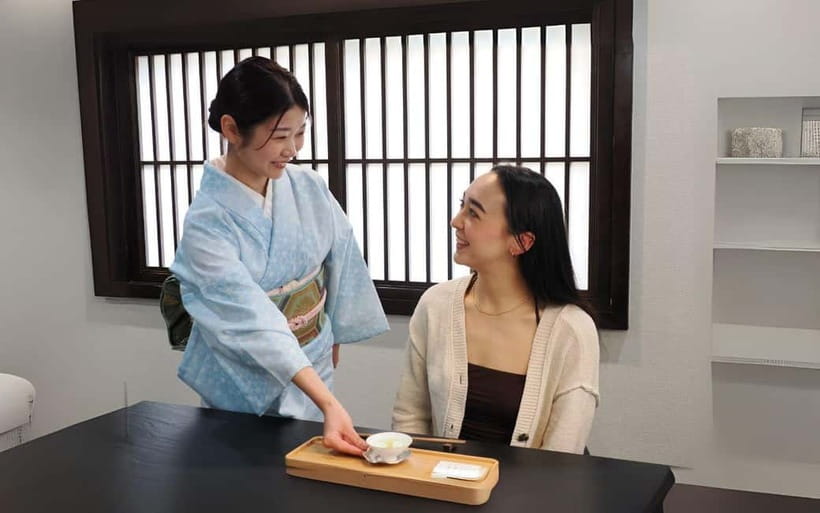
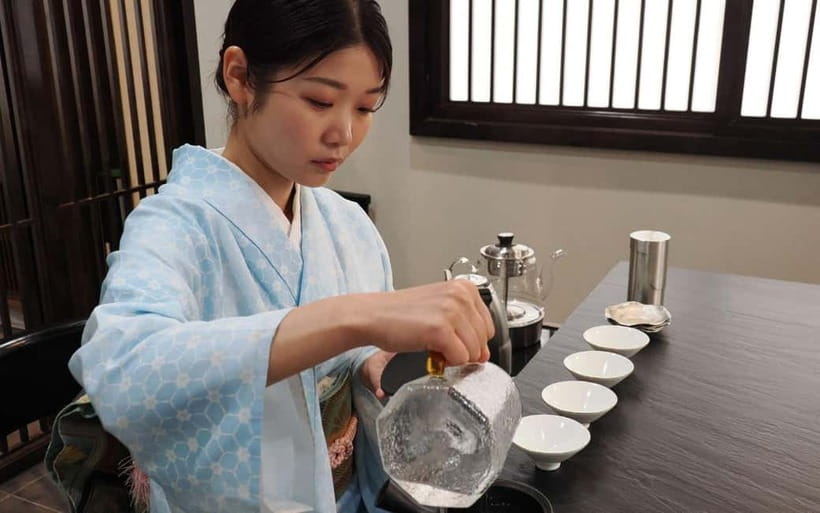
Next comes Gyokuro sencha, described as the highest grade of green tea. This is one of the most distinctive parts of the session. The tea master brews it for you, allowing you to focus on its aroma, taste, color, and texture before trying the matcha-making exercise.
Gyokuro is prized for its concentrated flavor, so do not expect a plain, everyday cup of green tea. The preparation matters. Your guide explains how temperature affects the final taste, a detail several parts of the experience return to. Hotter water is not automatically better, and the right temperature can soften bitterness while bringing out the tea’s more savory qualities.
The unusual extra is tasting the brewed leaves. This may sound odd at first, but it shows that the leaves are not just disposable material left in the pot. It is a small lesson in the quality and texture of the tea itself.
Seasonal wagashi from Ougiya accompany this part of the ceremony. These Japanese sweets are made to be attractive as well as pleasant to eat, and their seasonal character gives the session a connection to the calendar. The sweets are not simply a snack on the side. Their sweetness balances the stronger tea and helps you understand why wagashi traditionally appear with matcha.
If you have a sweet tooth, this may be your favorite pairing. If you prefer savory flavors, the Gyokuro and tea-leaf tasting provide the more unusual moment.
Making your own matcha with traditional tools

The hands-on matcha session is the heart of the activity. The tea master provides the traditional utensils and demonstrates the basic movements. You then whisk your own matcha and drink what you have prepared.
This is more useful than simply watching a professional do everything. You feel the resistance of the whisk, learn how the powder and water combine, and see why the movement needs to be controlled. Your tea may not look as smooth as the master’s first attempt, and that is part of the fun.
The guide also explains how to drink matcha politely. You learn some of the manners connected with the bowl, the sweet, and the act of receiving tea. The session presents etiquette in a clear, practical way instead of making it feel like a test.
The atmosphere is not stiff. The tea masters are often described as patient, funny, and easy to talk with. One guide made a special effort to include a ten-year-old child, which suggests that families can take part as long as everyone can manage the hour and the seating arrangement.
I would choose this activity for anyone who wants a cultural experience with some participation. It suits curious beginners better than a purely theatrical demonstration. You leave with a clearer idea of what matcha preparation involves, not just a photo of someone else whisking it.
Same base, a different sort of day:
- Mt Fuji and Hakone 1-Day Bus Tour Return by Bullet Train
★ 5.0 · 26,383 reviews - 1-Day Tokyo Bus Tour
★ 5.0 · 14,250 reviews - Tokyo: TOKYO SKYTREE® Admission ticket
★ 4.5 · 11,192 reviews - Tokyo: teamLab Planets TOKYO Digital Art Museum Entry Ticket
★ 4.6 · 9,779 reviews
Finishing with Genmaicha from Niigata
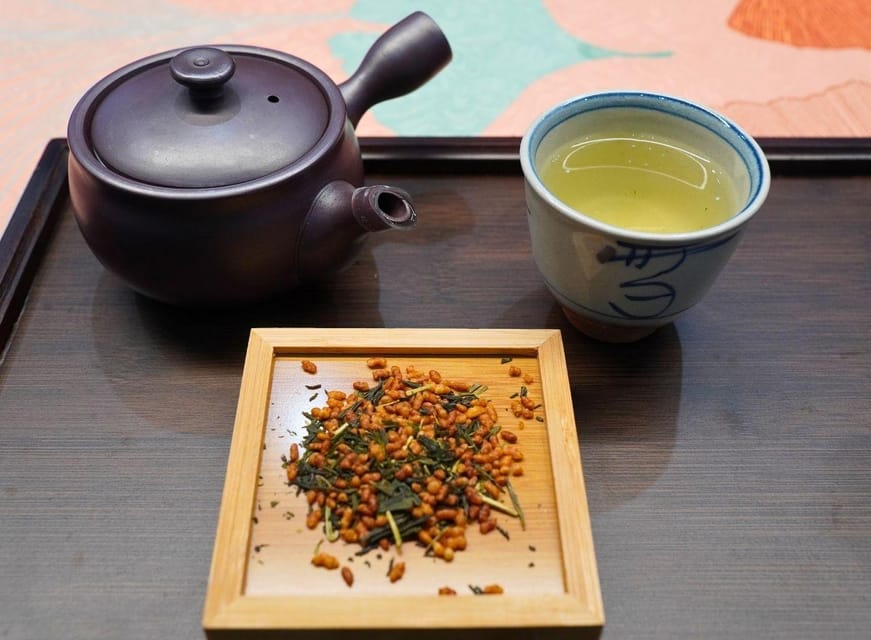
The final cup is Genmaicha, a blend of sencha and roasted rice from Niigata Prefecture. Its toasted rice gives it a warmer, more familiar flavor than the sharper green teas earlier in the session.
Ending with Genmaicha is a smart choice. After the concentrated Gyokuro and matcha, the roasted flavor feels soothing and easy to drink. It rounds out the tasting by showing how Japanese tea can be simple and everyday as well as refined.
By this point, you have sampled four types of tea in different forms. The lesson is not that one tea is best. Each has its own place, preparation, and mood. That comparison is the real value of the hour.
Some sessions may run closer to 50 minutes rather than a full 60. The difference is small, but you should not expect a long afternoon program. This is a compact introduction designed to fit into a busy Tokyo itinerary.
Why the setting across from Tokyo University helps
Ocharu’s location gives you a practical reason to visit this part of Tokyo. The green OCHARU logo is on the building, but it may be higher than you expect. One useful tip is to look for the tea shop and check that you are at the correct entrance rather than searching only at eye level.
The room is across from Tokyo University, making it easy to combine the tea experience with a walk around the university area. The zoo is also nearby, according to the activity details and visitor directions. You can build a pleasant half-day around the session without needing to cross the city afterward.
The location is not presented as a traditional temple setting. That matters if you are picturing a solemn ceremony in an old garden. This is a purpose-designed tea room with a clean, comfortable feel. The benefit is easy access and clear instruction. The tradeoff is that the surrounding city remains part of the experience.
I see this as a good choice on a Tokyo day when you want something quieter than major shopping districts. It also gives you a pause between museums, neighborhoods, or university-area sightseeing.
What the $38 price really covers
At $38 per person, the price is reasonable for a one-hour activity if you value instruction and tasting rather than duration alone. You are not paying only for a cup of matcha. The fee covers several teas, sweets, guided preparation, traditional utensils, access to the tea room, a certificate, and a group photo.
The Gyokuro tasting and seasonal wagashi add more value than a basic café visit. You also get explanations about origins, brewing temperatures, customs, and the differences between sencha, matcha, and Genmaicha.
It is less attractive if you only want to drink matcha cheaply. A café downstairs offers matcha and tea for purchase, and the shop sells tea to take home. But a café will not give you the guided comparison or the chance to whisk your own tea.
The certificate is a cheerful souvenir rather than a formal qualification. In some sessions, the certificate is written with your name in Japanese, which makes it more personal. You may also keep small items used during the session, such as chopsticks, depending on the arrangements that day.
Who will enjoy this most
I would recommend the experience to:
- First-time visitors who want an accessible introduction to Japanese tea
- Tea drinkers interested in processing, temperature, and regional differences
- Couples looking for a calm activity between sightseeing stops
- Families with older children who can listen and take part
- Visitors who want a hands-on cultural activity rather than a simple demonstration
- Anyone staying near Tokyo University, Ueno, Nezu, or the zoo
You do not need prior knowledge of tea. The guide starts with the basics and explains the etiquette in plain English.
I would think twice if you want a highly formal, silent ceremony lasting several hours. This session is friendly and conversational. It is designed for learning and participation, not for strict ceremonial precision.
The activity is also not suitable for wheelchair users. Seating and room access should be considered before booking. Since the format includes tasting several teas, it is a poor match for someone who dislikes tea altogether, though the informal presentation may still appeal to a reluctant companion.
Small practical details that improve the visit
Arrive five minutes early. This gives you time to find the entrance, especially since the green OCHARU sign may be mounted high on the building.
The activity is in English, but accents and individual speaking styles can vary. Most of the teaching is described as clear and easy to follow, yet if you have trouble catching a point, ask the guide to repeat it. The format encourages questions.
Plan for four teas, sweets, and a short lesson in preparation and manners. This is not a meal, so eat beforehand if you need something substantial.
Afterward, you can visit the tea shop downstairs. It sells tea and accessories, and it offers matcha and other drinks. Buying something is optional, but it can be a practical way to continue the experience at home.
The activity allows free cancellation up to 24 hours before the start time, and you can reserve now and pay later. Starting times vary, so check availability when choosing your date.
Should you book the Ocharu tea ceremony?
Book it if you want a friendly, well-paced introduction to Japanese tea with real tasting and hands-on preparation. The best parts are the range of teas, the Gyokuro and wagashi pairing, and the chance to make your own matcha under an English-speaking tea master.
Skip it if your main goal is a grand temple ceremony or a long formal performance. For most visitors, though, the one-hour format is a strength. You learn enough to understand what you are drinking, take part without pressure, and leave with a certificate, photo, and a better sense of how tea fits into Japanese culture.
FAQ
How long does the Tokyo tea ceremony last?
The activity is scheduled for one hour, though some sessions may finish in about 50 minutes.
Which teas will I taste?
You will taste Shizuoka wakocha, Gyokuro sencha, matcha that you prepare yourself, and Genmaicha made with sencha and roasted rice from Niigata Prefecture.
Is matcha preparation hands-on?
Yes. The tea master demonstrates how to use traditional tools, then guides you as you whisk and drink your own matcha.
Is the activity taught in English?
Yes. The instructor language is English.
Where is the meeting point?
The Ocharu Tea Ceremony Room is in a building across from Tokyo University. Look for the green OCHARU logo, which may be positioned high on the wall. The tea shop can also help you identify the location.
Is the activity suitable for wheelchair users?
No. The activity is not suitable for wheelchair users.
Just added in Tokyo
- Small-Group Wagyu Beef and 7 Japanese Dishes Tokyo Cooking Class★ 5.0 · 190 reviews
- Nikko: Edo Wonderland Edomura Cultural Theme Park Ticket★ 4.3 · 205 reviews
- 《MEMBERS-ONLY-BAR-HOPPING》Discover Your Special Whiskey in Tokyo!★ 5.0 · 29 reviews
- Japanese Whisky Hunting《HIGH-QUALITY-ONLY》Rare Tasting Class★ 5.0 · 20 reviews
- Luxury Tokyo Sake, Cocktail, Whisky and Pairing Tour★ 5.0 · 18 reviews
- Wagyu & Sake Pairing in Shinjuku – Steak, Shabu-Shabu & More★ 5.0 · 112 reviews
- From Tokyo: Private Tour to Fuji/Hakone – Onsen, Art, Nature★ 5.0 · 116 reviews
- Tokyo: KABUKI Show at Kabukiza Theatre Admission Ticket★ 4.8 · 152 reviews
Tea Ceremony Experiences, compared.
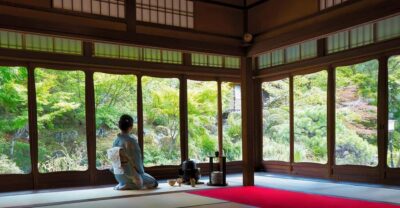
Tea Ceremony in a Traditional Tea House in Kiyomizu
Read our review →
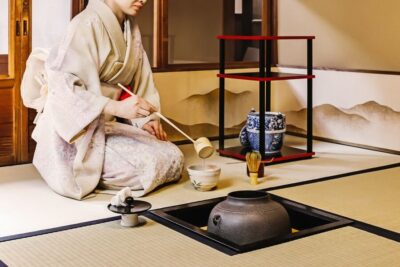
World Heritage Kyoto & Nara Uji Authentic Matcha Experience
Read our review →
Arashiyama Bamboo Forest, Monkeys, Matcha & Temple Tour
Read our review →Browse the lists this tour appears in