
Reviewed · COOKING CLASSES
Nishiki Market Food Tour with Cooking Class
Nishiki Market makes far more sense when someone explains what you are looking at. On this private tour, an English-speaking local guide leads you past old stalls, translates questions, points out Kyoto specialties, and helps you choose ingredients for a donburi meal you cook later. The market walk and cooking class fit together naturally, rather than feeling like two unrelated activities.
I especially like the chance to choose among seafood, tempura, and chicken-and-egg donburi, plus the flexibility to request a substitution such as tofu. I also like the practical lessons: Japanese sauces, dashi, market manners, and the rule against eating while walking. The main consideration is time. One hour in Nishiki Market is enough for an introduction, but it may feel brief if you want to browse every stall or stop for a full meal.
Key points
- Private English-language tour: Ask questions freely and move at your group’s pace with a local Japanese guide.
- Three donburi choices: Prepare kaisen-don, ten-don, or oyako-don using ingredients bought at Nishiki Market.
- Market insight beyond sightseeing: Learn which stalls are old, what Kyoto foods are known for, and how to behave in the market.
- Tasting built in: Try sample foods and free Japanese pickles, with three types of sake available as an option.
- Easy transfer to the kitchen: The taxi from the market to the cooking studio is included.
- Useful souvenir: You receive the recipe, so the meal can become something you make at home.
Why Nishiki Market Works Best With a Guide
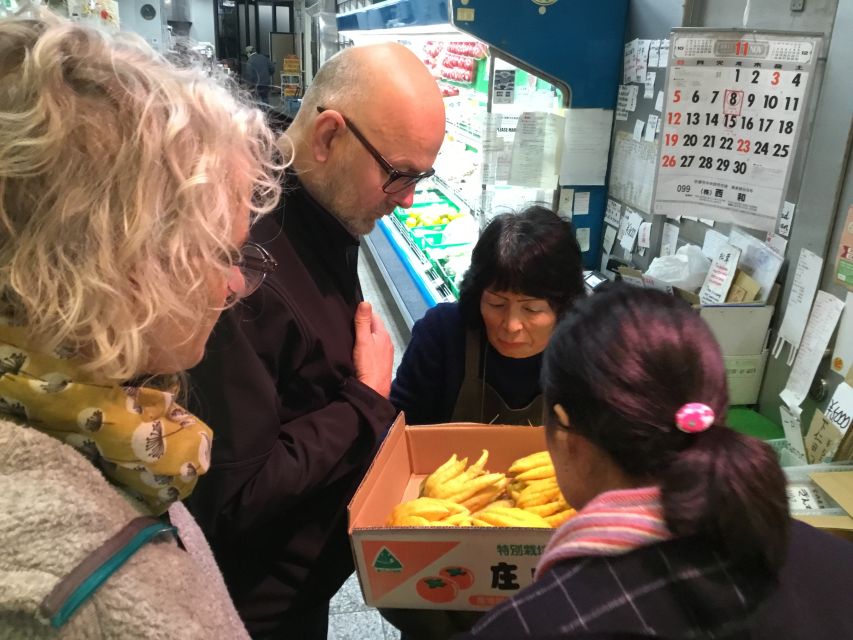
Nishiki Market is easy to cross and hard to understand. Without context, you can walk through it in about 15 minutes, seeing rows of seafood, pickles, spices, meat, sweets, and prepared foods without knowing which stalls matter or how the foods fit into Kyoto cooking.
With a guide, the same market becomes a food lesson. Your guide can explain the background of particular shops, point out older stalls among newer tourist-focused ones, and translate when you want to ask a shop worker a question. That last point matters. A market is much more useful when you can ask what something is, how it is eaten, or how it should be stored.
Guides named Chie, Momo, Mio, and Mae have led this experience at different times. The exact guide depends on the date, but the important feature is the English-speaking local perspective. You are not simply being shown attractive food. You are being helped to understand how it is sold, seasoned, and used.
The market can be crowded, so expect a walking tour rather than a quiet lesson in an empty food hall. A guide helps you keep moving and focus your limited time. Still, if you want long stops at every stall, you may need to return later on your own.
Other cooking classes in Kyoto people book:
- Ramen Cooking Class at Ramen Factory in Kyoto
★ 5.0 · 1,937 reviews - Kyoto: Ramen Cooking Class at a Ramen Factory with Souvenir
★ 4.9 · 532 reviews - Kyoto: Ramen, Gyoza, and Onigiri Cooking Class
★ 5.0 · 445 reviews
Starting at the Western Entrance
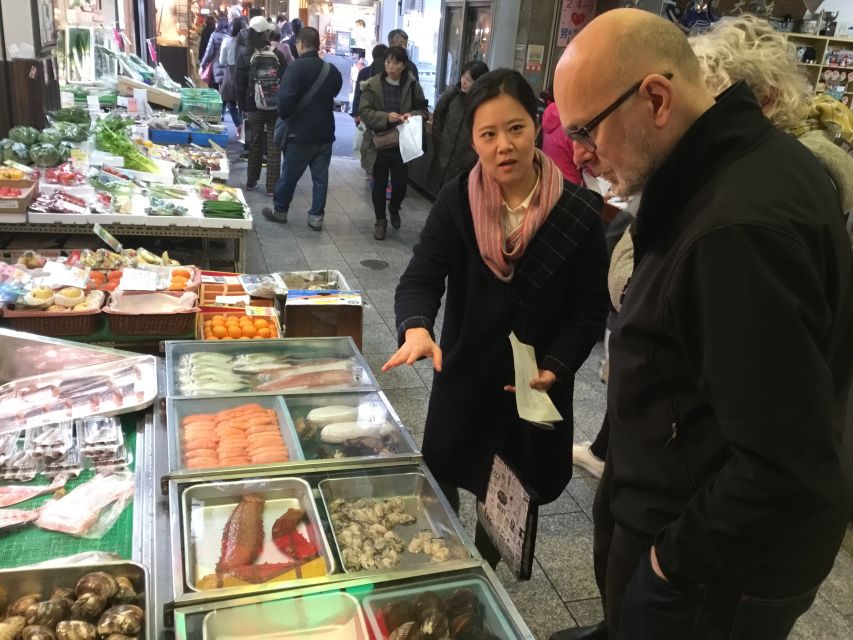
The meeting point is the western entrance of Nishiki Market. After a short briefing, the group begins walking through the market, usually spending about an hour among the stalls.
This is a private group, which gives the visit a useful amount of freedom. You can ask about unfamiliar ingredients without worrying that you are holding up a large crowd. Your guide can also adjust the conversation to your interests, spending more time on cooking methods, Kyoto food traditions, or the ingredients that catch your eye.
You should expect a mix of explanation and tasting. Sample food is included, and Japanese pickles are available to try for free during the tour. These tastings help you make sense of the market’s range. Pickles are not just a side note in Japanese meals, and trying several kinds gives you a better idea of how texture, salt, sweetness, and acidity are used.
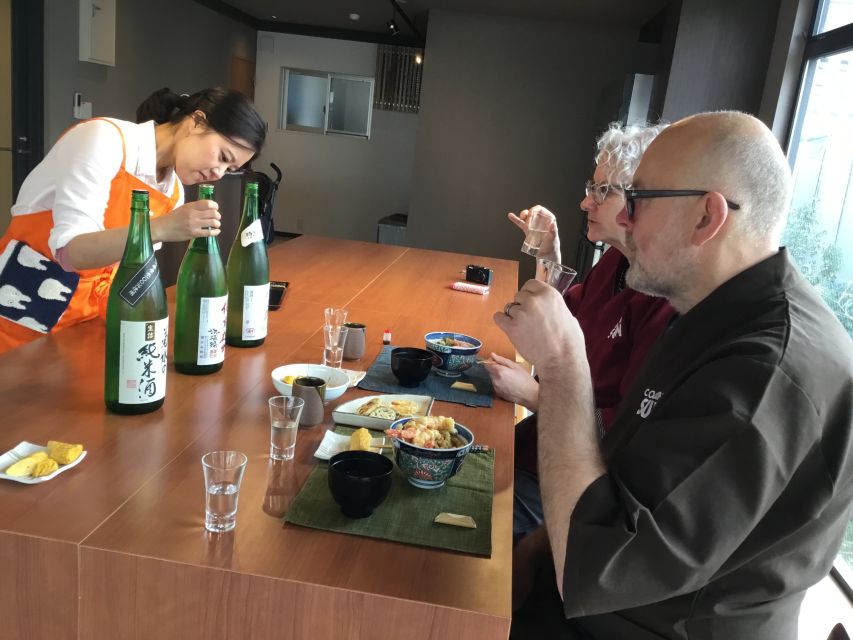
Three types of sake can also be tasted as an optional part of the experience. Since this is not listed as a required inclusion, confirm the details when booking if sake is important to you.
Learning Market Customs, Not Just Market Foods
One of the most useful lessons is etiquette. You may not know that eating while walking is not allowed in the market, especially when many stalls sell food designed to be sampled immediately. Your guide can explain where and how to eat, helping you avoid an awkward mistake.
This kind of advice is easy to miss if you visit alone. Nishiki Market is a working food area as well as a sightseeing stop, so being aware of shop space, foot traffic, and local manners improves the visit for everyone.
Your guide can also explain why certain stalls are known for particular products. You may learn about pickles, spices, meat, seafood, sauces, or other foods associated with Kyoto. The aim is not to rush through a checklist. It is to help you recognize what deserves a closer look.
The market is also a good place to ask about brands and ingredients. One especially useful part of the cooking lesson is learning which sauces are used for what and how different brands compare. If you cook at home, this information can be more valuable than a quick tasting.
Choosing Your Donburi Meal
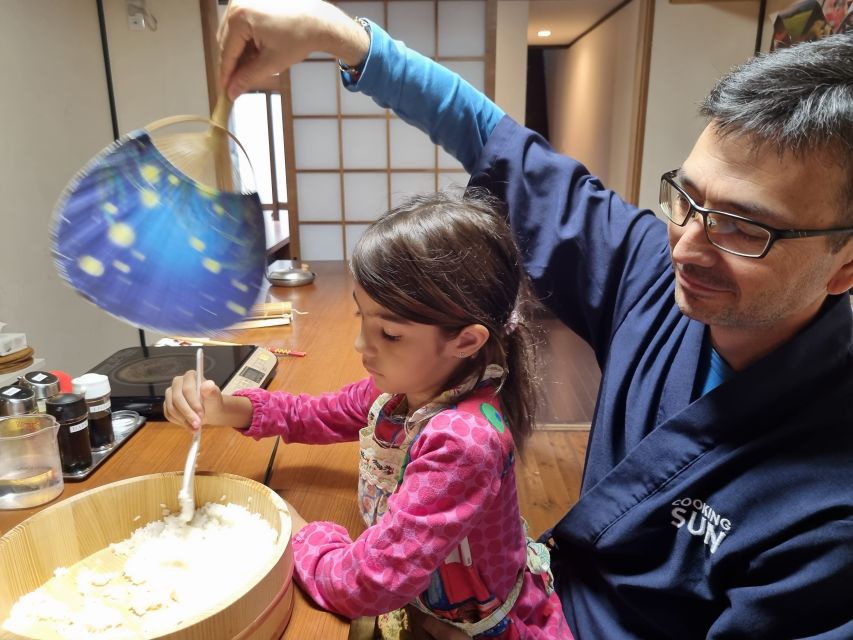
The cooking portion centers on donburi, a Japanese bowl meal served over rice. You choose from three main options:
- Kaisen-don: A seafood bowl
- Ten-don: A tempura bowl
- Oyako-don: A chicken-and-egg bowl
The ingredients are included, and the food is selected during the market visit. That connection gives the class a clear purpose. You see the products at the stalls, then use them in your own meal rather than watching a generic cooking demonstration with ingredients brought in from elsewhere.
Different people in the same private group can choose different dishes. This is useful for families and couples with different tastes. One group prepared all three choices, including tempura, seafood, and chicken-and-egg bowls, so everyone could compare the methods and flavors.
Substitutions may be possible. A request for tofu instead of chicken was accommodated, but you should raise dietary needs before or at the start of the activity rather than assume every change can be made. The listed options are the clearest choices, and the experience is not described as a fully vegetarian, vegan, or allergy-specific class.
More cooking in Kyoto:
- Kyoto: Japanese Washoku Bento Small Group Cooking Class
★ 5.0 · 380 reviews - Kyoto Ramen and Gyoza Cooking Class with Professional Chefs
★ 5.0 · 282 reviews - Kyoto: Afternoon Japanese Izakaya Cooking Class
★ 4.9 · 241 reviews - Izakaya Style Cooking Class
★ 5.0 · 219 reviews
Moving From Market to Cooking Studio
After roughly an hour at Nishiki Market, you travel by taxi to the cooking studio. The taxi cost is included, which removes one small but useful piece of Kyoto logistics from your plate.
The studio is described as a clean, well-stocked kitchen intended for cooking classes. Its smaller setting suits the private format. You are not one person in a large demonstration room trying to see over other people’s shoulders. Instead, the instructor can guide your group through the steps and answer questions as you work.
The class generally takes about an hour for preparation and eating. You should expect to take part rather than simply watch. The instructors explain how to prepare the dishes, how to make food taste good, and how to arrange it so it looks appealing.
That visual point is worth noting. The class is not only about following a recipe. You can learn how to place ingredients, balance colors, and make a home-cooked bowl look more polished. These are small skills, but they travel well beyond this one meal.
What You Actually Learn in the Kitchen
The cooking class covers practical details that are easy to use at home. You may learn about dashi, Japanese sauces, ingredient brands, preparation methods, and the order in which parts of the dish should be cooked.
The instructors are praised for clear English and patient teaching. Mio, in particular, has led classes for participants who appreciated both her English and her enthusiasm for cooking. Other named guides, including Chie and Momo, have also combined the market walk with hands-on instruction.
The lesson can be adjusted to the group. Children can take part, and the activities are structured to keep everyone involved. That makes this a stronger family choice than a class built around a long lecture or advanced knife work.
You also get a recipe. It will not recreate every part of the market experience, but it gives you a practical way to repeat the dish after returning home. The chicken-and-egg bowl is likely the simplest option for a home kitchen, while seafood quality and tempura technique may depend more on what ingredients and equipment you can find.
Eating the Meal You Prepared
The final reward is eating your own donburi in the studio. The meal may be served with additional Japanese side dishes selected during the market visit, and the guide may add small extras based on your preferences.
This is where the experience earns its place over a standard market walk. You do not just taste a few bites and leave with a camera full of food photos. You see how ingredients become a complete meal, then sit down to eat it.
The food quality can vary by ingredient. One participant felt that the fatty tuna was not especially good, which is a fair reminder that market purchases are not guaranteed to suit every palate. Choosing seafood means accepting a little more uncertainty than choosing a cooked chicken-and-egg bowl.
The meal is also not designed for people who want to eat their way through the entire market. Foods you decide to buy for yourself are not included. If you spot something you want to take home or try later, plan to return to Nishiki Market after the tour or budget separately for those purchases.
Is $109 a Fair Price?
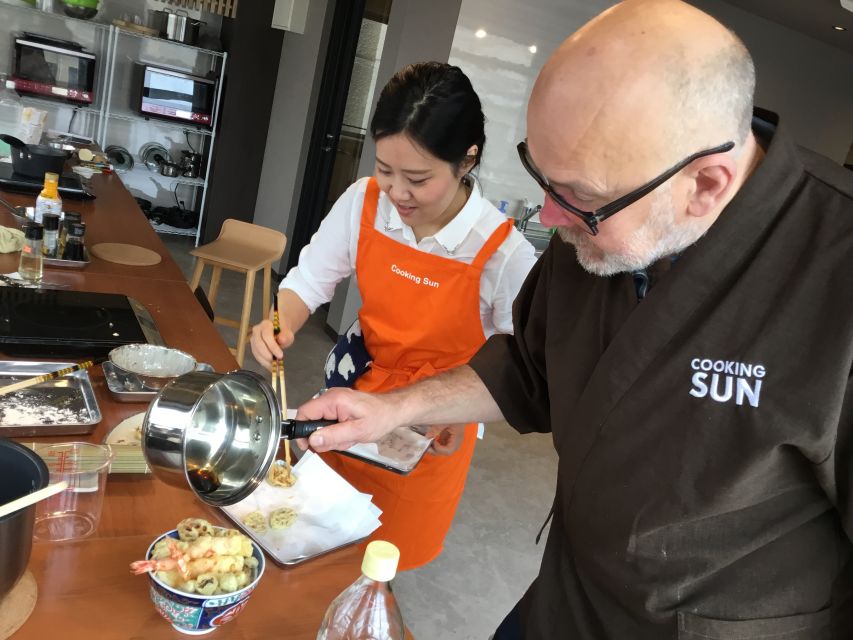
At $109 per person, this is not the cheapest way to see Nishiki Market. You are paying for more than a walk through the stalls, though. The price includes a private English-language guide, market tastings, donburi ingredients, the cooking class, the recipe, and the taxi transfer to the studio.
The private format is the biggest value point. If your group has many questions, different food preferences, or children who need a more active lesson, the ability to set the pace can justify the higher price. Translation help is another practical benefit that is difficult to put a price on when you want to ask shop staff about unfamiliar food.
The value is weaker if you mainly want a cheap market snack tour or a long period of free shopping. The market visit lasts about an hour, and personal food purchases are separate. You should book this for the combination of explanation and cooking, not as a substitute for several hours of independent browsing.
There is also a useful flexibility feature: you can reserve now and pay later, and cancellation is free up to 24 hours in advance. Check availability for start times, since the total duration is 150 minutes.
Who Will Get the Most From This Experience?
I would recommend this tour to first-time visitors who want a clear introduction to Kyoto food without having to decode every stall alone. It is also a good fit for home cooks, since the class covers sauces, dashi, presentation, and ingredient choices rather than only providing a meal.
Families should find the private format helpful. Children can take part in preparing the dishes, and different people can choose different donburi options. A group with one seafood fan, one tempura fan, and one chicken-and-egg fan can share the same class without forcing everyone into one menu.
This is also suitable for travelers who want to ask many questions. You can ask about ingredients, Kyoto specialties, market etiquette, and preparation methods without the restrictions of a large group.
You may want a different activity if your main goal is extensive shopping, a quiet meal, or a highly specialized cooking course. The market is crowded, the walking portion is relatively short, and the class focuses on three accessible donburi dishes rather than advanced Japanese cuisine.
Practical Details Before You Book
Meet at the western entrance of Nishiki Market. Wear comfortable shoes, since the first part is spent walking through the market and stopping at stalls.
Keep some time free after the tour if you want to return for personal shopping. The tour includes the ingredients used for your meal, but not extra foods you may want to buy for yourself.
Tell the guide about substitutions as early as possible. A tofu request was handled successfully, but the available options and ingredients may vary. If you have allergies or strict dietary requirements, ask before booking.
The full activity lasts 150 minutes. Allow for about one hour in the market, a taxi ride to the studio, and about one hour of cooking and eating. The guide speaks English, and the group is private.
Should You Book the Nishiki Market Food Tour?
Book it if you want Nishiki Market explained rather than simply crossed off your sightseeing list. The strongest parts are the private questions, translation help, local food context, and the satisfying link between market shopping and cooking your own donburi.
The $109 price makes sense for a private group that values personal attention and a hands-on meal. If you prefer free time, extensive snacking, or independent shopping, visit the market on your own and spend the money elsewhere. For families, curious eaters, and home cooks, this is a practical Kyoto activity with a useful recipe to take home.
FAQ
Where does the Nishiki Market food tour start?
The tour starts at the western entrance of Nishiki Market in Kyoto.
How long does the activity last?
The experience lasts 150 minutes. The market portion typically takes about one hour, followed by transportation to the cooking studio and about one hour of cooking and eating.
What donburi dishes can I choose from?
You can choose kaisen-don with seafood, ten-don with tempura, or oyako-don with chicken and egg.
Are the cooking ingredients included?
Yes. The ingredients used for the donburi cooking class are included in the tour price.
Is transportation to the cooking studio included?
Yes. The taxi cost from Nishiki Market to the cooking studio is included.
Is the tour private?
Yes. This is a private group experience, so you can ask questions and move at your group’s pace.
Is the tour conducted in English?
Yes. The guide and cooking instruction are provided in English.
Can I cancel or pay later?
You can cancel up to 24 hours in advance for a full refund. You can also reserve now and pay later.
More food tours elsewhere in Japan
- Kyoto Night Foodie Tour in Gion (9+ dishes + 6 Sake tastings)
★ 5.0 · 1,762 reviews - Kyoto: Gion Food Tour 13 Dishes at 4 Eateries
★ 5.0 · 408 reviews - Kyoto Foodie Night Tour
★ 5.0 · 376 reviews - Kyoto: Gion & Pontocho Food Tour with 13 Dishes
★ 4.9 · 235 reviews
Just added in Kyoto
- Kyoto: Zen Meditation at a Private Temple with a Monk★ 5.0 · 25 reviews
- Private Cooking Class Udon in Kyoto Japan★ 5.0 · 23 reviews
- Your Private Vacation Photography Session In Kyoto★ 5.0 · 110 reviews
- Private Pewter Sake Cup Experience with a Kyoto Artisan★ 5.0 · 31 reviews
- Kyoto Wagashi(Japanese sweets) Cooking Class near Fushimiinari★ 5.0 · 60 reviews
- Kyoto:Family-Friendly Kimono & Yukata Experience at WARGO★ 5.0 · 147 reviews
- Private Guided Traditional Buddhist Cooking in Japan★ 5.0 · 16 reviews
- Kyoto: Gion Geisha District & Sake-in-Hand Walking Tour★ 5.0 · 37 reviews
Cooking Classes, compared.
Ramen Cooking Class at Ramen Factory in Kyoto
Read our review →
Ramen & Gyoza Cooking Class in Tokyo with Local Supermarket Visit
Read our review →
Ramen Cooking Class at a Ramen Factory with Souvenir
Read our review →
Japanese Washoku Bento Small Group Cooking Class
Read our review →
Sumo Stage Show with Bento or Snack + Fight & Photo
Read our review →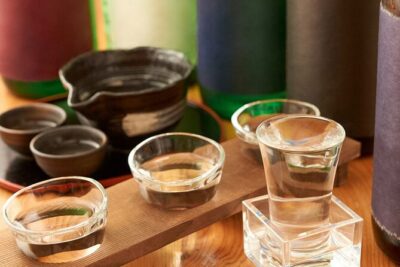
Ramen and Sushi Cooking Class with Sake Pairing Set in Tokyo
Read our review →Browse the lists this tour appears in