
Reviewed · TEA CEREMONY EXPERIENCES
Osaka: Matcha Making Experience with Japanese Sweets
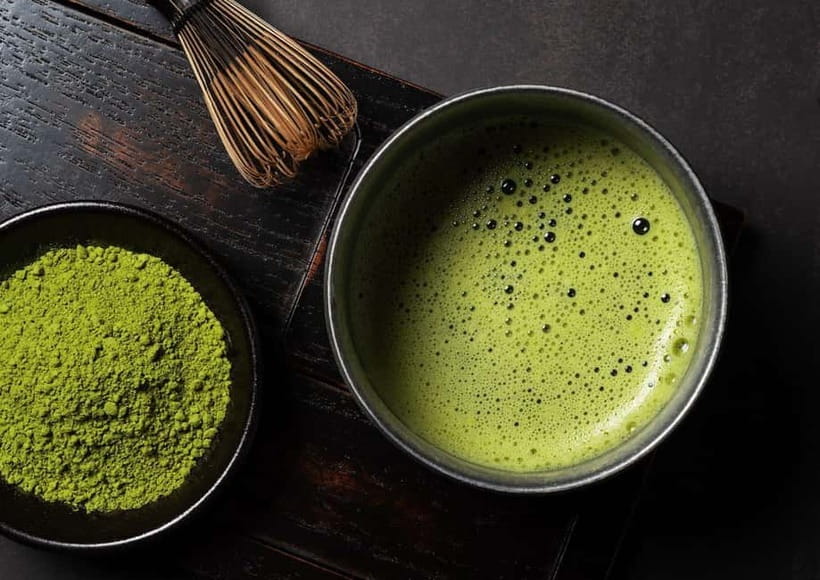
Making matcha in Osaka is a calm, hands-on break from the neon and noise of Dotonbori. You learn where the tea comes from, test your new knowledge in a light quiz, then whisk your own bowl with the same basic tools used in Japanese tea preparation. The best part is doing, not just watching.
I like the small six-person format, which gives you room to ask questions and receive help with your whisking. I also like the friendly English-speaking instruction. Guides including Fujiko, Reika, Yui, Matty, Serin, and Shota have been praised for their humor, clear explanations, and local tips. The main drawback is the short one-hour schedule: you get a satisfying introduction, but not a long, formal tea ceremony.
Key points at a glance
- A hands-on matcha lesson: You whisk your own tea instead of simply watching a demonstration.
- A useful history quiz: The lighthearted quiz makes Japanese tea culture easier to remember.
- Small groups of up to six: You can ask questions and get help without feeling lost in a crowd.
- Sweets served with the tea: Japanese confections balance matcha’s grassy, slightly bitter taste.
- Comfortable central location: The class is five minutes from Shinsaibashi Station, near Dotonbori.
- A good first taste of matcha: You need no previous experience, and instruction is in English.
A quiet hour near Dotonbori
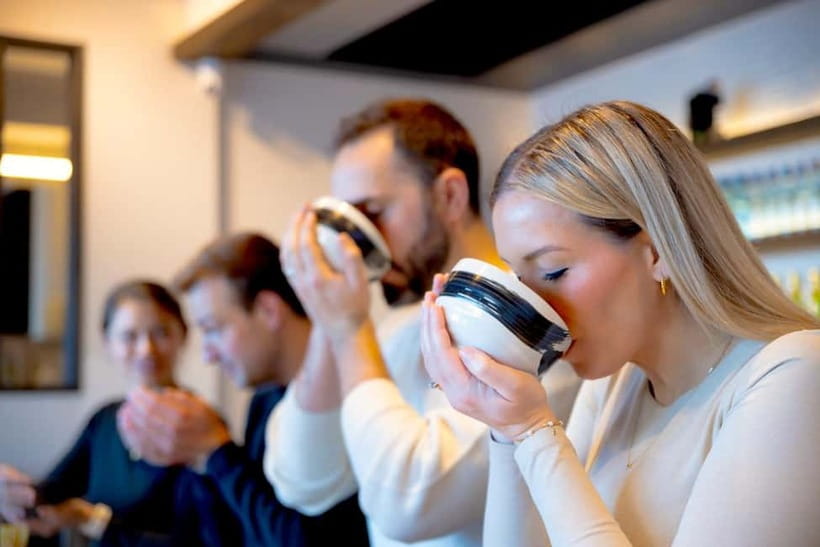
Osaka is famous for food, bright signs, packed streets, and late-night energy. This matcha class gives you a different side of the city without sending you far from the action. The meeting point is on the third floor of the Galleria Acca Building, about five minutes on foot from Shinsaibashi Station.
That location matters. You can fit the class into a day of shopping in Shinsaibashi, a walk through Dotonbori, or an evening meal nearby. It also gives you a cool, seated pause if Osaka’s heat, rain, or crowds become tiring.
Finding the building may require a little attention. One participant described the facility as clean but slightly hard to spot, with the practical advice to go up the stairs. I would save the coordinates, 34.6723159, 135.5024459, and allow a few extra minutes rather than arriving at the last second.
The setting has a traditional feel, but you do not need to kneel on the floor. The table arrangement lets you sit normally, which is especially helpful for families, older visitors, or anyone who prefers not to use a floor mat.
Other tea rooms and ceremonies in Osaka:
- Osaka: Tea Ceremony Experience
★ 4.9 · 1,426 reviews - Tea Ceremony Experience in Osaka Doutonbori
★ 5.0 · 754 reviews - Matcha Making Class in Osaka with Authentic Japanese Sweets Set
★ 5.0 · 509 reviews
The first fifteen minutes: matcha through a quiz
The class begins with an introduction to matcha and its place in Japanese culture. Rather than loading you with a long lecture, the guide uses a quiz and conversation to make the material easy to follow.
This is a smart approach for a short class. You learn basic points about the tea, its origins, and the customs surrounding it, but the tone stays relaxed. Guides such as Fujiko and Matty have been praised for making the information funny and accessible, while Serin and Yui have been noted for clear explanations and good English.
The quiz also gives the group a natural way to participate. You are not expected to know the answers, and you do not need to prepare beforehand. If you are trying matcha for the first time, this opening helps you understand what you are tasting instead of treating the drink as just another green beverage.
The class is also suitable for people who already buy matcha at home. You can ask about preparation, taste, tools, and tea culture, rather than spending the hour on a basic scripted demonstration. One participant even bought a chawan bowl after the class, so the session can lead to a new interest in making matcha at home.
Whisking your own bowl with traditional tools
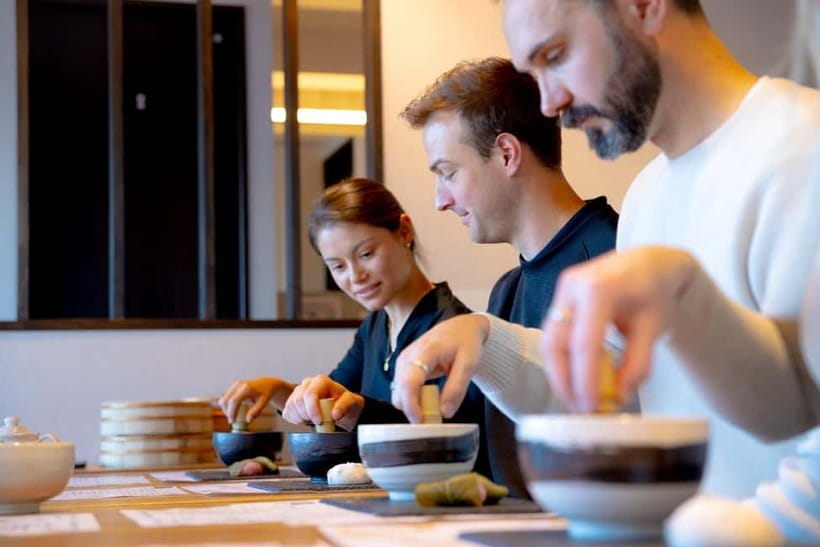
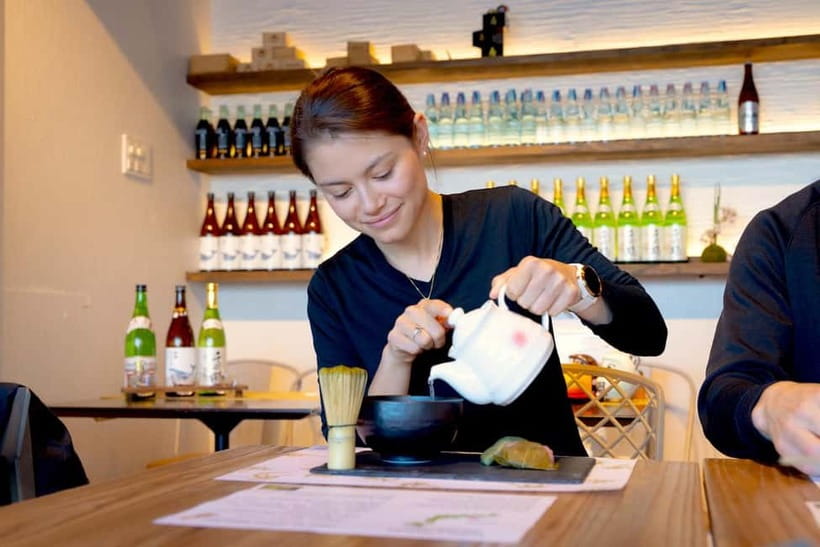
The hands-on part is the heart of the experience. You receive the ingredients and tools, then learn how to prepare your own bowl of matcha. The instructor guides you through the process, including dissolving the powder and whisking it until the drink becomes smooth.
This is simple in theory, but the whisking motion takes a little practice. You may produce a foamier or smoother bowl with the guide’s help, and that small improvement is part of the fun. You are not being tested. The point is to understand the rhythm and feel of the preparation.
The tools give the activity a sense of purpose. Instead of stirring matcha into a mug with a teaspoon, you use traditional equipment and learn why the preparation is done this way. That makes the lesson more useful after you return home. You can remember the motion, the texture, and the order of the steps.
Several instructors have been singled out for patient, clear teaching. Takara explained each step from whisking to tasting in a calm way. Reika helped make the lesson interactive. Fujiko has been praised for her humor and English, while Matty made the process work well for both adults and elementary-school children.
You should expect guidance, not a formal examination in tea ceremony. The class introduces the traditional method in a casual setting. If your goal is to study every rule of a full tea ceremony, this one-hour activity will feel too brief. If you want to learn the basics and make a good bowl yourself, the pace is well judged.
Tasting matcha with Japanese sweets
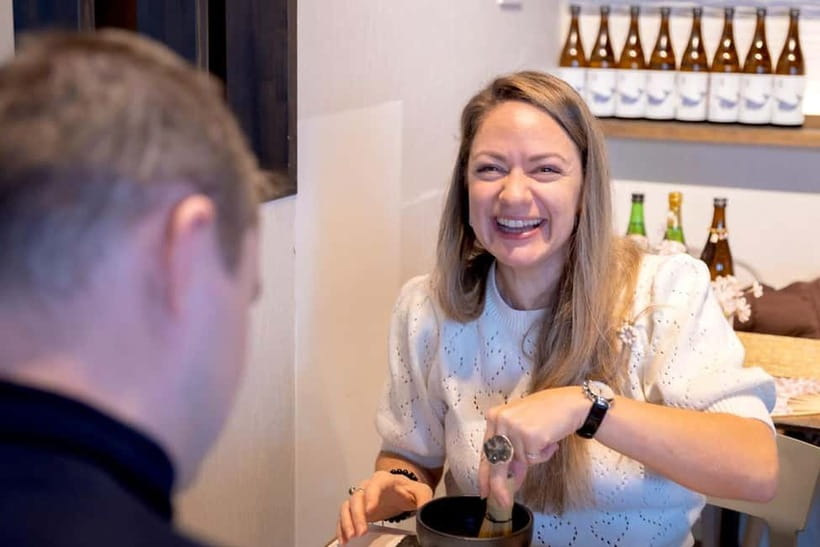
Once you have prepared your tea, you sit down to drink it with Japanese sweets. The sweets are an important part of the experience, not just a decorative extra. Their sweetness helps balance matcha’s earthy, grassy flavor and makes the tasting more approachable for first-time drinkers.
The portions are intended as a snack, not a meal. One participant specifically noted that there was not a lot of food or matcha, while still finding the experience worthwhile. Plan to eat before or after if you are hungry, especially since Dotonbori and Shinsaibashi offer plenty of nearby food.
I like this part because it slows the class down. You have already learned the background and prepared the tea, so the final tasting gives you time to notice the flavor. You can also ask questions while drinking instead of rushing straight out after the practical lesson.
One useful expectation comes from the timing: the class is only an hour. You get enough time to taste your own tea and enjoy the sweets, but you should not expect a long period of silent tea service. If you want a quiet cultural pause in your day, it works well. If you want a full afternoon ceremony, choose a longer specialist experience.
Other things to make with your hands in Osaka:
- Osaka Sushi Making Experience
★ 5.0 · 400 reviews - Osaka Dotonbori: Sushi Making Experience
★ 4.9 · 122 reviews - Osaka: Private Japanese Calligraphy Experience
★ 5.0 · 66 reviews - From Osaka: Sakai Knife Maker or Blacksmith Walking Tour
★ 4.9 · 64 reviews
The guides make the difference
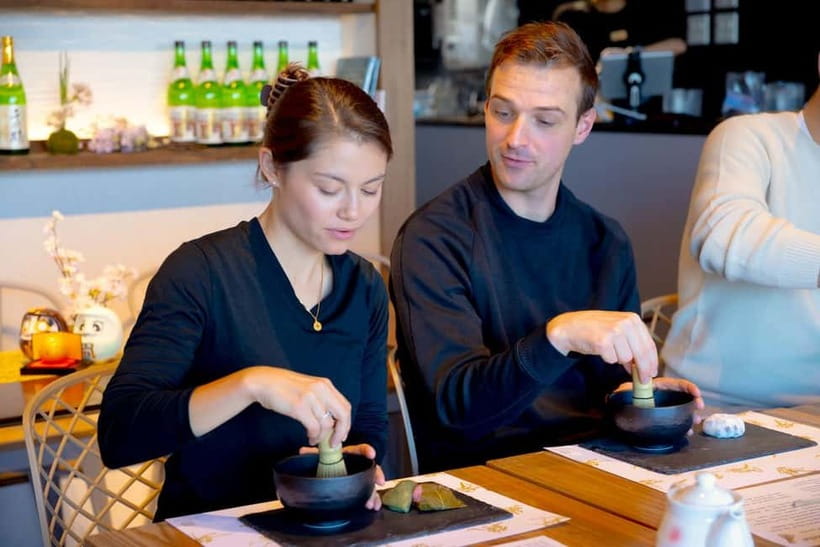
The class is delivered in English, and the teaching style appears to be warm rather than stiff. That matters because matcha preparation can seem formal from the outside. A relaxed guide helps you try the steps without worrying about making a mistake.
The staff members named in past sessions include Fujiko, Reika, Yui, Matty, Serin, Shota, Takara, Harita, Hinata, Moe, Mayuho, Lala, and Marty. You are not guaranteed a particular instructor, but the range of names gives you a sense of the team’s size and personality.
The most praised qualities are consistent: clear English, humor, patience, and active involvement with the group. Several instructors also offered suggestions for restaurants and places to visit around Osaka. That can be useful when you are still deciding where to eat after class, though local recommendations will naturally depend on the person leading your session.
The small group limit of six is a real advantage. In a large workshop, you might struggle to see the demonstration or get help with your whisk. Here, you can ask about taste, preparation, or Japanese tea customs without trying to compete for the instructor’s attention.
Who will get the most from this class?
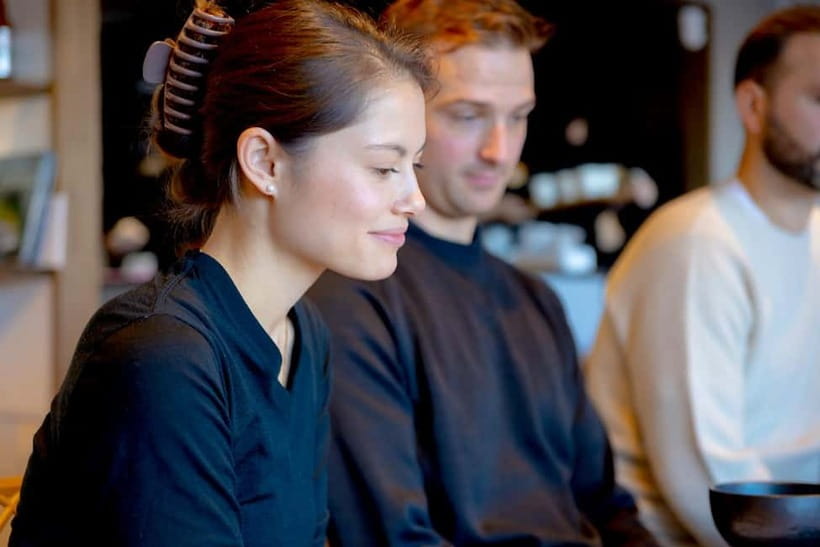
This is an easy choice for a first-time matcha drinker. You receive enough context to understand the drink, enough instruction to prepare it, and enough time to taste it with sweets. You do not need to know Japanese customs or have any cooking experience.
Families can also fit comfortably into the class. An eight-year-old enjoyed the activity with parents, and one parent attended with a nine-month-old baby. The table setup is more practical than a floor-based ceremony, although the information provided does not set out specific stroller or infant facilities.
Teenagers and older children should also find the class approachable. One family with two teenage daughters enjoyed the lesson, and another praised the guide’s ability to keep elementary-school children involved. The quiz and hands-on work give younger participants something to do instead of asking them to sit through a long talk.
Matcha fans will get a different kind of value. You may already know the drink, but you can improve your technique, ask questions, and see how the traditional tools are used. The class may also encourage you to buy a whisk or bowl and continue the practice at home.
I would be less likely to recommend it to someone seeking a serious, extended tea ceremony. The tone is casual, the class lasts one hour, and the focus is on learning by doing. That is a strength for most visitors, but it is worth knowing before you book.
Is $22 a good value?
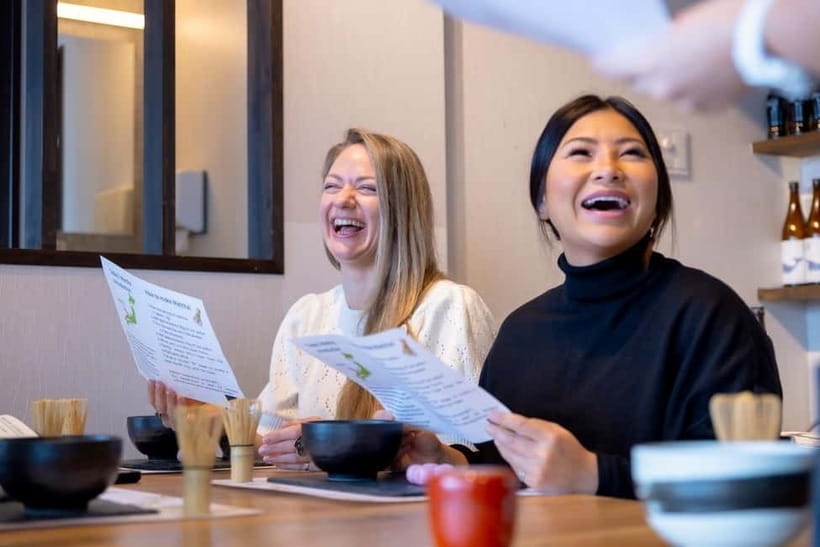
At $22 per person, the price is reasonable for a central Osaka activity that includes the instructor, ingredients, tools for the class, matcha, and Japanese sweets. You are paying for instruction and cultural context as much as for the drink itself.
The value is strongest if you want a compact activity that fits around sightseeing. A one-hour class does not take over your day, and the Shinsaibashi location keeps transport simple. You can combine it with shopping, Dotonbori food stops, or an evening walk.
The price is less compelling if you are judging it only by the amount of tea and food. This is not a cooking class that leaves you with a full meal. It is a short cultural lesson with a snack at the end.
I would think of the fee as paying for three things: access to a local English-speaking instructor, the chance to use traditional matcha tools, and a guided introduction to a drink that can be hard to understand from a café visit alone. On that basis, it offers good value, especially for solo visitors and small families who want a structured activity.
Practical details before you book
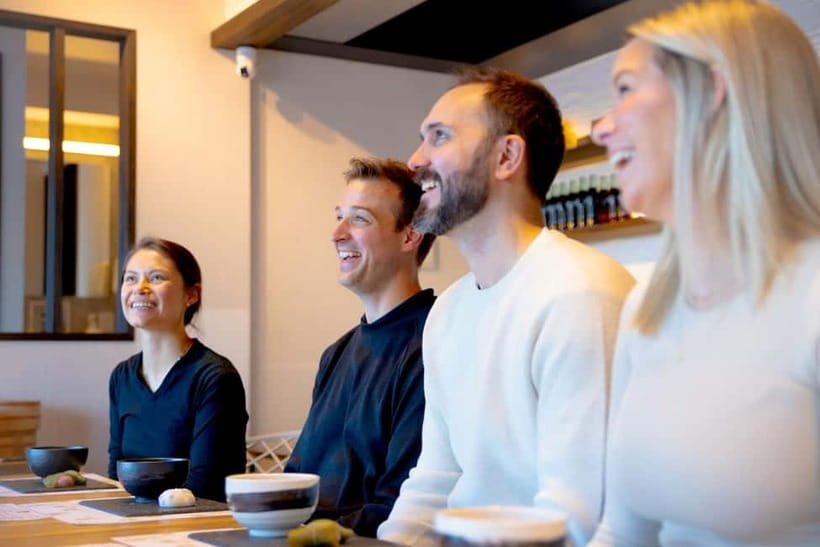
The meeting point is on the third floor of the Galleria Acca Building, five minutes from Shinsaibashi Station. Because the entrance can be easy to miss, keep the address and coordinates ready and allow a little extra time.
Hotel pickup and drop-off are not included. You make your own way to the building, but the central location means you can reach it as part of a normal day in Osaka.
The class runs for one hour, with starting times subject to availability. English instruction is provided, and the group is limited to six participants. Solo visitors are welcome, as are families and mixed groups.
You can cancel up to 24 hours before the activity for a full refund. The reserve-now, pay-later option also helps if your Osaka plans are still shifting.
Should you book the Osaka matcha class?
Book it if you want a short, friendly cultural activity rather than another sightseeing stop. It is especially good for first-time matcha drinkers, families, curious food lovers, and anyone who wants a quiet hour close to Dotonbori.
I would book an earlier session if you want to use it as a break from the day’s heat and crowds, or a later one before dinner in Shinsaibashi. Keep your expectations realistic about the food portion and the length of the tea time.
Skip it if you want a formal, lengthy tea ceremony or a substantial cooking class. For everyone else, the combination of history, quiz, hands-on whisking, sweets, and a six-person group makes this a practical way to connect with Japanese food culture without giving up half a day.
FAQ
How long does the matcha making experience last?
The activity lasts one hour.
Where does the class meet?
It meets on the third floor of the Galleria Acca Building, about five minutes from Shinsaibashi Station. The coordinates are 34.6723159, 135.5024459.
Is the class taught in English?
Yes. The instructor speaks English, and English is the listed class language.
How many people are in each group?
The class is limited to six participants.
Do I need previous matcha or cooking experience?
No. The class is designed for beginners, and the instructor guides you through the process.
What is included in the price?
The price includes the cooking class, ingredients, and instructor. You also prepare and drink matcha with Japanese sweets during the session.
Is hotel pickup included?
No. Hotel pickup and drop-off are not included.
Can I cancel for a refund?
Yes. You can cancel up to 24 hours in advance for a full refund. The activity also offers a reserve-now, pay-later option.
More sweet things to try in Osaka
- Osaka: Japanese Traditional Sweets Making and Tea Ceremony
★ 4.7 · 118 reviews - Matcha Making Class in Tokyo with Authentic Japanese Sweets Set
★ 5.0 · 744 reviews - Tokyo: Matcha Making Experience with Mochi Sweets in Asakusa
★ 4.9 · 388 reviews - Kyoto: Japanese Traditional Sweets Making and Tea Ceremony
★ 4.4 · 314 reviews
Just added in Osaka
- Private arrival transfer from Kansai International airport to Kyoto City★ 5.0 · 32 reviews
- (Ticket Included) Explore Osaka Castle & Museum of History★ 4.8 · 21 reviews
- Hidden Osaka – Yukaku Red Light Tour & Culinary Adventure★ 4.8 · 96 reviews
- Osaka: Walking Tour and Top Highlights★ 4.8 · 104 reviews
- Pickleball in Osaka, Kobe & Kyoto with Locals!★ 4.7 · 80 reviews
- Osaka: Private Ceramic Painting Workshop★ 5.0 · 13 reviews
- Osaka:SUMO BEATS SHOWCASE: Taiko Drum and Wagyu burger!★ 4.2 · 37 reviews
- Eat Like a Local in Osaka – Private Custom Street Food Tour★ 4.3 · 33 reviews
Tea Ceremony Experiences, compared.

Tea Ceremony in a Traditional Tea House in Kiyomizu
Read our review →

World Heritage Kyoto & Nara Uji Authentic Matcha Experience
Read our review →
Arashiyama Bamboo Forest, Monkeys, Matcha & Temple Tour
Read our review →Browse the lists this tour appears in