
Reviewed · COOKING CLASSES
Near Fushimiinari: Kyoto Home Cooking Class & Supermarket tour
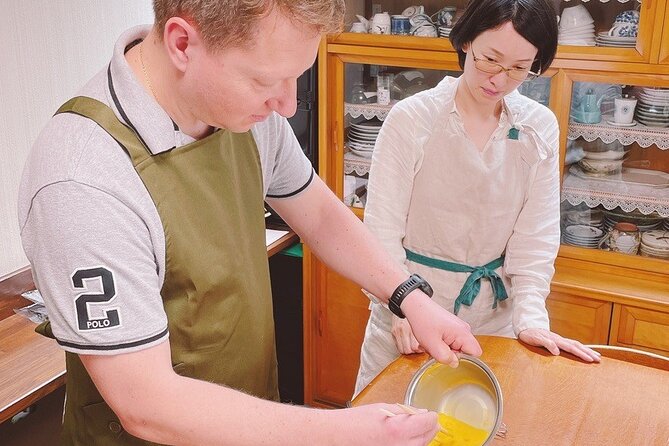
The best part of this Kyoto experience is that you do not simply watch someone prepare Japanese food. You learn about dashi, make several dishes yourself, then sit down to eat in a traditional home with a garden view. Miho leads the class in clear English and keeps the group small enough for real questions.
I like the useful supermarket visit, where you can match the ingredients from the kitchen with products on Japanese shelves. I also like the practical recipes you take home, plus the chance to meet other food-minded people. The one drawback is the price: at $118.92, this is a serious half-day purchase, and drinks are not included.
Key points to know before booking
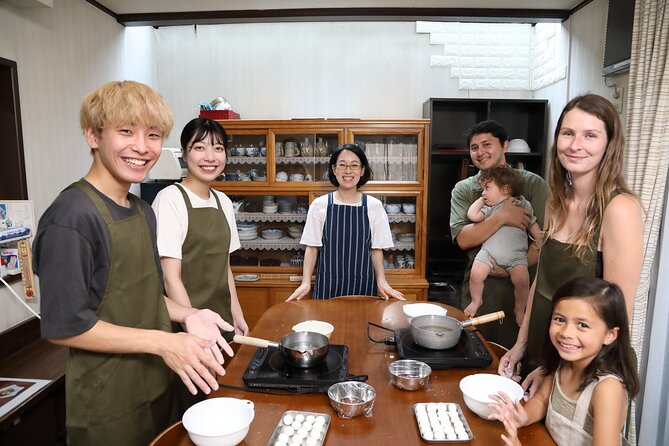
- You prepare about five Japanese dishes: The class includes hands-on cooking, not just a demonstration.
- Dashi comes first: You learn about the soup stocks used throughout Japanese cooking.
- Miho teaches in English: Her explanations are designed to be easy to follow, and she answers questions throughout the class.
- Lunch is served in a traditional room: Expect tatami flooring, a tokonoma display area, and a garden view.
- The supermarket visit adds real shopping help: A 30-minute walk through a local store helps you identify the ingredients used in class.
- The group never exceeds six people: This is a useful size for personal instruction and conversation.
A Kyoto cooking class with a real home setting
Many cooking classes give you a work surface, a recipe sheet, and a polished studio. This one takes place in an authentic Japanese house near Fushimi Inari Shrine, which changes the feel from a standard food lesson to a small cultural visit.
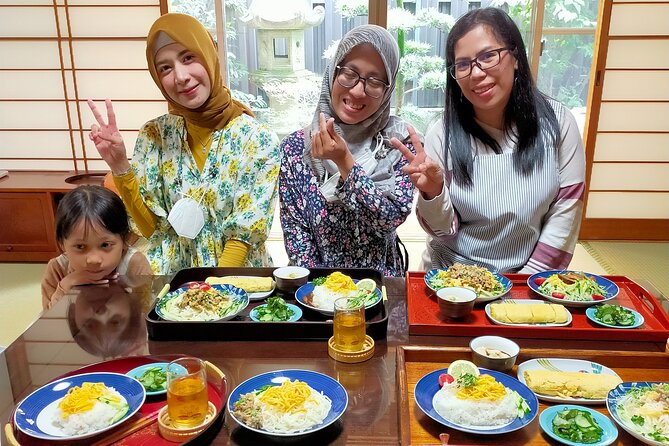
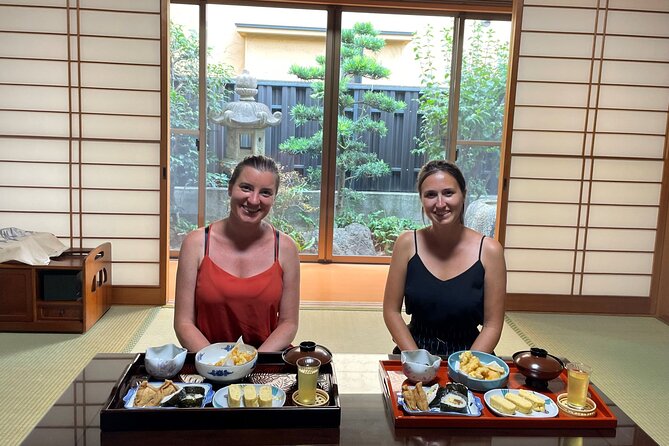
You cook in the kitchen, then eat in a traditional Japanese room. The setting includes tatami flooring, a tokonoma display area, and a view toward a quiet garden. I like that the meal does not end the moment the food is ready. Sitting together gives you time to talk, notice how a Japanese home is arranged, and enjoy the dishes at a slower pace.
The house setting also means this is not a large production. With a maximum of six people, you should have a better chance to see the techniques up close and ask about ingredients, customs, or substitutions. That small group size is especially helpful if you are traveling alone and want a social activity that does not feel forced.
The meeting point is 38-4 Fukakusa Watamoricho in Fushimi Ward. The class begins at 9:30 a.m. and ends back at the same meeting point after roughly four hours. It is near public transportation, and its location makes it easy to pair with time around Fushimi Inari Shrine, though you should allow enough time to find the exact address before the start.
Other cooking classes in Kyoto people book:
- Ramen Cooking Class at Ramen Factory in Kyoto
★ 5.0 · 1,937 reviews - Kyoto: Ramen Cooking Class at a Ramen Factory with Souvenir
★ 4.9 · 532 reviews - Kyoto: Ramen, Gyoza, and Onigiri Cooking Class
★ 5.0 · 445 reviews
Learning dashi before the main cooking begins
The first lesson focuses on dashi, the basic soup stock found in a wide range of Japanese food. This is a smart starting point because dashi helps explain why many Japanese dishes taste so layered even when the ingredient list looks simple.
Rather than treating Japanese cooking as a list of exotic recipes, the class gives you a foundation. You learn what different kinds of dashi are used for and how they shape the flavor of soups and other dishes. That knowledge is more useful at home than simply copying one finished meal.
The instructors demonstrate techniques before you begin preparing the food yourself. You may work alone or with a partner, depending on the group. The exact menu can vary, but the class typically includes about five dishes. Past menus have included miso soup, sushi, spinach salad, tempura, and mochi, giving you a mix of soup, rice, vegetables, fried food, and dessert.
That variety is one of the strongest parts of the experience. You are not spending four hours repeating one recipe. You get a broad look at Japanese home cooking, including the small steps that make a dish work.
Hands-on cooking instead of a front-row demonstration
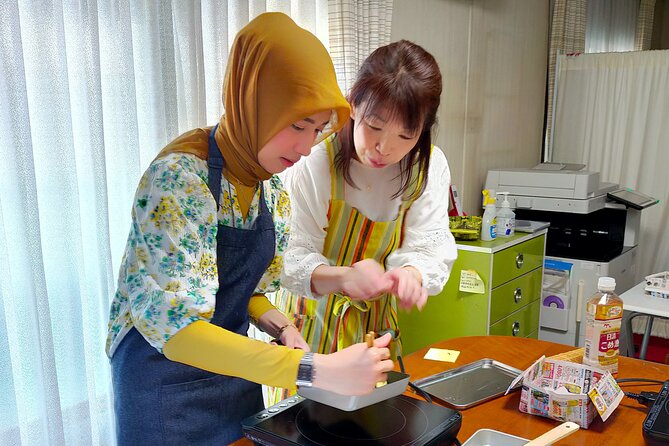
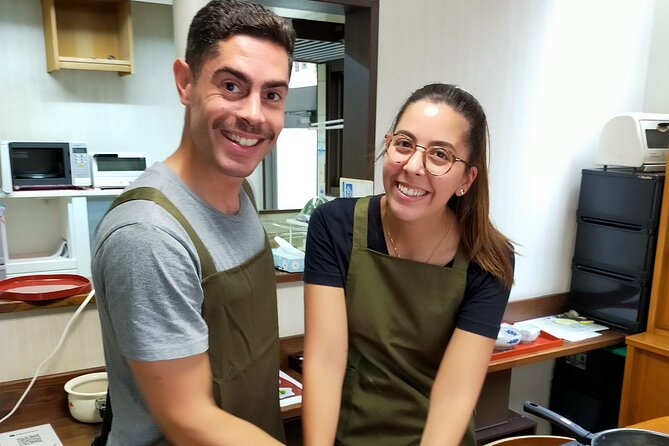
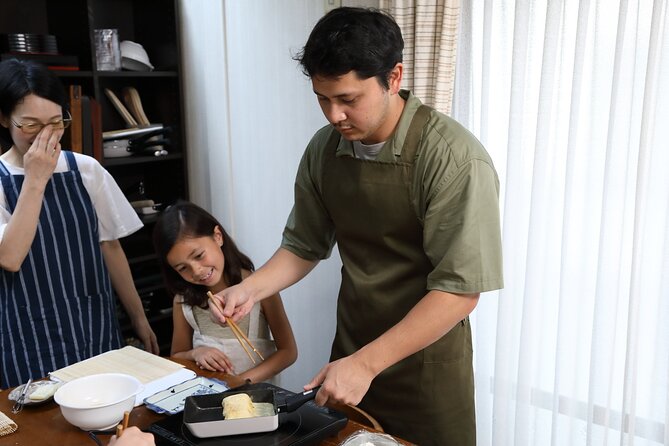
You should expect to participate. Miho demonstrates the key steps, then guides you as you prepare the dishes. That format lets you learn by doing, while still giving you help when a technique or ingredient is unfamiliar.
The class is conducted in English. Miho is a licensed guide interpreter, and her English is described as clear and easy to understand. That matters in a cooking class, where a small misunderstanding about timing, texture, or preparation can affect the final dish.
The group size gives the instruction a personal feel. In a class of six, you can ask why a certain stock is used, how a vegetable should be cut, or where to find an ingredient later. You are not left trying to keep up with a large room full of people.
The class also works well for different experience levels. You do not need to arrive as a skilled cook. The focus is on guided preparation and simple techniques that can be repeated at home. Still, this is an active class, so anyone expecting only to sit and watch should choose a different kind of food tour.
Vegetarian arrangements are possible, according to the information provided. If this matters to you, raise it when booking or before the class so the instructor can plan appropriately. The available information does not promise other dietary adaptations, so specific needs should be confirmed in advance.
Lunch in a tatami room with a garden view
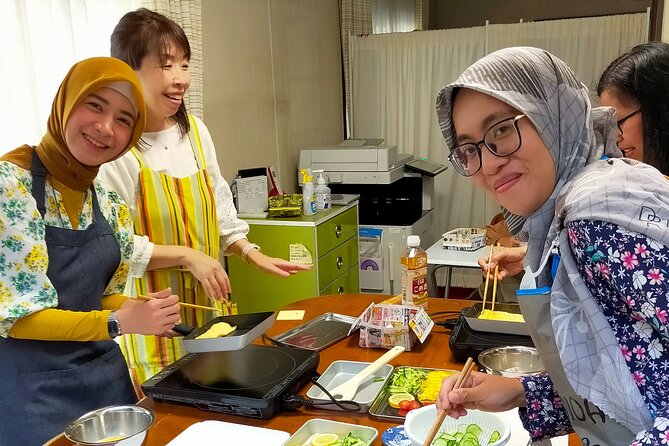
After cooking, you sit down with the group and eat the food you have prepared. Lunch is included in the price, along with cooking ingredients, seasonings, and all fees and taxes.
The meal takes place in a traditional room with tatami flooring and a garden view. That setting is not just decoration. It gives the meal a clear sense of place and lets you experience a style of Japanese room that you may not see during a standard restaurant visit.
The dishes are meant to be shared as a group, making lunch a natural time to compare notes and talk about what you have learned. Solo visitors may especially appreciate this part. You arrive as strangers, but the shared work in the kitchen gives everyone an easy subject to discuss.
Drinks are not included, so plan to pay separately if you want something beyond what is provided. The tour includes lunch, but it does not include hotel pickup, hotel drop-off, or gratuity.
One small point to keep in mind is that the published information uses both lunch and dinner in descriptions of the meal. Since the class starts at 9:30 a.m. and lasts about four hours, you should plan on a late lunch rather than an evening dining experience.
More cooking in Kyoto:
- Kyoto: Japanese Washoku Bento Small Group Cooking Class
★ 5.0 · 380 reviews - Kyoto Ramen and Gyoza Cooking Class with Professional Chefs
★ 5.0 · 282 reviews - Kyoto: Afternoon Japanese Izakaya Cooking Class
★ 4.9 · 241 reviews - Izakaya Style Cooking Class
★ 5.0 · 219 reviews
The supermarket visit makes the recipes usable
After the meal, you spend about 30 minutes in a local supermarket. This is more useful than it may sound. Japanese grocery stores can be difficult to read at first, especially when labels, package sizes, and unfamiliar ingredients crowd the shelves.
Miho helps you identify the ingredients used in the class and explains what you are seeing. This turns the shopping stop into a practical extension of the cooking lesson. You can connect the dish on your plate with the actual products you might need at home.
You may also buy ingredients for friends and family. That is a good option if you want to keep cooking after your return. The supermarket visit is short, so it is not designed as a full food market tour or a long shopping session. Its purpose is clear: learn how to recognize the items that support the recipes.
For many people, this may be the part that makes the class more useful over time. A recipe can tell you what to buy, but a local guide can show you what the package looks like and explain where it is found. That extra help reduces the guesswork when you try to recreate the dishes.
What the $118.92 price includes
At $118.92 per person, this is not a budget lunch. You are paying for roughly four hours of instruction, a meal, ingredients, seasonings, a supermarket visit, and an English-speaking guide. The cost also includes taxes.
I see the value in the combination. A basic cooking lesson might teach you how to make a few dishes, while a standard walking tour might show you a neighborhood without giving you a useful skill. This experience combines food, a home setting, cultural explanation, social time, and practical shopping advice.
The price makes more sense if you intend to use the recipes later. You also get more personal attention than you would in a large class, since the group is limited to six. If you simply want a cheap meal near Fushimi Inari, this is not the right purchase. If you want a structured activity with something to take home besides photographs, it offers stronger value.
The meal itself is not the only thing you are buying. You are paying for access to a local home, guided instruction, explanations about dashi and Japanese ingredients, and help understanding a supermarket that can otherwise feel confusing.
Who will enjoy this experience most
I would recommend the class to solo visitors, couples, small groups, and anyone who wants a break from temple visits. Solo visitors gain an easy social setting, while couples and friends can learn together without being separated into a large group.
It is also a good fit for people who enjoy practical cultural experiences. You are not just looking at a traditional home. You are using its kitchen, eating in its tatami room, and then walking through a local supermarket.
Food lovers will get the most from the class, but you do not need advanced cooking skills. The demonstrations and guided preparation make the activity accessible to beginners. The recipes and supermarket explanations also suit people who want to continue cooking Japanese food at home.
This may be less suitable if you have a tight morning schedule, dislike group activities, or want a fully private class. The maximum is six, but the experience still includes shared cooking and a common meal. You should also avoid booking it as a quick stop between several fixed appointments, since the class lasts about four hours and ends at the original meeting point.
Timing, meeting point, and cancellation details
The start time is 9:30 a.m. at 38-4 Fukakusa Watamoricho, Fushimi Ward, Kyoto, 612-0022. The activity ends back at that meeting point after the cooking class, meal, and supermarket visit.
A mobile ticket is provided, and confirmation is received when you book. The location is near public transportation, but you should still build in time to arrive calmly. Cooking classes are not a good place to rush in late, since the opening explanation about dashi sets up the rest of the lesson.
Free cancellation is available up to 24 hours before the local start time for a full refund. Changes or cancellations made less than 24 hours before the start are not accepted for a refund. The activity requires good weather, and if poor weather causes a cancellation, you are offered another date or a full refund.
Should you book the Kyoto home cooking class?
Book it if you want to learn something practical, eat food you helped prepare, and see a side of Kyoto that a shrine visit cannot provide. The small group, clear English instruction, traditional home, recipes, and supermarket stop work well together.
I especially like the way the class continues after the meal. You learn the basics, cook several dishes, sit down in a traditional room, then see where the ingredients are sold. That sequence gives the morning a clear purpose.
Skip it if you only want a low-cost meal, a private experience, or a short activity. At $118.92, it deserves space in your budget and schedule. For a food-loving visitor who wants useful skills and a friendly local setting near Fushimi Inari, it is a strong choice.
FAQ
Where does the cooking class begin?
The class begins at 38-4 Fukakusa Watamoricho, Fushimi Ward, Kyoto, 612-0022, Japan.
What time does the experience start?
The start time is 9:30 a.m.
How long does the activity last?
The experience lasts approximately four hours.
How many people can join the class?
The class has a maximum of six participants.
Is the class taught in English?
Yes. The class is conducted entirely in English, and the instructors are licensed guide interpreters.
What is included in the price?
The price includes lunch, all fees and taxes, cooking ingredients and seasonings, an English-speaking instructor, and a roughly 30-minute local supermarket tour.
Are drinks included?
No. Drinks are not included.
Can I cancel for a full refund?
Yes, if you cancel at least 24 hours before the local start time. Cancellations made less than 24 hours before the start are not refunded.
Just added in Kyoto
- Private Cooking Class Udon in Kyoto Japan★ 5.0 · 23 reviews
- Your Private Vacation Photography Session In Kyoto★ 5.0 · 110 reviews
- Kyoto: Zen Meditation at a Private Temple with a Monk★ 5.0 · 25 reviews
- Private Pewter Sake Cup Experience with a Kyoto Artisan★ 5.0 · 31 reviews
- Kyoto Wagashi(Japanese sweets) Cooking Class near Fushimiinari★ 5.0 · 60 reviews
- Kyoto:Family-Friendly Kimono & Yukata Experience at WARGO★ 5.0 · 147 reviews
- Private Guided Traditional Buddhist Cooking in Japan★ 5.0 · 16 reviews
- Kyoto: Gion Geisha District & Sake-in-Hand Walking Tour★ 5.0 · 37 reviews
Cooking Classes, compared.
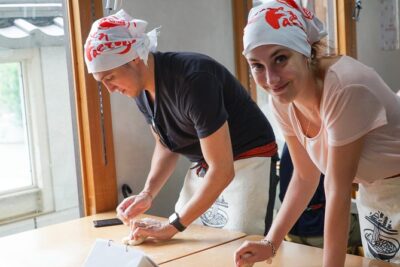
Ramen Cooking Class at Ramen Factory in Kyoto
Read our review →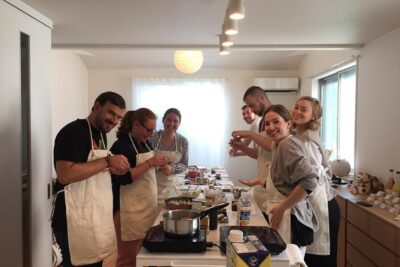
Ramen & Gyoza Cooking Class in Tokyo with Local Supermarket Visit
Read our review →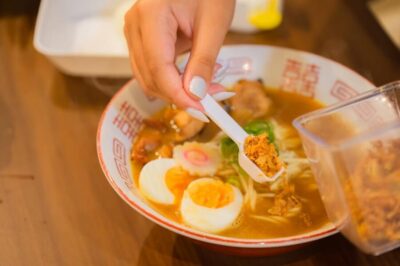
Ramen Cooking Class at a Ramen Factory with Souvenir
Read our review →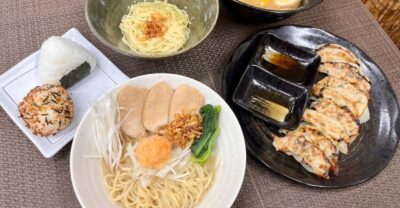
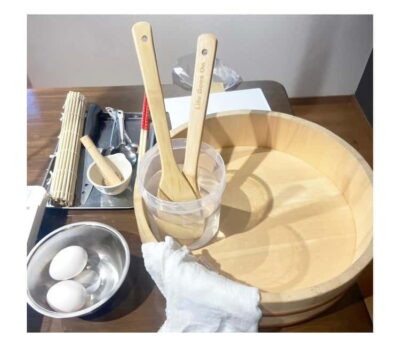
Japanese Washoku Bento Small Group Cooking Class
Read our review →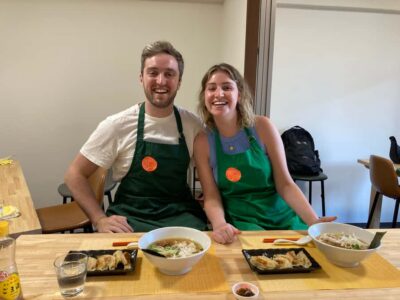
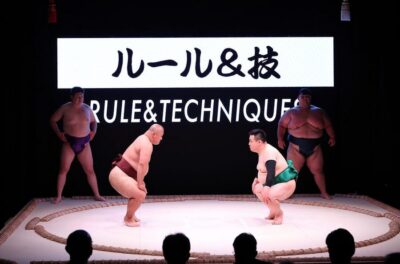
Sumo Stage Show with Bento or Snack + Fight & Photo
Read our review →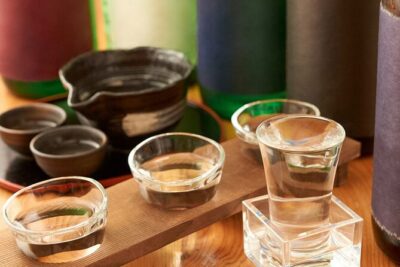
Ramen and Sushi Cooking Class with Sake Pairing Set in Tokyo
Read our review →Browse the lists this tour appears in