
Reviewed · TEA CEREMONY EXPERIENCES
Kyoto Tea Ceremony & Kiyomizu-dera Temple Walking Tour
Kiyomizu-dera and a traditional tea ceremony make a fine first morning in Kyoto. You get the city’s famous wooden temple stage, Otowa Waterfall, old lanes lined with sweets and souvenir shops, and a quiet cultural lesson in one compact outing. The group is limited to six, so the guide can answer questions instead of delivering a speech to a crowd.
I especially like the combination of Kiyomizu-dera’s hilltop views and the slower pace of the tea ceremony. I also like the practical help: guides such as Hide explain temple customs, discuss Shinto and Buddhism, and take photos during the walk. The main drawback is the uphill route and crowded shopping streets, while summer heat can make three hours feel longer.
Key points to know before booking
- Kiyomizu-dera entry is included, along with Otowa Waterfall and the temple’s famous wooden stage.
- The tea ceremony includes matcha and snacks, with a host such as Haruki explaining the formal movements.
- The maximum group size is six, a useful size for questions and personal attention.
- The walk begins at Yasaka Shrine at 9 a.m. and returns to the same meeting point.
- Kiyomizu-zaka, Sannenzaka, and Ninenzaka require uphill walking on sloped, busy streets.
- Food substitutions and allergy-free preparation are not guaranteed, so this tour needs care if you have dietary restrictions.
Why this three-hour Kyoto outing works
Kyoto can feel like a puzzle on your first day. Temples sit behind shop-lined lanes, slopes turn into stairways, and the difference between a Shinto shrine and a Buddhist temple is not always clear at first glance. This tour gives you a useful framework without taking up an entire day.
You meet at the western tower gate of Yasaka Shrine at 9 a.m. From there, the route moves through some of eastern Kyoto’s most recognizable streets before reaching Kiyomizu-dera. The plan is not just to check off a famous temple. It connects the shops, legends, religious customs, food, and views that make this part of town worth exploring on foot.
The result suits you best if you want an introduction rather than a long academic lecture. You will see a major UNESCO World Heritage Site, learn how to behave at a Japanese temple, taste matcha, and get a feel for Kyoto’s traditional streets in about three hours.
Other tea ceremonies in Kyoto people book:
- Kyoto: Tea Ceremony in a Traditional Tea House in Kiyomizu
★ 4.9 · 3,519 reviews - Kyoto: Tea Ceremony Ju-An at Jotokuji Temple
★ 4.9 · 3,207 reviews - Kyoto: 45-Minute Tea Ceremony Lesson Experience
★ 4.3 · 2,378 reviews
Starting at Yasaka Shrine at 9 a.m.
The meeting point is Yasaka Shrine’s Nishiromon Gate, also called the Western Tower Gate, at 625 Gionmachi Kitagawa in Kyoto’s Higashiyama Ward. The shrine is near public transportation, but the meeting instructions deserve attention. One person began the tour in a panic because finding the exact meeting place was not clear enough.
I would arrive early and identify the gate before the 9 a.m. start. This is especially sensible if you are staying near Gion or coming from another part of Kyoto. The tour ends back at the same meeting point, which makes the start and finish easy to fit into a day of sightseeing.
Yasaka Shrine also sets the tone for the morning. It gives the guide a natural place to explain Japanese religious traditions before the walk reaches Kiyomizu-dera. The discussion can include the difference between Shinto and Buddhism, a point that Hide handled well for one group.
Kiyomizu-zaka and Kyoto’s old-fashioned streets
The walk heads toward the Kiyomizu area through streets known for their traditional appearance. Kiyomizu-zaka is not a single quiet lane. It is an area of connected streets with old teahouses, Japanese sweets shops, dried-food shops, pickles, yatsuhashi, and small stores selling Kyoto souvenirs.
You may also see people dressed as maiko or geisha in the area, though the tour information does not promise a sighting. The important point is that the route lets you experience the approach to the temple as a neighborhood and pilgrimage road, not just as a path to a ticket gate.
The guide also takes you to Yasaka Koshindo, a particularly colorful temple. It adds variety before Kiyomizu-dera, since the bright decorations and compact setting feel different from the large temple grounds ahead.
This section is photogenic, and there is time to stop for pictures. Your guide takes photos during the tour, which is helpful if you want a record of the morning without asking strangers to use your phone. Still, remember that this is a walking tour through a popular part of Kyoto. Shop-lined slopes can be crowded, and the pace may slow when groups gather around attractive storefronts.
Reaching Kiyomizu-dera and its wooden stage
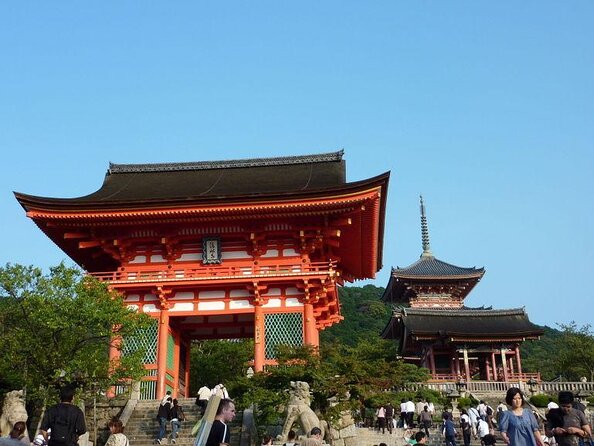
Kiyomizu-dera was built on the site of Otowa Waterfall about 1,200 years ago. Its name comes from the waterfall’s pure water, and the connection between the temple and the water remains part of the visit.
The temple’s wooden stage sits about 13 meters above the ground. From here, you can look across rows of cherry and maple trees toward Kyoto. The view changes with the season, but the basic appeal is constant: the height gives you a broad look beyond the immediate temple buildings.
The guide’s presence matters most here. Kiyomizu-dera has enough gates, buildings, customs, and photo stops to make a first visit confusing. Instead of trying to decode every sign while keeping up with the route, you can ask why a place matters and what you are supposed to do there.
The tour includes the temple entrance fee, which makes the listed price easier to judge. You are not paying separately for admission, a guide, a tea ceremony, matcha, snacks, and photos. At $109.39 per person, it is not a budget walk, but the six-person limit and the number of included elements give it reasonable value if you want a structured introduction.
Other temples and shrines in Kyoto people book:
- Arashiyama Bamboo, Temple, Monkeys, or Secret Sake Brewery
★ 4.8 · 886 reviews - Kyoto: Arashiyama Bamboo Forest, Monkeys, Matcha & Temple Tour
★ 5.0 · 759 reviews - Osaka/Kyoto: Arashiyama, Nara & Fushimi Inari Shrine w/Lunch
★ 4.4 · 754 reviews - Kyoto: Ninnaji Temple Entry Ticket
★ 4.2 · 650 reviews
Drinking from Otowa Waterfall
Otowa Waterfall is one of the most memorable parts of the temple visit. Its water divides into three streams, and each stream is associated with a different benefit. You choose one, use a cup attached to a long pole, and drink the water as part of the traditional worship practice.
The guide can show you how to take part, which removes some of the uncertainty that can come with religious sites. This is a small moment, but it helps turn the visit from sightseeing into participation.
You should not treat the three streams as a menu where taking all three brings extra luck. The custom is generally presented as choosing one, and the tour specifically describes selecting one stream. The guide can explain the practice in context, making it more meaningful than simply copying the person ahead of you.
Walking the one-kilometer route to the temple
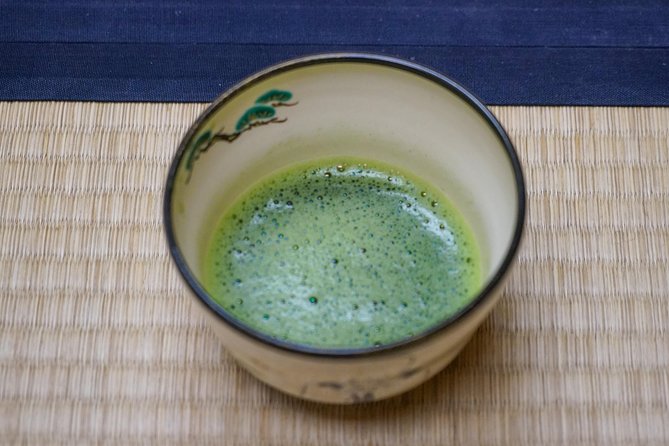
Kiyomizu-zaka is also the name of the roughly one-kilometer pilgrimage route leading toward Kiyomizu-dera. It begins where Matsubara-dori crosses Higashioji-dori and climbs toward the temple. The lower stretch can feel quieter, while the upper part fills with souvenir shops and people calling out to shoppers.
The route passes the tall Niomon Gate and three-story pagoda near the temple entrance. These landmarks help you understand how the temple announces itself from the street. You are not simply arriving at a modern attraction. You are following an old approach that has long connected Kyoto’s streets with a major place of worship.
This is one reason comfortable shoes matter. The tour covers slopes, and the streets can be busy. If you have trouble with hills or uneven walking, ask yourself if the route sounds manageable before booking. Most people can take part, but the tour is not a seated temple visit.
Sannenzaka and Ninenzaka, with a little local folklore
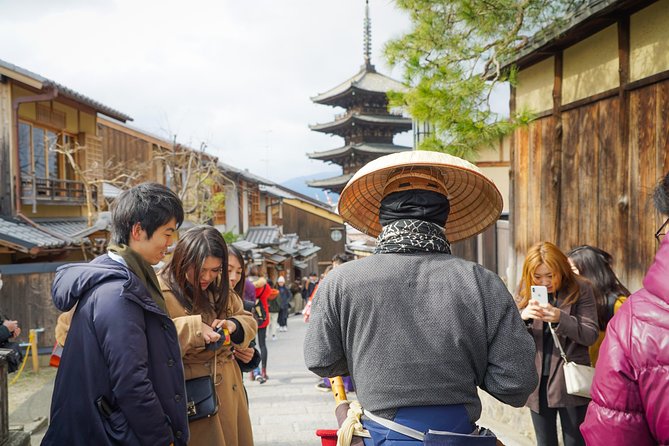
Near Kiyomizu-dera, the route passes Sannenzaka and Ninenzaka. These lanes are known for their traditional buildings, shops, and old Kyoto atmosphere. They are also among the most popular parts of the approach, so expect a less quiet experience than the word historic might suggest.
Sannenzaka has a famous warning attached to its steps. According to the legend, falling there means you will die within three years, or lose three years from your life. The story is best understood as an old reminder to watch your footing on a steep slope, not as a reason to panic.
The route once led toward the Toribeno burial ground, which helps explain how the cautionary tale may have developed. Your guide can make this kind of detail useful, turning a staircase and a shop street into part of Kyoto’s story.
You will have chances for photographs, but this is not a dedicated shopping tour. The guide’s main job is to show you the area and get you to the temple and tea experience. If you want long browsing time in every sweets shop, you may prefer to return on your own after the tour.
The tea ceremony and a calmer change of pace
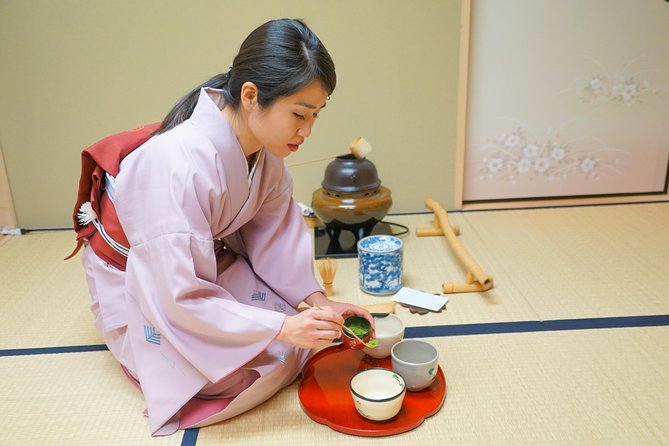
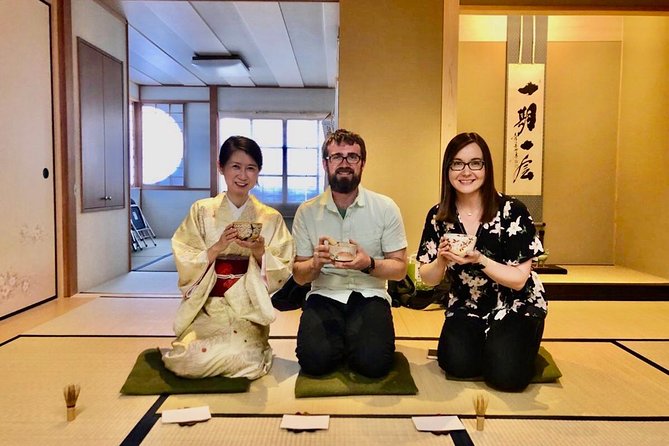
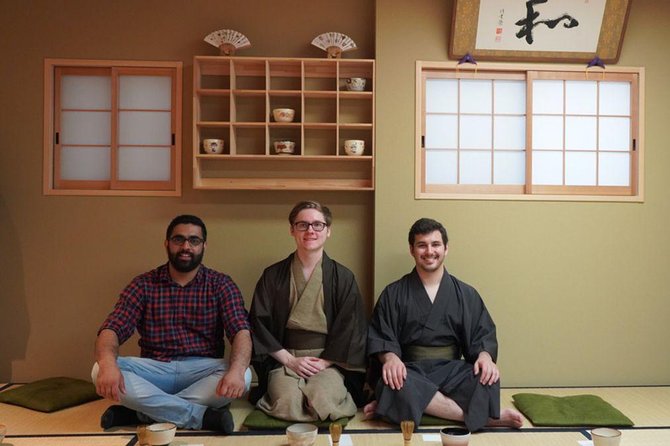
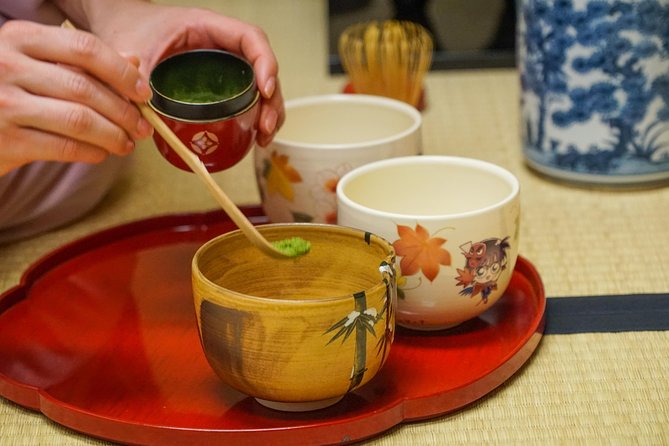
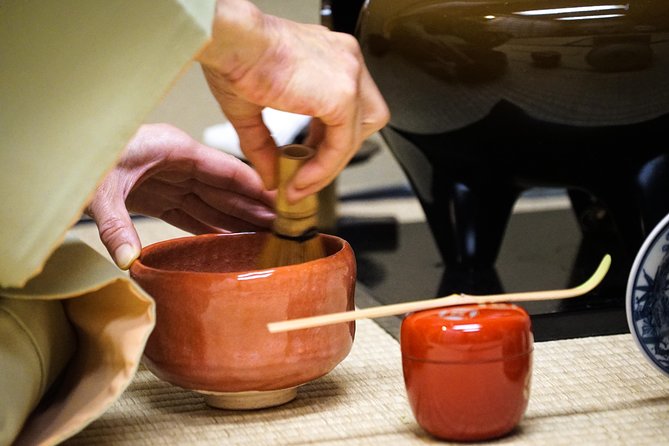
After the temple walk, the tea ceremony provides a welcome change. The ceremony is a special Japanese cultural experience rather than a quick drink stop. You receive matcha and snacks while learning about the formal movements and customs.
The tea host may be someone such as Haruki, who was described as warm, entertaining, and gentle with visitors. Another host led the ceremony with a clear interest in the people attending and explained the tradition in a friendly way. The ceremony is meant to be approachable, not intimidating.
I like this pairing because the morning moves from active sightseeing to careful observation. At Kiyomizu-dera, you are looking outward at the city and temple grounds. During the tea ceremony, you focus on the bowl, the preparation, the manners, and the flavor of the matcha.
The included food consists of a few samplings and snacks. Additional food and drinks cost extra. Do not book this expecting a full meal. Think of it as a small taste alongside the tea, enough to support the cultural experience but not replace lunch.
If you have allergies or dietary restrictions, take the warning seriously. The food is prepared in kitchens outside the company’s control, allergy-free preparation is not guaranteed, and substitutions may not always be possible. The operator says it will try to compensate at other stops, but you should not count on a complete replacement.
What the small group changes
The group maximum is six people. That is one of the strongest reasons to choose this outing over a large city tour. A group this size can usually gather around a guide without blocking a narrow lane, and you have a better chance to ask about temple customs, local legends, or the tea ceremony.
A small group does not make the streets empty. Kiyomizu-zaka, Sannenzaka, and Ninenzaka remain popular. It simply means the guide can keep the explanation more personal and notice when people need help with the route or a photo.
The guide can also shape the mood. Hide, one of the named guides, made the walk relaxed and added humor, including jokes about baseball. That sort of light touch matters during a morning with several religious sites and formal customs. You get information without feeling as if you are attending a classroom.
The experience has a strong rating of 4.9 from 115 reviews, with 97 percent recommending it. Those figures suggest consistent satisfaction, but they do not remove the practical limitations. The meeting point can be confusing, the hills require effort, and the food policy is not suited to every diet.
Is $109.39 a fair price?
At $109.39 per person, this is a mid-priced guided experience. The value comes from combining several separate costs and decisions into one morning: Kiyomizu-dera admission, a local guide for three hours, matcha, snacks, the tea ceremony, and photos.
You also pay for orientation. If you are new to Kyoto, a good guide can explain why the temple matters, how to approach worship, and how the surrounding streets fit together. That may save you from spending your first morning staring at a map or moving through the area without context.
The price is less attractive if you only want entry to Kiyomizu-dera and a quick cup of tea. Independent visitors can explore the neighborhood at their own pace and spend less, though they will need to arrange their own explanations and tea experience.
For me, the price makes sense for a first Kyoto morning, especially if you value a small group and prefer cultural context over a checklist of sights. It is not the right choice for someone who dislikes guided schedules or wants plenty of time for shopping.
Timing, weather, and who should book
The 9 a.m. start is useful. The tour takes place before the hottest part of the day, and you still have most of the afternoon for another district or a slower meal. It also gives you an early orientation to Gion and Higashiyama.
Summer requires extra planning. Kyoto can be very hot and humid, so bring water and wear a hat. Light clothing and comfortable walking shoes will make the slopes easier, though those clothing suggestions are practical advice rather than formal requirements.
Children under six cannot join. Older children who can manage a three-hour walk may appreciate the waterfall, colorful temple, snacks, and stories, but the formal tea ceremony may hold more interest for older children and adults.
I would choose this tour if you are visiting Kyoto for the first time, want Kiyomizu-dera explained, enjoy a small cultural activity, and prefer a guide to lead you through a busy historic district. I would skip it if you need a full meal, have serious food restrictions, dislike uphill walking, or want to explore every shop without a schedule.
Should you book the Kiyomizu-dera tea tour?
Book it if you want a well-shaped introduction to eastern Kyoto. You will see one of Japan’s best-known temples, take part in the Otowa Waterfall custom, walk through Kiyomizu-zaka, Sannenzaka, and Ninenzaka, and sit down for matcha with a host who explains the ceremony.
The strongest reasons to book are the six-person maximum, the included temple admission, and the guide’s personal help with customs and photos. The main cautions are the hills, summer heat, possible meeting-point confusion, and limited flexibility for allergies.
For a first or second day in Kyoto, this is a useful choice. It gives you both the famous view and the quieter rhythm of tea, with enough local detail to help the rest of your Kyoto sightseeing make more sense.
FAQ
How long does the Kyoto tea ceremony and Kiyomizu-dera tour last?
The tour lasts approximately three hours.
What time does the tour begin?
It begins at 9 a.m.
Where does the tour meet?
The meeting point is Yasaka Jinja Nishiromon Gate, also called the Western Tower Gate, at 625 Gionmachi Kitagawa in Kyoto’s Higashiyama Ward.
Where does the tour finish?
The activity ends back at the original meeting point.
Is the Kiyomizu-dera entrance fee included?
Yes. The Kiyomizu-dera Temple entrance fee is included in the tour price.
Is the tea ceremony included?
Yes. The traditional tea ceremony is included, along with matcha and snacks.
How many people can join the tour?
The activity has a maximum of six participants.
Are children under six allowed?
No. Children under six years old are not allowed on this tour.
Can the tour accommodate food allergies or dietary restrictions?
Allergy-free preparation and dietary substitutions are not guaranteed. The food is prepared in kitchens outside the tour operator’s control, although the operator will try to compensate at other stops when possible.
More tea ceremonies elsewhere in Japan
- Kyoto: Table-Style Tea Ceremony at a Kyo-Machiya
★ 4.9 · 1,211 reviews - Kimono Tea Ceremony at Kyoto Maikoya, NISHIKI
★ 5.0 · 911 reviews - Kyoto: Tea Museum Tickets and Matcha Grinding Experience
★ 4.9 · 739 reviews - Kyoto: Kimono Tea Ceremony at Orizuruya Gion
★ 4.9 · 618 reviews
More walking tours in Kyoto
- Kyoto Geisha Walking Tour: Gion District & Hidden Gems
★ 4.7 · 3,273 reviews - Kyoto: Gion Magical Night Walking Tour with Geisha Trivia
★ 4.9 · 2,393 reviews - Kyoto: Gion Geisha District Walking Tour – Stories of Geisha
★ 4.7 · 2,187 reviews - Kyoto Gion Geisha District Walking Tour – The Stories of Geisha
★ 5.0 · 1,441 reviews
Just added in Kyoto
- Private Cooking Class Udon in Kyoto Japan★ 5.0 · 23 reviews
- Your Private Vacation Photography Session In Kyoto★ 5.0 · 110 reviews
- Kyoto: Zen Meditation at a Private Temple with a Monk★ 5.0 · 25 reviews
- Private Pewter Sake Cup Experience with a Kyoto Artisan★ 5.0 · 31 reviews
- Kyoto Wagashi(Japanese sweets) Cooking Class near Fushimiinari★ 5.0 · 60 reviews
- Kyoto:Family-Friendly Kimono & Yukata Experience at WARGO★ 5.0 · 147 reviews
- Private Guided Traditional Buddhist Cooking in Japan★ 5.0 · 16 reviews
- Kyoto: Gion Geisha District & Sake-in-Hand Walking Tour★ 5.0 · 37 reviews
Tea Ceremony Experiences, compared.

Tea Ceremony in a Traditional Tea House in Kiyomizu
Read our review →

World Heritage Kyoto & Nara Uji Authentic Matcha Experience
Read our review →
Arashiyama Bamboo Forest, Monkeys, Matcha & Temple Tour
Read our review →Browse the lists this tour appears in