
Reviewed · COOKING CLASSES
Gyoza Cooking Class in Kyoto: Traditional Japanese Dumplings
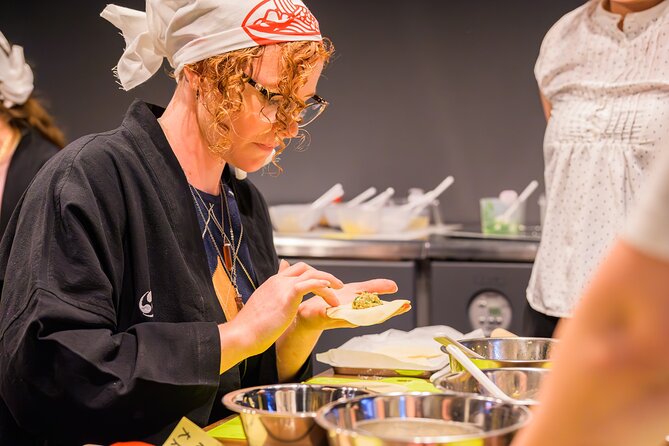
The most memorable part of this Kyoto class is that you make the entire dumpling, not just the filling. You choose what goes inside, roll wrappers from scratch, learn the folding pattern, and cook roughly 10 to 12 gyoza per person. I like the hands-on format and the chance to take home a useful skill, not just another set of holiday photos.
I also like the setting: a traditional Kyoto townhouse, with an English-speaking teacher and room for each person to work. Guides including Hama, Maya, Ryo, and Yo have been praised for making the process easy and fun. The main consideration is price. At $118.19 per person for about 90 minutes, this is not a cheap meal, so you are paying for instruction, the setting, the cultural background, and the activity itself.
Key points
- Make gyoza from start to finish: Choose a filling, prepare fresh wrappers, fold the dumplings, and cook them yourself.
- Work in a traditional Kyoto townhouse: The setting gives the class more character than a plain cooking studio.
- Learn with an English-speaking instructor: Hama, Maya, Ryo, and Yo are among the named teachers praised for clear, friendly instruction.
- Expect about 10 to 12 dumplings each: Go hungry, since your finished gyoza becomes the meal.
- Add an optional samurai photo: You can dress in samurai armor after cooking.
- Take home more than a memory: An apron souvenir is included in the experience, and you can ask about receiving the recipe.
Making Kyoto-Style Gyoza From Scratch
This is a compact cooking class built around one very practical dish. Gyoza began in China, but Japan developed its own versions, with differences in size, style, fillings, and cooking methods. The class uses that familiar dumpling as a way to introduce both Japanese food and a little samurai culture.
You begin by choosing your preferred filling. That small choice matters because it gives you some control over the meal instead of handing you a fixed recipe and telling you to copy it. The available filling choices are not specified in advance, so ask the instructor what is offered when you arrive.
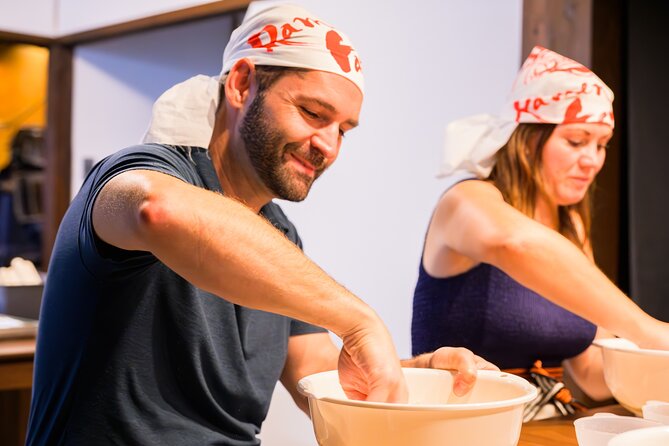
Next comes the wrapper. Making wrappers from scratch is the part that separates this experience from simply buying a tray of prepared dumplings. You work with the dough, shape the wrappers, and then learn how much filling to add. The process sounds simple, but portion size affects how neatly the dumpling closes and how well it cooks.
The folding lesson is another useful part of the class. Gyoza have a pleated edge, and the first few can be untidy. That is part of the fun. Your instructor shows you how to seal the wrapper and helps you get a consistent shape. The goal is not to produce factory-perfect dumplings. It is to understand the method well enough to repeat it at home.
Other cooking classes in Kyoto people book:
- Ramen Cooking Class at Ramen Factory in Kyoto
★ 5.0 · 1,937 reviews - Kyoto: Ramen Cooking Class at a Ramen Factory with Souvenir
★ 4.9 · 532 reviews - Kyoto: Ramen, Gyoza, and Onigiri Cooking Class
★ 5.0 · 445 reviews
A 90-Minute Class With Real Hands-On Time
The stated duration is about one hour and 30 minutes, although one participant described the full experience as closer to two hours. Allow a little extra time in your schedule, especially if you have a train, dinner reservation, or evening show afterward.
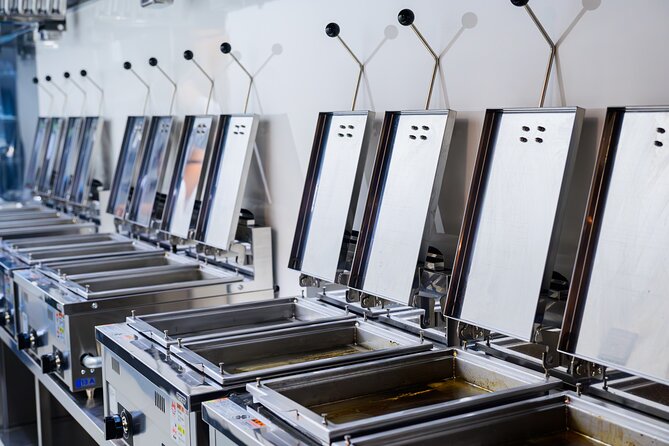
This is not a demonstration where you sit back and watch someone else cook. The class provides cooking tools, and each person has a working station. You handle the ingredients, prepare your wrappers, fold the gyoza, and cook the finished dumplings using a professional baking machine.
That equipment helps keep the cooking stage manageable. Once the dumplings are folded, you do not need to guess how to regulate the heat or spend your Kyoto afternoon cleaning a kitchen. The machine handles the cooking while you follow the instructor’s guidance. This makes the activity friendly for beginners and older children.
The pace should feel comfortable for most people, but the class still asks you to pay attention. Folding several dumplings gives you enough repetition to improve. By the last few, you should have a better sense of the dough, the filling, and the seal.
What Your Instructors Add to the Experience
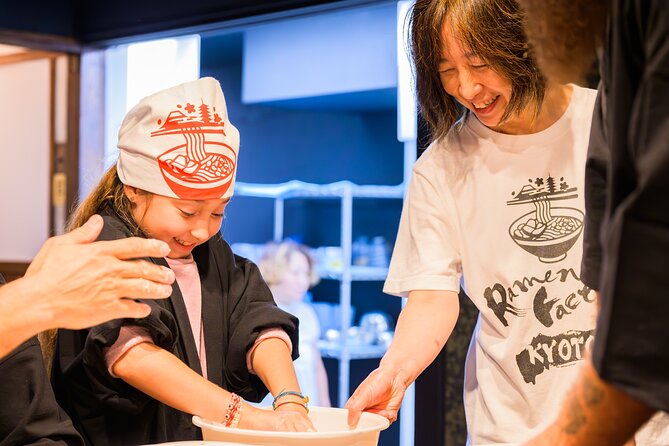
The teacher can make or break a short cooking class. Here, Hama, Maya, Ryo, and Yo are named instructors associated with the experience. Each has been singled out for being friendly, clear, and easy to follow.
Hama is especially good at making the class feel encouraging. She has guided families and first-time cooks through the steps, while adding historical facts along the way. Maya’s English has been described as strong, and her teaching style makes the process easy to understand. Ryo brings a personable approach that works well for older children and teenagers. Yo has also been praised for creating a relaxed class in a suitable cooking setting.
Your actual instructor depends on the date and session, so you should not book expecting one specific person unless the operator confirms it. Still, the range of names and consistently positive comments suggest that the teaching style is a central strength of the activity.
The class also includes some background on Japanese history and samurai culture. This is not a museum lecture, and you should not expect a long academic presentation. Instead, the cultural information is worked into the cooking session, giving the dumplings a wider Japanese context.
From Dough to a Plate of 10 to 12 Dumplings
Once the wrappers are ready, you fill and fold your dumplings. A typical person makes about 10 to 12 gyoza. That is enough for a satisfying snack or light meal, especially after spending time preparing each one.
Go hungry. One participant specifically advised arriving ready to eat, and that is sensible. You are not simply sampling one dumpling at the end. You are preparing a plate of your own food, and the cooking stage is part of the reward.
The finished gyoza are cooked using the class equipment rather than a traditional open-kitchen method. This gives the activity a practical, controlled finish. You learn how to take raw folded dumplings and turn them into a cooked dish without needing specialist kitchen gear at home.
The class does not promise an extensive meal, side dishes, or a full restaurant menu. Its value is in the making. If you want a long lunch or a broad tasting menu, spend your money elsewhere. If you want to learn one dish properly enough to try it again, the format makes sense.
More cooking in Kyoto:
- Kyoto: Japanese Washoku Bento Small Group Cooking Class
★ 5.0 · 380 reviews - Kyoto Ramen and Gyoza Cooking Class with Professional Chefs
★ 5.0 · 282 reviews - Kyoto: Afternoon Japanese Izakaya Cooking Class
★ 4.9 · 241 reviews - Izakaya Style Cooking Class
★ 5.0 · 219 reviews
The Kyoto Townhouse Setting
The location is 230-1 Kamimyokakujicho in Nakagyo Ward, Kyoto. The activity begins and ends at this same meeting point, and it is near public transportation. No private transportation is included, so you need to make your own way there.
A traditional townhouse is a fitting place for this class. It gives the experience a stronger connection to Kyoto than a generic commercial kitchen would. You are not only learning a recipe. You are working in a type of building associated with the city’s older urban fabric.
The location also makes the class easy to fit into a day of sightseeing, provided you allow time to reach the address. Check the meeting details carefully before leaving your hotel, since Kyoto addresses can be difficult to identify by sight alone. The activity ends where it starts, which simplifies your plans afterward.
The maximum group size is 20 people. That is large enough for a lively session but not necessarily intimate. The personal working stations help, yet the amount of individual attention may vary with the number of people in the room. If you prefer private instruction, note that some evening sessions have had only one person booked, resulting in a private class. That is a pleasant possibility, not something you should assume.
The Optional Samurai Armor Photo
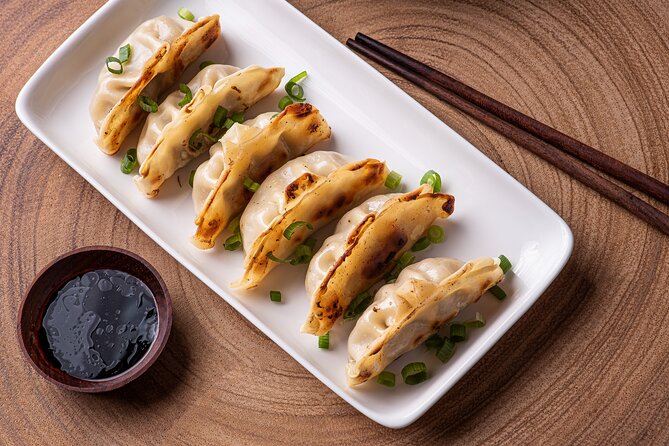
After cooking, you may have the chance to dress in samurai armor and take photos. This is optional, so you can treat it as a light cultural extra rather than a required part of the class.
For families, children, and anyone who enjoys a playful photo, the armor adds a memorable finish. It also gives the class a second theme beyond food. You move from learning about dumplings to posing in a distinctly Japanese costume, all without arranging a separate photo activity.
The armor element is not the reason to book the class if cooking is not your interest. It is a bonus, and the cooking remains the main event. Adults who dislike staged photos can simply skip it and finish with their meal and apron souvenir.
What You Take Home
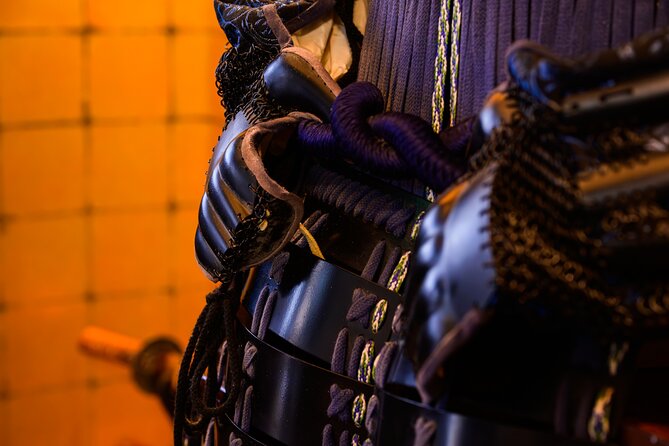
The best souvenir here is the technique. You learn how to choose a filling, make wrappers, fold dumplings, and cook them. Those are steps you can repeat for friends and family after returning home.
An apron souvenir is also provided. One person described keeping an apron and headband, while another noted the apron as a welcome extra. Ask your instructor exactly what is included on your session, but plan on leaving with an apron tied to the experience.
You may also want the recipe. One participant forgot to ask for it when leaving and was told the recipe could be sent later. To avoid that small frustration, request the written instructions before you go. The value of a cooking class increases sharply when you can reproduce the dish in your own kitchen.
This is why the class works well for people who want a useful memory. Photos fade into the mass of holiday images. A repeatable recipe can become a meal you make for friends, family, or yourself.
Is $118.19 a Fair Price?
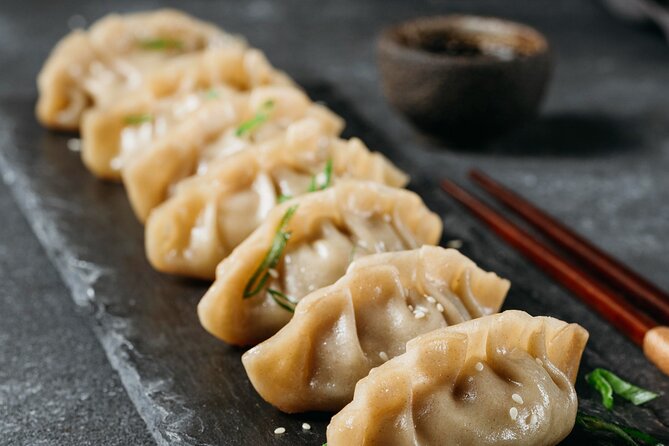
At $118.19 per person, this class sits firmly in the paid experience category rather than the casual snack category. You are not paying only for the ingredients. The price covers an English-speaking instructor, cooking tools, the townhouse setting, the instruction, the prepared meal, and the cultural material.
The cost makes more sense if you take part in every stage. Make the wrappers yourself. Ask questions about the dish and its Japanese development. Try the folding technique several times. Stay for the samurai photos if that appeals to you, and remember to ask for the recipe.
The price is harder to justify if you mainly want to eat gyoza. Kyoto has less expensive ways to enjoy dumplings, and this class is not designed as a budget meal. It is best understood as a short cultural activity that happens to end with food you made yourself.
A private session can also change the value calculation. If you happen to be the only person booked, you may get more direct attention and a more personal lesson. That possibility is appealing, but it is not guaranteed by the normal maximum group size of 20.
Who Will Enjoy This Class Most?
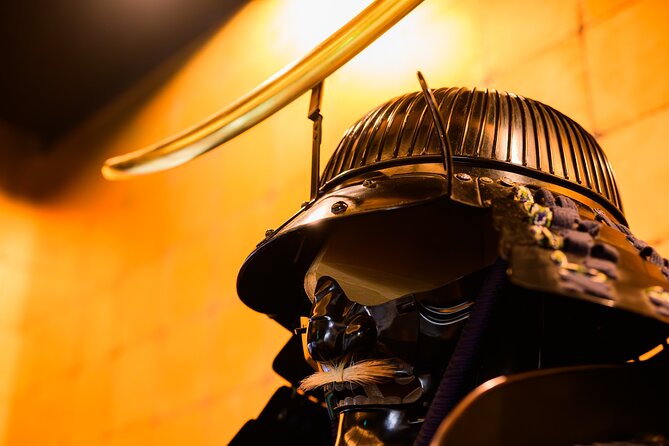
I would recommend this for first-time cooks, families with older children, teenagers, couples, and solo participants who want a structured activity. The steps are simple enough for beginners, and the repeated folding gives children something concrete to do.
The class is particularly good for a family day in Kyoto. A 10-year-old has taken part with two parents, and the hands-on format gave everyone a role. Older children and teenagers can also manage the process while learning something they can recreate at home.
Solo participants should not dismiss the experience. A solo booking has occasionally turned into a private class, and the format gives you a clear way to meet the instructor and focus on a practical skill.
I would be more cautious about booking it for someone with a very limited schedule, someone who dislikes food preparation, or someone seeking a serious culinary course. The class is friendly and accessible, but it is also short and entertainment-focused.
The provided information does not specify dietary substitutions, allergy procedures, wheelchair access, or age limits. If any of those points affect your decision, contact Japan food entertainment Ltd before booking. Do not assume that a filling can be changed or that the venue meets a specific access need.
Booking and Cancellation Details
You receive confirmation at the time of booking, and the ticket is mobile, so you can keep it on your phone. The class begins and ends at 230-1 Kamimyokakujicho, Nakagyo Ward.
Free cancellation is available if you cancel at least 24 hours before the local start time. Within 24 hours, the payment is not refunded, and late changes are not accepted. Keep that deadline in mind when arranging a Kyoto day that depends on weather or train schedules.
The operator is Japan food entertainment Ltd. Since the class can attract up to 20 people, booking ahead is sensible if you need a particular time. The activity had more than five bookings in the previous month and carries a five out of five rating from 210 ratings, with 100 percent recommending it.
Should You Book the Gyoza Class?
Book it if you want a short, practical Kyoto activity that combines food, culture, and a little fun. The strongest reasons are the full process from wrapper to cooked dumpling, the friendly English instruction, the townhouse setting, and the chance to learn a skill you can use at home.
Think twice if $118.19 feels high for a meal, because it is. You are paying for an activity, not simply a plate of gyoza. For families, couples, solo cooks, and older children, that added value is likely to make sense. For anyone focused only on eating cheaply, a restaurant is the better choice.
My advice is to book this as a break from temples and formal sightseeing. Arrive hungry, leave extra time beyond the stated 90 minutes, ask for the recipe, and treat the samurai armor as an optional bonus. If you want a Kyoto memory with a flavor you can recreate, this class earns its place on your schedule.
FAQ
Where does the gyoza cooking class meet?
The class meets at 230-1 Kamimyoakakujicho, Nakagyo Ward, Kyoto, 604-0025, Japan. The activity ends back at the same meeting point.
How long does the experience last?
The stated duration is approximately one hour and 30 minutes. One participant found the full experience lasted about two hours, so allow some extra time afterward.
Is the class taught in English?
Yes. An English-speaking instructor leads the activity. Named instructors connected with the class include Hama, Maya, Ryo, and Yo.
How many people can join the class?
The maximum group size is 20 people. Some sessions may be much smaller, and an occasional booking has resulted in a private class.
What is included in the price?
The experience includes an English-speaking instructor and the cooking tools needed for the class. You make and cook your own gyoza, and an apron souvenir is provided.
Is samurai armor part of the class?
Samurai armor is optional. After cooking, you can dress in the armor and take photos if you want to add that activity.
Can I cancel for a full refund?
Yes, if you cancel at least 24 hours before the experience start time. Cancellations or changes made less than 24 hours before the local start time are not refunded or accepted.
Just added in Kyoto
- Kyoto: Zen Meditation at a Private Temple with a Monk★ 5.0 · 25 reviews
- Private Cooking Class Udon in Kyoto Japan★ 5.0 · 23 reviews
- Your Private Vacation Photography Session In Kyoto★ 5.0 · 110 reviews
- Private Pewter Sake Cup Experience with a Kyoto Artisan★ 5.0 · 31 reviews
- Kyoto Wagashi(Japanese sweets) Cooking Class near Fushimiinari★ 5.0 · 60 reviews
- Kyoto:Family-Friendly Kimono & Yukata Experience at WARGO★ 5.0 · 147 reviews
- Private Guided Traditional Buddhist Cooking in Japan★ 5.0 · 16 reviews
- Kyoto: Gion Geisha District & Sake-in-Hand Walking Tour★ 5.0 · 37 reviews
Cooking Classes, compared.
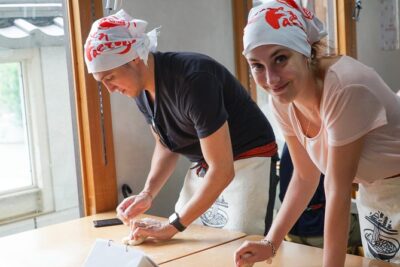
Ramen Cooking Class at Ramen Factory in Kyoto
Read our review →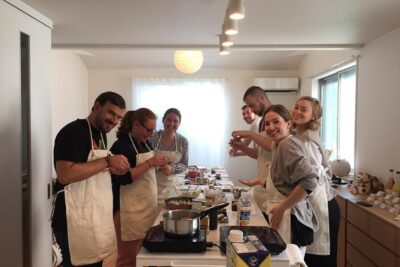
Ramen & Gyoza Cooking Class in Tokyo with Local Supermarket Visit
Read our review →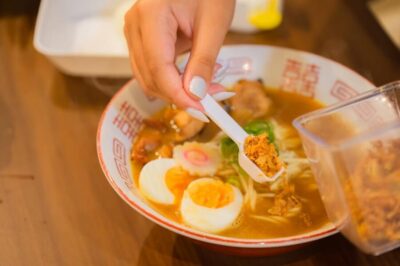
Ramen Cooking Class at a Ramen Factory with Souvenir
Read our review →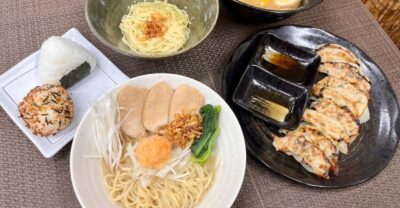
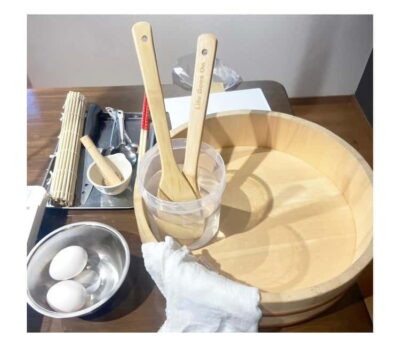
Japanese Washoku Bento Small Group Cooking Class
Read our review →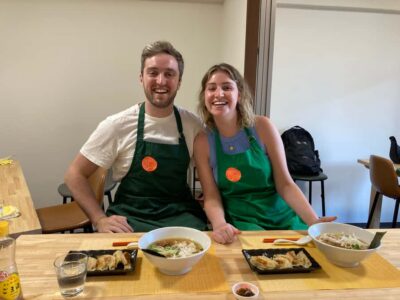
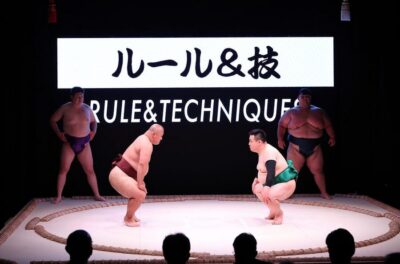
Sumo Stage Show with Bento or Snack + Fight & Photo
Read our review →
Ramen and Sushi Cooking Class with Sake Pairing Set in Tokyo
Read our review →Browse the lists this tour appears in