
Reviewed · COOKING CLASSES
Private Kyoto Cooking Class with Aki in a Beautiful Wooden House
Kyoto’s best food lesson may be the one that gets you away from restaurant menus. Aki’s private home class takes place in a beautiful wooden house, where you prepare seasonal Japanese dishes that may never appear on a standard dining menu. You cook together, then sit down to eat what you made.
I like two things here: the private format lets you stop and ask questions, and the recipes reach beyond the usual sushi-and-tempura lineup. Aki’s clear English, patient instruction, and practical recommendations for the rest of your Kyoto stay add value. The main drawback is the price, $95 per person, plus the confusing cancellation language, so read the terms carefully before paying.
Key points at a glance
- Cook in Aki’s Kyoto home: This is a private experience in a beautiful wooden house, not a large class filled with strangers.
- Make seasonal home dishes: Possible recipes include chikuzenni, braised burdock root, and miso soup.
- Expect hands-on work: You help prepare and cook the food, rather than simply watching a demonstration.
- Eat what you make: The cooking takes about an hour, followed by a shared home-cooked meal.
- Ask for dietary adjustments early: Vegetarian cooking is available, and allergies or other restrictions should be given when booking.
- Plan on a morning commitment: The class begins at 10:30 a.m. in Kyoto’s Sakyo Ward and lasts about three hours.
A quiet Kyoto kitchen instead of a crowded classroom
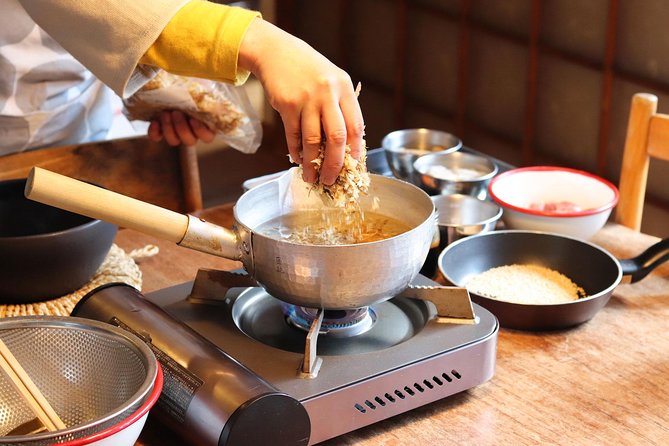
The appeal starts with the setting. You meet Aki at her wooden Kyoto house in the Ipponmatsu, Shimogamo Matsunokicho area of Sakyo Ward. The experience is built around a private kitchen and dining table, not a commercial cooking school with several unrelated groups working side by side.
That privacy changes the pace. You can ask why a technique matters, check a step before moving on, or ask about an ingredient without waiting for a whole room to quiet down. If you are the sort of cook who learns by asking small questions, this format is worth more than a polished demonstration.
The house also gives the class a sense of place. You are not only being shown Japanese food in a tourist setting. You are cooking in a local home, with recipes and methods connected to Aki’s family traditions. The supplied details do not promise a historic house tour or a formal look at Kyoto architecture, so you should book this for the kitchen experience, not for a house museum visit.
Other cooking classes in Kyoto people book:
- Ramen Cooking Class at Ramen Factory in Kyoto
★ 5.0 · 1,937 reviews - Kyoto: Ramen Cooking Class at a Ramen Factory with Souvenir
★ 4.9 · 532 reviews - Kyoto: Ramen, Gyoza, and Onigiri Cooking Class
★ 5.0 · 445 reviews
What happens during the three-hour morning
The start time is 10:30 a.m., and the full experience lasts about three hours. The cooking itself takes roughly one hour. That leaves time for introductions, explanations, preparation, the meal, and conversation.
Aki provides recipes in English before guiding you through the work. This matters because you leave with something more useful than a pleasant memory. You have written instructions that can help you repeat at least some of the dishes at home.
The class is hands-on. You should expect to take part in preparing and cooking the food, not simply stand beside Aki while she does everything. The exact jobs and order will vary with the menu and season, but the basic rhythm is clear: learn about the ingredients and food culture, prepare several dishes, cook them with Aki’s help, and sit down to eat together.
One practical point: three hours can feel long if you only want a quick cooking demonstration. It is a better match for you if you enjoy conversation, patient instruction, and a meal at the end.
Seasonal dishes beyond the restaurant menu
The menu changes with the time of year. That is a strength, but it also means you cannot book this expecting one fixed set of dishes.
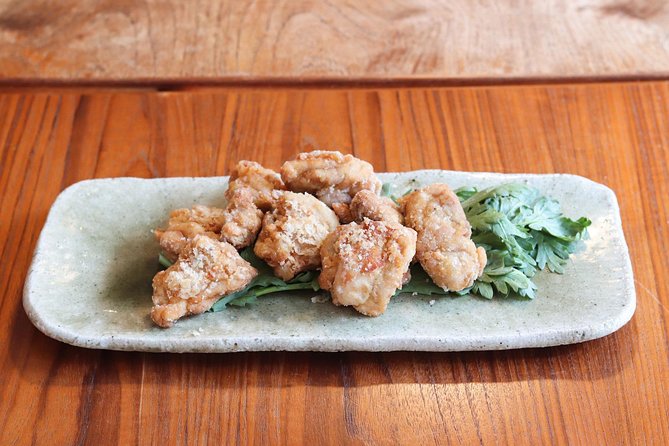
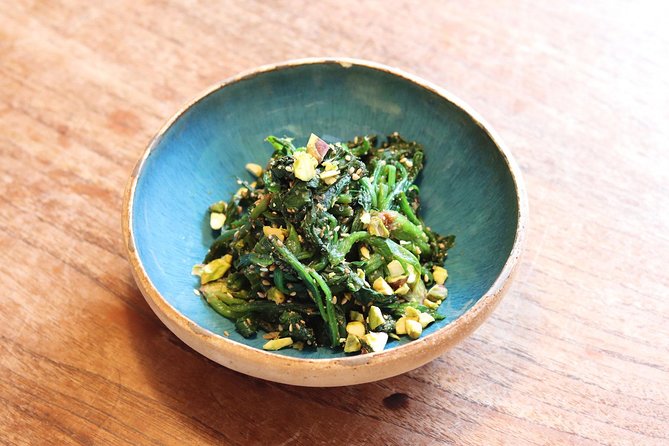
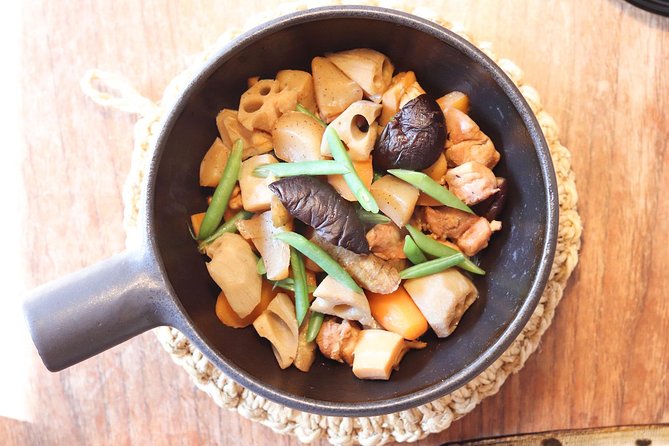
Possible examples include chikuzenni, a braised dish of chicken and vegetables; braised burdock root; and miso soup. These are useful choices for a visitor who wants to understand everyday Japanese cooking. They show how Japanese meals can depend on simmering, seasoning, texture, and careful preparation rather than restaurant-style presentation alone.
The class also promises dishes that you may not find in restaurants. That distinction is important. Kyoto has plenty of polished dining experiences, but a private home meal can show you what a family might actually prepare, along with small methods passed down through generations.
Miso soup is a good example. You may already know it from Japanese restaurants, but Aki can explain the details that make a familiar dish taste different at home. The supplied information does not specify every ingredient or technique, so do not expect a guaranteed menu or a fixed masterclass on one particular regional specialty.
Because the menu is seasonal, tell Aki about your food needs when you book. Vegetarian cooking is available, and allergies, dietary restrictions, and cooking preferences should be reported in advance. This is especially important in a private kitchen, where preparation depends on what has been planned before you arrive.
Learning with Aki, not just watching her
Aki is the heart of the experience. Her English is described as strong, and the class is designed for explanation as much as action. That makes the experience suitable for cooks who want more than a set of translated instructions.
I would pay attention to the small questions you might not ask in a restaurant. Ask how the seasoning changes by season. Ask which part of a recipe can be prepared ahead. Ask how she would adapt a dish for a vegetarian table. The private format gives you room to shape the lesson around your curiosity.
Aki’s patience is another practical advantage. Cooking classes can become stressful when the instructor moves quickly or assumes you already know basic techniques. Here, the private setting lets you stop and catch up.
The class also reaches beyond cooking. Aki shares information about Japanese food and culture, and she has offered suggestions for things to do later in Kyoto. That is a pleasant bonus, though you should view it as informal local advice rather than a separate sightseeing tour.
The experience is most useful if you participate fully. If you prefer to sit back and photograph the process, you may not get the full value. If you enjoy making mistakes, asking questions, and learning by doing, the format should suit you well.
More cooking in Kyoto:
- Kyoto: Japanese Washoku Bento Small Group Cooking Class
★ 5.0 · 380 reviews - Kyoto Ramen and Gyoza Cooking Class with Professional Chefs
★ 5.0 · 282 reviews - Kyoto: Afternoon Japanese Izakaya Cooking Class
★ 4.9 · 241 reviews - Izakaya Style Cooking Class
★ 5.0 · 219 reviews
The meal after the cooking
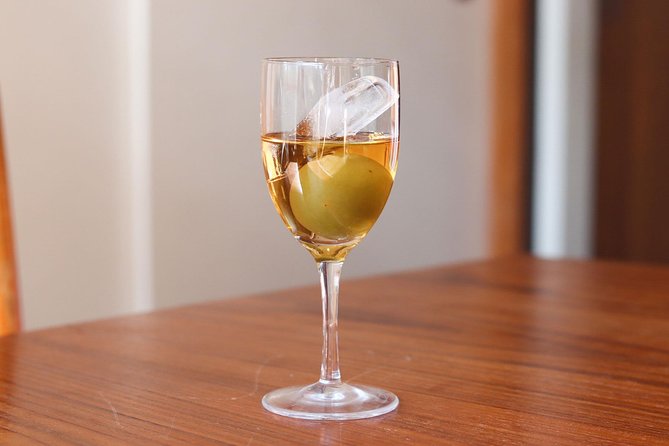
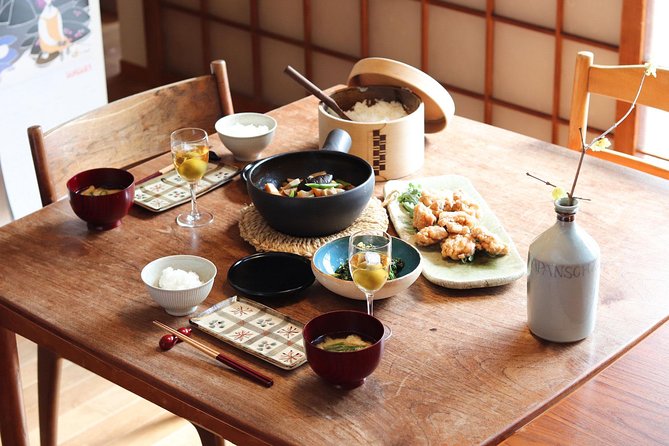
After about an hour of preparation and cooking, you eat the meal you helped make. This is more satisfying than being handed a finished dish because you can connect each plate with the work behind it.
The meal is also where the class becomes social. You are not rushing through a tasting counter. You sit with your host and enjoy the food in the same home where it was prepared. The experience includes non-alcoholic beverages, and the tour description also refers to alcoholic drinks being included. Since the formal inclusions specifically name non-alcoholic drinks, I would confirm the alcohol details before booking if that matters to you.
One useful benefit is portion size. The available comments describe making enough food for substantial leftovers. That is not guaranteed for every group or menu, but it suggests this can feel like a proper meal rather than a few tiny samples.
If you have a full afternoon planned, keep the timing in mind. A 10:30 a.m. start and three-hour duration may put you at the next stop around early afternoon, depending on how long the meal and conversation take. The class is easy to pair with a relaxed afternoon, but it may not fit neatly before a tightly timed temple visit or lunch reservation.
Is $95 per person a fair price?
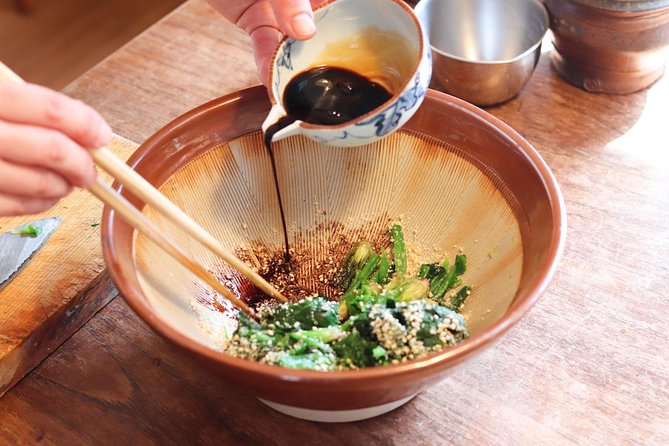
At $95 per person, this is not a budget meal. You are paying for more than the food. The price covers a private cooking lesson, a home setting, English recipes, a prepared meal, beverages, and several hours of Aki’s personal attention.
Compared with a large group class, the value comes from access and flexibility. You can ask questions without competing with a roomful of people, and the lesson can account for your group’s preferences. If the class helps you recreate even a few dishes at home, the recipes add lasting value.
The price is easier to justify for couples, families, and small groups who would rather have a private experience than join a crowded class. It is also a stronger choice for anyone interested in everyday Japanese cooking rather than a quick activity built mainly for photographs.
The value is less clear if your main goal is simply to eat Japanese food. Kyoto offers many less expensive meals. You should book this because you want the instruction, conversation, and home setting, not because it is the cheapest way to have lunch.
Getting there and fitting it into Kyoto plans
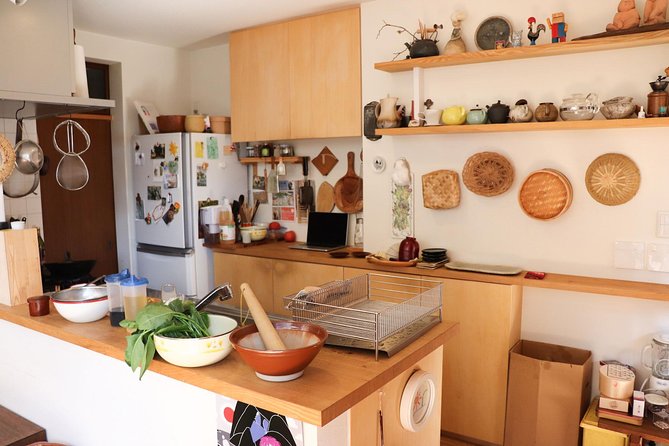
The meeting point is Ipponmatsu, Shimogamo Matsunokicho, in Sakyo Ward, Kyoto, postal code 606-0816. The class ends back at the same meeting point. Hotel pickup and drop-off are not included, so you need to arrange your own way there and back.
The location is near public transportation, which helps, but the information provided does not give a station name, walking time, or detailed directions. Once your booking is confirmed, check the exact meeting instructions rather than relying only on the street address.
A 10:30 a.m. start gives you a useful morning activity without requiring an early dawn departure. Still, allow extra time to find a private residence. Arriving late could cut into the cooking portion, and you do not want your first lesson in Kyoto to be a race through the neighborhood.
The experience allows service animals. No other accessibility details are provided, so contact the provider before booking if you need information about steps, seating, kitchen access, or mobility.
Booking details worth checking twice
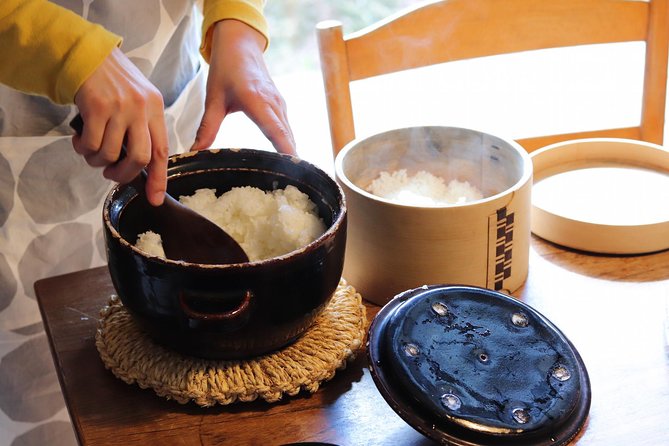
Confirmation is expected within 48 hours, subject to availability. The experience is commonly booked about 38 days ahead, so I would not leave it until the last minute if this is an important part of your Kyoto plans.
The cancellation information needs care. One part says the experience has a two-week cancellation policy, while the stated cancellation policy says the booking is non-refundable and cannot be changed for any reason. Check the terms shown at the time you book and keep the confirmation details.
This is a private activity for your group only. That makes the class more personal, but it also means the booking is less flexible if one person in your party changes plans.
Who will enjoy Aki’s cooking class most?
I would recommend this class to you if you:
- Want a private activity rather than a large group lesson
- Enjoy learning family-style recipes and everyday food customs
- Prefer hands-on cooking to a simple tasting
- Need English recipes and clear instruction
- Are willing to share a morning with your host
- Want a meal that may include enough food for leftovers
- Have dietary needs you can report in advance
It may not suit you if you want a fixed menu, a short demonstration, hotel transportation, or a low-cost lunch. It is also not the right choice for a schedule packed with timed attractions immediately after 1 p.m.
Should you book this Kyoto cooking class?
Book it if you want to see how Japanese home cooking works beyond the dishes commonly found in restaurants. Aki’s private wooden-house setting, hands-on instruction, seasonal menu, English recipes, and shared meal make this a personal way to spend a Kyoto morning.
The strongest reasons to choose it are the private attention and the chance to ask questions as you cook. The main cautions are the $95 price, self-arranged transportation, changing menu, and unclear cancellation wording. Give Aki your dietary details at booking, confirm what drinks are included, and leave your afternoon reasonably open.
For a visitor who values connection and practical cooking skills, this is a worthwhile splurge. If you only want a quick meal or a standard tourist demonstration, spend the money elsewhere.
FAQ
Where does the cooking class take place?
It takes place in Aki’s beautiful wooden house in Kyoto’s Sakyo Ward, at Ipponmatsu, Shimogamo Matsunokicho, Kyoto 606-0816.
What time does the experience begin?
The class starts at 10:30 a.m.
How long does the cooking class last?
The experience lasts about three hours. The cooking portion takes about one hour, followed by the meal and related conversation.
Is this a private activity?
Yes. Only your group participates in the activity.
What dishes might I prepare?
The seasonal menu can vary. Possible dishes include chikuzenni, braised burdock root, and miso soup.
Are recipes provided in English?
Yes. Aki provides English recipes and guides you through the cooking process.
Is a vegetarian option available?
Yes. Vegetarian cooking is available, but you should request it when booking.
Are beverages included?
Non-alcoholic beverages are included. The experience description also refers to alcoholic drinks being included, so confirm the current drink arrangements when booking.
Is hotel pickup included?
No. Hotel pickup and drop-off are not included, and the experience ends back at the meeting point.
Just added in Kyoto
- Private Cooking Class Udon in Kyoto Japan★ 5.0 · 23 reviews
- Your Private Vacation Photography Session In Kyoto★ 5.0 · 110 reviews
- Kyoto: Zen Meditation at a Private Temple with a Monk★ 5.0 · 25 reviews
- Private Pewter Sake Cup Experience with a Kyoto Artisan★ 5.0 · 31 reviews
- Kyoto Wagashi(Japanese sweets) Cooking Class near Fushimiinari★ 5.0 · 60 reviews
- Kyoto:Family-Friendly Kimono & Yukata Experience at WARGO★ 5.0 · 147 reviews
- Private Guided Traditional Buddhist Cooking in Japan★ 5.0 · 16 reviews
- Kyoto: Gion Geisha District & Sake-in-Hand Walking Tour★ 5.0 · 37 reviews
Cooking Classes, compared.
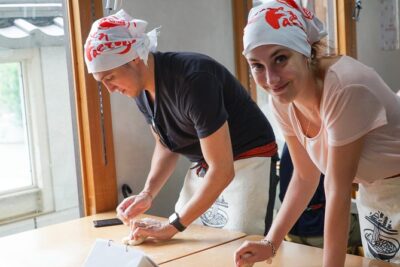
Ramen Cooking Class at Ramen Factory in Kyoto
Read our review →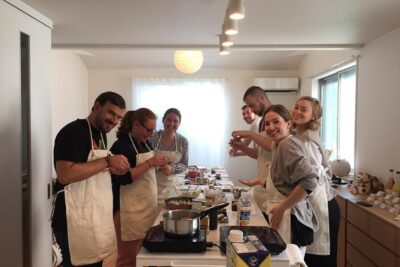
Ramen & Gyoza Cooking Class in Tokyo with Local Supermarket Visit
Read our review →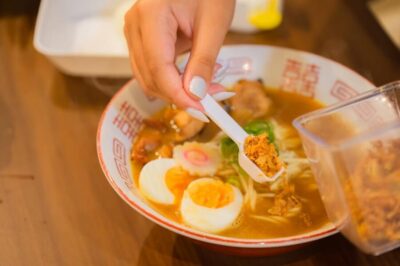
Ramen Cooking Class at a Ramen Factory with Souvenir
Read our review →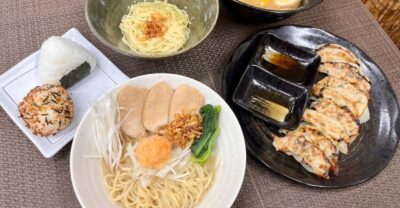
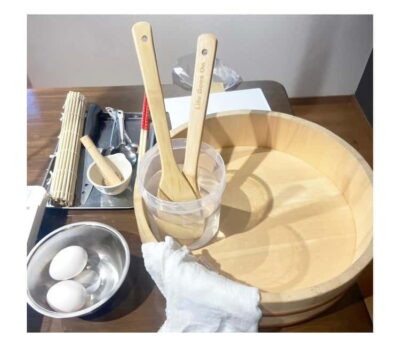
Japanese Washoku Bento Small Group Cooking Class
Read our review →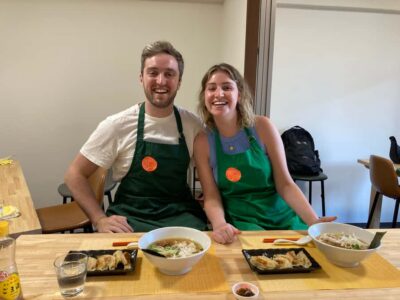
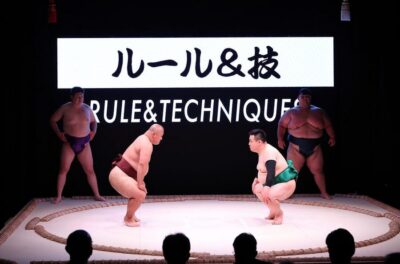
Sumo Stage Show with Bento or Snack + Fight & Photo
Read our review →
Ramen and Sushi Cooking Class with Sake Pairing Set in Tokyo
Read our review →Browse the lists this tour appears in